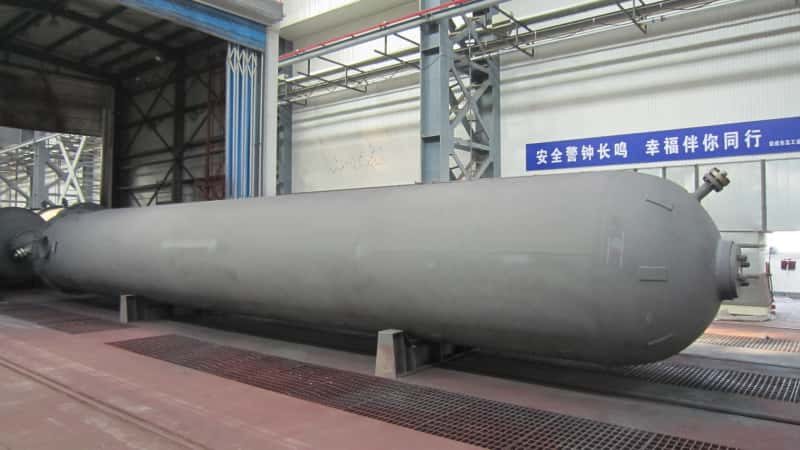


Selecting the right heat exchanger can be overwhelming—especially when each type looks different, performs differently, and suits specific operating conditions. Choosing incorrectly can result in high energy consumption, fouling, poor heat transfer, or premature equipment failure. Fortunately, understanding how each design works and where it performs best allows engineers and plant managers to avoid downtime and improve thermal efficiency. In this article, we break down the major industrial heat exchanger types so you can confidently select the right one for your process.
Shell and tube heat exchangers excel in high-pressure and high-temperature applications, plate heat exchangers deliver compact and highly efficient heat transfer for clean fluids, air-cooled exchangers eliminate the need for water and suit outdoor installations, while double-pipe exchangers are simple, economical solutions for small-scale or low-flow heat duties.
Each heat exchanger type solves a different engineering challenge, so understanding their distinct advantages and limitations will help you choose the most reliable and cost-effective solution. Continue reading for a clear, practical breakdown.
Shell and tube exchangers are the best choice for high-pressure industrial processes.True
Their cylindrical shell and thick-walled tubes give them superior mechanical strength.
Plate heat exchangers can efficiently handle dirty or particulate-heavy fluids.False
Their narrow channels are prone to clogging and fouling when handling dirty fluids.
Air-cooled heat exchangers require cooling water to function properly.False
They use ambient air, eliminating water consumption entirely.
Double-pipe heat exchangers are ideal for large industrial flow rates.False
Their small heat transfer area limits them to low-flow or small-duty applications.
Understanding the Four Major Heat Exchanger Types
Shell and Tube Heat Exchangers
Shell and tube heat exchangers consist of a bundle of tubes enclosed within a steel shell. One fluid flows inside the tubes while another flows outside the tubes within the shell. Their strength lies in handling high pressure, high temperature, and corrosive fluids thanks to design flexibility (U-tube, floating head, fixed tube sheet) and material customization.
Key Characteristics:
- Withstands >100 bar and >500°C
- Easy to clean on shell side
- Works well for dirty or viscous fluids
- Large footprint
Plate Heat Exchangers
Plate heat exchangers use multiple thin corrugated plates to create high-turbulence flow channels. They offer exceptional thermal efficiency—up to 3× the heat transfer rate of shell-and-tube units within the same footprint. However, they work best with clean, low-viscosity fluids.
Key Characteristics:
- Very high heat transfer coefficient
- Compact and lightweight
- Low cost to expand by adding plates
- Not suitable for dirty or particle-laden fluids
Air-Cooled Heat Exchangers
Air-cooled exchangers use fans to blow ambient air over finned tubes, cooling the process fluid without water. They are widely used in hot climates, oil fields, and remote installations where water is scarce.
Key Characteristics:
- Zero water consumption
- Performance depends on ambient temperature
- Larger installation footprint due to fans
- Best suited for outdoor environments
Double-Pipe Heat Exchangers
Double-pipe exchangers consist of one pipe inside another, with fluids flowing in opposite directions. They are simple, durable, and inexpensive—but not ideal for high-capacity operations due to limited surface area.
Key Characteristics:
- Low cost and easy maintenance
- Ideal for small flow rates or pilot plants
- Compact but low thermal efficiency
- Best for basic heating or cooling tasks
Comparison Table of Heat Exchanger Types
| Feature / Type | Shell & Tube | Plate | Air-Cooled | Double-Pipe |
|---|---|---|---|---|
| Heat Transfer Efficiency | Medium | High | Low–Medium | Low |
| Pressure/Temperature | Very High | Medium | Medium | Low |
| Space Requirement | Large | Small | Very Large | Small |
| Best Fluid Type | Dirty/clean | Clean | Clean | Clean |
| Water Requirement | Yes | Yes | No | Yes/No |
| Cost | High | Medium | High | Low |
Ambient Temperature vs. Air-Cooled Efficiency
| Ambient Temperature (°C) | Cooling Efficiency (%) |
|---|---|
| 15 | 95 |
| 25 | 87 |
| 35 | 76 |
| 45 | 63 |
This demonstrates why air-cooled systems require careful sizing in hot regions.
Summary
Shell and tube exchangers are ideal for rugged, high-pressure operations; plate exchangers deliver compact efficiency for clean fluids; air-cooled exchangers eliminate water use for outdoor or remote sites; and double-pipe exchangers offer simplicity and low-cost performance for small-capacity duties. The right choice depends on fluid properties, location, footprint, and required heat duty.
Ready to Select the Right Heat Exchanger?
As a professional manufacturer and engineering supplier, we can help you choose and customize the best heat exchanger for your process. Contact us for technical support, product specifications, or a tailored quotation.
References
- Types of Heat Exchangers Compared – Engineering Toolbox
- Shell and Tube vs. Plate Heat Exchangers – Exchanger Industries
- Air-Cooled Heat Exchanger Fundamentals – API Heat Transfer
- Understanding Double-Pipe Heat Exchangers – Chemical Engineering Resources
- Heat Transfer Equipment Comparison – HTRI
- TEMA Heat Exchanger Standards – Tubular Exchanger Manufacturers Association
- Plate Heat Exchanger Benefits – Alfa Laval