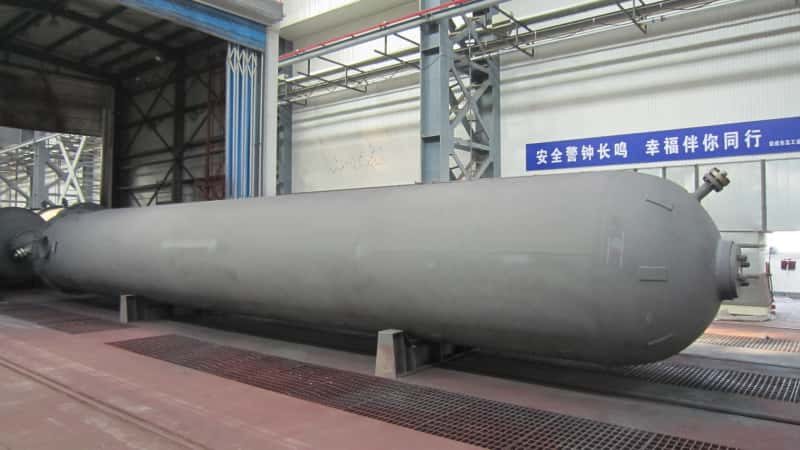

In many chemical, petrochemical, fertilizer, and refining plants, reactors are discussed mainly from a reaction or process-performance perspective, while their identity as pressure vessels is not given equal weight. This lack of structural clarity often leads to fragmented engineering decisions, where chemical design, mechanical design, and regulatory compliance are treated as separate topics. The consequences are serious: underestimated mechanical loads, insufficient safety margins, non-compliance with pressure vessel codes, premature degradation, and in worst cases, loss of containment accidents. These problems do not arise because engineers misunderstand chemistry, but because the definition of a reactor as a pressure vessel is not clearly structured or consistently applied. The solution is to explicitly define reactors as pressure vessels and to organize this definition into clear mechanical, regulatory, and operational layers that engineers and operators can systematically follow.
In process plants, reactors are defined as pressure vessels because they are closed containers designed to carry out chemical reactions under pressures and temperatures different from ambient conditions, and therefore must be mechanically designed, fabricated, inspected, and operated in accordance with recognized pressure vessel codes to safely contain pressure, temperature, and reactive media throughout their service life.

To make this definition clearer and more usable in engineering practice, the explanation below is reorganized with explicit third- and fourth-level headings. This structure helps distinguish regulatory meaning, mechanical reality, operational impact, and lifecycle implications, making it easier for engineers, inspectors, and decision-makers to apply the concept correctly in real projects.
Most industrial chemical reactors qualify as pressure vessels under international design codes.True
Because they are closed systems operating above or below atmospheric pressure, reactors must meet pressure vessel code requirements.
Reactors are exempt from pressure vessel rules because their main function is chemical reaction.False
Regardless of function, any vessel containing pressure must comply with pressure vessel regulations to ensure mechanical integrity and safety.
Core Definition: Why Reactors Are Classified as Pressure Vessels
Closed containment under pressure
At the most fundamental level, a pressure vessel is defined as a closed container that holds fluids at a pressure substantially different from atmospheric pressure. Industrial reactors meet this criterion almost without exception. Whether used for hydrogenation, oxidation, polymerization, cracking, synthesis, or fermentation, reactors are sealed systems designed to contain gases or liquids while a chemical reaction occurs. The presence of reaction kinetics does not change this basic physical reality. From a mechanical standpoint, a reactor shell experiences internal pressure loads in exactly the same way as any other pressure vessel, and therefore must be treated as such.
Pressure is not limited to steady-state operation
A critical part of the definition is that “pressure” includes more than normal operating pressure. Reactors experience design pressure, startup pressure, shutdown pressure, upset pressure, and sometimes vacuum conditions. For example, an exothermic reactor may see rapid pressure rise during a runaway reaction, while a batch reactor experiences frequent pressurization and depressurization cycles that induce fatigue. These scenarios are integral to the definition of reactors as pressure vessels because pressure vessel design codes require that all credible pressure and temperature cases be considered in the mechanical design.
Regulatory and Code-Based Definition in Process Plants
Inclusion of reactors in pressure vessel codes
From a regulatory perspective, reactors fall squarely within the scope of international pressure vessel codes such as ASME Boiler and Pressure Vessel Code Section VIII, EN 13445, GB 150, and the EU Pressure Equipment Directive (PED). These codes do not distinguish equipment based on function (reaction versus storage); they classify equipment based on pressure, temperature, and contained volume. As soon as a reactor exceeds defined pressure thresholds, it is legally a pressure vessel and must comply with applicable design, fabrication, testing, and certification requirements.
Legal implications of pressure vessel classification
Once a reactor is defined as a pressure vessel, compliance is no longer optional. Design calculations must be documented, materials must be certified, welds must be qualified, inspections must be performed, and pressure testing must be witnessed and recorded. From a plant owner’s perspective, this definition has direct legal implications: failure to comply can invalidate permits, insurance coverage, and regulatory approvals. This is why reactors are often among the most heavily regulated pieces of equipment in a process plant.
Mechanical Engineering Meaning of Reactors as Pressure Vessels
Stress-based shell and head design
Defining reactors as pressure vessels means their shells, heads, and nozzles must be sized using mechanical stress calculations rather than process intuition. Wall thickness is determined by internal pressure, temperature-dependent allowable stress, corrosion allowance, and joint efficiency, not by reaction residence time or catalyst volume. Even if the reaction itself is mild, the mechanical design must still safely contain the maximum allowable working pressure throughout the reactor’s life.
Material selection beyond chemical compatibility
Pressure vessel classification also governs material selection. Reactor materials must satisfy both chemical resistance and mechanical integrity requirements. This includes resistance to creep at high temperature, adequate toughness at low temperature, fatigue resistance under cyclic pressure, and resistance to damage mechanisms such as hydrogen embrittlement, nitriding, or stress corrosion cracking. In hydrogen service, reactors are often the most demanding pressure vessels on site because they combine high pressure, high temperature, and aggressive media for long durations.
Relationship Between Reactor Internals and Pressure Vessel Definition
Pressure boundary versus internal components
The presence of catalyst beds, agitators, trays, baffles, or internal heat exchangers does not change the definition of a reactor as a pressure vessel. The pressure boundary is formed by the shell, heads, and pressure-retaining nozzles. Internals exist inside this boundary and do not carry pressure themselves, but they strongly influence pressure distribution, temperature gradients, and mechanical loads. Therefore, internal design must be coordinated with pressure vessel design to avoid localized overheating, excessive stresses, or unexpected deformation.
Interaction between internals and vessel integrity
Poor internal flow distribution can create hot spots that raise local metal temperature, reducing allowable stress and accelerating long-term damage. Heavy internals impose additional loads on support rings and shell attachments. From a pressure vessel perspective, these effects must be included in design and assessment, reinforcing why reactors cannot be designed purely as “reaction equipment” without full mechanical integration.
Fabrication and Quality Control Implications
Code-driven fabrication requirements
Once defined as pressure vessels, reactors must be fabricated under strict quality control systems. This includes qualified welding procedures, certified welders, traceable materials, post-weld heat treatment where required, and non-destructive examination such as radiography or ultrasonic testing. These requirements exist because failure of a reactor pressure vessel has far more severe consequences than failure of low-pressure process equipment.
Importance of fabrication discipline for reactors
For reactors, fabrication quality is especially critical because repair or replacement is extremely expensive once installed. Thick-wall shells, high-alloy materials, and complex nozzles make reactors among the most challenging pressure vessels to manufacture. From a manufacturer’s standpoint, reactors represent one of the highest-responsibility products precisely because they combine pressure containment with chemical hazard.
Operational Definition: How Plants Must Treat Reactors
Operating within pressure vessel limits
Defining reactors as pressure vessels imposes strict operational boundaries. Operators must respect maximum allowable working pressure (MAWP), maximum allowable metal temperature, and defined operating envelopes. Exceeding these limits, even briefly, can permanently reduce vessel life or trigger regulatory violations. This is why reactors are typically equipped with multiple pressure and temperature measurements and conservative alarm and trip settings.
Pressure relief and protection systems
As pressure vessels, reactors must be protected by properly sized pressure relief devices such as safety valves or rupture disks. Relief sizing must consider worst-case scenarios, including runaway reactions, blocked outlets, and external fire exposure. These protection systems are not optional accessories; they are mandatory components derived directly from the pressure vessel definition.
Inspection and Lifecycle Management Perspective
Periodic inspection requirements
Pressure vessel regulations require periodic inspection to verify continued mechanical integrity. For reactors, inspection programs often include internal visual inspection, ultrasonic thickness measurement, hydrogen damage assessment, acoustic emission monitoring, and fitness-for-service evaluation. These activities exist because reactors, as pressure vessels, are subject to long-term degradation mechanisms that may not be obvious during normal operation.
Lifecycle risk management
Recognizing reactors as pressure vessels from the design stage allows plants to plan inspection intervals, upgrades, and eventual replacement proactively. Plants that fail to apply this definition often discover problems late, when damage is already advanced and options are limited. From a lifecycle cost standpoint, early and structured pressure vessel thinking consistently reduces unplanned outages and safety risk.
Comparison with Non-Pressure Equipment
| Aspect | Reactor as Pressure Vessel | Non-Pressure Equipment |
|---|---|---|
| Design basis | Mechanical + process | Process only |
| Code compliance | Mandatory | Often not required |
| Failure consequence | High (loss of containment) | Lower |
| Inspection | Regulated, periodic | Often discretionary |
| Lifecycle risk | High, long-term | Typically lower |
Practical Engineering Lessons from Industry
Common failure modes when definition is ignored
In real plants, there are documented cases where reactors were modified internally—such as adding catalyst volume or changing internals—without re-evaluating pressure vessel stresses. Over time, increased temperature gradients or pressure cycling led to cracking and leakage. These incidents were not caused by poor chemistry, but by violating the principle that reactors are pressure vessels first and reaction spaces second.
Why this definition improves safety culture
Plants that clearly define reactors as pressure vessels tend to integrate mechanical integrity, process safety, and operations more effectively. Hazard analysis methods such as HAZOP and LOPA rely on this definition as a foundation. When everyone—from design engineers to operators—understands that a reactor is a pressure vessel, safety decisions become clearer and more consistent.
Summary
Reactors in process plants are defined as pressure vessels because they are closed systems that contain chemical reactions under pressure and temperature conditions that demand strict mechanical integrity. This definition is not a formality; it governs design codes, materials, fabrication, operation, inspection, and lifecycle management. Structuring this definition clearly—across regulatory, mechanical, operational, and lifecycle dimensions—helps engineers and operators apply it correctly and consistently. Recognizing reactors as pressure vessels is a cornerstone of safe, compliant, and reliable process plant engineering.
Call to Action
FAQ
Q1: What is meant by reactors as pressure vessels in process plants?
A1:
In process plants, reactors as pressure vessels refer to chemical reactors that are specifically designed to operate under pressures significantly different from atmospheric pressure and are therefore classified as pressure vessels. These reactors are enclosed containers where chemical reactions take place while safely containing internal pressure generated by gases, vapors, liquids, or exothermic reactions. Because pressure can arise from reaction kinetics, temperature changes, or the introduction of pressurized feed streams, the reactor must be structurally robust and compliant with pressure vessel codes.
From an engineering perspective, the definition emphasizes two combined roles: the reactor provides a controlled environment for chemical transformation, and the pressure vessel provides mechanical integrity and safety. This dual function distinguishes such reactors from open or low-pressure systems like stirred tanks operating at near-atmospheric conditions.
In most industrial sectors—such as petrochemical, fertilizer, pharmaceutical, and refining industries—reactors are routinely designed as pressure vessels. They are subject to stringent regulations, inspections, and certifications to prevent catastrophic failures. Therefore, defining reactors as pressure vessels highlights their critical importance in both process performance and plant safety.
Q2: Why are most industrial reactors classified as pressure vessels?
A2:
Most industrial reactors are classified as pressure vessels because the reactions they host often require elevated pressure and temperature to achieve acceptable conversion rates, selectivity, or economic efficiency. For example, reactions involving gases, hydrogenation processes, polymerization, or synthesis reactions typically operate at pressures far above atmospheric levels.
Additionally, even when reactions are intended to occur at moderate pressures, pressure can build up due to heat release, vaporization of liquids, or unexpected reaction behavior. Designing reactors as pressure vessels ensures that these conditions are safely contained without leakage or rupture. This classification also allows engineers to anticipate worst-case scenarios, such as runaway reactions or blocked outlets.
Another key reason is regulatory compliance. International standards such as ASME Boiler and Pressure Vessel Code (BPVC), EN standards, or PED require any equipment exceeding certain pressure limits to be designed, fabricated, tested, and inspected as a pressure vessel. Since reactors frequently exceed these limits, they naturally fall into this category.
Q3: What are the main design features of reactors used as pressure vessels?
A3:
Reactors designed as pressure vessels incorporate several critical design features to safely withstand internal pressure and operating stresses. The most important feature is a thick-walled shell, typically cylindrical or spherical in shape, which efficiently distributes stress. The choice of geometry minimizes stress concentrations and improves structural integrity.
Material selection is another crucial aspect. Reactor pressure vessels are commonly made from carbon steel, low-alloy steel, stainless steel, or specialty alloys, depending on operating pressure, temperature, corrosion potential, and chemical compatibility. Internals such as agitators, catalyst beds, baffles, or heat transfer coils must also be designed to handle pressure-related loads.
Safety components are integral to the design. These include pressure relief valves, rupture disks, nozzles for instrumentation, and manways for inspection. Welding quality, non-destructive testing, and heat treatment are also mandatory to ensure long-term reliability. Together, these features ensure that the reactor can function effectively as both a chemical processing unit and a certified pressure vessel.
Q4: How do pressure vessel codes apply to process plant reactors?
A4:
Pressure vessel codes provide the legal and technical framework governing the design, fabrication, inspection, and operation of reactors in process plants. When a reactor is defined as a pressure vessel, it must comply with applicable standards such as the ASME BPVC, European Pressure Equipment Directive (PED), or other national regulations.
These codes define allowable stress limits, material specifications, welding procedures, inspection intervals, and testing requirements such as hydrostatic or pneumatic tests. For reactors, this ensures that even under maximum allowable working pressure (MAWP), the vessel maintains an adequate safety margin.
Compliance with pressure vessel codes is not optional. It is a legal requirement in most jurisdictions and is often tied to insurance, plant licensing, and operator safety. By applying these codes, process plants reduce the risk of mechanical failure, protect personnel, and ensure consistent operational performance throughout the reactor’s service life.
Q5: What is the importance of defining reactors as pressure vessels in plant safety?
A5:
Defining reactors as pressure vessels is critical for plant safety because it enforces a disciplined engineering approach to managing pressure-related hazards. Pressure vessel classification ensures that potential risks—such as overpressure, material fatigue, corrosion, and thermal stress—are systematically identified and mitigated during design and operation.
This definition also mandates the use of protective systems like pressure relief devices, emergency shutdown systems, and continuous monitoring instrumentation. Operators are trained to recognize pressure-related risks, and maintenance teams follow strict inspection and testing schedules to detect early signs of damage or degradation.
From a broader safety perspective, pressure vessel classification creates accountability. Designers, manufacturers, inspectors, and plant owners all share responsibility for compliance. As a result, reactors functioning as pressure vessels play a vital role in preventing accidents, environmental releases, and production downtime in modern process plants.
References
- ASME Boiler and Pressure Vessel Code – https://www.asme.org/codes-standards – ASME
- Pressure Vessels Overview – https://www.britannica.com/technology/pressure-vessel – Encyclopaedia Britannica
- Chemical Reactor Design – https://www.sciencedirect.com/topics/chemical-engineering/chemical-reactor – ScienceDirect
- Process Plant Equipment – https://www.engineeringtoolbox.com/chemical-reactors-d_1325.html – Engineering ToolBox
- Pressure Equipment Directive – https://single-market-economy.ec.europa.eu/sectors/pressure-equipment_en – European Commission