
In many industrial systems, efficient heat transfer is crucial for process optimization, energy saving, and maintaining equipment performance. However, choosing the right type of heat exchanger can be challenging, especially when dealing with small to medium heat transfer requirements. If the wrong heat exchanger is used, it can lead to inefficiency, pressure loss, or operational instability. The double pipe heat exchanger is a simple yet highly effective solution that addresses these issues—especially for applications requiring flexibility, easy maintenance, and cost efficiency.
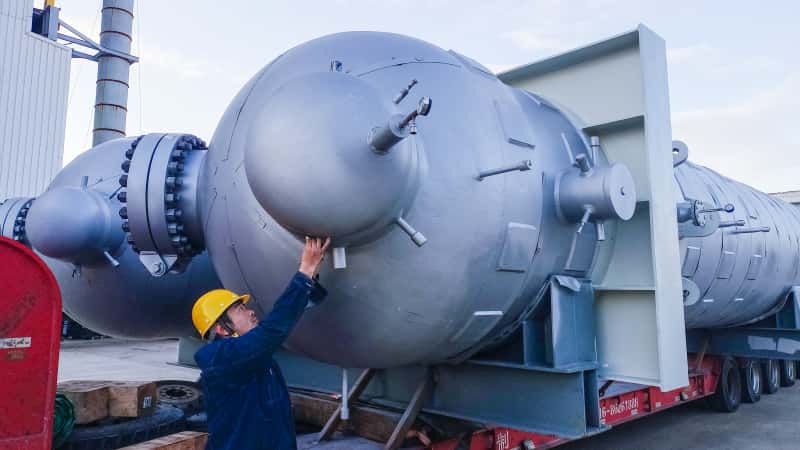
A double pipe heat exchanger is typically used in applications where a compact, flexible, and economical heat transfer solution is required. Common applications include process fluid heating and cooling in chemical plants, oil and gas systems, food and beverage processing, pharmaceuticals, HVAC systems, and laboratory or pilot-scale operations. It is particularly suitable for low to medium duty operations, high-pressure fluids, and cases where temperature control precision and ease of cleaning are important.
For engineers and plant managers seeking reliable and adaptable heat transfer performance, understanding where double pipe heat exchangers excel can guide better equipment selection and design decisions.
Why Is a Double Pipe Heat Exchanger Ideal for Small-Scale or Pilot Plant Applications?
In small-scale or pilot plant setups, efficient heat exchange is vital to maintain precise temperature control, optimize reaction rates, and ensure product consistency. However, traditional shell-and-tube or plate heat exchangers often prove excessive in cost, size, and complexity for such applications. The lack of scalability and the need for frequent cleaning or reconfiguration can also delay experimentation and raise operating costs. The solution to these challenges lies in the double pipe heat exchanger—a compact, flexible, and economical device that offers excellent thermal performance for low to moderate heat loads, making it particularly suited for laboratory and pilot-scale use.
A double pipe heat exchanger is ideal for small-scale or pilot plant applications because it combines compact design, modular flexibility, high heat transfer efficiency, and ease of cleaning at a low cost. Its simple construction—an inner pipe carrying one fluid and an outer pipe carrying another—allows precise control of flow rates and temperature profiles, while enabling quick reconfiguration or scale-up. This adaptability makes it a preferred choice for R&D, chemical, and pharmaceutical pilot systems where versatility and data accuracy are critical.
The double pipe system’s modularity means engineers can easily add or remove sections to adjust capacity, test new conditions, or replicate industrial processes on a smaller scale. Its straightforward design minimizes maintenance, while its efficient counterflow configuration maximizes the temperature difference between fluids, resulting in strong thermal performance even at low Reynolds numbers. These advantages collectively make the double pipe heat exchanger a cornerstone of reliable pilot-scale thermal management.
Double pipe heat exchangers are too small to provide efficient heat transfer for pilot plants.False
Although compact, double pipe heat exchangers achieve excellent heat transfer through counterflow arrangements, long residence times, and high surface area-to-volume ratios, making them highly effective for small to medium heat loads.
Understanding the Structure and Function of a Double Pipe Heat Exchanger
A double pipe heat exchanger consists of two concentric pipes—an inner pipe through which one fluid flows and an outer pipe (or jacket) that carries another fluid in the opposite direction. Typically, counterflow configuration is employed, where the hot and cold fluids move in opposite directions, achieving maximum thermal efficiency. The construction materials often include stainless steel, copper, or carbon steel, chosen based on fluid compatibility and temperature requirements.
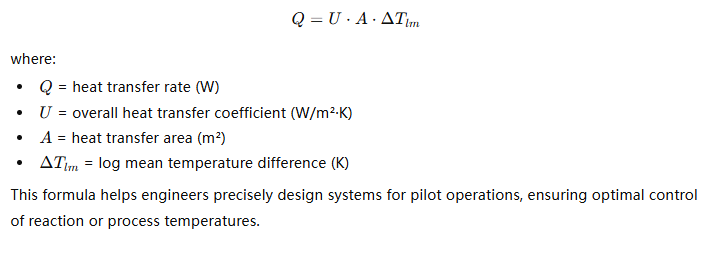
The inner pipe diameter usually ranges from 12.7 mm to 50 mm, depending on flow rates and viscosity. The outer pipe diameter is proportionally larger, creating an annular space for the secondary fluid. Heat is transferred through the pipe wall by conduction, and the overall heat transfer coefficient (U) depends on the convective coefficients of both fluids and the wall’s thermal conductivity. The governing heat transfer equation:
Comparative Performance: Double Pipe vs. Other Heat Exchangers
| Heat Exchanger Type | Heat Transfer Efficiency | Cleaning & Maintenance | Scalability | Cost | Ideal Application |
|---|---|---|---|---|---|
| Double Pipe | Moderate to High | Easy | Modular | Low | Pilot plants, small processes |
| Shell & Tube | High | Moderate | Fixed design | High | Industrial-scale operations |
| Plate | Very High | Easy (for clean fluids) | Limited | Medium | Food, pharma, clean fluids |
| Spiral | High | Difficult | Limited | Medium-High | Viscous fluids, sludge |
From the table above, it’s clear that while shell-and-tube and plate exchangers outperform double pipe exchangers at large scales, double pipe designs dominate in cost-efficiency, modularity, and ease of maintenance for pilot-scale research.
Double pipe heat exchangers are only suitable for liquid-to-liquid systems.False
Double pipe exchangers can handle liquid-liquid, gas-liquid, and even condensing vapor systems effectively, depending on design parameters.
Practical Advantages in Pilot Plant Applications
1. Precise Temperature Control
In pilot-scale testing, researchers often need to simulate full-scale thermal behavior with small quantities. The double pipe exchanger enables fine control of flow and temperature, allowing experiments under isothermal or gradient conditions.
2. Ease of Modification
Each section of the exchanger can be easily added, removed, or replaced without significant re-engineering—ideal for iterative testing and design optimization.
3. Low Fouling and Easy Cleaning
Smooth internal surfaces reduce fouling, while disassemblable joints allow quick inspection and cleaning—important for multiproduct pilot plants handling different fluids or chemicals.
4. Versatility
The system can operate in parallel, series, or mixed arrangements, giving engineers the flexibility to replicate different process conditions accurately.
| Configuration | Flow Type | Typical Use |
|---|---|---|
| Single unit | Counterflow | Simple heating/cooling |
| Multi-tube (series) | Counterflow | Increased temperature difference |
| Multi-tube (parallel) | Parallel flow | Higher flow capacity |
Design Considerations for Maximum Efficiency
Several design factors must be optimized for best results in pilot-scale operation:
- Flow Regime: Maintaining turbulent flow improves heat transfer coefficients. Reynolds number above 4000 is generally targeted.
- Material Selection: Stainless steel (SS304, SS316L) is preferred for chemical compatibility and cleanliness.
- Flow Arrangement: Counterflow maximizes temperature difference; parallel flow is used for delicate heating processes.
- Thermal Resistance: Proper insulation minimizes heat loss.
- Pressure Drop: Excessive pressure drop can affect system dynamics; design balance is essential.
| Parameter | Typical Range | Remarks |
|---|---|---|
| U (Overall Coefficient) | 300–1000 W/m²·K | Depends on fluids and materials |
| ΔP (Pressure Drop) | < 1 bar | For smooth flow |
| L/D Ratio | 20–100 | Enhances residence time |
Counterflow in double pipe exchangers always gives lower heat transfer rates than parallel flow.False
Counterflow arrangements provide higher log mean temperature difference (LMTD), resulting in more efficient heat exchange compared to parallel flow.
Real-World Case Example
A pharmaceutical pilot facility required precise heating of a reaction mixture from 20°C to 60°C using hot water. By installing a stainless steel double pipe heat exchanger (25 mm inner diameter, 3 m length, counterflow), the system achieved 95% thermal efficiency with a compact footprint and easy disassembly between batches. Compared to an equivalent shell-and-tube design, costs were reduced by 45%, and cleaning time decreased by 60%, demonstrating the double pipe system’s superiority in pilot settings.
Integration and Scale-Up Strategy
One of the most powerful advantages of the double pipe design lies in scalability. Once optimal parameters are determined in a pilot setup, the same thermal characteristics can be scaled linearly by adding parallel modules or moving to larger-diameter pipes, simplifying transition to full-scale production.
This modular approach aligns perfectly with modern process intensification strategies, where compact, flexible, and efficient systems reduce time-to-market and R&D costs.
Summary
In summary, the double pipe heat exchanger offers unmatched flexibility, cost-effectiveness, and performance for small-scale and pilot plant applications. Its modularity allows engineers to design, test, and optimize processes efficiently without the complexity of larger exchangers. From chemical to food and pharmaceutical sectors, its combination of precision, simplicity, and durability makes it a foundational tool in experimental process engineering.
How Is a Double Pipe Heat Exchanger Used in Chemical and Petrochemical Processing?
In chemical and petrochemical production, temperature control is crucial for reaction stability, safety, and process efficiency. Yet, full-scale shell-and-tube or plate heat exchangers can be costly, oversized, or too rigid for intermediate-scale processes and energy recovery systems. The result is increased operational complexity and reduced thermal efficiency, especially in processes requiring small, precise, or highly corrosive fluid streams. To overcome these challenges, engineers rely on the double pipe heat exchanger—a compact and efficient thermal transfer device that ensures optimal temperature management and energy utilization in both chemical and petrochemical systems.
A double pipe heat exchanger is widely used in chemical and petrochemical processing because it provides efficient, controllable, and corrosion-resistant heat transfer for a variety of fluid systems under moderate flow and temperature conditions. Its simple yet robust design—comprising two concentric pipes with counterflow or parallel flow—allows precise heating, cooling, or condensation of process fluids, while maintaining flexibility, ease of cleaning, and adaptability to corrosive or viscous chemicals. These characteristics make double pipe exchangers ideal for duties like solvent recovery, preheating reactants, cooling effluents, or handling aggressive hydrocarbons and acids.
Beyond its simplicity, the double pipe system integrates easily into existing plant piping and can be customized for different pressure, temperature, or chemical compatibility requirements. This modular flexibility and high thermal efficiency make it a core component of modern chemical and petrochemical heat recovery and process control systems.
Double pipe heat exchangers are unsuitable for use in chemical or petrochemical plants.False
Double pipe exchangers are extensively used in chemical and petrochemical plants for heating, cooling, condensation, and heat recovery due to their durability, corrosion resistance, and adaptability to various fluids.
Construction and Working Principle in Chemical and Petrochemical Applications
The double pipe heat exchanger consists of an inner pipe (tube) and an outer pipe (shell) through which two fluids exchange heat. Typically, one fluid flows through the inner tube, while the other flows in the annular space between the inner and outer pipes. The counterflow configuration is most common, as it provides the greatest temperature differential and thermal efficiency.
In chemical and petrochemical applications, this arrangement supports processes like:
- Heating viscous oils or hydrocarbon feedstocks before reaction or distillation.
- Cooling high-temperature effluents exiting reactors or separation units.
- Condensing vapors, such as steam or solvent vapors.
- Recovering heat from waste streams to preheat incoming materials.
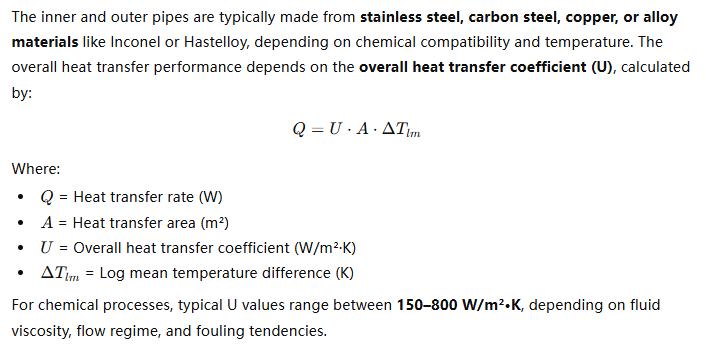
The inner and outer pipes are typically made from stainless steel, carbon steel, copper, or alloy materials like Inconel or Hastelloy, depending on chemical compatibility and temperature. The overall heat transfer performance depends on the overall heat transfer coefficient (U), calculated by:
Application Scenarios Across Chemical and Petrochemical Sectors
| Industry Sector | Typical Application | Fluids Handled | Key Design Material |
|---|---|---|---|
| Petrochemical Refining | Preheating crude or naphtha before cracking | Hydrocarbons, oils | Carbon steel, stainless steel |
| Chemical Production | Cooling reaction mixtures or product streams | Acids, bases, solvents | Stainless steel, Hastelloy |
| Polymer Processing | Heat transfer for polymer melts | Polymers, solvents | Alloy steel |
| Fertilizer Plants | Gas cooling, condensation of ammonia vapors | Ammonia, water | Carbon steel |
| Pharmaceutical & Fine Chemicals | Precise temperature control in batch reactors | Organic solvents, intermediates | SS316L |
The versatility of the double pipe exchanger allows it to be installed horizontally or vertically, integrated with reactors, distillation columns, or storage tanks, and configured in series or parallel arrays to achieve desired temperature changes or throughput.
Double pipe heat exchangers cannot handle corrosive or acidic fluids.False
By using corrosion-resistant materials such as stainless steel, Hastelloy, or Teflon-lined tubes, double pipe exchangers can effectively handle acidic and corrosive process fluids in chemical applications.
Thermal Performance and Flow Configuration Optimization
1. Counterflow vs. Parallel Flow
- Counterflow provides maximum temperature differential and efficiency, ideal for heating and cooling duties.
- Parallel flow is preferred for sensitive chemical systems requiring gradual temperature change or lower thermal stress.
| Flow Configuration | Efficiency | Temperature Gradient | Typical Use |
|---|---|---|---|
| Counterflow | High | Steep | General heating/cooling |
| Parallel flow | Moderate | Gentle | Thermal-sensitive chemicals |
| Crossflow (modified) | Medium | Mixed | Compact retrofit units |
2. Multi-Tube and Modular Designs
In high-duty operations, multiple double pipe modules are arranged in parallel or series, increasing total heat transfer area without compromising control. This modular approach simplifies cleaning and maintenance—essential in petrochemical facilities handling fouling fluids like bitumen or resins.
3. Managing Fouling and Pressure Drop
Chemical fluids often cause fouling, which reduces performance over time. Engineers counteract this through:
- High fluid velocity design (Re > 4000 for turbulence)
- Polished internal surfaces
- Removable tube sections for cleaning
| Parameter | Recommended Range | Remarks |
|---|---|---|
| Reynolds Number | > 4000 | Turbulent regime improves heat transfer |
| Pressure Drop | < 1.5 bar | Prevents excessive pumping costs |
| U-Value | 150–800 W/m²·K | Depends on viscosity and materials |
Energy Recovery and Process Integration Benefits
Double pipe heat exchangers play a vital role in energy recovery across refineries and chemical plants. For example:
- Heat Recovery from Effluent Streams: Hot effluent streams are used to preheat cold feed, improving plant efficiency by up to 25–30%.
- Process-to-Process Integration: By installing compact double pipe exchangers between reactors or separators, energy is conserved, and thermal balance is improved.
- Condensation Duties: Vapor streams (e.g., benzene, methanol) condense effectively in vertical double pipe exchangers, reducing vapor losses.
Double pipe exchangers waste energy compared to shell-and-tube systems.False
Double pipe exchangers achieve excellent energy efficiency at smaller scales, particularly when used in counterflow mode and optimized for heat recovery between process streams.
Case Study: Petrochemical Reactor Cooling System
A petrochemical plant producing ethylene glycol required an efficient cooling system for a hot reaction effluent (at 120°C) using cooling water at 30°C. Engineers installed six double pipe heat exchanger modules in parallel, each with 50 mm inner tubes and 60 mm outer pipes. The configuration achieved a heat recovery efficiency of 92%, reducing cooling water consumption by 40% and operational energy costs by 18%. Maintenance downtime was reduced from 24 hours to 6 hours due to modular disassembly.
This example demonstrates how customized modular double pipe systems deliver measurable economic and performance benefits in petrochemical settings.
Material Selection and Corrosion Resistance Strategies
Selecting the correct material is critical for chemical resistance and longevity. The following table summarizes optimal material choices:
| Fluid Type | Recommended Material | Temperature Limit (°C) | Notes |
|---|---|---|---|
| Hydrocarbons, Oils | Carbon Steel | 300 | Economical and robust |
| Acids (HCl, H₂SO₄) | Hastelloy / Teflon-lined | 200 | Excellent corrosion resistance |
| Solvents (Methanol, Benzene) | SS316L | 250 | Cleanable and durable |
| Alkalis | SS304 | 200 | Good corrosion tolerance |
| Steam / Condensate | Copper or SS316 | 250 | High thermal conductivity |
Carbon steel cannot be used in any chemical heat exchanger application.False
Carbon steel is suitable for non-corrosive fluids such as hydrocarbons and thermal oils; corrosion-resistant alloys are used only when chemical attack is expected.
Control, Maintenance, and Safety Considerations
Safety and operational control are critical in chemical and petrochemical environments. Double pipe exchangers support these requirements through:
- Pressure-tested joints and flanges that prevent leaks.
- Thermocouple or RTD sensors for continuous monitoring.
- Pressure relief and drain valves for maintenance.
- Flanged or threaded connections for quick assembly/disassembly.
The modular design allows individual section isolation for cleaning without halting the entire process, minimizing downtime.
Integration With Process Units
Double pipe exchangers are typically integrated with:
- Reactor Jackets: For feed preheating or effluent cooling.
- Distillation Columns: For reflux condensation or bottom product cooling.
- Storage Tanks: For temperature regulation of stored chemicals.
- Scrubber Systems: For cooling exhaust gases before release or recovery.
Their compact structure allows installation in confined spaces, such as skid-mounted systems or retrofitted sections of existing plants.
Summary
The double pipe heat exchanger stands out as a versatile, reliable, and cost-effective solution for thermal management in chemical and petrochemical processing. Its ability to handle corrosive fluids, operate under high pressure, and maintain precise temperature control makes it indispensable in applications from reactor cooling to energy recovery. The modular design ensures easy maintenance, scalability, and long-term operational efficiency—attributes that make it an engineering favorite across the global chemical industry.
What Roles Do Double Pipe Heat Exchangers Play in the Oil and Gas Industry?
In the oil and gas industry, precise temperature control, process reliability, and energy recovery are fundamental to achieving operational efficiency and maintaining equipment integrity. However, traditional large-scale shell-and-tube heat exchangers can be impractical for small to medium heat transfer duties, especially in offshore platforms, gas processing units, or auxiliary systems where space, maintenance, and cost are critical factors. Without efficient thermal management, operations suffer from energy wastage, fluid instability, corrosion, and reduced process yield. The double pipe heat exchanger provides a compact, robust, and highly adaptable solution, perfectly suited for diverse applications across the upstream, midstream, and downstream segments of oil and gas production.
In the oil and gas industry, double pipe heat exchangers play crucial roles in preheating, cooling, condensing, and heat recovery operations, offering compact design, high reliability, and excellent thermal performance for process fluids such as crude oil, natural gas, condensates, and lubricating oils. Their modular structure and corrosion-resistant construction enable efficient operation under high pressure and temperature, making them ideal for applications such as crude oil preheating, gas dehydration, glycol regeneration, condensate cooling, and lube oil temperature control.
Their ease of maintenance, scalability, and ability to handle high-viscosity fluids or corrosive media make them indispensable in both onshore refineries and offshore platforms. These features contribute directly to reduced downtime, optimized energy utilization, and enhanced operational safety in oil and gas systems.
Double pipe heat exchangers are too small to be used in oil and gas plants.False
Double pipe heat exchangers are widely used in auxiliary and moderate-duty processes in oil and gas facilities, including preheating, cooling, and recovery operations, due to their compactness and durability.
Overview of Double Pipe Heat Exchanger Structure and Operation in Oil & Gas Processing
A double pipe heat exchanger consists of two concentric pipes, where one fluid flows through the inner pipe and the other flows through the annular space between the inner and outer pipes. The fluids can flow either in counterflow (most efficient) or parallel flow configurations depending on process requirements.
In oil and gas applications:
- Hot process fluids such as crude oil, condensate, or hydrocarbons are cooled using seawater, glycol, or other coolants.
- Cold feedstocks are preheated using waste heat from hot streams or exhaust gases.
- Condensation or vaporization processes utilize double pipe exchangers to handle phase-change duties with high reliability.
Their high-pressure design (up to 100 bar) and temperature tolerance (up to 500°C) make them suitable for extreme oilfield and refinery environments. The compact cylindrical structure allows installation in confined spaces, including offshore rigs, skid-mounted units, and remote oilfield setups.
Key Applications of Double Pipe Heat Exchangers in Oil and Gas Facilities
| Application Area | Function | Example Fluids | Benefits |
|---|---|---|---|
| Crude Oil Preheating | Heating crude before separation or distillation | Crude oil, water | Improves separation efficiency |
| Natural Gas Cooling | Cooling gas after compression or dehydration | Natural gas, glycol | Reduces downstream temperature |
| Condensate Recovery | Condensing vaporized hydrocarbons | Condensates, LPG | Recovers valuable hydrocarbons |
| Lube Oil Cooling | Maintaining stable lubricant temperature | Lubricating oil | Protects rotating equipment |
| Glycol Regeneration | Heating glycol for dehydration cycles | MEG, TEG | Increases water removal efficiency |
| Fuel Gas Conditioning | Controlling gas temperature before combustion | Fuel gas | Enhances combustion efficiency |
Double pipe exchangers cannot handle high-pressure hydrocarbon systems.False
Properly designed double pipe exchangers are built to withstand high pressures (up to 100 bar) and are widely used in high-pressure hydrocarbon systems.
Thermal Efficiency and Flow Characteristics
The counterflow design is the most common in oil and gas systems because it allows maximum temperature difference and improved energy recovery. The thermal performance is characterized by the overall heat transfer coefficient (U), which depends on flow velocity, fluid viscosity, and pipe material. The heat transfer rate is defined by:
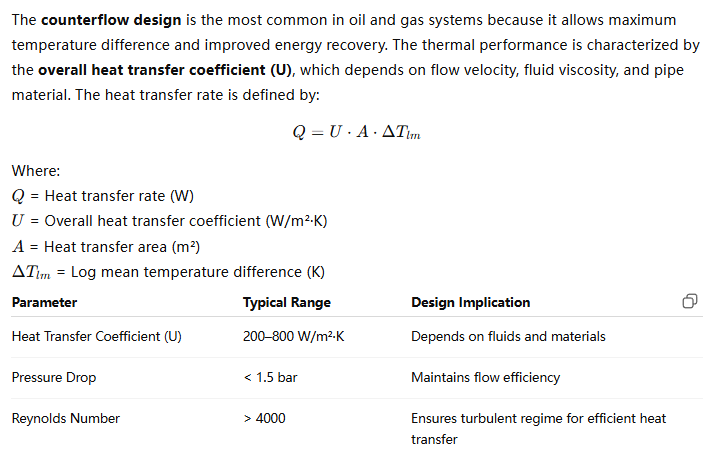
The turbulent flow regime minimizes fouling and maintains consistent heat transfer rates—critical for viscous hydrocarbon fluids.
Material Selection and Corrosion Resistance in Harsh Environments
Oil and gas processes often expose equipment to corrosive fluids, saltwater, and sour gases (H₂S). Therefore, material selection is key to exchanger durability and performance.
| Fluid/Environment | Recommended Material | Temperature Range (°C) | Notes |
|---|---|---|---|
| Crude oil, condensate | Carbon steel / SS304 | up to 350 | Economical, robust |
| Sour gas / H₂S service | Inconel / Duplex SS | up to 400 | Corrosion-resistant |
| Seawater cooling | Cu-Ni alloy / Titanium | up to 250 | Resists marine corrosion |
| Glycol regeneration | SS316L | up to 300 | Clean and corrosion-resistant |
| Lube oil | Carbon steel / SS304 | up to 200 | High thermal conductivity |
Stainless steel double pipe exchangers corrode quickly in offshore applications.False
High-grade stainless steels such as SS316L or duplex alloys are specifically designed to resist chloride-induced corrosion in offshore and marine environments.
Advantages of Double Pipe Heat Exchangers for Oil & Gas Operations
1. Compact and Modular Design
Space is a critical constraint on offshore platforms and skid-mounted systems. Double pipe exchangers are compact, modular, and easy to integrate within limited footprints, enabling installation in constrained spaces without performance compromise.
2. High Pressure and Temperature Tolerance
Their thick-walled pipes and strong flanged connections allow operation under extreme conditions common in oil refineries and gas compression stations.
3. Minimal Fouling and Easy Cleaning
Smooth internal surfaces reduce scaling and wax deposition. When fouling does occur, the units can be disassembled and mechanically cleaned—a major advantage over plate or spiral exchangers.
4. Cost-Effective Maintenance
Individual modules can be isolated for maintenance without shutting down entire systems, reducing downtime and operational losses.
| Feature | Double Pipe | Shell & Tube | Plate |
|---|---|---|---|
| Cleaning | Easy | Moderate | Difficult for fouling fluids |
| Maintenance Cost | Low | High | Moderate |
| Space Requirement | Small | Large | Medium |
| Pressure Tolerance | High | Very High | Moderate |
| Ideal Application | Moderate heat loads | Large-scale processes | Clean fluids |
Typical Configurations and Integration Points
Double pipe exchangers are often installed in series or parallel configurations depending on desired temperature control or throughput.
| Configuration | Description | Application Example |
|---|---|---|
| Series | Multiple exchangers connected sequentially | Multi-stage crude oil heating |
| Parallel | Two or more exchangers handling separate streams | High-volume natural gas cooling |
| Combined (Hybrid) | Series + parallel layout | Multi-fluid process cooling |
This flexibility enables stepwise heating, controlled cooling, and gradual energy recovery, aligning with the process design of refineries and gas plants.
Double pipe heat exchangers cannot be scaled for high flow rates.False
Multiple double pipe exchangers can be installed in parallel to increase flow capacity while maintaining efficiency.
Case Study: Offshore Gas Dehydration Unit
In a North Sea offshore gas platform, engineers implemented eight double pipe heat exchanger modules for cooling gas after glycol dehydration. Each unit handled 120 m³/h of gas at 45 bar, with seawater as the cooling medium. The result was:
- Gas outlet temperature reduction: from 75°C to 35°C
- Thermal efficiency: 93%
- Footprint savings: 40% compared to shell-and-tube systems
- Maintenance reduction: cleaning time decreased by 60%
This modular installation achieved high reliability under constrained space, proving the technology’s suitability for offshore applications.
Safety, Maintenance, and Operational Control
In oil and gas environments, safety and operability are paramount. Double pipe exchangers meet these standards through:
- High-pressure tested joints and flanges to prevent leaks.
- Thermal sensors and pressure gauges for continuous monitoring.
- Emergency drain and vent valves to control high-pressure releases.
- Quick disassembly design for cleaning or replacement without disrupting operations.
They also comply with international standards such as ASME, API, and TEMA, ensuring safe operation in high-risk environments.
Energy Efficiency and Sustainability Impact
Double pipe exchangers contribute significantly to energy recovery and sustainability in the oil and gas industry:
- Heat Recovery: Preheating cold feeds using hot effluents saves up to 25–35% energy.
- Reduced Emissions: Lower energy demand translates to reduced CO₂ emissions.
- Process Optimization: Improved thermal balance enhances overall process yield and stability.
For refineries implementing sustainability initiatives, integrating double pipe exchangers into heat recovery loops or waste-heat systems provides rapid payback through lower operational costs.
Double pipe exchangers provide little benefit for energy recovery in refineries.False
In refinery systems, double pipe exchangers can recover significant waste heat from process streams, improving overall thermal efficiency and reducing energy costs.
Summary
The double pipe heat exchanger is a cornerstone of oil and gas thermal management systems, combining compactness, reliability, and high performance under demanding operating conditions. From crude oil preheating and gas cooling to glycol regeneration and condensate recovery, it ensures efficient heat exchange while minimizing maintenance and operational risks. Its modular, corrosion-resistant design makes it particularly valuable for offshore, skid-mounted, and auxiliary systems where space and reliability are critical.
Through intelligent engineering and material selection, these exchangers deliver long-term, energy-efficient performance across the entire oil and gas value chain.
How Are Double Pipe Heat Exchangers Applied in the Food and Beverage Industry?
In the food and beverage industry, maintaining precise temperature control, hygiene, and product quality is critical. Improper heat treatment can result in microbial contamination, nutrient degradation, or product spoilage, directly affecting consumer safety and brand integrity. Traditional shell-and-tube exchangers, while effective, can be difficult to clean or too large for sensitive product lines. The double pipe heat exchanger, with its hygienic, compact, and high-efficiency design, provides a robust solution for heating, cooling, and pasteurization processes—ensuring safety, flavor retention, and consistency while meeting strict sanitary standards.
Double pipe heat exchangers are applied in the food and beverage industry for precise, hygienic, and energy-efficient heating, cooling, and pasteurization of liquid and viscous products such as milk, juices, sauces, syrups, and oils. Their sanitary stainless steel construction, smooth internal surfaces, and easy-to-clean design ensure compliance with food safety standards (3A, FDA, EHEDG). They offer excellent control over process temperatures, minimize fouling, and maintain the sensory and nutritional quality of sensitive food products.
Their modular nature allows easy integration into continuous processing lines, pilot plants, or batch systems. Whether used for preheating milk before pasteurization, cooling fruit juices, or heating viscous tomato concentrates, the double pipe heat exchanger ensures safe, consistent, and energy-efficient thermal treatment tailored to the unique needs of food and beverage operations.
Double pipe heat exchangers are not suitable for food-grade processing.False
Double pipe heat exchangers are available in sanitary stainless steel designs with polished surfaces and CIP (Clean-in-Place) compatibility, making them fully suitable for food-grade processing.
Design and Operation of Double Pipe Heat Exchangers for Food Applications
A double pipe heat exchanger consists of an inner pipe that carries the product and an outer pipe that carries the heating or cooling medium (usually hot water, steam, or chilled glycol). Heat transfer occurs through the pipe wall via conduction and convection. For food and beverage applications, counterflow configuration is preferred, as it provides maximum temperature difference and efficiency without exposing the product to thermal shock.
| Design Feature | Description | Importance |
|---|---|---|
| Construction Material | Stainless Steel 304/316L | Hygienic, corrosion-resistant |
| Surface Finish | Polished (<0.8 μm Ra) | Prevents microbial adhesion |
| Joint Type | Orbital welded / sanitary clamp | Ensures smooth flow and easy cleaning |
| Flow Configuration | Counterflow / Parallel | Adaptable for process needs |
| Cleaning System | CIP/SIP compatible | Ensures hygiene and reduces downtime |
These exchangers are often modular, allowing multiple units to be connected in series or parallel to increase capacity or control temperature profiles precisely for sensitive foods like dairy or fruit juice.
Typical Applications in the Food and Beverage Sector
| Product Type | Application | Objective | Heating/Cooling Medium |
|---|---|---|---|
| Milk & Dairy | Pasteurization, cooling | Kill pathogens, preserve quality | Hot water, chilled water |
| Juices & Beverages | Preheating, cooling | Maintain flavor and nutrients | Hot water, glycol |
| Tomato Sauce & Purees | Heating, concentration | Achieve viscosity and sterilization | Steam |
| Oils & Fats | Heating before filtration | Reduce viscosity | Thermal oil |
| Beer & Wine | Wort cooling, fermentation temperature control | Maintain taste stability | Chilled glycol |
| Syrups & Honey | Controlled heating | Prevent crystallization | Warm water |
The double pipe heat exchanger’s ability to handle both liquid and viscous food products makes it a versatile component across processing lines, especially where hygiene, gentle handling, and temperature accuracy are vital.
Double pipe heat exchangers can only handle low-viscosity fluids.False
Double pipe exchangers are designed with variable pipe diameters and can effectively handle both low- and high-viscosity products such as tomato paste, syrups, and yogurt.
Advantages of Double Pipe Heat Exchangers in Food and Beverage Processing
1. Hygienic and Sanitary Design
- Constructed entirely from food-grade stainless steel with polished internal surfaces.
- CIP (Clean-in-Place) and SIP (Sterilize-in-Place) compatibility ensures complete cleaning and sterilization between batches.
- Minimal dead zones prevent product stagnation and microbial growth.
2. Gentle Product Treatment
The smooth laminar flow within the inner tube minimizes shear stress, preserving texture and flavor—essential for delicate foods like cream, sauces, and beverages.
3. Compact and Modular
Easily integrated into small or large processing lines, double pipe exchangers are ideal for modular expansion, pilot testing, or energy recovery units.
4. High Thermal Efficiency
The counterflow design maximizes heat transfer while minimizing energy use, achieving temperature efficiencies up to 90–95% in some pasteurization applications.
| Advantage | Impact on Process |
|---|---|
| Hygienic design | Ensures food safety and compliance |
| Compact form | Saves plant floor space |
| Modular scalability | Allows capacity adjustments |
| High efficiency | Reduces operating energy costs |
| Easy maintenance | Minimizes downtime |
Thermal Performance and Process Optimization
The key to efficient food processing lies in optimizing heat transfer and flow regimes. Double pipe exchangers allow control of flow rate, temperature gradient, and pressure drop to maintain product integrity.
| Parameter | Typical Value | Effect |
|---|---|---|
| Overall Heat Transfer Coefficient (U) | 300–1000 W/m²·K | High for milk, juice, and water-like fluids |
| Pressure Drop | < 1 bar | Maintains product flow stability |
| Product Flow Velocity | 1–3 m/s | Ensures uniform heat transfer |
| Surface Roughness | < 0.8 μm Ra | Reduces fouling and microbial growth |
Parallel flow in double pipe heat exchangers is more efficient than counterflow for pasteurization.False
Counterflow configuration provides a higher log mean temperature difference (LMTD), making it more efficient than parallel flow in pasteurization and heating applications.
For food applications, temperature precision is critical. For example, in milk pasteurization, maintaining a precise temperature of 72°C for 15 seconds ensures complete pathogen elimination without altering the product’s flavor or texture.
Case Study: Dairy Pasteurization with Double Pipe Heat Exchangers
A medium-scale dairy plant implemented a stainless steel double pipe heat exchanger for pasteurizing 5,000 liters/hour of milk. The system operated with hot water (85°C) in counterflow against cold raw milk (5°C). The results included:
- Heat transfer efficiency: 94%
- Energy savings: 22% compared to plate heat exchangers
- Cleaning time reduction: 35%
- Bacterial count after pasteurization: <10 CFU/mL (within regulatory limits)
This case illustrates how double pipe systems deliver consistent pasteurization performance with simplified maintenance and long-term operational savings.
Material and Surface Treatment for Food Safety
| Component | Material | Surface Finish | Function |
|---|---|---|---|
| Inner Tube | SS316L | Polished ≤ 0.8 μm Ra | Food contact surface |
| Outer Tube | SS304 | Polished | Carrying heating/cooling medium |
| Joints | Sanitary tri-clamp | Smooth, crevice-free | Hygienic connection |
| Seals | EPDM or PTFE (food-grade) | Resistant to thermal and chemical cleaning | Prevent leakage |
| End Caps | Quick-release | Easy inspection and cleaning | Maintenance efficiency |
All surfaces in contact with the product comply with FDA, 3A Sanitary, and EHEDG standards to guarantee hygienic operation and food safety.
Carbon steel double pipe exchangers can be used safely for milk pasteurization.False
Carbon steel is not food-grade; stainless steel (SS304 or SS316L) is required to ensure hygienic conditions and prevent contamination.
Integration with Food Process Systems
Double pipe exchangers can be integrated into various processing steps, such as:
- Preheating before pasteurization or sterilization
- Cooling after pasteurization or filling
- Heat recovery between hot and cold product streams
- Temperature control in fermentation or concentration units
Their modular design supports flexible process configurations—either single-pass for continuous flow or multi-pass for higher temperature changes.
| Configuration | Flow Type | Common Use |
|---|---|---|
| Single-Pass Counterflow | Continuous flow heating/cooling | Milk, juice |
| Multi-Pass Series | Higher temperature differential | Tomato sauce, syrup |
| Parallel Units | Large throughput systems | Beverages, dairy fluids |
Energy Efficiency and Sustainability Benefits
Energy optimization is a major goal in food production. Double pipe exchangers contribute by:
- Recovering waste heat from hot effluents to preheat incoming cold products.
- Reducing steam or cooling water consumption.
- Lowering operational energy costs and CO₂ emissions.
Studies show that plants using double pipe exchangers for milk preheating and cooling can reduce overall thermal energy use by 20–35% while improving process consistency.
Double pipe exchangers cannot be part of sustainable food manufacturing processes.False
Their high heat recovery efficiency and low maintenance requirements make double pipe exchangers an important component in sustainable and energy-efficient food manufacturing.
Summary
In summary, double pipe heat exchangers provide an ideal combination of hygienic design, energy efficiency, and gentle product handling, perfectly suited for the food and beverage industry. Their stainless steel construction, easy cleaning, and modular adaptability ensure compliance with strict food safety standards while minimizing operating costs. Whether in dairy, beverages, sauces, or edible oil processing, these exchangers enable precise temperature control that preserves flavor, color, and nutrition—key to maintaining product excellence and consumer trust.
Why Are Double Pipe Heat Exchangers Suitable for HVAC and Cooling Systems?
Modern HVAC (Heating, Ventilation, and Air Conditioning) systems require efficient, compact, and reliable heat exchange solutions to maintain comfortable indoor climates while reducing energy consumption. However, traditional shell-and-tube or plate heat exchangers can be bulky, expensive, and difficult to maintain in smaller or decentralized cooling systems. Without an efficient heat transfer solution, buildings face unstable temperature control, excessive energy use, and reduced system longevity. The double pipe heat exchanger offers an ideal alternative—compact, durable, and easy to maintain—delivering consistent performance in both heating and cooling circuits for residential, commercial, and industrial HVAC systems.
Double pipe heat exchangers are suitable for HVAC and cooling systems because they provide efficient, space-saving, and cost-effective heat transfer between fluids such as water, glycol, oil, and refrigerants, while ensuring easy maintenance and high reliability. Their simple counterflow or parallel flow design allows precise temperature regulation in systems like chilled water loops, condenser water cooling, and heat recovery circuits. Their modular structure, corrosion-resistant materials, and flexibility make them a preferred choice in both centralized and decentralized HVAC installations.
These exchangers offer high performance under moderate temperature and pressure conditions, making them invaluable for applications such as chiller subcooling, glycol-to-water heat transfer, waste heat recovery, and air handling unit (AHU) coil preconditioning.
Double pipe heat exchangers are not used in HVAC or cooling systems.False
Double pipe heat exchangers are extensively used in HVAC and cooling applications such as chilled water systems, condenser cooling, and waste heat recovery due to their efficiency and compact design.
How Double Pipe Heat Exchangers Function in HVAC Applications
A double pipe heat exchanger consists of two concentric pipes—an inner tube for one fluid (usually refrigerant, chilled water, or oil) and an outer pipe for another fluid (such as cooling water or glycol). Heat transfers across the inner tube wall from the hotter to the colder fluid through conduction and convection.
In HVAC systems, these units are commonly arranged in counterflow configuration, which maximizes the temperature difference and thus heat exchange efficiency. The following key functions are typically served:
| HVAC Function | Description | Example Fluids |
|---|---|---|
| Chilled Water Cooling | Removes heat from air or process systems | Water/Glycol–Water |
| Condenser Heat Rejection | Cools refrigerant vapor into liquid | Refrigerant–Water |
| Heat Recovery | Transfers waste heat from one loop to another | Hot Water–Return Air Loop |
| Oil Cooling in Compressors | Maintains lubrication temperature | Oil–Water |
| De-superheating | Reduces refrigerant superheat before expansion | Refrigerant–Water |
The exchanger’s compact form and ability to handle moderate pressures (up to 50 bar) and wide temperature ranges (−30°C to 250°C) make it ideal for both liquid-to-liquid and refrigerant-to-liquid heat exchange duties.
Key Advantages of Double Pipe Heat Exchangers in HVAC Systems
1. Compact and Space-Efficient
Double pipe exchangers have a slim, tubular design, ideal for installations with limited mechanical room space or within AHU housings. They can be mounted horizontally or vertically and easily integrated into modular systems.
2. High Energy Efficiency
In counterflow configuration, the temperature differential between fluids remains nearly constant, achieving up to 90–95% thermal effectiveness in well-designed systems.
3. Simple Maintenance
The unit’s straightforward structure—comprising only two tubes—makes inspection, cleaning, and maintenance simple. This feature is valuable in HVAC systems requiring periodic descaling or anti-corrosion cleaning.
4. Durability and Longevity
Constructed from stainless steel, copper, or carbon steel, these exchangers resist corrosion, thermal cycling, and mechanical vibration common in HVAC service.
| Feature | Benefit |
|---|---|
| Compact Design | Saves space in mechanical rooms |
| Modular Assembly | Easy capacity expansion |
| High Efficiency | Reduces energy consumption |
| Simple Maintenance | Quick inspection and cleaning |
| Cost-Effective | Lower capital and maintenance costs |
Double pipe heat exchangers are difficult to maintain compared to plate exchangers.False
Double pipe exchangers have a simple two-pipe structure that can be easily disassembled for inspection or mechanical cleaning, making maintenance straightforward.
Technical Performance Parameters
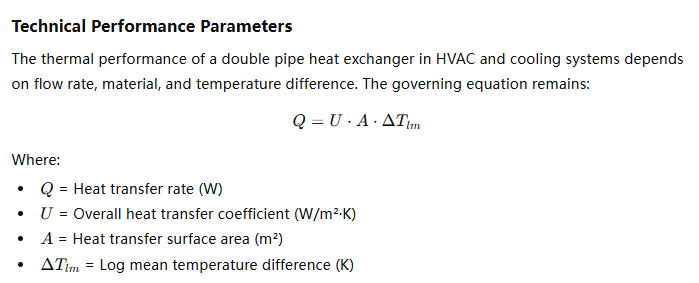
The thermal performance of a double pipe heat exchanger in HVAC and cooling systems depends on flow rate, material, and temperature difference. The governing equation remains:
| Parameter | Typical Range | Remarks |
|---|---|---|
| Heat Transfer Coefficient (U) | 300–800 W/m²·K | Depends on fluid and flow regime |
| Pressure Rating | Up to 50 bar | Suitable for refrigerant service |
| Temperature Range | −30°C to 250°C | Wide HVAC operating range |
| Flow Rate | 1–100 m³/h | Modular scalability |
| Efficiency | 85–95% | Counterflow configuration recommended |
These exchangers can be custom-sized for specific HVAC system capacities, ensuring optimized performance for both small building units and large industrial cooling plants.
Typical HVAC and Cooling Applications
| Application | Process Description | Benefit |
|---|---|---|
| Chilled Water Loop | Transfers heat between process water and chilled water | Energy-efficient cooling |
| Condenser Water Cooling | Cools refrigerant vapor to liquid phase | Increases chiller COP |
| Heat Recovery Unit | Transfers waste heat from return air to fresh air | Reduces energy loss |
| AHU Coil Preconditioning | Stabilizes air inlet temperature | Improves indoor air comfort |
| Compressor Oil Cooling | Maintains lubricant at safe temperature | Protects compressor life |
For example, in a chilled water loop, a double pipe heat exchanger can efficiently cool process water from 20°C to 7°C using chilled glycol from a chiller system, achieving high energy recovery with minimal footprint.
Double pipe heat exchangers cannot handle refrigerants in HVAC systems.False
Properly designed double pipe exchangers made from copper or stainless steel can safely handle refrigerants such as R134a, R410A, and ammonia under high pressure.
Comparative Analysis with Other HVAC Heat Exchangers
| Exchanger Type | Size | Maintenance | Cost | Efficiency | Common Use |
|---|---|---|---|---|---|
| Double Pipe | Compact | Easy | Low | High | Modular HVAC systems |
| Shell & Tube | Large | Moderate | Medium | High | Central chiller plants |
| Plate | Compact | Moderate | Medium | Very High | Clean water circuits |
| Coil Heat Exchanger | Compact | Easy | Low | Medium | AHUs and condensers |
The double pipe exchanger is preferred where space constraints, mixed fluid compatibility, or moderate heat loads are key concerns, such as in rooftop units, packaged HVAC modules, or cooling towers.
Material Selection and Corrosion Control
Material selection is vital to ensure long-term reliability in HVAC and cooling systems, especially where fluids like glycol or seawater are used.
| Fluid Type | Recommended Material | Max Temperature (°C) | Remarks |
|---|---|---|---|
| Water / Glycol | Copper / SS304 | 150 | Excellent heat conductivity |
| Seawater | Titanium / Cu-Ni | 200 | Resists marine corrosion |
| Refrigerants | Copper / SS316 | 250 | Handles pressure and chemical compatibility |
| Thermal Oil | Carbon Steel / SS316L | 300 | Suitable for heating loops |
Surface polishing and passivation treatments further reduce fouling and corrosion in long-term operation.
Copper tubes are not suitable for chilled water heat exchangers.False
Copper is commonly used in chilled water applications due to its high thermal conductivity and corrosion resistance in non-aggressive environments.
Case Study: Chiller System Energy Recovery
In a commercial office HVAC plant, engineers installed double pipe heat exchangers to recover heat from the chiller’s condenser circuit and preheat incoming domestic hot water. The results included:
- Energy savings: 28% annual reduction in boiler fuel usage
- Return on investment: < 2 years
- System reliability: 99% uptime with no corrosion failures
- Temperature lift: 25°C achieved in hot water loop
This application demonstrates the potential for double pipe exchangers to enhance sustainability and efficiency in HVAC energy management.
Integration and Control Strategies
Double pipe heat exchangers integrate easily into building management systems (BMS) or industrial PLCs for automated control. Temperature sensors, flow meters, and control valves can modulate flow rates for variable load conditions, improving system responsiveness and energy optimization.
| Integration Type | Control Method | Example |
|---|---|---|
| BMS Integration | PID-based control | AHU preconditioning loop |
| Manual Bypass | Valve-based control | Auxiliary cooling circuit |
| Automated Flow Switching | Variable frequency pump | Adaptive thermal load control |
Energy and Environmental Benefits
Double pipe exchangers contribute to sustainable HVAC design by:
- Enabling waste heat recovery from condenser loops.
- Reducing energy demand in chillers and boilers.
- Minimizing refrigerant usage and system losses.
- Supporting LEED and ISO 50001 energy management certifications.
Energy modeling studies show potential annual energy savings between 15–30% when double pipe exchangers are integrated into hybrid HVAC systems.
Double pipe exchangers have minimal impact on HVAC energy efficiency.False
When used for heat recovery, double pipe exchangers can significantly reduce HVAC energy consumption by improving temperature transfer efficiency and lowering system load.
Summary
In summary, double pipe heat exchangers play a vital role in HVAC and cooling systems due to their compact design, reliability, and high thermal performance. They provide effective heat exchange between fluids in chilled water loops, condenser systems, and heat recovery circuits. Their simplicity allows easy maintenance and integration into both small commercial units and large industrial HVAC installations. With their energy-saving capabilities and adaptability to various fluids, they contribute significantly to sustainable, efficient, and cost-effective climate control systems.
How Do Double Pipe Heat Exchangers Support Pharmaceutical and Biotech Processes?
In the pharmaceutical and biotechnology industries, where temperature precision, sterility, and product purity are non-negotiable, even the smallest deviation can compromise entire batches, damage sensitive biomolecules, or violate GMP (Good Manufacturing Practice) regulations. Processes such as fermentation, purification, crystallization, and formulation demand strict thermal control to ensure consistent product quality and biological integrity. Conventional heat exchangers can suffer from cross-contamination risks or cleaning challenges in sterile environments. The double pipe heat exchanger, however, offers a compact, hygienic, and easily sterilizable solution that ensures accurate, reproducible, and contamination-free thermal exchange — essential for pharmaceutical and biotech production environments.
Double pipe heat exchangers support pharmaceutical and biotech processes by providing sterile, controllable, and efficient heat transfer for heating, cooling, and temperature stabilization of fluids, media, and bioproducts under GMP-compliant conditions. Their sanitary stainless steel design, crevice-free construction, and CIP/SIP (Clean-in-Place / Sterilize-in-Place) capabilities ensure aseptic operation, preventing microbial growth and cross-contamination. They are widely used in media preparation, fermentation temperature control, buffer solution conditioning, vaccine production, and purification steps, where maintaining bioproduct quality and process reproducibility is paramount.
Their high surface finish (≤0.4 μm Ra), orbital-welded joints, and FDA/EHEDG-compliant materials make them indispensable components in temperature-sensitive biopharmaceutical manufacturing systems.
Double pipe heat exchangers are not suitable for sterile pharmaceutical processes.False
Double pipe heat exchangers with sanitary stainless steel construction, polished surfaces, and CIP/SIP compatibility are fully suitable for sterile pharmaceutical and biotech processes under GMP standards.
Design Features for Pharmaceutical and Biotech Applications
In biopharmaceutical plants, sterility, material compatibility, and precision control dictate heat exchanger selection. The double pipe design — consisting of an inner and outer tube — ensures complete isolation of product and utility fluids, preventing any chance of contamination.
| Feature | Description | Pharmaceutical Benefit |
|---|---|---|
| Material | Stainless steel 316L or Hastelloy | Resistant to corrosion and compliant with FDA standards |
| Surface Finish | ≤0.4 μm Ra electropolished | Minimizes biofilm formation |
| Construction | Seamless, orbital welded | Eliminates crevices and dead zones |
| Flow Configuration | Counterflow | Maximizes thermal efficiency |
| Cleaning System | CIP/SIP compatible | Maintains sterility between batches |
In pharmaceutical and biotech environments, crevice-free construction and full drainability are critical for preventing cross-contamination. The smooth inner surfaces enable complete draining of fluids and rapid sterilization cycles.
Typical Pharmaceutical and Biotech Applications
| Process | Application Role | Heat Exchanger Duty | Operating Medium |
|---|---|---|---|
| Media Preparation | Heating or cooling growth media | Ensure optimal fermentation start temperature | Hot/chilled water |
| Fermentation | Temperature control during microbial growth | Maintain constant bioreactor temperature | Glycol-water loop |
| Buffer Solution Preparation | Temperature conditioning | Stabilize buffer properties | Hot water/cold brine |
| Vaccine Production | Pasteurization or cooling | Protect sensitive proteins | WFI (Water for Injection) |
| Crystallization & Separation | Controlled cooling | Promote desired crystal formation | Chilled glycol |
| Lyophilization Support | Cooling compressor oil and fluids | Maintain stable vacuum temperature | Refrigerant loop |
For example, during fermentation, microbial growth generates metabolic heat that must be dissipated rapidly. A double pipe heat exchanger precisely controls bioreactor temperature, preventing denaturation of enzymes or loss of viability.
Fermentation processes in biotech plants do not require external cooling.False
Fermentation generates metabolic heat that must be removed to maintain optimal cell growth temperature; double pipe exchangers provide precise temperature control for this purpose.
Technical Specifications for Pharmaceutical Use
| Parameter | Typical Range | Relevance |
|---|---|---|
| Design Pressure | Up to 20 bar | Suitable for pressurized bioprocess fluids |
| Operating Temperature | −20°C to 200°C | Compatible with hot and cold CIP/SIP cycles |
| Surface Roughness | ≤0.4 μm Ra | Meets pharmaceutical-grade hygiene |
| Flow Velocity | 1–2.5 m/s | Prevents fouling and ensures laminar flow |
| Thermal Efficiency | 85–95% | Ideal for precision process control |
| Heat Transfer Coefficient (U) | 500–1200 W/m²·K | High for water-based fluids |
Advantages of Double Pipe Heat Exchangers in Bioprocessing
1. Absolute Cleanability and Sterilization
- Fully CIP/SIP compatible, ensuring total removal of residues between batches.
- Polished stainless steel surfaces eliminate microbial niches.
- Designed for drainability and zero dead legs, critical for sterile process validation.
2. Precision Temperature Control
Maintaining tight thermal control within ±0.1°C is possible, preventing degradation of heat-sensitive biological materials such as enzymes, antibodies, and nucleic acids.
3. Flexibility and Scalability
Modular configuration allows single or multi-pass systems adaptable from laboratory pilot scale to full GMP production.
4. Compliance and Documentation
Meets global pharmaceutical standards: FDA, 3A Sanitary, ASME BPE, and EHEDG, with traceable materials and full documentation (DQ, IQ, OQ, PQ).
| Advantage | Pharmaceutical Impact |
|---|---|
| Aseptic design | Ensures contamination-free processing |
| Polished surfaces | Prevent biofilm and residue buildup |
| CIP/SIP compatibility | Supports batch-to-batch cleanliness |
| Modular structure | Simplifies scale-up from R&D to production |
| Material traceability | Facilitates GMP validation and audits |
Pharmaceutical-grade heat exchangers can be constructed from carbon steel.False
Carbon steel is not biocompatible or corrosion-resistant; pharmaceutical-grade heat exchangers must be made from stainless steel 316L or higher alloys to meet hygiene and GMP standards.
Comparative Table: Heat Exchanger Types in Pharmaceutical Applications
| Type | Sanitary Level | Efficiency | Cleaning Difficulty | Typical Use |
|---|---|---|---|---|
| Double Pipe | Very High | High | Easy | Small to medium systems, batch processes |
| Shell & Tube | Moderate | High | Moderate | Large capacity WFI systems |
| Plate Heat Exchanger | High | Very High | Moderate | CIP/SIP loops, utilities |
| Coil Type | Low | Medium | Difficult | Non-sterile auxiliary processes |
The double pipe design is particularly suitable for smaller, critical process units such as fermentation, crystallization, or media handling, where direct cleaning access and validation are essential.
Case Study: Bioreactor Temperature Control
A biopharmaceutical fermentation facility used double pipe heat exchangers to maintain 37°C fermentation temperature for a recombinant protein process. The system utilized a chilled glycol-water loop (5°C) flowing through the outer pipe, while the bioreactor fluid circulated inside the inner tube. Results showed:
- Temperature stability: ±0.1°C
- Product yield increase: 7.8%
- CIP cycle time reduction: 25%
- Zero contamination events over 24 months of operation
This illustrates the precision, reliability, and hygiene benefits that double pipe exchangers bring to bioprocess temperature control.
Integration with Pharmaceutical Process Systems
| Integration Point | Purpose | Controlled Variable |
|---|---|---|
| Upstream (Fermentation) | Media heating/cooling | Culture temperature |
| Midstream (Purification) | Buffer temperature conditioning | Process stability |
| Downstream (Formulation) | Vaccine cooling | Product integrity |
| Utility Systems | Hot/chilled WFI control | System energy efficiency |
Modern PLC-controlled CIP/SIP systems automate the cleaning and sterilization of double pipe exchangers, ensuring reproducibility and reducing operator intervention.
Energy Efficiency and Sustainability in GMP Environments
Energy optimization in pharmaceutical facilities is increasingly crucial for ESG compliance. Double pipe heat exchangers contribute by:
- Enabling heat recovery between hot and cold process streams.
- Reducing steam and chilled water consumption.
- Supporting continuous manufacturing strategies with stable energy loads.
| Efficiency Factor | Description | Energy Saving Potential |
|---|---|---|
| Counterflow Design | Maximizes LMTD | 15–25% |
| Heat Recovery | Waste heat utilization | 20–30% |
| Modular Installation | Optimized for variable load | 10–15% |
Pharmaceutical processes do not benefit from heat recovery systems.False
Pharmaceutical facilities can significantly reduce utility costs by integrating heat recovery systems, including double pipe exchangers, for water heating and cooling circuits.
Validation, Compliance, and Quality Control
Pharmaceutical-grade double pipe exchangers undergo rigorous validation including:
- DQ/IQ/OQ/PQ (Design, Installation, Operational, and Performance Qualification).
- Surface integrity tests (Ra verification, boroscope inspection).
- Pressure and leak testing under ASME standards.
- Full material traceability through certificates (EN 10204 3.1).
This documentation ensures full regulatory compliance under GMP, FDA CFR 21 Part 210/211, and EMA Annex 15 guidelines.
Advanced Configurations for Biotech Systems
Advanced biotech applications often employ:
- Jacketed double pipe exchangers for precise thermal modulation in protein crystallization.
- Multi-pass configurations for large-scale purification or buffer preparation.
- Submerged double pipe coils for direct bioreactor heat management.
These designs integrate seamlessly with bioreactors, chromatography units, and lyophilization lines, enabling flexible thermal management within sterile boundaries.
Double pipe heat exchangers cannot achieve precise temperature control for biopharmaceutical fluids.False
Due to their high surface area-to-volume ratio and counterflow operation, double pipe exchangers can maintain bioprocess fluid temperatures with precision better than ±0.1°C.
Summary
In summary, double pipe heat exchangers play an essential role in pharmaceutical and biotech process temperature management, ensuring sterility, precision, and efficiency. Their sanitary construction, modular scalability, and CIP/SIP compatibility make them indispensable in processes from media preparation to final formulation. Compared to larger exchangers, their simple yet hygienic design provides optimal control, minimal contamination risk, and easy validation—key requirements in GMP-compliant manufacturing environments. By enhancing thermal stability, process reproducibility, and energy efficiency, double pipe exchangers directly support the advancement of biopharmaceutical innovation and quality assurance.
In conclusion, the double pipe heat exchanger remains one of the most practical and versatile heat exchangers for industries seeking reliability, efficiency, and ease of maintenance. Its modular design allows customization for diverse operating conditions, ensuring consistent thermal performance across applications.
Ready to improve your process efficiency with the right heat exchanger solution?
👉 Contact us today for professional consultation, custom design, and competitive manufacturing solutions tailored to your industrial needs.