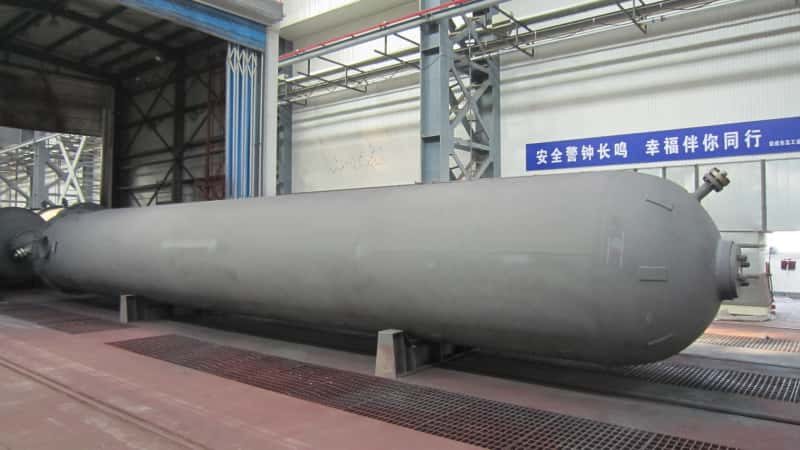

In a world increasingly reliant on clean and consistent energy, understanding how nuclear reactors work is essential for industries, policymakers, and consumers alike. Misconceptions about their safety, complexity, and environmental impact often lead to fear or hesitation around nuclear power. Yet, reactors are one of the most efficient and powerful sources of energy when properly designed and maintained. To harness their potential safely and responsibly, it’s crucial to understand their fundamentals. This article provides a practical and authoritative explanation of what reactors are and how they operate.
Reactors, specifically nuclear reactors, are devices designed to initiate, control, and sustain nuclear fission reactions to generate energy, typically in the form of heat, which is then used to produce electricity. They function by using fuel (usually uranium or plutonium), a moderator to slow down neutrons, control rods to regulate the reaction rate, a coolant to transfer heat, and a pressure vessel or containment structure to house the process safely.

Understanding the basic mechanics of reactors is essential for industries considering nuclear options, educational institutions teaching energy science, or curious individuals seeking to debunk myths and understand their real-world applications.
What Is a Nuclear Reactor and What Is Its Primary Function?
Energy generation today faces pressing challenges: fossil fuels are depleting, renewable sources are intermittent, and carbon emissions threaten global climate stability. Many industrialized nations require a reliable, continuous, and low-carbon energy source to meet base-load electricity demands. A nuclear reactor is engineered precisely to meet this challenge—it harnesses the immense energy released during nuclear fission to produce heat, which is then converted to electricity or used in critical industrial processes. Understanding what a nuclear reactor is and its core purpose is essential to evaluating its role in modern energy infrastructure.
A nuclear reactor is a highly engineered device that initiates and controls nuclear fission reactions to generate thermal energy. Its primary function is to produce heat from the splitting of heavy atomic nuclei (typically uranium-235 or plutonium-239), which is then used to create steam for driving turbines and generating electricity. In addition to electricity production, nuclear reactors are also used for research, radioisotope generation, marine propulsion, and hydrogen production.
As clean energy goals intensify globally, the strategic importance of nuclear reactors as stable and scalable power sources is being reevaluated. Let’s explore how they work and why they are indispensable in certain sectors.
A nuclear reactor’s primary function is to produce heat through nuclear fission, which can then be converted into electricity.True
Fission reactions in the reactor core generate large amounts of heat, which is transferred to a working fluid and ultimately used to generate electrical power.
1. Core Components of a Nuclear Reactor
A reactor consists of several critical subsystems that ensure safe and sustained fission:
| Component | Function |
|---|---|
| Fuel Rods | Contain fissile material (U-235, Pu-239) |
| Moderator | Slows down neutrons (e.g., water, graphite) |
| Control Rods | Absorb excess neutrons to regulate reaction |
| Coolant | Transfers heat from core (water, gas, liquid metal) |
| Pressure Vessel | Encloses the reactor core |
| Containment Structure | Prevents radiation release in emergencies |
Neutrons released by fission trigger further reactions, maintaining a chain reaction. Moderators slow the neutrons to increase their likelihood of causing further fission.
2. Primary Function: Heat Generation via Fission
The fission of uranium-235 releases ~200 MeV (million electron volts) of energy per atom, primarily as heat.
Chain reaction example:
U-235 + n → Kr-92 + Ba-141 + 3n + Energy (≈200 MeV)
This heat is used to:
- Convert water into high-pressure steam
- Drive turbines connected to electric generators
- Re-condense steam and recycle water in a closed loop
Efficiency typically ranges from 30–40% (thermal to electric).
3. Types of Reactors and Their Use Cases
| Reactor Type | Coolant | Moderator | Use Case |
|---|---|---|---|
| Pressurized Water Reactor (PWR) | Water | Water | Commercial power generation |
| Boiling Water Reactor (BWR) | Water | Water | Simplified turbine integration |
| Fast Breeder Reactor (FBR) | Liquid metal | None | Produces more fuel than it consumes |
| Research Reactor | Light water/graphite | Water/Graphite | Isotope production, materials testing |
| Small Modular Reactor (SMR) | Varies | Varies | Distributed or off-grid power |
Emerging designs include molten salt reactors and high-temperature gas-cooled reactors aimed at hydrogen production and process heat.
4. Additional Functions Beyond Power Generation
Nuclear reactors are also essential in:
- Medical isotope production: Generating molybdenum-99, cobalt-60, iodine-131
- Naval propulsion: Powering submarines and aircraft carriers
- Desalination plants: Coupling with evaporative units
- Hydrogen production: Using high-temperature steam electrolysis
5. Energy Output and Efficiency
Energy Yield Comparison (Per kg of Fuel)
| Uranium-235 (in reactor): █████████████████ 20,000,000 kWh
| Coal:                     ███ 8,000 kWh
| Natural Gas:              ████ 10,000 kWh
One uranium fuel pellet (≈ the size of a fingertip) produces the same amount of energy as one ton of coal or 150 gallons of oil.
6. Safety and Control Mechanisms
Modern reactors are designed with multiple layers of safety:
- Redundant cooling systems
- Emergency shutdown (SCRAM) via control rods
- Passive safety systems that operate without power
- Containment domes with reinforced concrete and steel
New reactor designs incorporate inherent safety features such as negative temperature coefficients, which automatically slow the reaction as temperature rises.
7. Case Study: Pressurized Water Reactor (PWR) Design
A typical 1,000 MW(e) PWR uses:
- ~80 tons of low-enriched uranium (3–5% U-235)
- Operates at ~320°C and 150 atm pressure
- Has a fuel cycle of 18–24 months
| System Component | Design Detail |
|---|---|
| Core Output | ~3,000 MW(th) |
| Efficiency | ~33% |
| Primary Loop | Transfers heat to steam generator |
| Secondary Loop | Drives turbines using clean steam |
8. The Role of Reactors in a Low-Carbon Future
Reactors are vital for decarbonizing sectors that require:
- Base-load power not reliant on weather
- High-temperature industrial heat
- Emission-free maritime transport
By producing consistent, dense, and low-carbon energy, nuclear reactors complement renewables like wind and solar in a balanced energy mix.
Nuclear reactors are sophisticated machines that enable the controlled release of nuclear energy for practical use—primarily heat generation and electricity production. Their design, safety, and operational flexibility make them indispensable in medicine, industry, defense, and the energy sector.
Considering nuclear solutions for energy, propulsion, or research?
We provide consulting, equipment sourcing, and engineering services for nuclear applications including research reactors, SMRs, and isotope production systems.
👉 Contact us today to discuss your requirements or schedule a technical consultation.
How Does Nuclear Fission Generate Energy Inside a Reactor?
Modern energy demands require massive, continuous power output with minimal environmental impact. Traditional fossil fuels fall short due to carbon emissions and resource depletion, while some renewables struggle with intermittency. Nuclear reactors solve this by using fission—a process that releases millions of times more energy than chemical combustion. At the core of this innovation is nuclear fission, a controlled atomic reaction that generates enormous heat within the reactor. But how exactly does splitting atoms create usable energy? This article unpacks the science and engineering behind energy production via nuclear fission.
Nuclear fission generates energy inside a reactor by splitting heavy atomic nuclei, such as uranium-235 or plutonium-239, into lighter fragments. This process releases a massive amount of energy in the form of heat, as well as additional neutrons that sustain a chain reaction. The heat produced from fission is transferred to a coolant, which carries it to steam generators or turbines to produce electricity. Controlled by moderators and control rods, this continuous reaction is the core mechanism of power generation in nuclear reactors.
Understanding this process is essential for grasping how nuclear energy works, why it’s so efficient, and what safety systems ensure it remains under control.
Nuclear fission releases energy by splitting atomic nuclei inside a reactor.True
The splitting of heavy atoms like uranium-235 during fission releases heat and neutrons, which sustain a chain reaction used to generate power.
1. The Atomic Reaction at the Core: What Is Nuclear Fission?
Nuclear fission occurs when a heavy atomic nucleus absorbs a neutron and becomes unstable, splitting into two smaller nuclei (fission products), free neutrons, and a large amount of energy.
The reaction is typically initiated in uranium-235 or plutonium-239. For example:
U-235 + 1 neutron → Ba-141 + Kr-92 + 3 neutrons + ~200 MeV energy
Each fission event releases:
- Kinetic energy of the fission fragments (~168 MeV)
- Energy from emitted neutrons (~5 MeV)
- Gamma radiation (~7 MeV)
- Beta decay of fission products (~20 MeV over time)
Total: ~200 MeV (million electron volts) per atom
2. Chain Reaction: Sustaining the Energy Flow
The fission of one U-235 atom releases 2–3 fast neutrons. These neutrons can:
- Cause more fissions (sustaining a chain reaction)
- Be absorbed by other materials (e.g., control rods)
- Escape the system (loss)
A sustained chain reaction is achieved when exactly one of the released neutrons causes another fission on average. This is called a critical state.
| Reaction State | Description |
|---|---|
| Subcritical | <1 neutron causes fission (reaction dies out) |
| Critical | 1 neutron causes fission (stable output) |
| Supercritical | >1 neutron causes fission (power increases) |
Reactor control systems (e.g., control rods, moderators) are designed to maintain criticality.
3. Role of the Moderator: Slowing Neutrons for Efficiency
Fission neutrons are “fast” and must be slowed to increase the probability of causing more fission in U-235. This is where the moderator comes in.
| Moderator Material | Function | Typical Use |
|---|---|---|
| Light water (H₂O) | Slows neutrons via collisions | PWRs and BWRs |
| Heavy water (D₂O) | Excellent neutron economy | CANDU reactors |
| Graphite | Used in gas-cooled reactors | Advanced and research reactors |
The moderator ensures that fission neutrons stay within the ideal energy range (thermal range) to sustain the chain reaction.
4. Heat Transfer and Steam Generation
The energy released during fission is mostly in the form of heat from moving fission fragments. This heat is transferred to a coolant, which circulates through the reactor core and then moves to a heat exchanger or steam generator.
| Coolant Type | Operating Role | Common Reactor Types |
|---|---|---|
| Pressurized Water | Heat transfer, neutron moderation | PWR |
| Boiling Water | Direct steam generation | BWR |
| Liquid Metal (e.g., Na, Pb) | High thermal conductivity | Fast Breeder Reactors |
| Helium Gas | Inert and high-temperature capability | High-Temperature Reactors |
The hot coolant either:
- Boils water to generate steam directly (as in BWRs), or
- Transfers heat to a secondary loop (as in PWRs), which generates steam
Steam drives a turbine, which spins a generator to produce electricity.
5. Control Mechanisms: Keeping the Reaction Stable
To ensure the chain reaction remains controlled and safe, several key components are used:
- Control rods made of boron, cadmium, or hafnium absorb excess neutrons
- Neutron flux detectors monitor reaction rates
- Automatic shutdown systems trigger in case of anomalies
- Coolant flow regulation controls core temperature
If temperature or neutron flux exceeds limits, the system initiates a SCRAM (emergency shutdown), rapidly inserting control rods to halt the reaction.
6. Energy Efficiency and Fuel Yield
Energy Output per kg of Fuel (Theoretical Maximum)
| Uranium-235:         █████████████████ 20,000,000 kWh
| Coal:                ███ 8,000 kWh
| Natural Gas:         ████ 10,000 kWh
| Gasoline:            ███ 12,000 kWh
One kilogram of U-235 can power:
- A typical home for over 20 years
- A 1000 MWe reactor for over 20 minutes
This incredible energy density makes nuclear fission far more efficient than chemical combustion.
7. Case Study: Fission in a Pressurized Water Reactor (PWR)
In a 1000 MW(e) PWR:
- The core contains ~157 fuel assemblies
- Each fuel assembly has ~264 rods with enriched U-235
- Operating temperature: 300–330°C
- Operating pressure: 155 bar (to prevent boiling)
Heat generated in the core:
- Transfers to primary coolant loop
- Moves to steam generators
- Steam spins turbines → electricity
| System Component | Role |
|---|---|
| Fuel rods | Contain fissile material |
| Control rods | Adjust neutron population |
| Coolant loop | Transfers fission heat |
| Steam generator | Converts heat to steam |
| Turbine + Generator | Produces electricity |
8. Waste and Radiation Management
Fission also produces:
- Fission products (e.g., iodine-131, cesium-137): radioactive and must be managed
- Neutron activation products: from structural materials
- Spent fuel: highly radioactive, stored and cooled in pools or dry casks
Reactor designs include shielding and containment to prevent radiation leakage.
Nuclear fission inside a reactor is a controlled release of atomic energy through the splitting of uranium or plutonium nuclei. This reaction produces a continuous, heat-rich chain that is harvested to generate electricity or support industrial operations. With proper design and safety systems, fission provides a dense, reliable, and low-carbon energy source for modern society.
Looking for nuclear systems, simulation tools, or educational kits?
We provide solutions for nuclear engineering training, reactor modeling, and process system design.
👉 Contact us today to explore technical products or request a consultation with our reactor experts.
What Are the Main Components of a Nuclear Reactor and How Do They Work Together?
Nuclear reactors are complex yet precisely engineered systems where safety, control, and energy generation must function in perfect harmony. If any core component underperforms—whether due to overheating, material failure, or control loss—the consequences can be severe, ranging from plant shutdowns to radiation exposure risks. To prevent these outcomes and enable efficient energy production, nuclear reactors rely on a tightly integrated set of components that regulate nuclear fission, manage heat, and ensure safety. Whether you’re a student, engineer, or energy policy planner, understanding these components and their interplay is essential to grasp how nuclear power plants operate safely and effectively.
The main components of a nuclear reactor include the fuel rods, control rods, moderator, coolant, pressure vessel, and containment structure. Together, these components enable, regulate, and contain the fission reaction. The fuel rods contain fissile material like uranium-235; the control rods absorb excess neutrons to regulate the reaction; the moderator slows neutrons to sustain fission; the coolant transfers heat to turbines; the pressure vessel contains the core; and the containment structure provides radiation shielding and environmental protection.
This integration allows reactors to operate continuously, producing high-efficiency, low-carbon energy under tightly controlled conditions.
The main components of a nuclear reactor work together to safely produce and control heat from nuclear fission.True
Each component—fuel, moderator, control rods, coolant, and containment—plays a specific role in initiating, regulating, and containing the fission process while transferring heat for power generation.
1. Fuel Rods: The Source of Fission Energy
Fuel rods are cylindrical tubes filled with fissile material, most commonly uranium-235 or low-enriched uranium dioxide (UO₂) pellets.
| Feature | Description |
|---|---|
| Material | UO₂ pellets inside zirconium cladding |
| Enrichment Level | 3–5% U-235 for commercial reactors |
| Arrangement | Grouped into fuel assemblies (often 200–300 rods) |
Function:
When a neutron strikes a U-235 nucleus, it splits (fission), releasing energy and more neutrons to sustain the reaction. The fission energy is released as heat, which must be transferred away to prevent overheating.
2. Control Rods: The Brakes of the Chain Reaction
Control rods are neutron-absorbing rods made from materials such as boron, cadmium, or hafnium.
| Role | Description |
|---|---|
| Function | Regulate or halt the chain reaction |
| Operation | Inserted or withdrawn to change reactivity |
| Material | High neutron absorption cross-section |
When inserted into the reactor core, control rods absorb free neutrons and reduce the number of fissions. In an emergency, the reactor performs a SCRAM, where all control rods are rapidly inserted to shut down the chain reaction.
3. Moderator: Slowing Down Neutrons for Fission
Most fission reactions require thermal (slow-moving) neutrons. Moderators slow down fast neutrons without absorbing them.
| Common Moderator | Characteristics |
|---|---|
| Light Water (H₂O) | Dual-purpose (moderator + coolant) |
| Heavy Water (D₂O) | Superior neutron economy |
| Graphite | High-temperature tolerance |
Function:
Slowed (thermal) neutrons are more likely to cause further fission in U-235, ensuring a sustained chain reaction. The moderator fills the spaces between fuel rods.
4. Coolant: Transporting Heat to the Power Cycle
The coolant flows through the core, removing heat generated by fission and transporting it to the steam generator or turbine system.
| Coolant Type | Used In |
|---|---|
| Water (Pressurized) | PWRs (Pressurized Water Reactors) |
| Boiling Water | BWRs (Boiling Water Reactors) |
| Liquid Sodium | Fast Breeder Reactors |
| Helium Gas | High-Temperature Gas Reactors |
Function:
- Prevents the core from overheating
- Transfers thermal energy for power generation
- Maintains pressure and core temperature
5. Pressure Vessel: Structural Containment of the Core
The reactor pressure vessel is a thick steel container that houses the fuel assemblies, control rods, and coolant under high pressure.
| Key Specifications | Value |
|---|---|
| Pressure Rating | Up to 155 bar (in PWRs) |
| Temperature Range | ~300°C–330°C |
| Material | Forged carbon steel with stainless cladding |
Function:
- Withstands high-pressure, high-temperature conditions
- Prevents coolant leakage
- Supports internal components like core support structures
6. Steam Generator (in PWRs): Heat-to-Steam Converter
In Pressurized Water Reactors, the coolant doesn’t boil in the core. Instead, it transfers heat to a secondary loop via steam generators.
| Description | Role |
|---|---|
| Closed shell-and-tube system | Transfers heat from primary to secondary water loop |
| No radioactive mixing | Keeps radioactive coolant separate from turbine system |
This secondary water loop produces steam to drive turbines, preventing radiation from leaving the reactor island.
7. Containment Structure: The Final Defense Layer
This is a massive reinforced concrete and steel dome that surrounds the pressure vessel and associated systems.
| Key Features | Function |
|---|---|
| Reinforced Concrete | Resists high-pressure and impact |
| Steel Lining | Prevents gas leakage |
| Air-tight Sealing | Contains radioactive gas during incident |
Function:
- Protects the environment and operators from radiation
- Contains any radioactive release during emergencies
- Withstands earthquakes, explosions, and internal pressure surges
How These Components Work Together: Simplified Process Flow
- Fuel rods initiate fission when struck by neutrons.
- The moderator slows the neutrons to maintain the chain reaction.
- Control rods are adjusted to keep the reaction steady or shut it down.
- Coolant absorbs the heat from fission and transports it out of the core.
- In a PWR, heat moves to a steam generator, creating steam in a separate loop.
- Steam drives a turbine-generator to produce electricity.
- The containment structure ensures everything stays securely inside—even during fault scenarios.
Example: Component Overview in a Pressurized Water Reactor (PWR)
| Component | Material | Function |
|---|---|---|
| Fuel Rods | Uranium dioxide + Zircaloy | Fission reaction & heat generation |
| Control Rods | Boron-carbide steel | Absorb neutrons to regulate fission |
| Moderator | Light water (H₂O) | Slows neutrons |
| Coolant | Pressurized water | Heat transfer |
| Pressure Vessel | Forged carbon steel | Houses core and internal systems |
| Steam Generator | Stainless steel | Converts heat to steam |
| Containment | Concrete & steel | Radiation containment |
Energy Efficiency Insight
Energy Distribution in a Nuclear Reactor
| Fission Heat Generation:     ████████████████████ 100%
| Heat to Coolant Transfer:    ████████████████ 90%
| Turbine Conversion Efficiency: ████████ 33%
| Net Electrical Output:       ██████ 30–35%
Losses are mainly thermal and mechanical, which can be improved with advanced designs like supercritical CO₂ turbines or high-temperature reactors.
Nuclear reactors are intricate machines that rely on the coordinated performance of all core components to convert atomic energy into usable power. The fuel generates heat, the moderator and control rods manage the reaction, the coolant transports heat, and the containment ensures safety. Together, they make nuclear power a dense, efficient, and reliable source of energy.
Interested in nuclear system design, simulation models, or education tools?
We offer professional-grade reactor component packages, training systems, and consulting support for academic, industrial, and energy clients.
👉 Contact us today to discuss your requirements or request a detailed technical brochure.
What Types of Nuclear Reactors Exist and How Do They Differ in Operation?
Nuclear reactors are not one-size-fits-all. Different industries, countries, and operational goals demand different designs based on safety, fuel efficiency, cooling method, and end-use. Misunderstanding reactor types can lead to overspending, safety compromises, or regulatory hurdles—especially when adapting a reactor for electricity, medical isotopes, naval propulsion, or hydrogen production. To meet these diverse demands, engineers have developed a wide range of nuclear reactor types, each with its unique configuration and operating principles. These differences lie primarily in how the reactor manages heat, controls the chain reaction, and transfers energy into useful power.
There are several main types of nuclear reactors, including Pressurized Water Reactors (PWRs), Boiling Water Reactors (BWRs), Pressurized Heavy Water Reactors (CANDUs), Gas-Cooled Reactors, Fast Breeder Reactors (FBRs), Small Modular Reactors (SMRs), and Research Reactors. They differ primarily in coolant type, moderator material, pressure/temperature levels, and whether they produce more fuel than they consume. PWRs use pressurized water for heat transfer, BWRs generate steam directly in the core, and fast reactors operate without moderators for higher neutron energies and breeding potential.
Choosing the right reactor depends on application requirements, fuel availability, safety philosophy, and regional preferences. Below is a comprehensive look at how these reactor types compare.
There are multiple types of nuclear reactors, each using different methods for cooling, moderation, and energy conversion.True
Reactor designs vary to optimize for specific fuel types, neutron economics, heat transfer methods, and end-use applications.
1. Pressurized Water Reactor (PWR)
The most common reactor type worldwide, used in over 60% of global nuclear power plants.
| Feature | Description |
|---|---|
| Coolant and Moderator | Light water (H₂O) |
| Operating Pressure | ~155 bar (to prevent boiling) |
| Heat Transfer Mechanism | Heat from core goes to steam generator |
| Output Steam | Generated in a separate secondary loop |
| Reactor Core | Enclosed in a steel pressure vessel |
How It Works:
- Water circulates in a closed primary loop to absorb fission heat.
- This heat is transferred to a secondary loop to create steam.
- Steam drives turbines, keeping radioactive water isolated.
Advantages:
- Stable and mature technology
- Excellent containment of radioactive materials
- Widely available fuel supply
Limitations:
- Requires complex high-pressure systems
- Larger footprint than other types
2. Boiling Water Reactor (BWR)
A simplified design where steam is generated directly in the reactor vessel.
| Feature | Description |
|---|---|
| Coolant and Moderator | Light water |
| Operating Pressure | ~70 bar |
| Steam Generation | Occurs in-core; no separate steam generator |
| Turbine Contact | Turbine receives slightly radioactive steam |
How It Works:
- Water boils inside the reactor core itself.
- Steam exits the vessel and directly drives the turbine.
- Condensed steam is returned as feedwater.
Advantages:
- Fewer components; simpler design
- Higher thermal efficiency (fewer heat transfers)
Limitations:
- Radioactive steam in turbine loop
- More complex turbine maintenance and shielding
3. Pressurized Heavy Water Reactor (PHWR / CANDU)
Uses heavy water (D₂O) as both moderator and coolant, enabling the use of natural (unenriched) uranium.
| Feature | Description |
|---|---|
| Coolant and Moderator | Heavy water (D₂O) |
| Fuel Type | Natural uranium (no enrichment needed) |
| Core Design | Horizontal fuel channels in a calandria vessel |
How It Works:
- Heavy water slows neutrons more efficiently.
- Fuel channels can be refueled while the reactor operates.
- Very high neutron economy allows fuel flexibility.
Advantages:
- No need for uranium enrichment
- On-power refueling for continuous operation
- Flexible fuel cycle (e.g., thorium, mixed oxides)
Limitations:
- Heavy water is expensive
- Larger and more complex core structure
4. Gas-Cooled Reactors (e.g., AGR, HTGR)
Use inert gas (typically carbon dioxide or helium) for cooling, and graphite as a moderator.
| Feature | Description |
|---|---|
| Coolant | CO₂ (AGR) or Helium (HTGR) |
| Moderator | Graphite |
| Core Temperature | Up to 750–900°C (HTGR) |
How It Works:
- Heat from fission transfers to high-temperature gas.
- Gas drives turbines directly or transfers heat to steam.
- Excellent for high-efficiency power generation and hydrogen production.
Advantages:
- Very high thermal efficiency
- Can produce process heat for hydrogen or desalination
- Passive safety potential in pebble-bed designs
Limitations:
- Large core size (graphite moderator)
- Gas has lower heat capacity than water
5. Fast Breeder Reactor (FBR)
Operates without a moderator, allowing fast neutrons to induce fission and breed more fissile fuel (e.g., plutonium-239 from U-238).
| Feature | Description |
|---|---|
| Coolant | Liquid metal (sodium, lead) |
| Moderator | None |
| Fuel Type | Mixed oxide (MOX) or plutonium-based |
How It Works:
- Fast neutrons convert U-238 into Pu-239 (breeding).
- Liquid metal transfers heat to a secondary loop.
- High power density due to compact core.
Advantages:
- Extends uranium resource by a factor of ~60
- Reduces long-lived nuclear waste
- Ideal for closed fuel cycle strategies
Limitations:
- Liquid sodium is reactive and flammable
- Complex control due to fast neutron spectrum
6. Small Modular Reactors (SMRs)
Next-generation reactors designed for flexible deployment, modular construction, and passive safety.
| Feature | Description |
|---|---|
| Size | <300 MWe per module |
| Coolants | Water, gas, molten salt, or liquid metal |
| Deployment | Factory-built and shipped to site |
How It Works:
- Uses various technologies (e.g., PWR, HTGR, MSR).
- Focused on remote grids, industrial use, and load following.
- Emphasizes inherent and passive safety.
Advantages:
- Lower capital cost and construction time
- Ideal for isolated or developing regions
- Scalable and flexible for demand changes
Limitations:
- Limited real-world deployment so far
- Licensing and economic uncertainty in some countries
7. Research Reactors
Used primarily for scientific, medical, and materials research, not power generation.
| Feature | Description |
|---|---|
| Power Output | Typically <100 MW(th) |
| Purpose | Neutron generation, isotope production |
| Core Design | Open pool or tank-type core |
Applications:
- Molybdenum-99 production (for medical imaging)
- Materials irradiation testing
- Neutron scattering experiments
Advantages:
- Compact and cost-effective
- Versatile scientific tool
- Important for medical and academic sectors
Limitations:
- Not suitable for grid power generation
- Requires specialized operating expertise
Comparative Summary Table
| Reactor Type | Coolant | Moderator | Fuel Type | Key Advantage | Typical Use |
|---|---|---|---|---|---|
| PWR | Water | Water | Enriched uranium | Most common, safe, stable | Electricity generation |
| BWR | Water | Water | Enriched uranium | Simpler design, direct steam | Electricity generation |
| CANDU | Heavy water | Heavy water | Natural uranium | Refuels online, no enrichment needed | Electricity generation |
| HTGR | Helium | Graphite | Enriched uranium | High-temp output, hydrogen-ready | Industrial power, CHP |
| FBR | Liquid metal | None | MOX, plutonium | Breeds fuel, reduces waste | Fuel sustainability |
| SMR | Varies | Varies | Flexible | Modular, deployable | Off-grid, remote areas |
| Research | Water, D₂O | Varies | LEU or HEU | Science, medicine | Isotope production |
Different nuclear reactors serve different goals—some aim for efficient base-load power, others for sustainability, compact deployment, or scientific utility. Understanding their differences helps engineers, policymakers, and investors align technology choices with long-term energy and industrial strategies.
Looking to evaluate or design nuclear reactor systems for power, research, or isotope production?
We offer engineering support, simulation tools, and custom-configured reactor models for academic, commercial, and governmental applications.
👉 Contact us today to start your project or request a technical specification sheet.
How Is Heat from a Reactor Converted into Electricity Efficiently and Safely?
Nuclear reactors are powerful sources of thermal energy, but heat alone doesn’t power cities—it must be converted into electricity through a precisely controlled system. Failing to manage this conversion safely can lead to efficiency losses, mechanical failures, or catastrophic safety incidents like overheating or radiation release. As global reliance on low-carbon power grows, nuclear energy offers a stable, efficient alternative to fossil fuels—but only if the heat-to-electricity process is handled with precision, reliability, and rigorous safety protocols. Understanding how this conversion occurs, from reactor core to electrical grid, is crucial for engineers, energy planners, and policymakers.
Heat from a nuclear reactor is converted into electricity by transferring thermal energy from the reactor core to a working fluid (usually water), which becomes high-pressure steam that drives turbines connected to electrical generators. This conversion process involves several stages—core heat generation, steam formation, mechanical rotation, and power transmission—each governed by robust safety systems such as pressure regulation, emergency shutdown mechanisms, radiation shielding, and containment structures to ensure efficient and secure operation.
The combination of thermodynamic engineering and nuclear safety design ensures that nuclear power is both a high-efficiency and low-risk solution for large-scale electricity production.
Nuclear reactor heat is converted into electricity by using steam to turn turbines connected to generators.True
The heat generated by nuclear fission boils water into steam, which spins a turbine. This mechanical energy is then converted into electrical energy via a generator.
1. Core Heat Generation from Nuclear Fission
In the reactor core, fissile material such as uranium-235 undergoes controlled fission:
U-235 + neutron → Fission fragments + 2-3 neutrons + ~200 MeV of energy
This energy is released predominantly as kinetic energy of the fission fragments, which rapidly heats the surrounding fuel and transfers heat to the coolant circulating through the core.
| Energy Release per Atom | Source |
|---|---|
| ~168 MeV | Fission fragment kinetic energy |
| ~5 MeV | Prompt neutrons |
| ~7 MeV | Gamma radiation |
| ~20 MeV | Beta decay of fission products |
This heat is then absorbed by the reactor coolant, which could be water, gas, or liquid metal, depending on the reactor type.
2. Steam Generation: Thermal Energy to Working Fluid
For Pressurized Water Reactors (PWRs):
- The primary coolant loop absorbs heat but remains liquid due to high pressure (150–160 bar).
- This hot coolant transfers energy to a steam generator, where a secondary water loop is turned into steam without direct contact with radioactive water.
For Boiling Water Reactors (BWRs):
- Water is allowed to boil directly inside the reactor core under lower pressure (~70 bar), and the resulting steam goes directly to the turbine.
| Reactor Type | Steam Generation Method | Radioactive Steam? |
|---|---|---|
| PWR | Secondary steam loop (indirect) | No |
| BWR | Steam directly from reactor | Yes (low-level) |
This step is critical for isolation of radiation and maintaining system efficiency.
3. Turbine and Generator: Converting Heat to Electricity
The high-pressure steam is piped into steam turbines, where it expands rapidly and spins the turbine blades. This mechanical energy drives a rotor inside an electric generator, producing electricity via electromagnetic induction.
| Component | Function |
|---|---|
| Turbine | Converts steam energy into mechanical motion |
| Generator | Converts motion into electrical energy |
| Condenser | Cools steam back into water for reuse |
Typical nuclear plants operate with thermal efficiencies between 30% and 37%, with advanced designs targeting >45% using supercritical steam or alternative cycles.
Efficiency Flow (PWR Example)
| Reactor thermal power:    █████████████████████ 3000 MW(th)
| Turbine output:           ██████████████         1000 MW(e)
| Efficiency:               ≈ 33%
4. Condensation and Recirculation: The Steam Cycle Loop
After passing through the turbine, steam enters a condenser, where it is cooled (often using external water from rivers or cooling towers) and condensed back into liquid water.
This water is then:
- Pumped back into the steam generator or reactor
- Deaerated and treated to prevent corrosion or scaling
This closed-loop Rankine cycle ensures minimal water loss and radiation containment.
| Stage | Description |
|---|---|
| Condenser | Converts exhaust steam to liquid |
| Feedwater pump | Pressurizes and recycles condensed water |
| Deaerator | Removes oxygen and non-condensable gases |
5. Electricity Transmission to the Grid
The generator’s output is AC power, typically at voltages of 22–25 kV. This is stepped up using transformers to transmission voltages (e.g., 230–500 kV), then delivered to the regional grid for distribution.
| Step | Role |
|---|---|
| Generator | Produces electricity |
| Step-up Transformer | Increases voltage for grid transport |
| Grid Interface | Synchronizes with national grid |
Modern nuclear plants include power conditioning equipment to manage frequency, phase, and voltage.
6. Safety Mechanisms to Ensure Secure Heat Conversion
To protect against overheating, radiation leaks, and pressure surges, multiple safety systems are built in:
- Redundant cooling loops with backup diesel or battery power
- Pressure release valves and expansion tanks
- Emergency core cooling systems (ECCS)
- SCRAM systems (reactor shutdown using control rod insertion)
- Containment buildings made of thick steel-reinforced concrete
Passive Safety Systems (in modern reactors):
- Natural convection cooling without pumps
- Gravity-fed water reservoirs
- Pressure suppression pools
These systems activate without human intervention, ensuring fail-safe heat removal during outages.
7. Advanced Technologies for Higher Efficiency
To improve thermodynamic performance, newer reactors use:
- Supercritical steam cycles (600+°C, >25 MPa pressure)
- CO₂ or helium turbines in gas-cooled reactors
- Molten salt heat exchangers with high thermal conductivity
- Hybrid energy storage systems for load balancing
| Technology Type | Efficiency Gain | Example Design |
|---|---|---|
| Supercritical CO₂ cycle | +5–10% thermal efficiency | Gen-IV fast reactors |
| Molten salt loop | Improved heat transfer | MSR, Thorium reactors |
| Direct Brayton cycle | Simplified conversion | HTGR, SMR |
Summary Flow Diagram: Heat-to-Electricity in a PWR
Nuclear Fission → Heat in Fuel → Primary Coolant → Steam Generator → Steam → Turbine → Generator → Electricity
                                                        ↓
                                                 Condenser → Feedwater → Steam Generator (loop)
The conversion of nuclear heat into electricity is a highly efficient and rigorously controlled process involving heat generation, fluid mechanics, turbine dynamics, and safety engineering. Every component—from steam systems to electrical converters—is integrated for both performance and protection, ensuring that nuclear energy remains one of the most reliable and scalable power sources available today.
Need help designing high-efficiency nuclear power loops or evaluating safety systems?
We provide simulation tools, reactor component kits, and engineering consultation for advanced reactor design and energy system integration.
👉 Contact us today to learn more or request a technical evaluation.
What Safety Systems Are Built Into Reactors to Prevent Accidents and Radiation Leaks?
Nuclear energy offers immense power with a small environmental footprint—but it comes with a non-negotiable imperative: safety. From Chernobyl to Fukushima, past accidents underscore how vital it is to contain radiation and control reactivity at all times. Modern reactors are therefore designed with a robust, layered network of safety systems—each functioning as a safeguard, backup, or fail-safe. These systems protect workers, the public, and the environment by ensuring stable operation, rapid emergency response, and total containment of radioactive materials under both normal and extreme conditions.
Nuclear reactors are equipped with multiple safety systems including control rods, emergency core cooling systems (ECCS), containment structures, pressure relief systems, passive safety designs, and radiation shielding. These systems work together to automatically shut down the reactor, cool the core, prevent pressure buildup, and contain radioactive materials in the event of a malfunction or external threat. Each layer is redundant and designed to prevent accidents from escalating into radiation leaks or core damage.
Understanding these safety systems is key to appreciating why modern nuclear power is among the safest forms of large-scale energy production available.
Modern nuclear reactors include multiple safety systems to prevent radiation release during accidents.True
These include active and passive systems such as control rods, emergency cooling, containment buildings, and pressure relief systems, all designed to handle internal and external events.
1. Control Rods: The First Line of Defense
Control rods are inserted into the reactor core to absorb neutrons and control the fission chain reaction.
| Component | Material | Function |
|---|---|---|
| Control Rods | Boron, Cadmium, Hafnium | Absorb excess neutrons |
| Operation | Motorized or hydraulic drive | Rapid insertion for SCRAM |
SCRAM (Safety Control Rod Axe Man) is a rapid shutdown system that inserts all control rods immediately to stop the chain reaction if unsafe conditions are detected.
Trigger Conditions:
- Abnormal power level
- Rapid temperature rise
- Loss of coolant pressure
- Earthquake or seismic activity
2. Emergency Core Cooling System (ECCS): Preventing Meltdown
ECCS prevents fuel damage by maintaining core temperature during accidents like loss of coolant accidents (LOCA).
| ECCS Subsystem | Role |
|---|---|
| High-Pressure Injection | Cools core without depressurizing system |
| Low-Pressure Injection | Delivers water after depressurization |
| Accumulator Tanks | Gravity-fed emergency coolant |
| Core Flooding System | Immerses core in coolant if breach occurs |
Features:
- Automatically activated
- Uses pressurized tanks and pumps
- Can operate on battery or diesel power
3. Containment Structure: The Last Physical Barrier
The containment building surrounds the reactor vessel, creating a sealed and reinforced barrier.
| Layer | Material | Function |
|---|---|---|
| Inner Liner | Stainless steel | Gas-tight radiation seal |
| Reinforced Concrete | Steel-reinforced concrete (~1.2m thick) | Explosion, impact, and fire resistant |
| Airlock Doors | Radiation-shielded access points | Prevent leakage on entry/exit |
Containment is built to withstand aircraft crashes, earthquakes, internal explosions, and hydrogen buildup.
4. Passive Safety Systems: No Power Required
Modern Gen III+ and Gen IV reactors use passive safety systems that operate without pumps, electronics, or operator intervention.
| Passive System | Function |
|---|---|
| Gravity-Driven Cooling | Uses gravity to feed coolant from tanks |
| Natural Circulation | Coolant flows via convection |
| Passive Containment Cooling | Heat dissipates through air convection |
| Isolation Condensers | Condense and recirculate steam |
Advantages:
- Works even during power outages
- Reduces need for human intervention
- Increases safety margins during natural disasters
5. Pressure Relief and Containment Venting
Reactors include pressure suppression systems to manage overpressurization events.
| Subsystem | Role |
|---|---|
| Pressure Relief Valves | Prevent rupture by venting excess pressure |
| Suppression Pools | Condense steam and reduce pressure |
| Hydrogen Recombiners | Prevent explosion risk from hydrogen buildup |
| Filtered Vent Systems | Vent radioactive gases while trapping particles |
These systems were enhanced post-Fukushima to manage extended station blackouts and hydrogen events.
6. Redundant Power and Instrumentation Systems
Reactor safety depends on power for sensors, valves, and pumps. To ensure uninterrupted safety operations:
| Redundancy Element | Purpose |
|---|---|
| Diesel Generators | Backup power for cooling and monitoring |
| Battery Systems | Run critical systems in blackout |
| Multiple Power Buses | Prevents single-point electrical failure |
| Instrument Diversity | Different sensor types confirm readings |
7. Radiation Shielding and Monitoring
Radiation exposure to workers and the public is mitigated by:
| Protection System | Role |
|---|---|
| Biological Shield | Thick concrete around core and piping |
| Lead Shielding | Used near high-radiation sources |
| Remote Monitoring | Tracks dose rates and radiation leaks |
| Reactor Vessel Integrity | Contains radioactive fuel and coolant |
Continuous radiation monitors can automatically initiate alarms and emergency shutdowns if thresholds are exceeded.
Layered Defense-in-Depth: The Nuclear Safety Philosophy
Layer 1: Stable Core Design → self-regulating physics
Layer 2: Control Rods + Moderator → maintain subcriticality
Layer 3: Coolant + Circulation System → heat removal
Layer 4: Containment Building → radiation confinement
Layer 5: Emergency Systems (ECCS, Passive Cooling) → mitigate accidents
This “defense-in-depth” approach ensures that even if one system fails, others are ready to prevent catastrophe.
Summary of Reactor Safety Systems
| System Type | Safety Function |
|---|---|
| Control Rods | Stop chain reaction instantly |
| ECCS | Cool the core during emergency |
| Containment Building | Confine radiation and physical damage |
| Passive Cooling Systems | Provide cooling without external power |
| Hydrogen Management | Prevent combustion and explosions |
| Radiation Shielding | Protect workers and environment |
| Redundant Power Systems | Ensure operation of safety mechanisms |
Modern nuclear power plants are designed not just to prevent accidents, but also to survive them safely. From rapid shutdown systems to containment domes and passive cooling, these layered safety features work together to eliminate radiation leaks and protect both people and infrastructure under any conceivable scenario.
Need help designing safety systems or auditing compliance for your reactor facility?
We provide technical consulting, simulation tools, and safety system components tailored to regulatory and operational requirements.
Understanding how reactors work not only demystifies nuclear energy but also empowers more informed discussions about sustainable power, safety regulations, and future energy policy. By exploring their components, types, and safety protocols, we gain a comprehensive view of their role in modern infrastructure.
Need expert consultation or component supply for your reactor systems?
**[Contact us today] to speak with a specialist about your requirements and get reliable support for your nuclear technology needs.**
FAQ
Q1: What is a reactor in industrial and scientific terms?
A1: A reactor is a device or vessel designed to facilitate and control chemical or nuclear reactions. In industrial settings, reactors are used in chemical manufacturing, refining, pharmaceuticals, and energy production to convert raw materials into valuable products. In scientific terms, a reactor provides the necessary conditions—such as temperature, pressure, and mixing—for reactions to occur efficiently and safely.
Q2: How do chemical reactors function in industrial processes?
A2: Chemical reactors operate by maintaining optimal conditions for desired reactions. Feedstock materials enter the reactor, where they undergo controlled chemical transformations facilitated by catalysts, heat, and mixing. Common types include batch reactors, continuous stirred-tank reactors (CSTR), and plug flow reactors (PFR), each chosen based on reaction kinetics and production scale. The output is a transformed product ready for further processing or use.
Q3: What is the difference between chemical and nuclear reactors?
A3: Chemical reactors manage molecular transformations between chemical compounds, while nuclear reactors control nuclear fission reactions that release enormous amounts of energy. Nuclear reactors are typically used in power generation and scientific research, utilizing fuel like uranium-235. Chemical reactors, on the other hand, are used in manufacturing to synthesize products like plastics, fuels, and pharmaceuticals through chemical pathways.
Q4: What are the main components of a typical reactor system?
A4: Key components of a reactor include the reaction vessel, heating/cooling systems, agitators (for mixing), pressure and temperature sensors, feed inlets, and product outlets. In nuclear reactors, additional elements include fuel rods, control rods, moderators, and shielding systems. Together, these components enable precise control over reaction rates, safety, and efficiency.
Q5: Why is process control crucial in reactor operation?
A5: Process control is essential to ensure safety, product quality, and energy efficiency. Reactors must maintain specific conditions to avoid runaway reactions, explosions, or inefficient production. Advanced control systems monitor parameters like temperature, pressure, flow rate, and chemical composition in real time, allowing for automated adjustments that optimize performance and reduce risk.
References
- What is a Chemical Reactor? – Chemical Engineering
- Types of Chemical Reactors – ScienceDirect
- How Nuclear Reactors Work – U.S. Department of Energy
- Industrial Reactors Explained – Thermopedia
- Nuclear Reactor Basics – Britannica
- Components of a Reactor System – Metso
- Reactor Process Control – Emerson
- Chemical Reactor Design – Koch Technology Center
- Safety in Reactor Operations – International Atomic Energy Agency (IAEA)
- Understanding Reactor Kinetics – University of Michigan