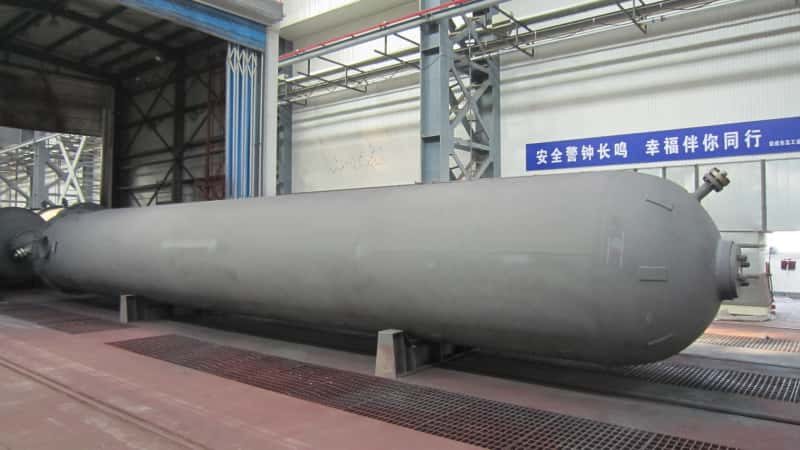

In industrial heat transfer systems, many users struggle to fully understand how a shell and tube heat exchanger actually works internally. This lack of clarity often leads to poor specification, incorrect maintenance practices, or suboptimal performance. Without a clear grasp of its core components, it becomes difficult to diagnose issues such as fouling, leakage, or pressure drop inefficiencies. The solution is to break down the heat exchanger into its fundamental parts—each with a distinct role that directly impacts performance, durability, and efficiency.
A shell and tube heat exchanger consists of five core components: the shell (outer pressure vessel), tubes (heat transfer surfaces), baffles (flow directors), tube sheets (structural plates securing tubes), and heads (end covers controlling fluid entry/exit). Each component plays a critical role in ensuring efficient heat transfer, structural integrity, and operational reliability.
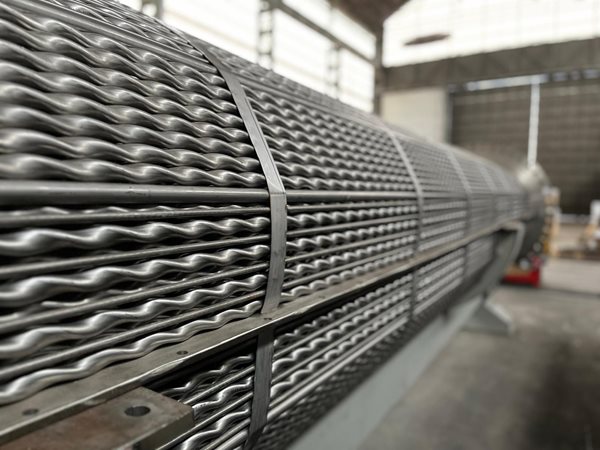
To truly understand performance and supplier quality, you need a deep technical understanding of how these components function together as an integrated system.
The tubes are the only important component in a shell and tube heat exchanger because they handle heat transfer.False
While tubes are central to heat transfer, other components like baffles, shell, and tube sheets are essential for flow control, structural support, and overall efficiency.
Understanding the Shell: The Pressure Vessel Backbone
The shell is the outer cylindrical body that encloses the tube bundle and directs the shell-side fluid flow. It is typically made from carbon steel, stainless steel, or alloy materials depending on pressure and corrosion requirements.
From an engineering standpoint, the shell must withstand internal pressure, thermal expansion, and mechanical stress while maintaining structural integrity. Its diameter and length are carefully designed based on heat duty and flow rate requirements.
The shell also determines the overall flow pattern of the external fluid. Poor shell design can lead to uneven flow distribution, dead zones, and reduced heat transfer efficiency.
| Shell Parameter | Function | Design Impact |
|---|---|---|
| Diameter | Controls flow area | Affects velocity & efficiency |
| Thickness | Withstands pressure | Ensures safety |
| Material | Resists corrosion | Extends lifespan |
| Length | Determines residence time | Influences heat transfer |
In high-performance systems, shell design is optimized using advanced simulation tools to ensure uniform flow and minimal pressure drop.
Tubes: The Core Heat Transfer Surface
Tubes are the most critical component for heat exchange. They carry one fluid while the shell-side fluid flows around them, enabling thermal energy transfer.
The efficiency of a heat exchanger largely depends on:
- Tube material (thermal conductivity)
- Tube diameter and thickness
- Tube arrangement (pitch and layout)
| Tube Material | Thermal Conductivity | Application |
|---|---|---|
| Copper | Very high | HVAC, low corrosion |
| Stainless Steel | Moderate | General industry |
| Titanium | High corrosion resistance | Seawater |
| Duplex Steel | High strength | Oil & gas |
Tube layout (triangular or square pitch) affects both heat transfer and cleanability. Enhanced or finned tubes may also be used to improve efficiency.
Baffles: Flow Control and Efficiency Enhancers
Baffles are internal plates installed inside the shell to direct fluid flow across the tube bundle rather than allowing it to flow straight through.
Their primary functions include:
- Increasing turbulence (improves heat transfer)
- Supporting tubes (reduces vibration)
- Controlling flow path
| Baffle Type | Benefit | Application |
|---|---|---|
| Segmental | Standard | General use |
| Helical | Low pressure drop | Energy-efficient systems |
| Double segmental | Reduced vibration | High flow |
Improper baffle design can lead to excessive pressure drop or tube vibration, both of which reduce system reliability.
Tube Sheets: Structural Anchors of the Tube Bundle
Tube sheets are thick plates that hold the tubes in place and separate the shell-side and tube-side fluids.
They are typically drilled with precise hole patterns to accommodate tube placement and are critical for:
- Preventing fluid mixing
- Providing structural support
- Maintaining pressure boundaries
| Feature | Function | Risk if Poorly Designed |
|---|---|---|
| Hole precision | Tube alignment | Leakage |
| Thickness | Pressure resistance | Structural failure |
| Material | Corrosion resistance | Degradation |
Tube-to-tube sheet joints are often expanded or welded, and their quality directly affects leak prevention.
Heads (Channels): Flow Distribution and Access Points
Heads, also known as channel covers, are located at the ends of the heat exchanger and manage the entry and exit of tube-side fluid.
They are designed for:
- Fluid distribution
- Maintenance access
- Pressure containment
| Head Type | Feature | Application |
|---|---|---|
| Fixed head | Simple design | Low maintenance |
| Removable head | Easy cleaning | Fouling fluids |
| Floating head | Thermal expansion handling | High temperature |
Proper head design ensures even flow distribution and simplifies maintenance operations.
How These Components Work Together
The effectiveness of a shell and tube heat exchanger depends on the integration of all components.
- The shell directs external fluid
- The tubes transfer heat
- The baffles optimize flow and turbulence
- The tube sheets secure and isolate fluids
- The heads control fluid entry and exit
Any weakness in one component can compromise the entire system.
Real-World Engineering Insight
In a refinery application, poor baffle spacing caused uneven flow distribution, reducing efficiency by 15%. After redesigning the baffles and optimizing tube layout, performance improved significantly without changing the overall unit size.
This highlights how each component contributes to overall system performance.
Common Misunderstandings
Many users assume that increasing the number of tubes automatically improves performance. However, without proper baffle design and flow control, this can actually reduce efficiency.
Another misconception is that thicker materials always improve durability. In reality, proper material selection and design optimization are more important.
Conclusion: A System of Interdependent Components
A shell and tube heat exchanger is not just a collection of parts—it is a carefully engineered system where each component plays a vital role. Understanding the shell, tubes, baffles, tube sheets, and heads allows you to better evaluate design quality, diagnose issues, and select the right supplier.
Contact Us for Expert Design Support
References
- Shell and Tube Heat Exchanger Basics – https://www.sciencedirect.com/topics/engineering/shell-and-tube-heat-exchanger – ScienceDirect
- Heat Exchanger Components – https://www.thermopedia.com/content/945/ – Thermopedia
- TEMA Standards – https://www.tema.org – Tubular Exchanger Manufacturers Association
- ASME Pressure Vessel Code – https://www.asme.org/codes-standards – ASME