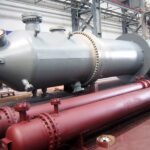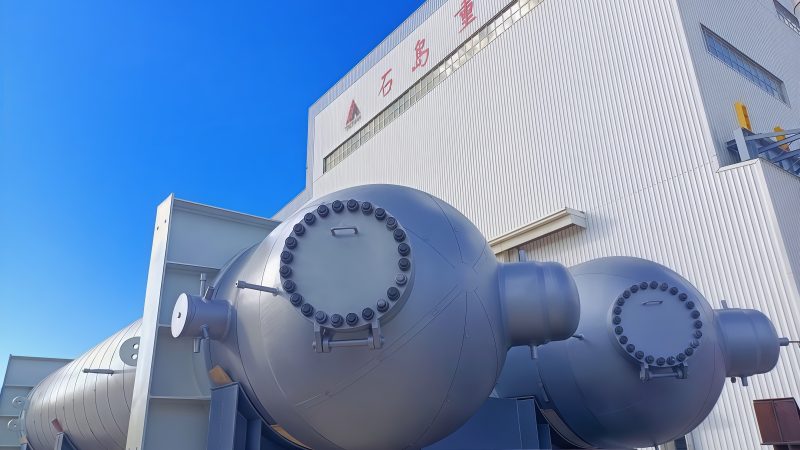

Ordering a reboiler or condenser for a distillation column is not simply a matter of specifying heat-transfer area and nozzle sizes.
These exchangers are thermally, hydraulically, and mechanically integrated with the column they serve. An error in heat duty, pressure-drop allowance, material selection, fouling basis, circulation assumptions, or mechanical design can affect column stability, product purity, utility consumption, maintenance frequency, and commissioning performance.
A unit may fit the piping, pass fabrication inspection, and successfully complete hydrostatic testing — yet still fail to achieve the required process duty under real operating conditions.
Before issuing a purchase order for a distillation-column reboiler or condenser, the buyer should establish the required heat-duty envelope, operating and design cases, allowable pressure drop, fouling basis, utility conditions, process-fluid composition, material requirements, exchanger configuration, mechanical design standard, inspection requirements, and interface conditions with the column. These parameters should represent the actual operating envelope rather than only a single nominal design point.
The objective is not simply to purchase an exchanger that meets a datasheet.
It is to purchase equipment that remains compatible with the column across startup, normal operation, turndown, seasonal utility variation, and foreseeable process upsets.
How to Define Heat Duty Before Issuing a Purchase Requisition
Thermal duty is one of the most important values on a reboiler or condenser datasheet.
It is also one of the easiest values to misuse when the underlying process assumptions are not transferred to the equipment vendor.
A single steady-state duty number does not tell the full story.
The vendor should understand the conditions that generated that duty, the expected operating range, and the uncertainties that the mechanical and thermal design must accommodate.
Deriving Reboiler Duty from Process Simulation
Process simulators such as Aspen Plus, Aspen HYSYS, and PRO/II can provide reboiler duty directly.
However, the calculated value is only as reliable as the process model behind it.
Before transferring a simulated duty into a requisition, verify that the model represents the intended operating case, including:
- feed flow and composition;
- feed temperature and pressure;
- feed vapor fraction or enthalpy;
- column pressure;
- reflux ratio;
- reboil ratio;
- bottoms flow rate;
- product specifications;
- and utility conditions.
Feed condition can have a meaningful effect on reboiler duty.
A partially vaporized feed may reduce the heat required in the reboiler, while a subcooled feed can increase it.
If the vendor only receives the final duty value, it cannot independently determine whether that value represents normal operation, maximum throughput, startup, or another design case.
Reboil ratio should therefore be supplied together with the bottoms flow and composition where relevant.
These parameters help the vendor evaluate whether the proposed exchanger configuration can generate the required vapor load without creating excessive pressure drop or unstable two-phase circulation.
Designing for Turndown and Maximum Operating Cases
The exchanger should not be evaluated only at 100% nameplate throughput.
Turndown can change heat-transfer coefficients, fluid velocities, vapor generation, and natural-circulation behavior.
This is particularly important for thermosyphon reboilers.
As duty decreases, vapor generation and density difference also change, potentially reducing the natural driving force available for circulation.
Maximum-duty conditions deserve equal attention.
Feed changes, startup conditions, process recovery, utility variation, or future capacity increases may temporarily require a duty above the normal operating case.
The purchase requisition should therefore identify, where applicable:
- normal operating duty;
- minimum stable duty;
- maximum continuous duty;
- maximum expected transient duty;
- and any future design case.
The vendor should rate the proposed exchanger across the relevant operating range rather than at a single point.
Condenser Duty: Total Condensation, Partial Condensation, and Subcooling
Condenser sizing begins with understanding what phases must leave the equipment.
A total condenser is intended to condense essentially all of the overhead vapor under the specified design conditions.
The duty may therefore include:
- sensible cooling of superheated vapor;
- latent heat of condensation;
- and liquid subcooling where required.
If reflux-drum stability depends on maintaining the condensate below its bubble point, the required subcooling should be stated explicitly.
A partial condenser operates differently.
Only part of the overhead vapor is condensed, leaving vapor and liquid phases at the outlet.
Because the outlet is an equilibrium two-phase system, the condenser is performing both heat transfer and a degree of phase separation.
The vapor fraction, liquid composition, vapor composition, and outlet temperature should therefore be part of the thermal design basis.
Non-Condensable Gas Load
Non-condensable gases can significantly affect condenser performance.
Nitrogen, hydrogen, light hydrocarbons, carbon dioxide, or other non-condensables may accumulate near condensing surfaces and introduce an additional mass-transfer resistance.
This effect should be included explicitly in the design basis.
A fouling factor alone is not an appropriate substitute for explicitly accounting for non-condensable gas load in condenser thermal design.True
Surface fouling and non-condensable gas accumulation affect heat transfer through different mechanisms. The expected non-condensable load should therefore be identified separately where it can materially affect condenser performance.
The purchase requisition should state the expected non-condensable flow where known and identify the required venting arrangement.
Design Margin: Define What It Is Protecting Against
A thermal design margin is commonly added above the calculated process duty, but the percentage alone is less important than the reason for it.
A project may include margin for:
- uncertainty in feed composition;
- seasonal utility-temperature variation;
- process throughput growth;
- simulation uncertainty;
- or another defined operating case.
Fouling resistance should generally remain a separately identified design input rather than being hidden inside an unspecified duty margin.
Similarly, future expansion should preferably appear as an explicit future operating case rather than an unexplained percentage.
A short design-basis attachment can be extremely useful.
It may record:
- simulation case and revision;
- property method;
- process duty;
- operating range;
- fouling assumptions;
- utility conditions;
- design margin;
- and the reason for that margin.
This gives both purchaser and vendor a common technical basis for thermal design.
Selecting the Right Reboiler Type
Reboiler configuration should be selected during process and layout development rather than left entirely to the equipment vendor.
Changing exchanger type after detailed engineering can affect:
- piping layout;
- equipment elevation;
- column nozzles;
- structural design;
- control philosophy;
- plot space;
- and maintenance access.
The selection should reflect process characteristics as well as thermal duty.
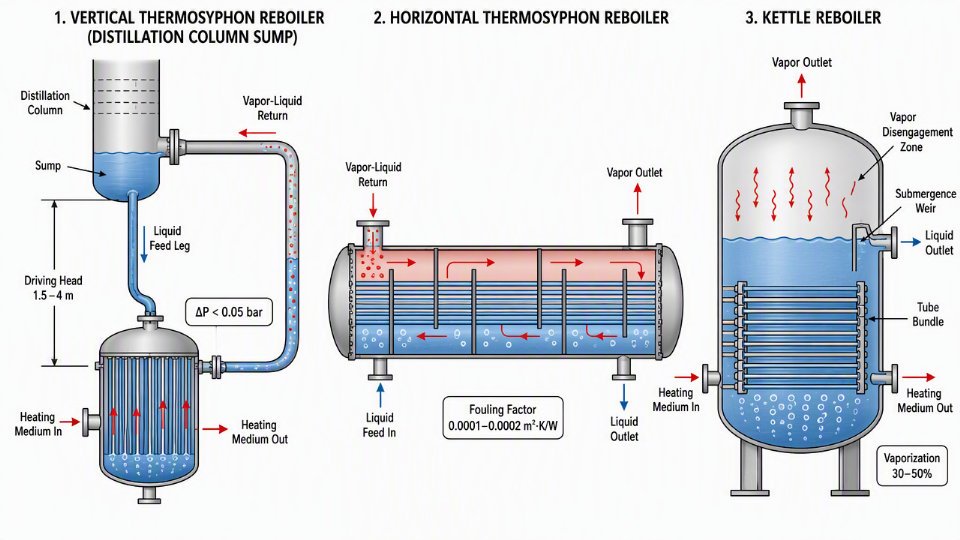
Vertical and Horizontal Thermosyphon Reboilers
Thermosyphon reboilers use natural circulation generated by density difference between the incoming liquid and the heated two-phase return stream.
No circulation pump is required.
This makes them attractive for many refinery and petrochemical applications, but their performance depends heavily on hydraulic integration with the column.
A vertical thermosyphon commonly routes the process liquid through the tubes.
As boiling occurs, the density of the two-phase mixture falls and circulation develops between the column bottom and the exchanger.
Important design parameters include:
- available static head;
- circuit pressure drop;
- inlet liquid condition;
- outlet vapor fraction;
- exchanger elevation;
- tube diameter;
- tube length;
- and return-piping geometry.
A horizontal thermosyphon can provide different hydraulic characteristics and may offer advantages for certain boiling ranges, plot layouts, or fouling conditions.
The appropriate configuration should be selected through thermal and hydraulic evaluation rather than a simple vertical-versus-horizontal rule.
Kettle Reboilers
Kettle reboilers provide an internal liquid pool around the tube bundle and a vapor-disengagement space above it.
This configuration can be useful where:
- a relatively high vaporization fraction is required;
- pressure-drop sensitivity is significant;
- vapor-liquid disengagement inside the exchanger is beneficial;
- or thermosyphon circulation is difficult to guarantee.
The liquid level around the bundle is an important design parameter.
The tube bundle should remain appropriately submerged during the intended operating range.
The vapor space must also provide sufficient disengagement capacity to limit entrainment.
Oversizing should not be treated as automatically conservative.
Excessive surface area can alter heat flux, liquid level, velocity, and operating behavior.
The exchanger should instead be sized around the required duty range and intended operating level.
Forced-Circulation Reboilers
Forced-circulation reboilers use a pump to maintain the required process flow through the exchanger.
They may be selected where natural circulation is difficult or undesirable, including some:
- viscous services;
- fouling services;
- heat-sensitive processes;
- high-solids systems;
- and operating cases requiring controlled circulation.
The design should define the required recirculation rate and verify pump performance across the intended operating envelope.
Important information includes:
- minimum and normal circulation flow;
- exchanger pressure drop;
- suction conditions;
- NPSH available;
- operating temperature;
- residence time;
- and acceptable heat flux.
Forced-circulation reboilers do not automatically have higher overall process energy consumption than thermosyphon designs.True
A circulation pump adds electrical demand, but total energy performance depends on fouling, heat-transfer coefficient, operating stability, maintenance condition, and process duty. The appropriate comparison should be made on the complete operating system.
Where direct-fired heating or a separate heat-transfer-fluid loop is required, the equipment begins to cross into heater-system design and should be specified accordingly rather than treated as an ordinary shell-and-tube exchanger.
Condenser Configuration: Total, Partial, and Reflux Condensers
A condenser is not simply an overhead cooler.
Its configuration affects:
- outlet phase condition;
- reflux-drum operation;
- column pressure;
- inert-gas handling;
- control response;
- and separation performance.
The process basis should therefore define condenser function before mechanical design begins.
Total and Partial Condensers
A total condenser produces a predominantly liquid overhead product under its design condition.
Liquid flows to the reflux drum, where part returns to the column and the remaining stream becomes distillate.
A partial condenser intentionally leaves part of the overhead stream in the vapor phase.
At the outlet, vapor and liquid remain in equilibrium.
This means the exchanger performs a thermodynamic separation function in addition to heat rejection.
Fluid assignment and exchanger orientation therefore require careful consideration.
The configuration should allow the intended two-phase behavior without creating unacceptable:
- maldistribution;
- liquid holdup;
- pressure drop;
- or phase-separation problems.
The expected vapor and liquid outlet conditions should be provided directly by the process engineer.
Non-Condensables and Venting
Non-condensables should not be ignored during mechanical and process specification.
A total condenser and reflux drum may require an overhead vent or purge arrangement to prevent accumulation.
A partial condenser may discharge much of the non-condensable fraction with the vapor product.
The purchase requisition should identify:
- expected non-condensable components;
- estimated flow;
- required vent connection;
- vent destination where relevant;
- and any special control requirement.
Reflux Condensers and Dephlegmators
A reflux condenser or dephlegmator combines condensation with countercurrent vapor-liquid contacting.
Condensate flows against the rising vapor, providing additional mass-transfer behavior inside the exchanger.
These units are particularly important in certain:
- cryogenic separations;
- air-separation systems;
- low-temperature fractionation systems;
- and specialized multicomponent condensation services.
They should not automatically be replaced by a conventional condenser and reflux drum simply because calculated heat duty appears similar.
Standard single-phase or simple condensation correlations should not automatically be assumed to represent dephlegmator performance accurately.True
Dephlegmators can involve simultaneous heat transfer, mass transfer, multicomponent condensation, and countercurrent vapor-liquid interaction. The thermal design method should reflect the actual process mechanism.
For a dephlegmator, the buyer should understand the thermal-design method used by the vendor and ensure that multicomponent condensation behavior is represented appropriately.
Selecting the Cooling Medium
Cooling-medium selection determines both condenser size and achievable outlet temperature.
Cooling water is common where the condensing temperature provides sufficient approach above available water temperature.
However, the design should account for:
- seasonal cooling-water temperatures;
- water quality;
- fouling;
- velocity;
- corrosion;
- and water-treatment conditions.
Air cooling eliminates the cooling-water circuit but is constrained by ambient dry-bulb temperature.
In hot climates, the required process condensation temperature may simply be too low for air cooling to remain practical throughout the year.
Refrigerated cooling may therefore become necessary when process condensing temperatures cannot be achieved economically using cooling water or ambient air.
The requisition should define:
- required condensing temperature;
- cooling-medium inlet and outlet conditions;
- seasonal maximum utility temperature;
- allowable approach;
- and allowable pressure drop.
Material Selection for Corrosive and High-Temperature Services
Material selection should be driven by the actual corrosion and damage mechanisms expected in service.
The purchase requisition should therefore contain enough process information for the material basis to be reviewed properly.
Simply specifying “hydrocarbon service” or “corrosive service” is rarely sufficient.
Relevant information may include:
- process composition;
- water content;
- chlorides;
- H₂S;
- CO₂;
- amines;
- organic acids;
- operating temperature;
- pH;
- velocity;
- and upset conditions.
Amine Service
Amine systems can present several corrosion and cracking risks depending on the amine type, concentration, contaminants, temperature, stress level, and process conditions.
Carbon-steel equipment may require additional controls such as:
- appropriate PWHT where specified;
- weld hardness control;
- material restrictions;
- corrosion allowance;
- and documented fabrication procedures.
Requirements should follow the applicable project corrosion specification and relevant industry standards.
The purchase requisition should clearly identify amine service rather than expecting the exchanger vendor to infer it from the process name alone.
Chloride-Containing Overhead Service
Chloride-containing condensate can create pitting, crevice-corrosion, and stress-corrosion risks for certain stainless-steel grades.
Material selection cannot be reduced to the rule that stainless steel is always superior to carbon steel.
The appropriate alloy depends on:
- chloride concentration;
- temperature;
- pH;
- oxygen content;
- water phase;
- velocity;
- and other contaminants.
Grades such as 316L or duplex stainless steels may be considered for more demanding chloride environments, but final material selection should follow project corrosion assessment rather than a universal concentration threshold.
High-Temperature Organic Acid Service
High-temperature crude and other services containing naphthenic acids may require special metallurgy.
Damage tendency depends on more than total acid number alone.
Temperature, sulfur species, velocity, phase condition, alloy chemistry, and operating history can all affect corrosion behavior.
Where naphthenic acid corrosion is a credible mechanism, suitable corrosion-resistant alloys or upgraded metallurgy should be identified during process-material review.
| Service | Potential Damage Mechanism | Possible Material / Fabrication Consideration | Procurement Check |
|---|---|---|---|
| Amine service | Corrosion / stress-related cracking depending on conditions | Carbon steel or upgraded metallurgy with project-specific PWHT and hardness controls | State amine type, concentration, temperature, and applicable corrosion standard |
| Chloride-containing overhead condensate | Pitting, crevice corrosion, chloride-related cracking | 316L, duplex, higher-alloy material, or another corrosion-engineered solution | Provide chloride, temperature, pH, and water-phase data |
| High-temperature acidic crude service | Naphthenic acid and other high-temperature corrosion mechanisms | Upgraded Cr-Mo or stainless/alloy metallurgy where justified | Provide TAN, sulfur, temperature, velocity, and corrosion study basis |
| Sour aqueous service | SSC, HIC, hydrogen-related damage | Project-specified sour-service materials and hardness control | Define applicable sour-service standard and required material testing |
Bimetallic and Clad Tubesheets
When tube material differs from shell material, the tubesheet often becomes the most metallurgically complex part of the exchanger.
Possible solutions include:
- corrosion-resistant weld overlay;
- integrally clad plate;
- explosively bonded cladding;
- or another qualified construction method.
Weld overlay is commonly used to place a corrosion-resistant layer over a structural base material.
Where specified, the final machined overlay thickness, chemistry, ferrite content, PMI requirements, and examination criteria should be defined.
Explosively bonded or other metallurgically clad tubesheets may be considered where the process or thermal-cycling conditions justify the construction.
The mechanical and thermal implications of the clad system should be included in the exchanger design.
Tube-to-Tubesheet Joint Selection
Tube-to-tubesheet joints should be selected according to pressure, temperature, cycling, material combination, leakage consequence, and service severity.
Possible constructions include:
- expanded joints;
- seal-welded joints;
- strength-welded joints;
- welded-and-expanded joints;
- and full-penetration designs where justified.
The appropriate tube-to-tubesheet joint cannot be selected solely from vendor manufacturing preference.True
Joint selection should consider operating pressure, differential pressure, thermal cycling, material compatibility, corrosion environment, leakage consequence, applicable code, and purchaser requirements.
Where leakage between shell-side and tube-side fluids would create a serious safety, contamination, or reaction hazard, the joint requirement should be established explicitly in the purchase specification.
Mock-up qualification or production-procedure qualification may also be required for demanding material combinations or welding methods.
Mechanical Design Standards and Code Requirements
Thermal performance is only one part of exchanger procurement.
The final equipment must also integrate mechanically and legally with the plant.
The requisition should therefore identify:
- pressure-vessel design code;
- applicable edition;
- exchanger standard;
- jurisdiction;
- design pressure;
- design temperature;
- corrosion allowance;
- nozzle ratings;
- certification requirements;
- and third-party inspection requirements.
TEMA Class Selection
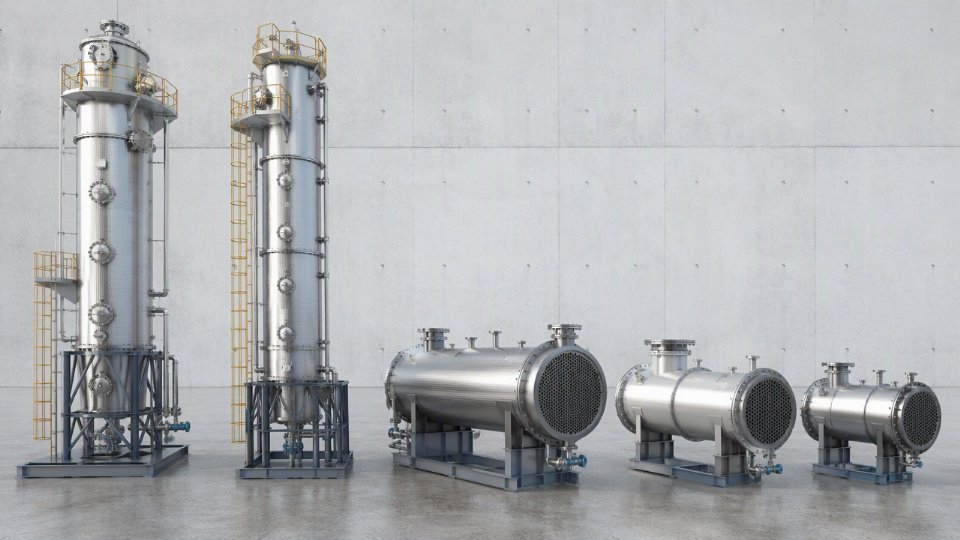
TEMA provides mechanical design practices for shell-and-tube heat exchangers.
Different classes are intended for different service severity and commercial requirements.
Class R is commonly associated with more demanding refinery and petroleum-processing applications, while other TEMA classes may be appropriate for less severe services.
Selection should reflect the project and service rather than being treated as a universal rule.
For severe hydrocarbon, fouling, high-pressure, or cyclic service, the purchaser should review features such as:
- corrosion allowance;
- tube-wall requirements;
- impingement protection;
- baffle design;
- gasket construction;
- removable-bundle requirements;
- inspection access;
- and maintenance philosophy.
Pressure-Rating Alignment
The exchanger, column, connecting piping, flange classes, and relief system should form a compatible pressure-design system.
Differences in nozzle flange ratings are not automatically incorrect.
However, they should be deliberate rather than accidental.
Before purchase-order release, confirm:
- exchanger design pressure;
- column design pressure;
- nozzle flange class;
- piping class;
- relief-device basis;
- hydrostatic test requirements;
- and any differential-pressure design case.
The flange pressure-temperature rating should be checked using the applicable dimensional and material standard, such as ASME B16.5, ASME B16.47, EN 1092, or the project-selected equivalent.
Interface pressure ratings should be reconciled before fabrication rather than discovered during site installation.True
Different equipment packages may use different pressure-rating assumptions. Early interface review reduces the risk of flange, piping-class, relief-system, or design-pressure inconsistencies during construction.
Cross-Border Code Compliance
For international projects, construction-code compliance and market-access requirements should be established before RFQ issuance.
For European installations, PED 2014/68/EU may apply, with the required conformity-assessment route determined according to equipment classification.
Where applicable, Notified Body involvement should be planned from the beginning.
For US projects, ASME Section VIII construction may be specified, and jurisdiction-specific registration or National Board requirements should be confirmed separately.
For equipment manufactured in China, GB 150 and applicable Chinese special-equipment requirements may govern domestic projects.
Export equipment may additionally need ASME, PED, or another destination-specific certification.
A manufacturer’s domestic manufacturing qualification does not automatically substitute for the certification required by the destination market.
The RFQ should therefore clearly state:
- governing code;
- code edition;
- destination jurisdiction;
- required certification;
- inspection organization;
- and documentation deliverables.
Process Nozzle Layout, Piping Interface, and Column Integration
An exchanger can be thermally and mechanically correct and still perform poorly if the piping interface is wrong.
This is particularly important for thermosyphon reboilers and low-pressure condensers, where relatively small pressure losses can materially affect process operation.
Thermosyphon Reboiler Elevation
Natural circulation depends on available static head and density difference.
The physical relationship between the column-bottom liquid level, reboiler inlet, and two-phase return connection therefore becomes part of the process design.
Required elevation should be determined from the hydraulic calculation.
The purchaser should not assume that a generic elevation range will suit every process fluid.
The design should account for:
- liquid density;
- vapor fraction;
- viscosity;
- circulation rate;
- exchanger pressure drop;
- piping losses;
- column liquid level;
- and return-line geometry.
Once exchanger nozzle locations and supports are fabricated, correcting an inadequate elevation can become difficult.
Layout and process engineering should therefore be coordinated before the general arrangement drawing is approved.
Two-Phase Return Line
The thermosyphon return carries a vapor-liquid mixture back to the column.
Its hydraulic behavior depends on vapor quality, pipe diameter, pressure, fluid properties, elevation, and line routing.
Excessive pressure loss can reduce natural circulation.
Poor routing can also contribute to unstable two-phase behavior.
Thermosyphon performance depends on the entire circulation loop, not only the exchanger bundle.True
Available static head must overcome pressure losses in the exchanger, inlet piping, two-phase return piping, fittings, and column connections. Hydraulic integration with the column is therefore essential to stable operation.
The process datasheet should provide enough information for the exchanger vendor and piping engineer to coordinate:
- expected circulation rate;
- inlet condition;
- outlet vapor fraction;
- allowable exchanger pressure drop;
- and relevant line-interface requirements.
Condenser Overhead Line
Pressure drop in the overhead system directly contributes to column operating pressure.
This is particularly important in vacuum and low-pressure distillation.
The process engineer should establish a pressure-drop budget for the complete system, including:
- column overhead nozzle;
- vapor line;
- fittings;
- exchanger inlet;
- exchanger itself;
- and downstream equipment.
The exchanger vendor should receive the portion of the pressure-drop budget allocated to the condenser.
Before approving the GA drawing, the project team should also check:
- nozzle orientation;
- nozzle elevation;
- structural clearances;
- maintenance space;
- drainage;
- condensate accumulation;
- and piping support requirements.
Inspection, Testing, and Quality Requirements
An exchanger purchase order should define inspection expectations before fabrication begins.
The Inspection and Test Plan, or ITP, provides the framework for agreeing:
- review points;
- witness points;
- hold points;
- required records;
- responsible inspection parties;
- and release criteria.
The ITP is most valuable when approved before manufacturing has progressed beyond the stage where changes can be made easily.
Material Certification Review
Pressure-retaining materials should remain traceable to their supporting material certificates.
Typical items include:
- shell plate;
- channels;
- heads;
- tubesheets;
- tubes;
- nozzles;
- flanges;
- and pressure-retaining bolting.
Material specification, grade, heat or lot number, required mechanical properties, and supplementary project requirements should be checked before the material becomes difficult to replace.
Welding Documentation
Applicable WPS, PQR, and welder qualification records should be available before production welding begins.
The qualified range should be checked against the actual:
- base material;
- thickness;
- joint design;
- filler material;
- welding process;
- and required heat treatment.
The purpose is not simply to confirm that the shop possesses welding procedures, but that those procedures cover the actual exchanger being fabricated.
Tubesheet and Tube-to-Tubesheet Inspection
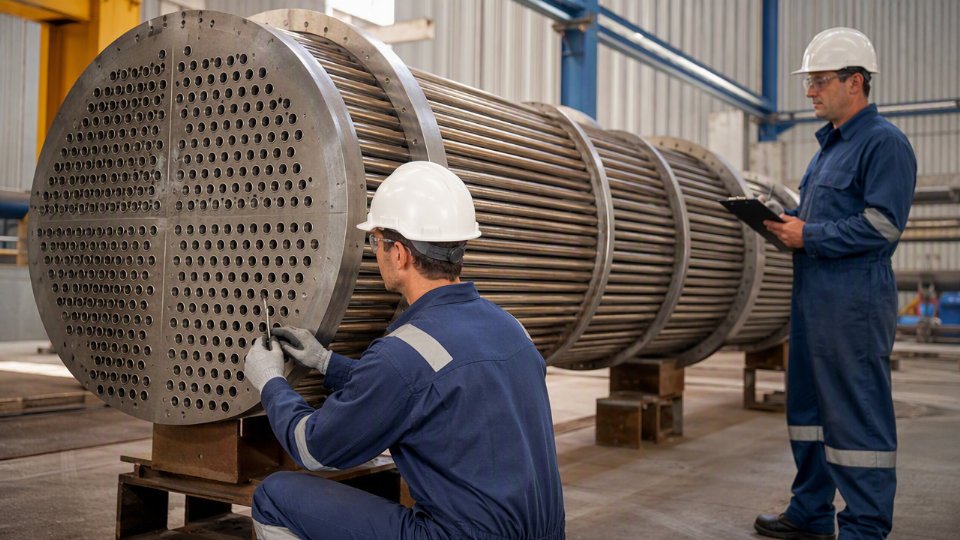
Tubesheet-hole geometry can directly affect expanded or welded joint quality.
Where required by the specification, inspection can include:
- hole diameter;
- ligament and pitch;
- groove geometry;
- surface finish;
- cleanliness;
- and dimensional conformity.
For critical tube-to-tubesheet joints, the project may also require mock-up qualification, welding qualification, expansion control, leak testing, or mechanical testing appropriate to the specified joint design.
Hydrostatic Testing
Shell-side and tube-side pressure boundaries normally require testing according to their applicable design conditions and governing code.
The test procedure should establish:
- required test pressure;
- test medium;
- test sequence;
- instrument requirements;
- hold or examination conditions;
- inspection involvement;
- and acceptance criteria.
For exchangers with significant differential-pressure limitations, the test sequence must also ensure that one side is not inadvertently overloaded while the opposite side is at atmospheric or lower pressure.
NDE Requirements
The appropriate NDE scope depends on:
- construction code;
- joint category;
- service;
- material;
- vessel thickness;
- design joint efficiency;
- purchaser specification;
- and inspection philosophy.
RT, UT, MT, and PT should therefore be specified according to the actual design rather than a universal percentage.
For advanced materials such as creep-resistant Cr-Mo steels or duplex stainless steels, additional fabrication controls may be needed.
These can include:
- heat-treatment verification;
- hardness testing;
- ferrite measurement;
- PMI;
- interpass-temperature control;
- or other material-specific requirements.
Special-alloy exchangers may require additional fabrication controls beyond standard carbon-steel exchanger inspection.True
Materials such as Cr-Mo steels and duplex stainless steels are sensitive to welding and heat-treatment variables. The applicable project material specification should define the additional examinations and acceptance criteria.
Third-Party Inspection and Final Data Book
Third-party inspection authority should be defined clearly in the purchase order.
The contract should establish:
- which events require witness;
- which documents require review;
- what constitutes a hold point;
- how inspection notifications are issued;
- and who can authorize fabrication to proceed.
The final manufacturing data book should also be defined as a formal deliverable.
Depending on project requirements, it may include:
- MTRs and traceability records;
- as-built drawings;
- WPS/PQR and welder qualifications;
- weld maps;
- NDE reports;
- heat-treatment records;
- dimensional reports;
- tube-to-tubesheet inspection records;
- pressure-test records;
- NCRs and repair records;
- nameplate documentation;
- and the applicable Manufacturer’s Data Report or conformity certificates.
Vendor Evaluation and Commercial Scope
Technical evaluation should consider more than fabrication capacity.
A vendor capable of manufacturing a shell-and-tube exchanger may not necessarily have the process and thermal-design experience required for a thermosyphon reboiler, kettle reboiler, partial condenser, or specialized fouling service.
Thermal Design Capability
For complex services, the buyer should understand how the vendor performs thermal rating.
Recognized software such as HTRI or other appropriate commercial or validated design tools can provide additional confidence, particularly for:
- thermosyphon circulation;
- two-phase heat transfer;
- condensation;
- vibration;
- pressure drop;
- and complex shell-side configurations.
The important point is not the software brand alone.
The vendor should be able to provide a transparent thermal-design basis that allows the purchaser or process engineer to review:
- inputs;
- assumed fouling factors;
- heat-transfer coefficients;
- velocities;
- pressure drop;
- overdesign;
- vibration checks;
- and operating cases.
Relevant Manufacturing Experience
Past experience should be evaluated by equipment type and service rather than only by exchanger size.
Useful reference information may include:
- exchanger configuration;
- service fluid;
- design pressure;
- temperature;
- material;
- approximate duty;
- date supplied;
- and operating history where available.
Experience with a clean-water exchanger is not automatically equivalent to experience with a fouling vacuum-column reboiler or corrosive overhead condenser.
Maintainability
Maintenance philosophy should influence the mechanical design.
For removable bundles, evaluate:
- bundle-pulling clearance;
- equipment weight;
- bundle handling;
- channel removal;
- tube cleaning;
- retubing;
- gasket replacement;
- and inspection access.
These requirements should be coordinated with the plot plan before equipment dimensions are frozen.
Commercial Scope Boundary
“Reboiler package” or “condenser package” can mean different things to different vendors.
The purchase order should therefore identify inclusions and exclusions line by line.
Potential boundary items include:
- circulation pump;
- motor and baseplate;
- relief valve;
- local gauges;
- thermowells;
- transmitters;
- interconnecting piping;
- valves;
- insulation;
- platforms;
- support steel;
- anchor bolts;
- expansion joints;
- and field installation.
Clear package boundaries reduce change-order risk during exchanger procurement.True
Interfaces between the exchanger vendor, piping contractor, instrumentation supplier, pump supplier, and site-construction contractor can otherwise remain ambiguous until late in the project.
A vendor equipment list, scope matrix, or battery-limit drawing can be attached to the purchase order to establish a common commercial basis.
Lead Time and Progress Payments
Heat-exchanger manufacturing lead time varies significantly with:
- material availability;
- exchanger size;
- tubesheet thickness;
- tube material;
- welding procedure requirements;
- heat treatment;
- inspection;
- and current fabrication-shop loading.
Rather than relying on a generic industry lead time, buyers should require a project-specific manufacturing schedule from each bidder.
That schedule should identify major milestones such as:
- drawing approval;
- material procurement;
- shell fabrication;
- tubesheet machining;
- tube-bundle assembly;
- welding completion;
- NDE;
- PWHT where applicable;
- pressure testing;
- painting;
- documentation;
- and shipment.
Progress payments can then be linked to verifiable milestones rather than only to elapsed time or final dispatch.
Frequently Asked Questions About Reboiler and Condenser Procurement
How do I choose between a kettle and thermosyphon reboiler for vacuum distillation?
The correct choice depends on process hydraulics rather than vacuum service alone.
A thermosyphon requires sufficient static head to overcome exchanger and piping pressure losses while maintaining stable natural circulation.
In a low-pressure system, even relatively small pressure losses can become important.
A kettle reboiler does not depend on the same external natural-circulation loop and provides an internal vapor-disengagement space.
This can make it attractive for some vacuum services.
However, kettle reboilers can present other concerns, including:
- liquid inventory;
- fouling;
- solids accumulation;
- residence time;
- and maintenance access.
The decision should therefore be based on hydraulic modeling, process properties, fouling tendency, plot arrangement, and operating range.
How much design margin should be added to condenser duty?
There is no single percentage that is correct for every condenser.
Projects commonly apply a defined thermal margin, but the appropriate value depends on what uncertainty the margin is intended to cover.
A relatively clean and well-characterized service may need less additional duty than a variable-feed, seasonal, or fouling-prone process.
What matters most is documenting whether the design basis already includes:
- fouling resistance;
- utility-temperature variation;
- feed uncertainty;
- future capacity;
- and process margin.
Excessive unexplained thermal oversizing can sometimes reduce operating velocity and worsen fouling or controllability.True
More surface area is not automatically beneficial. Exchanger performance should be evaluated at the actual operating range, including velocity, heat flux, pressure drop, and fouling behavior.
Can the same datasheet format be used for both a reboiler and a condenser?
The same general shell-and-tube datasheet framework may be used, but the required process information is different.
A reboiler datasheet may need to emphasize:
- liquid inlet condition;
- circulation rate;
- vaporization fraction;
- reboil ratio;
- two-phase outlet condition;
- and allowable loop pressure drop.
A condenser datasheet may need to emphasize:
- vapor inlet condition;
- total or partial condensation;
- non-condensables;
- condensing-temperature range;
- subcooling;
- outlet vapor fraction;
- and allowable overhead pressure drop.
Separate equipment datasheets are generally clearer for bid evaluation and vendor design.
What inspection points should be considered for sour-service exchangers?
Sour-service requirements should be established from the applicable project materials and corrosion specification.
Potential controls may include:
- material certification;
- sour-service material qualification;
- HIC testing where required;
- weld hardness limits;
- PWHT requirements;
- welding-procedure review;
- NDE;
- PMI;
- and third-party inspection.
The exact acceptance limits should follow the applicable sour-service standard and project specification rather than a generic value.
How can I determine whether a vendor’s thermal design is conservative or under-designed?
Review the full thermal rating rather than only the headline duty.
Important parameters include:
- actual required duty;
- calculated clean duty;
- fouled duty;
- surface area;
- overdesign;
- fouling resistance;
- shell-side velocity;
- tube-side velocity;
- pressure drop;
- heat-transfer coefficient;
- wall temperature;
- vibration assessment;
- and performance at minimum and maximum operating cases.
For thermosyphon units, also review the circulation calculation and available driving head.
For condensers, review how non-condensables and phase behavior were modeled.
What should be included in the final data book for an overseas EPC project?
The exact data-book requirements should follow the purchase order and Vendor Document Requirement.
A typical package may include:
- material certificates for pressure-retaining components;
- material traceability index;
- approved as-built drawings;
- WPS, PQR, and welder qualification records;
- weld maps;
- NDE reports;
- heat-treatment records;
- tube-to-tubesheet inspection or qualification records where applicable;
- dimensional inspection;
- hydrostatic or other pressure-test documentation;
- calibration certificates;
- NCR and repair records;
- nameplate photograph;
- final datasheet;
- and the applicable Manufacturer’s Data Report or conformity certificates.
For ASME-stamped equipment, the applicable Manufacturer’s Data Report should be included.
For PED equipment, the final package should contain the applicable conformity documentation required by the selected assessment route.
Final Takeaway: Buy the Process Performance, Not Just the Exchanger
A reboiler or condenser is not an isolated piece of heat-transfer equipment.
It is part of the operating system of the distillation column.
Its performance depends on the interaction between:
- process duty;
- phase behavior;
- pressure drop;
- circulation;
- utility conditions;
- material selection;
- exchanger geometry;
- piping layout;
- control strategy;
- mechanical design;
- fabrication quality;
- and maintenance philosophy.
The most effective procurement process therefore begins before the RFQ is issued.
Define the operating envelope. Establish the thermal and hydraulic basis. Select the appropriate exchanger configuration. Identify the corrosion mechanisms. Fix the applicable codes and certification requirements. Coordinate the nozzle and piping interfaces. Approve the ITP before fabrication. Require auditable thermal calculations and complete manufacturing documentation.
When those decisions are made early, vendor competition can focus on manufacturing quality, technical capability, delivery, and commercial value — rather than leaving fundamental process-design questions to be resolved after the purchase order has already been placed.