
A separator quotation may define liquid carryover at the gas outlet while leaving the liquid outlet described only as “suitable for downstream service.” That leaves the buyer without a clear way to assess the gas entering the connected liquid-handling system.
Buyers should specify the permitted gas content at a named liquid-outlet location, with a defined quantity, reference conditions, fluid basis, operating cases and verification method. Separate entrained free gas from dissolved gas and gas released by downstream pressure or temperature changes. Agree on the limit with the responsible process and receiving-equipment teams, and assign responsibility for demonstrating it.
The following checklist is for complete industrial gas-liquid separator procurement. It helps turn liquid-outlet quality into a reviewable requirement without assuming one gas-content limit or one test method suits every project.
Distinguish Carry-Under From Dissolved Gas and Flashing
Gas carry-under concerns free gas leaving through a separator’s liquid outlet. It is a different requirement from liquid carryover through the gas outlet. SLB’s separator product sheet distinguishes these directions and notes their relevance to flow measurement. A compliant gas outlet therefore does not, by itself, define acceptable liquid-outlet quality. 1
Before specifying a limit, identify what the requirement is intended to control:
| Gas condition | Meaning at the stated location | Procurement implication |
|---|---|---|
| Entrained free gas | A separate gas phase, such as bubbles, travels with the liquid | Define the permitted gas content at the agreed liquid-outlet boundary |
| Dissolved gas | Gas remains in solution in the liquid at those conditions | State whether dissolved gas is outside the carry-under requirement or covered by a separate product specification |
| Gas released after conditions change, including flashing | Dissolved gas is released or volatile liquid components vaporize as conditions change downstream | Assess the downstream state separately before assigning the gas to separator carry-under |
SLB’s definition of solution gas explains that changes in pressure or temperature can cause dissolved gas to become free gas. For a liquid that releases gas during downstream depressurization, observing bubbles after that pressure change does not establish how much free gas crossed the original separator outlet. 2
EPA describes hydrocarbon vapors released when oil passes from a pressurized separator into lower-pressure storage. This provides an example of downstream flashing, rather than proof of free gas carried through the separator outlet. 5
The useful distinction is the gas state at the specified location and conditions. A downstream observation should neither automatically condemn the separator nor automatically excuse it: the comparison must use the contractual boundary and account for phase changes between that boundary and the observation point.
Define the Liquid-Outlet Guarantee Before Choosing a Limit
Specify a measurable outlet condition, not simply “high separation efficiency” or “gas-free liquid.” For gas-liquid separator gas carry-under requirements, the buyer and responsible process designer should agree on the following fields before comparing supplier commitments. This is a procurement checklist, not a standardized test procedure.
| Specification field | What to record | Ambiguity it removes |
|---|---|---|
| Outlet and guarantee location | Identify the liquid stream and physical boundary on the project drawing, including its position relative to pressure-reducing equipment | A vessel outlet and a downstream receiving point may represent different fluid states |
| Quantity and limit | Name the quantity, units, numerator and denominator; state whether it covers free gas, dissolved gas or a separately defined total | A percentage or gas-to-liquid ratio without a definition cannot be compared reliably |
| Reference conditions | Give the pressure and temperature for the reported gas and liquid quantities; define any standard-volume reference conditions | Actual-volume and reference-volume quantities are not interchangeable labels |
| Fluid basis | Identify composition, relevant properties and the source or uncertainty of the data | A guarantee for one fluid basis does not define another service |
| Applicable cases | Attach the operating cases and state which limits apply to each | A normal-load commitment leaves other cases unresolved |
| Verification basis | Identify the measurement or sampling location, proposed method, reporting interval, uncertainty and pass/fail rule | The contractual quantity must be one the agreed method can assess |
If a supplier proposes a volume fraction, ask exactly which volumes form that fraction and at what conditions. If another proposes a gas volume per unit liquid volume, retain its distinct definition rather than treating the two figures as equivalent. Do not compare either with a removal-efficiency percentage unless the inlet basis and conversion are established.
A useful bid clarification is: “Please restate your liquid-outlet commitment using our nominated boundary, quantity definition and operating cases, and identify any deviations.” This makes differences visible before price comparison. The appropriate limit must come from the project’s receiving equipment and process requirements; a generic value cannot resolve those interfaces.
Tie the Requirement to Operating Cases and Downstream Equipment
Attach the liquid-quality requirement to an agreed set of operating cases. Ask the process designer to identify the cases that matter for this duty, rather than treating the maximum throughput as the only acceptance condition.
For each selected case, request:
- Phase loads and fluid data. Record the corresponding gas and liquid rates, composition, pressure, temperature and relevant liquid properties. Identify the source of foaming information and unresolved assumptions.
- Liquid inventory and residence basis. Request the liquid levels assumed in the assessment, the effective liquid volume used and the basis for the claimed separation time. A residence-time figure should come with its flow assumptions; SPE notes that simplified estimates can assume uniform flow and no short-circuiting. 3
- Operating mode and duration. Separate sustained operation from startup or intermittent events. Ask which outlet requirement applies during each event and who approves any exception.
- Receiving-system conditions. Identify the destination of each liquid stream, its expected pressure and temperature, and the responsible party’s inlet-quality requirements.
Low flow, foam and liquid slugs should be disclosed where relevant, with a request to explain their treatment in the assessment. Detailed operating-range and surge planning belong in the separate guides to separator low-flow turndown and liquid-surge requirements.
The downstream equipment supplier should confirm its own acceptance basis. For a pump, request the acceptable inlet gas condition for the selected equipment and service; for a meter, request the fluid-state requirements of the proposed measurement arrangement; for a treatment unit, request its allowable feed condition. These requirements should then be reconciled with the separator guarantee by the party responsible for the connected process.
SPE discusses the importance of carry-under and carryover to downstream pump and compressor performance. That supports involving the receiving-equipment specialists, but it does not supply a universal gas tolerance for every pump or process. 3
Agree How Process Performance Will Be Verified
Agree on the evidence for liquid-outlet quality before award. Keep this acceptance plan distinct from the vessel’s manufacturing inspection plan, while making their responsibilities consistent.
- Identify the evidence for each case. Ask whether the proposed commitment rests on calculations, relevant test data, process testing or a combination. Where simulation is offered, request the boundary conditions, relevant model assumptions and validation basis. SPE’s CFD discussion emphasizes the need to examine these assumptions and uncertainties; a simulation image alone is not an acceptance result. 3
- Check that the method addresses the specified quantity. Have the responsible measurement specialist explain how the arrangement assesses gas content at the guarantee conditions. If sampling changes pressure or temperature, require an explanation of how the result relates to the original liquid state. Gas released during that change must not silently become a measurement of entrained gas at the vessel outlet. This follows from the distinction between solution gas and free gas. 2
- Record the acceptance decision and owner. Agree on the conditions to be recorded, reporting period, treatment of uncertainty, witnesses and decision rule. Identify who resolves a disputed result and how cases that cannot be reproduced during the agreed test will be assessed. Record exclusions explicitly rather than leaving them inside a broad “performance guaranteed” statement.
Manufacturing documentation answers a different question. ASME’s public description of Section VIII, Division 1 covers pressure-vessel design, fabrication, inspection, testing and certification. It is a construction-code overview, not a liquid-outlet gas-content guarantee. A successful vessel pressure test cannot substitute for evidence against the agreed process-quality criterion. 4
For a fabricated-vessel supply, the EPC contractor or process-design party may retain process sizing, controls integration and performance-verification responsibilities. For a broader package, some responsibilities may transfer to the package supplier. The purchase order should state the actual allocation; neither arrangement should be inferred from the equipment name.
Frequently Asked Questions
Can the oil and water outlets share one gas-content requirement?
Only if the responsible process team confirms that the same requirement suits both streams. For a three-phase vessel, identify each liquid outlet separately in the specification and check its fluid basis, destination and measurement conditions. A shared vessel does not, by itself, establish a shared acceptance limit.
Can a larger vessel be accepted without a defined carry-under guarantee?
Size alone is not evidence against an undefined quality criterion. Request the proposed geometry’s assessment against the agreed outlet requirement and operating cases. A nominal retention-time calculation also needs its flow assumptions, as discussed in SPE’s separator-design article. 3
Must every separator purchase include CFD?
No universal CFD requirement is established by the sources used here. Agree on evidence appropriate to the duty and contract. If CFD is proposed, review what it models, its inputs and how its results are supported; the method’s name does not replace a defined acceptance basis. 3
Prepare a Complete Separator Enquiry
A useful gas carry-under requirement connects a defined liquid outlet, a clearly expressed quantity, applicable operating cases and an agreed verification method. Resolve those items with the process and downstream-equipment teams before treating competing offers as equivalent.
For a complete industrial separator vessel enquiry, share the process datasheet, composition and phase-flow cases, outlet-quality requirements, downstream conditions and preliminary drawings through the project contact page. Ask the quotation to identify manufacturing scope and any process-design or verification responsibilities that remain with other parties.
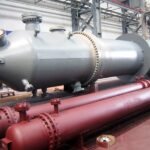
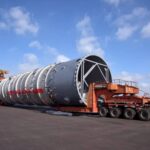
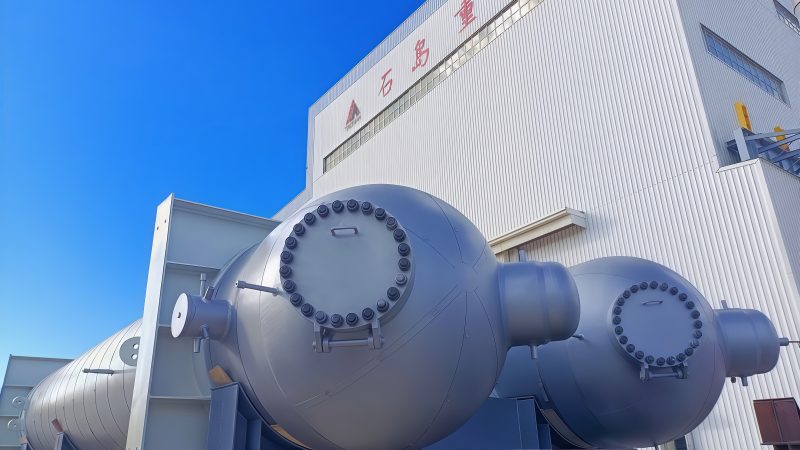
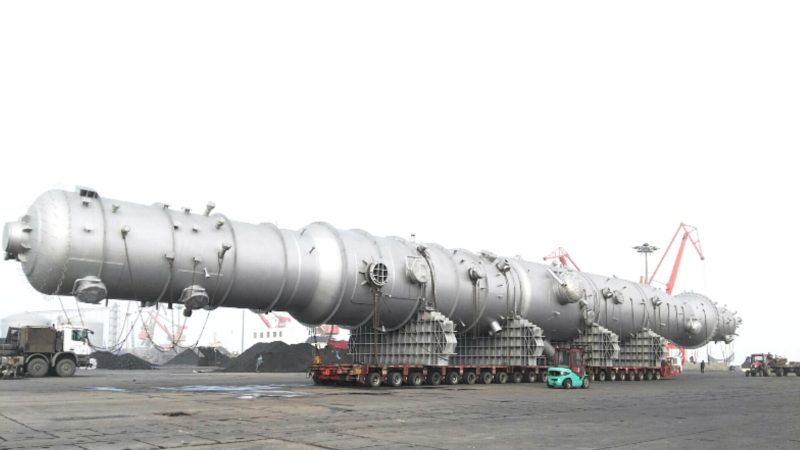
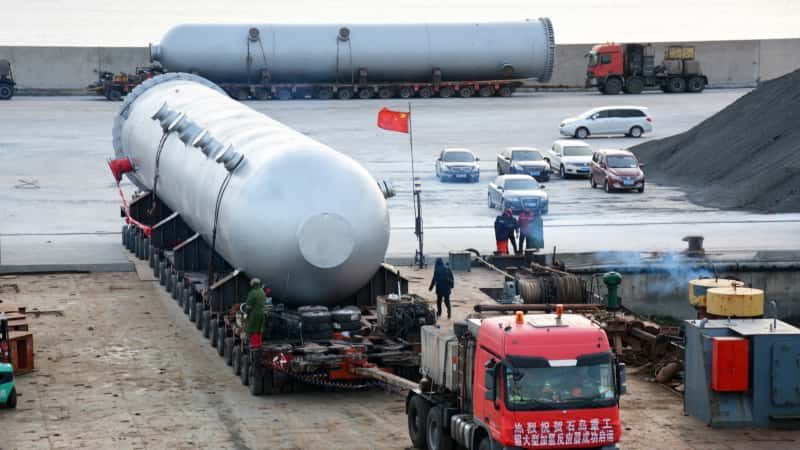
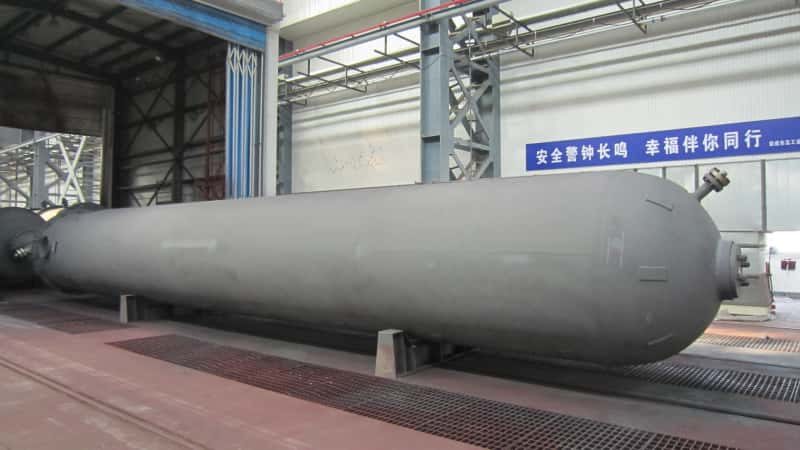
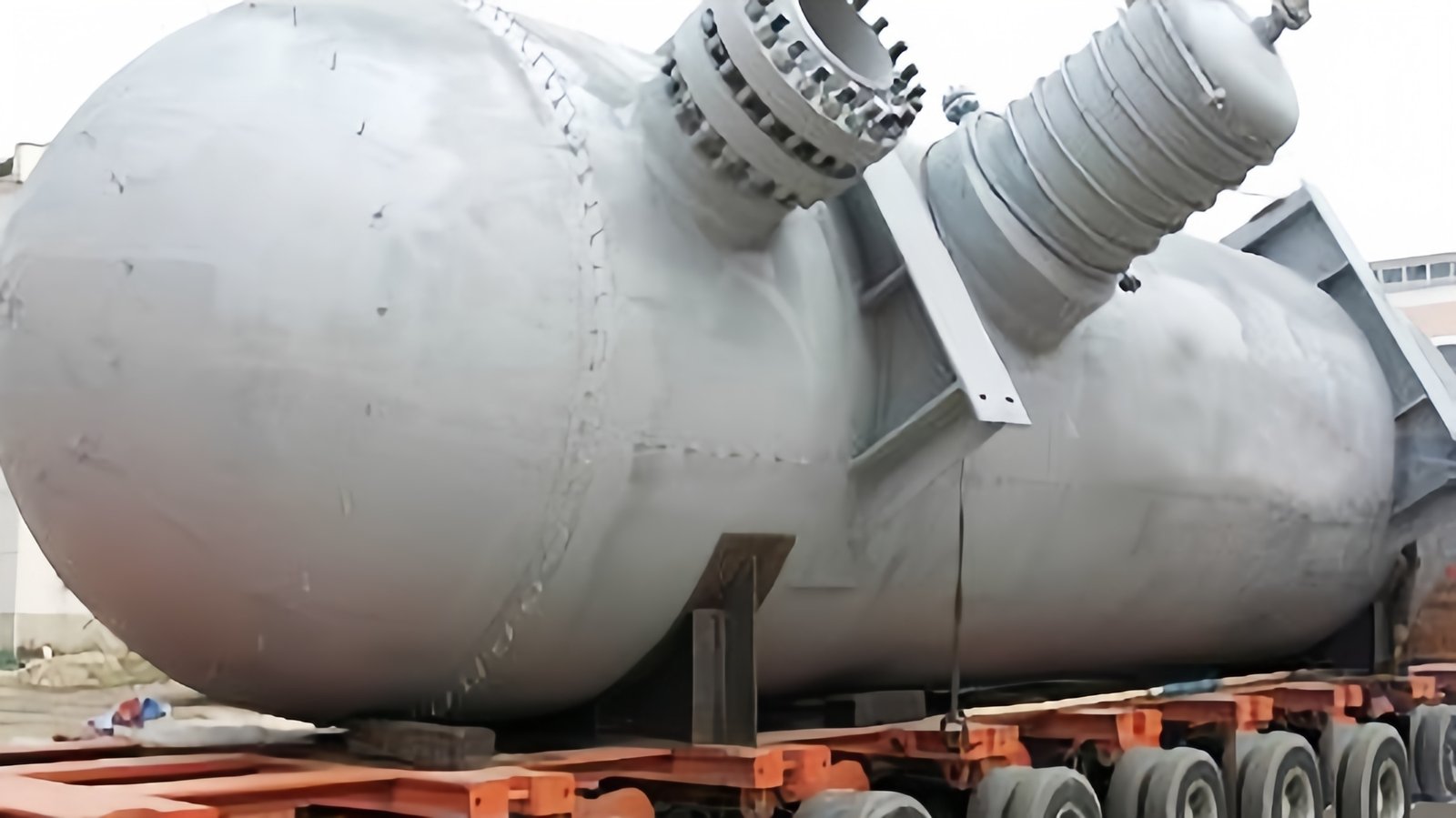
The published cold high-pressure separator project provides equipment context. Any gas carry-under commitment for a new project must be separately defined and confirmed.
References
- Conventional Horizontal Separator. Schlumberger (SLB), 2011 copyright, document 11-TS-0123. Product sheet; used for carryover/carry-under terminology and measurement context. Original PDF.
- Solution gas. SLB Energy Glossary, publication date not stated; accessed October 19, 2026. Definition.
- Savvy Separator: Introduction to CFD for Separator Design. Alex Read, SPE Oil and Gas Facilities, June 27, 2016. Article.
- BPVC Section VIII—Rules for Construction of Pressure Vessels, Division 1. ASME, public product description displaying the 2025 edition; accessed October 19, 2026. Only the public scope description was consulted, not the standard’s full text. Scope and product page.
- Installing Vapor Recovery Units on Crude Oil Storage Tanks. U.S. EPA, Natural Gas STAR Lessons Learned, archived text edition; publication date not independently confirmed. Technology Background consulted for flashing context only. Archived document.