How Do You Choose Large Vertical or Horizontal Storage Tanks for Chemical Projects?
Large chemical storage tanks are selected around project conditions, not only capacity. For EPC buyers, technical managers, and project procurement teams, the choice between vertical and horizontal storage tanks affects site layout, foundation design, pressure condition, corrosion protection, inspection access, transportation, installation, and long-term operation. This guide focuses on industrial storage tanks above 1,000 liters for chemical, petrochemical, oil and gas, environmental, and industrial manufacturing projects.
WSHI focuses on complete project-based storage equipment, not small containers or standalone tank accessories. A large tank procurement package should define the tank body, supports, nozzles, manways, coating or lining, pressure boundary where applicable, inspection, testing, documentation, packing, loading, and delivery scope.
Vertical tanks are always better than horizontal tanks for chemical storage.False
Vertical tanks may save ground area, but horizontal tanks may be better where height is restricted, transport as a complete vessel is practical, or pressure-rated saddle-supported storage is required.
Large chemical storage tank selection should start with medium data, pressure condition, corrosion risk, site layout, and delivery limits.True
Capacity alone is not enough for procurement. The stored medium, pressure or vapor condition, coating or lining needs, foundation, inspection scope, and transport route can all affect the final tank design.
What Are Large Chemical Storage Tanks?
Large chemical storage tanks are project-scale vessels used to store liquid chemicals, hydrocarbons, wastewater, process liquids, intermediates, utilities, or other industrial media. Depending on the application, they may be atmospheric tanks, low-pressure tanks, or pressurized storage vessels.
For WSHI’s manufacturing scope, storage tank inquiries should be positioned toward complete industrial equipment above 1,000 liters. Small fittings, accessories, or tank internals should only be discussed as part of the complete storage tank package.
Buyers can review WSHI’s industrial storage tanks and custom pressure vessels when planning early-stage chemical storage projects.
Vertical vs Horizontal Storage Tanks: The Main Difference
Vertical storage tanks are installed upright and usually have a smaller footprint for the same storage volume. They are often selected when site space is limited, when large capacity is needed in a compact area, or when gravity drainage and level measurement are important.
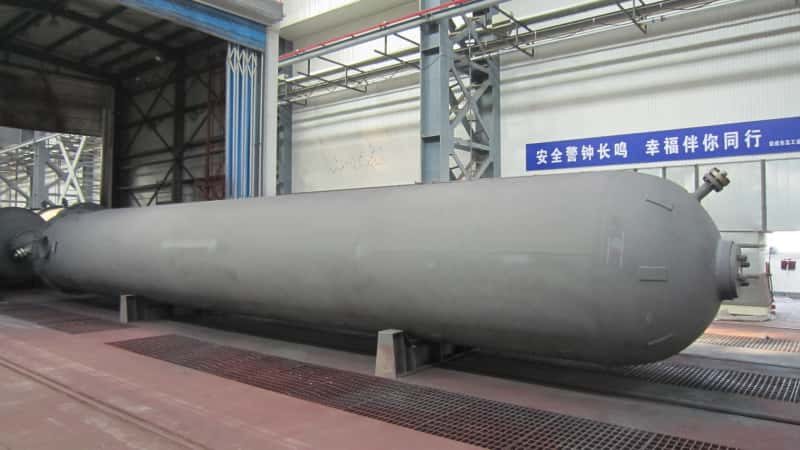
Horizontal storage tanks are installed on saddles or supports and may be easier to transport or install in some project layouts. They may be selected when height is restricted, when access from grade is preferred, or when the site layout favors a lower profile vessel.
There is no universal “best” option. The right choice depends on medium properties, required capacity, pressure condition, site space, foundation, safety requirements, installation method, and delivery route.
| Selection point | Vertical tank | Horizontal tank |
|---|---|---|
| Typical layout advantage | Smaller footprint for large volume | Lower profile where height is limited |
| Common project use | Tank farms, chemical storage, wastewater holding, process liquids | Pressurized storage, liquefied gas service, buffer storage, transport-friendly vessels |
| Foundation focus | Base support, wind, seismic, settlement, containment | Saddles, support loads, foundation pads, nozzle access |
| Delivery consideration | Height and diameter may require route review or field assembly | Shop fabrication and complete-unit shipment may be practical within route limits |
| Buyer caution | Do not ignore height, lifting, wind, seismic, or site access | Do not ignore footprint length, saddle loads, drainage, or pressure rating |
When Vertical Storage Tanks May Be Suitable
Vertical tanks are commonly considered when the project needs larger storage volume on a smaller floor area. In tank farms, chemical plants, wastewater treatment areas, and petrochemical facilities, vertical tanks can help make better use of limited land.
They may also support easier gravity drainage in some liquid storage services, depending on bottom design, nozzle arrangement, and site piping. For outdoor tank farms, vertical tanks can be arranged in rows or groups with access lanes, containment, fire safety spacing, and maintenance access planned by the EPC contractor.
However, vertical tanks may create additional considerations. Their height can affect wind load, seismic design, foundation requirements, lifting method, site installation, and transportation if the tank is shipped as a complete unit. For very large tanks, field assembly or sectional delivery may need to be evaluated.
When Horizontal Storage Tanks May Be Suitable
Horizontal tanks may be useful when height is limited, when the site has overhead restrictions, or when a lower profile arrangement is preferred. They are also common for pressurized storage vessels, gas storage, liquefied gas service, and certain process buffer applications where saddle-supported vessels are practical.
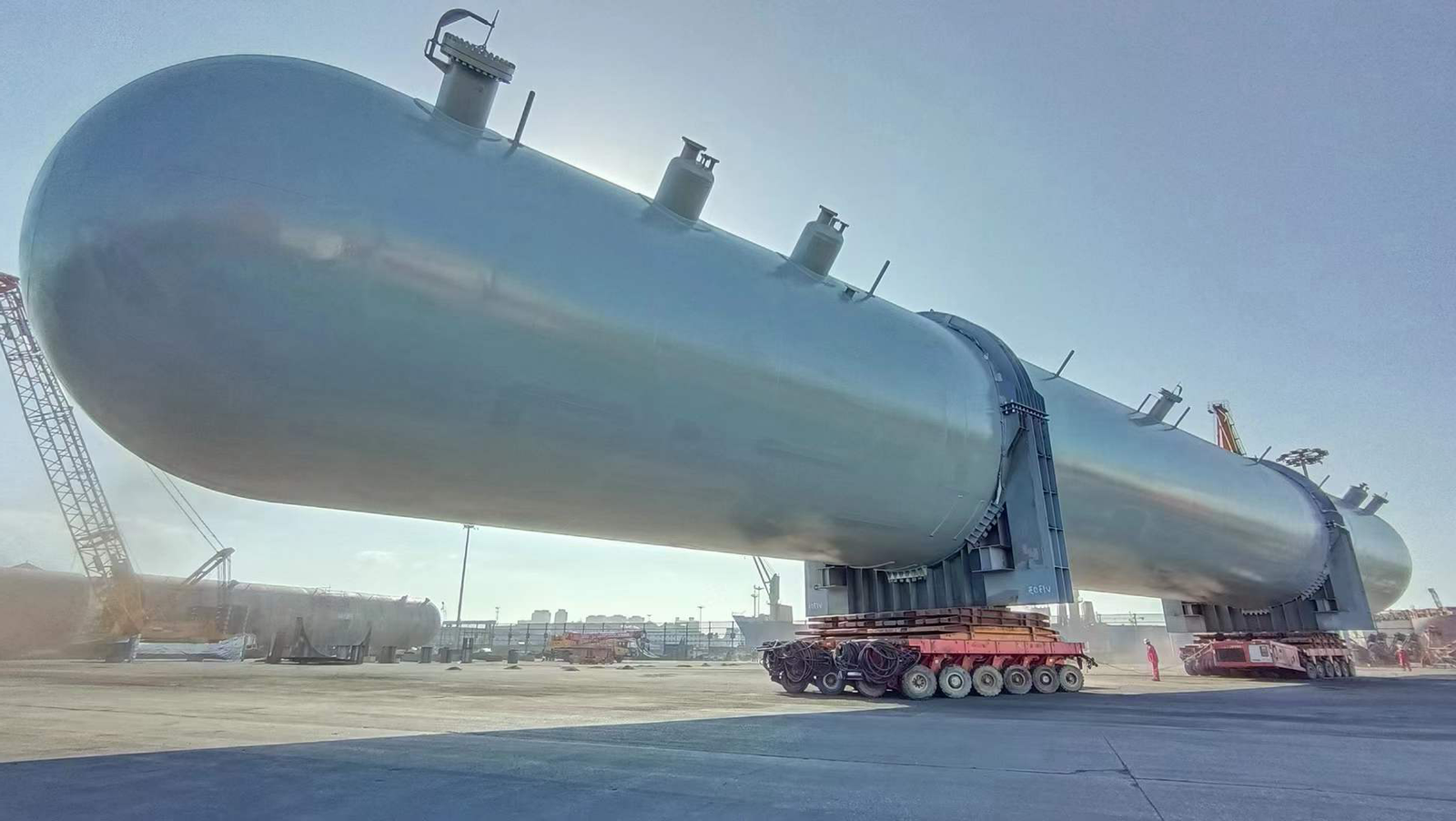
Horizontal tanks can sometimes be easier to shop-fabricate, test, and transport as complete units, depending on diameter, length, weight, and route limits. For pressurized applications, horizontal vessels are often used because they can be fabricated and inspected as pressure vessels according to project requirements.
Buyers planning propane, butane, LPG, or other liquefied gas storage can review WSHI’s liquefied gas storage tanks for project-scale storage discussions.
Key Selection Factors for EPC Buyers
Stored Medium and Chemical Compatibility
The first factor is the stored medium. Buyers should define whether the tank will store acid, alkali, solvent, hydrocarbon, wastewater, brine, ammonia solution, LPG, process liquid, or another industrial material.
Important data includes medium name and composition, concentration, density and viscosity, vapor pressure, flash point if relevant, operating temperature, corrosive components, water content, solid content or sediment risk, cleaning chemicals, and product purity or contamination limits.
Material and coating choices should be based on this information. Carbon steel, stainless steel, low-alloy steel, lined steel, coated steel, or other materials may be considered depending on the project, but final selection should follow engineering review and applicable standards.
Capacity Above 1,000 Liters and Operating Strategy
For industrial EPC projects, tank capacity should be based on process demand, batch size, delivery frequency, safety inventory, shutdown reserve, and plant operating schedule. WSHI’s storage tank content should remain focused on tanks above 1,000 liters and complete project equipment.
A tank that is too small may create frequent filling, unstable operation, or insufficient buffer capacity. A tank that is too large may increase foundation cost, land use, inspection work, and project capital cost. EPC teams should size the tank according to real operating needs, not only a rough volume estimate.
Atmospheric, Low-Pressure, or Pressurized Service
A key purchasing question is whether the tank is atmospheric, low-pressure, or pressure-rated. This depends on vapor pressure, operating temperature, blanketing requirement, relief philosophy, stored medium, and local regulations.
API Standard 650 is widely associated with welded tanks for oil storage, while pressure vessels may fall under ASME BPVC Section VIII or other project-specified codes where applicable. OSHA’s storage tank standards page references API 650 and API 653 as national consensus standards in relevant tank contexts. The final standard should always be selected by the owner, EPC contractor, and qualified engineering party.
Vertical or Horizontal Layout
Tank orientation should be reviewed together with site layout. Vertical tanks may save ground area but require more height clearance and foundation review. Horizontal tanks may require more footprint length but can be suitable where height is restricted or where saddle-supported pressure storage is preferred.
Buyers should confirm available plot area, height restrictions, foundation conditions, access for inspection and maintenance, piping direction, pump suction requirements, drainage arrangement, containment area, fire safety spacing, transport route, and lifting method.
Corrosion Protection, Coating, and Lining
Chemical storage projects often depend on coating or lining quality. Internal lining may be required when the stored medium is corrosive or when product contamination must be avoided. External coating should consider climate, humidity, coastal exposure, UV exposure, industrial atmosphere, and insulation requirements.
RFQs should define surface preparation, primer, intermediate coat, topcoat, dry film thickness, internal lining, holiday testing if required, repair requirements, and coating inspection documents.
Inspection, Testing, and Documentation
Inspection and testing requirements should be defined before quotation. Depending on tank type and project standard, these may include material certificates, welding documents, dimensional inspection, NDE where specified, hydrostatic testing, leak testing, coating inspection, and final documentation.
For in-service aboveground tank inspection and repair topics, API 653 is a common industry reference. OSHA’s 1926.152 flammable liquids regulation page may also be relevant for broader safety context in certain storage applications. Actual project requirements should follow the latest applicable standard and local authority requirements.
Manufacturing and Delivery Considerations
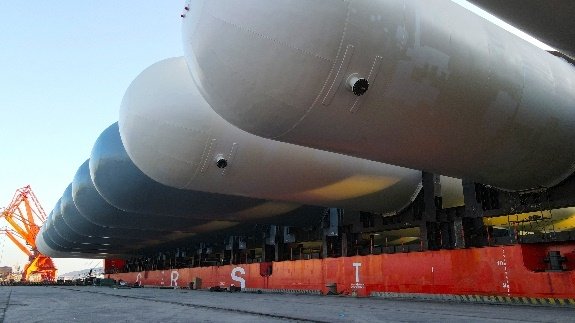
Large storage tanks can be shop-fabricated, modularized, or field-assembled depending on size, wall thickness, material, route restrictions, and site conditions. EPC buyers should involve the manufacturer early if tank diameter, length, height, or weight may affect transport.
As a large-scale pressure vessel manufacturer, WSHI supports project-based manufacturing for storage tanks, pressure vessels, heat exchangers, process columns, and custom industrial equipment. For projects that include tank farms, process vessels, and thermal equipment, buyers may also review industrial heat exchangers and process towers and columns as part of the wider equipment scope.
RFQ Checklist for Large Chemical Storage Tanks
| RFQ item | Information to provide | Why it matters |
|---|---|---|
| Stored medium | Name, composition, concentration, impurities, corrosive components | Drives material and coating selection |
| Tank capacity | Required working volume, total volume, reserve strategy | Prevents under-sizing or excessive capital cost |
| Pressure condition | Atmospheric, low-pressure, pressure-rated, vapor pressure, blanketing | Determines tank or pressure vessel design basis |
| Orientation | Vertical or horizontal preference, site constraints, layout drawings | Controls footprint, height, foundation, and access |
| Materials | Base material, corrosion allowance, lining, coating, insulation | Supports service life and product compatibility |
| Interfaces | Nozzle schedule, manways, drains, vents, instruments, supports | Reduces field piping and maintenance conflicts |
| Inspection | NDE, leak test, hydrotest, coating inspection, third-party witness | Defines quality scope before fabrication |
| Delivery | Destination, transport restrictions, lifting method, packing requirement | Prevents late shipping and site installation problems |
Common Procurement Mistakes
One common mistake is choosing tank orientation only by habit. Vertical and horizontal tanks serve different layout, capacity, pressure, and transport needs.
Another mistake is selecting material without enough medium data. Chemical concentration, water content, chloride level, temperature, pH, vapor pressure, and cleaning method can change the material and coating requirement.
A third mistake is ignoring transport and installation until the end. Oversized tanks may require route review, special loading, port handling, lifting planning, or field assembly.
A fourth mistake is requesting small accessories instead of defining the complete tank package. For industrial projects, the RFQ should focus on the finished tank and its project interfaces.
What Should Buyers Prepare Before RFQ?
Before requesting a quotation, EPC buyers should prepare stored medium and composition, required capacity above 1,000 liters, operating and design pressure, operating and design temperature, vertical or horizontal preference if known, site layout and foundation information, material requirements, coating or lining specification, applicable standards, nozzle orientation and piping interfaces, inspection and testing requirements, delivery terms and destination, transport restrictions, and documentation expectations.
Conclusion
Choosing large vertical or horizontal storage tanks for chemical projects requires a full review of medium properties, tank capacity, pressure condition, site layout, corrosion protection, inspection, manufacturing, and delivery. The right tank orientation is the one that best fits the project’s operating conditions and installation boundary.
If you are preparing a chemical storage, petrochemical tank farm, LPG storage, wastewater holding, or industrial process storage project, you can share your medium information, required capacity, drawings, pressure and temperature conditions, coating requirements, inspection scope, and delivery terms with WSHI. Our engineering and manufacturing team can help discuss the feasibility of large industrial storage tanks, pressure storage vessels, and complete project equipment for your requirements. You can contact our engineering team to discuss your storage tank procurement scope.
FAQ
Which is better, a vertical or horizontal storage tank?
Neither is universally better. Vertical tanks are often useful where land area is limited and large capacity is required. Horizontal tanks may be suitable where height is restricted, transport as a complete vessel is practical, or pressurized storage is required.
What size range does this article focus on?
This article focuses on large industrial storage tanks above 1,000 liters for chemical, petrochemical, oil and gas, environmental, and EPC projects.
Are chemical storage tanks pressure vessels?
Some are, but not all. Atmospheric tanks, low-pressure tanks, and pressurized vessels follow different design approaches. The correct classification depends on pressure, temperature, medium, and applicable standards.
What information is needed before ordering a chemical storage tank?
Buyers should provide medium composition, capacity, pressure, temperature, material requirements, coating or lining needs, drawings, standards, inspection scope, delivery terms, and site constraints.
Why is coating or lining important for chemical tanks?
Coating or lining can affect corrosion resistance, product cleanliness, service life, and maintenance. It should be selected based on actual medium, temperature, concentration, and owner specifications.