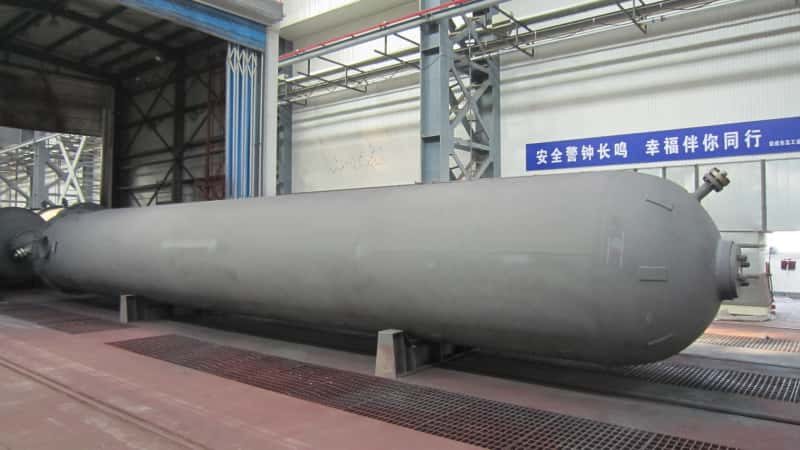

How Do EPC Buyers Specify Corrosion Allowance for Chemical Pressure Vessels and Storage Tanks?
Corrosion allowance affects wall thickness, material selection, vessel weight, coating requirements, inspection planning, service life expectations, and final project cost. For EPC buyers purchasing chemical pressure vessels or large storage tanks, the risk is treating corrosion allowance as a fixed number. In practice, it should be reviewed together with the stored or processed medium, temperature, pressure, water content, pH, chloride level, operating cycle, design life, coating or lining strategy, and applicable project standards.
WSHI focuses on complete project-based equipment, including custom pressure vessels, large industrial storage tanks, heat exchangers, process columns, separators, and evaporator-related vessels. Corrosion-related details such as nozzles, supports, lining, coating, or internal attachments should be discussed as part of the complete vessel or tank scope, not as small standalone purchases.

Corrosion allowance should be copied from a previous project as a fixed standard value.False
Corrosion allowance depends on medium composition, temperature, pressure, corrosion mechanism, material, coating or lining strategy, design life, inspection plan, and owner specification.
Corrosion allowance affects more than wall thickness.True
Additional thickness can affect material procurement, vessel weight, forming, welding, NDE, PWHT possibility, supports, lifting, transportation, foundation loads, and final project cost.
What Is Corrosion Allowance?
Corrosion allowance is extra material thickness added to the calculated minimum thickness of a pressure vessel, tank, column, or process vessel to compensate for expected metal loss during service. It is commonly used where general corrosion is expected and where the equipment must retain adequate wall thickness throughout its intended operating life.
For EPC procurement, corrosion allowance is not only a design topic. It affects fabrication cost, equipment weight, forming feasibility, welding schedule, inspection scope, lifting, transport, and delivery planning. When buying custom vessels, the corrosion allowance should be stated in the datasheet or project specification instead of being left for suppliers to guess.
Why Corrosion Allowance Matters in Chemical Projects
Chemical, petrochemical, coal chemical, oil and gas, wastewater, and environmental projects often involve corrosive or uncertain media. Acidic liquids, alkaline solutions, brines, chlorides, sulfur compounds, wet CO2, H2S, organic acids, solvents, ammonia-containing streams, wastewater concentrates, and cleaning chemicals can all influence material loss.
If corrosion allowance is too low, the equipment may lose usable wall thickness earlier than expected. If it is too high without engineering justification, the vessel may become unnecessarily heavy and expensive. For large equipment, even a small increase in wall thickness can affect plate procurement, rolling, welding, heat treatment, lifting, transportation, and foundation loads.
This is why corrosion allowance should be discussed early for industrial storage tanks, separators, reactors, evaporator vessels, heat exchanger shells, and process towers and columns.
Where Corrosion Allowance Is Commonly Reviewed
| Equipment type | Corrosion review focus | Procurement implication |
|---|---|---|
| Chemical pressure vessels | Internal and external corrosion, service medium, pressure, temperature, operating life | Material grade, corrosion allowance, NDE, testing, and documentation should be defined in the RFQ |
| Large storage tanks above 1,000 L | Stored liquid, vapor space, bottom corrosion, coating, lining, outdoor exposure | Tank body, lining, coating, inspection access, foundation interface, and delivery scope should be reviewed together |
| Heat exchanger shells and channels | Shell-side and tube-side fluids, cooling water, acidic condensate, cleaning chemicals | Buyers should define media on both sides and avoid assuming one corrosion allowance fits all components |
| Evaporator and wastewater vessels | Concentrated salts, chlorides, scaling, hot wastewater, cleaning cycles | Corrosion allowance should be reviewed with alloy, lining, coating, and cleaning strategy |
| Process towers and columns | Wet zones, overhead corrosion, trays or packing supports, process chemistry | Column shell, internals interfaces, nozzles, and inspection scope need coordinated review |
Chemical Pressure Vessels
Chemical pressure vessels may handle acids, alkalis, solvents, process intermediates, brines, or mixed-phase streams. The corrosion allowance should be selected based on medium composition, temperature, pressure, corrosion data, and operating life.
For process vessels, buyers should confirm whether corrosion is expected on the internal surface, external surface, or both. External corrosion may be relevant in coastal sites, wet insulation conditions, outdoor exposure, chemical atmosphere, or buried and mounded installations.
Storage Tanks Above 1,000 Liters
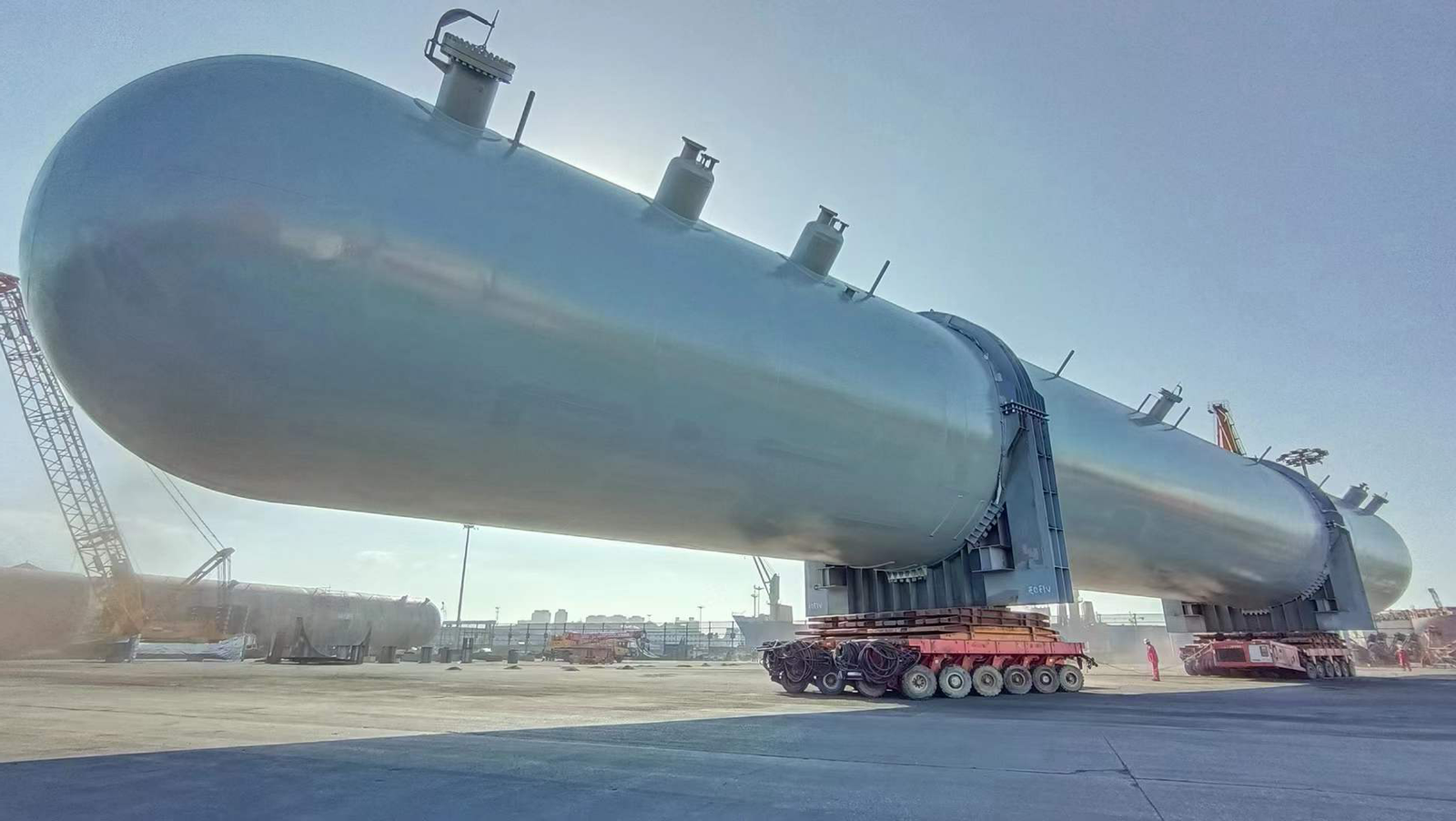
Large chemical storage tanks should be specified with a clear corrosion strategy. WSHI’s storage tank content should stay focused on complete industrial tanks above 1,000 liters, not small storage containers.
For large industrial storage tanks, corrosion allowance must be reviewed together with tank material, coating, lining, bottom protection, vapor space corrosion, product contamination limits, inspection access, and site environment.
Heat Exchanger Shells and Channels
Heat exchangers can face corrosion on either side depending on process fluid and utility fluid. Cooling water, sour process streams, acidic condensate, high-chloride fluids, and chemical cleaning solutions can all affect material selection.
For shell and tube heat exchangers, buyers should define both shell-side and tube-side media, corrosion allowance expectations, fouling assumptions, cleaning method, and material requirements.
Evaporator and Wastewater Vessels
Evaporators and wastewater concentration systems may become more corrosive as dissolved salts and contaminants concentrate. A feed stream that looks moderate at the inlet may create aggressive conditions near the concentrate outlet.
For wastewater evaporation, brine concentration, or ZLD-related projects, corrosion allowance should be reviewed together with coating, lining, alloy selection, scaling behavior, cleaning chemicals, and concentrate handling.
Key Inputs for Specifying Corrosion Allowance
Medium Composition
The RFQ should include the full medium composition, not only the product name. Buyers should provide pH, chloride concentration, sulfur compounds, CO2, H2S, ammonia, organic acids, dissolved oxygen, water content, solids, solvent content, and expected impurities where relevant.
For mixed or variable media, provide normal, maximum, and upset-case compositions if available.
Temperature and Pressure
Higher temperature can accelerate corrosion in many services. Pressure can influence phase behavior, dissolved gas content, and safety requirements. EPC buyers should provide operating pressure, design pressure, operating temperature, design temperature, startup and shutdown cases, and cleaning conditions.
Expected Service Life
Corrosion allowance is linked to the expected operating life and inspection strategy. A short-term temporary vessel and a long-life petrochemical pressure vessel may require different review logic. The design life expectation should be defined by the owner and project specification.
Corrosion Rate or Field Experience
Where possible, buyers should provide corrosion rate data, laboratory test results, historical plant experience, or corrosion engineer recommendations. If no data exists, the material and corrosion allowance should be reviewed cautiously by qualified engineering parties.
Coating, Lining, or Cladding Strategy
Corrosion allowance is only one method of corrosion control. Coatings, linings, cladding, corrosion-resistant alloys, inhibitors, process control, water removal, and inspection programs may also be used. In highly localized corrosion, pitting, crevice corrosion, or chloride stress corrosion cracking conditions, simply adding wall thickness may not be enough.
The RFQ should define whether internal coating, rubber lining, glass flake lining, stainless cladding, or other protection is required by the project.
Corrosion Allowance vs. Material Selection
A common misconception is that corrosion allowance can compensate for any corrosive service. That is not always true. If the medium causes localized attack, cracking, rapid corrosion, or contamination risk, a better material, lining, coating, or process change may be needed.
Carbon steel with corrosion allowance may be suitable for some general corrosion services. Stainless steel, duplex stainless steel, clad plate, titanium, nickel alloys, or coated and lined construction may be considered for other services. Final material selection should be made by the EPC contractor, owner, process licensor, corrosion engineer, and applicable standards.
As a large-scale pressure vessel manufacturer, WSHI can fabricate project-based equipment according to approved drawings and specifications, but the corrosion basis should be defined through project engineering review.
How Corrosion Allowance Affects Manufacturing
| Manufacturing area | Potential impact | Buyer action |
|---|---|---|
| Wall thickness and weight | Additional allowance increases plate thickness, vessel weight, lifting load, and transport limits | Confirm fabrication feasibility, supports, foundation loads, and logistics early |
| Welding and NDE | Thicker materials can require more welding passes, inspection time, and documentation | Define welding, NDE, PWHT possibility, and inspection hold points in the RFQ |
| Coating and lining | Surface preparation, lining thickness, curing, and holiday testing can affect lead time | Include coating or lining in the complete equipment quotation scope |
| Documentation | Material certificates, inspection records, coating reports, and data books may be required | List final documentation expectations before purchase order placement |
Additional corrosion allowance increases wall thickness. This can affect plate availability, forming, rolling, welding volume, lifting weight, support design, transport, and installation. For large pressure vessels, thicker walls may also influence PWHT requirements, NDE planning, and fabrication sequence depending on code and project specification.
If corrosion protection depends on coating or lining, surface preparation becomes critical. Blasting grade, coating thickness, curing time, holiday testing, lining inspection, and repair procedures should be included in the quotation scope.

Standards and Documentation Considerations
ASME BPVC Section VIII Division 1 is commonly referenced for pressure vessel design and fabrication, while API Standard 650 is widely associated with welded tanks for oil storage. API has announced the 13th edition of API Standard 650, describing it as supporting safety, sustainability, and environmental performance of welded oil storage tanks. For in-service tank inspection and repair, the API 653 aboveground storage tank inspector program is also a useful industry reference.
However, corrosion allowance requirements are not universal across all projects. The applicable standard depends on equipment type, medium, pressure, temperature, jurisdiction, owner specification, and inspection authority.
A pressure vessel or storage tank RFQ should define the applicable code and edition if specified, corrosion allowance for each side or component, material grade, coating or lining specification, NDE requirements, hydrostatic or pneumatic testing requirements, inspection hold points, final documentation and data book requirements, and nameplate or marking requirements.
Common Procurement Mistakes
One common mistake is stating only “corrosive liquid” without composition. This does not allow a reliable material or corrosion allowance review.
Another mistake is copying a corrosion allowance from a previous project without checking whether medium, temperature, concentration, cleaning method, or design life has changed.
A third mistake is assuming more corrosion allowance always means better equipment. In some services, corrosion-resistant material, coating, lining, cladding, or process control may be more appropriate.
A fourth mistake is leaving coating or lining outside the vessel procurement boundary. If corrosion protection is essential, it should be included in the complete equipment scope.
A fifth mistake is discussing small accessories or minor parts as standalone items. For WSHI’s scope, corrosion-related details such as nozzles, supports, internal attachments, instruments, or accessories should only be addressed as part of the complete pressure vessel, storage tank, heat exchanger, or process equipment package.
What Should EPC Buyers Prepare Before RFQ?
| RFQ input | Recommended detail |
|---|---|
| Equipment scope | Equipment type, application, complete vessel or tank boundary, drawings or sketches |
| Medium data | Composition, pH, chloride, sulfur, CO2, H2S, water, oxygen, solids, impurities |
| Operating data | Operating and design pressure, operating and design temperature, cleaning conditions |
| Corrosion basis | Expected corrosion rate, field experience, design life, corrosion engineer input if available |
| Materials | Material grade, corrosion allowance, cladding, lining, coating, contamination limits |
| Quality requirements | NDE, pressure testing, coating inspection, hold points, third-party inspection |
| Delivery and documents | Destination, transport constraints, final data book, certificates, inspection records |
If corrosion allowance is not yet confirmed, buyers should state the available medium data and ask the manufacturer to list material and fabrication assumptions clearly, while the final corrosion decision remains with the project engineering team.
Conclusion
Corrosion allowance for chemical pressure vessels and storage tanks should be specified through engineering review, not copied from a generic value. Medium composition, pressure, temperature, design life, corrosion rate, material, coating, lining, inspection, and delivery requirements all affect the final equipment design and procurement cost.
If you are preparing a chemical pressure vessel, separator, heat exchanger, process column, evaporator vessel, or large industrial storage tank project, you can share your datasheets, drawings, medium composition, corrosion data, material requirements, coating specification, inspection scope, and delivery terms with WSHI. Our engineering and manufacturing team can help discuss the fabrication feasibility and complete equipment boundary for your project requirements. You can contact our engineering team to discuss your project scope.
FAQ
What does corrosion allowance mean in pressure vessel design?
Corrosion allowance is extra wall thickness added to the calculated minimum thickness to compensate for expected metal loss during service. It should be based on medium, corrosion rate, material, design life, and project requirements.
Is corrosion allowance the same for all pressure vessels?
No. It varies by medium, temperature, pressure, corrosion mechanism, material, operating life, coating or lining strategy, and applicable standards.
Can coating replace corrosion allowance?
Sometimes coating, lining, cladding, or corrosion-resistant material may reduce the need for corrosion allowance, but this must be confirmed by project engineering and applicable specifications.
Why does corrosion allowance affect quotation cost?
Additional thickness can increase material weight, welding volume, forming difficulty, inspection time, PWHT possibility, transport weight, and overall fabrication cost.
What information should buyers provide for corrosion review?
Buyers should provide full medium composition, pressure, temperature, pH, chloride, water content, sulfur compounds, corrosion data, required service life, material requirements, coating or lining needs, and applicable standards.