
Chemical Recycling Equipment for Polyurethane Elastomers: What Changes During Scale-Up?
Selecting polyurethane chemical recycling equipment requires more than increasing the dimensions of a successful laboratory vessel. Larger production volumes change how material is handled, heated, mixed, transferred and separated. Feedstock variation and cleaning requirements also become important inputs to equipment availability and cost.
For EPC buyers and project developers, the central procurement question is whether the available process data are sufficient to specify complete industrial equipment. A clear scale-up basis helps manufacturers evaluate reactor vessels, heat exchangers, separation equipment and associated tanks without making unsupported assumptions about the recycling chemistry.
A laboratory recycling vessel can be scaled to production by increasing all dimensions proportionally.False
Scale changes heat transfer, mixing, material handling, operating cycles and separation behavior. Industrial equipment requires a documented process and scale-up basis.
Pressure testing a reactor vessel proves recycling yield and recovered-product quality.False
Mechanical acceptance verifies the approved construction basis. Yield, product quality and energy performance require separately assigned process guarantees and acceptance conditions.
A New Pilot Plant Highlights the Scale-Up Challenge
On September 16, 2026, Covestro announced the opening of a pilot plant for chemical recycling of high-performance elastomers in Leverkusen. The company described the project as moving its Vulkollan recycling process from laboratory development into pilot operation, with the aim of advancing toward industrial application.
The official Covestro announcement provides a recent example of this development stage. It does not establish a commercial-scale equipment procurement program or disclose a complete process design.
The considerations below are general engineering and procurement guidance. They do not describe Covestro’s proprietary equipment arrangement or imply WSHI participation in that project.
Define the Recycling Route Before Defining the Equipment
“Polyurethane recycling” does not identify one universal process. The selected technology, feedstock and intended recovered products determine the required operating conditions and downstream processing.
An equipment inquiry should identify the process route and the party responsible for its design. Where proprietary technology is involved, the technology owner should provide or approve the design information needed by equipment manufacturers.
A vessel manufacturer can evaluate an approved mechanical duty, but the term “depolymerization reactor” alone does not establish temperature, pressure, residence time or product quality requirements.
The procurement package should therefore begin with an equipment list tied to process functions, rather than a generic list of vessels suitable for chemical service.
Start with a Representative Feedstock Envelope
Distinguish Controlled Scrap from Collected Material
Laboratory development may use selected material with a consistent composition. A proposed industrial plant may receive production scrap, returned products or mixed collections with greater variability.
Buyers should identify the accepted feed categories and the limits governing moisture, contamination, additives and other relevant characteristics. These limits should come from the process developer’s assessment.
Do not assume that results obtained from one elastomer formulation apply to every polyurethane waste stream. The equipment design basis should identify which feedstocks have been evaluated and which remain outside the approved operating range.
Include Feed Preparation in the Project Boundary
Particle size, bulk handling behavior and the condition of material entering the reaction stage can influence the equipment duty. Feed preparation may be supplied by a different contractor, but its output requirements still need coordination.
The interface should specify what arrives at the process vessel, in what condition and at what rate. Unresolved preparation assumptions can otherwise become vessel-performance disputes later.
Any feed-preparation machinery should have its own supply responsibility. It should not be assumed to be included in a stationary-equipment manufacturing quotation.
Translate Throughput into an Operating Cycle
A target annual capacity is not sufficient to size a complete reaction vessel. The design needs a production schedule and an agreed basis for converting feed quantity into equipment duty.
For batch operation, distinguish charging, processing, heating, cooling, discharge and cleaning time. These activities contribute to the cycle, even when only part of it involves the principal reaction.
For continuous operation, define the required flow range, residence-time basis and expected interruptions. The process designer should establish how those conditions affect the selected equipment.
For custom pressure vessels, specify working inventory separately from gross volume. Operating space, expected behavior of the mixture and the approved mechanical requirements all influence the final equipment size.
Reassess Heat Transfer at Larger Scale
Increasing vessel size does not preserve every relationship found in a smaller unit. Heating and cooling requirements must be evaluated against the proposed geometry, fluid properties and utility conditions.
A successful laboratory temperature profile should be translated into a defined industrial duty. State the required operating temperature, allowable variation and the relevant heating or cooling periods.
Account for Changing Material Properties
The mixture may change during processing. Where relevant, provide viscosity, solids content and other properties across the operating sequence rather than only at the initial charge condition.
These data affect whether the proposed heat-transfer arrangement can perform as intended. They also influence transfer and cleaning considerations.
If properties remain uncertain, identify the testing or pilot observations required to close the gap before fabrication decisions are fixed.
Define Complete Exchanger Duties
Where external heating, cooling or condensation is required, each exchanger should have a process datasheet. Include both stream conditions, utility availability, allowable pressure drop and fouling assumptions.
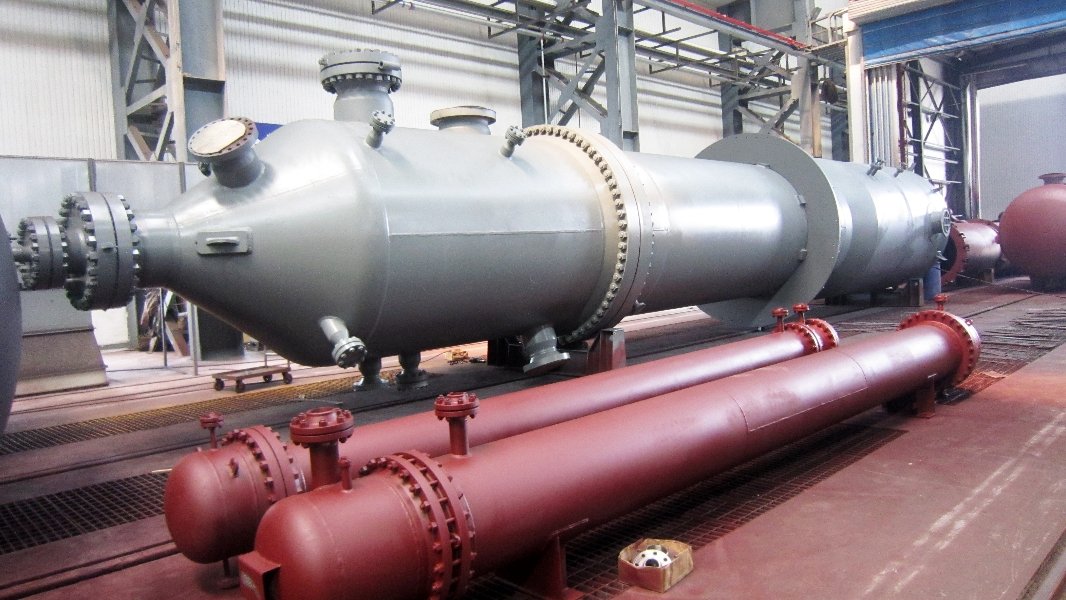
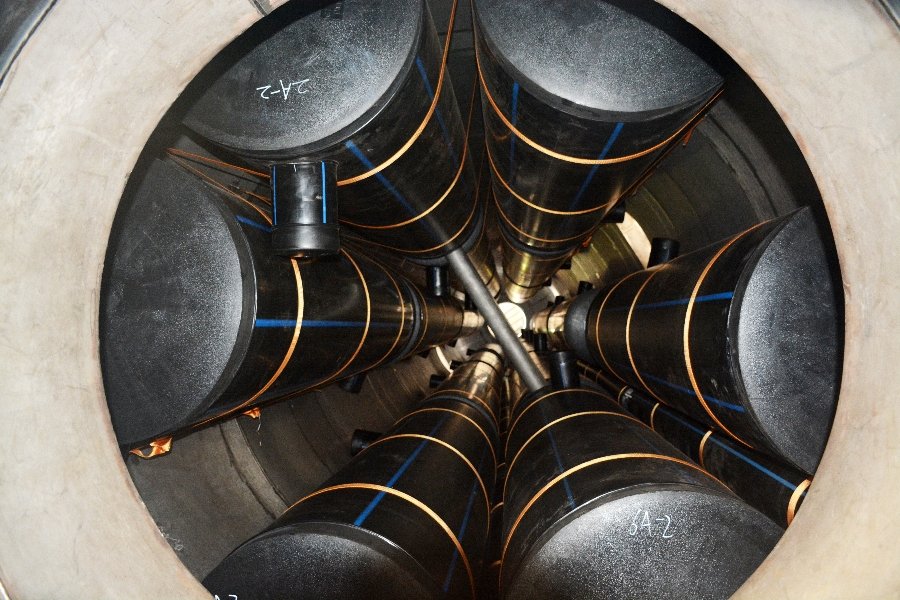
For shell and tube heat exchangers, buyers should also define maintenance access and cleaning requirements. Equipment selected only from a nominal heat duty may not address the process mixture’s actual behavior.
Verify Transfer and Separation Requirements
The material leaving the reaction stage may require further processing before it meets the intended product specification. The selected route determines whether cooling, liquid separation, recovery or other purification duties are needed.
Each stage should be supported by process data. A visible separation in a laboratory sample does not, by itself, establish the capacity or outlet quality of a continuously operated industrial separator.
Similarly, a material that can be transferred when hot may behave differently during shutdown or cooling. Define the relevant handling conditions and identify responsibility for transfer-system design.
Where the approved process requires recovery columns, the inquiry for process towers and columns should include the actual separation duty. Such equipment should not be added merely because it appears in another recycling plant.
Plan Cleaning and Residue Handling
Cleaning requirements can affect the achievable production schedule. Pilot work should help identify deposits, retained material and conditions that make equipment difficult to empty or restart.
The equipment specification should describe the intended cleaning method and any restrictions affecting materials or construction. Required access should be considered while the vessel arrangement is still being developed.
Assign a destination for cleaning liquids, residues and off-specification material. These streams belong in the project’s material balance and equipment scope.
Where separate buffering or storage is required, specify working capacity and operating conditions for industrial storage tanks. WSHI’s relevant storage scope is tanks above 1,000 liters.
Establish Materials and the Process Safety Basis
Material selection should address the complete exposure environment: feedstock, reagents, recovered streams, contaminants and cleaning chemicals. A material used in a short trial does not automatically establish suitability for a longer industrial operating campaign.
The process owner should also define the basis of safe operation before manufacturers finalize equipment requirements. Relevant reaction testing should address the chemistry and credible abnormal conditions.
The UK HSE’s guidance on reaction and product testing describes the importance of identifying reaction hazards and defining appropriate technical measures. This supports a project-specific assessment; it does not imply that every polyurethane recycling route has the same hazards.
Design pressure, temperature, external-pressure conditions and expected operating cycles should follow the approved assessment. A larger vessel or additional cooling area should not be treated as a substitute for process-safety engineering.
Separate Manufacturing Scope from Process Guarantees
The contract should identify who is responsible for technology performance, process sizing, thermal design, mechanical design and system integration.
These responsibilities may belong to different organizations. The equipment manufacturer needs approved inputs and an agreed procedure for resolving changes.
Claims about recovery yield, product quality or energy consumption require their own defined basis. They should not be inferred from the successful manufacture or pressure testing of a vessel.
Before requesting firm offers, establish a responsibility matrix covering the technology provider, EPC contractor, equipment manufacturer and other package suppliers. This makes quotations easier to compare and reduces unassigned work.
What Should a Scale-Up Equipment Inquiry Include?
| Information | Purpose |
|---|---|
| Feedstock envelope | Defines approved material types and relevant variability |
| Process basis | Establishes route, operating stages and equipment functions |
| Production schedule | Connects throughput with operating and cleaning time |
| Physical properties | Supports heat transfer, handling and separation assessment |
| Product requirements | Defines the intended outcome and acceptance responsibility |
| Mechanical specification | Establishes materials, design conditions and construction rules |
| Scope and delivery | Assigns engineering, manufacturing, site work and logistics |
Mark preliminary information clearly. Ask suppliers to identify which uncertainties affect cost, equipment dimensions or lead time.
Budget quotations can support development before every detail is complete. Fabrication release, however, requires the information needed to manufacture the agreed equipment safely and consistently with its approved design.
Review Manufacturing, Inspection and Delivery
The inspection plan should address material traceability, welding records, dimensional verification, required examination and testing. Where specified and applicable, ASME BPVC Section VIII, Division 1 provides pressure-vessel construction requirements. Applicability and certification requirements must be confirmed for the order.
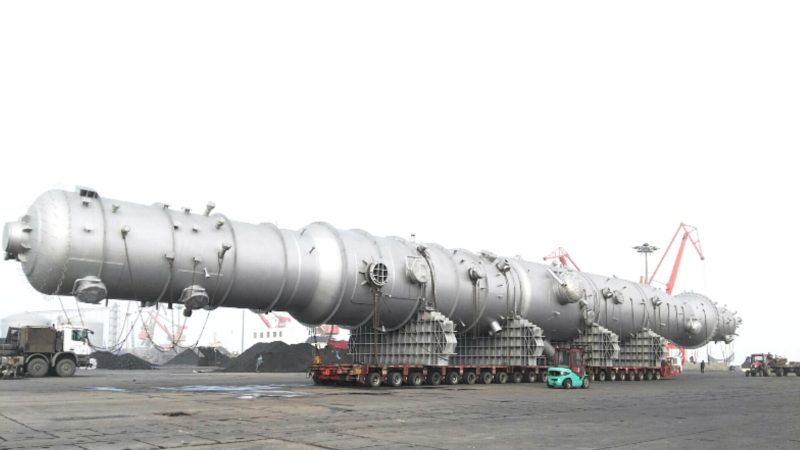
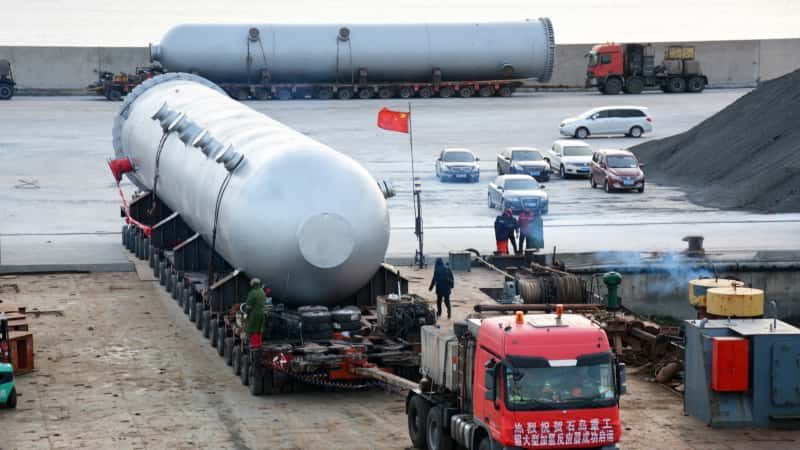
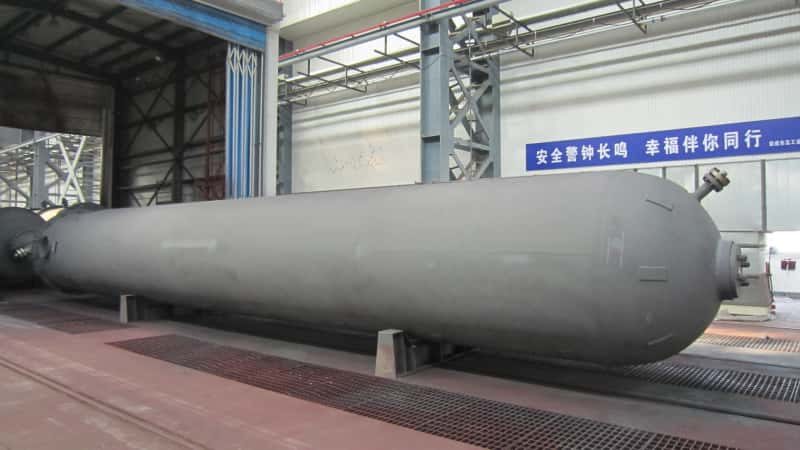
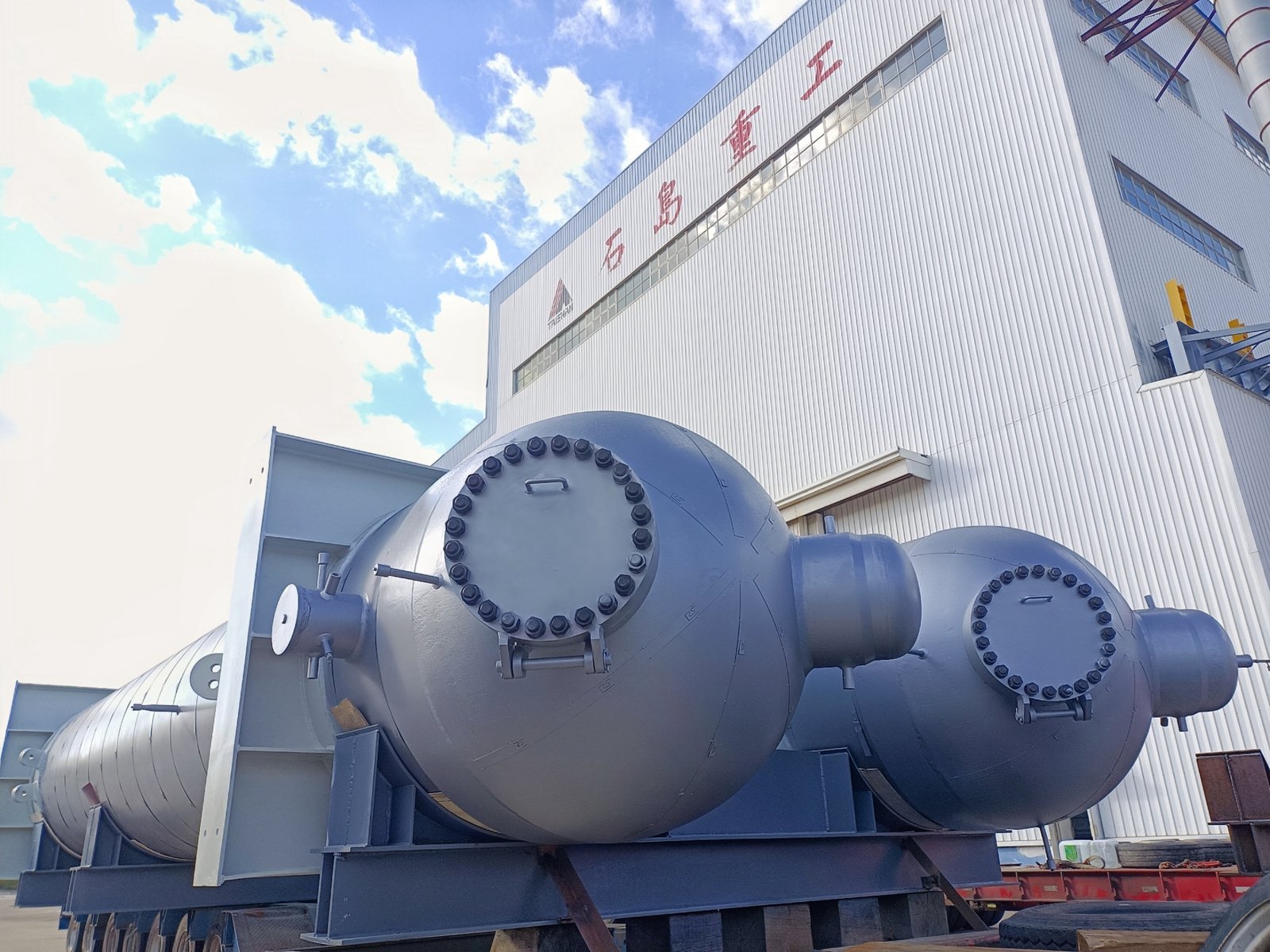
WSHI’s manufacturing capability includes engineering coordination, material procurement, welding fabrication, nondestructive examination, pressure testing, coating and heavy-equipment delivery activities.
For larger equipment, review transport dimensions and site access before finalizing the arrangement. The contract should identify the delivery point and responsibility for unloading, erection, field connections and commissioning.
FAQ
Can laboratory equipment simply be enlarged for industrial production?
Not reliably without engineering review. Heat transfer, material handling, operating cycles and separation behavior need assessment at the proposed scale.
Does one successful feedstock trial cover all polyurethane elastomers?
No. The process developer should define the accepted feedstock envelope and evaluate relevant variation before extending performance claims.
Which equipment is normally required?
There is no universal list. The approved route may require reaction vessels, exchangers, separation equipment and storage, but each item should follow a defined process function.
Can a vessel manufacturer guarantee the recycling yield?
Only where that responsibility is explicitly supported and included in the contract. Mechanical equipment acceptance and recycling-process performance are different commitments.
Discuss Your Recycling Equipment Requirements
Polyurethane chemical recycling equipment should be specified from a documented scale-up basis, with clear feed limits, operating duties and supplier responsibilities.
For an industrial development, contact our engineering team with your equipment list, process datasheets, materials requirements and delivery location. WSHI can review the proposed complete vessels, heat exchangers and associated equipment, and identify the information needed for a manufacturing quotation.