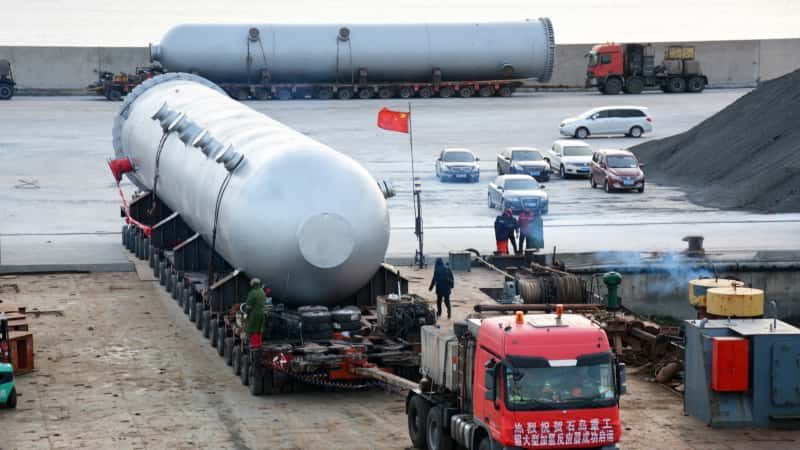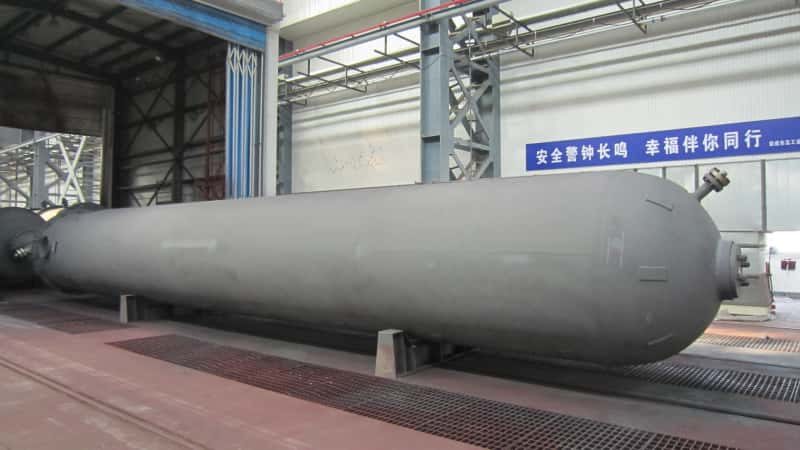

Iodine recovery from brine requires a clear division between process technology and equipment manufacturing. Before requesting quotations, EPC buyers need an approved process basis that identifies the duties of the vessels, columns, tanks, and associated equipment. A general request for an “iodine recovery system” leaves too many technical and commercial responsibilities undefined.
For industrial equipment procurement, the central question is which complete fabricated items can be specified and manufactured against the process designer’s requirements. Brine composition, corrosion conditions, operating pressure, and plant interfaces should guide that decision, rather than assumptions based on another facility’s equipment arrangement.
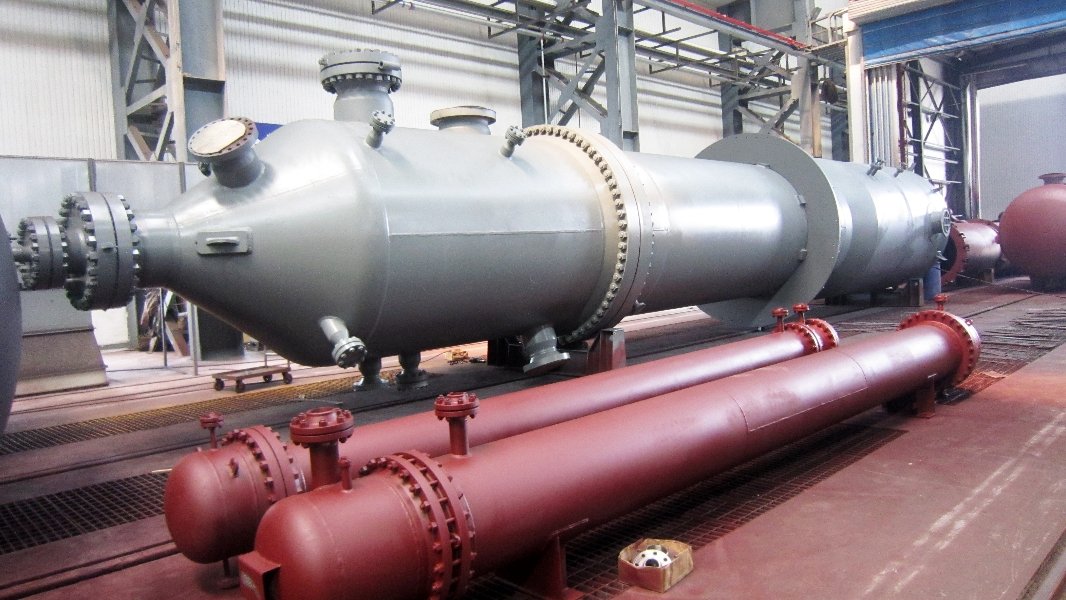
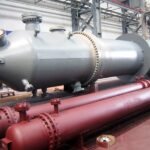
Representative manufacturing photograph from WSHI’s image library. This image does not show an iodine recovery installation.
A Recent Project Announcement Provides Industry Context
On September 14, 2026, Iofina announced agreements with an existing brine supply partner to develop two additional IOsorb plants in Oklahoma. The company stated that construction was expected to begin shortly, with operations anticipated by the end of the first half of 2027. These were forward-looking plans, not confirmation of completed facilities. See the company’s published RNS announcement.
The announcement illustrates continued investment in recovering iodine from existing brine streams. It does not disclose a complete equipment purchasing list. The procurement discussion below is general: it does not describe those plants’ confirmed specifications, imply WSHI participation, or suggest access to proprietary technology.
Start With the Process Route, Not an Equipment Catalogue
Iodine recovery equipment is not a single standardized package suitable for every brine. The selected process depends on feed characteristics, recovery objectives, product requirements, and the technology provider’s design.
Iofina’s official process overview identifies its WET and IOsorb technologies as proprietary methods used to recover iodine from produced-water brines. That distinction matters commercially: the ability to manufacture industrial vessels does not establish ownership of a recovery process or the right to reproduce a licensed plant.
Before approaching fabricators, buyers should obtain the available process flow diagrams, stream information, equipment list, and responsibilities matrix. If these remain preliminary, quotations should identify their assumptions and limitations. A manufacturer should not be expected to reconstruct the process from a short description of the feed.
Which Fabricated Equipment May Be Included?
Process and Conditioning Vessels
Depending on the approved route, a project may require vessels for feed conditioning, intermediate handling, or other defined process steps. Their dimensions and operating requirements should come from the responsible process designer.
For custom pressure vessels, distinguish operating conditions from mechanical design conditions. Provide the expected liquid composition, temperature, pressure, and relevant transient cases. If the duty is atmospheric, do not classify it as high-pressure service merely because the overall facility processes oilfield brine.
The scope should also identify who owns process sizing and any mixing, circulation, or temperature-control requirements. A fabricated vessel and a fully integrated process package are different deliverables.
Process Columns and Gas-Handling Equipment
Some recovery routes may use gas-liquid contacting or require associated gas treatment. Where columns or scrubbers are specified, the inquiry should define their actual duty, stream conditions, performance basis, and environmental interfaces.
The procurement focus should remain on complete process towers and columns, not individual internals. If specialist process components are supplied by another party, define responsibility for their specification, integration, installation, and acceptance within the complete equipment.
A project announcement alone cannot establish that a particular column arrangement is required. Avoid converting a generic equipment description into an assumed flowsheet.
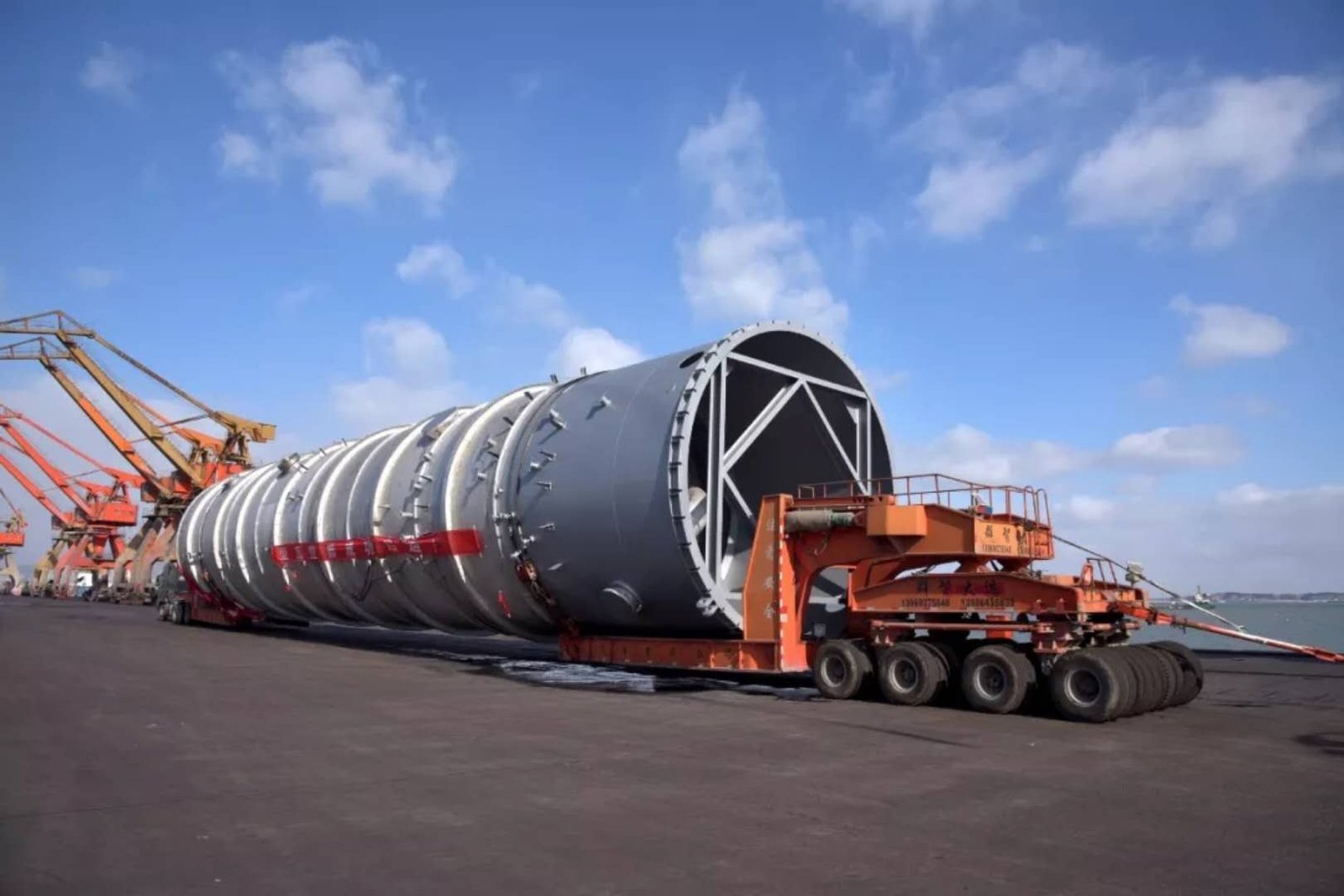
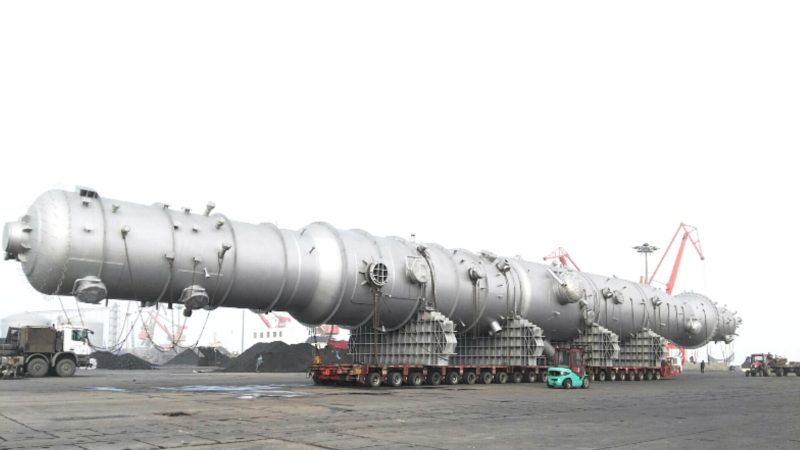
Representative process-tower photograph. These towers are not identified as iodine recovery equipment.
Large Storage and Buffer Tanks
Feed buffering, intermediate-liquid storage, and residual-stream handling may require dedicated tanks. The number and capacity depend on the operating schedule, feed interruptions, maintenance strategy, and permitted storage conditions.
For industrial storage tanks above 1,000 liters, specify usable working volume separately from total volume. Include liquid density, temperature, composition, filling and withdrawal rates, and relevant settling or gas-release information.
Storage should not be treated as an undefined allowance around the process equipment. The plant needs a clear destination for incoming brine during interruptions and for outgoing liquids under normal and off-spec conditions.
What Brine Information Should Buyers Provide?
Composition and Variability
Provide representative feed analyses and explain how composition changes between sources or over time. Relevant information may include iodine-related analytical data, salinity, pH, suspended solids, residual hydrocarbons, and dissolved gases, as required by the process designer.
The available analysis should identify its sampling basis. A single sample may not represent seasonal changes, upstream operating disturbances, or feed blending. Where uncertainty remains, the owner and technology provider should establish what additional sampling or testing is required before equipment specifications are finalized.
Conditions Throughout the Process
Raw-brine data alone are insufficient for equipment exposed to chemically conditioned or otherwise changed streams. Each item should have its own service description and relevant composition range, including process additions and cleaning conditions.
This distinction is especially important when comparing materials. Equipment upstream and downstream of a treatment step may face different chemical environments even when both are described informally as “brine service.”
Select Materials Against the Actual Chemical Environment
High salt content does not justify selecting a universal stainless-steel grade. Materials review should consider the complete chemistry, temperature, operating conditions, and credible variations. Solids and local flow conditions may introduce additional wear concerns.
HSE’s plant design guidance emphasizes compatibility between construction materials and process conditions, including excursions. This provides general engineering context, not approval of a particular material for iodine recovery.
Where coated, lined, or specialized-alloy construction is proposed, request the supporting compatibility basis and confirm the manufacturer’s capability for that construction. Cleaning requirements, inspection access, and repair methods should be considered alongside initial material cost. Do not assume a conventional metallic pressure vessel is suitable for every process stage.
Define Brine and Gas Interfaces Beyond the Equipment
The inlet and outlet boundaries deserve the same attention as the vessel specification. Buyers should identify who supplies the brine, how feed availability is communicated, and what conditions apply when the recovery plant cannot accept flow.
Likewise, establish the destination and required condition of processed brine and other residual streams. Recovering iodine does not automatically make the remaining water suitable for discharge or reuse. Environmental obligations and any return-to-operator arrangements must be established for the project.
Where gas streams require containment or treatment, define the design basis and responsible party. The equipment manufacturer should work to approved requirements rather than make unsupported assumptions about emissions, discharge permission, or site operating procedures.
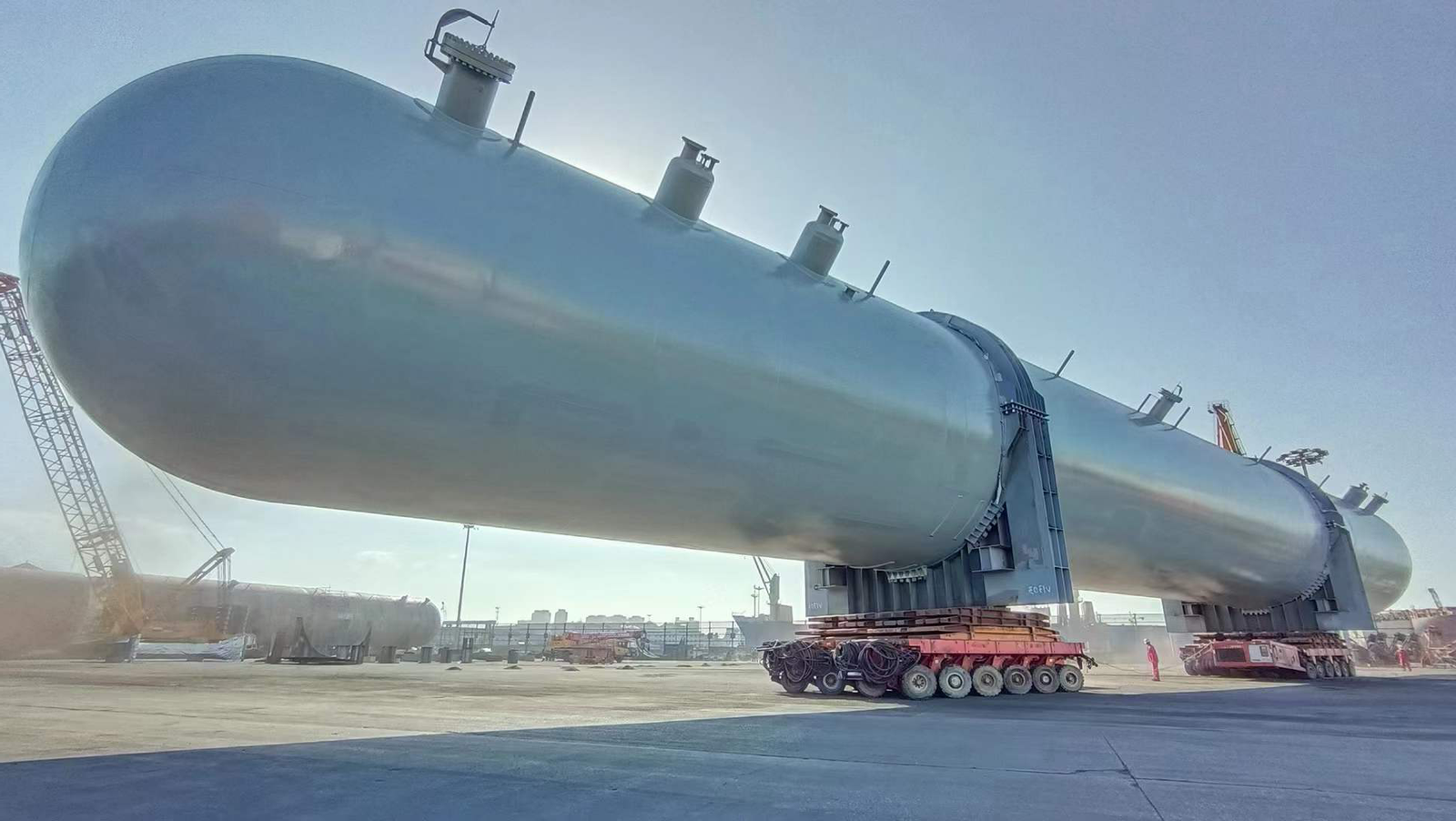
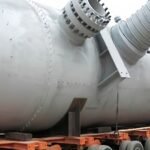
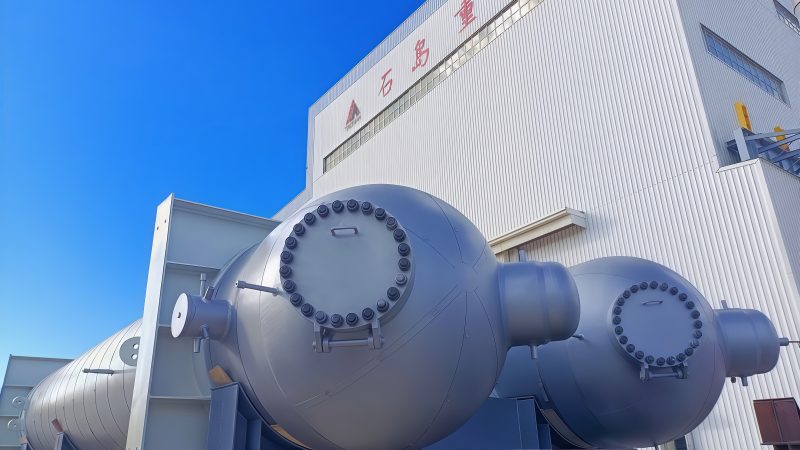
Representative storage vessel photograph. Material compatibility, working volume, and service suitability must be confirmed for the specified brine.
Separate Process Guarantees From Manufacturing Acceptance
A recovery percentage or product-purity commitment requires a defined process basis, feed envelope, operating conditions, and verification method. Such commitments should sit with the party contractually responsible for process performance.
Manufacturing acceptance addresses different questions: whether the ordered equipment matches approved drawings, materials, dimensions, examination requirements, and applicable mechanical specifications. A successful pressure test does not demonstrate iodine recovery, product purity, or performance with variable brine.
If both forms of acceptance are included in a wider contract, document them separately. Identify who provides test feed, utilities, sampling, analytical services, and operating support. Avoid accepting a general promise of “complete performance” without measurable conditions and clear responsibilities.
Manufacturing Quality and Delivery Planning
WSHI’s stated capabilities include drawing coordination, material procurement, welding, nondestructive examination, pressure testing, coating, and heavy-equipment delivery. For an iodine recovery project, the proposed equipment and materials must still be reviewed against the specific manufacturing requirements.
The purchase specification should establish required material records, fabrication documentation, inspection points, testing, surface treatment, and final data packages. Specialist construction requirements should be confirmed before commercial commitments are made.
Transport planning should address equipment dimensions, weights, lifting arrangements, preservation, and site access. For large columns or tanks, the delivery method may influence the final arrangement and site assembly scope. Distinguish factory completion, port delivery, site arrival, and installation when comparing quotations.
What Should an Initial Equipment Inquiry Contain?
A useful inquiry includes the process equipment list, available drawings, stream conditions, operating and design requirements, material specifications, storage capacities, and project delivery location. It should also identify the process technology provider and the documents that the manufacturer is authorized to use.
Include a scope matrix covering engineering, fabrication, bought-in systems, inspection, transport, installation, and commissioning. Mark preliminary information clearly. This allows bidders to offer comparable equipment scopes without implying responsibility for technology or plant performance that has not been contracted.
FAQ
Does an iodine recovery plant always need the same equipment?
No. The equipment depends on the selected technology, feed characteristics, product requirements, and site interfaces. The approved process package should establish the equipment list.
Can a vessel manufacturer provide the iodine recovery technology?
Not automatically. Process licensing, chemistry, and recovery performance are separate from fabrication capability. Confirm the technology provider and contractual responsibilities.
Is stainless steel always suitable for iodine-bearing brine?
No. Suitability depends on the precise chemical environment and operating conditions. Material selection requires service-specific assessment, including process additions and cleaning.
Does iodine recovery make the remaining brine suitable for reuse?
Not necessarily. The residual liquid must be assessed against its intended destination and applicable requirements. Resource recovery is not equivalent to complete water treatment.
Discuss Your Complete Process Equipment Requirements
Iodine recovery from brine projects benefit from a clear boundary between process technology and fabricated equipment supply. For projects requiring complete custom vessels, columns, or storage tanks above 1,000 liters, discuss your requirements with our engineering team. Provide approved process documents, materials requirements, drawings, and delivery constraints for manufacturing assessment and scope coordination.