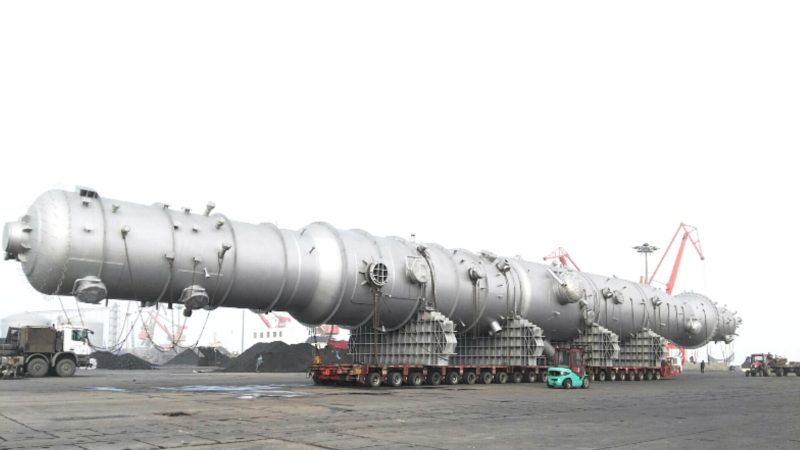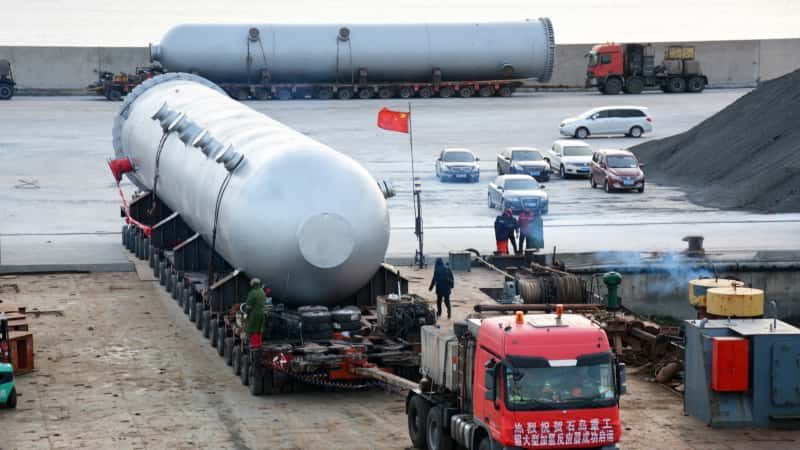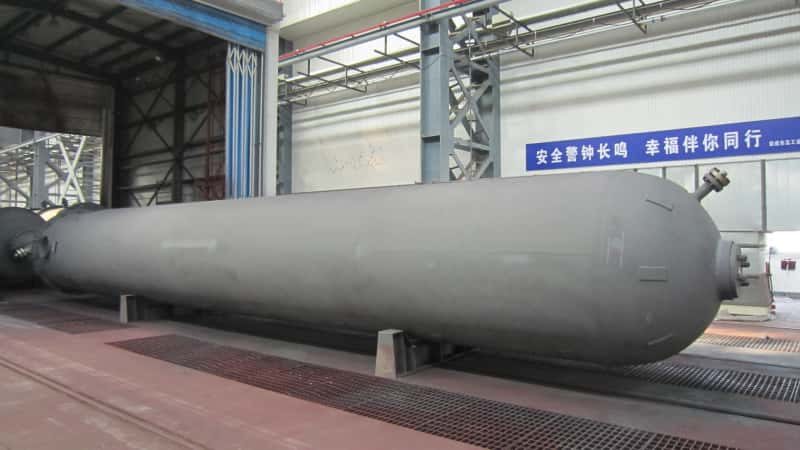

An industrial evaporator’s capacity is meaningful only when its operating conditions are defined. Equipment that handles a dilute feed effectively may behave differently as the liquid approaches its target concentration. Boiling-point elevation, changing viscosity, deposits and available heating conditions can all influence performance. For EPC buyers, the practical question is not simply how much wastewater the equipment can receive. It is how much solvent it can remove while producing the specified concentrate under the agreed operating conditions.
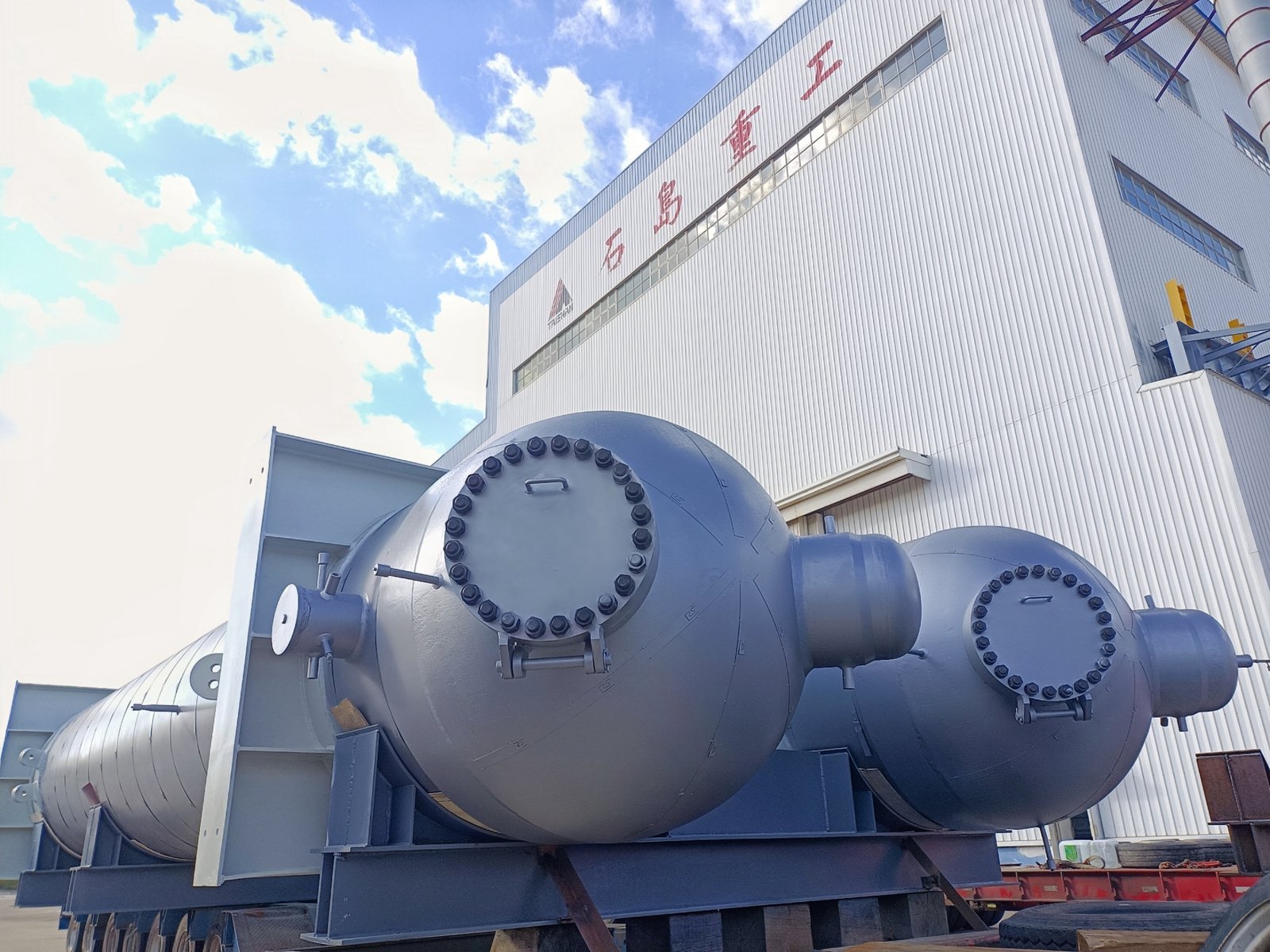
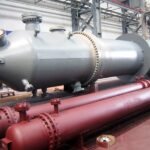
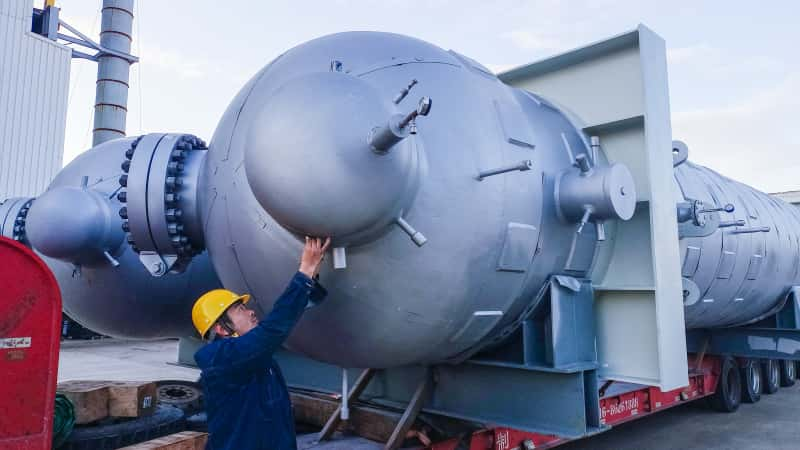
Representative heat-transfer equipment. Evaporation duties should reflect the relevant feed and concentrate properties, not inlet conditions alone.
First Define What “Capacity” Means
Feed Throughput and Evaporation Rate Are Different
A quotation may describe capacity as feed processed per hour, water evaporated per hour or concentrate produced per hour. These quantities are related through the material balance, but they are not interchangeable.
For a simplified illustration, assume an aqueous feed contains 10% nonvolatile dissolved solids by mass and the product must contain 20%. With no solids losses or other material streams, processing 1,000 kilograms of feed produces 500 kilograms of concentrate and requires removal of 500 kilograms of water. This is a material-balance example, not an equipment rating or performance promise.
The enquiry should therefore state feed concentration, target concentration and the basis used for every quoted capacity. The NPTEL evaporator-design course distinguishes water evaporation capacity from steam economy in its discussion of evaporator performance. Greater water removal per unit of heating steam does not automatically mean greater feed throughput.
A Higher Target Concentration Changes the Required Duty
At the same feed rate, a higher concentration target generally requires more solvent removal when the nonvolatile material balance is otherwise unchanged. Meanwhile, the concentrated liquid may become harder to process thermally or hydraulically.
This creates two separate purchasing questions: how much evaporation is required, and whether the proposed equipment can provide it at the final liquid condition. A capacity statement that omits the concentration target cannot answer either question reliably.
Why Higher Concentration Can Reduce Available Thermal Capacity
Boiling-Point Elevation Uses Part of the Temperature Difference
Many solutions boil at a higher temperature than the pure solvent at the same pressure. For aqueous systems, this means the solution may require a higher boiling temperature than pure water under the same pressure conditions.
If the heating-medium temperature remains fixed, this boiling-point elevation reduces the temperature difference available to drive heat transfer. NPTEL explains the relationship in its boiling-point elevation and evaporator-selection guidance.
The effect depends on the actual solution and concentration. Buyers should request measured data or an appropriate property model rather than apply a generic allowance to every wastewater. Boiling-point elevation is a solution-equilibrium effect; it should not be described simply as a consequence of increased viscosity.
Viscosity Changes Can Affect Heat Transfer and Circulation
Viscosity may change substantially between the feed and final concentrate. That change can affect circulation, pressure loss and heat transfer on the process side. A property value measured only for the dilute feed may therefore be an inadequate design input.
Ask for the relevant properties across the intended temperature and concentration range. If the liquid exhibits more complex flow behavior, the process designer should identify the additional information needed. Not every solution follows the same trend, and the concentration effect should not be represented by a universal percentage reduction in capacity.
Concentration Can Also Change Deposit and Solids Behavior
As solvent is removed, some constituents may approach their solubility limits or form deposits under the local operating conditions. Deposits can impair heat transfer and restrict flow. Whether this occurs depends on the chemistry, temperature profile and equipment arrangement, not concentration alone.
Distinguish a clear-liquid concentration duty from a duty that intentionally produces crystals or handles a slurry. Equipment selected for one should not be assumed suitable for the other. If solids formation is expected, define that condition before the manufacturer develops the mechanical arrangement.
For complete custom pressure vessels associated with evaporation, the approved process basis should identify the expected liquid, vapor and solids duties. The focus is the complete equipment arrangement rather than individual replacement components.
Batch and Continuous Systems Need Different Capacity Descriptions
In a batch system, the liquid changes during the operating cycle. An evaporation rate measured early in the batch should not automatically be applied to the final concentration stage. The full cycle may also include filling, heating, discharge and other necessary activities.
A continuous system may operate near a defined concentrate condition, but feed variability can still change the required duty. Buyers should identify the normal case and other required operating cases, including different feed concentrations or product targets.
When comparing quotations, check whether both suppliers are describing the same basis. An instantaneous evaporation rate, a batch-average rate and a daily processing capacity are different measures. They should not be compared without accounting for their assumptions.
Review the Heating and Condensation Equipment Together
The evaporator’s thermal performance depends on the utility conditions actually available at the equipment. Specify the heating-medium conditions, relevant limitations and the expected operating range. Increasing heating temperature is not an automatic remedy for reduced capacity because materials, product sensitivity and mechanical limits also require assessment.
Where shell and tube heat exchangers provide heating or condensation, their datasheets should cover the relevant stream properties and duties. An exchanger rated only for the dilute-feed case may not represent the conditions governing final concentration.
The vapor-handling, condensation and pressure-control arrangements must also support the approved process conditions. Changes to one part of the system should be reviewed for their effect on the others. Do not assume that enlarging the heating surface alone resolves every system constraint.
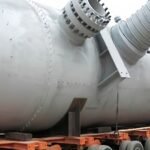
Representative exchanger image. The appropriate configuration depends on fluid properties, thermal duty and the approved system design.
What Should Buyers Include in the RFQ?
Provide a representative feed analysis, feed-temperature range, concentration basis and target product condition. Identify expected variability, relevant physical-property data, available utilities and the intended operating schedule. Clearly mark missing or preliminary information.
Ask the process designer to identify the cases that govern thermal duty, equipment size and material selection. The most demanding case for evaporation quantity may differ from the case that governs viscosity or deposit behavior.
Where separate feed or concentrate storage is required, specify the working duty of industrial storage tanks above 1,000 liters. Concentrate holding and transfer conditions should be assessed against the actual product, not assumed to match the incoming wastewater.
Make Capacity Guarantees Comparable
A useful guarantee states the evaporation rate or feed throughput together with the feed composition, target concentration, utility conditions and operating basis. It should distinguish clean-condition performance from any agreed allowance for operation between cleanings.
For variable feeds, identify which cases are guaranteed and which require further evaluation. A broad statement such as “suitable for high-salt wastewater” does not define a measurable obligation.
Agree on sampling locations, concentration measurements, flow measurements and the method used to reconcile the material balance during acceptance. For batch equipment, specify whether acceptance concerns a stage of the cycle or the complete batch. Any correction from test conditions to reference conditions should follow an agreed engineering method.
Connect Process Requirements to Manufacturing
Once the process basis is approved, translate it into equipment drawings, materials specifications and inspection requirements. Materials must address the relevant concentration and temperature range, including any approved cleaning conditions. A material selected for dilute service should not automatically be accepted for the final concentrate.
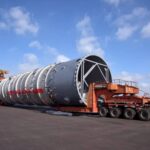
WSHI’s manufacturing activities include engineering coordination, material procurement, welding, nondestructive examination, pressure testing where applicable, coating and heavy-equipment delivery. Buyers reviewing WSHI manufacturing capabilities should confirm the actual scope and identify who owns process sizing and performance guarantees.
Manufacturing inspection and pressure testing do not establish evaporation capacity. Mechanical acceptance, process verification and site delivery requirements need separate, coordinated definitions.
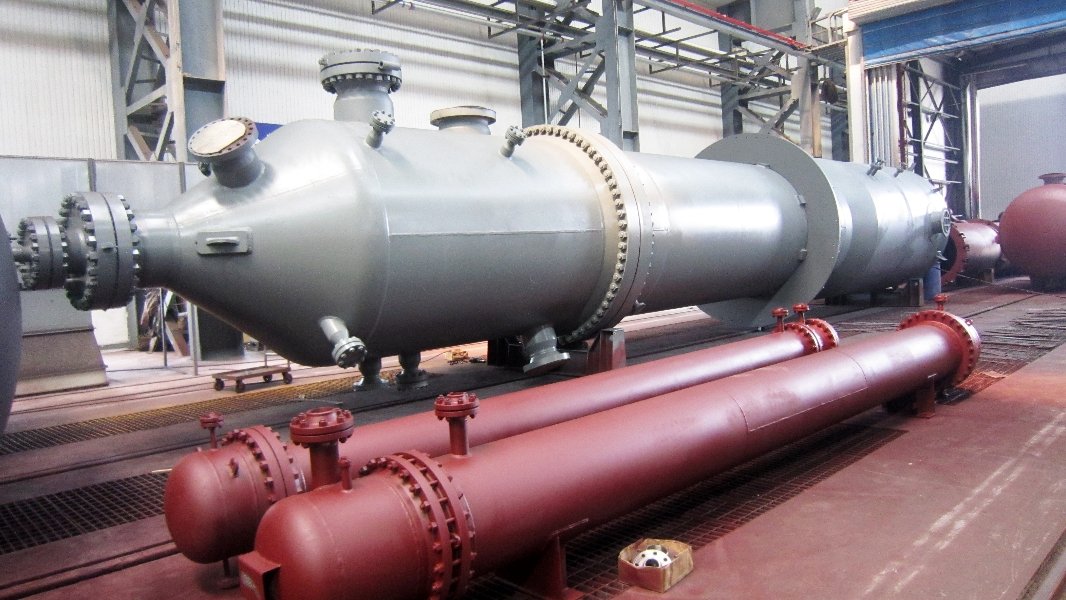
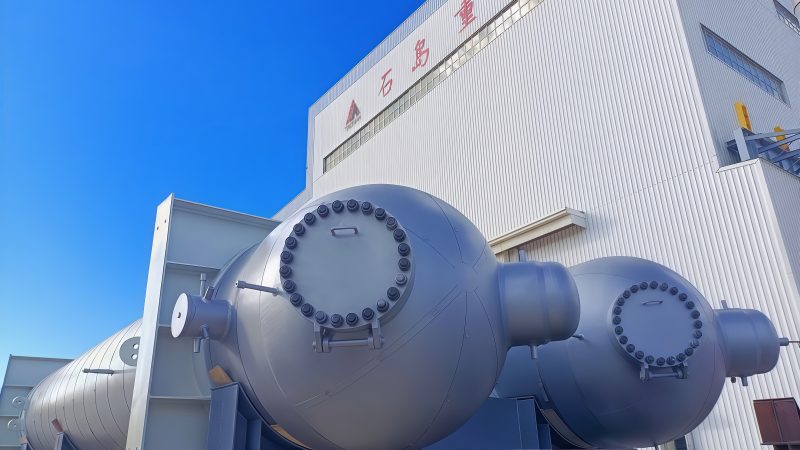
Representative fabrication workshop. Approved process requirements must be reflected in the manufacturing and inspection package.
FAQ
Does evaporator capacity always decrease as concentration rises?
Not necessarily. The result depends on solution properties, equipment configuration and available operating conditions. Higher concentration requires assessment rather than an assumed fixed reduction.
Does a higher feed rate mean a higher evaporation rate?
Not automatically. The amount of solvent to be removed depends on feed and product concentrations as well as throughput.
Can a larger heat-transfer area solve every concentration-related problem?
No. Circulation, deposits, phase behavior, utilities and downstream handling may impose other constraints.
What concentration should a supplier use for its capacity guarantee?
The guarantee should identify the agreed feed and product conditions and any additional required operating cases. An unspecified concentration basis is incomplete.
Discuss Your Evaporator Capacity Requirements
Industrial evaporator capacity should be evaluated against the complete concentration duty, not a single nominal throughput figure. If your project requires complete evaporation equipment, associated heat exchangers or process vessels, contact our engineering team with the feed analysis, target concentration, utility conditions and preliminary drawings. These inputs support a focused discussion of manufacturing feasibility, inspection requirements and delivery scope.