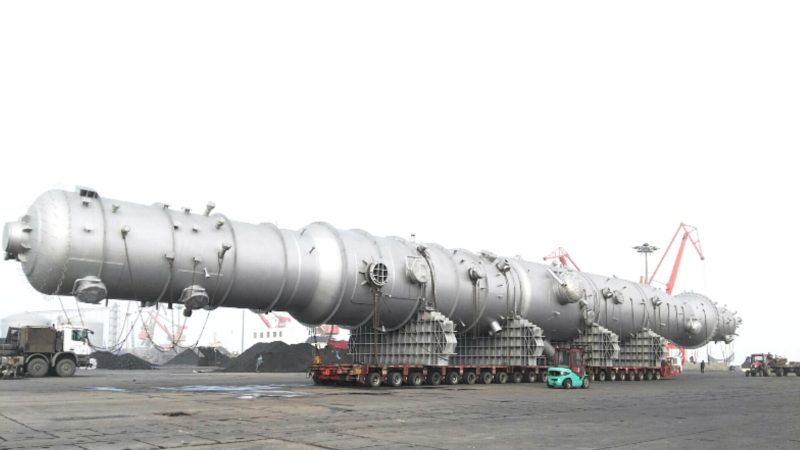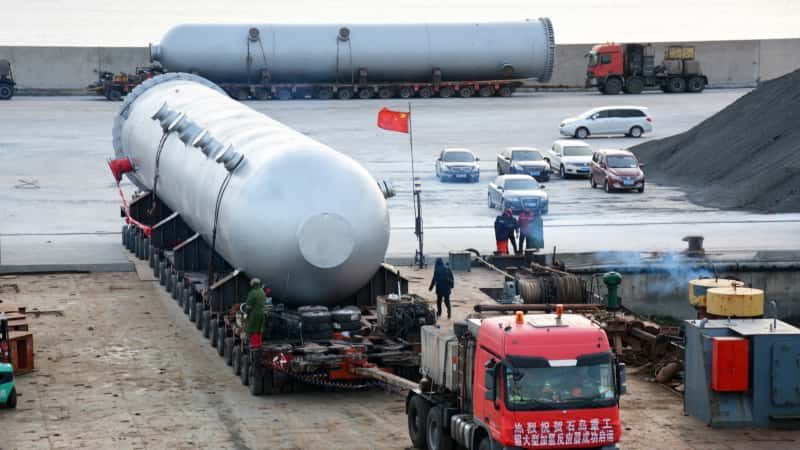

A liquid-liquid extraction column cannot be reliably specified from throughput and equipment volume alone. The required separation depends on how the actual liquids interact, how the target substance distributes between them and how readily the phases separate after contact. For EPC buyers, the priority is to establish an approved process basis before requesting a firm equipment quotation. This helps distinguish a mechanically complete tower from a system capable of meeting the intended separation duty.
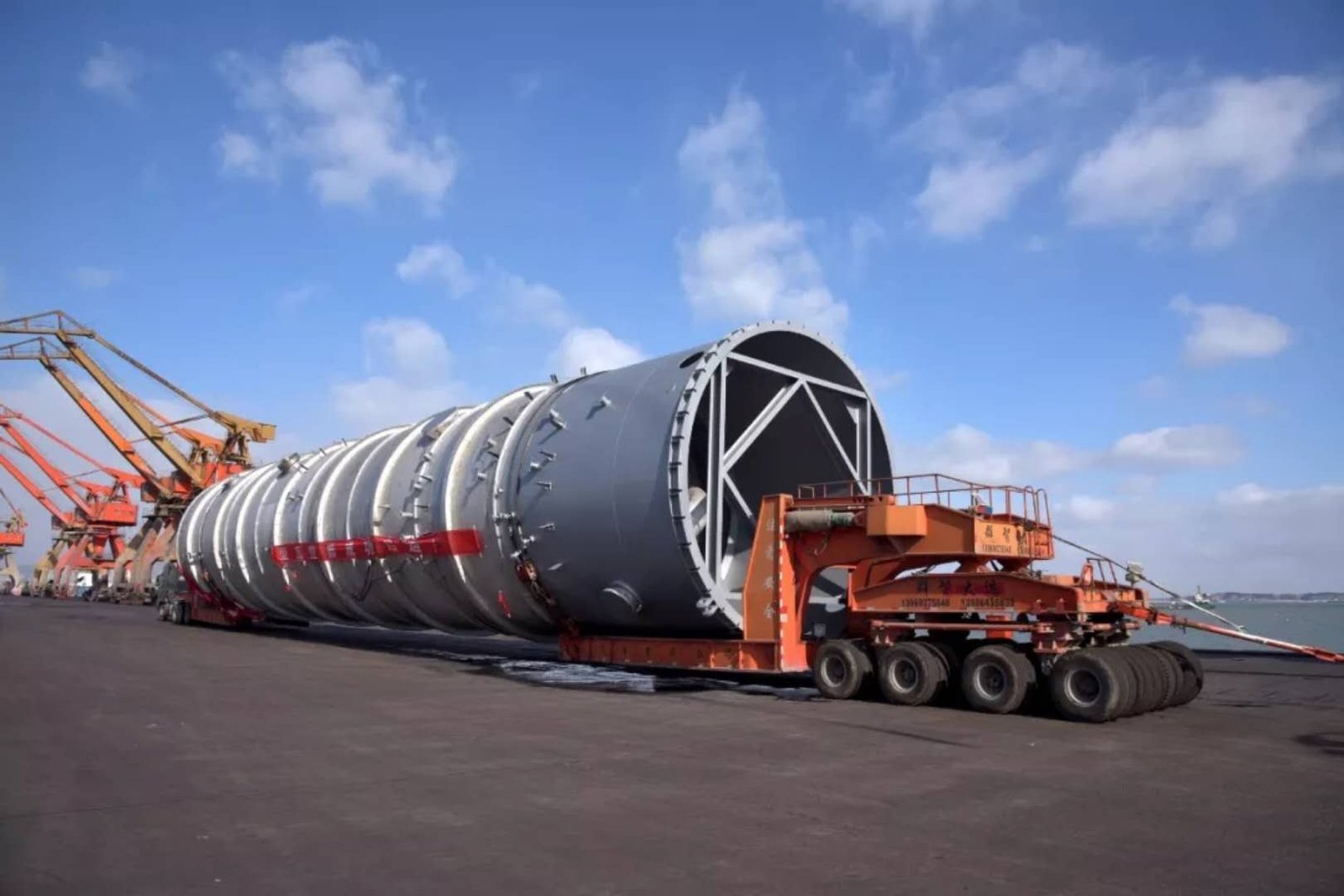
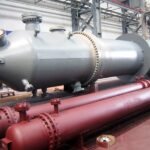
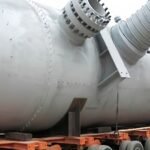
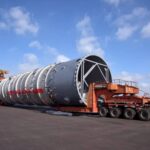
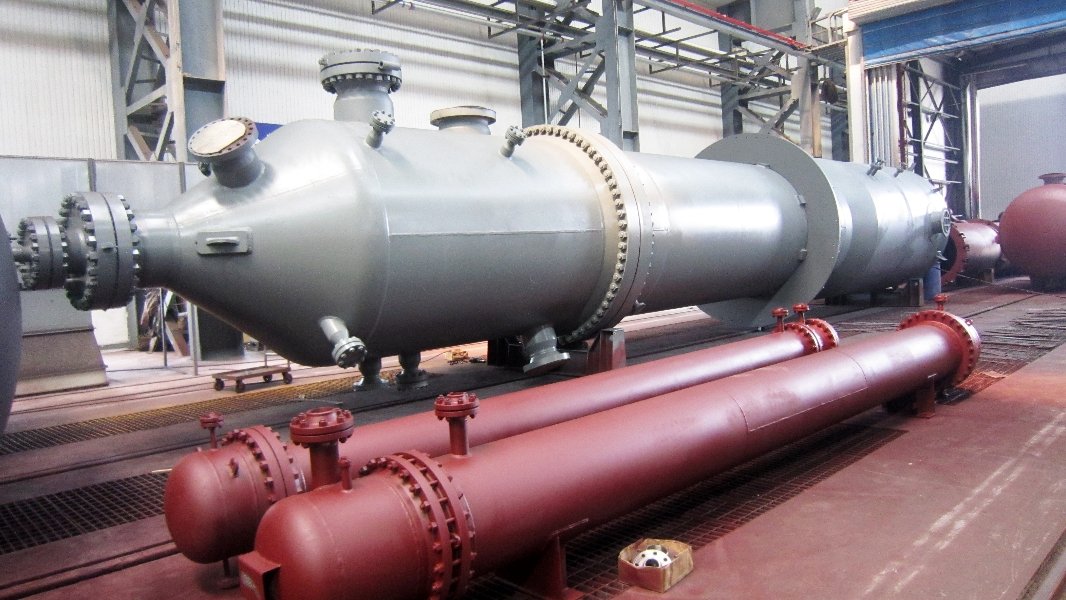
Representative tower equipment. The image does not identify a specific extraction service or demonstrate separation performance.
Define the Separation Objective First
Liquid-liquid extraction transfers a substance between liquid phases that remain sufficiently distinct under the operating conditions. It may be considered for product recovery, impurity removal or other chemical-processing duties where an appropriate solvent system is available.
The enquiry should identify what must be removed or recovered and how success will be measured. A recovery percentage, an outlet impurity limit and a product-purity target are different requirements. State which streams and constituents each requirement applies to.
Buyers evaluating process towers and columns should also identify who selects the separation route. The mechanical fabricator should not be expected to choose the solvent or guarantee the overall process from a general equipment description.
Provide Complete Feed and Solvent Information
Describe More Than the Main Components
Provide the composition and flow range of the feed, including relevant impurities and their expected variation. Trace constituents, suspended solids or residues from upstream processing may affect extraction or phase separation even when they contribute little to the total mass flow.
State whether the analysis represents normal operation, a particular production campaign or a preliminary estimate. Different product grades and cleaning-related discharges should not be hidden within an average composition.
The solvent specification also needs definition. Identify its composition, purity, water content where relevant and whether it is fresh or recovered. A recycled solvent may contain residual solute or other constituents that change the extraction duty.
Establish Consistent Data Bases
Identify whether flows are given by mass or volume and specify the associated temperature and density basis. Concentrations should use consistent units and clearly distinguish total-stream values from values measured in an individual phase.
The approved material balance should account for the feed, solvent and outlet streams. If additional streams or solvent losses are expected, identify them explicitly rather than assuming a closed balance with no transfer between phases.
Confirm Equilibrium Data at Relevant Conditions
Equilibrium information describes how the target substance distributes between the liquid phases. It provides a foundation for process design, but its applicability depends on the chemical system and operating conditions.
NPTEL’s introduction to distribution coefficients explains the basic relationship for defined conditions. For industrial procurement, a single coefficient should not automatically be treated as constant across every concentration, temperature or chemical state.
Ask the process designer to identify the source of the equilibrium data, the range it covers and any limitations. Where a model is used, clarify how it has been validated against the actual or sufficiently representative system.
For relevant multicomponent systems, the design may need phase-equilibrium information showing the compositions of coexisting liquid phases. A simplified diagram from an unrelated solvent system is not an adequate substitute.
Review Selectivity and Solvent Loading Together
A solvent may extract the desired substance while also transferring unwanted constituents. The process design should therefore address selectivity and the resulting outlet quality, not recovery alone.
The solvent-to-feed ratio also needs an approved basis. Increasing solvent circulation is not automatically a practical solution: it can affect column hydraulics, downstream recovery duties, equipment size and operating costs.
Specify the expected solvent condition at the column inlet, including allowable residual loading after recovery. This connects the extraction duty to the rest of the plant and avoids a quotation based on fresh solvent when the installation will normally use recycled material.
Provide Physical Properties Across the Operating Range
Density, viscosity and interfacial tension help describe how the phases contact and separate. Their values should reflect the intended temperature and composition range rather than only room-temperature properties of pure ingredients.
The designer should also identify the proposed continuous and dispersed phases and assess the relevant operating envelope. These decisions influence the process arrangement and should not be inferred solely from which liquid enters at the top or bottom.
NPTEL’s phase-equilibrium thermodynamics course identifies thermodynamics as a foundation for solvent extraction and other interfacial separation processes. Procurement should build on an approved process assessment rather than replace it with a generic tower-sizing rule.
Examine Phase Disengagement and Emulsion Behavior
Effective contact between liquids is only part of the requirement. The outlet phases must also separate sufficiently for their intended downstream uses. Persistent emulsions or slow disengagement can complicate operation and affect the complete equipment arrangement.
Provide available observations from representative tests, including the conditions under which phase separation was assessed. A clear result from a clean laboratory mixture may not represent an industrial stream containing impurities or suspended material.
Ask whether additional testing is required to evaluate the actual feed. The responsible process specialist should define the test programme and interpret its relevance. WSHI’s fabrication scope should not be assumed to include solvent development or pilot testing unless separately confirmed.
Where dedicated downstream separation vessels are required, their duties should be included in the equipment list. They should not be treated as an automatic function of an unspecified collection tank.
Distinguish Laboratory Results From Industrial Guarantees
A laboratory extraction result can establish useful chemical behavior, but it does not by itself prove continuous-column throughput or performance. Industrial design also needs a basis for mass transfer, hydraulics, operating flexibility and scale-up.
The enquiry should identify the process design authority and the evidence supporting the proposed column dimensions and performance. If additional pilot or specialist work is necessary, schedule it before releasing fabrication that depends on the results.
Buyers do not need to procure individual tower internals to resolve these issues. They need clear responsibility for the complete column’s process design, mechanical integration and performance envelope.
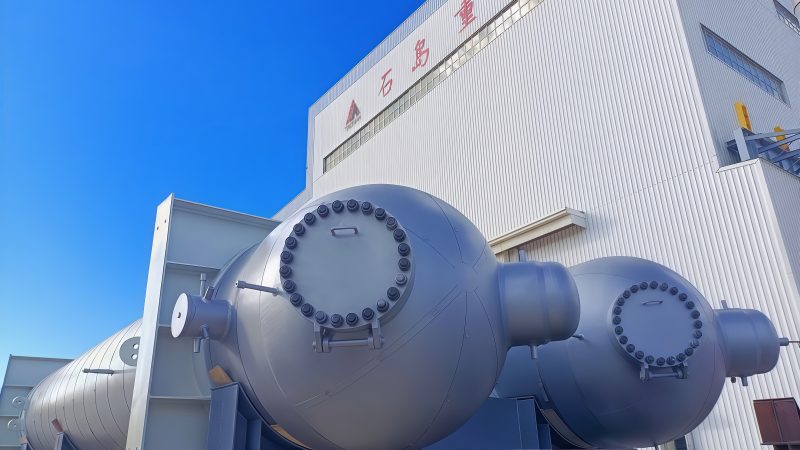
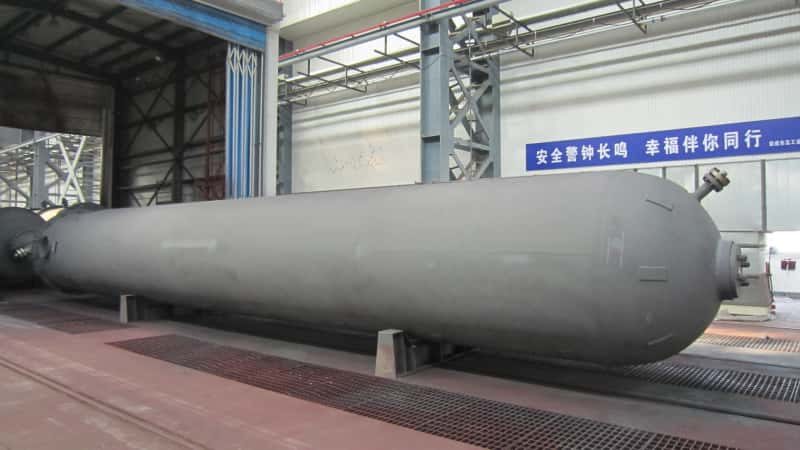
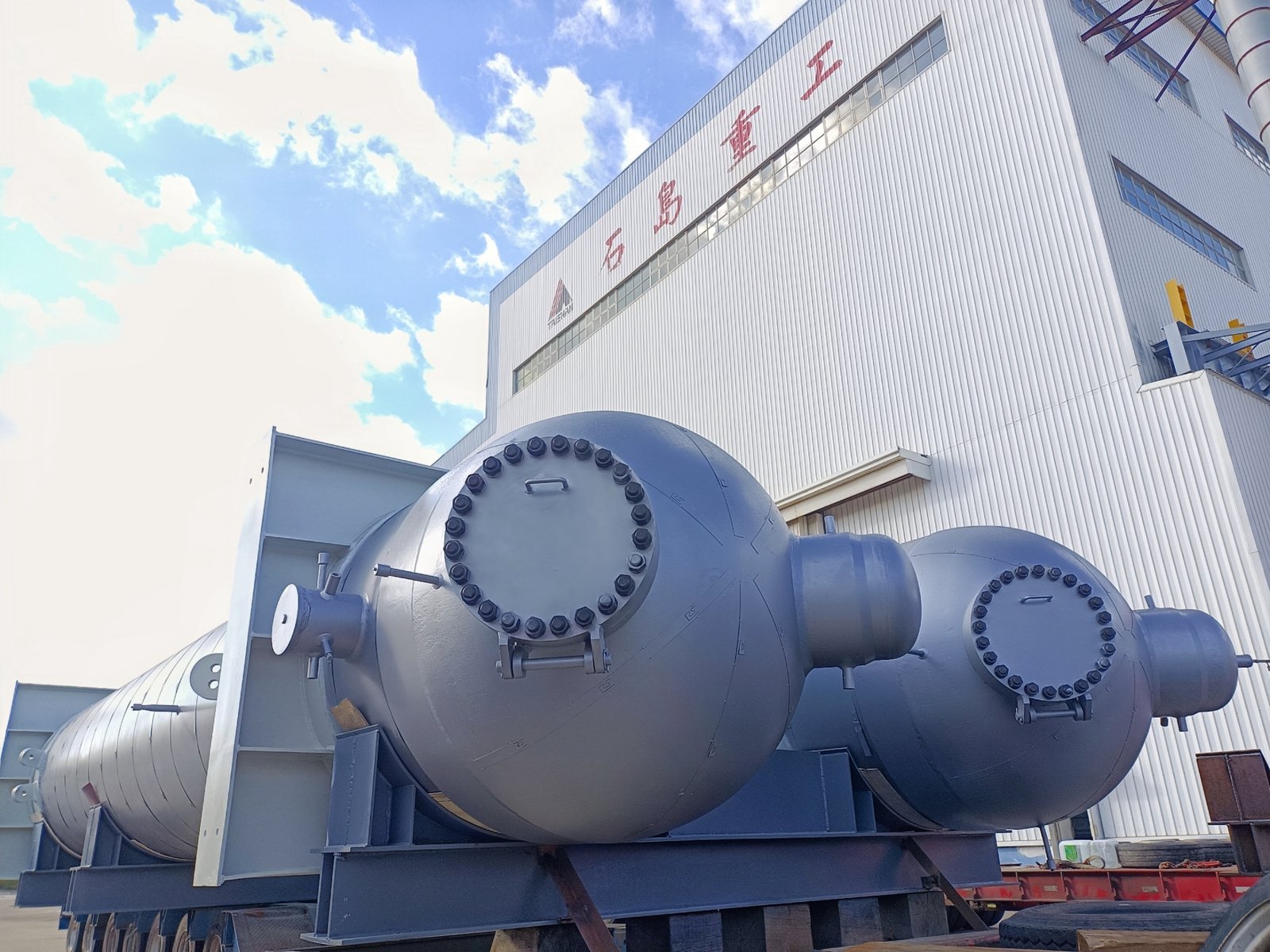
Representative fabrication workshop. Mechanical manufacturing should follow an approved extraction-process design basis.
Coordinate the Column With Supporting Equipment
Feed-temperature control, solvent recovery and intermediate storage can influence the conditions available at the extraction column. Identify these interfaces even where the supporting equipment is purchased from another supplier.
If shell and tube heat exchangers are required, provide their approved thermal duties and stream data. Do not assume that a preliminary extraction temperature can be achieved with whatever utilities happen to be available.
For industrial storage tanks above 1,000 liters, distinguish fresh solvent, recovered solvent and other holding duties. Materials, working capacity and handling requirements should follow the actual medium and operating schedule.
Representative thermal equipment. Any feed or solvent temperature-conditioning duty requires its own approved specification.
Translate Process Requirements Into Mechanical Specifications
Once the process basis is established, confirm design pressure and temperature, materials, corrosion considerations and applicable construction requirements. The assessment should cover all relevant phases and approved cleaning conditions.
The manufacturing package should identify required drawings, material traceability, welding documentation, examinations and testing. Mechanical inspection and pressure testing do not demonstrate extraction recovery or outlet purity.
WSHI’s activities include drawing development and engineering coordination, material procurement, welding, nondestructive examination, pressure testing where applicable, coating and heavy-equipment delivery. Buyers reviewing WSHI manufacturing capabilities should confirm the actual scope and separately assign any process-performance commitment.
Large-column delivery also needs early coordination of transport dimensions, handling requirements, foundation information and installation responsibilities.
Agree on Performance Acceptance Before Award
The guarantee should identify the feed and solvent conditions, operating range and required outlet specifications. State the sampling locations, analytical methods and conditions needed for a valid acceptance assessment.
Confirm whether acceptance covers the column alone or a wider system that includes solvent recovery and downstream separation. An outlet result influenced by equipment outside the supplier’s scope requires a clearly agreed responsibility boundary.
Where essential data remain provisional, request a conditional or budget quotation with explicit assumptions. A firm-looking price does not remove uncertainty from an incomplete process basis.
FAQ
Is feed flow enough to size an extraction column?
No. Composition, equilibrium behavior, physical properties, separation targets and hydraulic requirements are also needed.
Can one distribution coefficient represent every operating condition?
Not automatically. Its validity depends on the chemical system and the conditions under which it was determined.
Do laboratory recovery results guarantee industrial performance?
No. They provide supporting evidence, but industrial performance also depends on mass transfer, hydraulics and the approved scale-up basis.
Can the fabricator select the solvent?
Only if that service is explicitly included and supported by appropriate expertise. Mechanical fabrication alone does not imply solvent-selection responsibility.
Discuss Your Extraction Column Requirements
Reliable liquid-liquid extraction column procurement starts with confirmed process data and clearly assigned responsibilities. If your project requires a complete custom column, contact our engineering team with the approved process datasheets, preliminary drawings and available test information. These inputs support a focused discussion of manufacturing feasibility, inspection requirements and delivery scope.