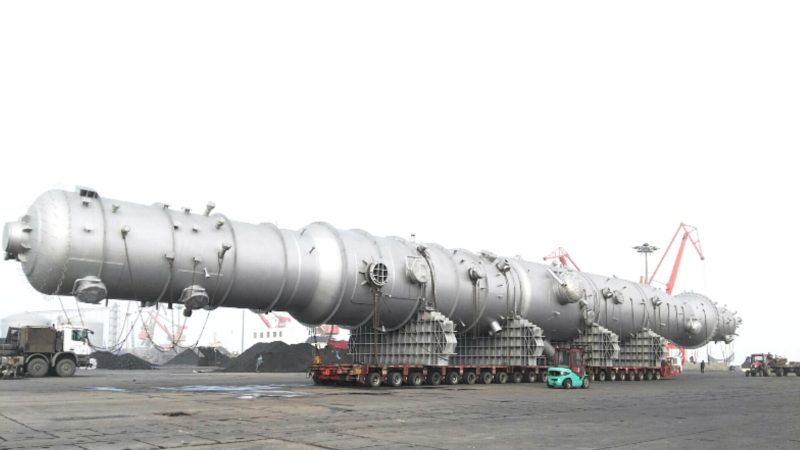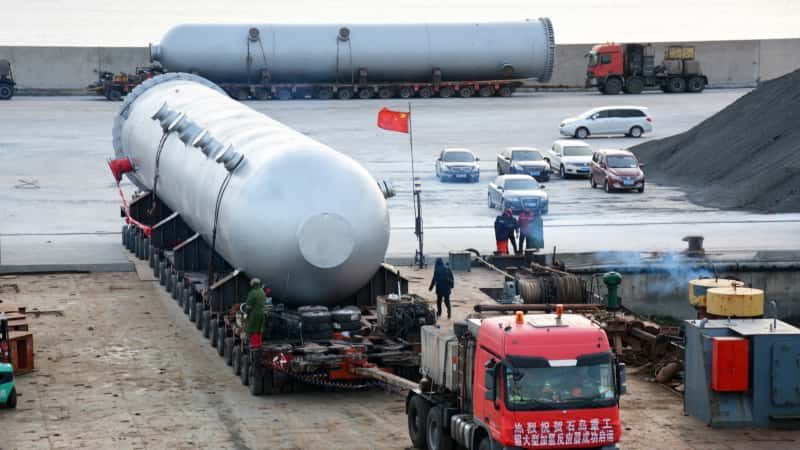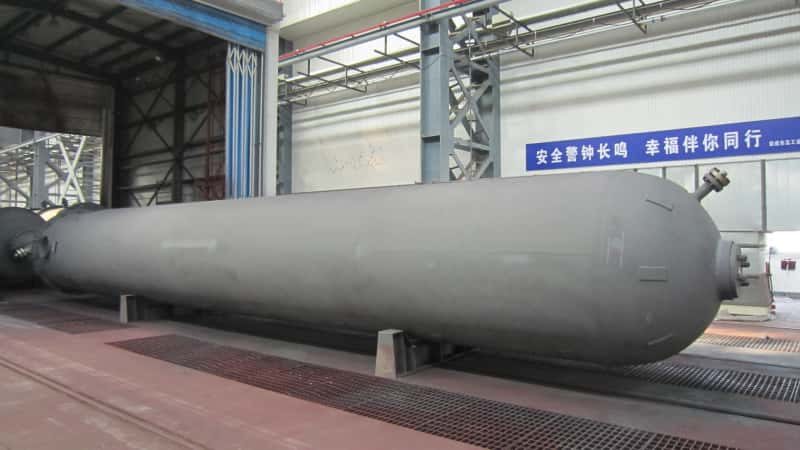

A condenser quotation based only on vapor flow and cooling-water temperature can leave important questions unanswered. Which compounds must be recovered? How much gas remains after cooling? What pressure is available to move that gas into downstream treatment?
For EPC buyers and chemical plant engineers, shell-and-tube condensers handling non-condensable gases require a clearly defined mixed-stream duty. The procurement objective is not simply to purchase cooling surface. It is to obtain a complete exchanger that meets agreed condensation requirements while fitting the process pressure balance, condensate handling arrangement and downstream gas-treatment system.
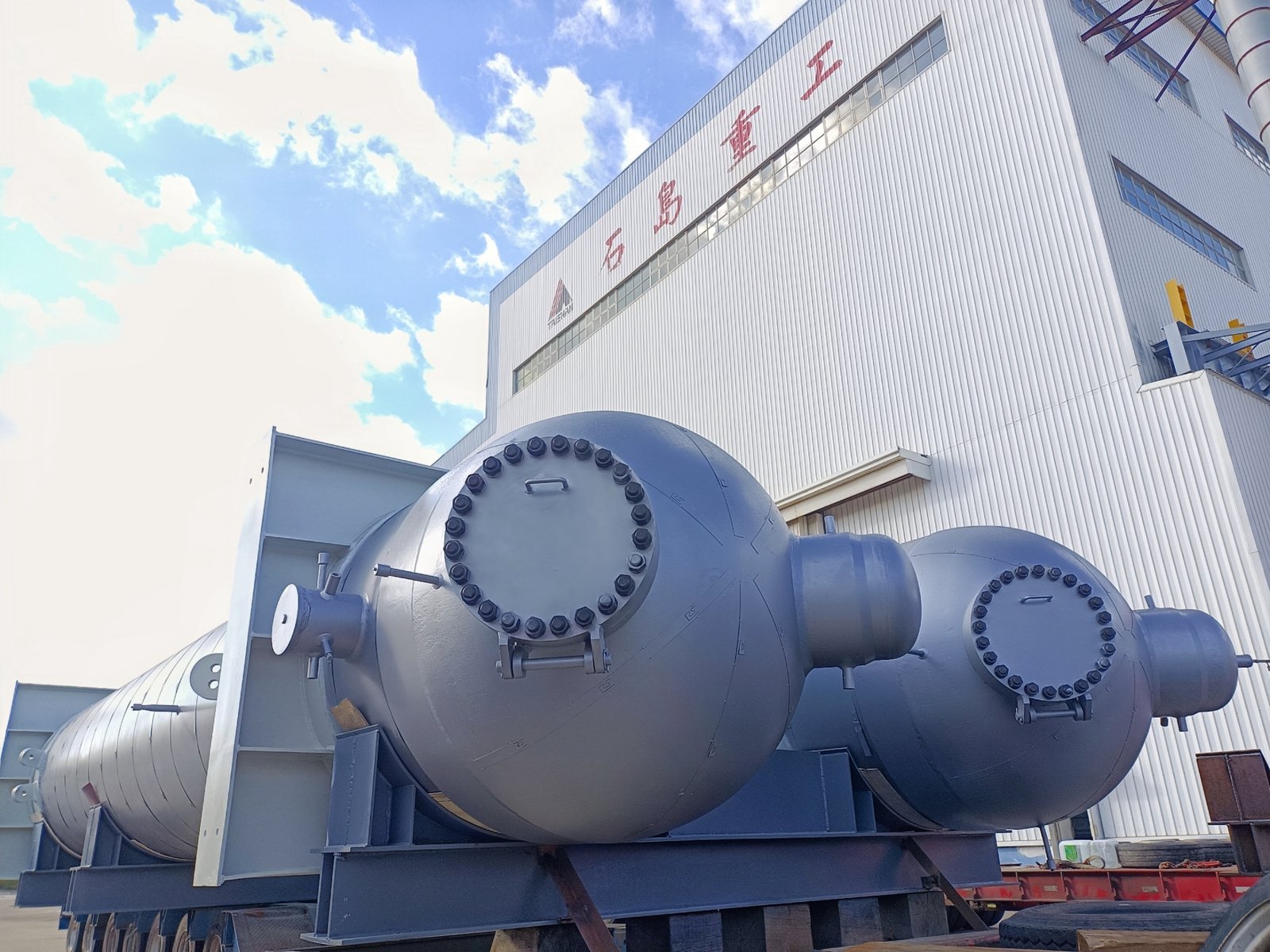
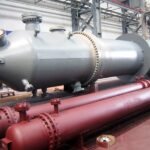
Representative heat-transfer equipment. Suitability for a particular mixed-vapor condensation duty requires project-specific engineering review.
What Are Non-Condensable Gases in a Condenser?
A non-condensable gas is a component that remains gaseous under the condenser’s specified operating conditions. Nitrogen or air may be present alongside condensable process vapors, depending on the application. The term is conditional: equipment specifications must identify the actual components and operating range rather than treating “non-condensable gas” as a complete stream description.
Applications can include solvent recovery, reactor overhead cooling, distillation overhead systems and process vent condensation. Each application has different requirements for liquid recovery, outlet gas composition and operating pressure.
The condenser removes heat from the mixed stream and condenses suitable components. It does not necessarily eliminate all condensable material from the remaining gas. The EPA’s technical guidance on refrigerated condensers provides background on condensation as a recovery technique. Its application-specific methods should not be treated as a universal design procedure for every process condenser.
Provide a Complete Stream Composition
Identify condensable and non-condensable components separately, including water vapor and relevant trace constituents. State whether composition is expressed on a molar or mass basis and whether reported gas concentrations are wet or dry.
Flow data should also have an unambiguous basis. A gas volume reported without its reference temperature and pressure is insufficient for reliable comparison. Provide normal, minimum and maximum flow conditions, together with the associated inlet temperatures and pressures.
Describe Variations Across the Operating Cycle
Batch processes may produce changing vapor composition and flow throughout a production cycle. A single average stream can conceal a peak condensation duty or a high non-condensable gas load.
Provide representative operating cases and identify which require guaranteed performance. Where nitrogen purging, vacuum-system leakage or other gas inputs are relevant, the process designer should define their contribution. These loads should not be assumed negligible or assigned arbitrary values by the equipment fabricator.
Define the Required Condensation Result
“High recovery” is not a measurable purchasing specification. State the required liquid recovery, allowable residual concentration or other agreed outlet criterion, together with the conditions under which it applies.
For multicomponent mixtures, the process designer should establish the relevant phase-equilibrium basis. An outlet-temperature target alone does not fully define recovery without composition and pressure information.
A proposal should clarify whether the condenser must achieve partial condensation, a specified component recovery or another defined process objective. Where recovered liquid quality matters, specify the relevant composition or contamination limits separately from the recovery quantity.
Distinguish Recovery from Emissions Compliance
A condenser can be one stage in a wider recovery or emissions-control system. Residual vapor and non-condensable gas may require further treatment, depending on composition and project requirements.
Do not assume that meeting a condenser temperature target establishes permission to discharge the outlet gas. Assign responsibility for downstream treatment selection, monitoring and regulatory review. These responsibilities should remain visible even when the condenser manufacturer supplies only the complete exchanger.
Review Cooling Conditions and Pressure Loss Together
For a custom shell-and-tube heat exchanger, provide the available coolant, its supply-temperature range, flow availability and allowable return conditions. Seasonal variation may matter, particularly where cooling water is used.
The supplier’s thermal assessment should account for the mixed-stream service. Pure-vapor condensation assumptions should not be applied automatically to a stream containing a significant gas fraction. Ask which process-property data and calculation methods support the proposal.
Pressure loss is equally important. Specify the available inlet pressure and permissible pressure drop through the condenser. Confirm whether the allowance includes only the exchanger or also associated piping and downstream equipment. For vacuum service, the condenser and vacuum-system designer need a consistent operating basis; neither package should be selected independently from the other.
Define Gas Outlet and Condensate Interfaces
As condensation proceeds, the remaining gas still needs a defined route to its next destination. Identify the receiving system, expected backpressure and operating conditions at the equipment boundary.
Condensate handling also needs coordination. Specify whether liquid flows to a separate receiver, a recovery system or another process stage. The designer should review the pressure and elevation relationships needed for the proposed arrangement rather than assuming that liquid will drain satisfactorily under every operating condition.
Where a complete collection or separation vessel is required, include it explicitly in the equipment schedule. Procurement of custom process vessels should be based on the required function and approved operating conditions, not an assumed standard receiver size.
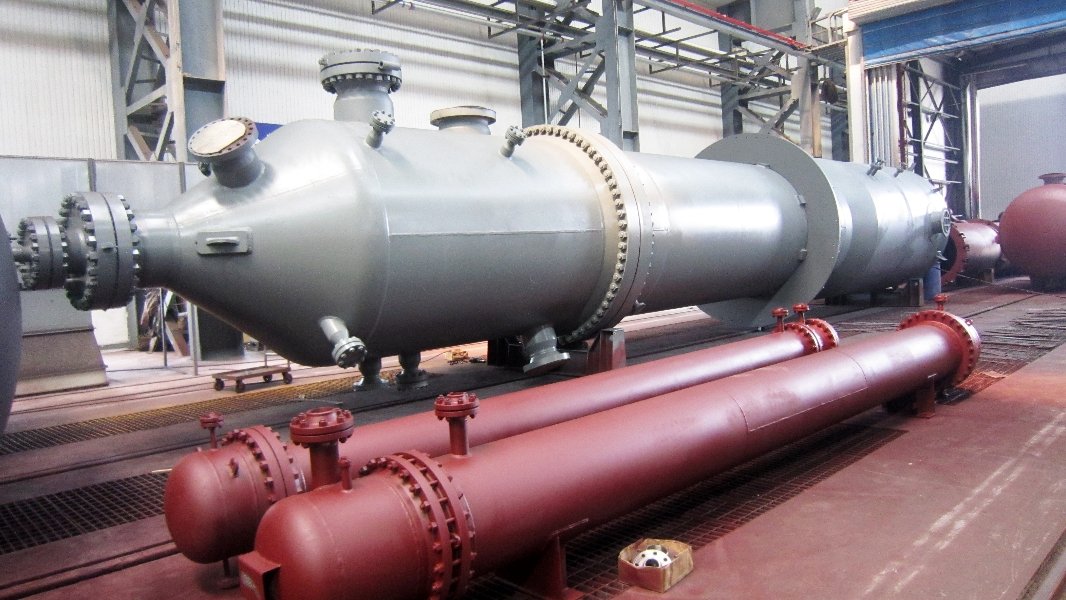
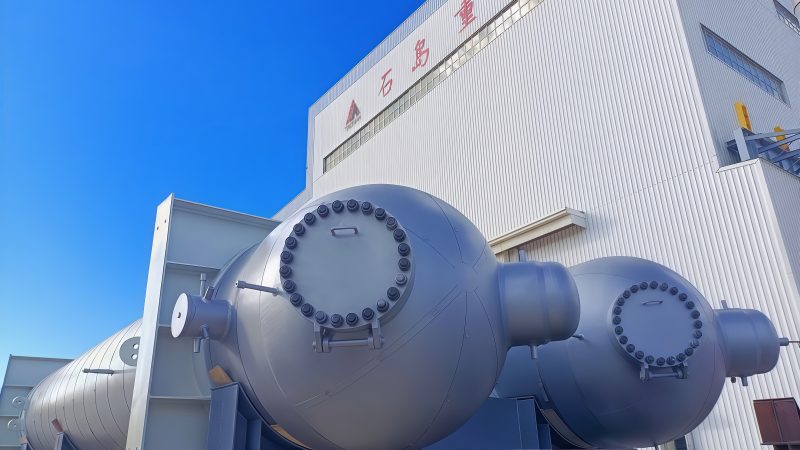
Representative fabrication workshop. Condenser and collection-vessel interfaces should be coordinated through approved project drawings.
Check Materials, Fouling and Cleaning Requirements
Provide the composition of both the incoming stream and the expected condensate. Material assessment should consider relevant impurities, operating temperatures and cleaning exposure, not merely the name of the principal solvent.
Identify known risks of deposits, solids, crystallization or reactive contamination for engineering review. Where low temperatures are proposed, the designer should evaluate whether freezing or solid formation could affect operation.
Buyers evaluating industrial heat exchangers should explain the intended cleaning method and maintenance constraints. Access requirements should be agreed before the configuration is finalized. Cleaning compatibility, inspection access and removal space can influence the practical suitability of an otherwise acceptable thermal design.
Agree Manufacturing Requirements and Performance Acceptance
The purchase specification should identify the applicable construction code, project specifications and required inspection documentation. Where adopted, the TEMA Standards provide exchanger-specific requirements. Referencing TEMA does not establish a manufacturer’s membership or demonstrate that a particular design meets every project obligation.
Agree material traceability, welding documentation, examination requirements, dimensional verification and applicable testing before production. A pressure test demonstrates a different aspect of equipment acceptance from a thermal-performance assessment; one should not be presented as proof of the other.
Performance acceptance should identify the operating case, measurement method and required data. The EPA’s condenser monitoring guidance identifies outlet gas temperature and outlet VOC concentration as important indicators in VOC-control applications, alongside other operating parameters. The project team should select suitable measurements for its actual service rather than copying a generic monitoring list.
Compare Complete Supply and Delivery Boundaries
Clarify whether the order includes process sizing, mechanical design, fabrication, collection vessels, documentation and transport. Allocate responsibility for refrigeration, vacuum equipment, downstream treatment, controls and field installation where these are required.
A complete condenser purchase does not automatically constitute a complete vapor-recovery plant. Review exclusions and technical deviations before comparing prices.
For project delivery, confirm shipping dimensions, preservation, lifting information and drawing-release dates. Equipment arrival should be coordinated with installation readiness and document approval. Critical connection dimensions and maintenance clearances should be checked before manufacturing release, not discovered after shipment.
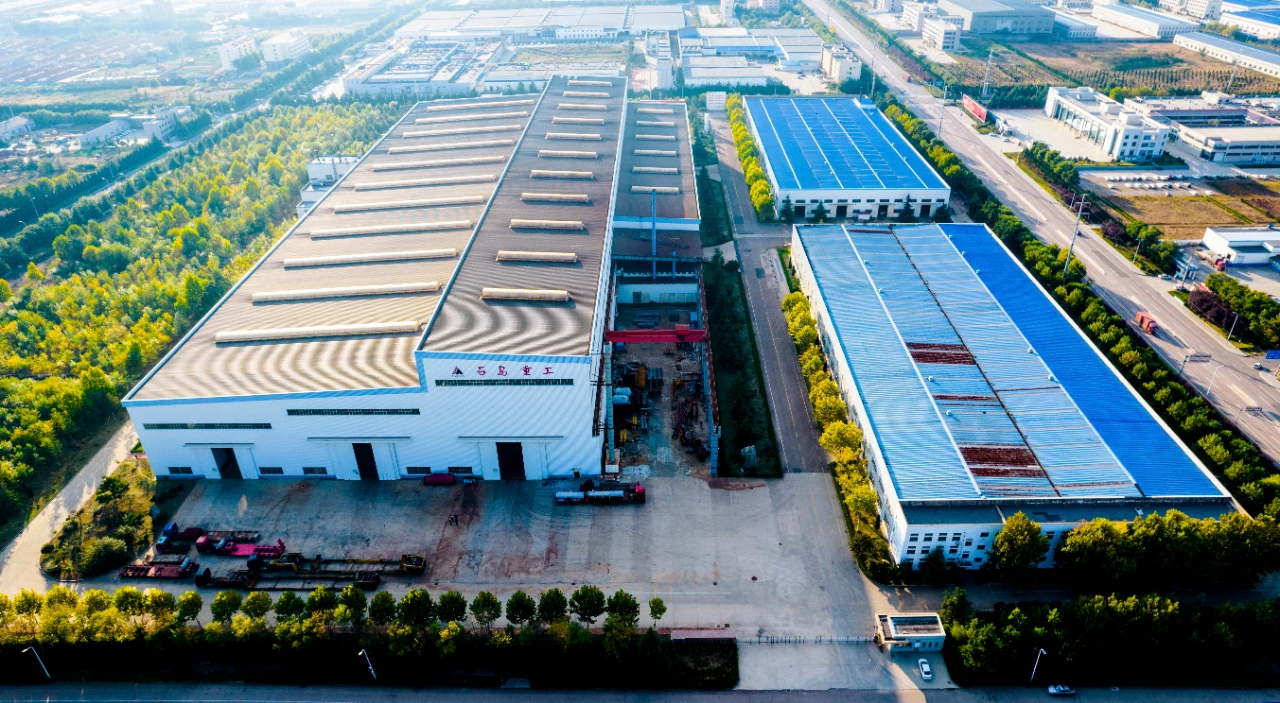
Representative manufacturing image. Inspection release, preservation and documentation form part of the agreed equipment delivery scope.
FAQ
Can a condenser remove all non-condensable gas?
Not by condensation under the specified conditions. The gas remaining at the outlet requires an engineered downstream route. Its handling depends on the process and any applicable treatment requirements.
Will increasing exchanger area always improve recovery?
Not necessarily. Recovery also depends on composition, pressure, coolant conditions and the achievable outlet state. Additional area cannot replace a correct process basis or resolve every system constraint.
Is cooling water sufficient for solvent recovery?
That depends on the stream and recovery target. Some duties may require lower-temperature cooling or additional treatment. Selection should follow process evaluation, not a general assumption about solvent service.
What should buyers provide for an initial quotation?
Supply stream composition, flow cases, inlet conditions, recovery targets, cooling availability, pressure-drop limits, condensate destination and outlet-gas requirements. Include applicable specifications, installation constraints and the proposed supply boundary.
Discuss a Defined Condenser Duty
Shell-and-tube condensers handling non-condensable gases should be specified as part of a connected process, with clear responsibilities for recovery performance, liquid collection and remaining gas treatment.
For complete custom condensers and associated process vessels, contact our engineering team with your stream data, operating cases and available drawings. These inputs support a focused review of equipment requirements, manufacturing scope, inspection and project delivery.