
Choosing between a falling film evaporator and a forced circulation evaporator starts with the liquid being processed, particularly how it behaves near the required final concentration. A feed that enters as a relatively thin liquid may become viscous, deposit solids or approach crystallization as water is removed.
For chemical manufacturers and environmental EPC contractors, the right comparison goes beyond evaporation capacity. Buyers should evaluate the complete operating range, cleaning requirements, utility consumption and equipment supply boundary. This article focuses on tubular industrial evaporation equipment and complete project packages, not individual components.
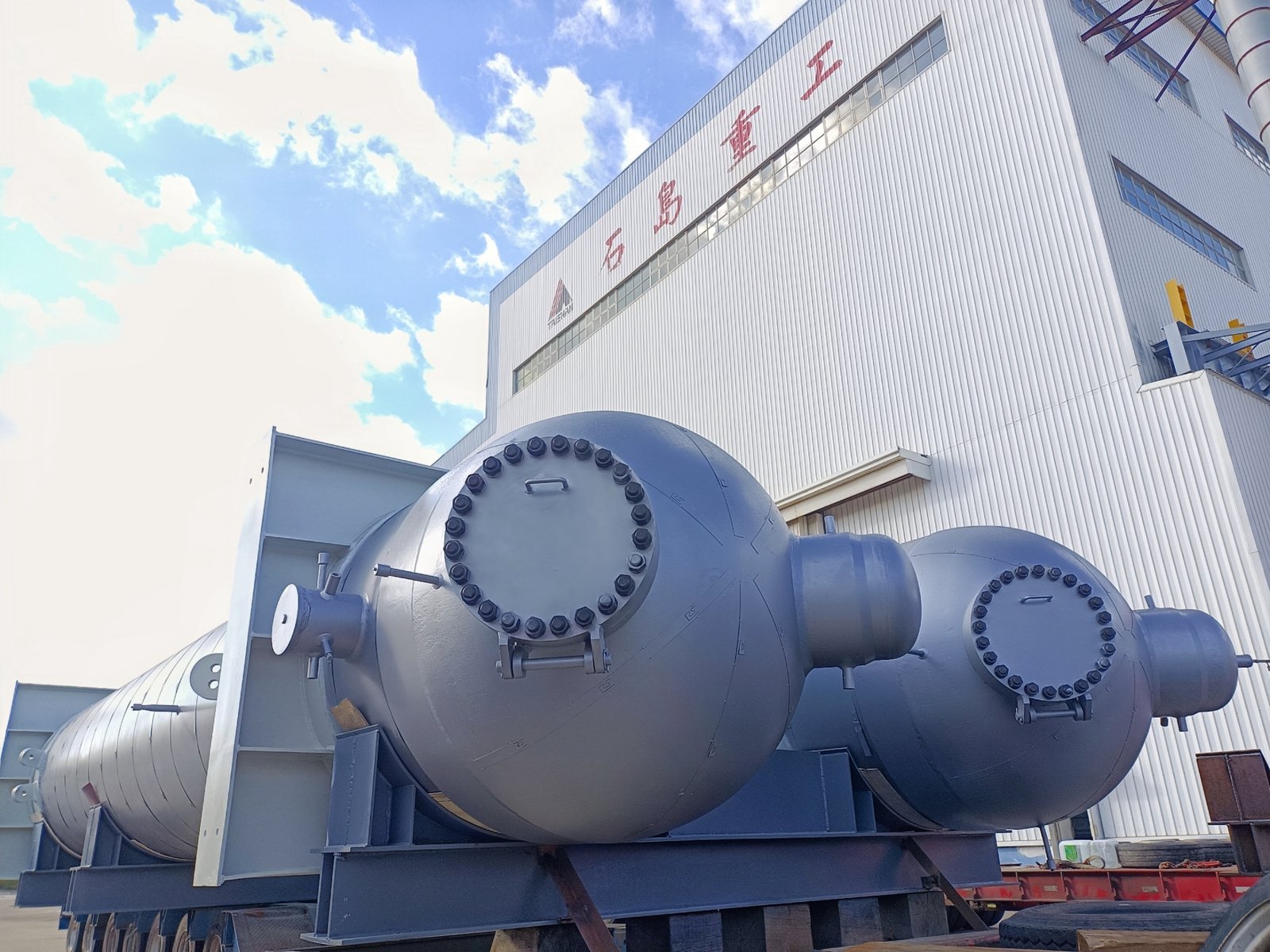
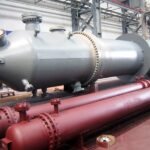
Representative heat-transfer equipment. This image does not identify a falling film or forced circulation evaporator configuration.
How the Two Evaporator Types Differ
In a tubular falling film evaporator, liquid is distributed near the top of the heating tubes and moves downward as a film while evaporation occurs. Maintaining suitable liquid distribution and surface wetting is an important design consideration.
A forced circulation evaporator uses pumped liquid circulation through a heater and a separation stage. In a common arrangement, pressure suppresses boiling within the heater, and evaporation occurs when the heated liquid enters the separator. The actual configuration must follow the process duty.
NPTEL’s engineering notes on evaporator types explain these operating principles. For procurement, the distinction is how each arrangement manages the liquid during concentration, not simply whether a pump is present somewhere in the system.
Start with the Final Concentrate, Not Only the Feed
Provide feed composition, flow range and temperature, but also define the required concentrate. Specify the intended concentration basis, expected discharge condition and downstream destination.
Request viscosity data at relevant temperatures and concentrations where available. Identify suspended solids, precipitation tendencies, foaming and known thermal sensitivity. A single viscosity value measured at room temperature may not represent either the feed under operating conditions or the final concentrate.
For unfamiliar mixtures, laboratory or pilot evaluation may be needed before committing to a process guarantee. The project should identify which assumptions are supported by measurements and which remain provisional.
Distinguish Concentration from Crystallization
A requirement to discharge a concentrated liquid is different from a requirement to produce a slurry containing crystals. Buyers should state whether precipitation is to be avoided, tolerated or deliberately controlled.
Neither equipment name alone establishes a crystallization capability. Where solids production is intended, the process designer must define the required operating conditions and downstream handling. A saleable dry salt product should not be assumed to be included in an evaporation package.
When to Evaluate a Falling Film Evaporator
A falling film arrangement can be a candidate where the liquid can maintain an adequately distributed film and where prolonged thermal exposure is undesirable. Buyers should ask the process designer to confirm suitability throughout the proposed concentration range.
The assessment must include minimum load as well as full production. Reduced feed flow, variable composition or interrupted operation can affect the proposed wetting conditions. Ask suppliers to state the guaranteed operating range and explain any recirculation requirements.
Do not treat “short residence time” as an unconditional product-quality guarantee. Actual exposure depends on the complete arrangement, including recirculation and associated liquid inventory. Likewise, the suitability of a relatively clean feed does not establish suitability once the liquid becomes more concentrated.
When to Evaluate a Forced Circulation Evaporator
Forced circulation is often considered for more demanding concentration duties, including streams with increasing viscosity or a tendency to form deposits or crystals. Its suitability still depends on the fluid, operating conditions and proposed design.
The buyer should review circulation requirements, pressure losses, heater performance and how solids will be managed where present. Pumping energy and the liquid inventory within the complete system should form part of the comparison.
Forced circulation does not mean self-cleaning, and it does not eliminate fouling or corrosion. Suppliers should explain the expected cleaning approach and the limits of their proposed operating envelope rather than relying on a broad claim that the equipment handles difficult wastewater.
Compare Fouling, Cleaning and Availability
Both arrangements need a credible cleaning strategy. Identify the likely deposits, previous operating experience and any restrictions on cleaning chemicals or cleaning temperatures.
Ask how the proposed equipment can be drained, inspected and cleaned. State the available maintenance space and required access before the arrangement is finalized. A suitable thermal design can still create operational difficulties if essential surfaces are inaccessible within the plant layout.
Compare expected availability on a consistent basis. One quotation may assume a clean operating period that differs substantially from another. Require suppliers to distinguish demonstrated experience, engineering assumptions and conditions that need testing. Avoid accepting unsupported guarantees for cleaning frequency.
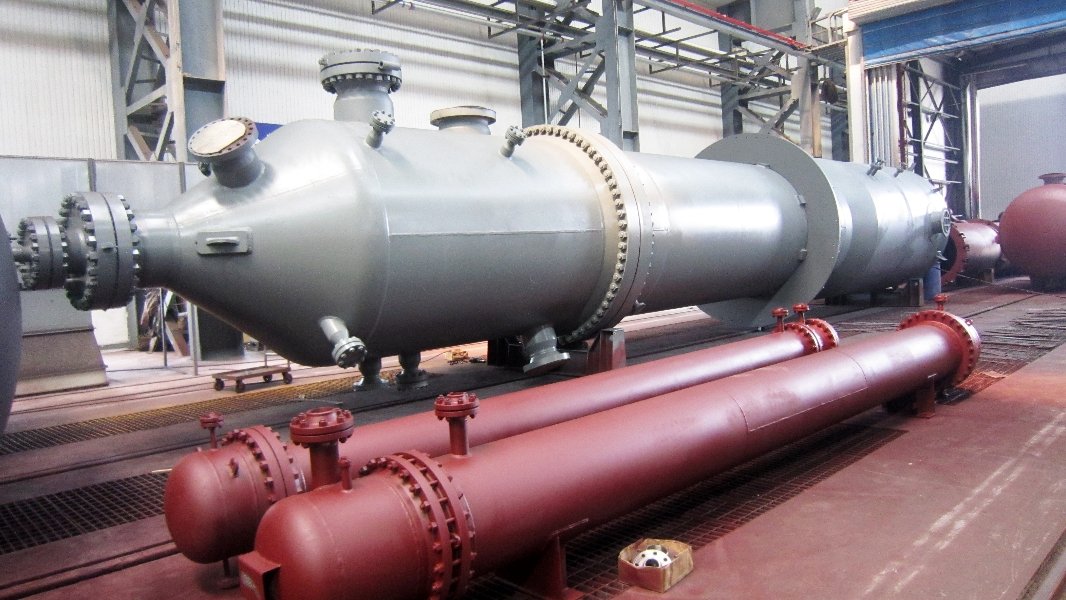
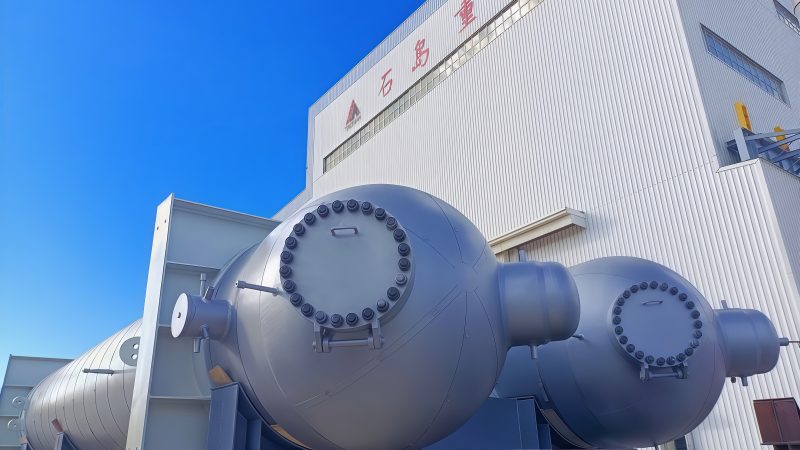
Representative workshop image. Manufacturing and access requirements should follow the approved evaporation duty and maintenance plan.
Separate Evaporator Configuration from Energy-Recovery Method
Falling film and forced circulation describe liquid-flow arrangements. Multiple-effect evaporation and mechanical vapor recompression describe how energy is used or recovered. They are not mutually exclusive alternatives on the same selection list.
A proposal may combine an appropriate liquid-flow arrangement with a suitable energy-recovery approach. Compare steam and electricity requirements at the same feed conditions, evaporation rate and concentrate target.
Include cooling demand, startup requirements and auxiliary consumption where relevant. An energy figure quoted without its operating basis is not a useful comparison. The system designer should establish how boiling-point elevation and changing liquid properties affect the proposed process.
Specify Materials and the Complete Equipment Boundary
Material selection should address the feed, concentrate, vapor-side exposure where relevant and cleaning conditions. The name of the evaporator type does not determine the appropriate alloy or corrosion protection.
For industrial heat exchangers within the evaporation arrangement, define the actual process and utility conditions. The associated custom process vessels should likewise have approved functions, design conditions and inspection requirements.
A complete equipment schedule may include the evaporator, separator, condenser and collection vessels, depending on the selected process. Where industrial storage tanks are included, this procurement discussion concerns complete tanks above 1,000 liters.
Clarify responsibility for process design, circulation equipment, vacuum equipment, vapor recompression where applicable, controls and site installation. A quotation for fabricated vessels and heaters should not be mistaken for a fully integrated evaporation system with plant-wide performance guarantees.
Define Condensate and Concentrate Acceptance Criteria
Specify evaporation capacity and final concentration together. Also identify relevant limits for product quality, condensate quality and discharge conditions. Acceptance criteria should state the feed and utility conditions under which they apply.
Recovered condensate is not automatically suitable for unrestricted reuse. Volatile substances and carryover can affect its quality. The EPA’s historical Capsule Report on Evaporation discusses condensate-contamination considerations; it is background information, not a current discharge authorization.
Agree how process performance will be evaluated and who performs the test. Mechanical examinations and pressure testing address different acceptance requirements from an operating performance test.
Review Manufacturing and Delivery Before Award
The manufacturing specification should identify applicable construction requirements, material documentation, welding controls, examinations and testing. Vacuum or pressure conditions must be included where relevant to the approved design.
Confirm drawing approval milestones, inspection responsibilities and required manufacturing records. Shipment dimensions, preservation and any division between factory assembly and site assembly should be established early.
When evaluating WSHI’s manufacturing capability, connect the discussion to the approved equipment scope. Specialized process design, package integration and guarantees should be confirmed individually rather than assumed from a general fabrication capability.
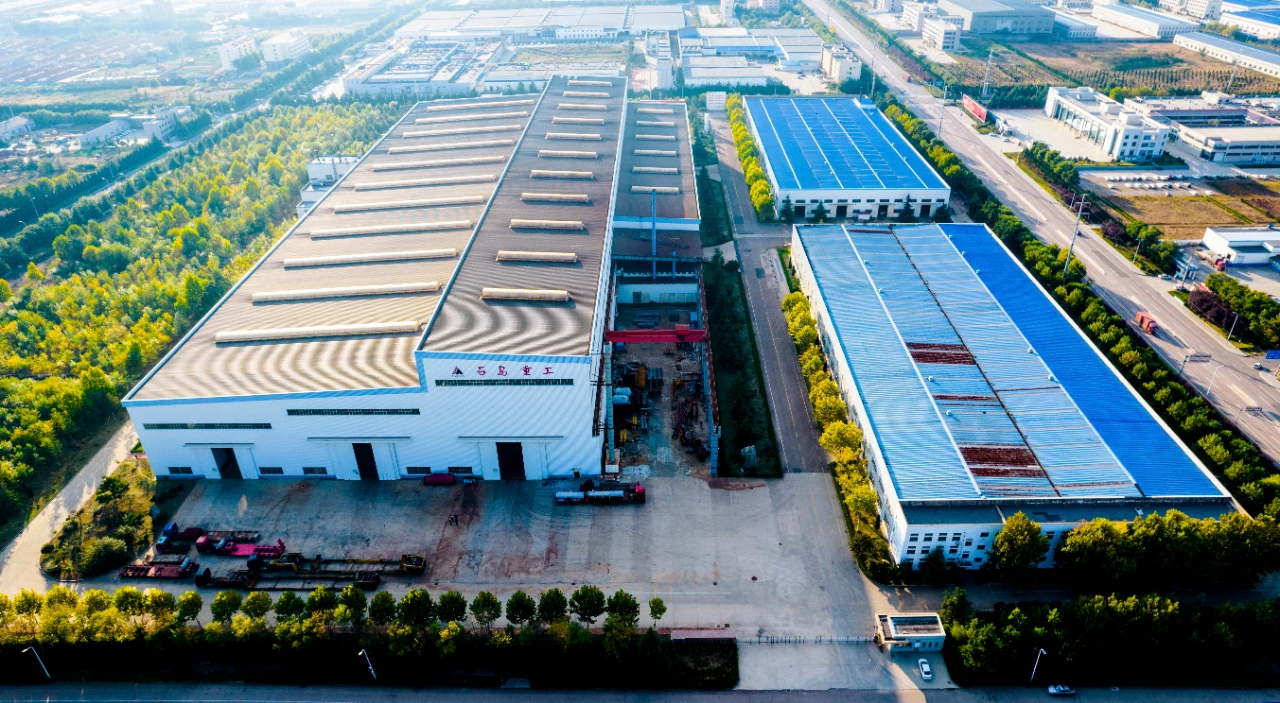
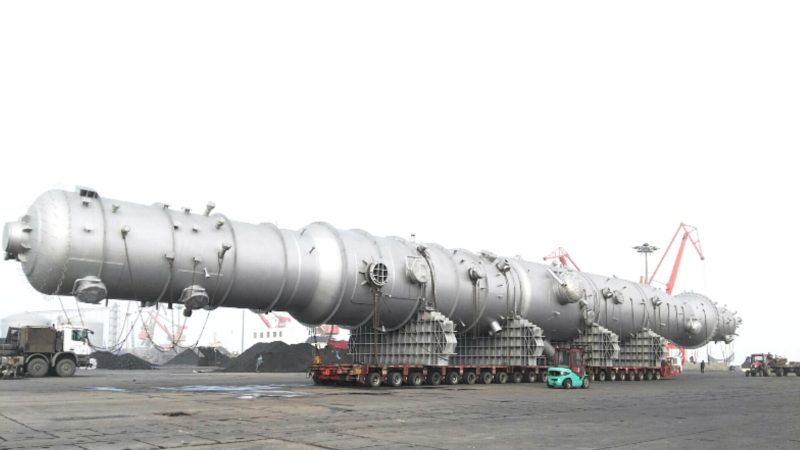
Representative manufacturing image. Fabrication, inspection release and delivery planning should be coordinated with the project’s installation schedule.
FAQ
Is a falling film evaporator always better for heat-sensitive liquids?
Not always. It can be a candidate, but the complete temperature history, residence time, recirculation and liquid behavior require evaluation. Product-quality requirements should be defined and verified.
Does forced circulation prevent scaling?
No. It may offer a suitable arrangement for some demanding duties, but scaling depends on the liquid and operating conditions. A cleaning strategy and realistic operating limits remain necessary.
Can both types be used in the same plant?
Yes, where process design supports that arrangement. Different concentration stages may have different liquid properties and operating requirements. The designer should justify the transition and interfaces.
What information is needed before requesting quotations?
Provide representative composition, flow variability, target concentration, viscosity information, solids behavior, thermal sensitivity, utilities and cleaning requirements. Include the proposed equipment boundary and identify unresolved process inputs.
Select Around the Duty, Then Define the Supply
A falling film evaporator or forced circulation evaporator should be selected around the full concentration duty, not a headline capacity or a general claim about efficiency.
For complete evaporator equipment, heat exchangers and associated process vessels, discuss your project requirements with our engineering team. Share the feed analysis, concentrate target, available process design and utility conditions so the team can assess manufacturing requirements, documentation and delivery scope.