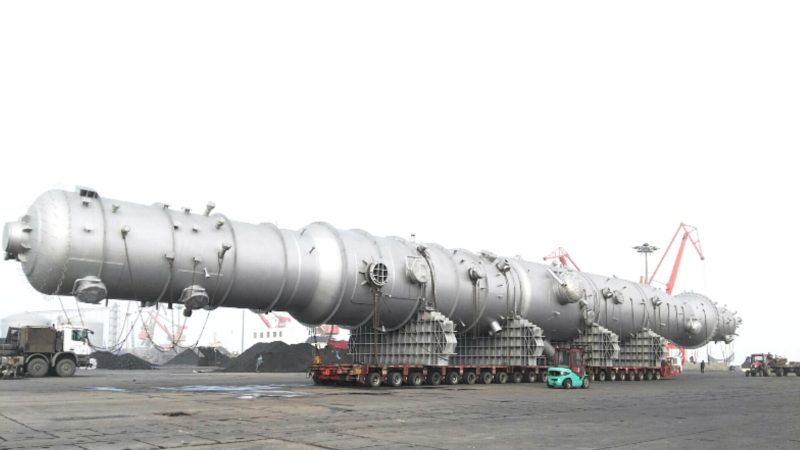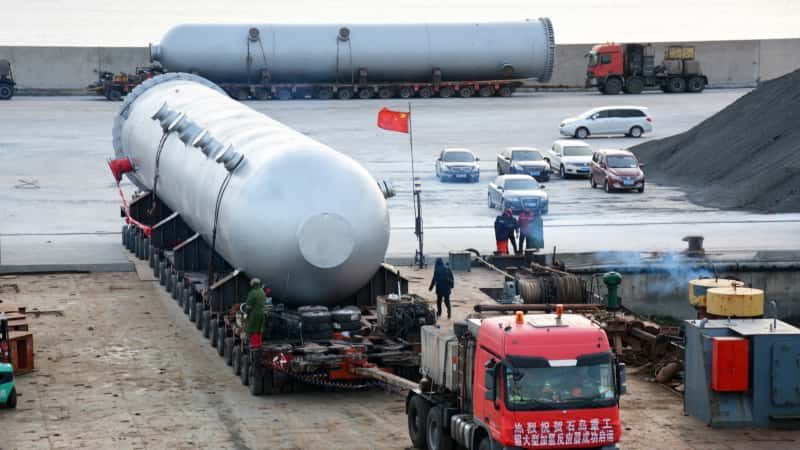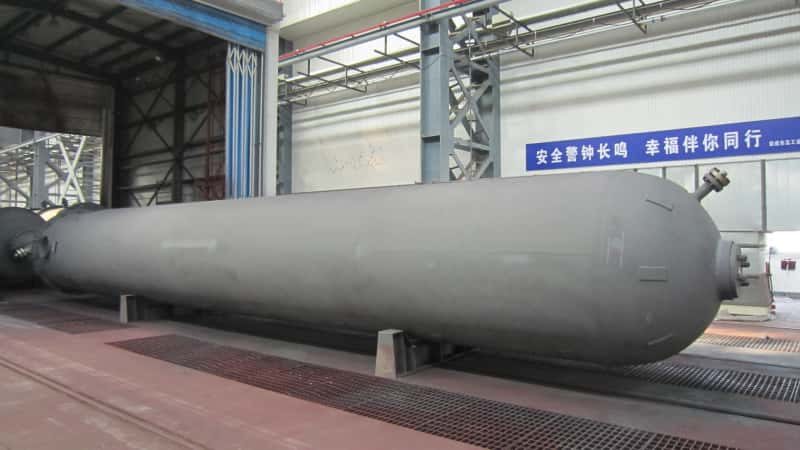

Pressure vessel material selection is sometimes reduced to a convenient rule: use carbon steel for lower pressure, stainless steel for intermediate duties, and a high-alloy material for the highest pressures. This approach is unreliable for an industrial vessel. Pressure is one important mechanical design input, but it does not establish chemical compatibility, minimum-temperature toughness, long-term temperature capability, fabrication suitability, or the requirements of the governing construction code.
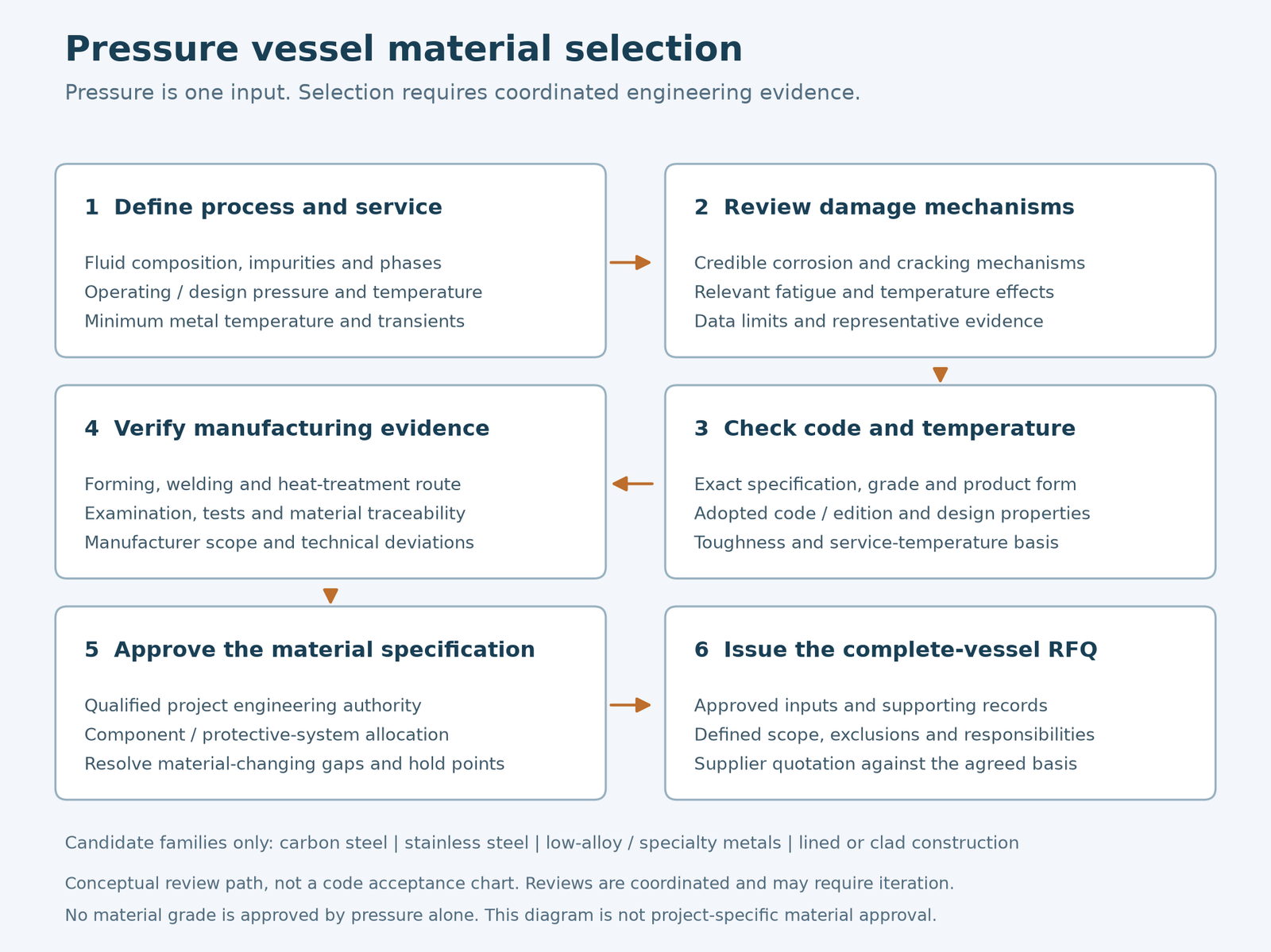
EPC buyers should select a pressure-vessel material through a documented review of the actual fluid composition, operating and design pressures and temperatures, relevant damage mechanisms, design life, code-permitted material properties, and manufacturing requirements. The outcome should be an approved material specification for the complete vessel—not a generic grade recommendation based on a pressure band or the word “acidic.”
This guide explains how to organize that review before requesting quotations for industrial reactors and other custom pressure vessels. It is a procurement framework, not a material approval, wall-thickness calculation, corrosion test report, or authorization for continued operation of existing equipment.
Why Can't Pressure Rating Alone Determine the Material of a Pressure Vessel?
Pressure influences the stresses that a vessel must resist. It does not determine the entire service environment in which the vessel will operate.
At a specified design pressure, several different metallic materials might be viable under the applicable code. Their required thicknesses, temperature limits, toughness requirements, fabrication methods, and susceptibility to the contained fluid can differ considerably. The responsible designer must evaluate those factors together.
Separate the engineering questions
| Selection question | What it establishes | Why pressure alone cannot answer it |
|---|---|---|
| Pressure-boundary strength | Whether the proposed material and geometry can meet the applicable mechanical design requirements | Strength and allowable properties depend on material specification, temperature, product form, code rules, and design details |
| Process compatibility | Whether wetted surfaces can withstand the specified medium and identified damage mechanisms | Corrosion depends on chemistry, concentration, contaminants, temperature, phase and local conditions |
| Low-temperature toughness | Whether relevant materials, welds and details meet requirements for the minimum design metal temperature and service | Brittle-fracture susceptibility is not determined by maximum design pressure alone |
| Elevated-temperature suitability | Whether the material is appropriate for the design metal temperature and expected exposure | Strength, time-dependent behavior and certain damage mechanisms can change at elevated temperatures |
| Weldability and fabrication | Whether the selected product forms, joints, forming operations and heat treatment are feasible and qualified | Different material grades and thicknesses can require different manufacturing controls |
| Documentation and compliance | Whether the offered material is acceptable under the project-adopted construction code and contractual requirements | A commercially available alloy is not automatically qualified for any vessel design |
The categories above are an editorial procurement framework, not a code acceptance table.
There is therefore no defensible universal table stating that a vessel below a particular pressure should be carbon steel, that an intermediate-pressure vessel should be stainless steel, or that every high-pressure vessel should be made of a nickel alloy.
Pressure rating is a design input; material selection is an engineering decision requiring several independent lines of evidence.
Pressure, thickness and material are related—but not interchangeable
A project may meet a pressure requirement by considering vessel geometry, thickness, allowable stress at design temperature, weld-joint and fabrication requirements, and an appropriate code-approved material. That does not mean the material with the greatest advertised tensile strength is the best or most economical choice.
For example, a candidate material may offer useful strength but be poorly suited to a chloride-bearing process stream, an extremely low design metal temperature, or the manufacturer's approved welding arrangement. Another candidate may offer better corrosion resistance but require different thickness, forming, inspection or procurement arrangements.
These are examples of decision factors, not recommendations for an unspecified process fluid.
What Process and Service Data Must Be Defined Before Screening Materials?
The owner's process-design basis should establish the range of conditions that a complete industrial pressure vessel is expected to encounter. An RFQ containing only “50 bar, 200°C, stainless steel preferred” leaves important selection assumptions unresolved.
Identify the complete chemical environment
Material selection begins with the fluid that contacts the pressure boundary, including normal and relevant non-normal service. Depending on the process, the data package may need to identify:
- Major process constituents and their concentration ranges, with an explicit mass, mole or volume basis.
- Water content, wet/dry states and the possibility of phase separation or condensed liquid.
- Relevant acids, alkalis, salts, chlorides, sulfur species, oxygen, oxidizing agents or other contaminants.
- pH and chemical conditions where meaningful for the actual phase and process.
- Dissolved gases, possible gas-phase and liquid-phase compositions, and any relevant partial-pressure information.
- Solids, deposits or process residues that may affect local corrosion or cleaning conditions.
- Feed variability, changes in raw-material quality and potentially relevant process excursions.
- Internal and external exposures, including atmosphere, insulation, soil contact or other project-specific conditions.
A generic label such as “acid service,” “seawater,” or “chemical wastewater” is not enough to determine a universal material grade. Different concentrations, impurities and temperatures can change the material compatibility assessment.
The required detail should be set by the process and materials engineers; not every service needs every item listed above.
Define temperature and pressure as service cases
Normal operating conditions and mechanical design conditions should be recorded separately. The design pressure and design metal temperature must follow the applicable design basis and code; they should not be invented by applying a universal percentage to normal operation.
| Input | Minimum clarification for the engineering team |
|---|---|
| Normal process pressure and temperature | Operating ranges, relevant locations and coincident process states |
| Design pressure and design metal temperature | Approved mechanical design values, units and basis |
| Minimum design metal temperature | Lowest relevant metal-temperature condition and its engineering basis |
| Startup, shutdown and cleaning | Credible changes in temperature, composition, phase and other applicable exposure conditions |
| Pressure/temperature cycling | Relevant frequency, magnitude and pattern, where cyclic loading is a design concern |
| External loading and environment | Relevant wind, seismic, support, insulation, external corrosion and other project requirements |
| Design-life basis | Contractual intended duty and assumptions needed by the responsible design/materials authority |
Metal temperature can differ from a nominal bulk process temperature. Where that difference matters, the engineering team must specify the relevant local or design metal condition.
A change in phase can also change the controlling material exposure. For example, a dry gas service may not represent the same corrosion conditions as a shutdown state in which an aqueous phase can form. The actual mechanism must be reviewed rather than assumed.
Record what is known and what is provisional
Each key parameter should be marked as measured, analytically verified, calculated, specified by the owner, conservatively bounded, or not yet confirmed. These labels prevent a preliminary operating assumption from becoming an apparently established material specification.
If credible service changes could alter the selected grade, those items should remain open in the technical clarification register until reviewed.
How Should Mechanical Strength, Temperature Limits and Toughness Be Checked?
The applicable construction code establishes the framework for pressure-boundary design. The material reviewer must verify the proposed material specification, product form and relevant design properties under the edition adopted by the project.
For an ASME construction basis, BPVC Section VIII, Division 1 covers applicable requirements for design, fabrication, examination, testing and certification. ASME's BPVC Section II and related resources identify the material-specification and property framework used with the governing construction sections. Other jurisdictions and contracts may adopt different codes or additional legal requirements.
Check an actual code material specification—not just a trade name
A pressure vessel material should be identified with sufficient precision for engineering, purchasing and manufacturing. Depending on the applicable code, the relevant information can include:
- Material specification and grade or alloy designation.
- Product form: plate, forging, pipe, tube or other required form.
- Thickness or size range and applicable specification restrictions.
- Material condition, heat treatment, and any supplementary requirements.
- Design-temperature range and code-recognized strength or allowable-stress data.
- Toughness and impact-testing requirements, including exemptions only where the applicable rules permit them.
- Weld-filler and welding-qualification requirements.
- Material certification and traceability obligations.
A broad designation such as “316L” is not a complete pressure-vessel material procurement specification. The code-approved product specification, delivery condition and applicable records must be identified for the actual component.
Evaluate the actual temperature range
The pressure-boundary material must be assessed for both relevant high-temperature and low-temperature conditions.
At elevated temperatures, allowable design properties may differ from room-temperature tensile values. Where applicable, time-dependent behavior and service-specific deterioration mechanisms must also be addressed.
At low temperatures, toughness and brittle-fracture requirements can control grade selection, heat treatment or testing even if a material has ample nominal tensile strength.
A pressure rating alone therefore cannot establish that a material is suitable for a specific temperature or transient condition.
Keep corrosion, fatigue and mechanical integrity distinct
A sufficient initial wall thickness is not proof of resistance to all deterioration mechanisms. Localized pitting, environment-assisted cracking, fatigue, embrittlement and other mechanisms require consideration of the actual service.
Likewise, a material that is chemically resistant under laboratory conditions still needs a code-compliant mechanical design for the complete vessel.
For general corrosion mechanisms and their procurement implications, refer to the site's chemical pressure-vessel corrosion and material specification guide. Any numerical claims in older site articles should be independently verified before being adopted as project design criteria.
How Can Buyers Use Corrosion Tables Without Misapplying Them?
Corrosion tables are valuable screening tools, particularly when considering material candidates for a known process medium. They are not universal approvals for a complete industrial pressure vessel.
Understand the conditions behind published corrosion data
Outokumpu's corrosion tables explain that much of the underlying data comes from laboratory tests using pure chemicals or aqueous solutions, frequently under conditions unlike those of a mixed industrial process stream. Its stated reference basis includes concentration, oxygen conditions, annealed material, normal microstructure and clean surfaces.
Outokumpu also cautions that impurities can increase or reduce corrosion and that testing representative process media may be necessary before a final material decision.
This matters because the apparent compatibility of a grade can change when the actual conditions include contaminants, oxidizing agents, deposits, stagnant zones, welded surfaces or temperature variations that were not represented by the published test.
| Data or evidence | Useful for | Important limitation |
|---|---|---|
| General material family description | Early option screening | Does not establish compatibility with a specific medium |
| Supplier corrosion table | Comparing reported behavior at defined chemical concentrations and temperatures | May assume a cleaner solution, different oxygen content or material condition |
| Historical plant experience | Understanding related service and degradation mechanisms | Requires documented comparability of composition, temperature and fabrication |
| Representative corrosion testing | Evaluating the actual fluid/material combination under selected conditions | Results apply only within the tested scope, duration and uncertainty |
| Materials specialist assessment | Integrating damage mechanisms and evidence with mechanical requirements | Depends on the completeness and quality of the supplied basis |
These evidence types are complementary; none independently approves the complete pressure-vessel design.
Check more than general corrosion rate
A low uniform corrosion rate does not prove immunity to localized damage.
Outokumpu's corrosion-resistance technical guidance discusses how temperature, chloride concentration, pH, oxidizing conditions, surface finish, fabrication and crevices can affect stainless steel behavior. It also distinguishes uniform corrosion from pitting, crevice corrosion and stress corrosion cracking.
For an EPC review, this means the materials engineer should identify the credible damage mechanisms rather than accepting a statement such as “stainless steel is corrosion-resistant” as a complete analysis.
Neither the stainless steel designation nor a generic acid/alkali category is a valid standalone material recommendation. In particular, 316L must not be automatically specified for every acidic environment.
Confirm which zones are exposed
A complete vessel can contain several materially different exposure zones:
- Vapor and liquid-contact areas.
- Liquid interfaces or regions where water can collect.
- Welds and heat-affected zones.
- Nozzles, dead legs, crevices and areas where deposits may accumulate.
- External surfaces under insulation or in an aggressive ambient environment.
The responsible materials team should decide whether one material specification is appropriate throughout the vessel or whether different approved requirements are necessary for specific components or surfaces.
Where corrosion evidence is incomplete, the design basis should state the unresolved information and identify whether additional data, specialist review or testing is required before material approval.
How Should Carbon Steel, Stainless Steel, Alloy Steel and Clad Constructions Be Compared?
Material families offer different combinations of strength, corrosion behavior, temperature capability, weldability, availability and cost. Their general characteristics help organize screening; they cannot be turned into an automatic hierarchy of “best” materials.
Compare candidate approaches by their selection questions
| Candidate approach | Why it may be considered | What still needs approval |
|---|---|---|
| Carbon steel | Common pressure-vessel product forms, broad manufacturing familiarity and potential cost advantages for compatible service | Code-permitted grade, design-temperature properties, toughness, corrosion and external exposure |
| Austenitic stainless steel | Potential advantages where compatible corrosion resistance, cleanliness or other properties are required | Exact fluid chemistry, chloride and cracking mechanisms, temperature and weld condition |
| Duplex stainless steel | Potential combined strength and localized-corrosion performance in certain services | Specific grade, operating environment, welding procedure, heat-treatment and code acceptability |
| Cr-Mo or other low-alloy steel | May be considered for certain elevated-temperature or specialized refinery duties | Temperature-dependent design rules, damage mechanisms, heat treatment, welding and service history basis |
| Nickel-base alloy or another specialty metal | Potential fit for certain aggressive chemical or temperature conditions | Exact alloy grade, verified compatibility, design-code eligibility, product form, fabrication and project economics |
| Clad plate, weld overlay or an engineered lining on a structural shell | May separate some pressure-resisting and corrosion-facing functions | Substrate design, integrity of the protective system, fabrication/inspection details, nozzles and expected exposure |
Conditional examples only. The table intentionally contains no generic pressure thresholds, guaranteed service lives, universal corrosion rankings or recommended grades for unspecified acids.
A lining or clad layer changes the design problem
A carbon-steel pressure boundary with an approved protective lining or metallic cladding can be considered in certain applications. However, the specification must identify which layer carries pressure, which provides process-side protection, and how the entire system performs at welds, nozzles, terminations and potential defects.
A protective layer should not be assumed to make an unsuitable substrate acceptable for every temperature, permeation, hydrogen or other service condition.
Likewise, a corrosion allowance addresses a defined metal-loss design basis; it is not a substitute for assessing localized attack or cracking. Detailed corrosion-allowance calculations belong in the appropriate specialist design documents rather than in a general material-selection article.
Nonmetallic and fiber-reinforced constructions may be relevant to some industries, but they are outside the confirmed supply scope of this page's industrial metallic pressure-vessel offering. No FRP manufacturing or design capability is claimed here.
Consider lifecycle consequences without inventing universal costs
Purchasing price is only one consideration. A technically acceptable comparison may also account for material availability, fabrication methods, inspection demands, maintenance implications and the project-specific consequences of corrosion or replacement.
No universal “nickel alloy costs X times more,” “stainless lasts Y years,” or “cladding saves Z%” rule is defensible without the relevant project estimates and service evidence.
The decision should first identify technically acceptable alternatives and then compare documented commercial and lifecycle implications.
What Fabrication and Material Records Are Needed for an Approved Selection?
A chemically suitable alloy is not a usable equipment specification unless the selected fabrication route can produce a code-compliant and inspectable pressure boundary.
Verify welding, forming and heat-treatment requirements
Depending on the material and equipment design, the engineering and manufacturing teams should address:
- The available plate, forging, tube and other component product forms.
- Forming limits, heat-treatment condition and dimensional implications.
- Applicable welding procedure and personnel qualification requirements.
- Filler-metal compatibility and corrosion resistance of relevant weld zones.
- Whether post-weld heat treatment or another defined treatment is required under the approved design basis.
- Examination and testing requirements, including any relevant impact testing.
- Surface preparation, contamination controls and other fabrication details affecting service suitability.
- Repair, rework and material-substitution approval procedures.
ASME's required code-books guidance distinguishes the construction, materials, examination and welding-qualification code sections associated with ASME pressure-vessel certification. The applicable project edition and requirements must be confirmed, rather than inferred from a general web summary.
Link every material to an actual pressure-boundary component
The final materials package should identify the selected specifications and records for each relevant component: shell, heads, forgings, nozzles and other applicable pressure-retaining parts. If multiple materials or protective constructions are used, the interfaces require explicit design review.
Material test reports, heat-number traceability, welding records, heat-treatment evidence and agreed inspection documentation support manufacture and verification. They do not independently establish corrosion suitability in an unspecified service.
The scope and method of positive material identification, where required, should be stated by the approved inspection and material-verification plan. This guide does not reproduce PMI or NDE procedures.

Do not confuse a supplier's product portfolio with project approval
The site's industrial reactor product page provides a reference for discussing the manufacture of complete industrial reactors. It is not evidence that every listed material, coating, advanced alloy or proprietary process is available for any requested service.
Before a supplier commits to a material option, the parties must confirm the actual manufacturing entity, applicable certification scope, product form, manufacturing capability and contractual responsibility.
What Should EPC Buyers Include in a Pressure Vessel Material Selection RFQ?
The final procurement decision should be traceable from process conditions through the selected damage-mechanism assessment and code/material review to the approved equipment documents.
Recommended input–evidence–responsibility register
| RFQ input or decision | Evidence to provide or obtain | Primary decision owner / interface |
|---|---|---|
| Equipment identity and supply boundary | Vessel tag, service description, major components and scope | Owner / EPC and supplier |
| Fluid composition | Representative composition, phase behavior, concentration units and contaminants | Process engineer |
| Operating cases | Normal, minimum, maximum and relevant transient conditions | Process engineer |
| Mechanical design basis | Design pressure, design metal temperatures, external loads and code edition | Mechanical design authority |
| Materials service assessment | Credible corrosion, cracking, fatigue, high/low-temperature and other relevant damage mechanisms | Materials / corrosion engineer |
| Corrosion evidence | Applicable tables, representative tests, previous service evidence and limitations | Materials / corrosion engineer |
| Material and product form | Proposed specification, grade, condition and component allocation | Materials engineer and mechanical designer |
| Fabrication route | Forming, welding, heat treatment, inspection and documentation plan | Manufacturer with design authority |
| Protective construction | Corrosion allowance, cladding, overlay or lining basis where applicable | Process/materials/mechanical team |
| Compliance evidence | Applicable material certificates, qualifications, inspection documents and required product certification | Supplier, QA/QC and inspection authority |
| Deviations and missing data | Technical query register with approval status and owners | EPC procurement / discipline leads |
Editorial handover matrix; the governing code, contract and responsible engineers establish the actual required deliverables.
Use a staged approval decision
A practical review can classify proposed material options as:
- Technically supported: The process data, mechanical/code basis, damage-mechanism review and fabrication requirements have been approved for the proposed service.
- Conditionally suitable for preliminary quotation: A material option can be priced against explicitly provisional assumptions, with named hold points before design approval.
- Not yet supportable: Missing composition, service conditions, code eligibility or fabrication evidence could materially change the material, vessel construction or protective system.
These are project-management categories, not official ASME acceptance statuses.
Where an unresolved condition could change the pressure-boundary specification, the project should establish an approval hold point before releasing affected fabrication drawings or materials for manufacture.
Ask vendors to identify their assumptions
A comparable supplier proposal should state the material specifications offered, the governing code and edition, component allocations, fabrication and documentation scope, exclusions and deviations. It should also flag any service-compatibility judgment that the supplier has not been contracted or equipped to make.
The owner, process engineer and appointed materials specialist remain responsible for the project decisions assigned to them. The equipment manufacturer should evaluate and manufacture against the approved design inputs within its confirmed scope.
For an enquiry about a complete industrial pressure vessel or reactor, send the fluid-composition and operating-case data, design conditions, applicable code, any approved material study, and the desired equipment scope to the supplier. Do not rely on a pressure-only material recommendation.
Frequently Asked Questions
What is the best material for an industrial pressure vessel?
There is no universal best grade. The appropriate selection depends on pressure-boundary requirements, design metal temperatures, actual process chemistry, credible damage mechanisms, code acceptability, fabrication and project-specific lifecycle considerations. A qualified engineer should approve the selection for the particular equipment.
Can pressure rating alone determine the material of a pressure vessel?
No. Pressure contributes to the mechanical design requirement, but it cannot establish corrosion resistance, toughness, service-temperature suitability, weldability or compatibility with the governing construction code.
Is 316L stainless steel always the best choice for chemical or acidic service?
No. “Acidic” does not describe a unique environment. Acid type, concentration, temperature, dissolved species, oxidizing conditions, impurities and the fabricated surface condition all matter. Published corrosion tables can help screen materials, but final compatibility may require specialist assessment or representative tests.
What materials are commonly considered for pressure vessels?
Depending on the service and code, candidate metallic materials can include carbon steel, low-alloy steel, austenitic or duplex stainless steel, nickel-base alloys, and other approved metals. Clad or lined constructions may also be evaluated where appropriate. Their inclusion in a list does not mean each is suitable for the same application.
Can a corrosion table prove that an alloy is suitable for the actual process?
Not by itself. A supplier table may reflect controlled laboratory chemistry, temperature, oxygen conditions and material state. Real process fluids may have impurities, different phases, deposits and fabrication conditions that change corrosion behavior.
What must buyers submit before requesting a material recommendation?
Provide representative process composition and impurities, pressure/temperature operating cases, design conditions, intended duty, the governing code and project location, relevant prior material experience and a clear equipment scope. State which items are provisional and who will approve the final materials assessment.
Conclusion
Pressure vessel material selection is not a ranking of alloys by design pressure or purchase price. It is the coordinated assessment of pressure-boundary requirements, process compatibility, temperature and toughness, manufacturing feasibility, and verifiable documentation.
For industrial EPC procurement, a reliable material-selection package begins with complete process information and identifies the mechanisms that could actually limit the vessel in service. It then checks code-permitted material properties, fabrication and inspection requirements, and the evidence behind any proposed corrosion-resistant construction.
A well-prepared RFQ makes those assumptions visible, distinguishes approved facts from missing data, and gives the manufacturer a coherent basis for quoting a complete pressure vessel. Final material approval must remain with the qualified project engineering authority.
References
- American Society of Mechanical Engineers (ASME). BPVC Section VIII, Division 1 — Rules for Construction of Pressure Vessels. Official scope of applicable pressure-vessel design, fabrication, inspection, testing and certification requirements. https://www.asme.org/codes-standards/find-codes-standards/bpvc-viii-1-bpvc-section-viii-rules-construction-pressure-vessels-division-1
- ASME. 2025 ASME Boiler and Pressure Vessel Code. Publisher information regarding BPVC Section II material specifications and properties, Section VIII construction rules, and Section IX welding qualifications. The applicable project edition must be separately established. https://www.asme.org/codes-standards/bpvc-standards/bpvc-2025
- ASME. BPVC Resources. Publisher description of Section II, Part D allowable stress/property tables, material approvals and related certification resources. https://www.asme.org/codes-standards/publications-information/bpvc-resources
- ASME. Required Code Books. Official overview of code sections associated with pressure-vessel manufacturer certification, including materials, examination, construction and welding qualifications. https://www.asme.org/certification-accreditation/asme-certification-process/required-code-books
- Outokumpu. Corrosion Tables and Charts for Stainless Steel. Material supplier's laboratory-data basis and explicit limitations concerning oxygen, chemistry, impurities, material condition and the value of representative testing. https://www.outokumpu.com/en/products/corrosion-tables
- Outokumpu. Corrosion Resistance of Stainless Steel. Material supplier's technical explanation of uniform corrosion, pitting, crevice corrosion, environmentally assisted cracking, fabrication and surface effects. https://www.outokumpu.com/en/expertise/stainless-basics/corrosion-resistance
- American Petroleum Institute (API). API Digital Catalog. Official listing of API RP 571, Damage Mechanisms Affecting Fixed Equipment in the Refining Industry. The paid standard itself was not reviewed or reproduced. https://www.api.org/products-and-services/standards/digital-catalog