
What Should Be Checked Before Ordering Custom Process Vessels for Chemical Plants?
Ordering custom process vessels for a chemical plant is not the same as buying a standard tank from a catalog. EPC buyers, project managers and technical teams need to confirm process conditions, materials, inspection requirements, nozzle orientation, coating, delivery limits and documentation before fabrication starts. Missing information at the RFQ stage can lead to quotation revisions, drawing delays, site installation conflicts or unnecessary rework.
For chemical, petrochemical, coal chemical, environmental and new energy projects, custom process vessels are usually part of a wider process system. They should be specified as complete equipment, not as isolated shells, nozzles or accessories. WSHI manufactures custom pressure vessels based on project drawings, datasheets and agreed technical requirements for industrial applications.

A custom process vessel RFQ can be prepared with only the vessel name and approximate size.False
A reliable RFQ should include process duty, pressure, temperature, medium composition, corrosion data, materials, nozzles, inspection, testing, coating, documentation and delivery requirements.
Nozzles, supports, instruments and accessories should be coordinated as part of the complete custom process vessel package.True
Treating small items separately can create piping conflicts, inspection gaps, coating rework and site installation delays. EPC buyers should define these interfaces within the complete vessel scope.
What Are Custom Process Vessels?
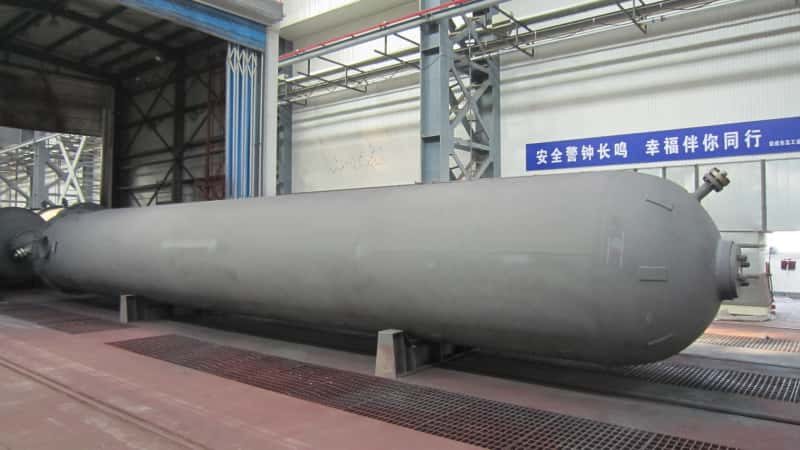
Custom process vessels are engineered containers used to hold, separate, react, heat, cool, buffer or condition process media under defined operating conditions. They may be pressure vessels, vacuum vessels, atmospheric vessels or special non-standard chemical equipment depending on the application.
In chemical plants, process vessels may include separators, receivers, reactors, drums, buffer vessels, storage vessels above 1,000 liters, columns, scrubbers and related equipment. Their design depends on process duty, pressure, temperature, medium composition, corrosion risk and installation conditions.
Why EPC Buyers Need a Clear RFQ Checklist
A complete RFQ helps both the buyer and manufacturer avoid uncertainty. If the manufacturer receives only a vessel name and approximate size, the quotation may miss important requirements such as corrosion allowance, NDE scope, heat treatment, coating, documentation or export packing.
A better RFQ should explain what the vessel does in the process and how it will be fabricated, inspected and delivered. This is especially important for pressure vessels for chemical plants, where safety, corrosion, process compatibility and project documentation all matter.
Custom Process Vessel RFQ Checklist
| RFQ area | Information EPC buyers should provide | Why it matters |
|---|---|---|
| Process duty | Equipment name, tag number, function, PFD or P&ID, operating cases | Defines whether the vessel is for holding, separation, reaction, buffering or another duty |
| Pressure and temperature | Operating/design pressure and temperature, vacuum case, startup/shutdown conditions | Defines vessel classification, wall thickness, test pressure and code basis |
| Medium and corrosion | Chemical composition, concentration, pH, chlorides, water, solids, viscosity, corrosion data | Drives material, lining, coating and corrosion allowance decisions |
| Materials | Material grade, plate/forging requirements, impact testing, sour service or supplementary tests | Affects cost, lead time, welding, inspection and documentation |
| Nozzles and interfaces | Nozzle schedule, flange rating, orientation, drains, vents, instruments, supports, lifting points | Prevents piping, access, drainage and installation conflicts |
| Quality scope | Welding requirements, NDE, pressure testing, leak testing, third-party inspection, hold points | Allows comparable quotations and clear manufacturing acceptance |
| Surface protection | Internal lining, external coating, surface preparation, DFT, holiday testing, preservation | Connects corrosion protection with fabrication and shipping schedule |
| Delivery and documents | Packing, transport limits, destination, Incoterms, certificates, data book requirements | Reduces logistics risk and supports owner handover |
1. Confirm the Process Duty
Before ordering custom process vessels, buyers should clearly define the vessel function. Is it used for gas-liquid separation, liquid holding, chemical reaction, vapor disengagement, condensate collection, heat transfer support or process buffering?
The RFQ should include equipment name and tag number, process flow diagram or P&ID if available, normal and maximum operating conditions, startup, shutdown or upset conditions if relevant, continuous or batch operation, expected liquid level range, vapor, gas or liquid composition, and connection with upstream and downstream equipment.
This information helps the manufacturer understand whether the vessel is a simple holding vessel, a pressure-rated separator, a process drum or part of a larger custom chemical equipment package.
2. Define Pressure, Temperature and Design Code
Pressure and temperature are basic but critical. EPC buyers should provide operating pressure, design pressure, operating temperature, design temperature and vacuum condition if applicable.
For many pressure vessels, ASME BPVC Section VIII Division 1 may be referenced. ASME describes this division as providing requirements for design, fabrication, inspection, testing and certification of pressure vessels operating above specified internal or external pressure limits. Final code selection depends on project location, owner requirements, contract documents and local regulations.
If the equipment is connected with hazardous chemicals, flammable media or high-pressure service, the RFQ should also define the relevant safety and regulatory requirements. OSHA’s Process Safety Management page and EPA’s Risk Management Program page are useful regulatory background references for certain chemical facilities, but actual applicability must be confirmed by the owner and qualified project team.
3. Provide Medium Composition and Corrosion Data
Material selection cannot be made reliably without process medium information. EPC buyers should provide chemical name, concentration, impurities, pH, chloride content, water content, solids, viscosity, density and temperature range where available.
For corrosive, sour, toxic, flammable or polymerizing media, the inquiry should identify any special requirements such as corrosion allowance, stainless steel or alloy material, cladding or lining, internal coating, post-weld heat treatment, hardness control, impact testing, and special cleaning or passivation.
These requirements should come from project specifications and engineering review, not from general assumptions. A large-scale pressure vessel manufacturer can review fabrication feasibility, but the process owner or EPC engineer should define the design basis.

4. Check Materials and Procurement Requirements
Material grade, plate thickness, forging requirements and supplementary testing can affect quotation, lead time and manufacturing planning. Buyers should clarify whether the project requires specific material standards, country of origin restrictions, low-temperature impact testing, sour service requirements or third-party material inspection.
For export projects, documentation requirements may include mill test certificates, material traceability records, welding records, NDE reports, hydrotest reports, coating reports and packing lists.
5. Review Nozzle Orientation and Connection Requirements
Nozzles, manways, supports, lifting points and instrument connections should be reviewed as part of the complete vessel design. They should not be treated as separate small purchases.
Nozzle orientation affects piping layout, site installation, maintenance access, drainage, venting and possible rework. EPC buyers should confirm nozzle schedule, flange standard and rating, orientation drawing, drain and vent locations, instrument connection requirements, manway access, support type and anchor interface, and lifting and transportation points.
Late changes to nozzle orientation after fabrication release can affect welding, inspection, coating and delivery schedule.
6. Confirm Welding, NDE and Testing Scope
Welding and inspection requirements should be agreed before purchase order release. Depending on the code and project specification, custom process vessels may require visual inspection, radiographic testing, ultrasonic testing, magnetic particle testing, penetrant testing, pressure testing, leak testing or dimensional inspection.
Buyers should state whether third-party inspection is required and whether hold points must be witnessed. For critical vessels, the inspection and test plan should be approved before manufacturing.
For related separation applications, WSHI also supports complete gas-liquid separator and process vessel manufacturing within industrial pressure vessels project scopes.
7. Define Coating, Painting and Surface Treatment
Coating requirements depend on internal medium and external environment. Chemical plants may involve corrosive vapors, outdoor exposure, coastal atmosphere, insulation, wastewater areas or high-temperature service.
The RFQ should define internal coating or lining if required, external paint system, surface preparation grade, dry film thickness, color requirement, holiday testing if required, coating inspection documents, and preservation for shipment and storage.
If the vessel will be exported, coating protection during lifting, packing and sea transport should be considered early.
8. Check Delivery, Packing and Site Constraints
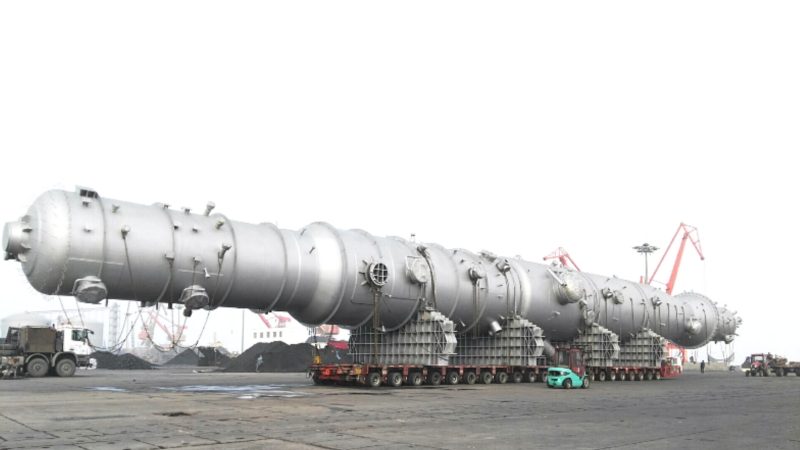
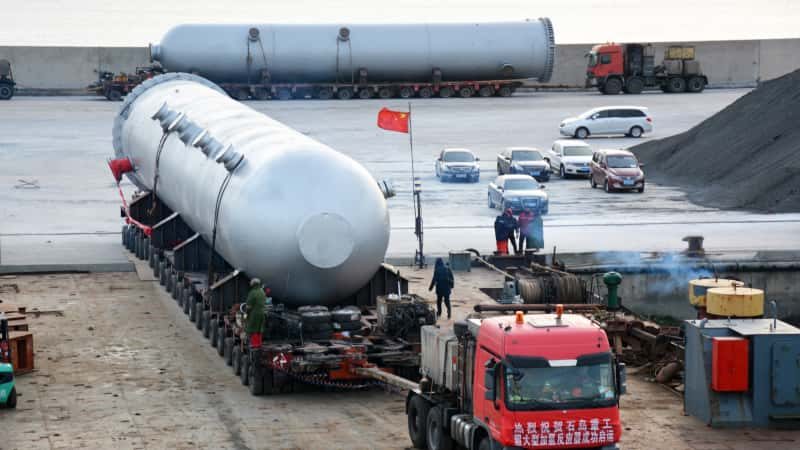
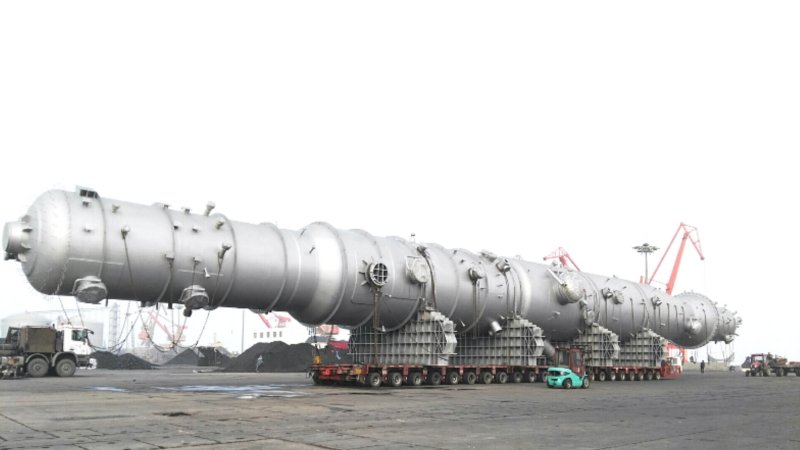
Large custom process vessels may require route planning, heavy lifting, export packing, saddle supports, sea fastening or port delivery coordination. EPC buyers should confirm shipping dimensions, weight limits, lifting plan, site access and installation schedule before finalizing drawings.
For overseas projects, Incoterms, port of delivery, documentation format and preservation requirements should be stated clearly. WSHI can support project communication for custom chemical equipment involving fabrication, testing, coating, packing and delivery planning.
Common Mistakes Before Ordering Process Vessels
| Common mistake | Why it creates risk | Better RFQ approach |
|---|---|---|
| Sending only a drawing | The manufacturer may not know the process duty, medium or operating cases | Include datasheets, PFD/P&ID and process conditions |
| Asking for lowest price first | Quotations may exclude code, materials, NDE, coating or documentation | Compare suppliers on the same technical and quality scope |
| Leaving nozzle orientation unresolved | Late changes can cause welding, inspection, coating and site rework | Freeze nozzle layout before fabrication release |
| Ignoring transport size | Large vessels may not fit route, lifting or port limitations | Review dimensions, weight and delivery route during RFQ |
| Treating small items separately | Accessories may not match the complete vessel design and inspection plan | Keep nozzles, supports, instruments and interfaces inside the vessel package |
A stronger purchasing approach is to compare suppliers based on manufacturing capability, technical review quality, welding and inspection experience, documentation control and delivery feasibility, not only unit price.
Conclusion
Before ordering custom process vessels for chemical plants, EPC buyers should check process duty, pressure, temperature, medium composition, materials, corrosion allowance, nozzle orientation, welding, NDE, testing, coating, documentation and delivery requirements. A complete RFQ helps reduce technical uncertainty and supports smoother fabrication, inspection and site installation.
If you are planning a chemical, petrochemical, coal chemical, environmental or new energy project and need custom process vessels, separators, towers, heat exchangers or large storage equipment, you can share your drawings, datasheets and project requirements with WSHI. Our team can support early communication for fabrication feasibility, quality control planning and project delivery review. You can contact our engineering team to discuss your equipment scope.
FAQ
What documents should be included in a process vessel RFQ?
A strong RFQ should include drawings, datasheets, process conditions, material requirements, design code, inspection scope, coating requirements, delivery terms and documentation requirements.
Why is medium composition important for custom process vessels?
Medium composition affects material selection, corrosion allowance, coating, lining, welding requirements and long-term vessel reliability. It should be confirmed before quotation.
Should nozzle orientation be finalized before fabrication?
Yes. Nozzle orientation affects piping, drainage, site installation and maintenance access. Late changes can cause rework, inspection changes and delivery delays.
Are process vessels always pressure vessels?
Not always. Some process vessels are atmospheric or vacuum vessels, while others are pressure-rated. The classification depends on design pressure, service condition and applicable standards.
How should EPC buyers compare process vessel manufacturers?
Buyers should compare engineering support, fabrication capability, welding quality, inspection control, coating capacity, documentation quality and delivery experience, not only price.