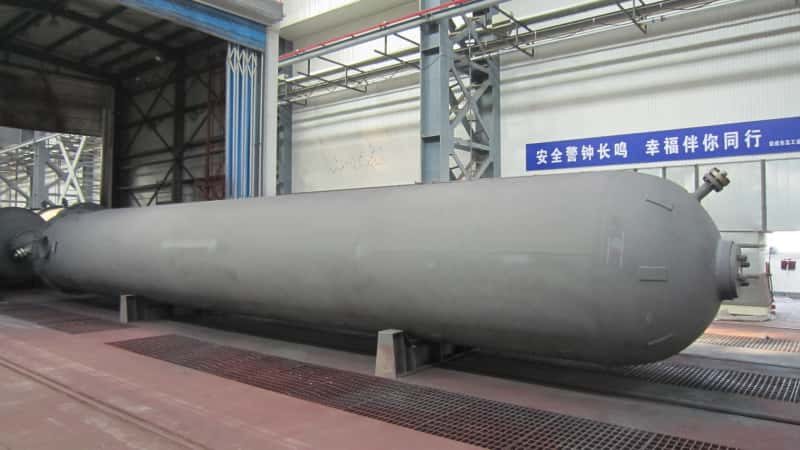

Chemical plants rarely operate under perfectly steady conditions. Feed flow changes, pump operation, upstream process swings, downstream control requirements, and batch transitions can all create instability. Custom surge drums and buffer vessels help absorb these fluctuations by providing controlled volume, liquid hold-up, gas space, phase separation, or pressure buffering within a process system.
For EPC buyers, a surge drum is not just a simple tank. It is a project-specific pressure vessel that must match process conditions, control philosophy, nozzle layout, inspection requirements, site installation limits, and delivery constraints.

For construction context, ASME BPVC Section VIII Division 1 is a common pressure vessel reference depending on project code and jurisdiction. The U.S. EPA’s pressure vessel rupture hazard alert also reinforces why proper design, fabrication, inspection, testing, and repair records matter for pressure equipment safety.
A surge drum can be specified by volume alone.False
Volume is only one input. Buyers should also define medium, phase condition, pressure, temperature, flow pattern, hold-up time, internals, nozzle layout, inspection scope, and delivery requirements.
Custom surge drums and buffer vessels help stabilize process operation when they are designed around the real process duty.True
A properly specified vessel can support flow buffering, pump suction stability, liquid hold-up, gas-liquid separation, control stability, and downstream equipment protection.
What Are Surge Drums and Buffer Vessels?
A surge drum is a vessel used to provide temporary liquid or gas volume between process steps. A buffer vessel performs a similar function by reducing short-term flow, pressure, or level fluctuations. In many projects, the terms may overlap, but the exact function should be defined by the process design.
These vessels may be used for feed flow stabilization, pump suction protection, liquid hold-up before downstream processing, gas-liquid separation, compressor or pump system buffering, batch-to-continuous transition, utility fluid balancing, and emergency or operational hold-up.
For custom pressure vessels, the design should be based on actual medium, pressure, temperature, residence time, control strategy, internal requirements, and installation layout.
Where Surge Drums and Buffer Vessels Are Used
Surge drums and buffer vessels are used in chemical, petrochemical, oil and gas, coal chemical, environmental, and new energy projects. In pressure vessels for chemical plants, they may be installed upstream of reactors, evaporators, distillation columns, solvent recovery units, crystallizers, or wastewater treatment equipment.
In oil and gas pressure vessel applications, they may support separation, gas treatment, condensate handling, compressor protection, liquid surge control, or process stabilization. For environmental projects, buffer vessels may help stabilize wastewater, solvent, brine, or process liquid flow before evaporation, concentration, or separation equipment.

Key Selection Factors for EPC Buyers
Process Medium and Phase Condition
The first question is what the vessel will handle. Is the medium liquid, gas, two-phase flow, slurry, solvent, hydrocarbon, wastewater, acid gas, ammonia-containing stream, or a mixture with solids? Material selection, corrosion allowance, coating, lining, gasket selection, and internals should be reviewed according to the actual medium and project requirements.
Buyers should avoid selecting a surge drum based only on volume. Two vessels with the same volume may require different materials, internals, pressure rating, inspection scope, and nozzle layout if one handles clean water and the other handles corrosive solvent, hydrocarbon condensate, or two-phase process fluid.
Operating Pressure and Temperature
A surge drum may operate at low pressure, medium pressure, or high pressure depending on the process. The EPC contractor or process engineer should define operating pressure, design pressure, operating temperature, design temperature, vacuum condition if applicable, and upset cases.
If the vessel is pressure equipment, applicable code requirements, inspection scope, pressure testing, relief connections, and safety accessories must be confirmed before fabrication begins.
Required Hold-Up Volume
Hold-up volume depends on process control needs. Some vessels provide short-term buffering, while others provide residence time, pump suction stability, liquid inventory, phase disengagement, or emergency capacity. WSHI focuses on project-based custom vessels and storage tanks above 1,000 liters. For large industrial projects, vessel volume should be defined by process calculations, plant layout, and control requirements.
| Selection Input | What Buyers Should Provide | Why It Matters |
|---|---|---|
| Process function | Buffering, pump suction protection, liquid hold-up, gas-liquid separation, emergency volume | Determines sizing logic, internals, controls, and nozzle arrangement |
| Medium and phase | Liquid, gas, vapor-liquid mixture, slurry, solvent, hydrocarbon, wastewater, corrosive stream | Drives material selection, corrosion allowance, coating, and safety review |
| Flow conditions | Normal, maximum, minimum, batch, intermittent, surge, and upset flow rates | Affects hold-up volume, residence time, and downstream stability |
| Pressure and temperature | Operating and design values, vacuum, startup, shutdown, and upset cases | Controls shell thickness, flange rating, testing, and code requirements |
| Internals | Baffles, demisters, inlet devices, vortex breakers, distributors, dip pipes, level controls | Supports separation, stability, and process performance |
| Site layout | Orientation, footprint, height limit, support type, lifting, transport, and access constraints | Prevents installation conflicts and logistics problems |
Nozzle Layout and Instrument Interfaces
Nozzle orientation is critical for surge drums and buffer vessels. Common interfaces may include inlet, outlet, vent, drain, level instruments, pressure instruments, temperature instruments, safety valve connection, manway, sample point, flushing connection, and inspection opening.
Early drawing review helps ensure that the vessel can be installed without piping conflict. Buyers preparing an RFQ should provide a nozzle schedule, P&ID, piping layout, and nozzle orientation drawing whenever available. If the vessel includes internals, nozzle positions should be coordinated with inlet devices, baffles, demisters, distributors, dip pipes, and vortex breakers.
Manufacturing and Quality Control
Surge drums and buffer vessels are usually fabricated according to project drawings and specifications. Manufacturing may include plate cutting, forming, shell welding, head assembly, nozzle installation, support fabrication, internal installation, NDT, pressure testing, coating, packing, and final inspection.
For large industrial pressure vessels, EPC buyers should confirm material certificates, welding procedure requirements, welder qualification records, NDT method and extent, pressure test requirements, dimensional inspection, surface treatment, coating, final documentation, packing, and transport plan.
| Quality Item | FAT or Inspection Review Point |
|---|---|
| Material certificates | Confirm pressure-retaining materials, heat numbers, and traceability |
| Welding records | Review WPS, PQR, welder qualifications, weld map, and repair records if any |
| NDT | Confirm RT, UT, MT, PT, visual inspection, or project-specific testing scope |
| Pressure test | Review test pressure, medium, holding time, gauge calibration, and acceptance result |
| Dimensional inspection | Check nozzle orientation, support dimensions, overall size, and shipping envelope |
| Coating and packing | Confirm surface preparation, coating records, flange protection, shipping saddles, and preservation |
Related Equipment in Process Systems
Surge drums and buffer vessels often work together with heat exchangers, separators, towers, columns, and storage tanks. A buffer vessel may stabilize feed before a shell and tube heat exchanger, or a surge drum may support liquid feed control before process towers and columns.
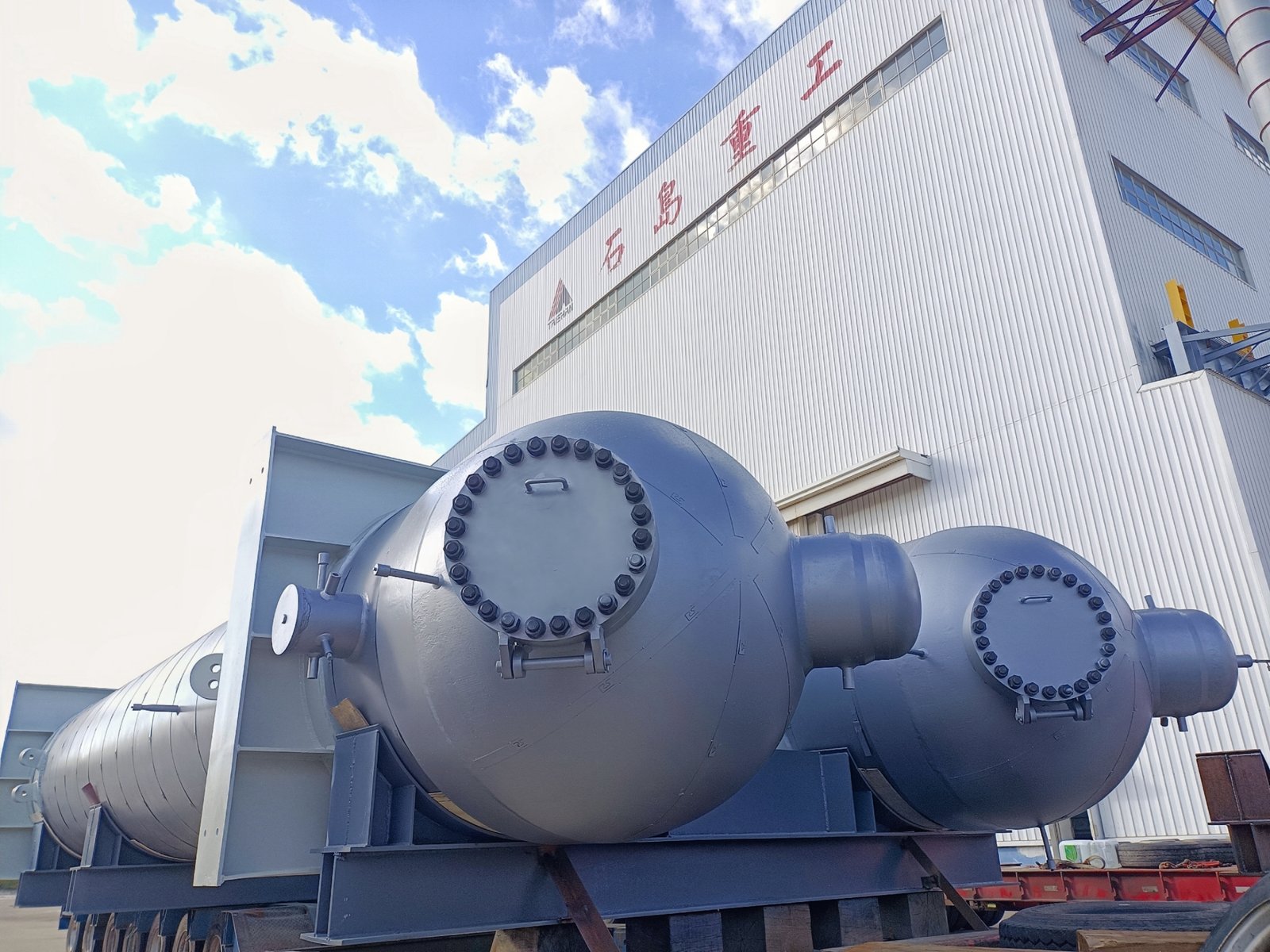
In larger EPC projects, buyers may source vessels, industrial heat exchangers, separators, and related custom equipment from one manufacturer to simplify drawing coordination, inspection planning, and delivery communication.
Common Procurement Mistakes
One common mistake is specifying only capacity without explaining the process function. A 5 m3 vessel used for pump suction stability is different from a 5 m3 vessel used for gas-liquid disengagement. Another mistake is leaving nozzle orientation to the manufacturer without sufficient layout information. This can cause field installation problems even when fabrication quality is acceptable.
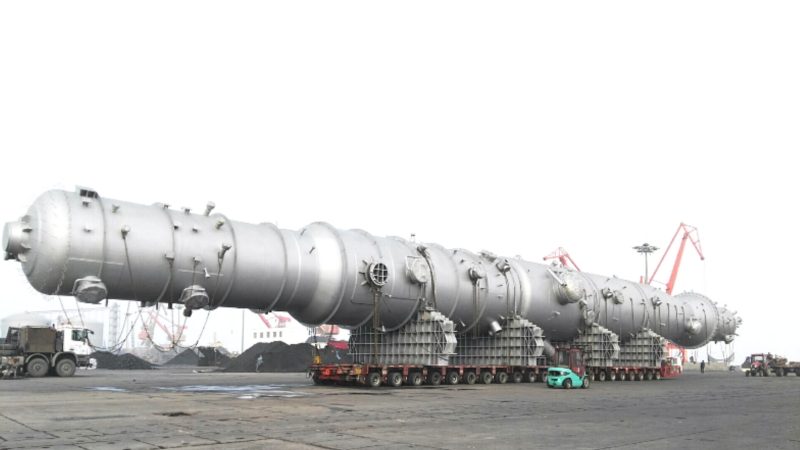
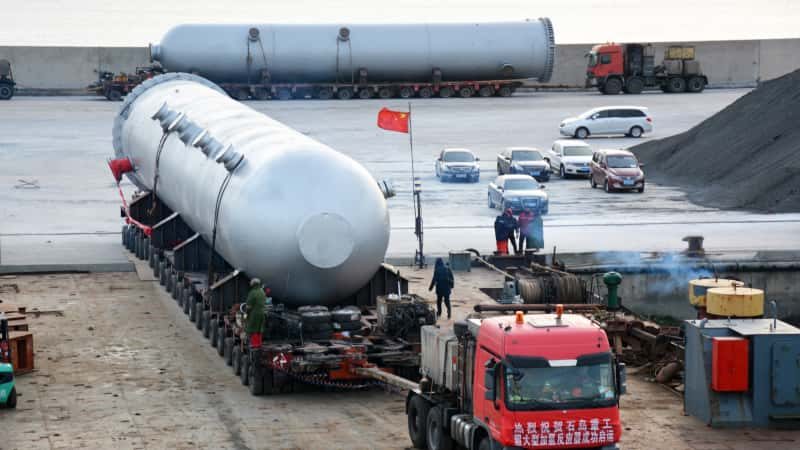
A third mistake is ignoring transportation. Large vessels may require lifting lugs, shipping saddles, route checks, port delivery planning, export packing, and site unloading coordination. These requirements should be considered before fabrication is complete.
What Buyers Should Prepare Before Requesting a Quotation
| RFQ Item | Recommended Information |
|---|---|
| Process description | Explain whether the vessel is for surge control, buffering, separation, pump suction, or hold-up |
| Medium and flow | Provide fluid composition, phase, flow rate, viscosity, density, corrosiveness, and solids if any |
| Pressure and temperature | Provide operating and design values, vacuum condition, and upset cases |
| Volume and residence time | Provide calculated hold-up volume, residence time, liquid level range, and emergency volume if required |
| Nozzles and instruments | Provide nozzle schedule, P&ID, instrument list, relief connection, vents, drains, manways, and sample points |
| Inspection and documents | Define code, NDT, pressure testing, coating, third-party inspection, data book, and delivery records |
| Delivery conditions | Provide destination, Incoterms, transport limits, lifting plan, packing, and delivery schedule |
Why Custom Manufacturing Matters
Surge drums and buffer vessels are rarely identical from one project to another. Medium, pressure, temperature, volume, residence time, control method, internals, support design, and inspection requirements all affect fabrication.
As a large-scale pressure vessel manufacturer, WSHI can support drawing review, material procurement, welding manufacturing, NDT coordination, pressure testing, coating, large-item loading, and export delivery for project-based equipment.
FAQ
What is the difference between a surge drum and a buffer vessel?
A surge drum usually provides temporary hold-up or flow stabilization. A buffer vessel may reduce pressure, flow, or level fluctuations. In some projects, the terms overlap, so the process function should be clearly defined.
What information is needed for a surge drum quotation?
Buyers should provide medium, flow rate, operating pressure, design pressure, temperature, volume, material requirements, nozzle layout, inspection requirements, documentation scope, and delivery destination.
Can a surge drum also provide gas-liquid separation?
Yes, if it is designed for that function. Gas-liquid separation may require suitable residence time, vapor space, inlet design, outlet arrangement, level control, and internals depending on process conditions.
Are surge drums standard products?
For industrial chemical and EPC projects, they are usually custom pressure vessels designed around project-specific process duty, layout, code, inspection, and delivery requirements.
Why does nozzle orientation matter for surge drums?
Nozzle orientation affects piping fit-up, level measurement, drainage, venting, relief connections, manway access, internals, and field installation. It should be reviewed before fabrication begins.
Conclusion
Custom surge drums and buffer vessels help chemical and industrial plants improve process stability, protect downstream equipment, and support reliable operation. Before procurement, EPC buyers should define vessel function, medium, pressure, temperature, volume, nozzle layout, internals, inspection requirements, and delivery constraints.
If you are planning a chemical, petrochemical, oil and gas, environmental, or new energy project, you can discuss your project requirements with an engineering team and share drawings, operating conditions, equipment specifications, inspection requirements, and delivery terms for manufacturing feasibility review.