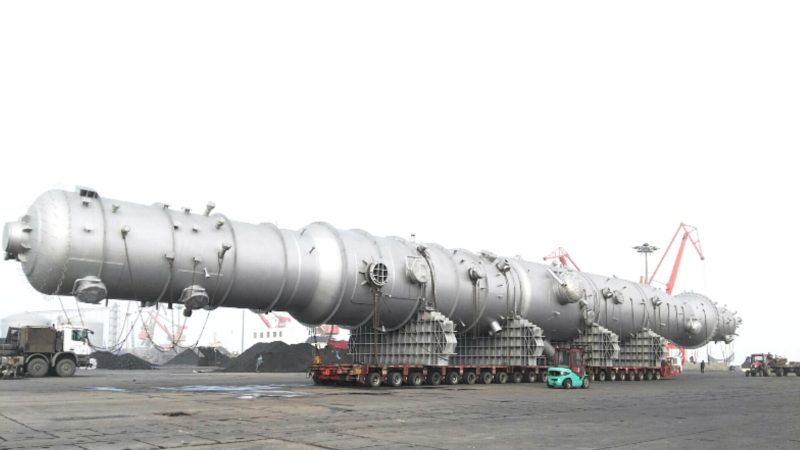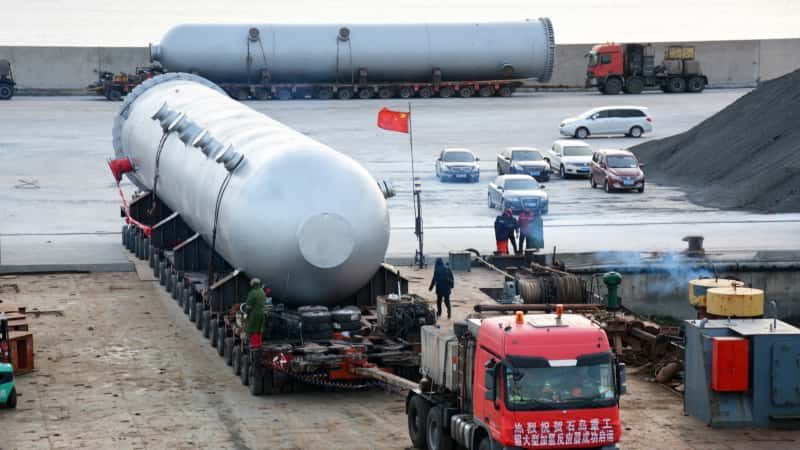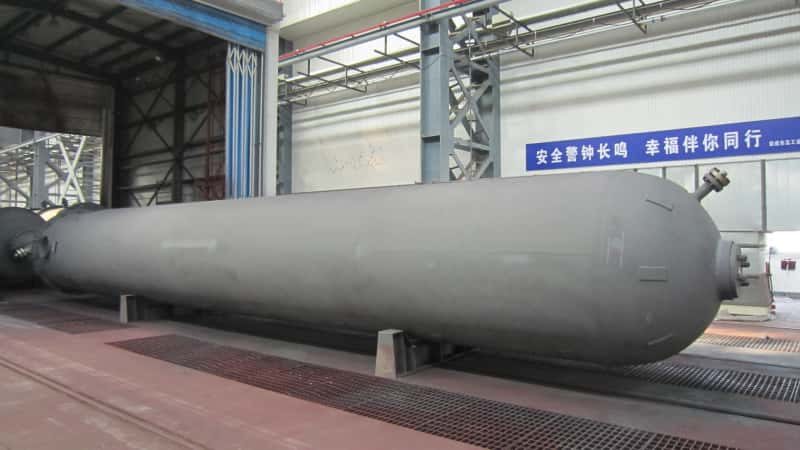

Yes, one distillation column can sometimes handle changing feed compositions, provided the complete system is designed and verified for those variations. However, a column selected for one mixture cannot automatically maintain the same purity, recovery, and throughput when the feed changes.
For chemical manufacturers, solvent recovery operators, and EPC buyers, flexibility should be a documented requirement rather than a general promise. The procurement specification needs to define the expected mixtures, their operating conditions, and the performance required from each case. The column, reboiler, condenser, and associated vessels should then be assessed together.
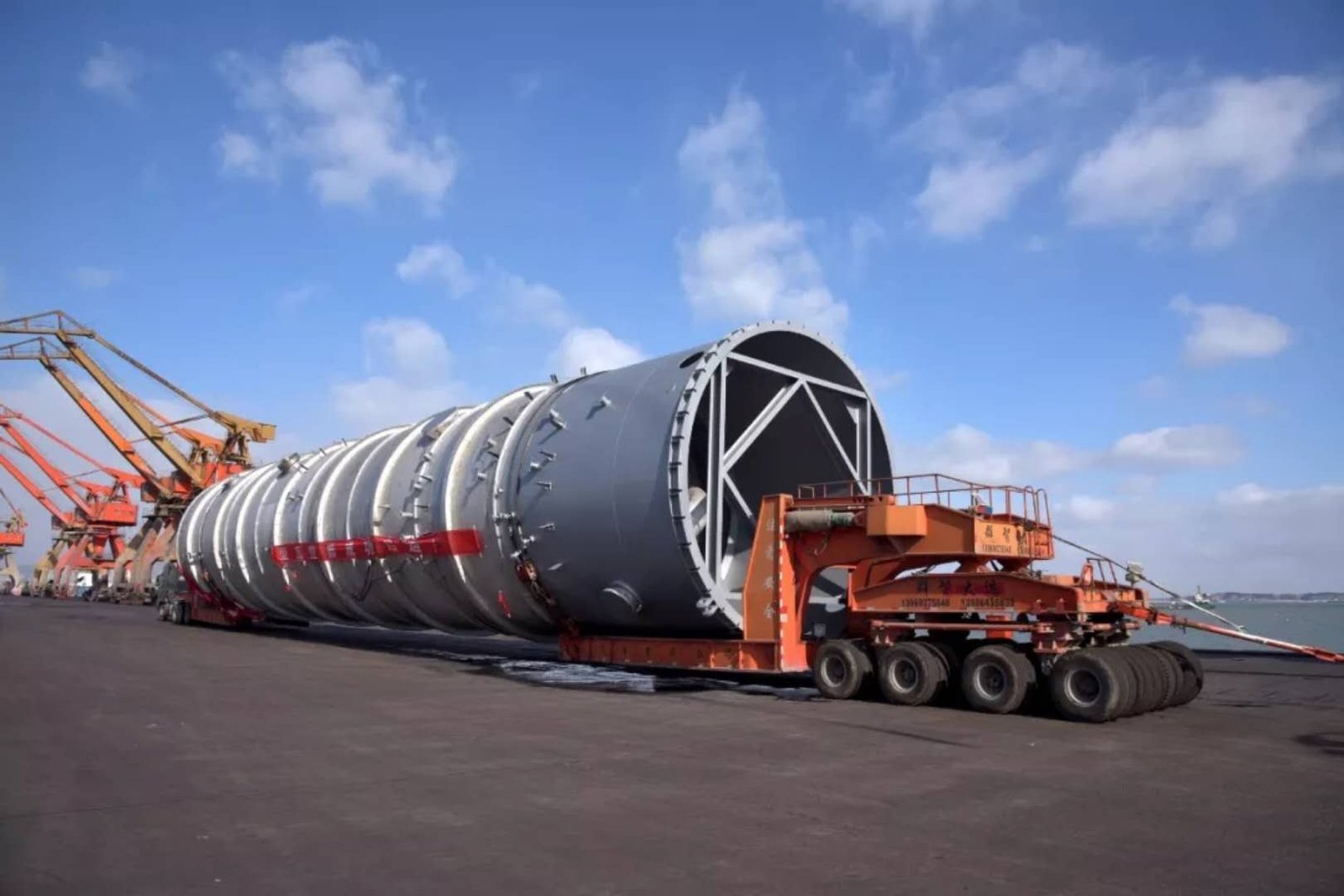
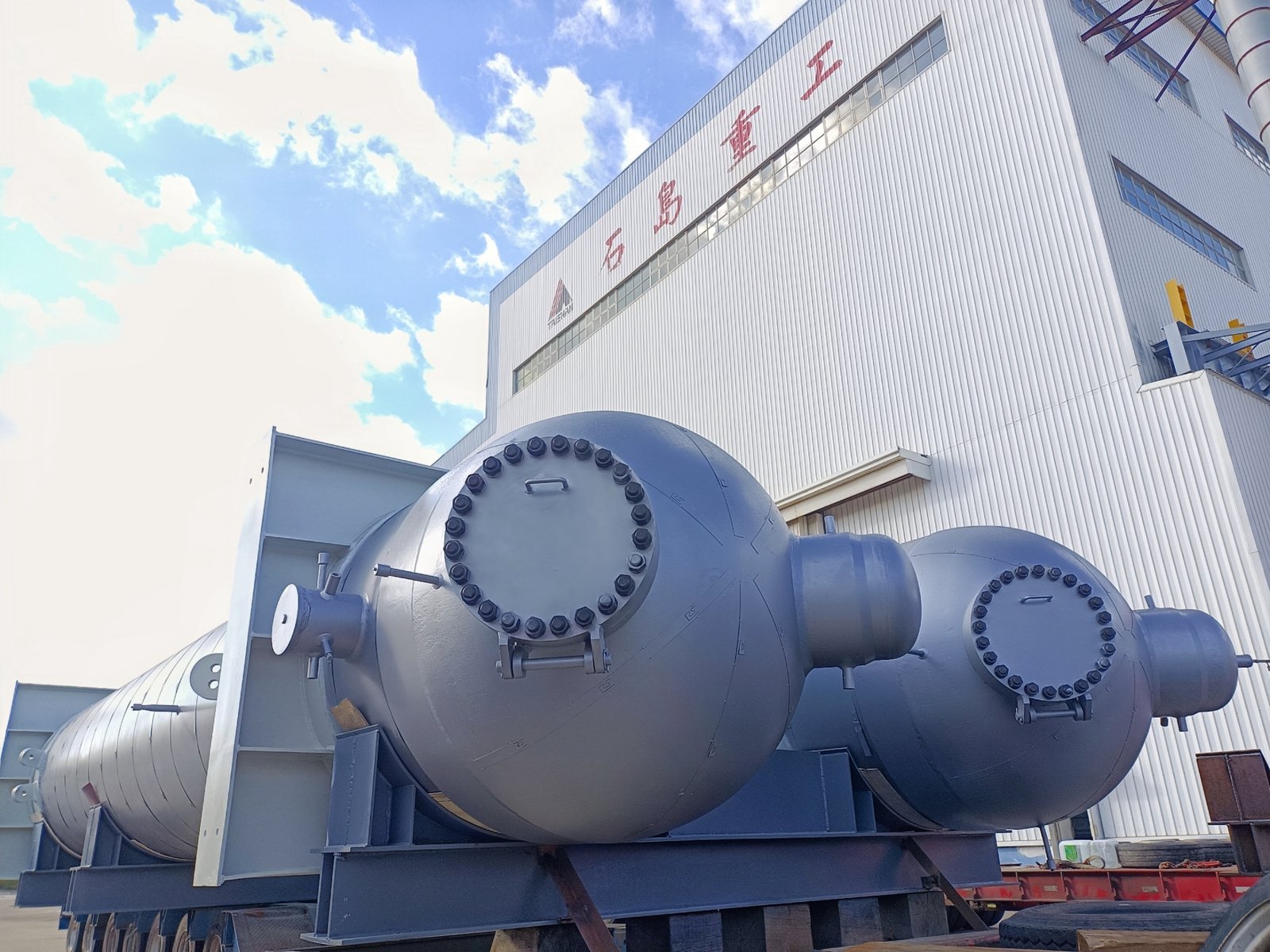
Representative process-tower photograph. This image does not demonstrate verified performance across different feed compositions.
What Does Changing Feed Composition Mean?
Feed variation may involve different proportions of the same components, additional impurities, or an entirely different mixture. These changes do not present the same design problem.
For example, recovering a solvent from streams with different water contents is different from introducing a new solvent with different separation behavior. Changes in dissolved solids, heavy residues, or substances that promote foaming may also affect equipment suitability, even when the main product remains unchanged.
Buyers should distinguish routine variation within an approved feed specification from a proposed change of service. A flexible operating range has boundaries; it does not make the column suitable for every available feedstock.
Why the Complete Distillation System Must Be Reviewed
Changing the feed can alter separation requirements, internal vapor and liquid loads, heat demand, and product withdrawal rates. The limiting equipment item may therefore change between operating cases.
NPTEL’s process design and control overview connects feed and product specifications with column configuration, reboiler and condenser requirements, and operating conditions. It also identifies feed-quality and utility fluctuations as disturbances to plant operation.
For custom process towers and columns, buyers should request a system-level assessment rather than ask whether the vessel diameter is large enough. Adequate physical space does not establish the required separation performance.
Define Purity, Recovery, and Throughput Separately
Product Purity
State the required composition of each product stream, including relevant impurity limits. Define whether the specification applies continuously, after a stabilization period, or to an accepted batch or collection period.
A requirement such as “high-purity solvent” is insufficient. Identify the analytical method and reporting basis, including whether concentrations are expressed by mass, mole, or volume where applicable.
Component Recovery
Recovery describes how much of a target component is collected in the intended product stream relative to the amount entering the system. A product can meet its purity requirement while an unacceptable quantity of valuable material leaves elsewhere.
Specify recovery independently from purity, and identify the streams included in the calculation. Where several components have commercial value, clarify which recoveries are contractual requirements and which are monitoring information.
Feed Throughput
State the required throughput for each feed case. The same equipment may meet product specifications at a reduced rate for a more demanding mixture, but that trade-off must be agreed rather than discovered during commissioning.
Ask the supplier to identify any proposed operating restrictions. A quotation that promises acceptable product quality without stating the associated feed rate does not provide a complete performance basis.
Build a Feed-Case Matrix Before Issuing the RFQ
Provide complete, credible compositions for the expected operating cases. Include flow rate, temperature, pressure, phase condition, and relevant physical properties. Explain the expected frequency and duration of each case.
Do not combine the maximum concentration of every component into an impossible mixture. Equally, do not assume that checking only individual minimum and maximum values captures every difficult separation case. The process designer should identify representative and limiting combinations.
Where feed analyses are incomplete, label the uncertainty and identify what information must be obtained before design approval. Include known contaminants, solids, and any substances that could affect materials, fouling, or thermal stability.
Verify Separation Feasibility Before Adding Design Margin
A process assessment should establish whether the proposed separation can achieve the required specifications across the feed range. The chosen physical-property method and supporting equilibrium data must be appropriate for the mixtures involved.
Some mixtures may exhibit separation limitations, including azeotropic behavior, that cannot be overcome simply by adding heat or increasing column size. If an alternative process route is necessary, that decision belongs with the qualified process designer.
NPTEL’s distillation design example illustrates how feed composition, product targets, equilibrium information, and reflux enter a column design. An example for one mixture should not be transferred directly to another service.
A process model is useful only within its supporting assumptions. Ask how the proposed model has been checked and whether additional laboratory or pilot information is needed for uncertain feeds.
Confirm the Hydraulic Operating Range
A feed change can affect the vapor and liquid traffic inside the column even when the total feed rate is unchanged. The complete column arrangement should therefore be checked for each required operating case.
The review should address both high-load limitations and low-load performance. A design that accommodates the greatest throughput may not provide the required contacting behavior at substantially lower loads.
These requirements belong in the specification for the complete tower. Buyers do not need to purchase individual internals separately to address flexibility; they need clear responsibility for the process design, its mechanical integration, and the performance envelope of the finished equipment.
Coordinate the Reboiler, Condenser, and Utilities
Reboiler and condenser duties should be provided for the defined feed cases, together with fluid conditions and allowable pressure drops. One case may determine heating demand while another sets the more demanding cooling requirement.
For associated shell-and-tube heat exchangers, confirm who performs thermal design and how the results are coordinated with the column. A general percentage added to one nominal duty is not a substitute for evaluating different feeds.
Available utilities also matter. Seasonal cooling conditions, steam availability, and competing plant demands can constrain the operating range. The proposed performance should identify the utility conditions under which it applies.
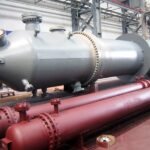
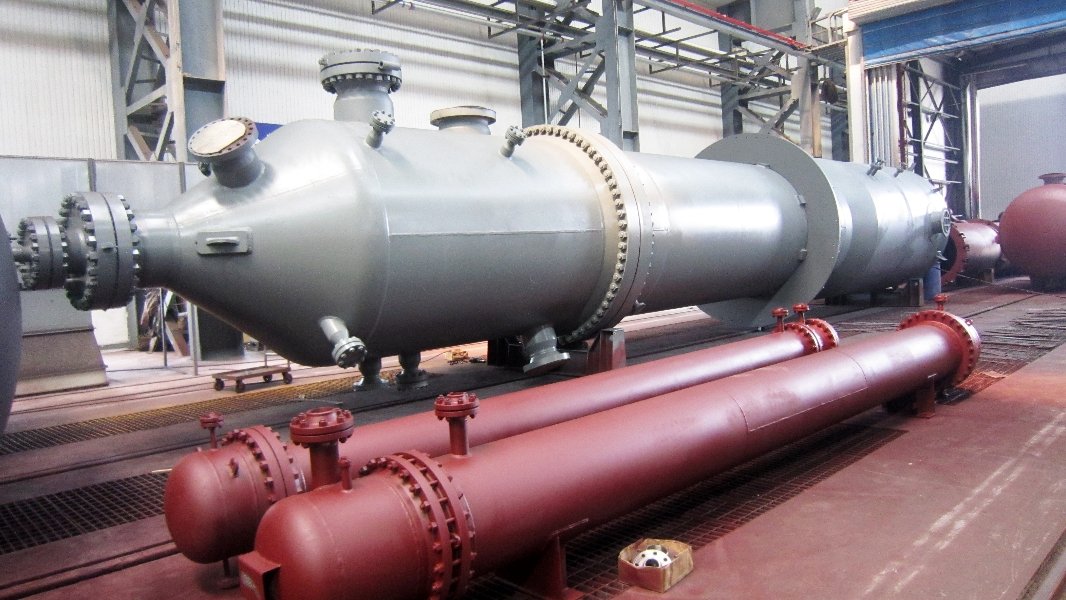
Representative heat exchanger photograph. Reboiler and condenser duties must be established for the specified feed cases.
Consider Feed Transitions and Campaign Changes
A system capable of operating steadily on two feeds does not automatically transition between them without producing off-spec material. Buyers should describe whether changes are gradual, abrupt, or separated by shutdown and cleaning.
The process team should define stabilization requirements, product routing during transitions, and any necessary segregation. Where holding equipment is required, project-scale industrial storage tanks above 1,000 liters should be sized from the operating schedule rather than an arbitrary allowance.
Residual material from the previous campaign may affect the next product or introduce incompatibility. Cleaning and changeover requirements should therefore be established before the complete equipment scope is finalized.
Know When a Feed Change Requires Formal Review
Variation within an approved operating envelope is different from introducing a new component or changing product requirements. A revised feed may affect corrosion, thermal stability, emissions, pressure protection, or downstream equipment.
HSE’s plant modification and change guidance emphasizes control of changes to plant and process. For procurement, retain the approved feed cases and assumptions so future changes can be assessed against a clear baseline.
Do not interpret a vessel’s pressure and temperature ratings as approval for a new chemical service. Mechanical suitability and process suitability are separate questions.
Separate Fabrication Acceptance From Process Performance
The purchase specification should identify responsibility for process design, column performance, mechanical design, associated equipment, controls, and commissioning. A vessel fabricator should not be assigned an undefined purity or recovery guarantee through a general equipment description.
WSHI’s stated capabilities include drawing coordination, material procurement, welding, nondestructive examination, pressure testing, coating, and heavy-equipment delivery. The project quotation should confirm which activities apply and how the manufacturer interfaces with the process-design authority.
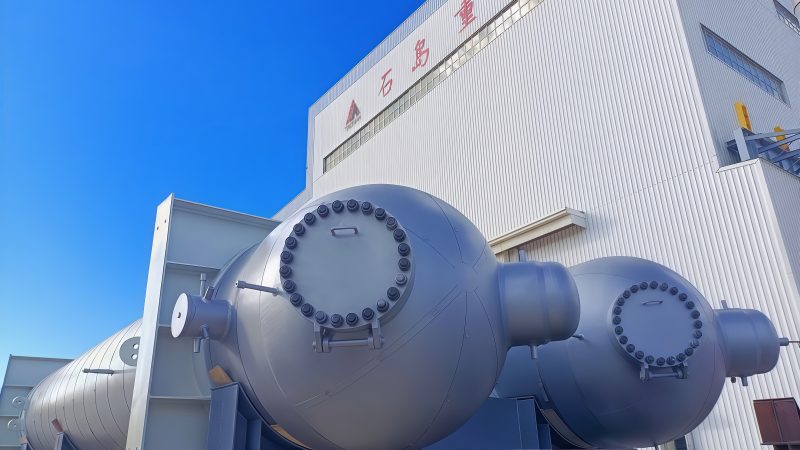
Representative manufacturing photograph. Shop inspection verifies specified fabrication requirements, not distillation performance across different feeds.
Manufacturing acceptance may include materials, dimensions, examination results, and specified tests. Process-performance acceptance should separately define feed composition, throughput, utilities, operating stability, sampling, analytical methods, and acceptance criteria.
If commissioning cannot test every operating case, agree how the remaining cases will be verified. A successful test on one feed should not be presented as proof of the entire proposed range without supporting assessment.
What Should Buyers Send With an Initial Inquiry?
Provide the feed-case matrix, product specifications, recovery targets, process diagrams, available simulation results, utility conditions, and site constraints. Include materials requirements, inspection expectations, and the proposed allocation of performance responsibilities.
For delivery planning, identify transport limits, site access, lifting constraints, and any restrictions affecting tower assembly. If the process basis remains preliminary, clearly mark the information that must be confirmed before material procurement or fabrication release.
FAQ
Can increasing reflux accommodate every feed change?
No. Reflux adjustment may help within an assessed operating range, but separation feasibility, hydraulic limits, heat duties, and utilities can constrain the result.
Is a larger column automatically more flexible?
No. Additional size does not independently establish mass-transfer performance, low-load suitability, or compatibility with different mixtures.
Can the same column meet equal purity at different throughputs?
Sometimes, but the relationship must be established for the actual feeds. Any throughput restriction should be part of the agreed performance envelope.
Does a pressure test verify purity and recovery?
No. A pressure test addresses specified mechanical requirements. Separation performance requires a separate process assessment and agreed verification method.
Discuss Your Variable-Feed Distillation Requirements
A distillation column can offer useful flexibility when its feed range and performance requirements are defined together. For projects requiring complete custom columns and associated fabricated equipment, discuss your requirements with our engineering team. Share feed cases, process documents, product targets, drawings, and delivery constraints for manufacturing assessment and scope coordination.