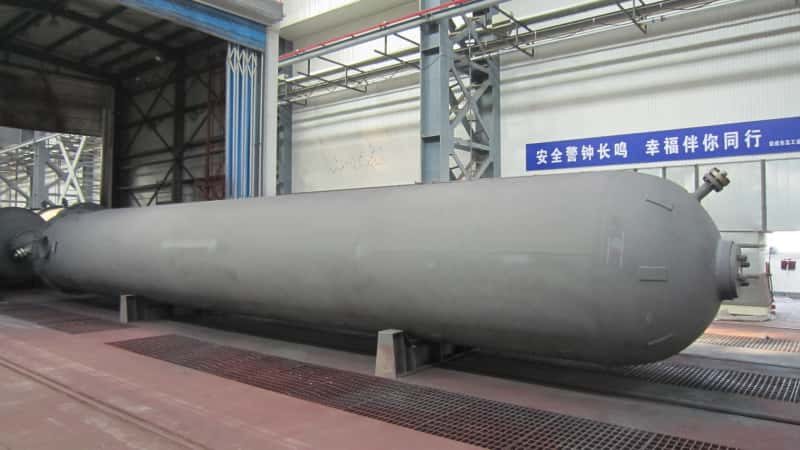

Ethanol CCS Plant Equipment for EPC Buyers
Carbon capture projects connected to ethanol and biofuel plants are moving from policy discussion into practical engineering, permitting and procurement. Recent U.S. developments around ethanol plant carbon sequestration, including EPA Class VI draft permit activity for CO2 injection wells, show why EPC buyers need to evaluate more than the capture technology itself. They also need to define the pressure vessels, absorber columns, heat exchangers, separation vessels, CO2 buffer equipment and project delivery scope required around the process.
For procurement teams, ethanol CCS plant equipment should be specified as a complete industrial system boundary, not as disconnected vessels. The real purchasing question is: what process data, materials, inspection requirements and delivery responsibilities must be confirmed before fabrication begins?
Ethanol CCS plant equipment can be purchased as disconnected standard vessels.False
CO2 separation, dehydration, cooling, compression support, buffering, drainage, corrosion control, inspection, and delivery interfaces should be reviewed as one connected equipment boundary.
CO2 composition, water content, pressure, temperature, materials, inspection scope, and site layout should be confirmed before fabricating CCS pressure equipment.True
These inputs affect vessel sizing, corrosion review, material selection, nozzle orientation, welding, NDE, pressure testing, coating, and delivery planning.
Why Ethanol CCS Projects Create Equipment Demand
Ethanol plants generate relatively concentrated CO2 streams compared with many combustion-based sources. This makes them a common focus for carbon capture and sequestration projects. However, once CO2 is captured, the project still requires dehydration, compression support, separation, cooling, buffering and safe transfer through pressure-rated equipment.
A September 2, 2026 REX American Resources SEC filing stated that its One Earth Energy carbon capture and sequestration project received U.S. EPA draft permits for three Class VI injection wells on August 17, 2026. EPA’s public notice for One Earth Sequestration, published August 24, 2026, lists a public comment deadline of September 23, 2026. These references are used as industry background, not as evidence of WSHI involvement in the project.
For equipment buyers, the important takeaway is not to copy one project design, but to recognize the broader demand for reliable process vessels in carbon capture infrastructure.
What Equipment Is Used in an Ethanol CCS Plant?
| Equipment category | Possible role in ethanol CCS | EPC buyer review focus |
|---|---|---|
| CO2 separation and conditioning vessels | Remove liquids, moisture, impurities or process contaminants | CO2 composition, flow rate, moisture, condensate, corrosion risk, drainage |
| Absorber columns and process towers | Gas-solvent contact in absorption-based capture routes | Gas flow, solvent type, pressure, temperature, corrosion, height and lifting limits |
| Gas-liquid separators and knock-out vessels | Protect compressors, dehydration units and downstream equipment | Liquid load, slug cases, level control, material, NDE and pressure testing |
| Heat exchangers and coolers | Cooling, heat recovery, compression-stage temperature control | Heat duty, pressure drop, fouling, cleaning access, material compatibility |
| CO2 buffer and process vessels | Support stable operation between process steps | Pressure fluctuation, venting, instrumentation, corrosion allowance, testing |
| Large process tanks | Store supporting fluids, condensate, wastewater or chemicals above 1,000 L | Medium, capacity, coating or lining, inspection, foundation, delivery |
CO2 Separation and Conditioning Vessels
Before CO2 can be compressed, transported or injected, the stream usually needs conditioning. Depending on the process route, this may involve removing water, entrained liquids, impurities or process contaminants. Pressure vessels used in this section may include separators, knock-out drums, dehydration-related vessels and buffer vessels.
For EPC buyers, the specification should define gas composition, flow rate, operating pressure, design pressure, temperature, moisture content, expected condensate and corrosion risk. These parameters affect vessel sizing, material selection, nozzle orientation, drainage design and inspection scope.
Absorber Columns and Process Towers
Some carbon capture systems use absorption-based processes. In these cases, absorber columns or related process towers may be required to bring gas and solvent into controlled contact. The column design depends on gas flow, solvent type, pressure, temperature, corrosion environment and operating strategy.
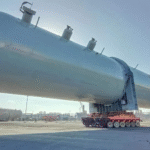
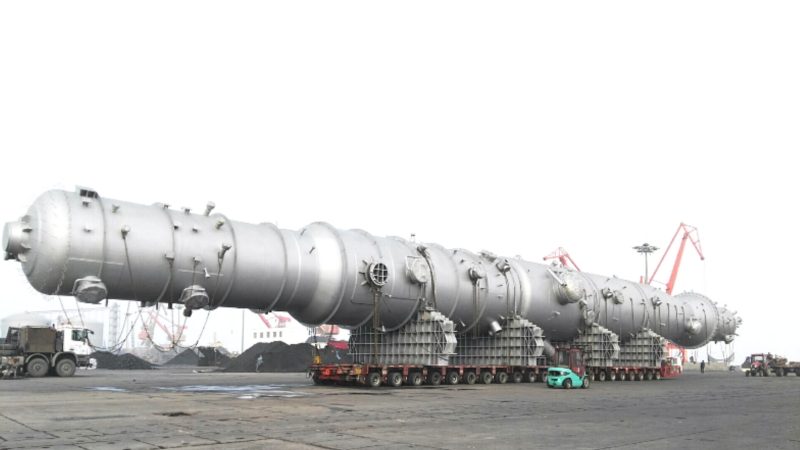
When the project requires large vertical equipment, process towers and columns should be evaluated early because height, diameter, lifting method, field installation and export transport can influence fabrication planning.
Heat Exchangers for Cooling and Energy Balance
Heat management is critical in CCS systems. CO2 compression, solvent regeneration, dehydration and process integration can create heating and cooling duties. Shell and tube heat exchangers are often considered for industrial services involving pressure, temperature, fouling or process compatibility requirements.
EPC buyers should define heat duty, fluid composition, allowable pressure drop, fouling tendency, cleaning access, material requirements and inspection scope before requesting quotation. WSHI supplies industrial heat exchangers for chemical, petrochemical, oil and gas, and energy-related process applications.
CO2 Buffer and Process Vessels
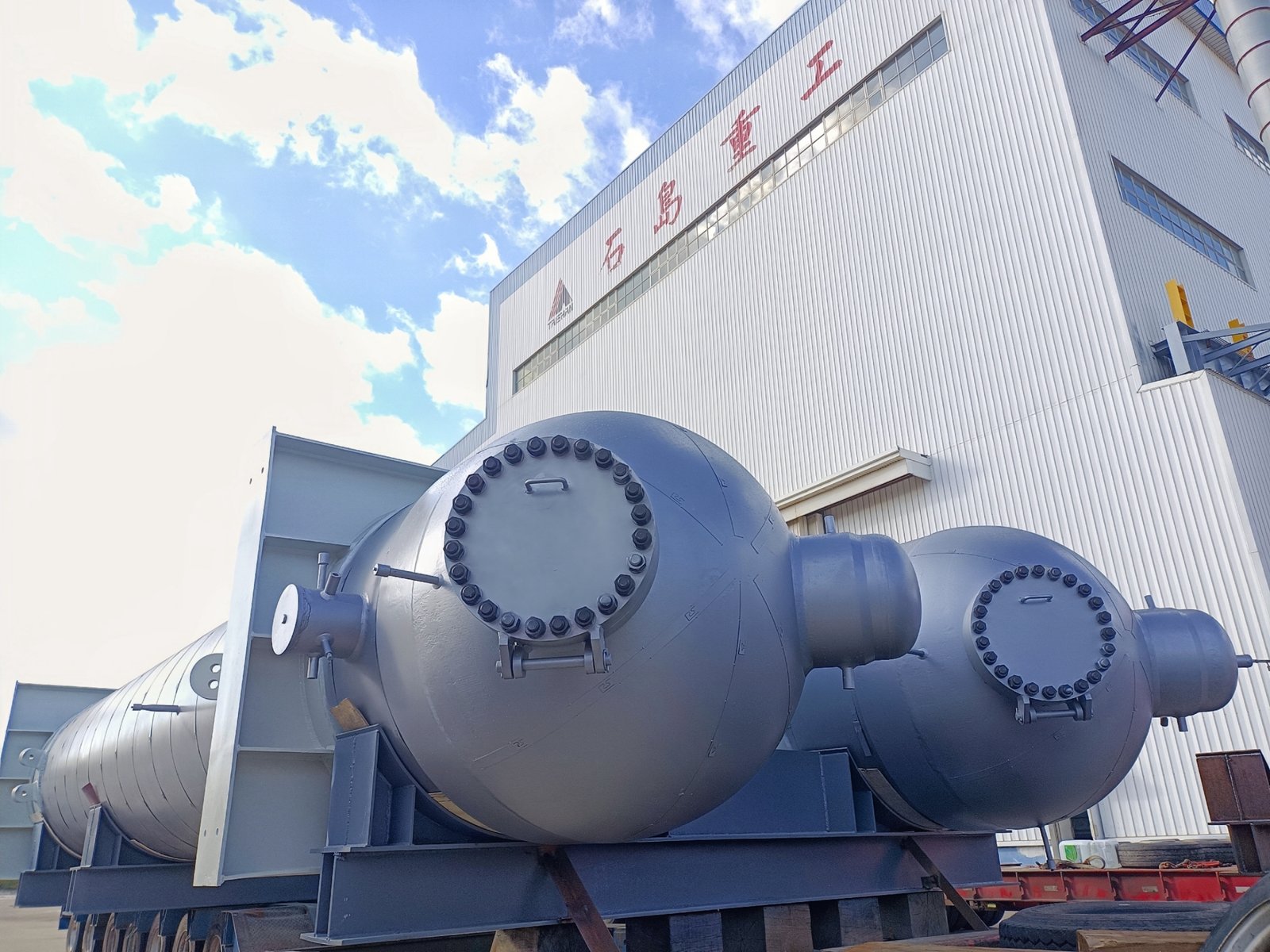
CCS projects often need pressure-rated vessels between process steps to support stable operation, protect downstream equipment and manage changing flow conditions. These vessels should be specified according to process duty rather than selected only by nominal volume.
Important data includes operating cases, pressure fluctuation, liquid accumulation, venting philosophy, drainage, instrumentation connections, corrosion allowance and testing requirements. If the equipment is connected to CO2 service, water content and material compatibility should be reviewed carefully by the project engineering team.
Key Selection Factors for EPC Buyers
CO2 Stream Composition
The CO2 stream may contain water vapor, oxygen, ethanol traces, volatile components, sulfur compounds or other impurities depending on the plant and process. Even small impurities can affect corrosion, dehydration, material selection and downstream equipment reliability.
Buyers should provide a stream composition table where available. If the final composition is still under process review, the inquiry should clearly state which values are preliminary.
Pressure and Temperature Conditions
Carbon capture equipment can involve changing pressure and temperature across separation, cooling, dehydration and compression sections. EPC buyers should define normal, maximum, minimum, startup, shutdown and upset conditions where relevant.
For pressure vessels, recognized codes such as ASME BPVC Section VIII Division 1 may apply depending on project location and contract requirements. The final standard, edition, certification path and local regulatory requirements should always be confirmed by qualified project engineers.
Materials and Corrosion Allowance
CO2 in the presence of water can create corrosion concerns. EPA’s Class VI wells page discusses CO2 geologic sequestration and notes that CO2 in the presence of water can be corrosive in well-related contexts. Although surface plant vessels are different from injection wells, the same engineering discipline applies: material selection should be based on real process conditions.
Depending on the project, carbon steel, stainless steel, corrosion allowance, internal coating, cladding or other protection methods may be considered. These choices should be made from project specifications and engineering review, not from a generic article.
Integration With Existing Ethanol Plant Layout
Many ethanol CCS projects are added to existing plants. This makes layout coordination especially important. Vessel diameter, height, maintenance access, lifting space, pipe routing, foundation interface and transportation route may all affect procurement.
Nozzle orientation, support design, manway access and lifting lugs should be reviewed as part of the complete vessel package. They should not be treated as standalone procurement items.
Inspection and Documentation
EPC buyers should confirm inspection expectations before ordering. Depending on the project, documents may include material certificates, welding procedure records, NDE reports, heat treatment records, pressure test reports, dimensional inspection, coating reports and packing lists.
For pressure vessels for new energy and low-carbon fuel projects, documentation quality can be as important as fabrication itself because the equipment may pass through owner review, EPC review, third-party inspection and export delivery checks.
Manufacturing Considerations
Drawing Review and Fabrication Feasibility
Ethanol CCS plant equipment should be reviewed for manufacturability before production release. Large vessels, towers and heat exchangers may require plate rolling, heavy welding, heat treatment planning, machining, assembly space and lifting arrangements.
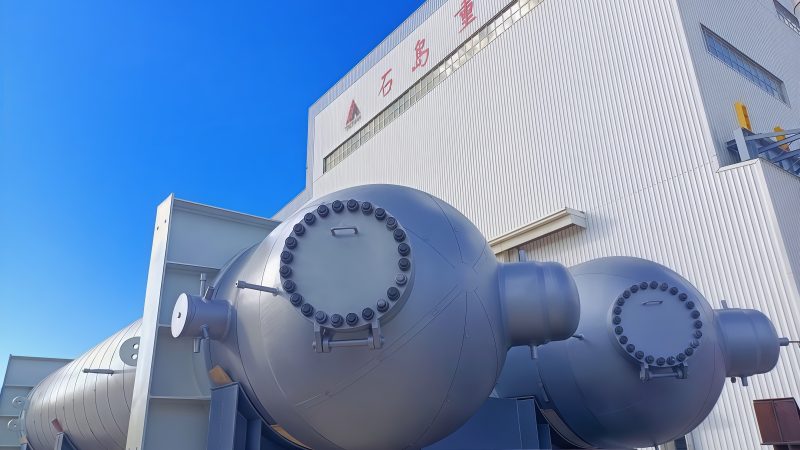
A large-scale pressure vessel manufacturer should help review whether the drawing, material requirement, NDE scope, coating system and shipping size are practical for fabrication and delivery.
Welding and Non-Destructive Examination
Welding quality is central to pressure vessel performance. Depending on the design code and project specification, NDE may include radiographic testing, ultrasonic testing, magnetic particle testing, penetrant testing or other methods. The required examination scope should be agreed before fabrication.
For CO2-related service, buyers should also confirm whether impact testing, hardness control, post-weld heat treatment or other supplementary requirements are needed.
Surface Treatment and Coating
CCS equipment may be installed in industrial, outdoor, coastal, humid or chemically exposed environments. External coating systems should be selected according to site conditions and owner specifications. Internal protection depends on medium composition, water content, temperature and corrosion risk.
Coating requirements should be defined early because surface preparation, primer, finish coat, curing time and inspection can affect delivery schedule.

What Buyers Should Include in the RFQ
| RFQ input | Recommended detail | Why it matters |
|---|---|---|
| Process basis | Process flow diagram, equipment list, battery limits, responsibility split | Defines the complete CCS equipment boundary |
| CO2 stream data | Composition, water content, impurities, ethanol traces, oxygen, sulfur compounds | Supports corrosion, dehydration and material review |
| Operating conditions | Flow rate, normal/min/max pressure and temperature, startup/shutdown and upset cases | Defines vessel, exchanger and column design basis |
| Mechanical requirements | Drawings, datasheets, nozzles, supports, lifting, layout and access constraints | Connects fabrication with existing plant installation |
| Materials and protection | Material grade, corrosion allowance, coating, lining, cladding, preservation | Reduces corrosion and compatibility risk |
| Quality requirements | Applicable code, NDE, pressure testing, third-party inspection, final data book | Supports owner and EPC acceptance |
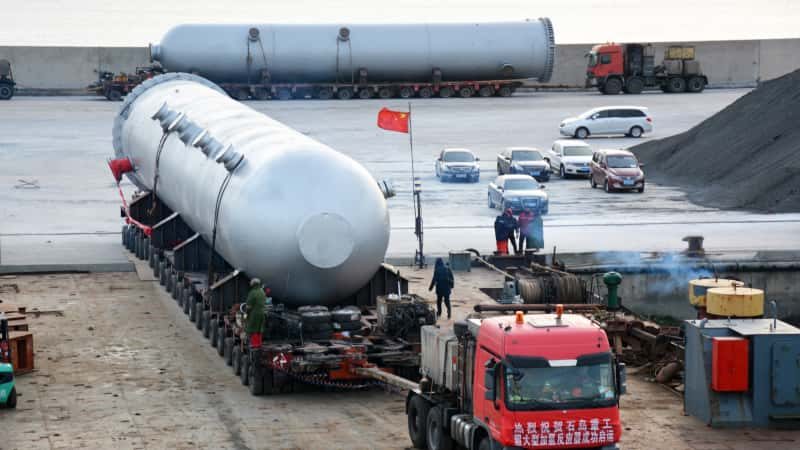
| Delivery scope | Packing, lifting, transport limits, destination, export documentation | Prevents late logistics and schedule problems |
If technical documents are still in progress, the inquiry can state which parameters are fixed and which require engineering confirmation.
Why Customized Manufacturing Matters
Carbon capture equipment is rarely a catalog purchase. Even when two projects use similar vessel names, the operating pressure, CO2 purity, water content, site layout, owner standards and inspection requirements can differ significantly.
Customized manufacturing allows the equipment to match process duty and operating conditions, project-specific pressure vessel standards, corrosion and material requirements, site installation constraints, export packing and port delivery needs, EPC documentation and review workflow, and integration with columns, separators, heat exchangers and storage equipment.
For ethanol, biofuel and other low-carbon industrial projects, pressure vessels for petrochemical plants and energy process equipment should be evaluated as part of the complete project package, not only as individual vessels.
Conclusion
Ethanol CCS plant equipment planning requires more than selecting a carbon capture process. EPC buyers need to define the complete equipment boundary around CO2 separation, dehydration, cooling, compression support, buffering and safe delivery to downstream systems. Pressure vessels, absorber columns, heat exchangers and gas-liquid separation vessels all depend on accurate process data and careful fabrication planning.
If you are working on an ethanol, biofuel, carbon capture or low-carbon process project, you can share your drawings, datasheets, operating conditions and inspection requirements with WSHI. Our team can support early communication for custom pressure vessel manufacturing, fabrication feasibility, quality control planning and project delivery review. You can discuss your project requirements with our engineering team.
FAQ
What equipment is commonly used in an ethanol CCS plant?
Common equipment may include CO2 separation vessels, dehydration-related vessels, absorber columns, gas-liquid separators, heat exchangers, buffer vessels and supporting process tanks. The final scope depends on the capture process and project design.
Why are pressure vessels important in carbon capture projects?
Pressure vessels help manage CO2 separation, conditioning, buffering and transfer under controlled pressure and temperature conditions. They must be designed and fabricated according to project specifications and applicable standards.
What should EPC buyers confirm before ordering CCS equipment?
Buyers should confirm process data, CO2 composition, pressure, temperature, materials, corrosion allowance, design code, inspection scope, coating requirements, documentation and delivery conditions.
Are absorber columns always required for ethanol CCS projects?
Not always. The need for absorber columns depends on the selected carbon capture technology. Some systems may use different separation or conditioning routes. The equipment list should follow the process design.
Can WSHI manufacture complete equipment packages for CCS projects?
WSHI can support custom pressure vessels, columns, heat exchangers, separators and related process equipment based on project drawings, datasheets and agreed technical specifications.