Ethylene oxide plant equipment requires careful planning because the process involves hazardous chemicals, oxygen service, heat transfer, gas-liquid separation, and strict project specifications. For EPC buyers, technical managers, and project procurement teams, the goal is not to buy isolated equipment items. It is to define complete pressure vessels, reactors, heat exchangers, towers, and large storage equipment that match process conditions, inspection requirements, and site delivery plans.
Recent industry news around renewable oxygen supply for ethylene oxide production, including an Indorama Ventures announcement, highlights a wider trend: chemical producers are reviewing how feedstock, utilities, carbon footprint, and plant equipment work together. For fabricated equipment suppliers, this creates demand for reliable manufacturing support around complete chemical process equipment packages.
What Is Ethylene Oxide Plant Equipment?
Ethylene oxide plant equipment refers to the major static equipment used in ethylene oxide production, recovery, purification, heat management, and supporting chemical services. Depending on the licensed process, project design, and site conditions, the equipment scope may include reactor vessels, heat exchangers, separators, absorbers, scrubbers, distillation columns, process tanks, and other custom-fabricated vessels.
For procurement purposes, buyers should treat this as a complete chemical process equipment scope. A single vessel may be important, but the project risk is usually connected to interfaces: pressure design, nozzle orientation, heat transfer duty, separation performance, inspection level, site lifting, piping connection, and documentation.
WSHI supplies custom pressure vessels and project-based fabricated equipment for chemical, petrochemical, oil and gas, new energy, and environmental engineering applications. For ethylene oxide-related projects, every equipment discussion should be based on drawings, datasheets, process requirements, and applicable safety standards.
Why Renewable Oxygen Supply Matters to Equipment Planning
Oxygen supply is a key part of ethylene oxide production. When a chemical producer introduces renewable or lower-carbon oxygen supply, the change may appear to be a utility or feedstock decision. In practice, EPC teams may still need to review equipment interfaces, pressure conditions, operating stability, oxygen cleanliness requirements, control philosophy, and documentation boundaries.
This does not mean every existing vessel must be redesigned. It means project teams should confirm whether the oxygen supply change affects operating conditions, materials, cleaning requirements, overpressure protection philosophy, process control, and equipment datasheets.
For buyers, the practical questions include:
- Does the oxygen supply source change any operating pressure or temperature assumptions?
- Are oxygen-contacting equipment and piping subject to special cleaning or compatibility requirements?
- Do the process vessels require revised datasheets or updated inspection requirements?
- Will the project add new buffer vessels, separators, or process tanks above 1,000L?
- Are there new delivery, documentation, or site tie-in requirements?
These questions should be answered by the EPC engineering team and process licensor where applicable. Equipment manufacturers can then support fabrication feasibility and manufacturing planning.
Main Equipment Used in Ethylene Oxide Projects
Reactor and Process Vessels
Ethylene oxide production is commonly associated with catalytic oxidation of ethylene under controlled process conditions. The reactor area is highly process-specific, and buyers should not rely on generic vessel assumptions. Reactor vessel design may involve pressure, temperature, catalyst service, heat control, material compatibility, and strict inspection requirements.
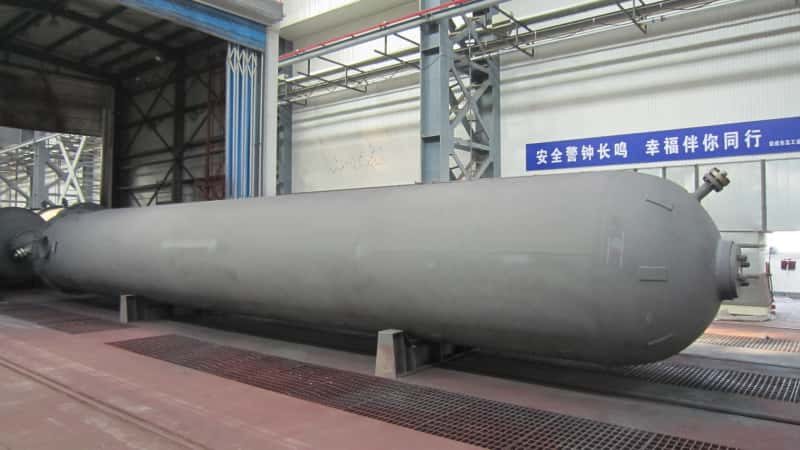
When requesting a quotation, EPC buyers should provide mechanical drawings, design code, material specifications, weld requirements, NDE scope, heat treatment requirements if applicable, and pressure test expectations. A pressure vessel manufacturing partner should review manufacturability before commercial confirmation.
Heat Exchangers
Heat exchangers are central to chemical plants because they support feed preheating, reaction heat management, gas cooling, condensation, recovery, and utility integration. In ethylene oxide-related projects, heat transfer equipment should be specified by thermal duty, fluid properties, fouling tendency, pressure drop, material requirements, and inspection access.
For many petrochemical and chemical duties, industrial heat exchangers or a shell and tube heat exchanger may be considered, depending on service conditions and project standards. The final selection should follow engineering design and the process package.
Absorbers, Scrubbers, and Separation Equipment
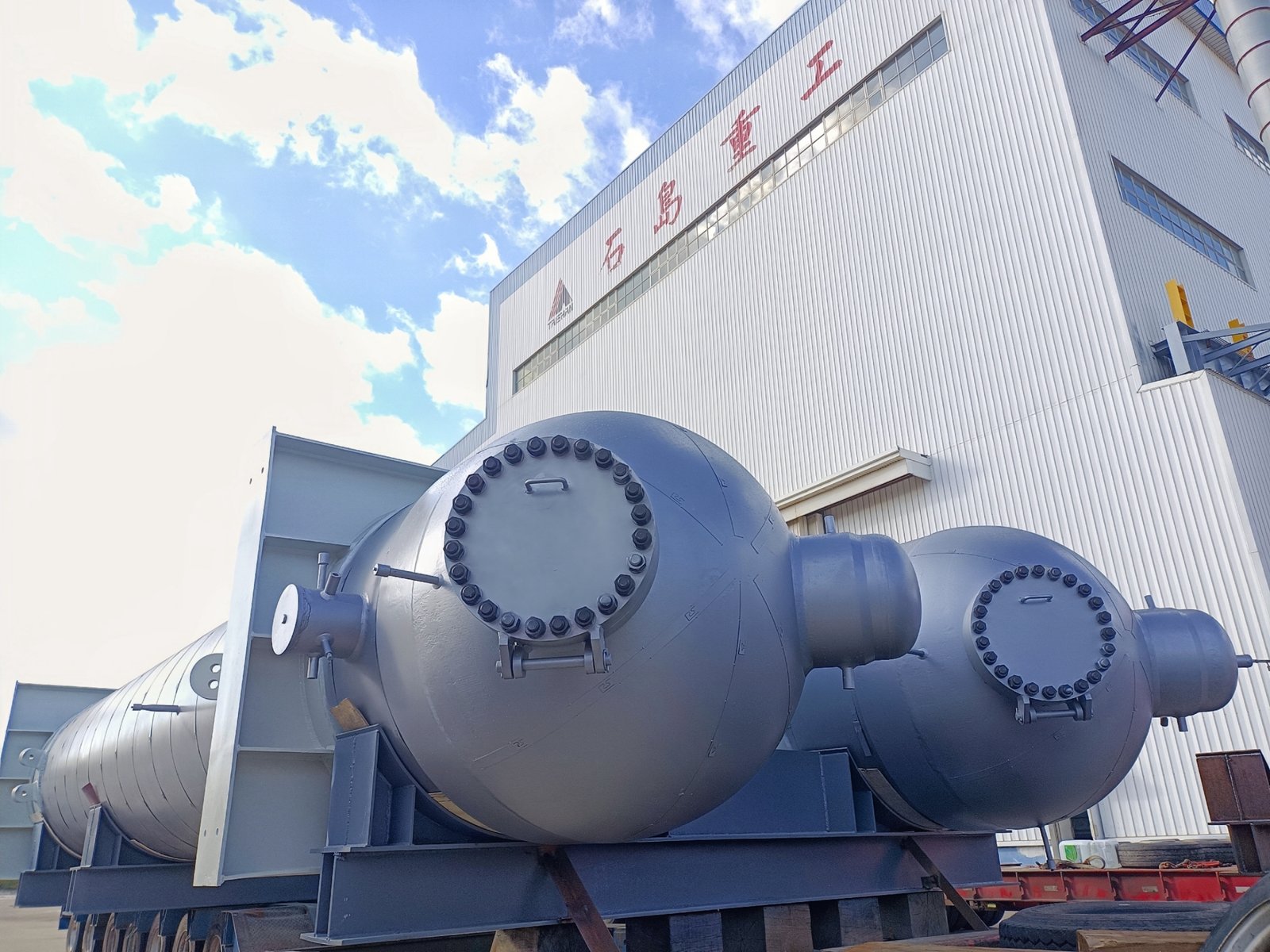
Ethylene oxide production and recovery can involve gas absorption, separation, purification, and emission-control-related equipment. Towers, columns, separators, and scrubbers should be specified as complete fabricated equipment, not as standalone small internals or accessory items.
For example, process towers and columns may be used in separation or purification sections, while scrubber towers may be relevant in gas treatment or environmental control packages. The buyer should define the equipment body, materials, nozzle arrangement, inspection scope, coating or lining, and delivery boundary as one project package.
Large Storage and Buffer Vessels
Ethylene oxide and related chemical plant areas may require feed, intermediate, process liquid, or wastewater storage. For this website’s positioning, storage tank content should focus on industrial tanks above 1,000L and project-based applications.
When specifying industrial storage tanks, buyers should confirm medium properties, capacity, pressure condition, design temperature, corrosion allowance, coating or lining system, foundation interface, and export delivery requirements. For hazardous or regulated chemicals, final storage requirements must be confirmed by qualified engineers and the latest applicable regulations.
Key Selection Factors for EPC Buyers
Process Conditions
The most important quotation inputs are design pressure, design temperature, operating pressure, operating temperature, medium composition, phase condition, corrosion behavior, and expected duty cycle. In oxygen-related and ethylene oxide-related services, buyers should also clarify whether special cleaning, material compatibility, or contamination control requirements apply.
Materials and Corrosion Control
Material selection should be based on process medium, temperature, pressure, corrosion allowance, safety requirements, and project standards. EPC buyers should avoid selecting materials based only on price. For chemical service, material incompatibility can create inspection, safety, and lifecycle risks.
The manufacturer should follow the specified material grade and provide traceability documentation according to project requirements. Any substitution should be reviewed and approved through the project’s formal technical process.
Design Code and Documentation
Pressure vessels may be designed and fabricated according to ASME BPVC Section VIII or other applicable standards, depending on project location, owner specifications, pressure level, and regulatory requirements. Buyers should state the required code clearly in the inquiry package.
A complete procurement package should define drawings, calculations, material certificates, welding documentation, NDE reports, pressure test records, coating reports, inspection release notes, packing lists, and delivery documents.
Inspection and Testing
Ethylene oxide plant equipment can involve demanding quality control. Depending on project requirements, inspection may include material verification, dimensional inspection, welding procedure review, radiographic testing, ultrasonic testing, magnetic particle testing, penetrant testing, hydrostatic testing, pneumatic testing under controlled conditions, and coating inspection.
The exact inspection plan should be agreed before fabrication. Late changes to NDE scope, test pressure, acceptance criteria, or documentation format can affect schedule and cost.
Manufacturing Capabilities That Matter
For EPC buyers, manufacturing capability is not just workshop size. It includes the ability to understand engineering drawings, manage material procurement, control welding quality, coordinate inspection, and deliver large equipment safely to the project site or export port.
When evaluating a large-scale pressure vessel manufacturer, buyers should review:
- Experience with custom chemical and petrochemical equipment
- Ability to fabricate large pressure vessels, heat exchangers, towers, and tanks
- Drawing review and engineering communication process
- Material traceability and procurement control
- Welding, forming, assembly, and dimensional control capability
- NDE, pressure testing, surface treatment, and coating coordination
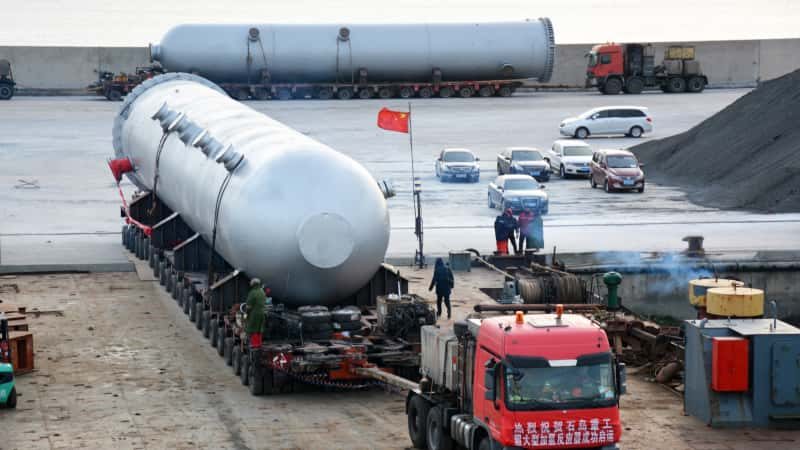
- Loading, heavy transport, and port delivery support
- English documentation support for overseas EPC projects
A manufacturer does not replace the EPC designer or process licensor. Its role is to convert approved engineering requirements into fabricated equipment with controlled quality and reliable delivery.
Common Procurement Risks
One major risk is sending incomplete datasheets and expecting a fixed quotation too early. Without pressure, temperature, medium, material, inspection, and delivery information, the supplier can only provide limited budgetary feedback.
Another risk is separating equipment items from their system context. Heat exchangers, separators, scrubbers, storage tanks, and pressure vessels are connected through process conditions and plant layout. If nozzle orientation, support position, lifting points, coating requirements, or transport limitations are not reviewed early, site installation risk increases.
A third risk is treating hazardous chemical equipment as ordinary fabricated steelwork. Ethylene oxide is subject to serious safety, exposure, flammability, and compliance concerns. These topics should be handled through qualified engineering and regulatory review, not through equipment name alone.
What Buyers Should Prepare Before Requesting a Quotation
Before asking for pricing and delivery, EPC buyers should prepare a technical package that includes:
- Equipment list and project scope boundary
- Process datasheets and mechanical drawings
- Design pressure and temperature
- Medium composition and corrosion considerations
- Material grade and corrosion allowance
- Applicable design code and project standards
- NDE, heat treatment, and pressure test requirements
- Painting, coating, lining, or preservation specification
- Size, weight, lifting, and transport restrictions
- Delivery terms, destination, and required documentation language
This helps the manufacturer provide a more realistic manufacturing evaluation and reduces repeated clarification cycles.
FAQ
What equipment is commonly used in ethylene oxide plant projects?
Common equipment may include reactor vessels, heat exchangers, separators, absorbers, scrubbers, process columns, storage tanks, and other custom pressure vessels. The exact scope depends on the process design, licensor package, owner specifications, and project standards.
Why does renewable oxygen supply affect equipment planning?
Renewable oxygen supply may require EPC teams to review operating assumptions, oxygen service requirements, equipment interfaces, documentation, and process control. The equipment manufacturer should fabricate according to approved drawings and technical specifications.
What information should EPC buyers provide for ethylene oxide plant equipment quotations?
Buyers should provide datasheets, drawings, medium composition, design pressure and temperature, material requirements, inspection plan, pressure test requirements, coating specifications, delivery terms, and applicable standards.
Are ethylene oxide plant vessels standard products?
Usually no. Major ethylene oxide plant vessels are project-specific fabricated equipment. Dimensions, materials, pressure conditions, nozzle orientation, inspection requirements, and delivery scope should be customized according to the engineering package.
What safety review is needed before procurement?
Ethylene oxide-related equipment should be reviewed by qualified process, mechanical, safety, and regulatory specialists. Buyers should confirm the latest standards, hazardous chemical requirements, occupational exposure rules, and local regulations before procurement.
Conclusion
Ethylene oxide plant equipment planning is becoming more important as chemical producers review renewable oxygen supply, lower-carbon raw materials, and updated plant interfaces. For EPC buyers, the best approach is to define complete equipment packages around process vessels, heat exchangers, towers, scrubbers, separators, and industrial storage tanks rather than treating each item as a disconnected purchase.
If you are planning an ethylene oxide, specialty chemical, petrochemical, or related process project, WSHI can support manufacturing discussions for custom pressure vessels, heat exchangers, process towers, and large industrial tanks based on your approved drawings and project specifications. To start a technical review, you can contact our engineering team with your datasheets, drawings, operating conditions, inspection requirements, and delivery expectations.