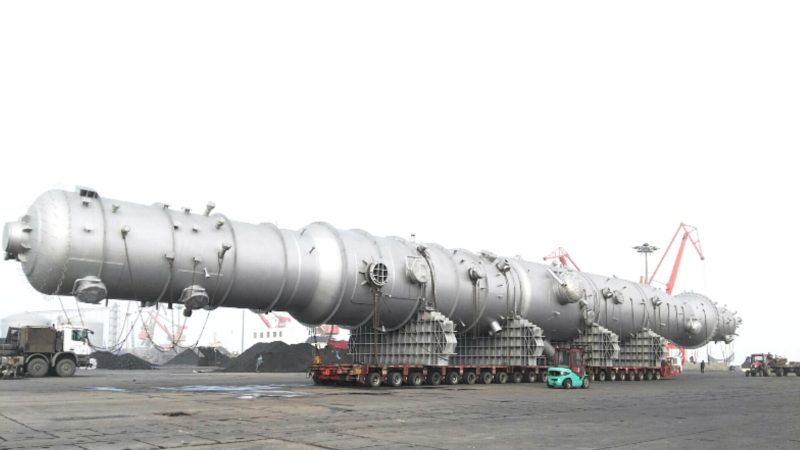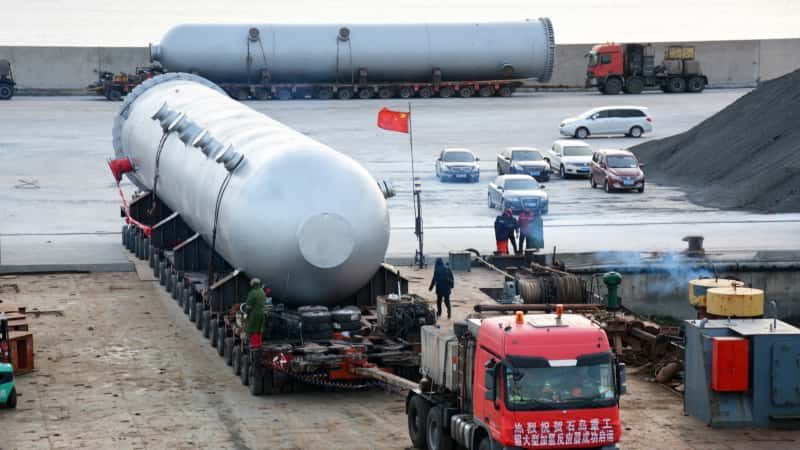

A gas-liquid separator can accommodate sudden liquid surges only when those events are included in its design basis. A vessel selected for average gas and liquid flow may not have enough usable volume or discharge capacity to manage a short, concentrated inflow of liquid. For EPC buyers, the question is therefore not simply whether the separator is large enough. It is whether the complete equipment can maintain its required performance during the specified transient conditions and recover before the next event.
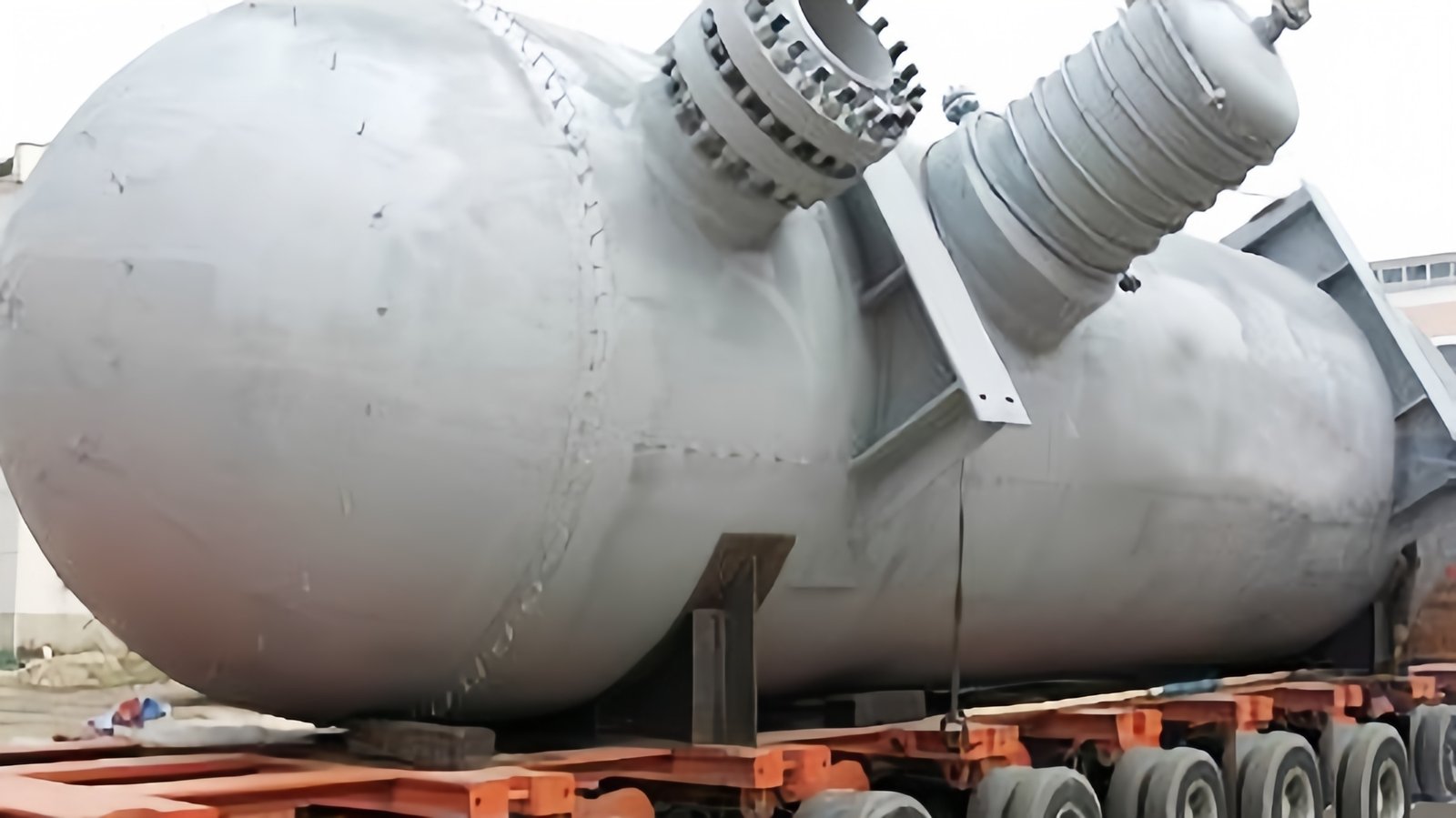
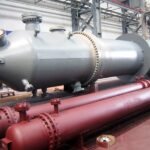
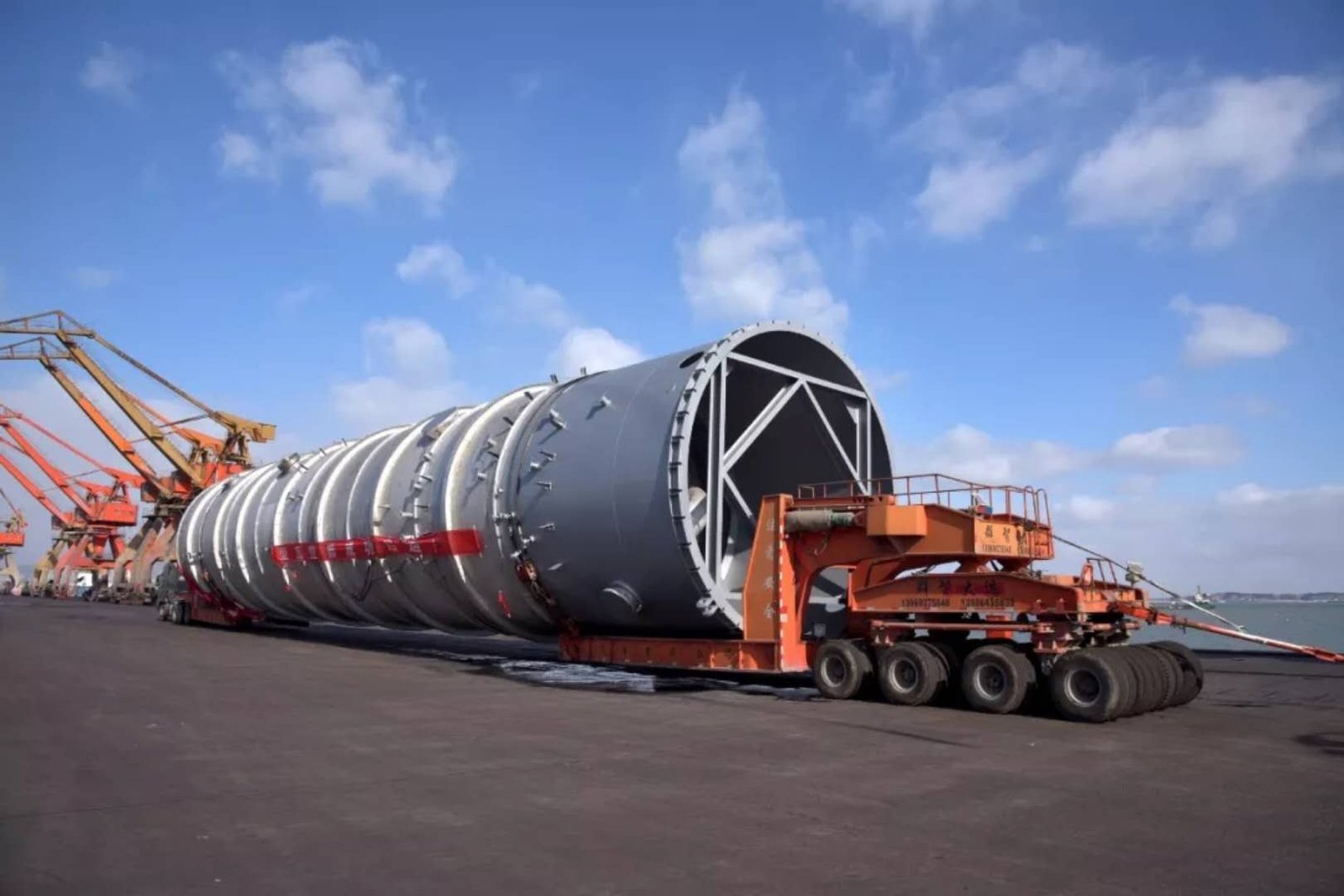
Representative separator vessel. Liquid-surge capability must be established from the project’s operating conditions and approved process design.
What Makes a Liquid Surge Different From Normal Flow?
Normal liquid flow describes an ongoing operating condition. A surge describes a temporary increase, while a liquid slug can involve a concentrated body of liquid arriving from an upstream multiphase system. These terms should be defined in the project documentation rather than treated as interchangeable equipment ratings.
Potential scenarios include pipeline restart, changes in upstream operating conditions or the arrival of accumulated liquid. Not every plant experiences the same events. Buyers should ask the responsible process engineer to identify credible scenarios and establish their expected frequency, duration and severity.
A daily average can conceal a short period of much higher liquid inflow. Similarly, a maximum flow value without its duration provides an incomplete basis for assessing the required temporary inventory. The enquiry should describe the event, not merely add a general allowance to normal flow.
Define the Surge Before Specifying the Vessel
Request a Time-Based Inlet Profile
The process design package should identify how gas and liquid flows change during the relevant event. Include fluid properties, inlet pressure and temperature, the expected liquid quantity, and the uncertainty associated with these inputs. Where appropriate, upstream transient analysis may be needed to develop the profile.
The Society of Petroleum Engineers’ discussion of separator sizing for nonstable multiphase streams illustrates why liquid arrival and drainage need to be considered together. It is a technical reference, not a universal sizing rule for every separator.
Identify the Condition Before the Event
Available capacity depends partly on the liquid inventory already present when a surge begins. State the relevant operating condition and how closely successive events may occur. A separator that accommodates one event may not accommodate another if its inventory has not returned to the intended operating range.
For custom pressure vessels, these process inputs should be established before the mechanical dimensions are finalized. The fabricator should not be expected to infer an upstream surge profile from a vessel-volume request.
Distinguish Total Volume From Usable Surge Capacity
The total internal volume of a separator is not its available surge volume. Part of the vessel supports normal liquid inventory, while other space is needed for gas flow and separation. The usable transient capacity must be assessed within the approved operating and protection philosophy.
As liquid inventory increases, the conditions available for gas-liquid separation can change. Buyers should therefore ask whether the performance assessment covers the relevant liquid levels and simultaneous gas loads, rather than only the normal operating point.
Also distinguish liquid retention requirements from surge-handling requirements. A retention basis may support a particular separation duty, but it does not automatically establish the capacity to receive a rapid inflow. Both functions need evaluation without double-counting the same available volume.
Check Liquid Discharge and Downstream Capacity
Temporary accumulation depends on the difference between incoming liquid and the amount that can leave during the event. Discharge capability must reflect actual operating conditions, including downstream pressure and the capacity of the receiving system.
Increasing the assumed discharge rate is not a complete solution if downstream equipment cannot accept the additional liquid. The project team should assess the separator and receiving process together, including how the system returns to its normal inventory.
Define responsibility for this review. The separator manufacturer may supply the complete vessel while the EPC contractor or process designer owns the discharge-system calculations and operating strategy. A quotation should make those boundaries explicit.
Preserve Separation Performance During the Event
A vessel may have sufficient physical space to contain additional liquid without maintaining the required gas-outlet quality. Surge handling and liquid-carryover performance should therefore be specified as related but distinct requirements.
Ask the process designer to assess the relevant gas and liquid combinations, fluid properties and transient conditions. Foaming or solids, where present, may complicate the evaluation. A nominal efficiency statement without an inlet basis and acceptance definition is not a meaningful performance commitment.
Technical guidance on gas-liquid separator sizing parameters explains that simplified sizing approaches have limitations in quantifying separation performance. Buyers should obtain a duty-specific assessment rather than rely on one sizing coefficient or a generic vessel ratio.
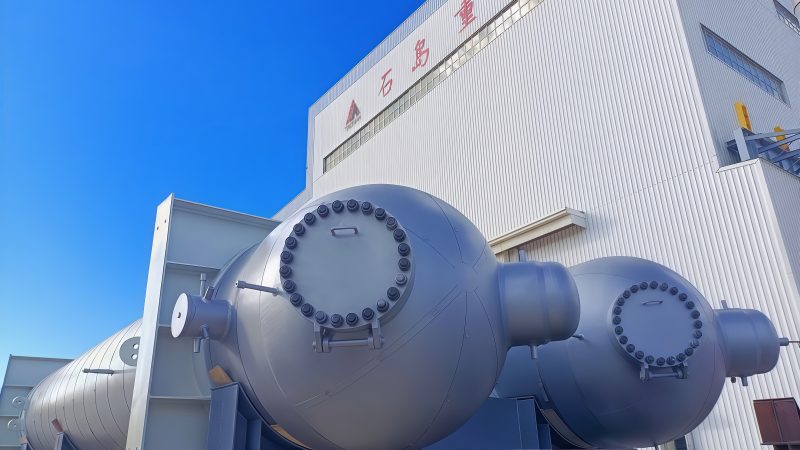
Representative process equipment. Upstream and downstream operating requirements must be coordinated with the separator duty.
Decide Whether a Separate Surge-Handling Arrangement Is Needed
Some projects can address the specified event within the process separator. Others may require an upstream slug-handling arrangement, additional buffering or changes elsewhere in the process. The appropriate choice depends on the credible event, required separation performance, site constraints and overall operating strategy.
A dedicated slug catcher is not simply another name for every gas-liquid separator. Its function and sizing basis require specific engineering. Buyers should not assume that a general vessel manufacturer offers every type of slug-handling system or owns the underlying process design.
For oil and gas pressure vessel applications, compare complete arrangements rather than individual vessel prices. Consider the associated footprint, foundations, liquid handling and delivery requirements. Any separate storage tanks within WSHI’s proposed scope should be above 1,000 liters and specified for their actual service.
Translate the Process Basis Into Manufacturing Requirements
The mechanical design must address the approved pressure-temperature conditions, materials, corrosion requirements and relevant loads. Where the process analysis identifies transient mechanical loads or repeated operating cycles, these inputs should be passed to the responsible mechanical engineer for assessment.
Agree on material traceability, welding requirements, applicable examinations, testing and dimensional checks before fabrication. A successful pressure test does not demonstrate surge-handling capacity or separation performance. Those require their own design evidence and, where contracted, acceptance arrangements.
WSHI’s activities include drawing development and engineering coordination, material procurement, welding, nondestructive examination, pressure testing where applicable, coating and heavy-equipment delivery. Review WSHI manufacturing capabilities against the approved vessel duty. Process guarantees and plant-wide protection responsibilities must be assigned separately and explicitly.
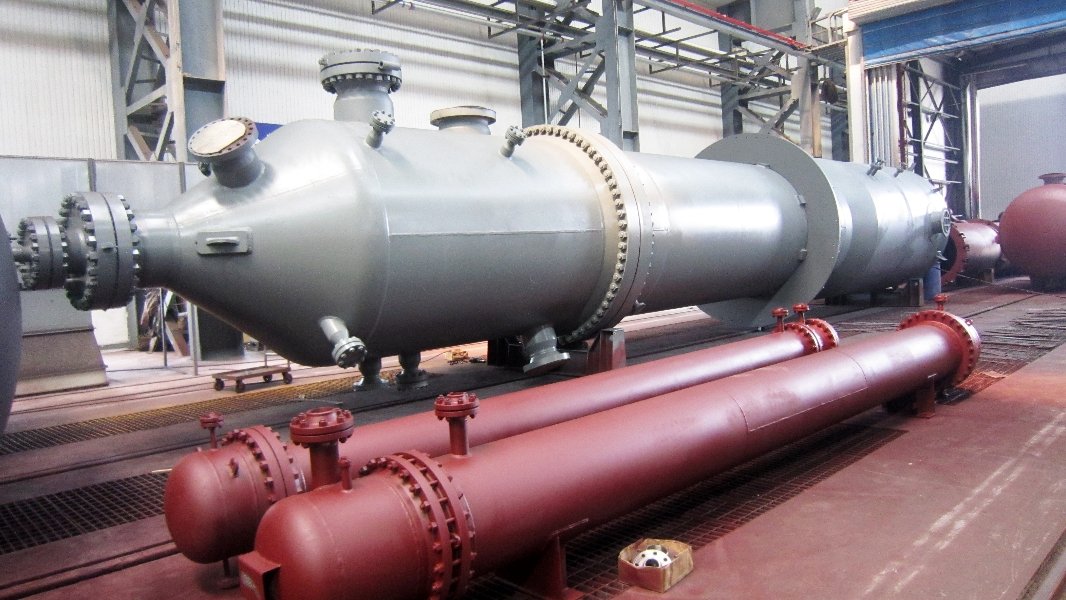
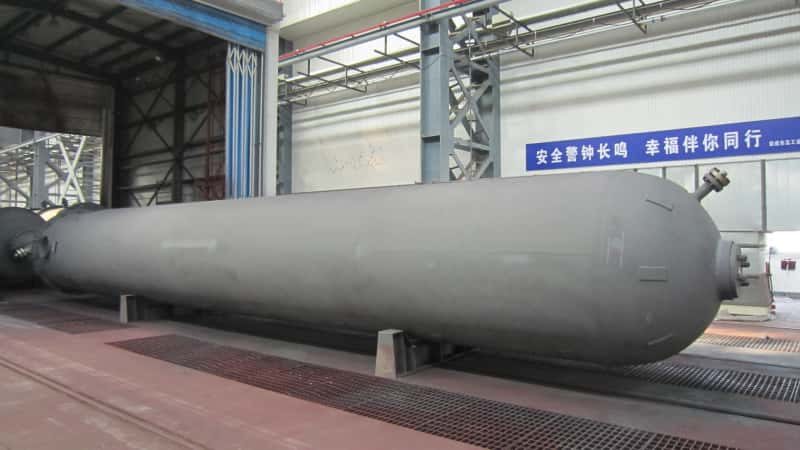
Representative fabrication workshop. Mechanical conformity and transient process performance require different forms of verification.
What Should the RFQ and Acceptance Basis Include?
Provide normal operating data, the defined surge scenarios, relevant fluid properties and the receiving system’s constraints. State the required gas-outlet quality, liquid-handling function, operating envelope and applicable construction requirements. Identify preliminary assumptions and the party responsible for resolving them.
Any performance commitment should specify the event profile, initial conditions, measurement basis and agreed exclusions. Where reproducing the event during commissioning is impractical, agree on the appropriate evidence and verification approach before award. Do not leave the meaning of “handles liquid surges” unresolved.
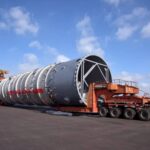
Delivery planning should also follow the approved equipment arrangement. Confirm transport dimensions, handling information, foundation inputs and installation responsibilities. A late increase in vessel size can affect more than fabrication cost, particularly where the site or transport route is constrained.
FAQ
Is a larger separator always better for liquid surges?
No. Usable inventory, gas-liquid separation and liquid discharge must be evaluated together. Additional volume alone does not establish acceptable performance.
Can average liquid flow be used to determine surge capacity?
Not by itself. The duration and profile of the incoming liquid, initial inventory and available discharge capacity are also important.
Does a horizontal vessel automatically solve slug-handling problems?
No. Orientation is one design consideration, not a guarantee. The complete arrangement must be assessed against the specified event and process requirements.
Can pressure testing verify liquid-surge performance?
No. Pressure testing addresses specified aspects of mechanical integrity. Surge handling and separation performance need a separate engineering and acceptance basis.
Discuss Your Separator Requirements
Effective gas-liquid separator procurement starts with a clear description of normal operation and credible liquid surges. If your project requires a complete custom separator or associated process vessel, contact our engineering team with the operating data, available transient analysis and preliminary drawings. These inputs support a focused discussion of manufacturing feasibility, inspection requirements and delivery scope.