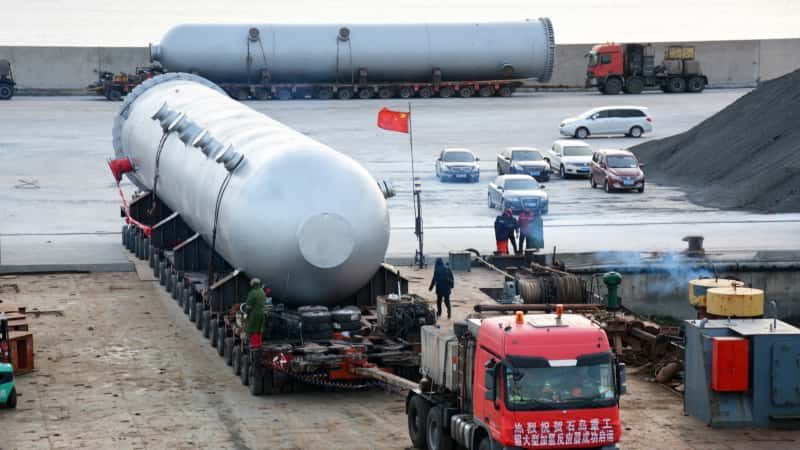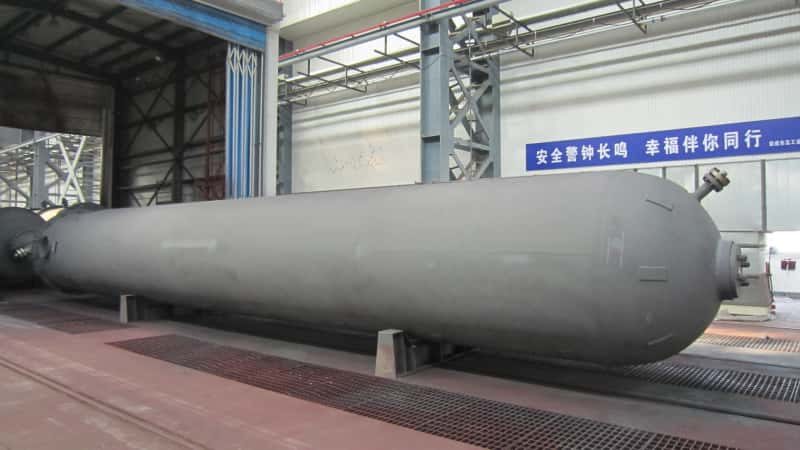

A shell-and-tube heat exchanger performance guarantee should define more than a heat-transfer rate. It must identify the fluid conditions, operating cases, pressure-drop limits and acceptance method behind that commitment. Without those details, buyers and suppliers can interpret the same guarantee differently when equipment reaches the plant. For EPC procurement teams, the objective is to establish a measurable performance obligation while keeping thermal design, mechanical fabrication and site operating responsibilities clear.
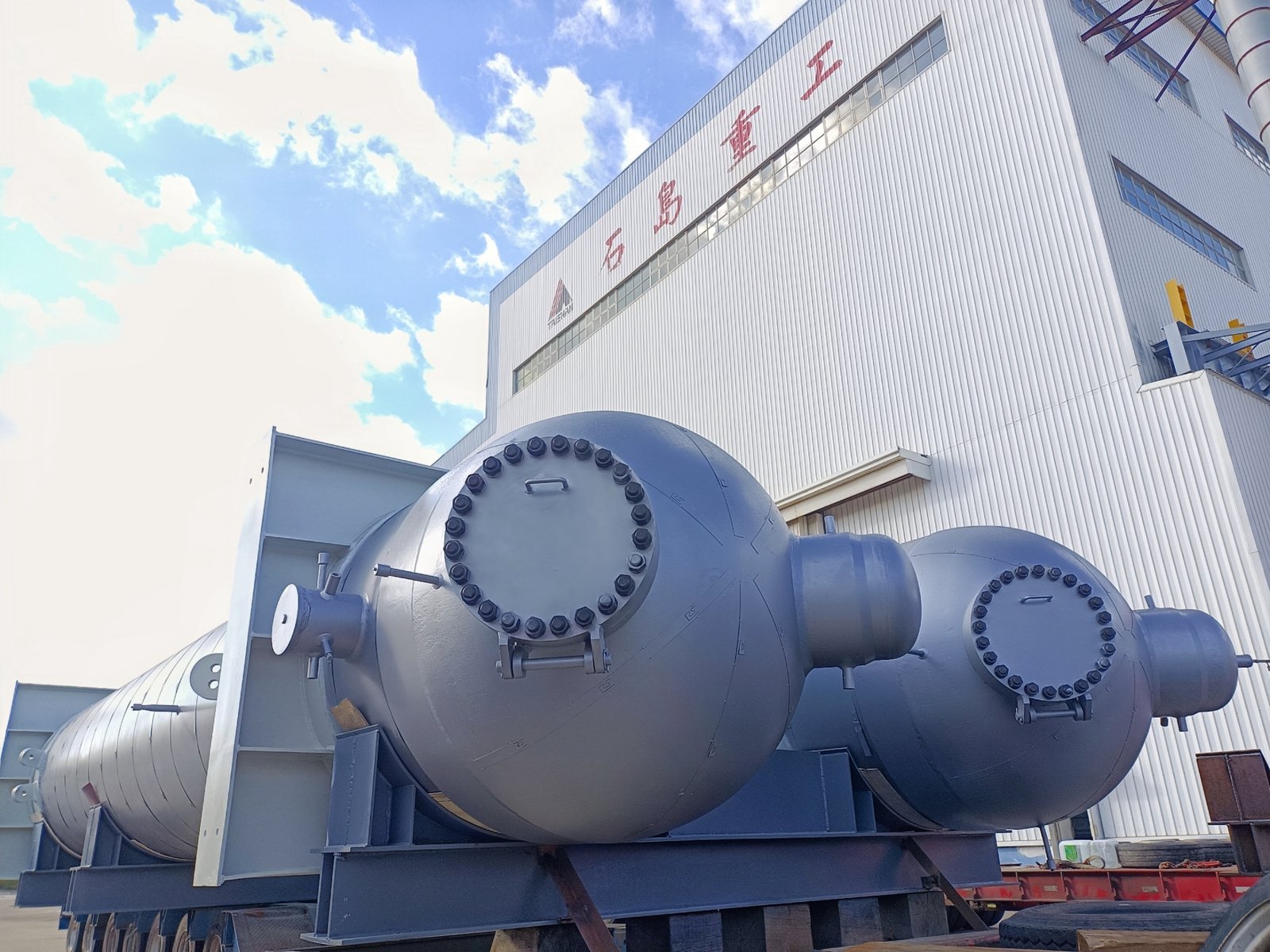
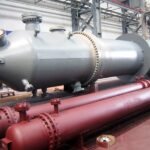
Representative heat exchanger. Guaranteed performance must relate to an approved duty and a defined verification method.
Separate Thermal Performance From Mechanical Acceptance
Mechanical acceptance and thermal acceptance answer different questions. Material verification, dimensional inspection, specified examinations and pressure testing address aspects of construction and pressure-boundary conformity. They do not demonstrate that the exchanger will achieve the required outlet temperature under actual process conditions.
A thermal guarantee addresses the agreed heat-transfer and hydraulic performance. Buyers should identify whether the manufacturer owns the thermal design or fabricates equipment to calculations and drawings supplied by another party. Neither responsibility should be inferred from the phrase “complete heat exchanger.”
For shell and tube heat exchangers, the purchase specification should state which party provides the thermal rating, which party approves it and which party is accountable for the performance commitment.
Establish a Complete Reference Duty
Specify Both Fluid Streams
Provide composition, flow, inlet temperature, operating pressure and relevant physical properties for both sides. Identify the source of property data and any uncertainty that could materially affect the calculation. A utility description such as “cooling water available” is not sufficient without its supply conditions and constraints.
The required outlet conditions should be consistent with the material and energy balance. Heat duty, flow rates and outlet temperatures are related; they cannot be treated as independent promises under arbitrary conditions. Ask the responsible thermal designer to identify the governing requirement and confirm how the remaining parameters follow from the approved basis.
Identify the Operating Cases Covered
A guarantee at one design point does not automatically cover minimum flow, maximum throughput, seasonal utility variation or alternative feed compositions. List the cases that need contractual coverage and distinguish them from conditions supplied for information only.
For batch or variable-duty applications, define whether the requirement concerns a steady operating point or a time-dependent heating or cooling objective. A transient requirement needs its own design and verification basis. Do not assume that a steady-state rating establishes a guaranteed batch-cycle time.
State the Guaranteed Parameters Clearly
The guarantee schedule should identify the applicable heat-transfer duty or outlet-temperature target and the corresponding conditions. It should also state the allowable pressure drop on each side, with clear measurement boundaries.
Specify whether pressure drop is assessed across the equipment connections and whether associated piping or other package equipment is included. Otherwise, plant measurements may be compared against a supplier calculation covering a different boundary.
Where an overall heat-transfer coefficient is included, define its area basis, reference conditions and calculation method. Avoid treating a calculated coefficient as a directly measured equipment characteristic independent of fluid properties and operating conditions.
ASME’s PTC 12.5 description for single-phase heat exchangers identifies heat-transfer rate, overall heat-transfer coefficient and pressure drop among the performance parameters covered by its testing methods. Its applicability must be checked for the actual service; it should not automatically be applied to condensers, reboilers or other phase-change duties.
Define Clean and Fouled Conditions
A heat exchanger designed with specified fouling allowances may initially be tested in a relatively clean condition. These are not necessarily equivalent performance bases. The contract should explain the condition covered by the guarantee and how the test result will be evaluated against it.
A fouling allowance is not a promise that deposits will develop at a particular rate or that the equipment will operate for a fixed period without cleaning. Such commitments require additional evidence and clearly defined operating conditions.
Buyers should also distinguish thermal-design allowance from extra surface area offered as a commercial margin. An unexplained percentage does not replace a documented rating. Ask the supplier to identify the assumptions used and avoid counting the same allowance twice.
Agree on a Practical Test Procedure Before Award
Decide Where Verification Will Occur
A factory may be able to complete mechanical acceptance activities without reproducing the process fluids, utility capacity or full thermal load needed for a representative performance test. State whether thermal verification will occur at the factory, at the operating site or through another agreed method.
A factory pressure test should not be labelled a thermal performance test. Likewise, a design calculation should not be presented as measured operating performance. Each provides different evidence and should have a clearly identified role in acceptance.
Establish Stable and Representative Conditions
The procedure should define the operating conditions needed for a valid test, the data-recording period and the criteria for determining that results are representative. It should address relevant bypass flows, heat losses and other factors that could affect interpretation.
Agree on the approach to comparing the heat balances on the two sides. A discrepancy should trigger the specified evaluation of measurements and assumptions, not an arbitrary choice of whichever result supports acceptance.
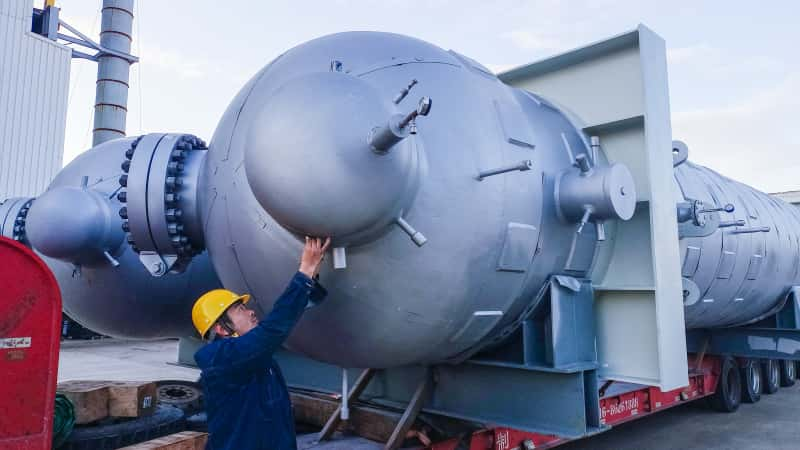
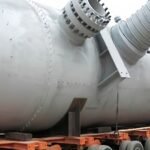
Representative heat-transfer equipment. Test arrangements must match the exchanger configuration and contracted performance scope.
Include Measurement Uncertainty and Data Quality
Measured temperatures, flow rates and pressures have uncertainty. Fluid-property estimates and calculations can introduce additional uncertainty into the reported performance. Calibration alone does not eliminate every source of error.
The test plan should identify the required measurements, instrument suitability, calibration records and the method for evaluating uncertainty. Agree in advance how uncertainty affects the acceptance decision rather than introducing an allowance after a disputed result.
ASME’s general instructions for performance test codes discuss performance evaluation and the treatment of measurement uncertainty. The project team should select an appropriate testing framework and confirm the applicable edition and scope rather than relying on a generic claim of “testing to ASME.”
Define How Off-Design Results Will Be Evaluated
Site conditions may differ from the contractual reference conditions. Cooling water may be warmer, throughput lower or the process composition different. Those differences do not automatically prove that the exchanger has failed, but they can prevent a direct comparison.
Where correction to reference conditions is permitted, agree on the calculation method, input data and limits of validity. A correction should not become an unrestricted extrapolation across different flow regimes or phase behavior.
If conditions fall outside the agreed evaluation range, the parties should follow a defined process for retesting or engineering review. This protects both buyer and supplier from conclusions based on an unsuitable test.
Assign Responsibilities and Remedies
The contract should identify who supplies test utilities, instruments, operating personnel and access to process data. It should also state who prepares the procedure, witnesses the test, calculates results and approves the report.
Define what happens after a valid test fails the agreed criteria. Investigation, corrective work and retesting responsibilities need a commercial agreement informed by engineering review. Do not assume that a generic warranty clause resolves every performance issue.
For custom heat exchanger procurement, clearly separate supplier-controlled performance obligations from owner-controlled feed and utility conditions. Exclusions should be specific enough to evaluate, rather than broad statements that make the guarantee meaningless.
Connect the Guarantee to Manufacturing Deliverables
Approved thermal and mechanical requirements should remain aligned throughout fabrication. Changes affecting geometry, materials or the agreed configuration need review by the responsible design parties. A manufacturing revision should not silently invalidate the performance basis.
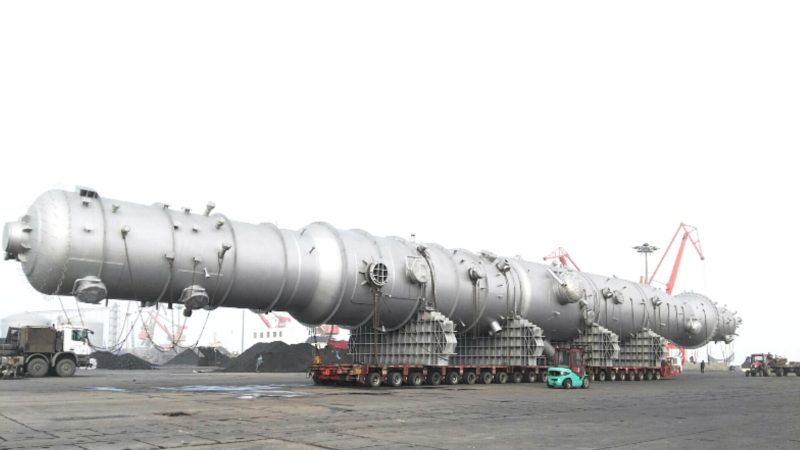
WSHI’s scope includes engineering coordination, material procurement, welding fabrication, nondestructive examination, pressure testing where applicable, coating and heavy-equipment delivery. Buyers reviewing WSHI manufacturing capabilities should confirm whether the order includes thermal design and a performance guarantee or mechanical fabrication to an approved design.
Agree on the final documentation package, including the applicable ratings, drawings, inspection records and test reports. Delivery and installation planning should preserve the conditions needed for subsequent verification, including access for the agreed measurements.
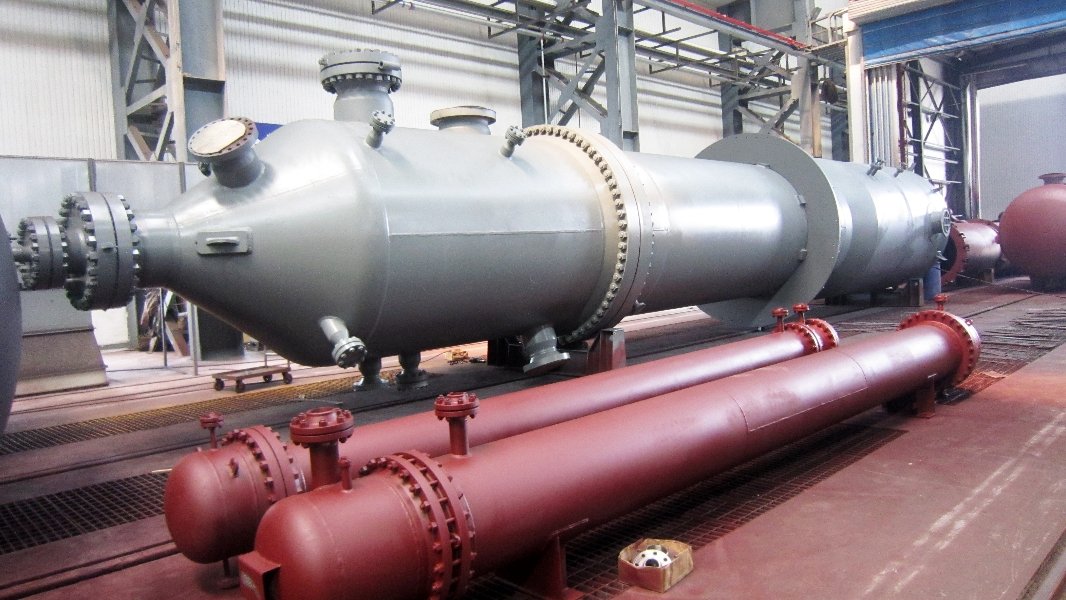
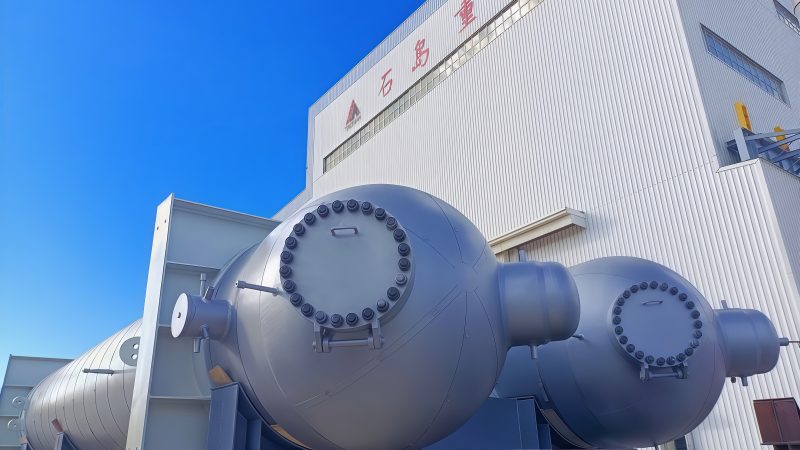
Representative manufacturing workshop. Fabrication records and thermal acceptance evidence serve distinct purposes.
FAQ
Does passing a pressure test prove the exchanger meets its heat duty?
No. Pressure testing addresses specified mechanical requirements. Thermal performance needs a separate design and verification basis.
Should every operating condition have the same guarantee?
Not necessarily. Identify the required cases and agree on the performance commitment for each. A single design-point guarantee should not be assumed to cover all conditions.
Can a clean-condition test prove a guaranteed operating period between cleanings?
No. Fouling development depends on the fluid and operation. A cleaning-interval commitment requires separate evidence and agreed conditions.
Can field results be corrected to design conditions?
Where an appropriate method is agreed, correction may be possible. Its validity limits and treatment of uncertainty should be established before testing.
Discuss Your Heat Exchanger Requirements
A useful shell-and-tube heat exchanger performance guarantee connects the approved duty with measurable acceptance criteria and clear responsibilities. If your project requires a complete custom exchanger, contact our engineering team with the process datasheets, utility conditions and proposed acceptance requirements. These inputs support a focused discussion of the design scope, manufacturing feasibility, inspection and delivery.