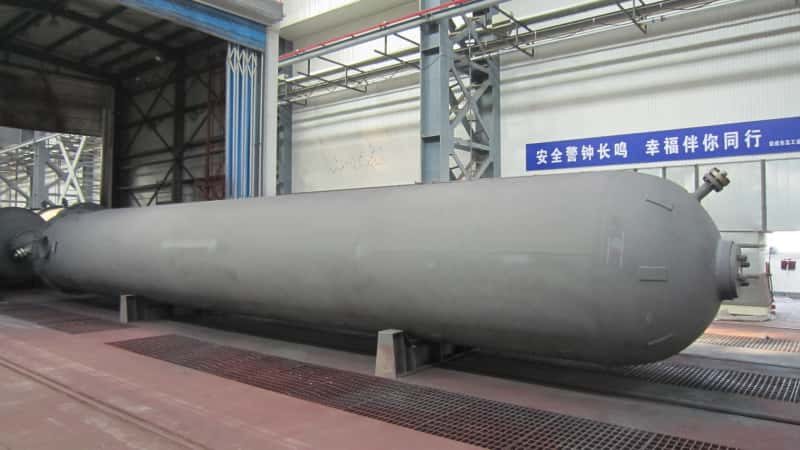

Knock-Out Drums for Gas Processing EPC Projects
In gas processing and petrochemical plants, knock-out drums are often specified to protect downstream equipment from liquid carryover, unstable flow, and process upsets. For EPC buyers and project engineers, the challenge is not only selecting a vessel diameter or orientation, but defining a complete pressure vessel package that fits the process duty, site layout, corrosion risk, inspection requirements, and delivery schedule.
A well-prepared inquiry for knock-out drums should connect process data with fabrication requirements. This helps the manufacturer evaluate vessel configuration, material selection, nozzle orientation, welding, non-destructive examination, pressure testing, coating, and transport feasibility before quotation.
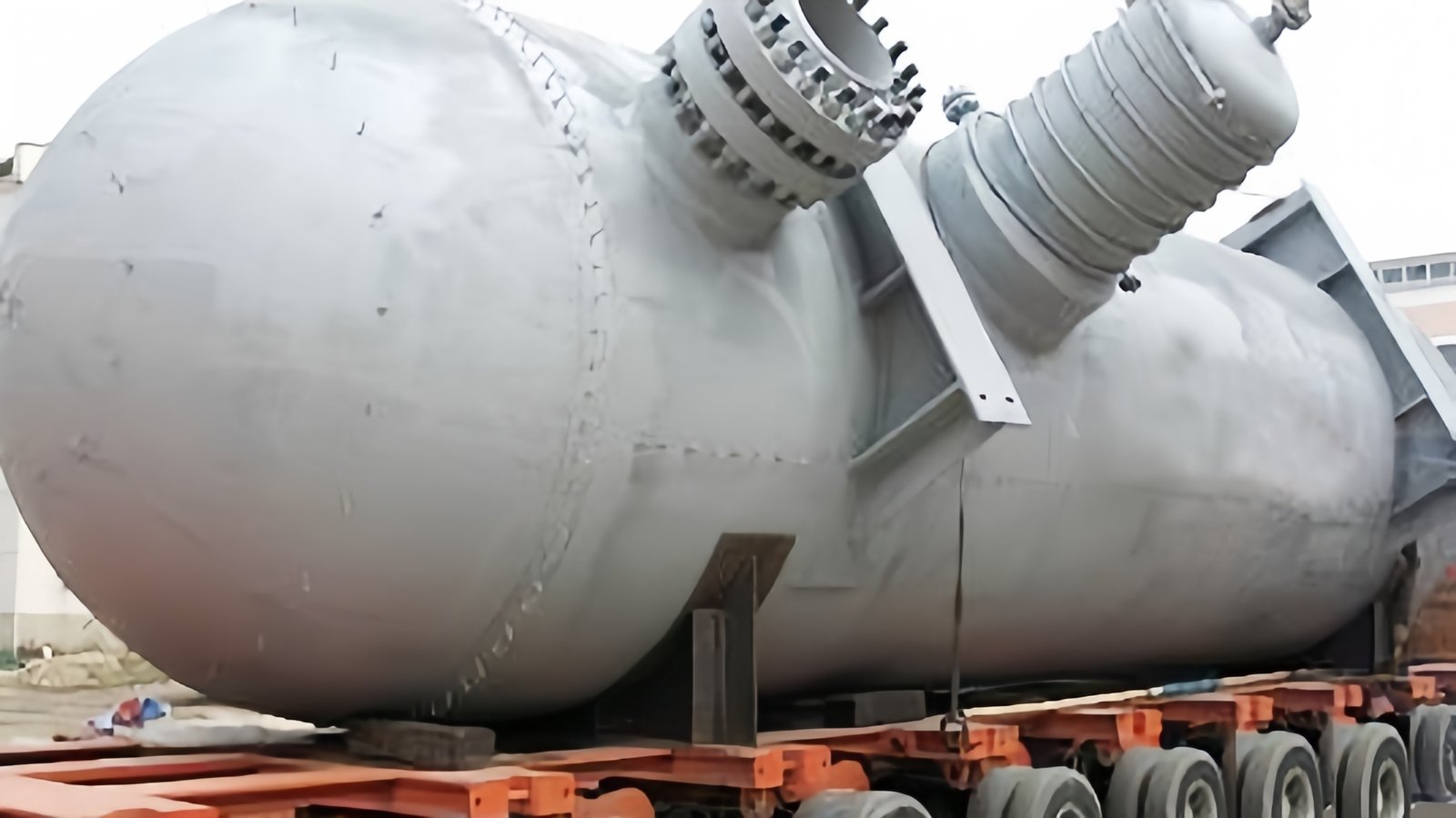
A knock-out drum can be specified reliably with only diameter, length, and orientation.False
A reliable RFQ should include gas flow, liquid load, pressure, temperature, medium composition, corrosion risk, drainage requirements, nozzle orientation, inspection scope, coating, and delivery terms.
Knock-out drums should be treated as complete pressure vessel packages in EPC gas processing projects.True
The vessel body, supports, nozzles, drainage, instruments, welding, NDE, pressure testing, coating, documentation, and transport planning all affect project execution and downstream equipment protection.
What Is a Knock-Out Drum?
A knock-out drum is a pressure vessel used to separate liquid droplets or slugs from a gas stream. In gas processing, refining, petrochemical, flare, vapor recovery, and compressor protection systems, it helps reduce liquid carryover before the gas enters downstream equipment.
Knock-out drums may be vertical or horizontal depending on flow rate, liquid load, residence time, available plot space, and maintenance access. In many projects, they are specified as part of a larger process package rather than as an isolated vessel.
For industrial projects, knock-out drums are usually treated as custom pressure vessels because operating pressure, gas composition, liquid behavior, corrosion allowance, nozzle layout, support design, and inspection scope vary from one project to another.
Where Knock-Out Drums Are Used
| Application area | Typical function | EPC buyer review focus |
|---|---|---|
| Gas processing plants | Remove free liquid before compressors, dehydration, amine systems, gas coolers, or downstream separation | Gas composition, condensate and water load, operating cases, corrosion risk |
| Petrochemical and refining units | Protect vapor lines, reactor outlets, compressor suction systems, overhead systems, and recovery units | Hydrocarbon service, acid gas, pressure fluctuation, contamination, drainage |
| Flare and relief systems | Collect liquid before gas enters downstream flare equipment | Relief basis, liquid hold-up, drainage philosophy, instrumentation, safety interface |
| Industrial gas and vapor recovery | Separate condensate, solvent, water, or chemical droplets before downstream treatment | Material compatibility, mist or slug concerns, vessel orientation, testing scope |
Gas Processing Plants
In natural gas treatment and processing facilities, knock-out drums may be used upstream of compressors, dehydration units, amine systems, gas coolers, or downstream separation stages. Their role is to remove free liquid and reduce the risk of liquid entering equipment that is not designed for two-phase flow.
This is especially important in systems where gas composition, condensate content, water content, and pressure changes may affect phase behavior. EPC teams should define the expected operating cases, not only the normal design point.
For broader applications, knock-out drums often fall under pressure vessels for oil and gas, where separation, storage, heat transfer, and gas treatment equipment must work together.
Petrochemical and Refining Units
In petrochemical plants and refinery units, knock-out drums may be installed in vapor lines, flare systems, reactor outlet systems, compressor suction lines, and overhead systems. Their duty can be related to hydrocarbon vapor, acid gas, light ends, fuel gas, or process vapor recovery.
When used in petrochemical pressure vessels, the vessel specification should consider process temperature, pressure fluctuation, corrosive components, operating cycles, drainage requirements, and possible contamination.
Flare and Relief Systems
Knock-out drums in flare or relief systems are intended to collect liquid before gas is routed to downstream flare equipment. These duties can involve occasional but severe operating scenarios. The final design basis should be confirmed by the process licensor, EPC engineering team, and applicable project standards.
Because flare-related vessels may involve safety-critical service, buyers should avoid treating them as simple tanks. The design basis, relief load, liquid hold-up, drainage philosophy, instrumentation interface, and inspection requirements should be reviewed carefully.
Key Data EPC Buyers Should Confirm Before RFQ
Gas Flow and Liquid Load
Flow data is the starting point for knock-out drum selection. EPC buyers should provide normal, minimum, maximum, startup, shutdown, and upset conditions where available. Liquid load should be clearly described, including whether it is continuous liquid, intermittent carryover, condensate, water, hydrocarbon liquid, or process chemical.
The inquiry should identify gas flow range, liquid flow or expected liquid accumulation, operating and design pressure, operating and design temperature, gas density and molecular weight where available, liquid density and viscosity, droplet removal expectations if specified by the process design, and slug or surge condition if applicable.
Pressure and Temperature Design Basis
Knock-out drums used in gas processing are pressure vessels. The design pressure, design temperature, corrosion allowance, test pressure, and applicable code should be stated in the inquiry documents.
Many projects refer to recognized pressure vessel codes such as ASME BPVC Section VIII Division 1, but the final code path depends on project location, owner requirements, local regulations, and contractual documents. Buyers should confirm the required design code and latest applicable edition with their engineering team.
For related high-pressure fabrication scope, WSHI can support pressure vessel manufacturing based on project drawings, technical specifications, and agreed inspection requirements.
Gas Composition and Corrosion Risk
Gas composition affects material selection and corrosion control. Buyers should identify components such as CO2, H2S, water vapor, chlorides, oxygen, ammonia, hydrocarbons, solvents, or other corrosive or hazardous constituents if present.
For sour gas, wet gas, acid gas, or corrosive vapor service, material selection should be reviewed by qualified engineering parties. Depending on the project, the specification may require corrosion allowance, specific steel grades, stainless steel, cladding, lining, post-weld heat treatment, hardness control, or other measures. These requirements should be defined by the project documents rather than assumed during quotation.
Vessel Orientation and Layout
The choice between vertical and horizontal knock-out drums depends on process duty and site layout. Vertical vessels may suit lower liquid hold-up or limited footprint. Horizontal vessels may be used where larger vapor-liquid disengagement area or liquid capacity is required.
EPC buyers should confirm available plot space, maintenance access, lifting and installation constraints, inlet and outlet orientation, drainage location, platform or ladder interface if included in the project scope, and transport restrictions for large-diameter or long vessels.
Nozzle orientation should be coordinated before fabrication. Late changes to nozzles, supports, or lifting points may affect welding, inspection, coating, and delivery schedule.

Manufacturing Considerations for Knock-Out Drums
Drawing Review and Engineering Coordination
For project-based vessels, fabrication should begin with careful review of drawings, datasheets, material specifications, welding requirements, inspection plans, coating requirements, and delivery conditions. Engineering coordination is especially important when the knock-out drum connects with compressors, heat exchangers, flare headers, scrubber systems, or downstream separators.
A capable large-scale pressure vessel manufacturer should review manufacturability before production, including plate rolling, welding sequence, lifting points, access requirements, dimensional tolerances, and shipping constraints.
Material Procurement and Traceability
Material selection should match the agreed code, service condition, and project specification. Buyers should confirm whether the project requires specific material standards, origin requirements, impact testing, supplementary examination, sour service requirements, or coating compatibility.
Material traceability is important for industrial gas and petrochemical vessels. Procurement documentation, material certificates, and inspection records should be aligned with the project quality plan.
Welding, NDE, and Pressure Testing
Welding quality is central to pressure vessel reliability. Knock-out drums may require controlled welding procedures, welder qualification, visual inspection, radiographic testing, ultrasonic testing, magnetic particle testing, penetrant testing, or other examination methods depending on code and project requirements.
Pressure testing should be performed according to the applicable code and agreed inspection plan. The buyer should specify whether third-party inspection, hold points, witnessing, or additional documentation is required.
Coating, Painting, and Corrosion Protection
External coating and internal protection depend on site environment and process medium. Offshore, coastal, desert, humid, chemical plant, and sour gas environments may require different coating systems. Internal lining or corrosion-resistant materials should be determined by the medium and project specifications.
Coating requirements should be clarified early because surface preparation, primer, intermediate coats, final coats, dry film thickness, curing conditions, and inspection records can affect both production schedule and shipping readiness.
RFQ Checklist for Knock-Out Drums
| RFQ input | Recommended detail | Why it matters |
|---|---|---|
| Process data | Gas flow range, liquid load, slug/surge cases, startup/shutdown cases | Defines vessel duty and preliminary sizing basis |
| Medium composition | Gas and liquid composition, CO2, H2S, water, chlorides, hydrocarbons, solvents | Supports material and corrosion review |
| Design conditions | Operating/design pressure and temperature, test pressure, vacuum if applicable | Defines pressure vessel design basis |
| Mechanical scope | Orientation, dimensions, nozzles, supports, drains, manways, lifting points | Controls fabrication and site installation fit |
| Inspection scope | Applicable code, NDE, pressure testing, hold points, third-party witness | Allows comparable quotations and acceptance planning |
| Protection system | Coating, lining, corrosion allowance, preservation, packing | Reduces corrosion and delivery damage risk |
| Delivery boundary | Destination, route limits, loading method, export documents, schedule | Prevents late logistics problems |
Common Buyer Mistakes to Avoid
Treating a Knock-Out Drum as a Standard Vessel
Knock-out drums may look simple, but their performance depends on operating conditions, liquid behavior, process connection, and vessel geometry. A generic vessel quotation may miss important details such as liquid surge volume, pressure drop, drainage, corrosion, and installation constraints.
Sending an RFQ Without Process Data
A drawing alone may not be enough if process parameters are incomplete. EPC buyers should provide the datasheet, medium composition, operating cases, applicable standards, inspection requirements, and delivery terms. This allows the manufacturer to evaluate whether the requested vessel can be fabricated and delivered as specified.
Ignoring Downstream Equipment Protection
Knock-out drums are often installed to protect compressors, heat exchangers, absorbers, scrubbers, flare systems, or other process equipment. If the vessel is underspecified, downstream equipment may face higher operational risk. Buyers should consider the knock-out drum as part of the complete process system.
Where the process includes cooling or condensation before separation, related industrial heat exchangers may also need to be coordinated with the vessel package.
Leaving Delivery Constraints Too Late
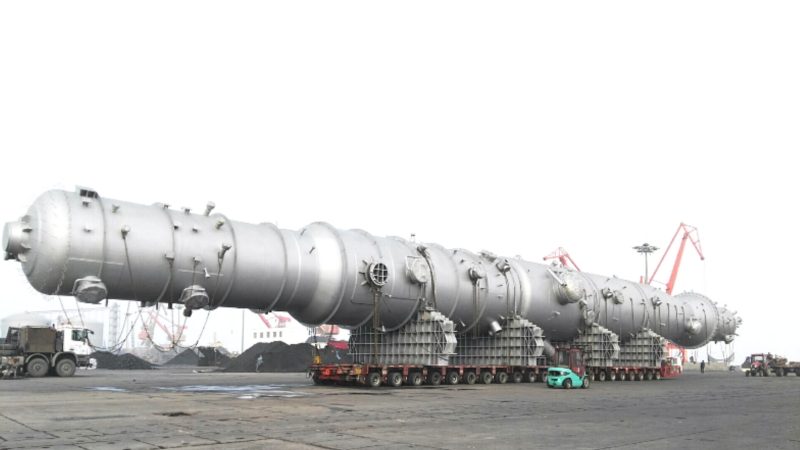
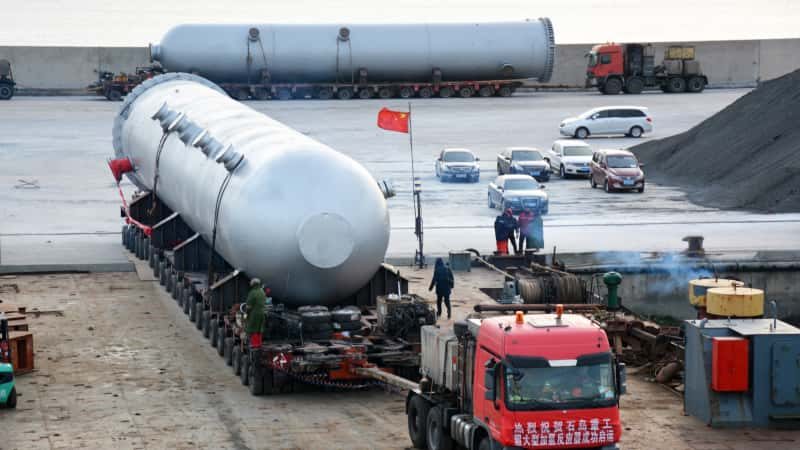
Large knock-out drums may require route planning, lifting studies, saddle design, special packaging, or port delivery coordination. Dimensions, weight, center of gravity, coating protection, and shipping supports should be discussed before final fabrication release.

Why Customized Manufacturing Matters
Gas processing and petrochemical projects rarely use one identical knock-out drum across all plants. Even when the vessel name is the same, the design can change based on pressure, temperature, gas composition, liquid load, corrosion risk, site layout, code requirements, and transportation route.
Customized manufacturing helps align the vessel with project drawings and datasheets, site installation conditions, process connection requirements, inspection and documentation expectations, coating and preservation requirements, export packing and port delivery needs, and integration with separators, towers, heat exchangers, and storage vessels.
If the project also involves gas treatment towers, scrubbers, or downstream separation equipment, buyers may need to coordinate knock-out drums with process towers and columns to keep the full process package consistent.
Conclusion
Knock-out drums are important gas-liquid separation pressure vessels for gas processing and petrochemical plants. For EPC buyers, the best procurement result usually starts with a complete technical RFQ: flow conditions, liquid load, pressure, temperature, medium composition, corrosion risk, code requirements, inspection scope, nozzle orientation, coating, and delivery terms.
If you are planning a gas processing, petrochemical, refinery, or industrial gas project and need knock-out drums, gas-liquid separator vessels, or related custom pressure vessels, you can share your drawings, datasheets, operating conditions, and project requirements. WSHI’s engineering and manufacturing team can support early communication for vessel fabrication feasibility, quality control planning, and project delivery evaluation. You can contact our engineering team to discuss your equipment scope.
FAQ
What is the main function of a knock-out drum?
A knock-out drum separates liquid from a gas stream before the gas enters downstream equipment. It is commonly used to reduce liquid carryover risk in gas processing, petrochemical, refining, compressor, vapor recovery, and flare-related systems.
What information is needed to quote a knock-out drum?
Buyers should provide drawings, datasheets, gas flow, liquid load, design pressure, design temperature, medium composition, corrosion allowance, material requirements, inspection scope, coating requirements, and delivery terms.
Is a knock-out drum the same as a gas-liquid separator?
A knock-out drum is a type of gas-liquid separation vessel, but the exact design depends on duty. Some projects use the term for compressor protection, flare liquid collection, vapor-liquid disengagement, or upstream gas treatment service.
Can knock-out drums be supplied for petrochemical projects?
Yes, knock-out drums can be manufactured for petrochemical and gas processing applications when the buyer provides the required process, mechanical, quality, and delivery specifications. Final design should follow applicable project standards and regulatory requirements.
Why should EPC buyers confirm nozzle orientation before fabrication?
Nozzle orientation affects piping connection, site installation, drainage, access, support design, inspection, and possible rework. It should be coordinated with the plant layout and piping model before fabrication release.