
Large chemical storage tanks need heating when the stored material cannot remain within its required handling or storage temperature range under expected site conditions. The reason may be maintaining pumpability, preventing unwanted solidification, or supplying a downstream process at a defined temperature. Heating is not automatically necessary simply because a tank is large or installed outdoors.
For EPC buyers and chemical manufacturers, the purchasing question is whether the complete tank arrangement must maintain temperature, warm incoming material, or recover from an extended cold shutdown. These duties can require different capacities and operating provisions.
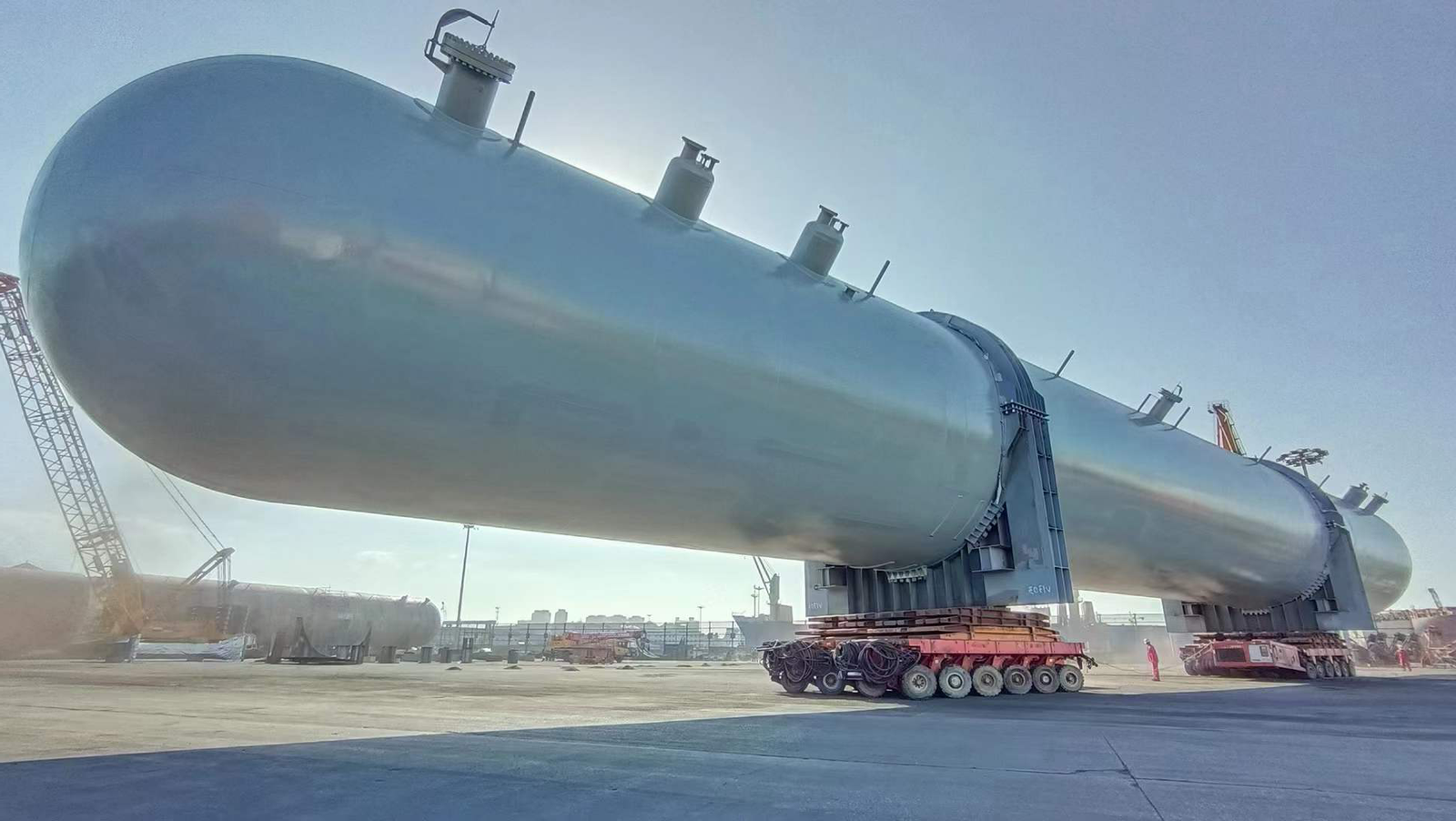
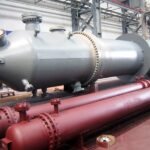
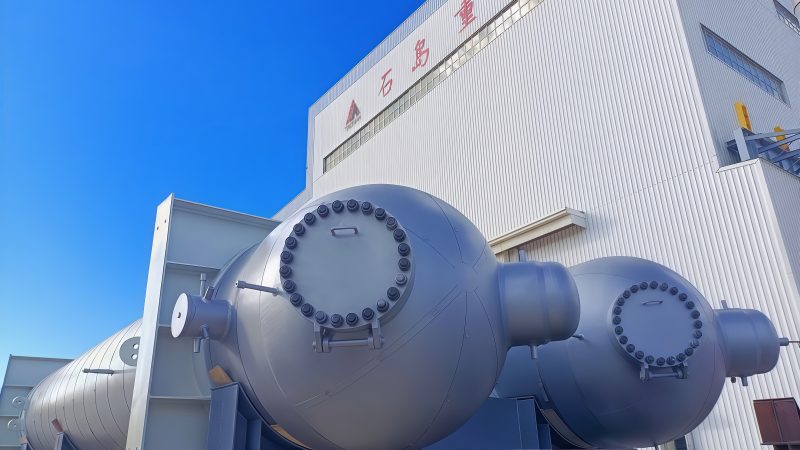
Representative storage vessel photograph. The image does not establish that the vessel includes heating or is suitable for a particular chemical.
Insulation and Heating Perform Different Functions
Insulation slows heat transfer between the tank and its surroundings. It does not supply energy to cold material. If a warm product arrives and leaves within a sufficiently short period, insulation alone may keep it within the acceptable temperature range. That conclusion requires a heat-loss assessment based on actual operating conditions.
Active heating adds energy. It may replace ongoing heat losses or raise the temperature of the stored contents. The US Department of Energy’s process heat overview distinguishes heating duties that raise material temperature from those that maintain it.
For industrial storage tanks above 1,000 liters, buyers should define the required thermal outcome before specifying an insulated or heated design. “Keep warm” is not a measurable procurement requirement.
Common Reasons to Consider Heated Chemical Storage Tanks
Maintaining Pumpability
Some viscous chemical products become more difficult to transfer as temperature falls. A project may therefore require controlled storage temperature to support unloading, circulation, or delivery to production equipment.
Provide viscosity-versus-temperature data where available and identify the transfer system’s operating requirements. The minimum practical transfer temperature is not necessarily the same as a published pour point or freezing point. Pump capability, piping losses, and the required delivery rate also influence the assessment.
The complete transfer path matters. Keeping the tank contents warm does not, by itself, establish that material will remain transferable through colder downstream piping or receiving equipment.
Avoiding Unwanted Solidification or Crystallization
Certain materials may solidify or form crystals during cooling. Where that behavior is relevant, buyers should describe the composition range, phase-change information, and consequences for storage and transfer.
Not every deposit is caused by inadequate heating. Precipitation can also depend on composition, contamination, or other process changes. The process team should establish whether heating is an appropriate response rather than treating it as a universal solution to solids formation.
Meeting a Downstream Temperature Requirement
A tank may serve as a buffer between delivery and production, with the next process requiring feed within a specified temperature band. In that case, the duty depends on incoming material temperature, withdrawal rate, inventory, and the permitted recovery time after filling.
Clarify whether the tank must deliver conditioned material immediately after receipt or whether a heating period is available. This operational distinction can materially change the thermal specification.
Separate Temperature Maintenance From Heat-Up Duty
Temperature Maintenance
A maintenance duty replaces heat lost during storage. Relevant inputs include tank geometry, insulation, ambient temperature, wind exposure, support arrangements, and the required product temperature.
Ask the supplier to state the conditions used in its heat-loss assessment. A calculation based on average weather may not represent the project’s defined winter operating case. Conversely, the design should not be based on arbitrary extreme assumptions without agreement from the owner’s engineering team.
Heating Cold Material
Heat-up duty includes raising the temperature of incoming material and the equipment itself, as well as replacing losses during the heating period. Buyers should specify the starting temperature, target temperature, quantity to be heated, and allowable heat-up time.
If melting or another phase change is involved, a simple liquid-heating assumption may be inadequate. A duty designed only for temperature maintenance should not be assumed capable of warming a full cold inventory within a short production window.
Recovery After an Extended Shutdown
Discuss what happens after loss of heating utilities or a prolonged shutdown. If the material becomes highly viscous or solidifies, the normal circulation arrangement may no longer be available.
Recovery requirements should be reviewed during design, not improvised after equipment is installed. The owner’s process and safety teams should establish the acceptable recovery method and any limits on restarting the system.
Define a Permitted Temperature Window
Heating should be specified against both a minimum useful temperature and a maximum permitted temperature. The maximum may depend on product stability, quality, vapor generation, materials compatibility, or other hazards.
Bulk temperature and local heating-surface temperature are different quantities. Material next to a heating surface may experience conditions that are not represented by a single measurement elsewhere in the tank. Buyers should provide relevant product limits and ask how the proposed arrangement addresses temperature distribution.
For flammable-liquid service, HSE’s storage of flammable liquids in tanks guidance discusses installation design and heating precautions for tanks operating at or near atmospheric pressure. Its scope should not be extended automatically to every chemical or pressure-storage application.
Heating must not be selected solely by comparing a proposed temperature with the liquid’s flash point. The overall process and fire-risk assessment remains necessary, with applicable requirements determined for the project location.
Evaluate the Complete Heating Arrangement
Possible arrangements include tank-integrated heating surfaces, external circulation through a heat exchanger, or other engineered systems appropriate to the duty. Selection depends on the material, available utilities, heat-transfer requirements, cleaning access, and operating constraints.
An external circuit may provide a way to transfer heat outside the tank, but it depends on the ability to circulate the contents under the relevant conditions. Tank-integrated heating also requires review of local temperatures, liquid levels, maintenance, and compatibility. Neither arrangement should be presented as universally preferable.
Where external heating is proposed, define the required shell-and-tube heat exchanger as part of the complete equipment scope. Confirm responsibility for circulation, controls, interconnecting piping, and system performance.
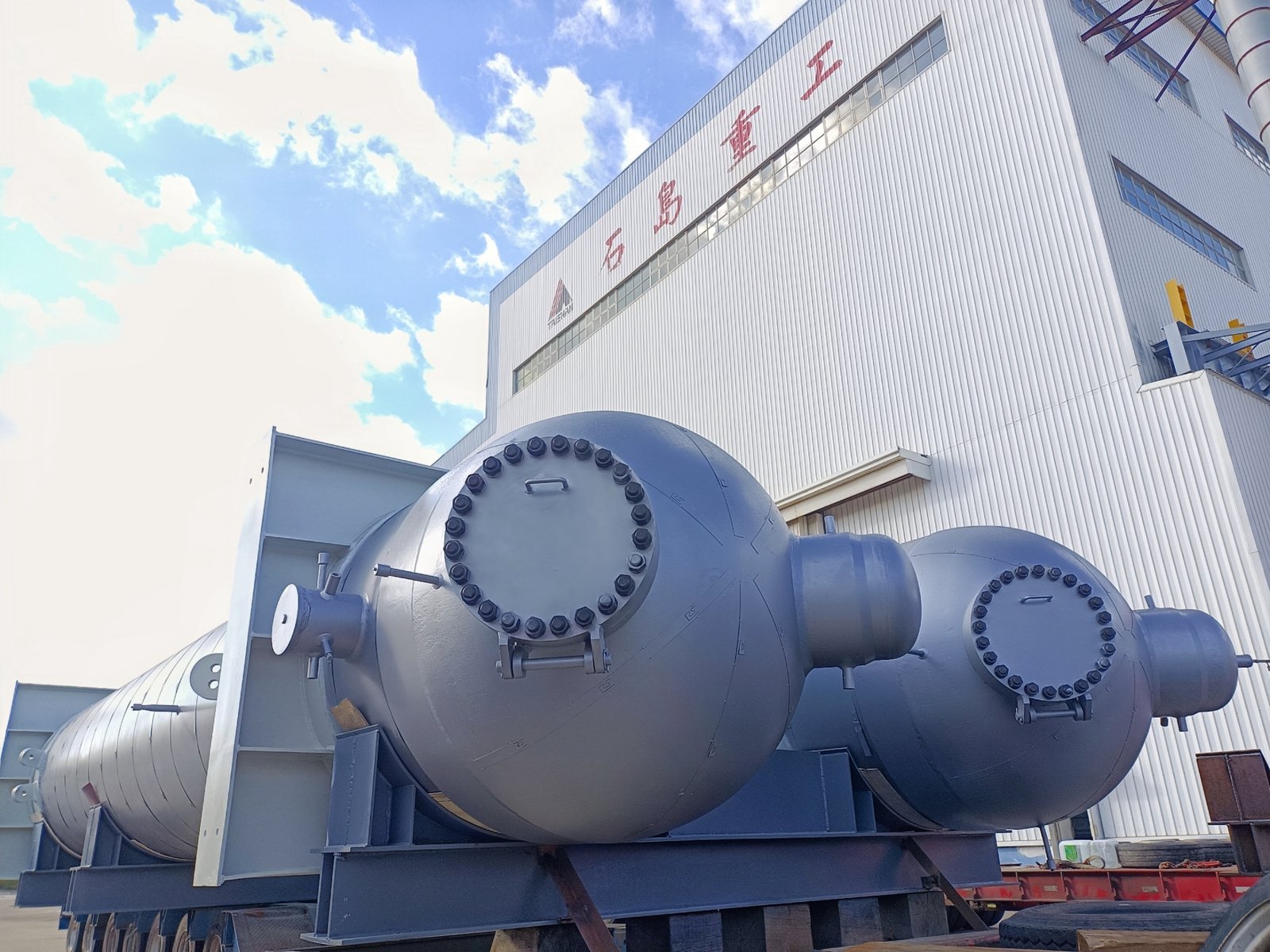
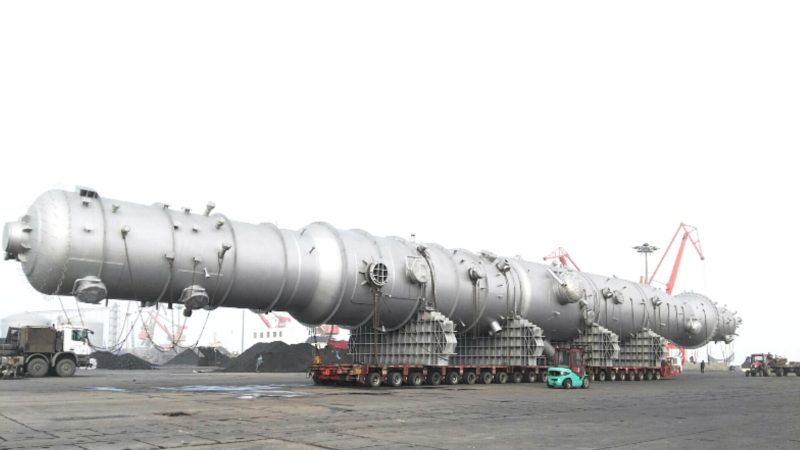
Representative heat exchanger photograph. An external tank-heating duty requires project-specific thermal and hydraulic assessment.
Review Materials and Mechanical Design at the Actual Temperature
Chemical compatibility should be assessed at the intended storage and heating conditions, not only at ambient temperature. Include cleaning agents, credible impurities, and conditions near heating surfaces where relevant.
For a lined or coated tank, confirm the proposed system’s compatibility with both the chemical and the thermal duty. A lining suitable for ambient storage may not be suitable for repeated heating or the local temperatures associated with a particular arrangement.
HSE’s plant design guidance addresses temperature effects and materials compatibility in equipment design. For procurement, the relevant design pressure, temperature, liquid density, and operating conditions should be established by qualified engineers.
Heating does not automatically make a tank a pressure vessel, but it also does not justify assuming that pressure and vacuum effects are irrelevant. The tank’s design basis and any separate heating circuit require explicit assessment. Where pressure-rated containment is needed, specify the appropriate custom pressure vessel requirements.
Include Controls, Inspection, and Maintenance in the Scope
The project should define how temperature is monitored and controlled, along with the protective functions identified by its hazard assessment. Low inventory, loss of circulation, utility failure, and excessive temperature are examples of conditions that may need consideration.
Assign responsibility for selecting, integrating, and verifying these functions. If the manufacturer supplies the fabricated tank only, the EPC contractor or package integrator must still address the complete operating arrangement.
Insulation and external protection should also allow for the project’s inspection and maintenance strategy. Specify whether insulation is installed at the factory or site and identify requirements for weather protection, access, and repair. These details can affect delivery and installation planning.
What Should Buyers Include in an RFQ?
A useful inquiry includes the chemical composition, safety information, viscosity data, phase-change behavior, required working volume, filling temperature, withdrawal schedule, and acceptable storage-temperature range. Provide site weather conditions, available utilities, heat-up expectations, and any shutdown-recovery requirement.
Also define the supply boundary: complete tank, heating arrangement, insulation, associated exchanger, controls, and site connections. Ask suppliers to identify assumptions and exclusions so that quotations can be compared on the same basis.
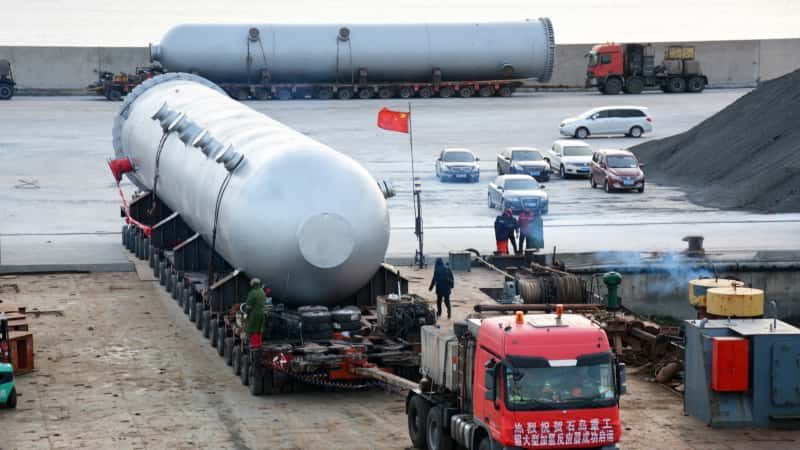
WSHI’s stated manufacturing capabilities include drawing coordination, material procurement, welding, nondestructive examination, pressure testing, coating, and heavy-equipment delivery. The quotation should confirm the services applicable to the ordered tank and distinguish fabrication responsibilities from complete heating-system integration.
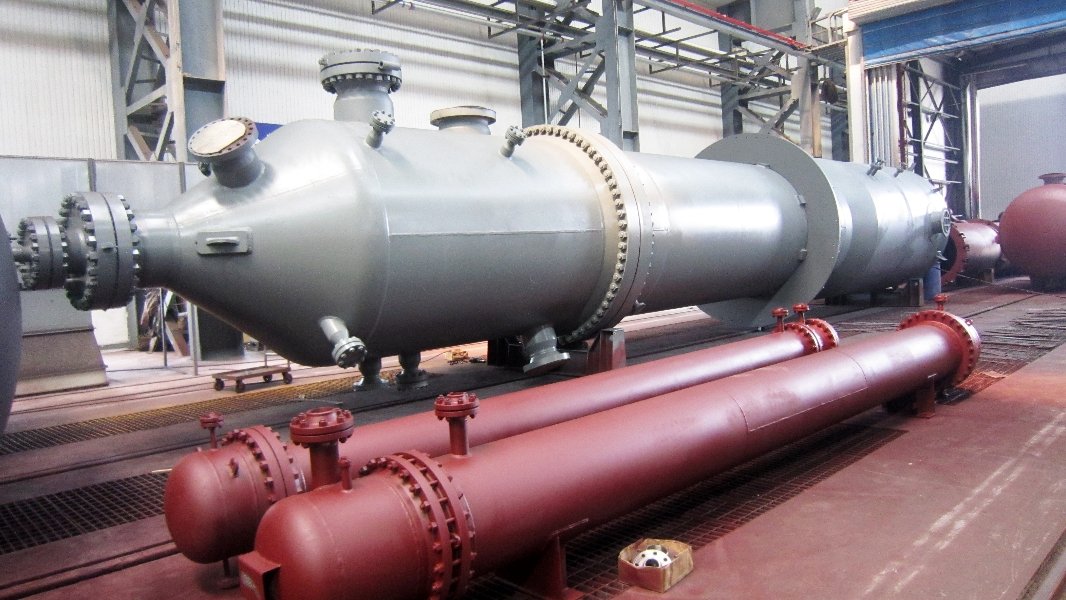
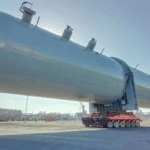
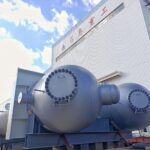
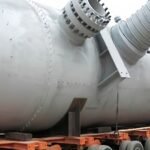
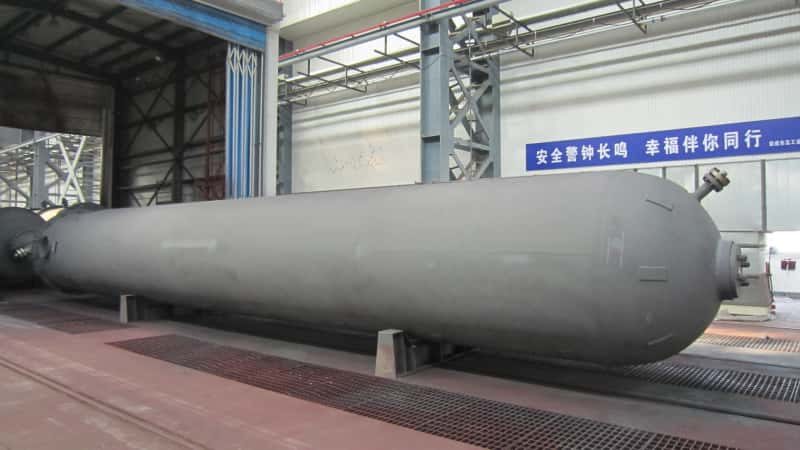
Representative manufacturing photograph. Inspection, testing, and heating-system supply must follow the agreed project specification.
Mechanical inspection does not establish heat-up performance. Where thermal acceptance is required, define the test conditions, inventory, utilities, measurement method, and responsible party. Shipping dimensions, preservation, lifting arrangements, and port or site delivery should be coordinated before manufacturing release.
FAQ
Is insulation enough to keep a chemical tank warm?
Sometimes, for a defined holding period and acceptable temperature decrease. Insulation reduces heat loss but cannot maintain temperature indefinitely without an energy source when the surroundings are colder.
Does a tank above 1,000 liters always need heating?
No. Tank size alone does not determine the need. Product properties, weather, storage duration, incoming temperature, and downstream requirements are more important.
Can maintenance heating warm a full tank of cold material?
Not necessarily within the required time. Temperature maintenance and cold-inventory heat-up are separate duties and should be specified separately.
Does choosing stainless steel resolve heated-storage compatibility?
No. The exact chemical environment, temperature range, impurities, and cleaning conditions must be reviewed. A generic material description is insufficient.
Discuss Your Large Chemical Storage Tank Requirements
Heated chemical storage tanks should be selected around a defined handling and storage objective, not simply an added heating allowance. For complete custom tanks above 1,000 liters, discuss your project requirements with our engineering team. Share the stored medium, capacity, temperature limits, filling and withdrawal schedule, available utilities, and delivery requirements for manufacturing assessment and scope coordination.