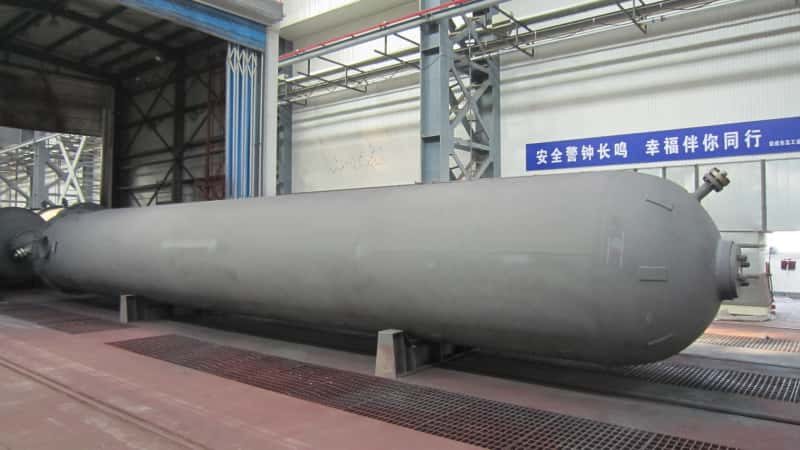

For EPC contractors, project owners, and industrial procurement teams, large industrial storage tanks are not simple containers. They affect plant layout, process continuity, material handling, safety review, corrosion control, installation planning, documentation, and long-term maintenance. In chemical, petrochemical, LPG, wastewater, fertilizer, coal chemical, and new energy projects, an incorrectly specified storage tank can cause layout changes, delayed fabrication, site installation conflicts, or unnecessary operating risk.
This guide focuses on large industrial storage tanks above 1,000 liters for project-based procurement. It is written for buyers who need complete fabricated storage equipment, not small tanks, accessories, or individual components. The goal is to help engineering and procurement teams prepare better RFQs, review manufacturer capability, and reduce avoidable risks before fabrication begins.
Large industrial storage tanks can be selected by volume alone.False
Volume is only one input. EPC buyers should also confirm stored medium, pressure, temperature, corrosion risk, material, coating, nozzle layout, inspection scope, and delivery constraints.
Storage tanks above 1,000 liters should be reviewed as complete fabricated equipment for EPC procurement.True
Complete-scope review helps align tank body, supports, nozzles, manways, coating, inspection records, documentation, packing, and delivery responsibility.
What Are Large Industrial Storage Tanks?
Large industrial storage tanks are engineered vessels used to store liquid, gas, liquefied gas, process media, wastewater, feedstock, intermediate products, or finished products in industrial facilities. Depending on the operating condition, the tank may be atmospheric, low-pressure, or pressure-containing.
For EPC procurement, it is important to define the tank category clearly at the beginning of the project. A general phrase such as “storage tank” is often not enough. Buyers should clarify whether the required equipment is an atmospheric welded tank, a low-pressure tank, a pressurized storage vessel, a horizontal tank, a vertical tank, a shop-fabricated tank, or a site-assembled tank.
In pressure-containing applications, storage tanks may need to be reviewed together with custom pressure vessels because design pressure, material selection, welding, inspection, and testing requirements can be more demanding than ordinary liquid storage.
Main Applications of Large Industrial Storage Tanks
Petrochemical and Chemical Plants
In petrochemical and chemical plants, large storage tanks are used for feedstock, solvents, intermediates, additives, process liquids, condensate, waste liquid, and utility media. These tanks must be selected according to chemical compatibility, vapor pressure, flammability, toxicity, operating temperature, and corrosion behavior.
For projects involving reactors, separators, columns, exchangers, and storage systems, EPC buyers often review tanks as part of a wider equipment procurement package. In these cases, working with a manufacturer familiar with petrochemical pressure vessels can help improve coordination between drawings, fabrication feasibility, and delivery planning.
LPG and Liquefied Gas Projects
LPG storage tanks require careful review of propane-butane composition, design pressure, ambient temperature, filling ratio, safety distance, loading interface, and transportation limits. These tanks are pressure equipment and should not be treated as ordinary atmospheric storage tanks.
For propane and butane projects, buyers may need LPG storage tanks for terminals, filling stations, industrial fuel systems, petrochemical units, or energy supply projects. The manufacturer should review drawings, support design, weld requirements, inspection scope, and shipping conditions before production.
Industrial Wastewater and Environmental Engineering
Large tanks are also used in wastewater treatment projects for equalization, temporary holding, neutralization, sludge storage, brine storage, and pretreatment buffering. In these applications, corrosion protection is often one of the most important selection factors.
Wastewater may contain acids, alkalis, salts, chlorides, solvents, or mixed contaminants. Buyers should not select tanks by volume alone. Material, lining, coating, corrosion allowance, and maintenance access should be reviewed according to the actual medium and operating environment.
Fertilizer, Coal Chemical, and New Energy Projects
Fertilizer, coal chemical, methanol, ammonia, hydrogen-related, biofuel, and other new energy projects may require large storage tanks for raw materials, process fluids, intermediate products, and utilities. These projects often involve multiple types of process equipment, including storage tanks, pressure vessels, heat exchangers, separators, and process columns.
A large-scale pressure vessel manufacturer can support engineering communication when tanks must be coordinated with other equipment in the same process area.
Atmospheric Tanks, Low-Pressure Tanks, and Pressure Storage Vessels
Before requesting a quotation, buyers should understand the difference between tank categories. The wrong classification can lead to incorrect standards, insufficient inspection, or unnecessary cost.
| Tank Category | Typical Use | Buyer Review Focus |
|---|---|---|
| Atmospheric storage tanks | Water, some chemicals, wastewater, fuel oil, utility liquids, or low-vapor-pressure media | Capacity, material, foundation, venting, corrosion protection, leak testing, and installation |
| Low-pressure storage tanks | Media with vapor pressure, blanketing requirements, or controlled venting needs | Design pressure, vacuum condition, venting philosophy, nozzles, coating, and safety interfaces |
| Pressurized storage vessels | LPG, liquefied gas, or other media requiring pressure containment | Design code, pressure rating, temperature, welding, NDT, pressure testing, and documentation |
Key Selection Factors for EPC Buyers
Stored Medium
The stored medium is the starting point for tank design. Buyers should provide the chemical name, concentration, phase, density, viscosity, vapor pressure, flammability, toxicity, and corrosion characteristics where available. For mixed media, the project team should identify the most severe expected operating case.
If the medium is hazardous, flammable, toxic, or corrosive, the tank specification should be reviewed by qualified engineering personnel and aligned with applicable safety and regulatory requirements.
Capacity and Working Volume
Tank capacity should not be selected only by nominal volume. EPC buyers should confirm working volume, total volume, minimum liquid level, maximum liquid level, surge capacity, residence time, and future expansion needs.
For large tanks above 1,000 liters, the capacity decision also affects transportation, foundation design, lifting arrangement, and site layout. Early communication between process, civil, piping, and equipment teams can prevent redesign later.
Design Pressure and Temperature
Pressure and temperature determine whether the tank is atmospheric, low-pressure, or pressure-containing. Buyers should provide operating pressure, design pressure, operating temperature, design temperature, and any possible vacuum condition.
For pressurized storage tanks, pressure testing and inspection requirements should be confirmed early. For heated, insulated, or outdoor tanks, temperature variation and environmental exposure may also influence material selection and coating requirements.
Material Selection
Common materials may include carbon steel, low-alloy steel, stainless steel, duplex stainless steel, or clad/lined structures, depending on medium and operating condition. The final material should be selected according to corrosion behavior, temperature, pressure, weldability, availability, inspection requirements, and project budget.
Carbon steel may be suitable for many industrial storage applications when corrosion is controlled. Stainless steel may be required for certain corrosive or clean-service applications. Lining or coating may be considered when the tank body material and medium need additional protection.
Corrosion Allowance, Lining, and Coating
Corrosion protection is critical for chemical, wastewater, coastal, and outdoor storage applications. Depending on the project, corrosion control may include corrosion allowance, internal lining, external coating, insulation, surface preparation, paint system selection, or special anti-corrosion measures.
Buyers should provide coating specifications if available. If the project has not finalized the coating system, the manufacturer can discuss fabrication and surface preparation feasibility, but the final anti-corrosion decision should be confirmed by the project engineering team.
Orientation and Installation Method
Large storage tanks may be horizontal or vertical. Horizontal tanks are often used for pressurized storage, LPG, and certain shop-fabricated applications. Vertical tanks are common for large liquid storage where site space, foundation, and capacity requirements support that layout.
Installation method should be reviewed before fabrication. Buyers should confirm whether the tank will be installed indoors or outdoors, on saddles or support structures, on a concrete foundation or steel frame, and whether site lifting conditions impose special restrictions.
Transportation and Delivery Boundary
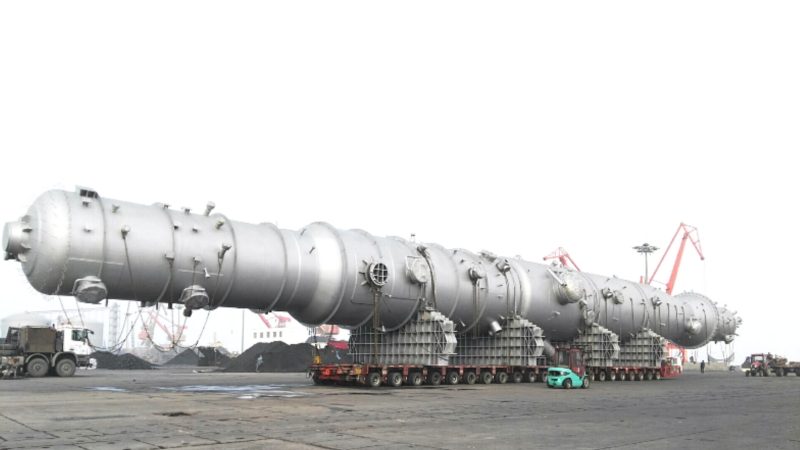
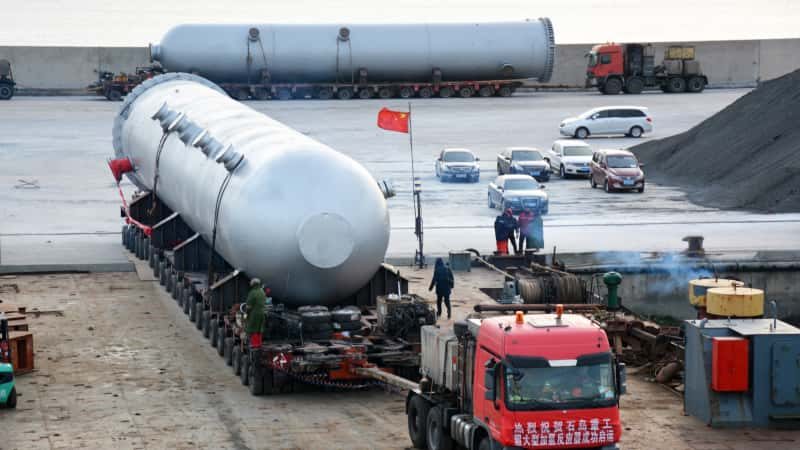
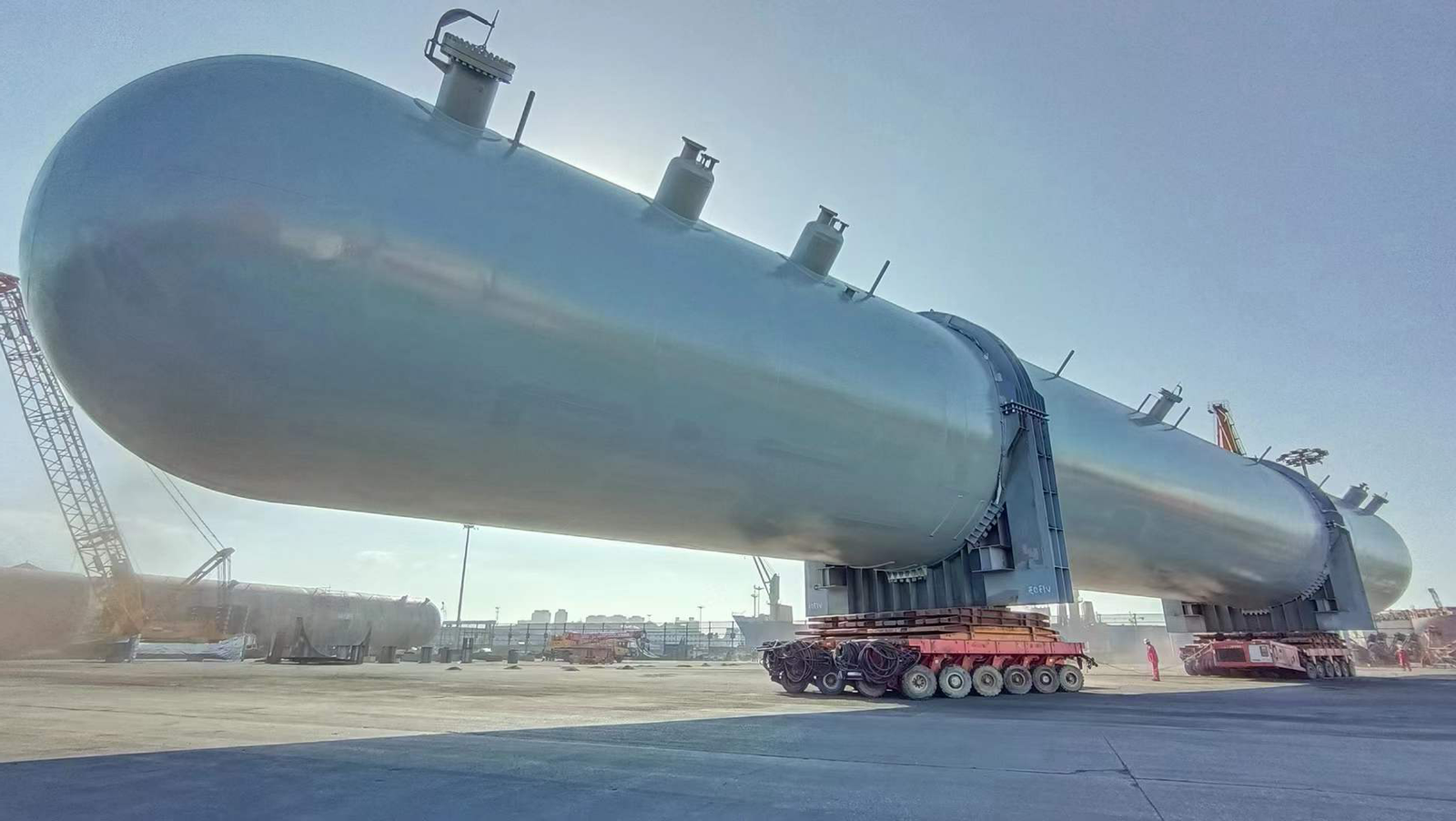
For large industrial tanks, transportation may become a major constraint. Overall length, diameter, lifting weight, shipping saddle design, road permits, port handling, and site access should be reviewed before production.
If the tank is for export, buyers should also confirm packaging, lifting points, shipping marks, documentation, port delivery terms, and unloading responsibility. These details can affect both fabrication schedule and project execution.
Storage Tank RFQ Checklist
| RFQ Item | What to Provide | Why It Matters |
|---|---|---|
| Process basis | Stored medium, concentration, density, viscosity, vapor pressure, operating cases | Supports material, pressure, venting, corrosion, and safety review |
| Mechanical basis | Capacity, orientation, dimensions, design pressure, temperature, vacuum, support type | Controls shell design, fabrication method, transport, and installation fit |
| Corrosion control | Material grade, corrosion allowance, lining, coating, insulation, surface preparation | Protects service life and reduces maintenance risk |
| Inspection and documentation | NDT, hydrotest or leak test, coating reports, MTCs, as-built drawings, data book | Supports acceptance, registration, commissioning, and future maintenance |
| Delivery and installation | Destination, delivery terms, lifting limits, route limits, site access, packing requirements | Prevents transport damage and site delays |
Manufacturing Capability and Quality Control
Drawing Review and Engineering Communication
Custom storage tank manufacturing begins with drawing and datasheet review. The manufacturer should check dimensions, material, weld details, supports, lifting points, nozzles, manways, inspection openings, and transportation feasibility as part of the complete tank scope.
These details should not lead the buyer into separate small-part procurement. For EPC projects, they are best reviewed as part of one complete fabricated tank or complete equipment package.
Plate Cutting, Rolling, and Assembly
Large tank fabrication may include plate cutting, bevel preparation, rolling, forming, shell assembly, head forming, fit-up, and dimensional inspection. For large-diameter tanks, fabrication accuracy is important because small deviations can affect welding, installation, and site alignment.
Welding and Weld Quality Control
Welding is one of the most important quality control points for large industrial storage tanks. The manufacturer should manage welding procedure requirements, welder qualification, joint preparation, heat input, deformation control, and weld inspection according to the project specification.
For pressure storage vessels, weld quality directly affects pressure integrity. Inspection and testing plans should be agreed before fabrication.
Nondestructive Examination and Testing
Depending on the tank type, code, and project requirements, inspection may include visual inspection, radiographic testing, ultrasonic testing, magnetic particle testing, penetrant testing, vacuum box testing, leak testing, hydrostatic testing, or pneumatic testing.
The exact inspection plan should be confirmed according to the applicable design code and project specification. Buyers should not assume that all tanks follow the same testing procedure.
Surface Treatment and Painting
Surface treatment and coating should be planned according to the stored medium, external environment, and project maintenance philosophy. Blasting grade, primer, intermediate coat, topcoat, dry film thickness, and curing conditions should be clearly specified.
For export projects, coating durability during sea transport should also be considered.
What EPC Buyers Should Include in an RFQ
A clear RFQ helps the manufacturer evaluate cost, schedule, and feasibility more accurately. Buyers should prepare:
- General arrangement drawing
- Tank datasheet
- Stored medium information
- Capacity and working volume
- Operating pressure and design pressure
- Operating temperature and design temperature
- Material requirements
- Corrosion allowance
- Internal lining or coating specification
- External painting specification
- Inspection and testing requirements
- Documentation requirements
- Delivery terms and destination
- Site installation limitations
- Applicable standards and project specifications
If these documents are not complete, buyers can still start preliminary communication, but technical assumptions should be clearly marked and reviewed before order confirmation.
Buyers may also download the pressure vessel catalog to review related product categories before preparing technical inquiries.
Common Procurement Mistakes
Treating Large Tanks as Standard Commodities
Large industrial storage tanks are often customized according to medium, pressure, capacity, layout, and delivery conditions. Treating them as standard products can create mismatch between the purchased equipment and the actual site requirement.
Ignoring Code Classification
A tank that looks simple may still require pressure vessel design if the operating pressure or medium requires it. Buyers should confirm the classification before finalizing the RFQ.
Underestimating Corrosion Risk
Corrosion protection should not be decided only after fabrication. For chemical and wastewater storage, material and coating decisions should be part of the early technical review.
Forgetting Transportation Limits
Large tanks must be manufacturable and transportable. Diameter, length, height, weight, and lifting method should be checked before drawings are released for fabrication.
Sending Incomplete Technical Data
Incomplete RFQ information often leads to inaccurate quotations or repeated clarification. A better datasheet can reduce communication cycles and help the manufacturer evaluate fabrication feasibility more efficiently.
Why Customized Manufacturing Matters
Customized manufacturing matters because large industrial storage tanks must match the real process, site, medium, and project delivery plan. A tank for LPG, corrosive wastewater, petrochemical feedstock, solvent storage, or utility buffering may look similar from the outside, but engineering requirements can be completely different.
For project procurement, buyers should evaluate not only price but also engineering communication, fabrication capability, welding control, inspection planning, coating execution, documentation, and delivery experience. A capable manufacturer can help identify fabrication or transport issues before they become site problems.
WSHI manufactures large custom pressure vessels, storage tanks, and process equipment for industrial projects. For buyers comparing industrial storage tanks, pressure vessels, and related process equipment, early technical communication can make the procurement process more reliable.
FAQ
What information is needed to request a quotation for large industrial storage tanks?
Buyers should provide drawings, datasheets, capacity, stored medium, operating pressure, design pressure, operating temperature, design temperature, material, corrosion allowance, coating requirements, inspection requirements, and delivery terms.
Are industrial storage tanks always pressure vessels?
No. Some storage tanks are atmospheric or low-pressure tanks, while others are pressure-containing vessels. The classification depends on pressure, medium, design code, and project requirements.
What size range does this guide apply to?
This guide focuses on large industrial storage tanks above 1,000 liters, especially tanks used in EPC, chemical, petrochemical, LPG, wastewater, and heavy industrial projects.
Why is corrosion protection important for chemical storage tanks?
Chemical media may contain acids, alkalis, salts, solvents, chlorides, or mixed contaminants. Incorrect corrosion protection can shorten service life and increase maintenance risk.
What should EPC buyers confirm before fabrication?
Buyers should confirm final drawings, material, code requirements, inspection plan, coating specification, transport dimensions, lifting method, delivery boundary, and documentation requirements.
Conclusion
Large industrial storage tanks are critical equipment in chemical, petrochemical, LPG, wastewater, fertilizer, coal chemical, and new energy projects. EPC buyers should evaluate stored medium, tank capacity, pressure condition, temperature, material, corrosion protection, inspection requirements, fabrication feasibility, and delivery constraints before placing an order.
If you are sourcing large industrial storage tanks above 1,000 liters for an EPC or industrial project, you can share drawings, datasheets, operating conditions, and delivery requirements with our engineering team. We can assist with manufacturing feasibility review for large storage tanks, pressure vessels, and related custom process equipment.
CTA: Discuss your project requirements or download the pressure vessel catalog.