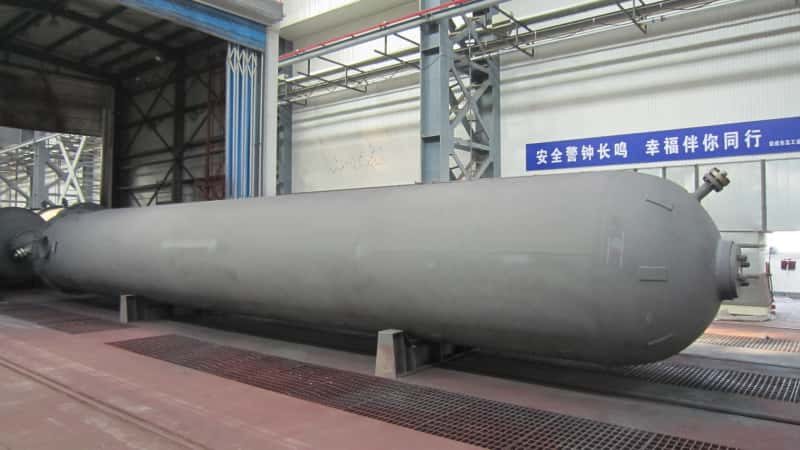

How Do EPC Buyers Specify Large Process Drums for Refinery and Petrochemical Units?
Large process drums are used throughout refinery and petrochemical units to separate phases, provide surge volume, collect condensate, stabilize flow and protect downstream equipment. For EPC buyers, the challenge is not simply ordering a “drum” by size. A reliable RFQ should define the process duty, medium composition, pressure, temperature, residence time, nozzle orientation, inspection scope, coating requirements and delivery conditions before fabrication begins.
In refinery and petrochemical projects, process drums should be specified as complete pressure vessels or process vessels, not as disconnected shells, nozzles or small accessories. The vessel body, nozzles, supports, instruments, inspection records, coating and delivery documents all need to fit the same project basis.

A large process drum can be quoted accurately from diameter, length and material alone.False
A reliable quotation also needs process duty, flow conditions, pressure, temperature, medium composition, corrosion data, nozzle orientation, inspection, testing, coating, documentation and delivery requirements.
Nozzle orientation and connected equipment should be reviewed before process drum fabrication.True
Process drums often connect with heat exchangers, columns, pumps or compressors, so late nozzle and layout changes can create rework, inspection delays and site installation conflicts.
What Are Large Process Drums?
A process drum is a vessel used to support a specific process function inside a plant. Depending on the unit, it may be called a flash drum, receiver drum, reflux drum, surge drum, knock-out drum, separator drum, condensate drum or buffer drum.
In refinery and petrochemical applications, these vessels may handle hydrocarbons, process gas, vapor-liquid mixtures, condensate, sour water, solvents, chemicals or intermediate products. Many are fabricated as custom pressure vessels because each project has different design conditions and connection requirements.
Common Applications in Refinery and Petrochemical Units
Flash Drums
Flash drums are used when a pressure or temperature change causes part of a liquid stream to vaporize. They help separate vapor from liquid before downstream processing. EPC buyers should define feed composition, flash conditions, vapor load, liquid load, pressure, temperature, residence time and corrosion risk.
Receiver Drums
Receiver drums collect and temporarily hold process liquids from condensers, columns, separators or other equipment. They may be used around distillation, condensation, solvent recovery or product handling sections. For petrochemical pressure vessels, receiver drum design should be coordinated with the connected process equipment and plant layout.
Surge Drums
Surge drums help manage short-term flow fluctuations between process steps. They can protect pumps, heat exchangers, columns or downstream units from unstable feed conditions. Buyers should define normal flow, maximum flow, liquid hold-up requirement, control philosophy and operating cases.
Knock-Out and Separator Drums
Knock-out drums and separator drums remove liquid from gas streams or separate mixed phases. These are common in gas processing, refinery off-gas handling, vapor recovery and compressor protection. For oil and gas applications, pressure vessels for oil and gas should be specified with clear gas flow, liquid load, pressure drop, drainage and downstream protection requirements.
Process Drum Types and RFQ Focus
| Drum type | Typical function | Key RFQ data |
|---|---|---|
| Flash drum | Separates vapor and liquid after pressure or temperature change | Flash conditions, vapor load, liquid load, residence time and corrosion risk |
| Receiver drum | Collects condensate or process liquid from connected equipment | Connected condenser or column, level control, nozzles and hold-up volume |
| Surge drum | Buffers flow variation between process steps | Normal and maximum flow, control philosophy and liquid inventory |
| Knock-out drum | Removes liquid carryover from gas streams | Gas flow, liquid load, pressure drop, drainage and downstream protection |
| Separator drum | Separates mixed vapor-liquid or multiphase streams | Phase composition, density difference, flow cases and internals interface if specified |
Key Data EPC Buyers Should Confirm
1. Process Function
The RFQ should clearly state what the drum does. A flash drum, receiver drum, surge drum and separator drum may look similar externally, but their design basis can be very different. The equipment tag, process description, PFD, P&ID and datasheet should be included whenever possible.
2. Flow Rate and Residence Time
Flow rate affects vessel diameter, length, liquid level, separation space and nozzle arrangement. For drums involving vapor-liquid separation or surge control, buyers should provide normal, minimum, maximum, start-up, shutdown and upset conditions where available.
Residence time should be defined by the process engineering team. The manufacturer can review fabrication feasibility, but it should not be expected to invent process sizing assumptions.
3. Pressure and Temperature
Large process drums may operate under internal pressure, external pressure, vacuum or changing pressure conditions. EPC buyers should provide operating pressure, design pressure, operating temperature, design temperature and any vacuum or cyclic conditions.
Recognized pressure vessel codes such as ASME BPVC Section VIII, Division 1 may apply depending on project location and contractual requirements. The final code, edition, certification path and inspection obligations should be confirmed in the project specification.
4. Medium Composition and Corrosion Risk
Material selection depends heavily on the medium. Hydrocarbons, hydrogen-rich streams, sour gas, acid gas, water, chlorides, solvents, oxygen, sulfur compounds or corrosive chemicals can affect corrosion allowance and fabrication requirements.
Depending on service conditions, the specification may require carbon steel, stainless steel, cladding, internal coating, post-weld heat treatment, impact testing, hardness control or additional NDE. These requirements should come from the project engineering documents.

Nozzle Orientation and Layout Requirements
Nozzle orientation is one of the most common sources of late-stage rework. For large process drums, nozzles, manways, drains, vents, instrument connections, supports and lifting points should be coordinated as part of the complete vessel design.
EPC buyers should confirm:
- Nozzle schedule and flange standard
- Orientation drawing
- Drain and vent locations
- Level instrument connections
- Manway access
- Support type and foundation interface
- Lifting and transportation points
- Maintenance clearance
- Connection with heat exchangers, columns, pumps or compressors
These items should not be treated as standalone small purchases. They belong inside the complete pressure vessel procurement scope.
Manufacturing and Quality Control Considerations
A capable large-scale pressure vessel manufacturer should review manufacturability before production. Large process drums may require plate rolling, controlled welding, heat treatment planning, dimensional control, coating coordination and transport review.
Quality control may include material traceability, welding procedure control, visual inspection, radiographic testing, ultrasonic testing, magnetic particle testing, penetrant testing, pressure testing, leak testing, dimensional inspection and coating inspection, depending on the project specification.
For refinery and petrochemical service, documentation is also critical. Buyers may require material certificates, welding records, NDE reports, pressure test records, coating reports, inspection release notes, packing lists and export documents. For facilities handling highly hazardous chemicals, OSHA Process Safety Management and the EPA Risk Management Program provide useful safety and accident-prevention background, although applicability depends on location, substance, quantity and site conditions.
Integration With Heat Exchangers and Columns
Process drums often work directly with heat exchangers, process towers and columns. A receiver drum may collect condensate from a condenser. A flash drum may connect with a heater or downstream separator. A surge drum may stabilize flow before a pump or exchanger.
When drums are connected with thermal duties, industrial heat exchangers should be reviewed together with the vessel interface. When drums are used around distillation or absorption systems, process towers and columns may also need coordinated nozzle elevations, platform access and delivery planning.
Delivery and Export Requirements
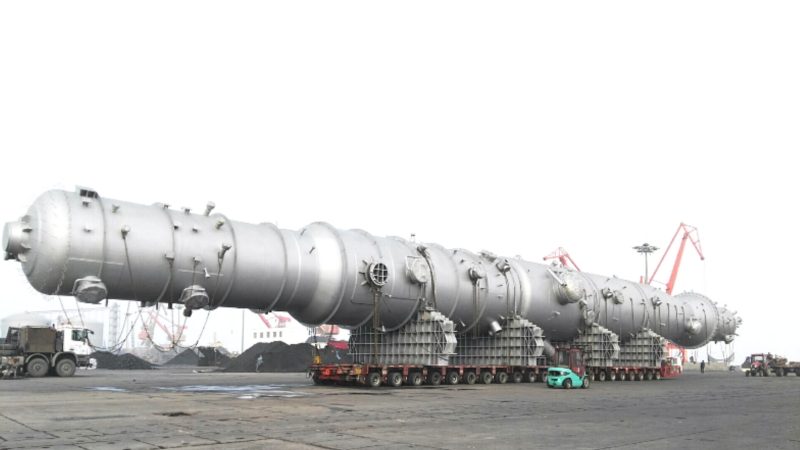
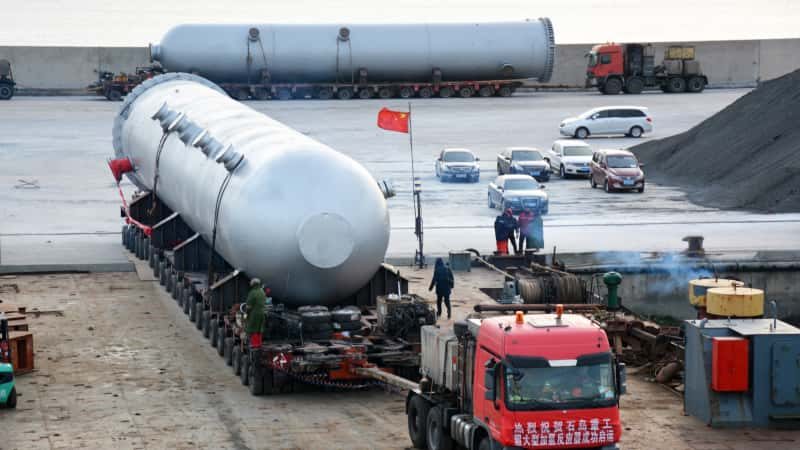
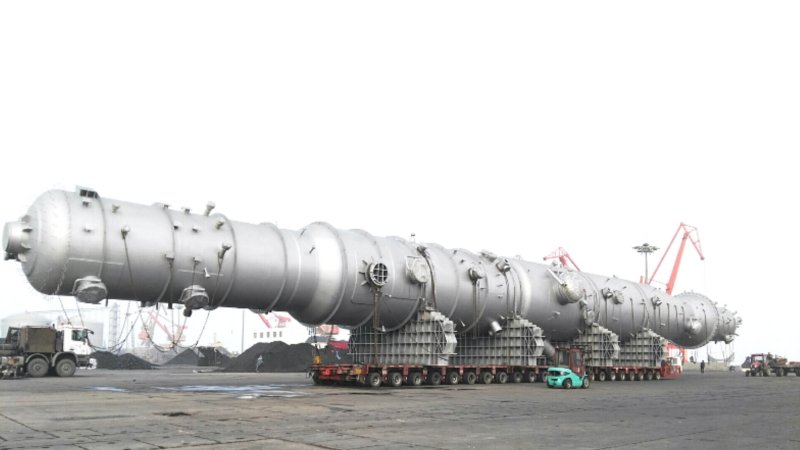
Large process drums can create logistics challenges. Their size, weight, coating, support design, center of gravity and lifting method should be reviewed before fabrication release. For export projects, buyers should define packing method, preservation period, delivery port, documentation format and inspection release procedure.
If a process drum is too large for standard transport, the manufacturer and EPC team may need to coordinate route planning, lifting arrangement or shipment in suitable sections where permitted by design and project requirements.
RFQ Checklist for Large Process Drums
Before requesting quotation, EPC buyers should prepare:
- Equipment name and tag number
- Process function and connected equipment
- PFD, P&ID, drawing and datasheet
- Flow rate and operating cases
- Vapor and liquid load
- Required residence time or hold-up volume
- Operating and design pressure
- Operating and design temperature
- Medium composition and corrosion data
- Material grade and corrosion allowance
- Applicable code and project standards
- Nozzle orientation and connection schedule
- Support, lifting and installation requirements
- NDE, testing and third-party inspection scope
- Coating and preservation requirements
- Documentation requirements
- Packing, transport and delivery terms
A clear RFQ helps the manufacturer evaluate the complete vessel package rather than quoting based on incomplete assumptions.
Conclusion
Large process drums are important pressure vessels in refinery and petrochemical units. Whether the project requires flash drums, receiver drums, surge drums, knock-out drums or separator drums, EPC buyers should specify the complete equipment boundary: process duty, flow conditions, pressure, temperature, materials, corrosion allowance, nozzle orientation, inspection, coating, documentation and delivery.
If you are preparing an inquiry for refinery process drums, petrochemical pressure vessels, separators, heat exchangers or related pressure vessel manufacturing, you can share drawings, datasheets, operating conditions and delivery requirements with WSHI. Our team can support early communication for fabrication feasibility, quality control planning and project delivery review. You can contact our engineering team to discuss your project scope.
FAQ
What is a process drum in a refinery?
A process drum is a vessel used for separation, surge control, condensate collection, flashing, buffering or flow stabilization in refinery and petrochemical units.
What types of process drums are commonly used?
Common types include flash drums, receiver drums, reflux drums, surge drums, knock-out drums, separator drums and condensate drums. The final design depends on the process duty.
What information is needed to quote a large process drum?
Buyers should provide drawings, datasheets, flow rates, pressure, temperature, medium composition, corrosion allowance, material requirements, inspection scope, coating requirements and delivery terms.
Are process drums always pressure vessels?
Not always, but many refinery and petrochemical process drums are pressure-rated. The classification depends on design pressure, service condition, applicable standards and project requirements.
Why is nozzle orientation important for process drums?
Nozzle orientation affects piping layout, drainage, instrument access, maintenance, support design, inspection, coating and site installation. It should be confirmed before fabrication release.