
When Is a Liquid-Liquid Decanter Suitable for Chemical Process Separation?
A liquid-liquid decanter is worth evaluating when a process mixture forms two liquid phases that can separate by gravity within practical operating conditions. Its suitability depends on phase behavior, density difference, viscosity, droplet behavior and the required quality of both outlet streams.
For EPC buyers, selecting a complete separation vessel requires more than specifying flow and holding volume. The process basis should demonstrate that gravity separation can achieve the intended result, and the equipment inquiry should clearly assign responsibility for sizing, fabrication and performance.
Any solvent-water mixture can be separated in a larger gravity decanter.False
The mixture must form distinct phases, and stable emulsions or dissolved contaminants may require different process measures. Vessel volume alone does not guarantee separation.
Mechanical vessel acceptance proves the required liquid-liquid separation performance.False
Fabrication records and pressure testing verify construction requirements. Separation performance requires an agreed process basis, feed envelope and outlet-quality acceptance method.
What Is a Liquid-Liquid Decanter?
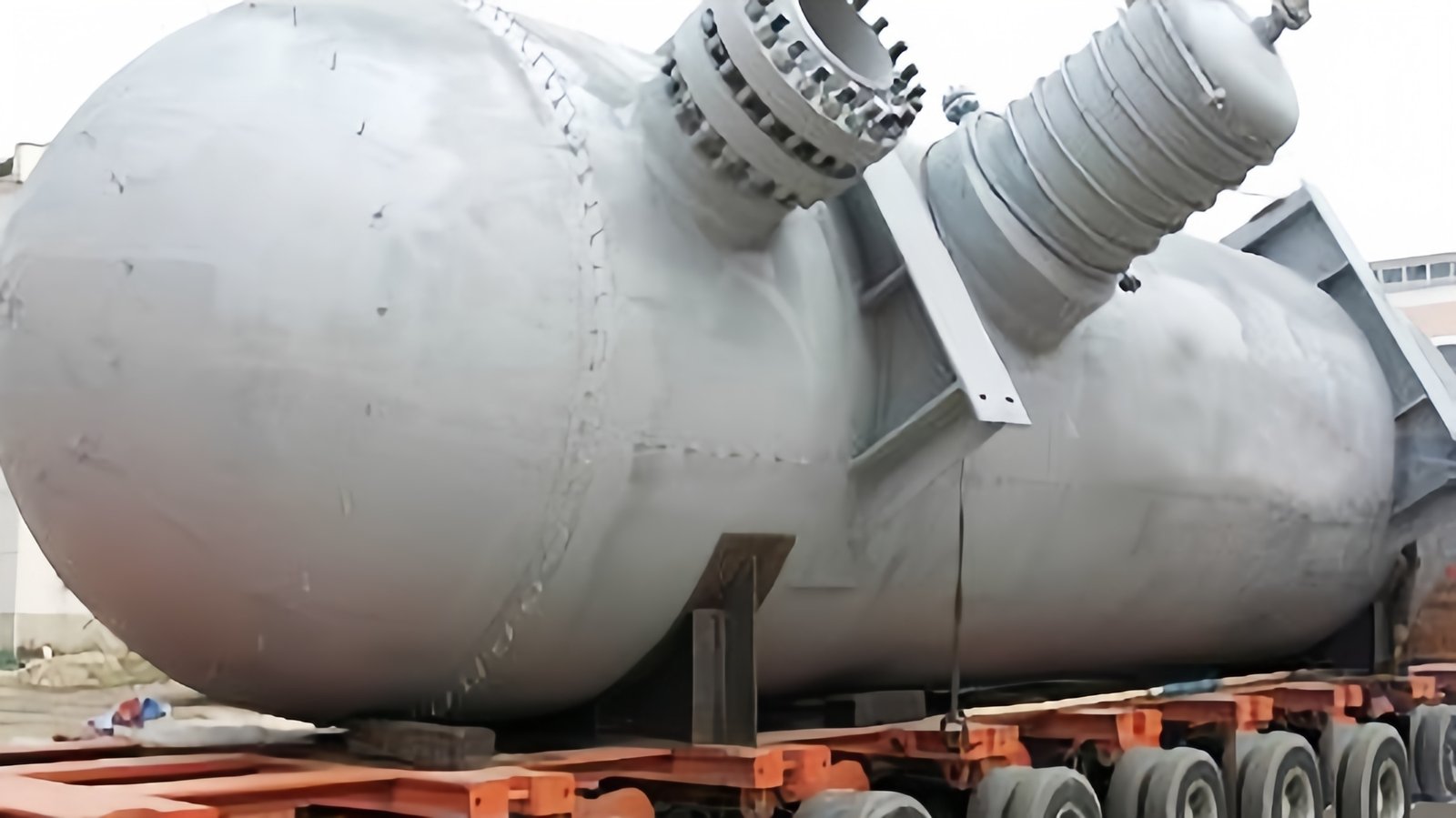
A liquid-liquid decanter, also called a gravity settler, provides a controlled environment for two liquid phases to separate. A dispersed phase moves through the surrounding liquid under the influence of their density difference, while droplets may merge and form a bulk liquid layer.
The equipment discussed here is a stationary vessel. It is distinct from a decanter centrifuge, which uses rotating machinery to generate centrifugal separation forces.
A gravity decanter can operate continuously or in a batch arrangement. Its configuration should follow the process duty, operating pressure, liquid properties and required handling of both separated phases.
A RWTH Aachen research record on pilot-scale liquid-liquid separation documents dynamic modeling and an experimental separator setup relevant to extraction and related chemical processing.
Where Can Gravity Decantation Be Useful?
Potential applications include separating aqueous and organic phases after extraction, separating suitable condensed liquid mixtures, and recovering a distinct liquid phase from a chemical process stream.
Each application requires confirmation that two phases actually exist at the intended composition and temperature. The description “solvent and water” does not establish that the mixture will separate.
The equipment may also form one stage within a larger treatment train. For example, bulk phase separation may reduce the load on downstream treatment without producing a final reusable or dischargeable stream.
Buyers evaluating custom pressure vessels should identify whether the required service is pressurized, atmospheric or subject to vacuum. The word “decanter” alone does not establish its mechanical design requirements.
First Confirm That Two Liquid Phases Exist
Immiscible and Partially Miscible Systems
Gravity separation requires distinct liquid phases. Fully miscible liquids cannot be separated into bulk layers simply by increasing vessel volume or settling time.
Partially miscible systems can form two phases under some conditions and one phase under others. Changes in temperature, composition or the presence of additional substances may therefore affect the proposed duty.
The process team should establish the expected phase behavior across the feed range. Where necessary, use representative testing or an appropriate phase-equilibrium assessment.
Dissolved Material Remains a Separate Issue
Removing dispersed droplets does not necessarily remove material dissolved in the continuous liquid phase. A visibly clear outlet can still contain dissolved solvent or other contaminants.
The outlet specification should distinguish entrained liquid from dissolved substances. Otherwise, the supplier may be asked to achieve a purity target that gravity separation cannot deliver.
This distinction is particularly important when the separated aqueous phase will be reused or sent to wastewater treatment.
What Makes a Mixture Easier or Harder to Separate?
Density Difference and Viscosity
Density difference provides the driving force for gravity separation, while liquid viscosity influences resistance to droplet movement. Their values should be supplied at the operating temperature and relevant compositions.
A nominal density difference alone is insufficient. The design also needs to account for which phase is continuous and how that may change during operation.
Research on droplet sedimentation kinetics in liquid-liquid extraction examines how viscosity and other physical properties influence separation behavior. For procurement, the practical implication is to use properties representative of the actual mixture.
Droplet Behavior and Upstream Mixing
The feed’s mixing history can affect the dispersion entering the vessel. Pumping, pressure changes and other upstream operations may alter the droplet population.
A sample collected before an important mixing step may not represent the decanter inlet. Buyers should identify the sampling location and explain the equipment between that location and the proposed separator.
Separation depends on both droplet movement and the formation of bulk phases. A simple holding-time assumption may overlook the behavior that actually limits performance.
Stable Emulsions and Persistent Intermediate Layers
A stable or slowly separating emulsion may require additional process measures. Increasing vessel volume should not be assumed to solve the problem.
Research on phase-separation kinetics and droplet-swarm coalescence distinguishes sedimentation behavior from coalescence. A concentrated intermediate layer can develop without promptly becoming two clean bulk phases.
The engineering assessment should identify whether gravity separation alone is appropriate, whether pretreatment is needed, or whether another separation method deserves evaluation.
What Testing Should Buyers Request?
A settling test can provide useful initial evidence, but the test conditions need to resemble the intended process. Temperature, composition, phase ratio and mixing procedure should be documented.
Record more than the time at which two visible layers first appear. Relevant observations may include the persistence of an intermediate layer, the quality of both separated phases and changes over time.
A small static test does not automatically establish continuous vessel capacity. Scale-up must account for continuous feed, flow distribution, operating levels and the relevant variability.
Where the feed is difficult or poorly characterized, pilot testing may be justified. The purpose should be to resolve a specific uncertainty that affects equipment selection or the proposed performance commitment.
Specify Both Outlet Streams
The decanter inquiry should define the acceptable quality of each liquid outlet. A project may prioritize organic recovery, aqueous-phase quality, or both, and those objectives need to be stated.
Specify the measurement method and units used for carryover or contamination limits. Identify whether the limit applies to dispersed material, dissolved material or a combined analytical result.
The proposed acceptance conditions should also define feed composition, temperature and flow. A guarantee based on a narrow test condition should not be treated as covering unlimited feed variation.
Where downstream polishing remains necessary, assign its scope separately rather than describing the decanter as a complete wastewater treatment system.
How Should Buyers Define Acceptance for Both Liquid Outlets?
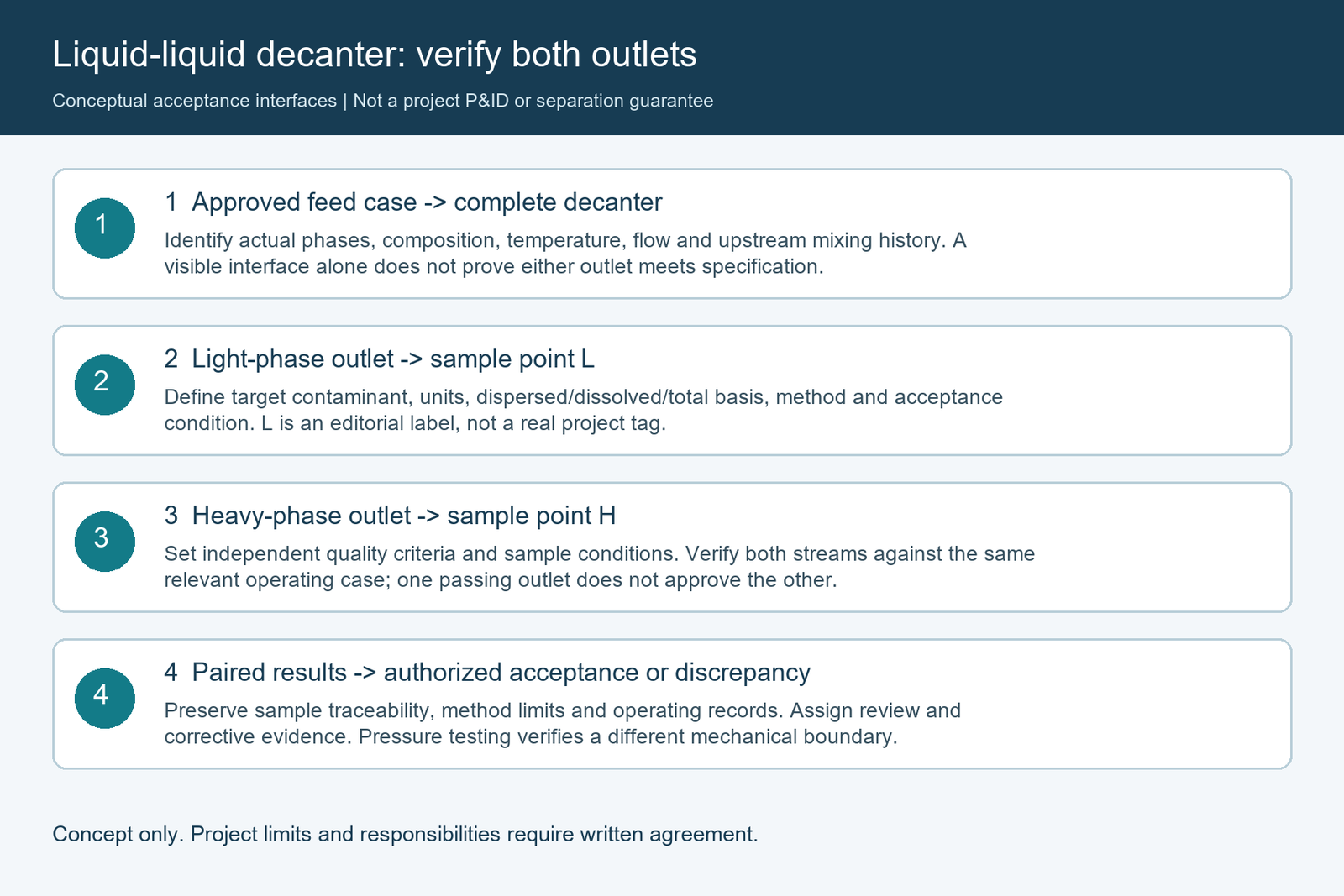
The existing decanter specification should already identify the two streams. The incremental procurement question is: what will count as a pass for each outlet, at which location, under which operating case, and according to whose approved method?
Give the light and heavy streams independent quality criteria
Suppose one outlet is intended for solvent recovery and the other for downstream water treatment. The first may be sensitive to water or another phase carried into recovered solvent; the second may be sensitive to entrained organic droplets or a particular dissolved constituent. Those are different analytical questions. The approved project specification must establish which matter for the actual fluids.
Dispersed-phase carryover means droplets of the other liquid phase remain in an outlet stream. Dissolved contamination means a component is present within a liquid phase in solution. Gravity decantation can reduce separable droplets but should not be assumed to remove a dissolved species to a required product-purity or discharge limit. If an analytical method measures a broader combined parameter, the specification must say so rather than silently treating it as a droplet-only measurement.
For each outlet, define the analyte or property, acceptable result, unit, calculation or reporting basis, and destination-related reason for the requirement. Do not copy the other outlet’s acceptance limit merely for symmetry.
Specify the point where the result must be achieved
A result measured at the decanter discharge nozzle is not necessarily the same as a result downstream of pumps, blending lines, filters, heated pipework or another treatment stage. The EPC process engineer should identify the physical sample location on the P&ID or other approved interface drawing.
Where an in-line sample is affected by phase segregation, pressure or temperature changes, or sampling-line hold-up, the approved sampling plan must address its representativeness. A sample altered during collection or storage should not be treated automatically as a true representation of the nozzle stream.
State the conditions attached to every guarantee
An outlet-quality commitment should identify the feed composition and phase ratio, combined and individual flow rates, temperature, pressure where relevant, inlet dispersion assumptions, interface-control basis and the operating state in which samples are taken. Minimum, normal and maximum cases should be evaluated as realistic paired conditions, not arbitrary combinations of unrelated extremes.
When the feed changes significantly or the project adds a new product, the process authority should assess whether the earlier evidence and acceptance commitment still apply.
Two-outlet acceptance matrix for an EPC RFQ
The following is a blank project-document template, not actual plant test data or a universal guarantee.
| Item to agree | Light-phase outlet | Heavy-phase outlet | Approval / evidence owner |
|---|---|---|---|
| Stream tag and intended destination | [Tag / destination to confirm] | [Tag / destination to confirm] | Owner/EPC process engineer |
| Phase identity and expected composition | [Actual phase and constituents] | [Actual phase and constituents] | Process designer |
| Quality objective and requirement source | [Product/recycle requirement; document and revision] | [Downstream-treatment/reuse requirement; document and revision] | Owner/process licensor as contracted |
| Target contaminant or attribute | [Specify entrained droplets, dissolved constituent or defined total parameter] | [Specify separately] | Process designer / quality specialist |
| Limit, unit and reporting basis | [To be approved: no assumed figure] | [To be approved: no assumed figure] | Owner/EPC / downstream receiver |
| Sample point | [Nozzle or agreed downstream point; P&ID reference] | [Nozzle or agreed downstream point; P&ID reference] | Process / commissioning team |
| Sampling and analytical method | [Method, sample handling, detection/reporting basis] | [Method and handling, independently confirmed] | Laboratory / QA / process team |
| Applicable case | [Matched feed composition, temperature, phase ratio, flow] | [Same approved case, corresponding outlet conditions] | EPC process engineer |
| Stabilization and test window | [Approved stability criterion, duration and sample schedule] | [Corresponding criterion and schedule] | Commissioning / test authority |
| Evidence and decision | [Test record, uncertainty, pass/fail approver] | [Test record, uncertainty, pass/fail approver] | Contract-assigned acceptance authority |
| Unresolved scope or exception | [Open item, assigned owner and closure date] | [Open item, assigned owner and closure date] | EPC document controller / contractor |
This matrix should be issued as part of the approved process or performance specification and cross-referenced in vendor clarification and, where applicable, the contract acceptance plan. An empty cell is a technical hold point, not permission for a supplier to invent a threshold.
What Measurement Basis Prevents an Ambiguous Result?
An instruction such as “clean organic phase” or “no oil in water” is difficult to verify unless the contract defines what the phrase means. A robust acceptance basis covers four dimensions:
- What is measured: the precise chemical analyte, total material class, dispersed-phase fraction or other agreed property. An appearance check can complement, but should not silently replace, laboratory analysis.
- How it is reported: mass fraction, mass concentration, volume fraction or another defined basis, including the relevant temperature or density assumptions where conversion is needed.
- Where and when it is measured: identified outlet point, approved operating case, representative stabilization period and sampling frequency.
- How results are judged: test method and edition where relevant, replicate or composite rules if approved, data-quality criteria, responsibility for resolving disputed results and required documentation.
For instance, US EPA Method 1664, Revision B defines a method-specific measurement of n-hexane-extractable material in applicable aqueous matrices and includes sampling and quality-control requirements. It is not a universal liquid-liquid decanter carryover test, nor does its result automatically separate dissolved compounds from entrained droplets. Use it only when the project’s analytical purpose, sample matrix and applicable requirements justify that method.
The relevant process and analytical specialists should agree on how to handle mixtures whose properties change between the outlet nozzle and laboratory. Equally, a result below a method’s reporting limit should be evaluated against the contracted criterion and the method’s limitations—not automatically described as “zero contamination.”
How Should Acceptance Testing Address Operating Variability?
A single test point can leave important ambiguity when phase ratios or inlet mixing conditions vary. The EPC’s case register should identify only credible and approved conditions that affect the outlet result.
| Proposed case label | Paired input record | Two-outlet question | Evidence to request |
|---|---|---|---|
| Normal steady operation | Actual two-phase feed, total and individual flow, temperature, inlet history | Do both outlets meet their own specifications simultaneously? | Timestamped operating log, both outlet samples, analyses |
| Approved low-load case | Lower flow with corresponding phase split and interface-control conditions | Are outlet withdrawals and quality still acceptable in the actual low-load arrangement? | Case-specific measurements and operating observations |
| Approved high-throughput case | Maximum credible coupled feed and composition | Does higher hydraulic loading affect either outlet quality? | Rated-case assessment and agreed performance test, if contracted |
| Approved composition or temperature variation | Relevant changed properties and phase behavior | Are the analytical and hydraulic bases still representative? | Updated property record, test/model applicability review |
| Approved transient or batch transition | Documented production transition; only if required in contract | Is a transitional specification intended, or does the guarantee apply only after stabilization? | Process-approved transition definition and test boundary |
These are case prompts, not an instruction to test unsafe combinations or a representation that every condition is guaranteed. If a credible condition falls outside the proposed equipment scope, the supplier should list it as an exclusion or open qualification rather than claim unrestricted performance.
Tests should distinguish whether failure arises at the specified decanter outlet or after additional downstream equipment. The commissioning plan must also address how samples will be associated with the correct feed and operating interval when residence time or upstream buffering introduces a delay.
What If One Outlet Passes and the Other Fails?
A liquid-liquid separation acceptance decision is not automatically a pass because one outlet looks satisfactory. Where the contract requires both outlet qualities at the same case, both results must meet their respective criteria before that case can be accepted.
A useful discrepancy record contains the equipment tag; relevant feed and outlet stream tags; failed criterion and unit; sample point, date and operating window; method and laboratory record; instrument and sampling checks; any interface or control observations; and the party assigned to investigate. It should also identify the approved disposition and the party authorized to close the item.
Technical review may be needed to distinguish an unrepresentative sample, off-design feed, incomplete stabilization, process-sizing assumption, an equipment configuration issue or a downstream change. The investigation belongs to the contracted process and quality authorities. No unapproved operational change, chemical addition or intervention should be inferred from this editorial checklist.
If performance is outside the contractual basis because the actual feed differs from the approved feed envelope, the parties should first reconcile that difference before allocating corrective-work responsibility. Conversely, a confirmed failure against an agreed and demonstrated duty should not be dismissed solely because the vessel passed its pressure test.
Select the Complete Vessel Arrangement
Vessel orientation, dimensions and operating inventory should follow the separation assessment and site constraints. Horizontal and vertical arrangements should be evaluated against the actual duty rather than selected through a universal rule.
Gross volume and usable separation capacity are not interchangeable. Space allocated to liquid inventory, operating flexibility and any vapor phase affects the available separation region.
Feed surges and changes in phase ratio also require attention. The complete equipment arrangement should support the approved operating range and the withdrawal of both phases.
If significant gas is present or flashing is expected, the duty needs additional evaluation. A two-liquid-phase specification should not silently become a gas-liquid-liquid separation requirement.
Coordinate Temperature and Feed Buffering
Changing temperature may alter viscosity, phase equilibrium and separation behavior. Any proposed heating or cooling should therefore follow a process assessment rather than a general assumption that warmer liquid always separates better.
Where feed conditioning requires an industrial heat exchanger, specify the required outlet condition and the acceptable variation entering the decanter.
For batch feeds, an upstream buffer may help establish a defined operating duty, but it should be included only where the process requires it. Associated industrial storage tanks should have their own capacity and materials basis. WSHI’s relevant tank scope is above 1,000 liters.
Materials, Manufacturing and Quality Control
Material selection should consider both liquid phases, the interface environment, contaminants and cleaning chemicals. The selected material must remain suitable across the specified operating range.
The mechanical specification should identify pressure, temperature, corrosion allowances and any relevant external-pressure conditions. Applicable construction requirements must be established for the individual vessel.
The inspection plan should define material traceability, welding records, dimensional checks, required examination and testing. These activities demonstrate conformity with the approved construction basis.
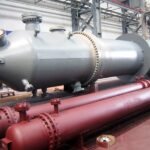
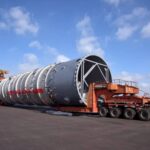
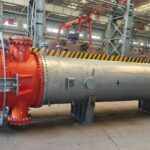
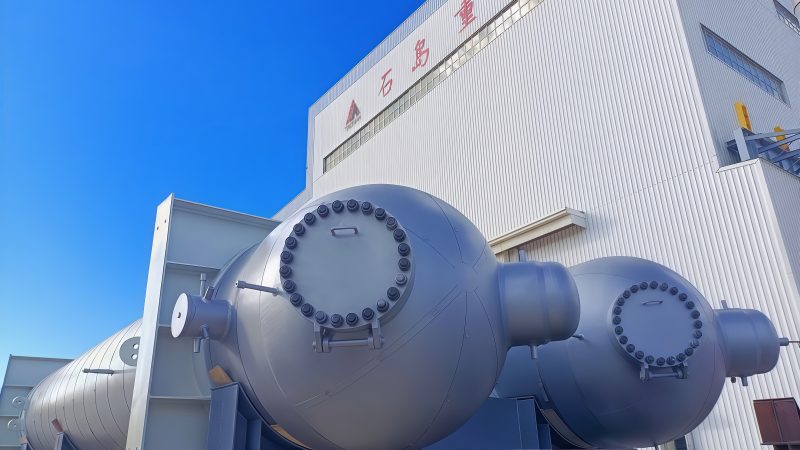
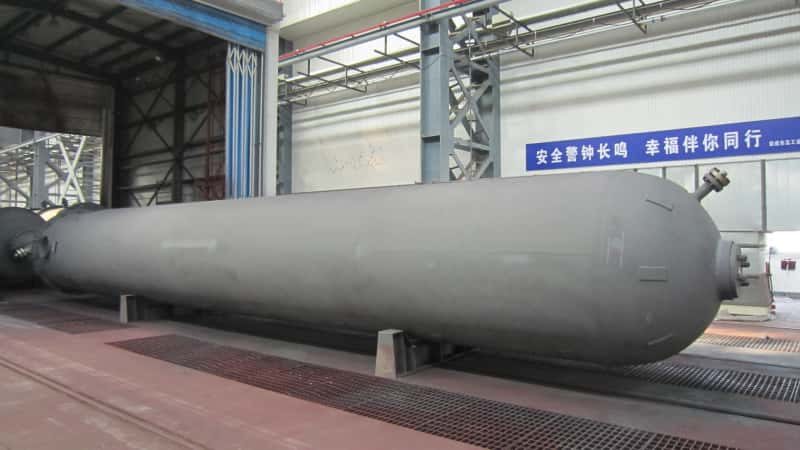
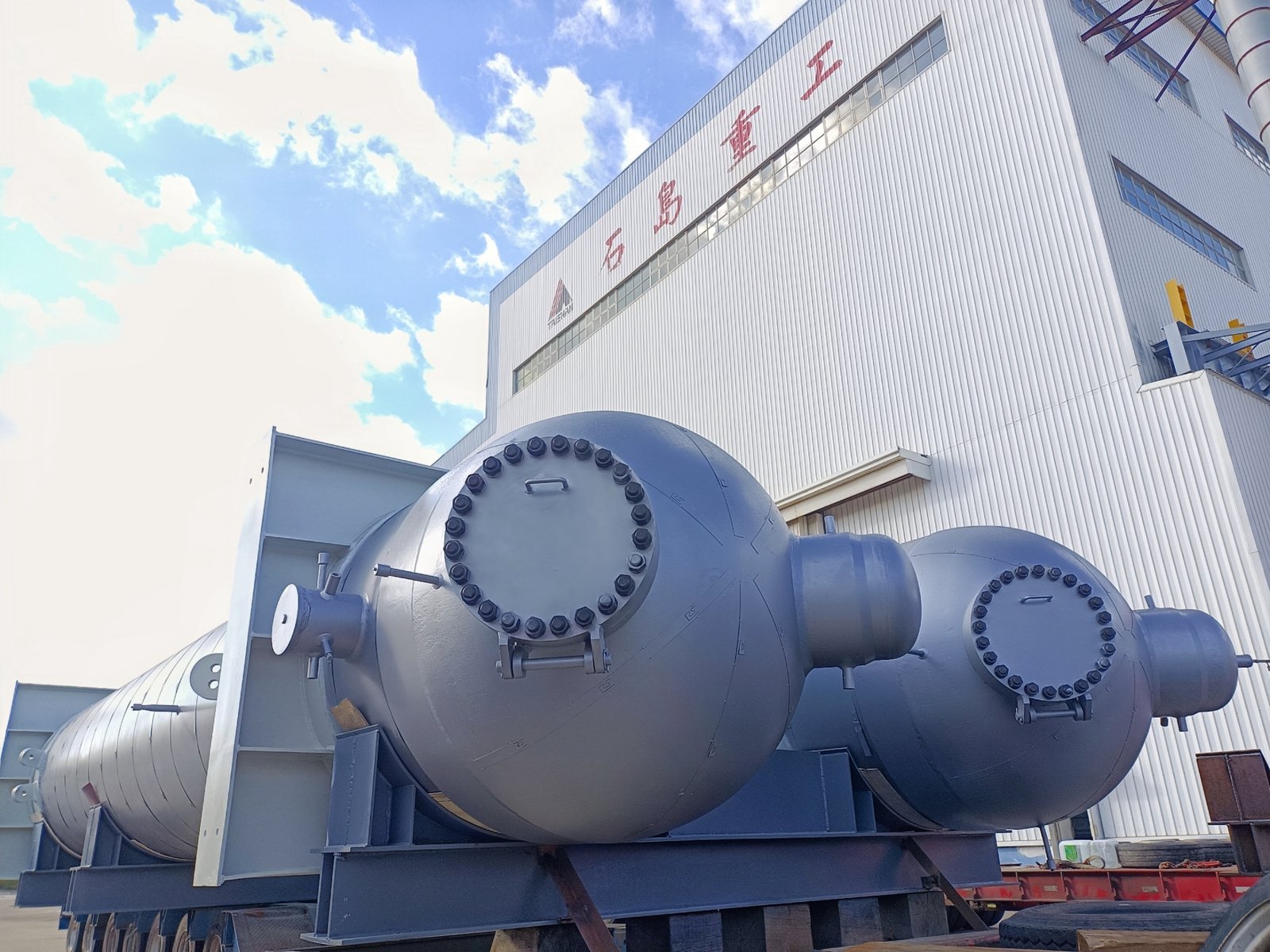
WSHI’s manufacturing capability includes engineering coordination, material procurement, welding fabrication, nondestructive examination, pressure testing, coating and heavy-equipment delivery activities. Liquid-liquid separation performance should be assigned explicitly to the party responsible for process design.
A successful mechanical test does not prove that the vessel will separate the specified mixture. Process acceptance and manufacturing acceptance require different evidence.
What Should an EPC Inquiry Include?
A practical quotation package should contain the following information:
| Inquiry item | Required information |
|---|---|
| Feed definition | Composition, flow range, phase ratio and mixing history |
| Physical properties | Relevant densities, viscosities and temperature dependence |
| Separation evidence | Settling observations, analytical results and available pilot data |
| Outlet requirements | Quality criteria for both phases and measurement methods |
| Mechanical conditions | Pressure, temperature, materials and construction requirements |
| Supply boundary | Process sizing, complete vessel, associated equipment and exclusions |
| Delivery | Site location, installation constraints and required documentation |
Require suppliers to identify assumptions and unresolved information. Before fabrication release, confirm that the selected geometry and mechanical design match the approved process basis.
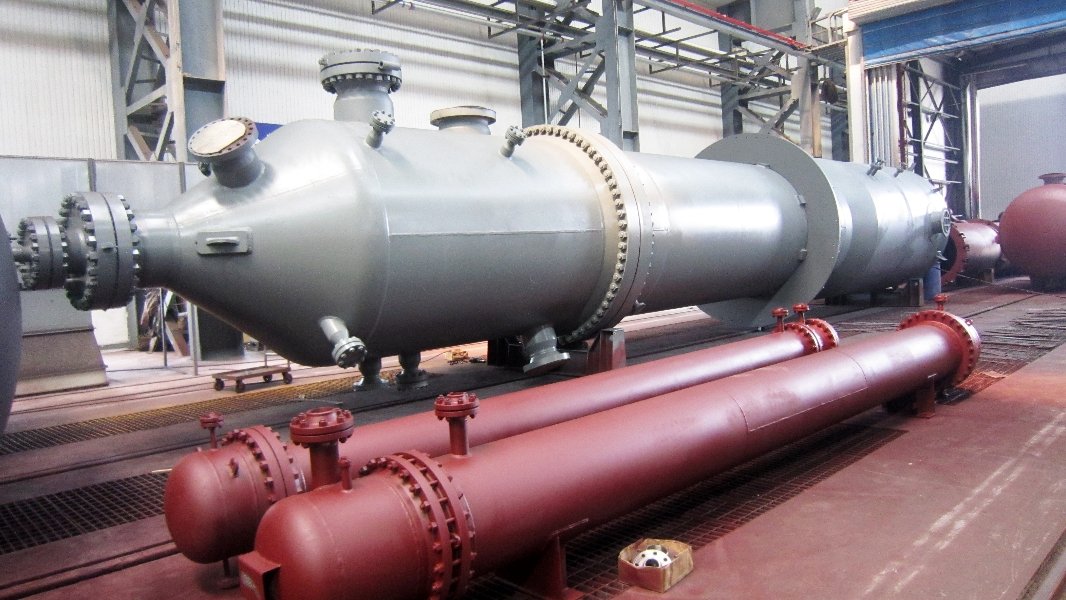
Transport planning should address complete equipment dimensions, lifting, preservation and the delivery point. Installation and commissioning responsibilities should be stated in the contract.
FAQ
Can a liquid-liquid decanter separate any solvent from water?
No. The mixture must form distinct liquid phases under the intended conditions. Dissolved substances may remain even after dispersed droplets have been separated.
Will a larger vessel solve a stable emulsion problem?
Not necessarily. Additional residence time may help some mixtures, but persistent emulsions require a specific process assessment. Volume alone does not establish a solution.
Is a bottle test enough to size the vessel?
It can support an initial assessment, but continuous equipment selection also needs operating data and an appropriate scale-up basis. Difficult or variable feeds may require further testing.
Is a gravity decanter the same as an extraction column?
No. An extraction column provides controlled contact between liquid phases for mass transfer. A gravity decanter primarily separates phases after they have been mixed or formed elsewhere.
Discuss Your Liquid-Liquid Separation Requirements
A liquid-liquid decanter is a practical candidate when the mixture’s phase behavior and separation evidence support gravity settling. Clear feed data and outlet requirements allow EPC buyers to define a complete vessel scope and evaluate proposals on consistent terms.
For a chemical separation project, contact our engineering team with your fluid properties, flow range, settling-test results and required outlet quality. WSHI can review the proposed complete separation vessel and discuss the engineering information, inspection and delivery requirements needed for a manufacturing quotation.
Outlet Acceptance Questions
Does a clear liquid-liquid interface prove both outlets meet their specifications?
No. A clear bulk interface does not quantify what remains in either outlet. Each stream needs its own defined property, measurement basis, sample location, operating case and acceptance evidence.
How are dissolved contaminants different from entrained droplets?
Entrained droplets are small amounts of the other liquid phase carried in a bulk stream; dissolved material is present within the continuous phase as a dissolved constituent. A gravity decanter is intended to separate suitable bulk liquid phases and droplets, not to guarantee removal of dissolved components that require another treatment mechanism.
Is a bottle test sufficient to guarantee both industrial outlet qualities?
No. It can be useful screening evidence under documented conditions, but a continuous industrial decanter operates with real inlet dispersion, flow distribution, level control and variable feed. Any contractual guarantee must be supported by an appropriate agreed engineering and acceptance basis.
Can the mechanical pressure test serve as liquid-liquid separation acceptance?
No. The pressure test addresses defined aspects of mechanical integrity; it is not a measurement of light-phase and heavy-phase outlet quality. Where contracted, process performance requires separate evidence at the agreed operating conditions.