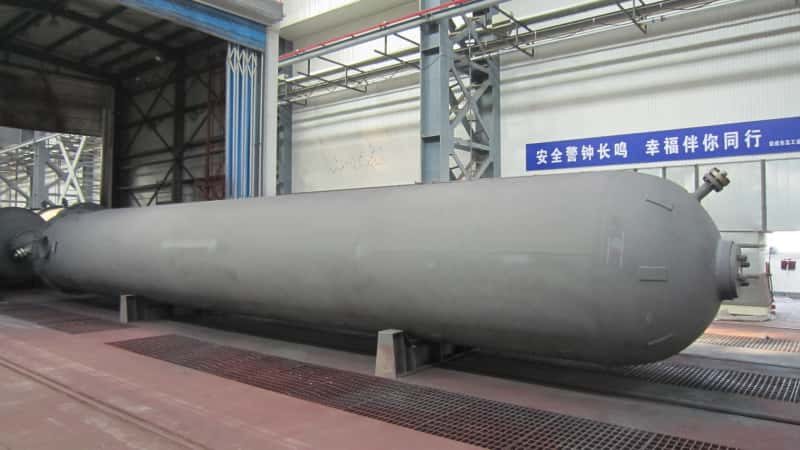

Circular PA6 Recycling Process Equipment for End-of-Life Vehicle Plastics
PA6 recycling process equipment is gaining attention as automotive, chemical, and materials companies explore ways to convert end-of-life plastics into reusable chemical feedstocks. For EPC buyers, the challenge is not only choosing a recycling technology. A commercial-scale PA6 chemical recycling project may require reaction vessels, separation equipment, heat exchangers, evaporators, condensers, wastewater holding tanks, and complete pressure vessel manufacturing support. Each item must be reviewed against feedstock quality, process conditions, corrosion risk, inspection requirements, and project delivery scope.
WSHI focuses on complete industrial equipment and project-based manufacturing, including custom pressure vessels, heat exchangers, separators, process columns, evaporator-related vessels, and large industrial storage tanks above 1,000 liters. Small internals, fittings, filters, or accessories should only be discussed as part of a complete vessel or equipment package.
PA6 recycling process equipment can be selected from a standard catalog without feedstock and process data.False
End-of-life PA6 feedstock may contain glass fibers, additives, coatings, moisture, and mixed contaminants. Equipment selection should be based on process datasheets, feedstock analysis, pressure, temperature, materials, inspection scope, and delivery requirements.
For EPC procurement, PA6 recycling equipment should be planned as a complete process equipment scope.True
Reactors, heat exchangers, condensers, separators, evaporator-related vessels, storage tanks, inspection records, testing, coating, and documentation all affect project execution and long-term operation.
Why PA6 Recycling Equipment Is a Current Project Topic
In August 2026, Envalior and SECARA announced a collaboration to develop circular PA6 for automotive applications using end-of-life vehicle plastics. The announcement describes SECARA’s catalytic depolymerization pathway for converting PA6 waste into caprolactam that can be reused in PA6 production.
For industrial equipment buyers, the relevant point is the wider direction of the market: engineering plastics recycling is moving toward more advanced chemical recovery routes. These projects need more than sorting and mechanical handling. They may require reaction vessels, industrial heat exchangers, vapor-liquid separators, purification equipment, evaporator-related vessels, and large storage tanks.
This article does not imply WSHI is involved in the Envalior or SECARA project. It uses the news as industry background for EPC equipment planning.
What Is PA6 Chemical Recycling Process Equipment?
PA6, also known as nylon 6, can be chemically recycled through depolymerization routes that aim to recover caprolactam or other reusable chemical intermediates. The exact process may involve catalytic depolymerization, hydrolysis, thermal routes, solvent-assisted systems, purification, condensation, and wastewater treatment depending on the technology provider.
Published technical literature also shows why equipment planning must stay process-specific. An ACS Industrial & Engineering Chemistry Research assessment of Nylon-6 depolymerization discusses liquid-phase hydrolysis, steam stripping, solvent-free depolymerization, purification, heat integration, and waste minimization. A 2026 Polymers review on caprolactam recovery from PA6 waste also describes multiple caprolactam-oriented chemical recycling pathways. These references support a practical procurement point: the route determines the equipment, not the other way around.
A complete industrial equipment scope may include feed preparation and buffer vessels, depolymerization reactor vessels, condensers and heat exchangers, vapor-liquid separation vessels, distillation or purification columns, evaporators or concentrators for process liquid and wastewater, large storage tanks above 1,000 liters, and final inspection, testing, documentation, packing, and delivery.
Main Applications in Circular Plastics Projects
Automotive End-of-Life Plastic Recycling
End-of-life vehicles contain engineering plastics that may include PA6, glass fiber reinforcement, additives, coatings, and mixed contaminants. Chemical recycling projects must consider feedstock variability, impurity removal, solids handling, and downstream product purity.
This affects equipment selection because reactors, separators, filters as part of package scope, condensers, and storage vessels must be designed around real feed and process data.
Caprolactam Recovery and Purification
Many PA6 chemical recycling concepts focus on recovering caprolactam for reuse. Purification may involve condensation, distillation, phase separation, crystallization, or other process steps depending on the technology.
Where separation or purification columns are required, EPC buyers can review process towers and columns as part of a complete equipment procurement scope.
Wastewater and Byproduct Handling
Chemical recycling can generate process wastewater, condensate, residue streams, cleaning liquids, or concentrated waste. These streams may require evaporation, concentration, temporary holding, or further treatment before disposal or reuse.
For larger industrial wastewater or concentrate storage, buyers should specify industrial storage tanks above 1,000 liters with suitable materials, coating or lining, venting, inspection, and delivery requirements.
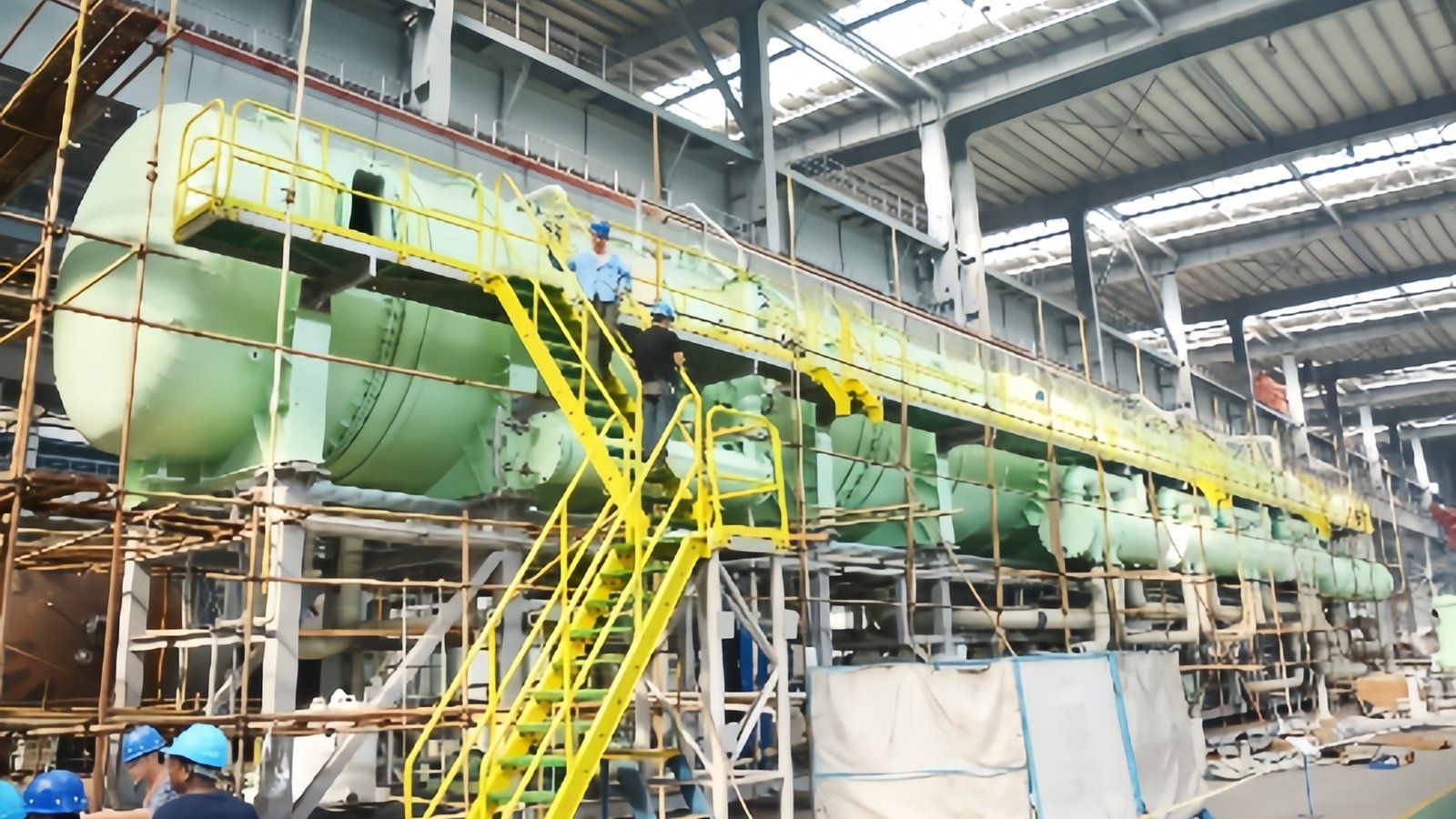
Key Equipment for PA6 Recycling Projects
| Equipment category | Potential role in PA6 recycling | EPC buyer review focus |
|---|---|---|
| Reaction vessels | Depolymerization, solvent-assisted reaction, catalytic conversion | Pressure, temperature, medium, catalysts, solids, agitation or circulation, inspection scope |
| Heat exchangers and condensers | Feed heating, reactor temperature control, vapor condensation, heat recovery | Fouling, viscosity, heat duty, pressure drop, materials, cleaning access |
| Separators and receivers | Vapor-liquid separation, condensate collection, intermediate buffering | Phase behavior, liquid load, nozzle layout, corrosion, testing and documentation |
| Purification columns | Distillation, stripping, solvent or monomer recovery | Column size, internals interface, vacuum or pressure service, transport limits |
| Evaporator-related vessels | Wastewater concentration, mother liquor handling, residue reduction | Scaling, corrosion, vacuum condition, condensate quality, coating or lining |
| Large storage tanks | Feedstock slurry, recovered liquid, solvent, wastewater, intermediates | Capacity above 1,000 L, vapor pressure, coating, filling and discharge, foundation |
Reaction Vessels
The reactor is often the core equipment in PA6 depolymerization. Depending on the process route, it may need to handle elevated temperature, pressure or vacuum, catalysts, molten polymer, solvent, steam, or mixed waste feed.
Buyers should define operating pressure, design pressure, operating temperature, design temperature, medium composition, solids content, agitation or circulation requirements if specified by process design, corrosion allowance, material requirements, and inspection scope.
Heat Exchangers and Condensers
Heat exchangers may support feed heating, reactor temperature control, vapor condensation, heat recovery, cooling, and utility integration. In PA6 recycling service, fouling, viscosity, impurity deposition, and cleaning access should be reviewed carefully.
For rugged process duty, shell and tube heat exchangers may be considered where project-specific pressure, temperature, material, and maintenance requirements apply.
Separators and Purification Vessels
Depolymerization and purification may involve vapor-liquid separation, liquid-liquid separation, residue separation, condensate collection, or intermediate buffering. These vessels should be purchased as complete engineered equipment, not as standalone small internals or accessories.
The RFQ should include flow rate, phase behavior, pressure, temperature, medium composition, corrosion risk, nozzle orientation, inspection requirements, and documentation expectations.
Large Storage and Holding Tanks
PA6 recycling projects may require large feedstock slurry tanks, recovered liquid tanks, process water tanks, wastewater tanks, solvent tanks, or intermediate product tanks. These should be industrial project-scale tanks above 1,000 liters.
For each tank, EPC buyers should define medium, concentration, vapor pressure, operating temperature, material, coating or lining, foundation interface, filling and discharge conditions, inspection scope, and delivery terms.
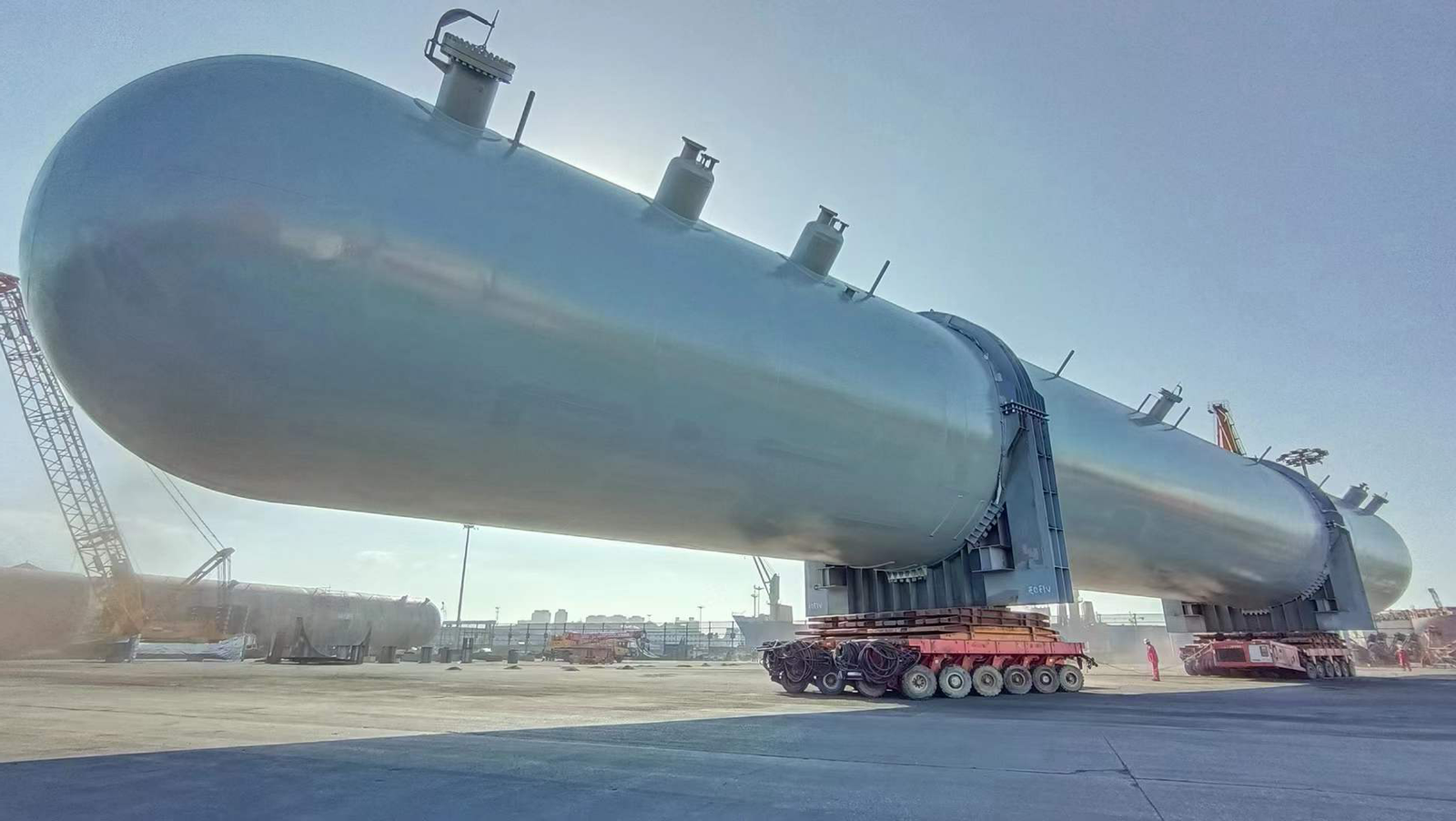
Manufacturing and Quality Control Considerations
Chemical recycling equipment may operate with heat, pressure, vacuum, corrosive liquids, mixed organics, and difficult residues. Manufacturing quality affects leakage risk, maintenance, inspection acceptance, and long-term reliability.
A practical quality plan may include material traceability, welding procedure qualification, welder qualification, fit-up inspection, dimensional inspection, nondestructive examination where required, hydrostatic or pneumatic testing where applicable, coating or lining inspection, and final documentation. Where equipment is designed as a pressure vessel, ASME BPVC Section VIII Division 1 or another project-specified code may be relevant depending on jurisdiction and owner requirements.
As a large-scale pressure vessel manufacturer, WSHI focuses on complete industrial equipment manufacturing, including pressure vessels, heat exchangers, process vessels, columns, evaporator-related vessels, and large tanks for chemical, petrochemical, environmental, and new energy projects.
Common Procurement Mistakes
One common mistake is focusing only on the recycling reactor while leaving condensation, separation, wastewater, and storage boundaries unclear. These systems affect product recovery, operation stability, and site layout.
Another mistake is assuming feedstock is clean and consistent. End-of-life vehicle plastics may contain additives, fillers, coatings, moisture, dirt, or mixed polymers. This can affect materials, fouling, residue handling, and cleaning requirements.
A third mistake is comparing quotations without equal inspection, testing, coating, and documentation scope. For EPC procurement, the same technical basis should be used across supplier quotations.
What Should EPC Buyers Prepare Before RFQ?
| RFQ information | Recommended details |
|---|---|
| Process basis | Process datasheets, PFD or P&ID if available, technology boundary |
| Feedstock data | PA6 content, contaminants, additives, glass fiber, moisture, solids, viscosity |
| Design conditions | Operating and design pressure, temperature, vacuum cases, upset cases |
| Medium and corrosion | Solvents, catalysts, water, organics, residues, corrosion allowance |
| Thermal duties | Heating, cooling, condensation, heat recovery, cleaning access |
| Equipment boundary | Vessels, exchangers, columns, evaporator vessels, large tanks, documentation |
| Quality requirements | Material certificates, welding records, NDE, pressure or leak testing, coating inspection |
| Delivery scope | Packing, lifting, transport limits, destination, export documents, final data book |
Conclusion
PA6 recycling process equipment should be planned as a complete chemical recycling equipment scope. Reaction vessels, heat exchangers, condensers, separators, purification vessels, evaporator-related equipment, and large storage tanks all affect project reliability, product recovery, wastewater handling, inspection, and delivery.
If you are preparing a PA6 recycling, caprolactam recovery, end-of-life plastics recycling, circular materials, or chemical recycling project, you can share your datasheets, drawings, feedstock information, operating conditions, material requirements, inspection scope, and delivery terms with WSHI. Our engineering and manufacturing team can help discuss the feasibility of custom pressure vessels, heat exchangers, separators, process columns, evaporator-related vessels, and large industrial storage tanks for your project requirements. You can contact our engineering team to discuss your project equipment scope.
FAQ
What equipment is used in PA6 chemical recycling projects?
Typical equipment may include depolymerization reactor vessels, heat exchangers, condensers, vapor-liquid separators, purification columns, evaporator-related vessels, wastewater tanks, and intermediate storage tanks.
Why are heat exchangers important in PA6 recycling?
Heat exchangers support feed heating, reactor temperature control, vapor condensation, cooling, and heat recovery. Their design should consider fouling, viscosity, pressure, temperature, material compatibility, and cleaning access.
What should EPC buyers provide before ordering PA6 recycling vessels?
Buyers should provide process datasheets, feedstock composition, contaminant profile, pressure, temperature, material requirements, drawings, inspection scope, testing requirements, coating needs, and delivery terms.
Are PA6 recycling vessels standard products?
Usually not. Chemical recycling vessels are normally customized according to process route, operating conditions, feedstock quality, safety requirements, inspection scope, and site layout.
Can storage tanks be included in the recycling equipment scope?
Yes. Large storage tanks above 1,000 liters may be required for process liquids, condensate, wastewater, solvents, or intermediate products. They should be specified as part of the complete project boundary.