
Selecting POE plant auxiliary equipment starts with a procurement question: which equipment belongs to the proprietary process package, and which items can be purchased separately against approved specifications? For EPC buyers, unclear boundaries can create duplicated orders, missing interfaces and disagreements over performance responsibility. Complete vessels, heat exchangers and storage tanks should therefore be specified around the selected process technology, not treated as interchangeable additions.
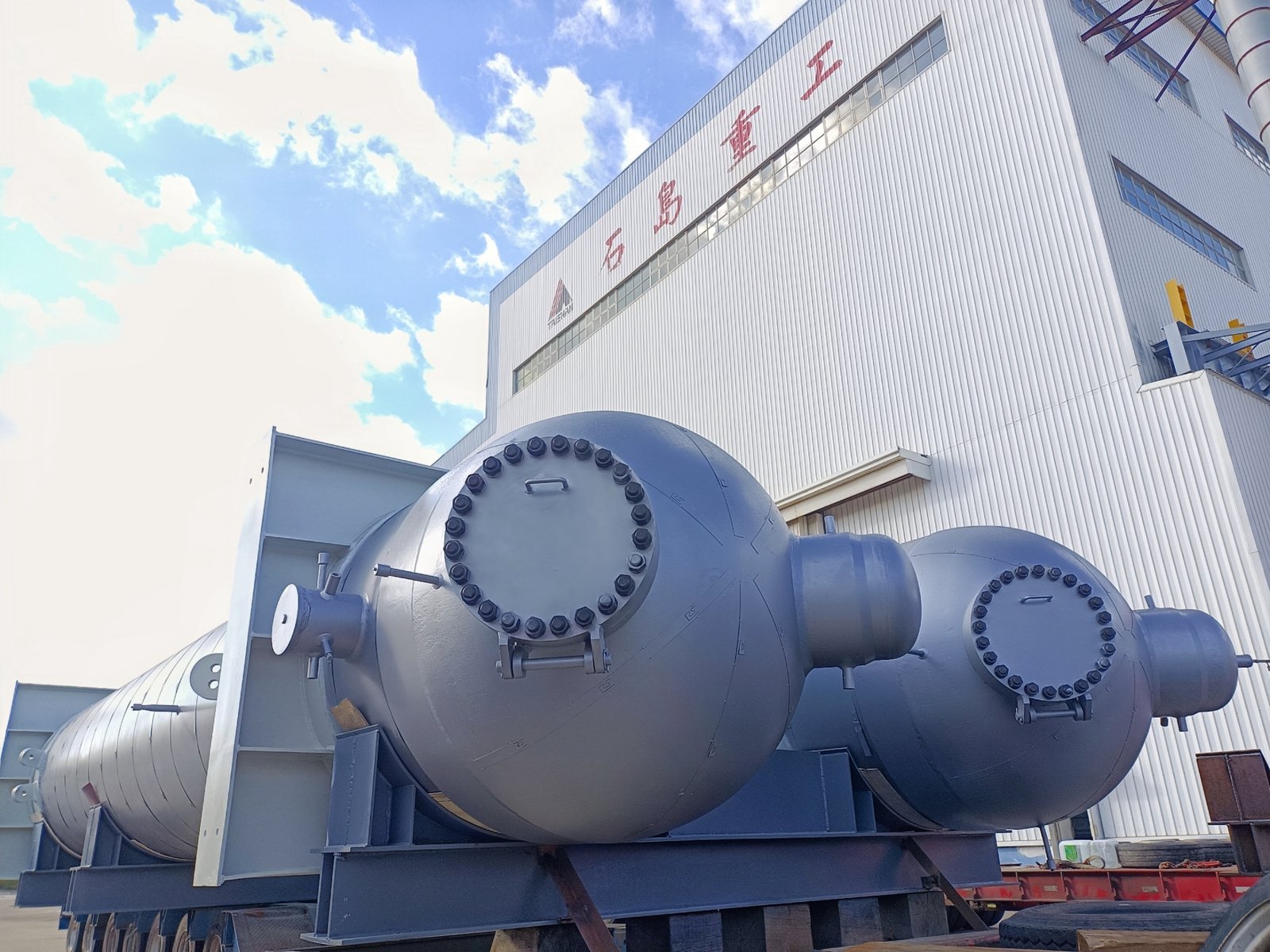
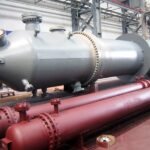
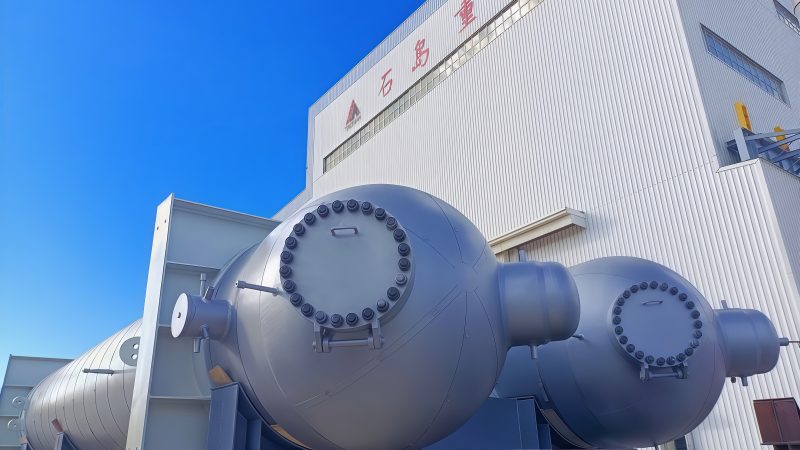
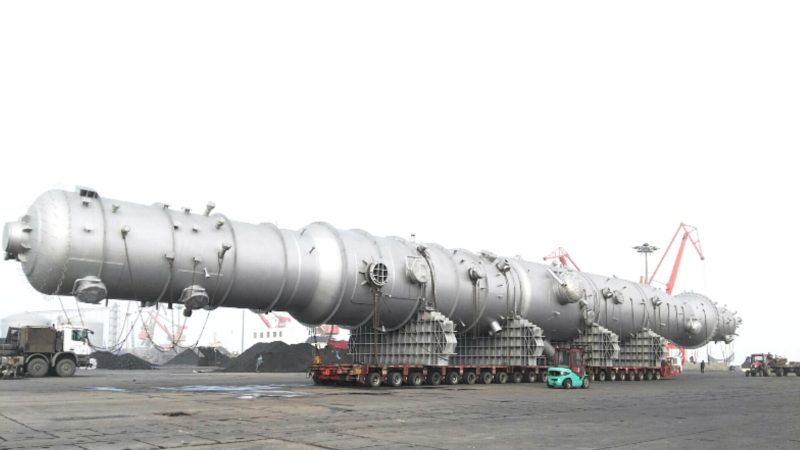
Representative equipment image from WSHI’s library. It does not depict equipment supplied to the POE project discussed below.
A Recent POE Project Highlights the Procurement Question
On September 25, 2026, Chemical Engineering reported acceptance of Sulzer’s DEVO purification unit at BeyondPoly’s 100,000-tonne-per-year POE plant in China. The report describes a proprietary purification step that removes residual compounds from the polymer. This is a completed equipment milestone, not an announcement of an available procurement contract. See the project news report.
For other projects, the useful procurement lesson is to distinguish licensed purification technology from surrounding equipment supplied to the process designer’s requirements. The following discussion is a general purchasing framework, not a description of BeyondPoly’s equipment configuration or a claim of WSHI involvement.
Define the POE Plant Auxiliary Equipment Boundary First
Before issuing inquiries, the EPC contractor should obtain an agreed equipment list and package boundary drawing from the process owner or technology provider. These documents should identify who supplies each complete item, who defines its operating requirements, and who approves its design.
A vessel located outside a proprietary skid is not automatically available for unrestricted third-party procurement. Its design may remain subject to licensor approval, confidentiality obligations or special process requirements. Conversely, a package quotation may exclude equipment that the purchaser assumes is included. Each exclusion needs an identified owner before purchase orders are released.
Separate Fabrication Scope from Process Guarantees
A fabricator may take responsibility for mechanical design and manufacture against an agreed specification without accepting responsibility for polymer purity, residual volatile content or overall plant output. Those guarantees depend on the process design and the applicable contract. Buyers should explicitly allocate thermal sizing, separation performance, utility requirements and operating-envelope approval instead of relying on the phrase “complete supply.”
Which Complete Equipment Items May Be Purchased Separately?
The answer depends on the approved flowsheet. Potential auxiliary purchases can include custom pressure vessels, heat exchangers, liquid receivers and large storage tanks. Their inclusion should be confirmed individually; they are not a universal POE equipment list.
Process Vessels and Liquid Receivers
Where the process requires them, complete vessels may provide liquid collection, buffering or phase separation. An inquiry should identify the actual stream, required function, expected liquid inventory and pressure conditions. A receiver intended for clean condensate should not be specified as though it handles a viscous, polymer-bearing mixture. Any separation guarantee requires an agreed process basis, not simply a vessel volume.
Heat Exchangers for Clearly Defined Services
Potential duties include utility heating or cooling and condensation of suitable process streams. Buyers evaluating industrial heat exchangers should distinguish these duties from direct polymer service. Equipment suitable for a relatively low-viscosity liquid is not automatically suitable for a polymer-rich stream. The responsible designer must establish the relevant properties, permissible pressure drop, temperature limits and cleaning requirements before the exchanger configuration is finalized.
Large Storage Tanks
Where the selected process requires solvent, recovered-liquid or other bulk storage, industrial storage tanks above 1,000 liters can form a separate procurement package. Buyers should specify working capacity rather than nominal volume alone, together with the operating envelope and required containment arrangements. Storage requirements should not be inferred from plant production capacity without a defined inventory strategy.
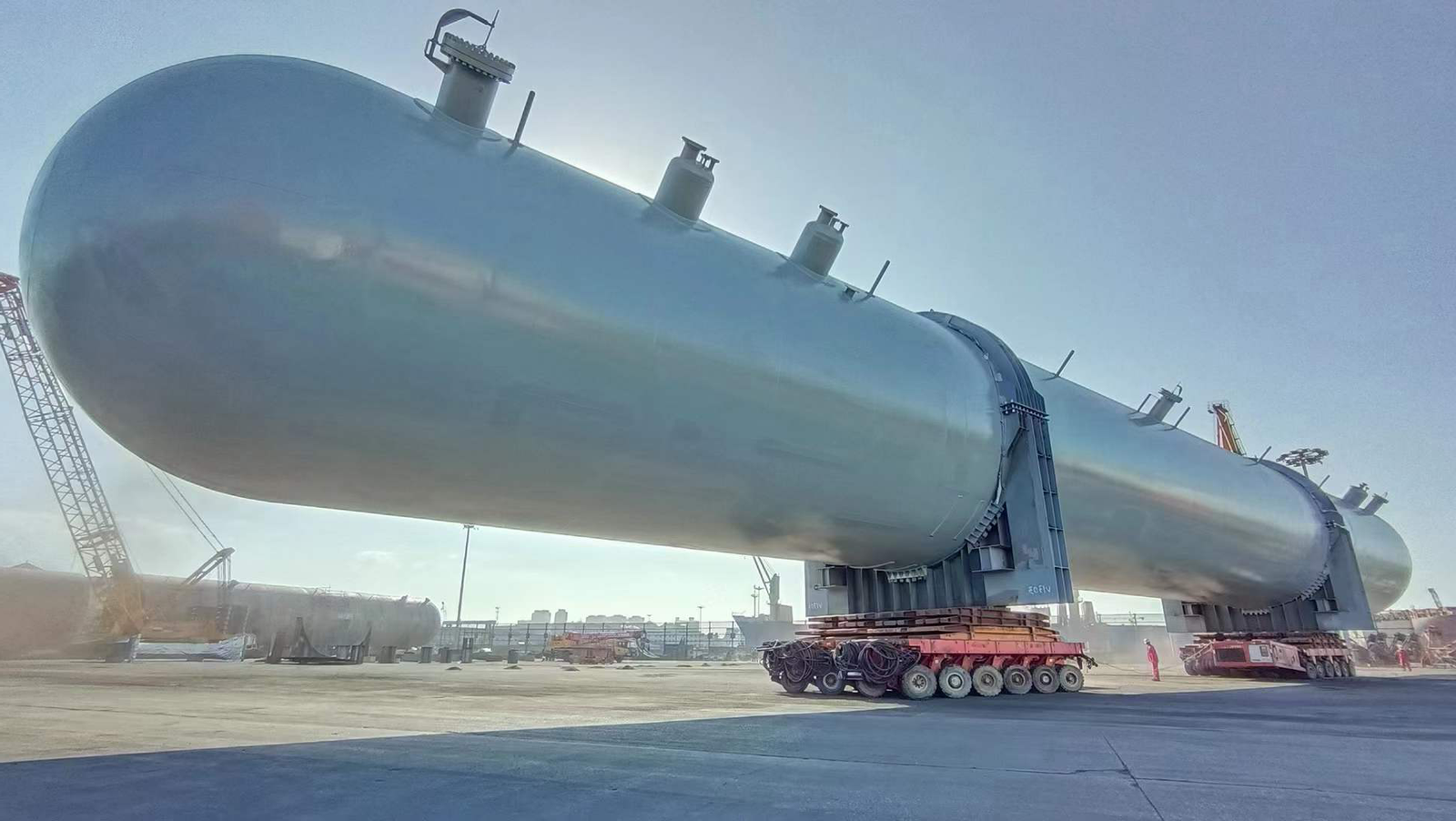
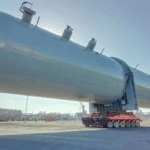
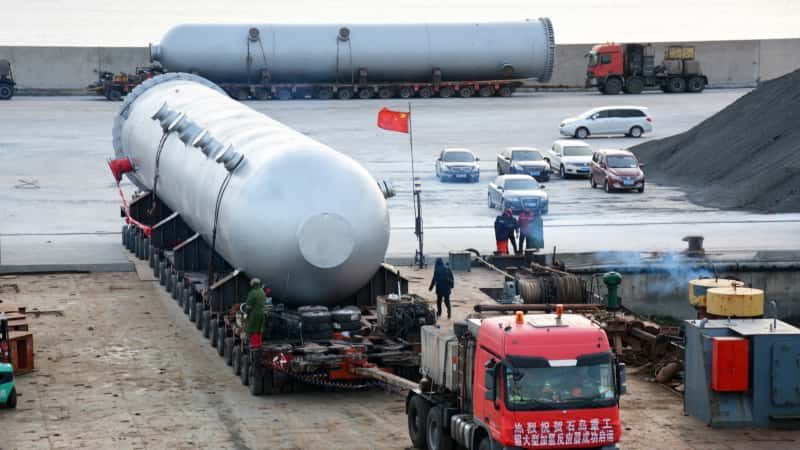
Representative storage equipment. Suitability for a particular POE service requires project-specific review.
Provide Process Data That Supports a Meaningful Quotation
A request stating only “POE auxiliary vessel” or “solvent condenser” leaves too much open to interpretation. The inquiry should include stream composition, normal and limiting flow conditions, operating pressures and temperatures, and the design conditions approved by the responsible engineer. Where applicable, it should also describe startup, shutdown, cleaning and product-grade changes.
For polymer-bearing streams, provide relevant viscosity data across the expected operating range rather than one value at a single temperature. Identify any known fouling, deposition or temperature-exposure constraints. These are inputs for specialist review, not issues that a fabricator should resolve by guessing from the equipment name.
Utility information matters equally. Available cooling and heating conditions, allowable pressure losses and any restrictions on contamination should accompany the datasheets. If information is preliminary, label it clearly and identify which changes could trigger redesign, price adjustment or a revised delivery schedule.
Review Manufacturing and Quality Requirements Before Award
Material selection should follow the actual process and cleaning environment. A general preference for stainless steel does not establish suitability for every stream or temperature. The purchaser should agree the material specification, any additional compatibility requirements and the evidence needed to demonstrate compliance.
For pressure-containing equipment, the contract should identify the applicable construction rules and edition, inspection responsibilities and destination requirements. The ASME Boiler and Pressure Vessel Code is one reference framework that may be specified; mentioning it does not establish a manufacturer’s certification or its applicability to every project.
The inspection and test plan should establish material traceability, welding documentation, required examinations, dimensional checks and applicable testing. Preservation and cleanliness requirements also deserve explicit acceptance criteria, especially where the process owner identifies contamination sensitivity. “Clean before shipment” is less useful than an agreed cleaning method and documented release condition.
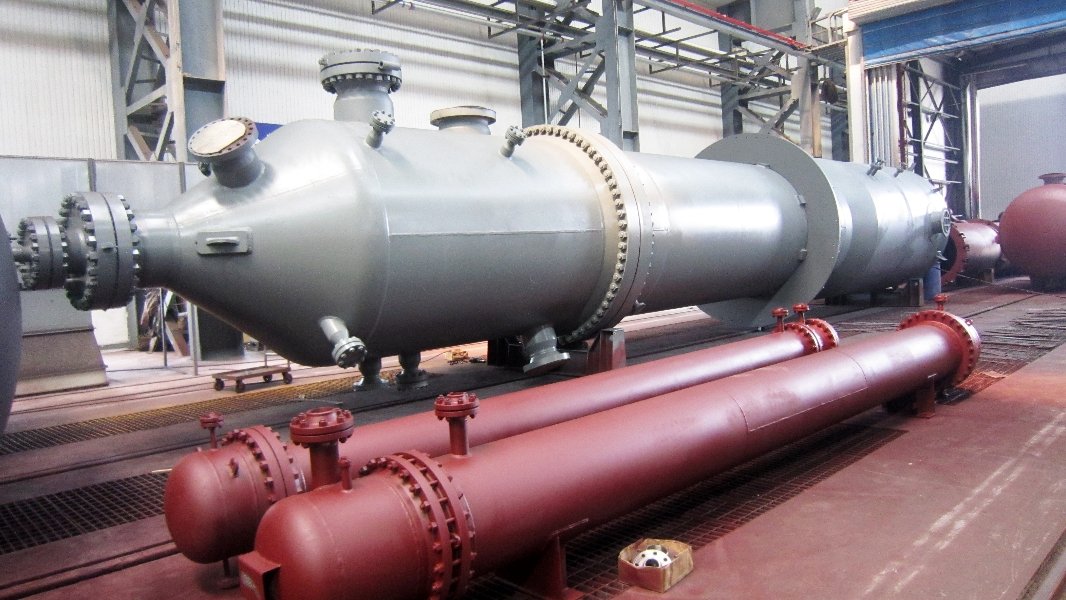
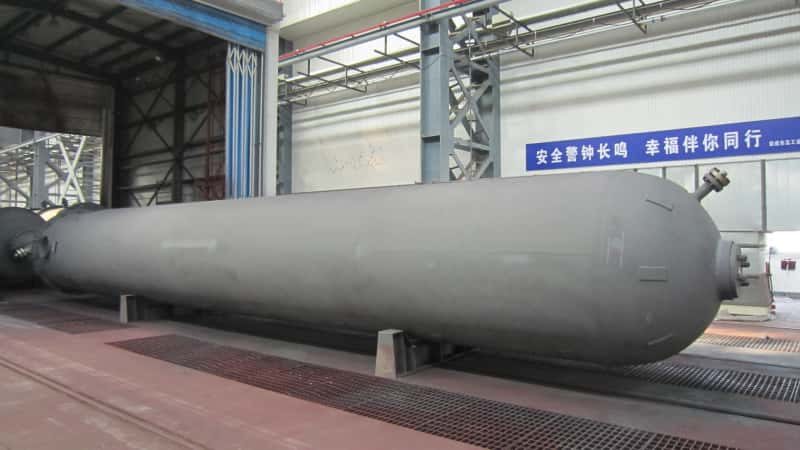
Representative manufacturing workshop image, not evidence of participation in the referenced project.
Connect Delivery Planning to Installation Readiness
Equipment procurement continues beyond fabrication. Buyers should confirm transport dimensions, shipment configuration, preservation arrangements and the agreed delivery point before finalizing the purchase. Requirements for export packing, port handover and site receipt should be allocated explicitly.
Document delivery should follow the same discipline. The EPC team needs approved drawings and interface information early enough to coordinate foundations and piping. Final manufacturing records should have a defined submission schedule. A vessel arriving on time does not resolve an installation delay caused by unapproved drawings or missing interface data.
FAQ
Can a fabricator supply the entire POE purification system?
Only where the contractual scope and demonstrated capabilities support that responsibility. Supplying auxiliary vessels and exchangers does not establish ownership of a proprietary purification technology or the ability to guarantee polymer quality.
Can an ordinary shell-and-tube exchanger handle polymer-rich material?
It should not be assumed. Suitability requires evaluation of the stream properties, thermal limits, pressure drop, fouling behavior and maintenance requirements. Utility or solvent duties should be distinguished from direct polymer service.
What should buyers provide for an initial inquiry?
Provide the equipment list, preliminary datasheets, process stream information, package boundaries, applicable specifications, delivery destination and required schedule. Clearly identify information awaiting approval.
Should auxiliary equipment procurement wait until every detail is finalized?
Preliminary supplier discussions can begin earlier, but fabrication release should follow an agreed approval process. Buyers should identify which unresolved inputs affect materials, dimensions, performance or delivery before authorizing manufacture.
Discuss a Defined Equipment Scope
Effective POE plant auxiliary equipment procurement connects approved process requirements with clear manufacturing and delivery responsibilities. For complete vessels, heat exchangers or storage tanks above 1,000 liters, discuss your project requirements with our engineering team. Share the equipment list, available datasheets and proposed supply boundaries so the team can assess fabrication requirements, documentation and delivery scope.