
Ordering custom chemical pressure vessels is not the same as buying standard catalog equipment. For EPC buyers, project managers, and technical procurement teams, the quality of the inquiry package directly affects quotation accuracy, manufacturing feasibility, inspection planning, delivery schedule, and later site installation.
A clear RFQ package helps the manufacturer understand the vessel’s service conditions, pressure boundary, material requirements, inspection scope, coating needs, and documentation expectations before fabrication starts. Without these inputs, the quotation may require repeated clarification or include assumptions that later need revision.
This guide explains what documents EPC buyers should prepare before ordering complete custom chemical pressure vessels, separators, process vessels, and related industrial equipment.

A pressure vessel RFQ based only on equipment name and rough size is enough for a reliable manufacturing quotation.False
Custom vessel pricing depends on process conditions, drawings, materials, inspection scope, coating, documentation, delivery terms, and applicable code requirements.
Why RFQ Documents Matter for Custom Pressure Vessels
A custom pressure vessel is built around project-specific operating conditions. Design pressure, temperature, medium composition, corrosion allowance, material grade, welding requirements, inspection method, coating, transport size, and delivery terms can all affect the final price and schedule.
For this reason, EPC buyers should treat RFQ preparation as part of engineering procurement control. A buyer who provides only a vessel name and rough size may receive a budgetary estimate, but not a reliable manufacturing quotation.
WSHI supplies custom pressure vessels for chemical, petrochemical, oil and gas, new energy, environmental engineering, and industrial process projects. The more complete the inquiry package is, the more efficiently the manufacturing team can review feasibility and prepare a technical response.
1. Equipment List and Scope Boundary
The first document is a clear equipment list. It should identify each vessel, tag number, service name, quantity, orientation, expected dimensions if available, and project area.
For EPC projects, the equipment list should also define the supply boundary. Buyers should clarify whether the inquiry covers only the fabricated vessel body or also saddles, supports, coating, insulation preparation, nameplate, lifting lugs, export packing, loading, documentation, and port delivery.
This does not mean purchasing small parts separately. It means defining everything that belongs to the complete pressure vessel scope so the supplier can quote the full equipment package correctly.
2. Process Datasheet
The process datasheet is one of the most important RFQ documents. It tells the manufacturer how the vessel will operate and what design conditions must be considered.
- Equipment tag and service name
- Operating pressure and design pressure
- Operating temperature and design temperature
- Medium composition and phase condition
- Liquid or gas flow rate where relevant
- Density, viscosity, and molecular weight if applicable
- Corrosion allowance
- Design life or project design basis if specified
- Heat treatment requirements if specified
- Insulation or heating requirements if applicable
For separators, scrubbers, or process vessels, additional process data may be needed. For example, gas-liquid separation projects should provide liquid load, gas flow, expected droplet behavior where defined by engineering, foaming risk, solids risk, and downstream equipment sensitivity.
3. Mechanical Drawing or General Arrangement Drawing
A mechanical drawing helps the manufacturer review vessel geometry, nozzle layout, supports, lifting points, installation interface, and transport feasibility. Even a preliminary general arrangement drawing is useful at RFQ stage.
The drawing should show the vessel diameter, tangent length, overall length, head type, orientation, support arrangement, nozzle schedule, manway if specified, drains, vents, instrument connections, lifting points, and major external dimensions.
For site installation, nozzle orientation and support position are especially important. A technically acceptable vessel can still create site problems if the drawing does not match piping layout, foundation design, or lifting conditions.

4. Material Specification
Chemical pressure vessels may handle corrosive, toxic, flammable, high-temperature, or high-pressure media. Material selection should therefore be based on the project specification, medium compatibility, corrosion allowance, operating temperature, and applicable code.
The RFQ should state the required material grade for shell, heads, nozzles, flanges, supports, and other pressure boundary parts where applicable. If stainless steel, low-temperature steel, alloy steel, clad plate, or special corrosion-resistant material is required, that should be clearly stated.
Any material substitution should be reviewed through the project’s formal technical approval process. The manufacturer should not guess material selection based only on price.
5. Applicable Codes and Standards
Pressure vessel RFQs should clearly state the required design and fabrication code. In many international projects, buyers may specify ASME BPVC or another applicable pressure vessel code, depending on destination country, owner requirements, and service conditions.
If welding qualification requirements are specified, buyers may reference ASME BPVC Section IX where applicable. For nondestructive examination, ASME BPVC Section V or equivalent project standards may be referenced, subject to the project code and inspection plan.
The final code basis should always be confirmed by qualified engineers and the relevant inspection authority. The RFQ should not leave standards open to supplier interpretation.
6. Inspection and Testing Requirements
Inspection and testing requirements affect both cost and schedule. EPC buyers should define these requirements before the quotation stage, not after fabrication has started.
- Material certificate requirements
- Welding procedure and welder qualification expectations
- NDE method and percentage where specified
- Radiographic testing, ultrasonic testing, magnetic particle testing, or penetrant testing requirements
- Dimensional inspection requirements
- Hydrostatic or pneumatic test requirements
- Third-party inspection involvement
- Inspection hold points
- Final data book format
Official references such as 29 CFR 1910.169 and 29 CFR 1910.119 show why pressure equipment and process safety requirements need qualified engineering review. For procurement, this reinforces the need for clear inspection and documentation control.
7. Surface Treatment, Coating, and Preservation Specification
Chemical pressure vessels may require internal surface treatment, external painting, special coating, lining, corrosion protection, or shipping preservation. These requirements should be stated in the RFQ because they affect material preparation, workshop workflow, drying time, inspection, and delivery.
Buyers should provide coating type, surface preparation grade, dry film thickness, color requirement, lining requirement if any, test method, and preservation duration. For export projects, preservation for sea transport and long storage periods should be discussed early.
8. Delivery Terms, Packing, and Transport Information
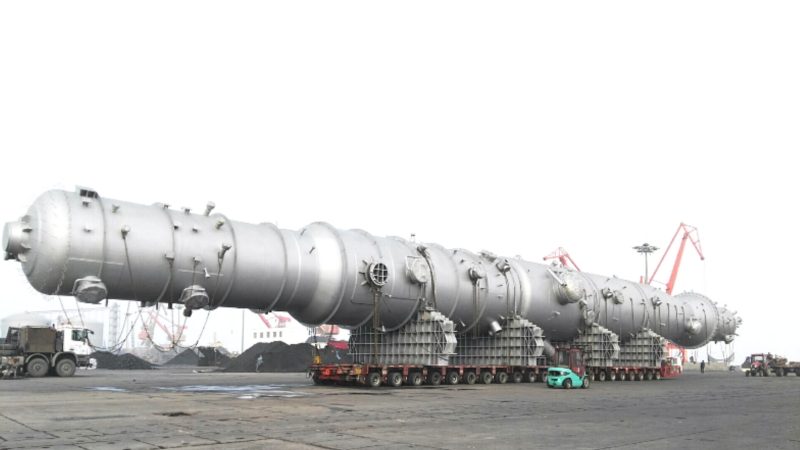
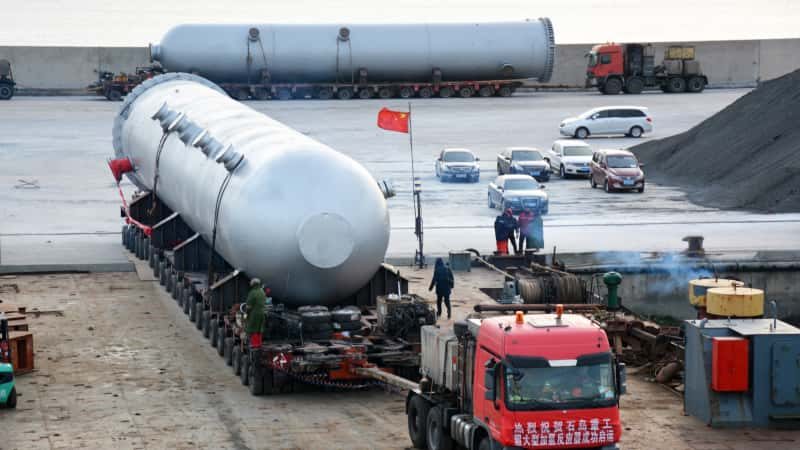
Large pressure vessels are manufacturing and logistics projects. A vessel may be technically correct but difficult to transport if size, weight, route limits, or port delivery requirements are ignored.
The RFQ should define delivery terms, destination, port requirement, maximum transport dimensions, shipping weight limits, lifting requirements, packing standard, marking requirements, and export documentation.
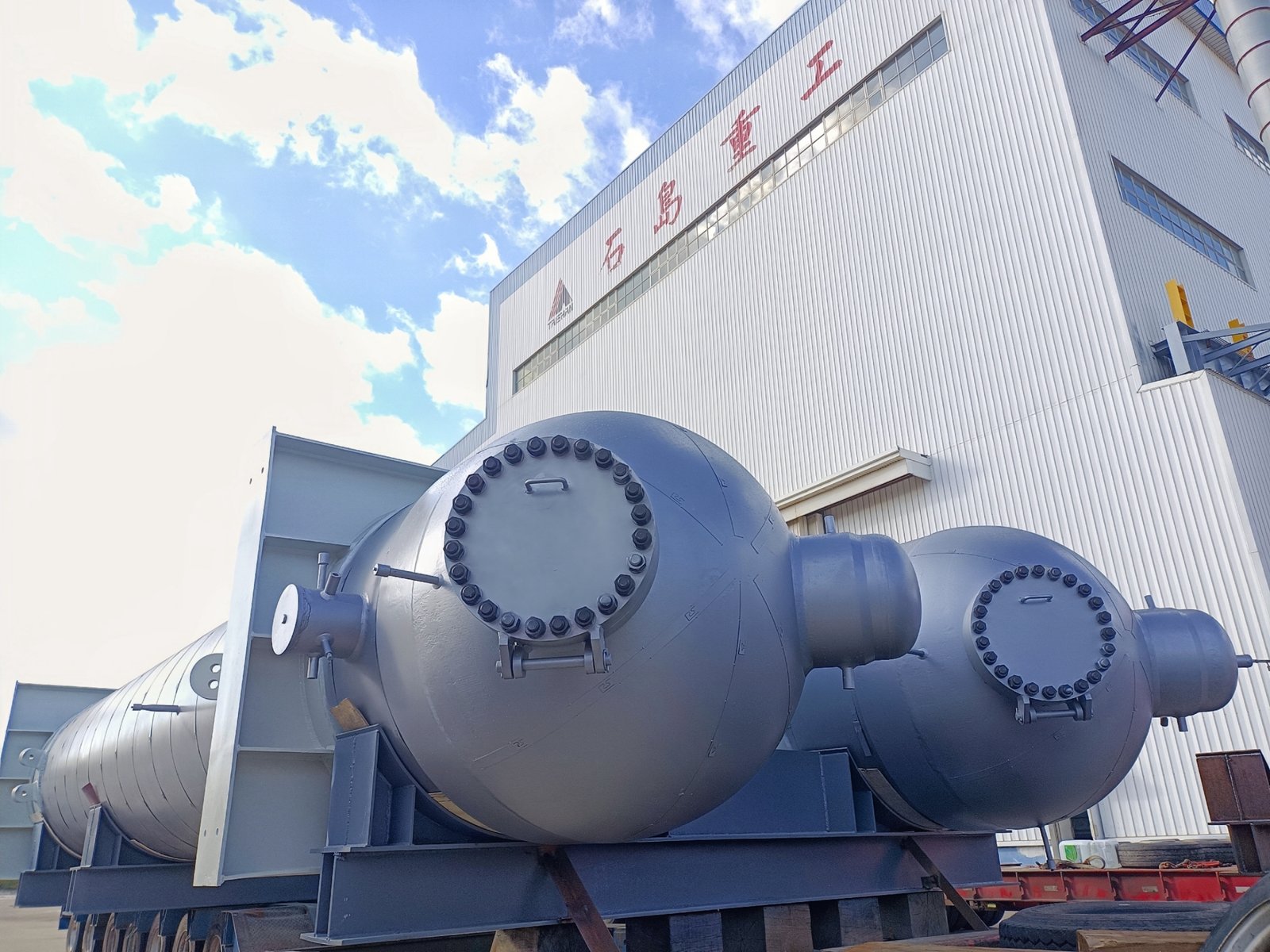
As a large-scale pressure vessel manufacturer, WSHI supports project-based manufacturing and delivery preparation for pressure vessels, separators, heat exchangers, towers, and large storage tanks. For related equipment categories, buyers may also review industrial heat exchangers, process towers and columns, and industrial storage tanks as part of complete project procurement.
9. Required Commercial and Project Information
Technical documents are essential, but commercial and project details also matter. Buyers should provide project name, end user if disclosure is allowed, destination country, delivery schedule, quotation currency, incoterms, documentation language, inspection agency if required, and expected quotation deadline.
If the project is still in budgetary stage, the buyer should state that clearly. If the inquiry is for firm procurement, the manufacturer may need more detailed drawings and approved datasheets.
Common RFQ Mistakes EPC Buyers Should Avoid
One common mistake is sending incomplete process data. A vessel name and approximate size are not enough for custom chemical pressure vessel procurement.
Another mistake is changing inspection requirements after fabrication starts. Additional NDE, third-party inspection, heat treatment, or documentation requirements can affect cost and schedule.
A third mistake is unclear delivery scope. EPC buyers should define whether the supplier is responsible for coating, preservation, loading, packing, export documents, and port delivery support.
Finally, buyers should avoid treating pressure vessels as isolated items when the project also requires separators, heat exchangers, towers, and storage tanks. Complete equipment planning usually produces better procurement control.
Inspection and documentation requirements can be added after fabrication without affecting cost or schedule.False
Late changes to NDE, third-party inspection, testing, heat treatment, coating, or data book requirements can affect workshop planning, cost, and delivery time.
Pressure Vessel RFQ Checklist
- Equipment list and tag numbers
- Process datasheets
- Mechanical drawings or GA drawings
- Material specifications
- Design code and project standards
- NDE and inspection requirements
- Pressure test requirements
- Coating, lining, and preservation requirements
- Documentation and data book requirements
- Delivery terms and transport limits
- Project schedule and commercial terms
Buyers can also download the pressure vessel catalog before preparing a formal RFQ package.
FAQ
What is the most important document for a pressure vessel quotation?
The process datasheet and mechanical drawing are usually the most important documents. Together, they define operating conditions, design conditions, geometry, materials, nozzles, supports, and inspection requirements.
Can I request a pressure vessel quotation without drawings?
A preliminary budget quotation may be possible with enough process data, but a reliable manufacturing quotation usually requires drawings or at least a clear general arrangement and technical specification.
What information should be included in a pressure vessel datasheet?
A datasheet should include design pressure, design temperature, operating conditions, medium composition, material requirements, corrosion allowance, applicable code, inspection scope, pressure test requirements, and any special project requirements.
Why do inspection requirements need to be confirmed before fabrication?
Inspection requirements affect welding control, NDE planning, hold points, documentation, cost, and delivery time. Late changes can delay fabrication or require rework.
Should EPC buyers prepare one RFQ for multiple equipment types?
For project-based procurement, it is often useful to define a complete equipment package, especially when the project includes pressure vessels, separators, heat exchangers, towers, and large storage tanks with connected delivery milestones.
Conclusion
A strong RFQ package helps EPC buyers receive more accurate quotations for custom chemical pressure vessels. The most important documents include the equipment list, process datasheet, mechanical drawing, material specification, applicable standards, inspection requirements, coating specification, delivery terms, and project schedule.
If you are preparing to order custom chemical pressure vessels, separators, heat exchangers, towers, or large storage tanks for a chemical, petrochemical, oil and gas, new energy, or environmental engineering project, WSHI can support manufacturing evaluation based on your drawings, datasheets, operating conditions, inspection requirements, and delivery expectations. You can contact our engineering team to discuss your RFQ package before quotation.