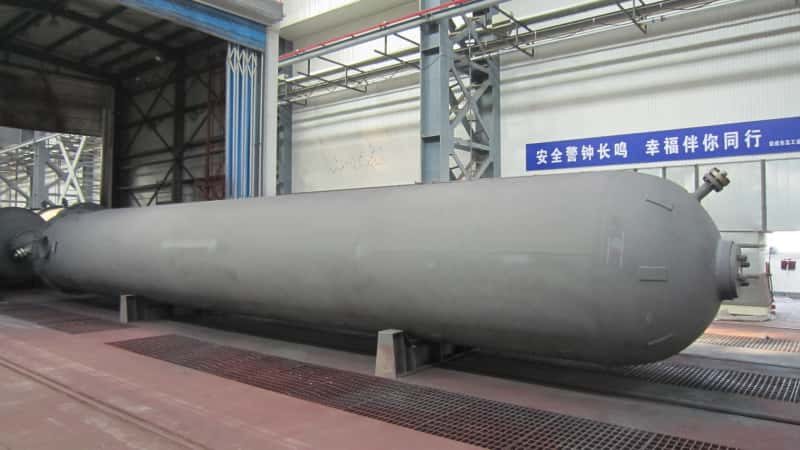


Selecting the wrong shell and tube heat exchanger can quietly sabotage your entire process—leading to energy inefficiency, unexpected shutdowns, excessive maintenance costs, or even catastrophic equipment failure. Many engineers underestimate the complexity of matching thermal performance with mechanical constraints, only to face issues like insufficient heat transfer, excessive pressure drop, or material degradation. The solution lies in understanding and correctly evaluating the core technical parameters that govern performance and reliability.
The critical technical parameters for selecting a shell and tube heat exchanger include heat duty (the required rate of heat transfer), allowable pressure drop on both shell and tube sides, and the operating temperature range. These factors directly influence exchanger size, configuration, material selection, and overall efficiency. Proper balancing of these parameters ensures optimal thermal performance, energy efficiency, and long-term operational stability.
To make an informed and technically sound decision, it’s essential to go beyond definitions and explore how these parameters interact in real-world engineering scenarios. Let’s dive deeper into each of these critical factors and how they shape the selection process.
Heat duty is the only parameter needed to select a shell and tube heat exchanger.False
While heat duty is crucial, parameters like pressure drop, temperature range, fouling factors, and material compatibility are equally important for proper selection.
Understanding Heat Duty: The Foundation of Thermal Design

Heat duty represents the amount of heat that must be transferred per unit time, typically expressed in kilowatts (kW) or British thermal units per hour (BTU/hr). It is the starting point for any heat exchanger design because it defines the thermal load the equipment must handle. Engineers calculate heat duty using process conditions such as mass flow rates, specific heat capacities, and temperature differences between inlet and outlet streams. In industrial applications like petrochemical refining, HVAC systems, or power generation, heat duty can range from a few kilowatts to several megawatts, making accurate calculation absolutely critical. From a design perspective, heat duty directly determines the required heat transfer area, governed by the relationship between heat load, heat transfer coefficient, and temperature driving force. When heat duty is underestimated, the exchanger will fail to meet process requirements, while overestimation leads to oversized equipment and unnecessary capital expenditure.
In practical engineering, heat duty must also account for dynamic operating conditions such as startup, shutdown, and load fluctuations. For example, in a refinery preheat train, crude oil temperature and flow rate may vary significantly, requiring flexible design margins. Additionally, fouling factors must be incorporated into heat duty calculations to ensure long-term performance. Deposits such as scaling, biofouling, or corrosion reduce effective heat transfer coefficients over time. Engineers typically add a fouling resistance margin based on industry standards, ensuring that the exchanger maintains required heat duty even after months or years of operation. Failure to include fouling considerations often results in gradual performance degradation, forcing frequent cleaning cycles and increasing maintenance costs.
Pressure Drop: Balancing Efficiency and Energy Consumption

Pressure drop is another critical parameter that significantly impacts both performance and operating cost. It refers to the loss of pressure as fluid flows through the exchanger due to friction, turbulence, and flow obstructions such as tube walls and baffles. Pressure drop must be carefully controlled because excessive values can increase pumping power requirements, leading to higher energy consumption and operating expenses. On the tube side, pressure drop is influenced by tube length, diameter, and flow velocity. Increasing velocity improves heat transfer by enhancing turbulence, but it also increases pressure losses sharply, creating a classic engineering trade-off.
On the shell side, the situation becomes more complex due to cross-flow patterns induced by baffles. Baffle spacing, cut, and orientation all influence fluid distribution and turbulence intensity. Engineers often use optimized baffle designs to maximize heat transfer while minimizing pressure drop penalties. In high-performance systems, even small reductions in pressure drop can translate into significant energy savings over time, especially in continuous operation environments such as chemical plants or power stations. Therefore, allowable pressure drop is usually defined early in the design phase based on pump capacity and system constraints.
| Design Parameter | Effect on Heat Transfer | Effect on Pressure Drop |
|---|---|---|
| Increased flow velocity | High improvement | Significant increase |
| Smaller tube diameter | Moderate improvement | High increase |
| Closer baffle spacing | High improvement | High increase |
| Smoother tube surface | Slight improvement | Reduction |
Temperature Range: Ensuring Material Integrity and Performance

The operating temperature range of a shell and tube heat exchanger plays a pivotal role in both thermal performance and mechanical integrity. It includes the inlet and outlet temperatures of both fluids as well as extreme operating conditions. High temperatures require materials that can resist oxidation, creep, and thermal fatigue, while low temperatures demand materials with high fracture toughness to prevent brittle failure. For instance, stainless steel and nickel-based alloys are commonly used in high-temperature applications, whereas specialized carbon steels or aluminum alloys may be selected for cryogenic systems.
Temperature differences between shell and tube sides also introduce thermal expansion challenges. If not properly addressed, differential expansion can lead to tube distortion, leakage, or even catastrophic failure. Engineers mitigate these risks through design features such as expansion joints, floating heads, or U-tube configurations. These structural solutions allow components to expand and contract independently without inducing excessive stress. Additionally, the log mean temperature difference (LMTD) determines the effective driving force for heat transfer. When temperature differences are small, larger heat transfer areas are required, increasing equipment size and cost.
| Temperature Condition | Design Implication |
|---|---|
| High temperature (>400°C) | Use heat-resistant alloys, allow expansion |
| Low temperature (<0°C) | Select materials with high toughness |
| Large ΔT | Manage thermal stress, use expansion joints |
| Small ΔT | Increase surface area or use multi-pass |
Integrating Parameters: A Holistic Design Approach

In real-world applications, heat duty, pressure drop, and temperature range cannot be considered in isolation. They are deeply interconnected, and optimizing one often affects the others. For example, increasing flow velocity to improve heat duty will raise pressure drop, while expanding surface area to compensate for low temperature differences may increase capital cost and footprint. Modern engineering design relies heavily on simulation tools and iterative calculations to balance these competing factors. Software platforms enable engineers to test multiple configurations, evaluate performance trade-offs, and arrive at the most efficient solution.
A practical case study from a petrochemical plant demonstrates this integration. Initially, a heat exchanger was designed with a focus on maximizing heat duty, but insufficient attention was given to pressure drop constraints. As a result, the system required higher pumping power, increasing operational costs significantly. After redesigning the exchanger with optimized baffle spacing and tube arrangement, engineers achieved a balanced solution that reduced pressure drop by 30% while maintaining the required heat duty. This not only improved energy efficiency but also extended equipment lifespan and reduced maintenance frequency.
Conclusion: Engineering Precision Drives Performance
Selecting a shell and tube heat exchanger is far more than a simple calculation—it is a complex engineering decision that requires a deep understanding of thermal dynamics, fluid mechanics, and material science. Heat duty defines the required performance, pressure drop determines operational efficiency, and temperature range ensures structural integrity and longevity. When these parameters are carefully balanced, the result is a system that delivers optimal performance, energy efficiency, and reliability.