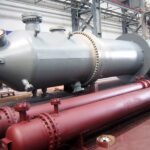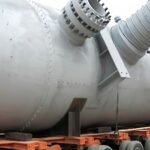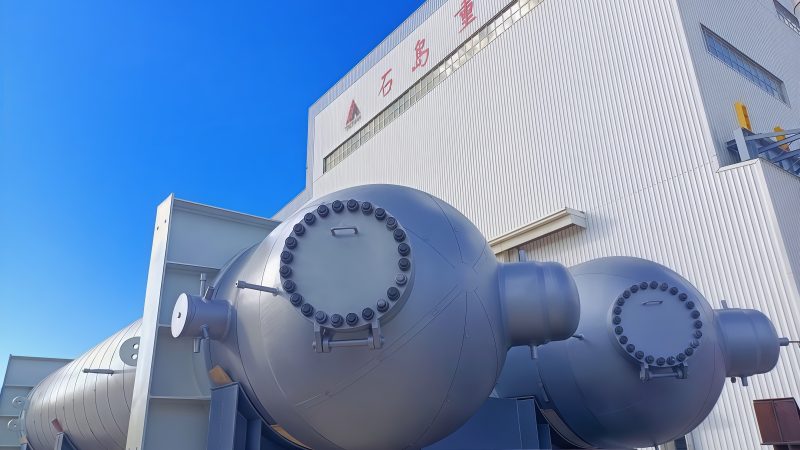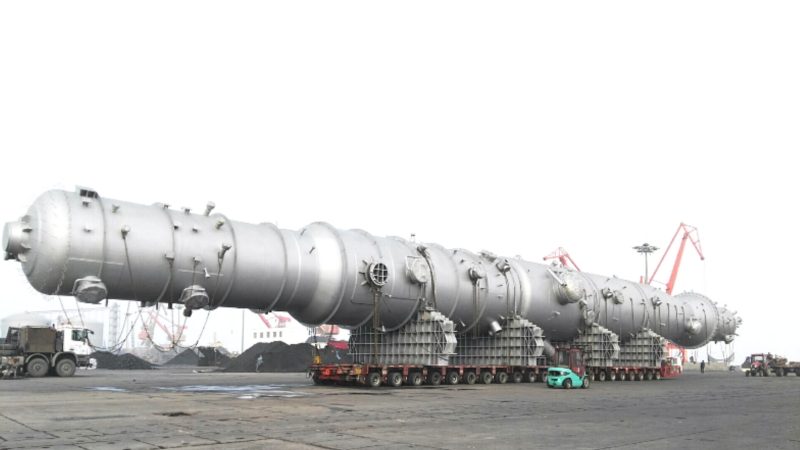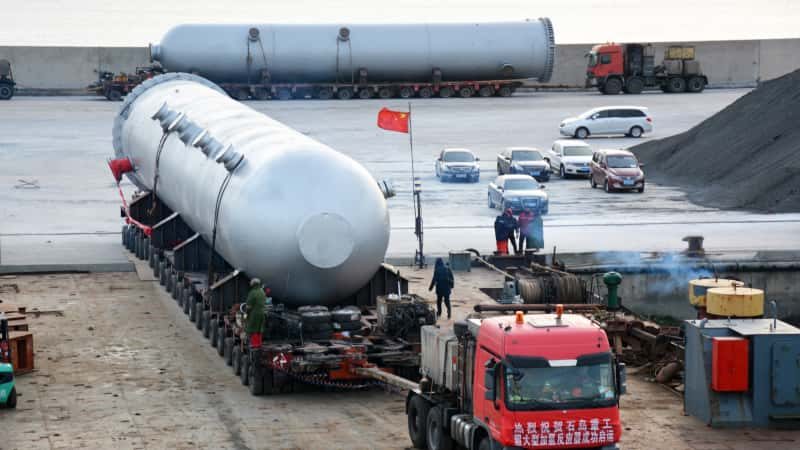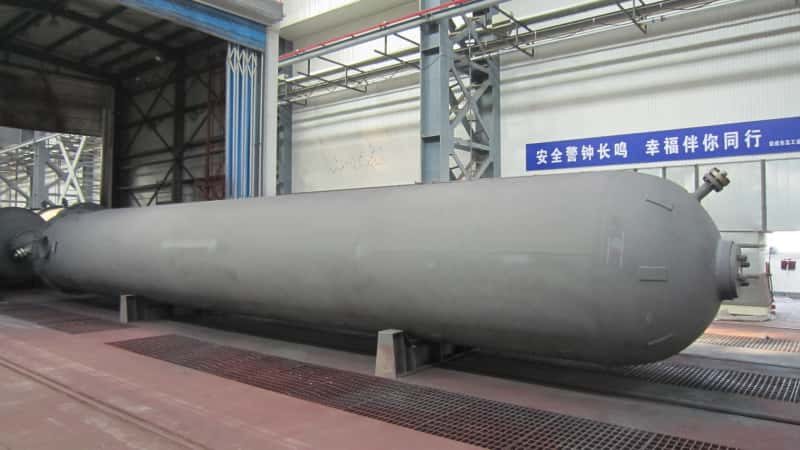

Misread the decision between shop fabrication and field assembly early in the FEED stage, and you will spend the rest of the project managing the damage. Wrong route selection has stalled reactor vessel installations by four to eight weeks, driven weld-repair scrap rates past 12% on site, and pushed total installed cost overruns into seven figures — not because the equipment was wrong, but because the delivery method was. The fabrication route is not a procurement detail; it is a schedule, quality, and logistics commitment that locks in cost structure from the moment the purchase order is issued.
EPC buyers choose between shop-fabricated and field-assembled pressure vessels based on three hard constraints: transport envelope (diameter above roughly 5–6 m or corridor height below 5.5 m typically forces field assembly), lift weight relative to site crane capacity, and the cost premium of mobilizing field welding and inspection teams versus the freight cost of moving a finished vessel. For vessels under approximately 200 tonnes, shop fabrication generally reduces total installed cost by 15–30%, depending on site location, local labor rates, and inspection jurisdiction.
What makes this decision genuinely difficult is that neither route dominates across all project conditions — and the factors that tip the balance are rarely all visible at the same time. Vessel geometry, site access, code jurisdiction, inspector availability, and schedule float interact in ways that can reverse an apparently obvious choice. The rest of this article works through each factor with the specificity that a project engineer or procurement manager can actually use.
Vessel Geometry and Weight Limits That Force the Field-Assembly Route
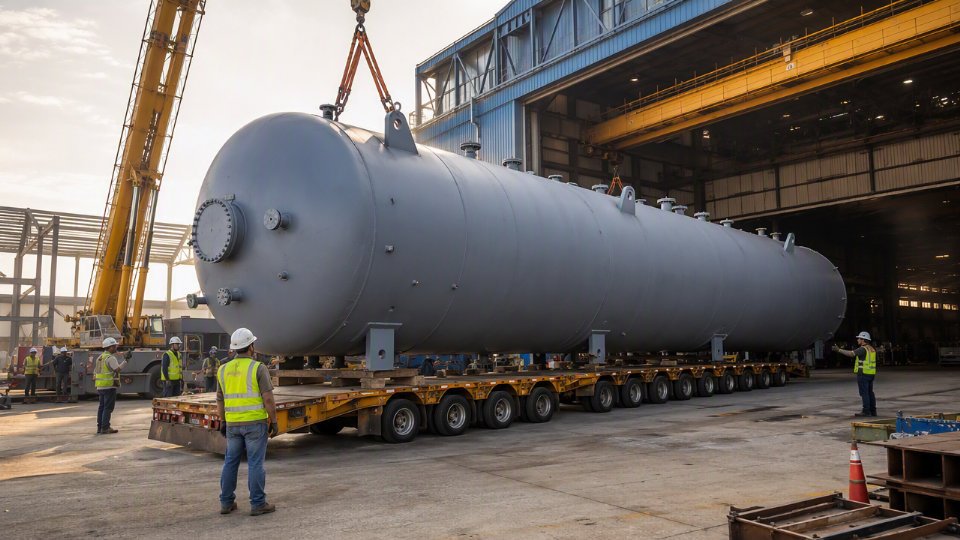
Physical reality ends the shop-versus-field debate faster than any commercial argument. Once a vessel’s dimensions or mass exceed what roads, bridges, and cranes can handle, the field-assembly route stops being a preference and becomes a constraint.
Road Transport Envelope Limits by Region
Every major industrial region publishes statutory limits on abnormal load movements, and those limits directly cap the diameter and length of any shop-fabricated vessel that will travel by road.
In North America, most state and provincial permit corridors allow a maximum transport height of 4.8–5.5 m (measured from road surface to the highest point of the load), a width envelope of 3.5–5.0 m, and axle-group loads governed by the Federal Bridge Formula in the U.S. or equivalent provincial regulations in Canada. Overhead utilities, interstate interchange structures, and railway overpasses routinely impose the binding constraint rather than the statutory maximum itself — it is common for a single low bridge on an otherwise-clear 400 km route to force a complete re-route or disqualify shop fabrication entirely.
Europe is more restrictive in practice. Most countries limit abnormal road loads to 4.0–4.5 m height clearance without a full route survey and escort permit, and width above 3.5 m typically requires police escort and nighttime-only movement windows. Transit through multiple countries — common for projects in Central or Eastern Europe — multiplies permit lead times, often adding 8–16 weeks to the procurement schedule.
The Middle East offers generally wider highway clearances (some Gulf corridor roads permit 5.5 m height), but desert heat imposes movement curfews, and desert highways frequently prohibit heavy abnormal loads during summer daylight hours. Port-to-site corridors in remote Saudi or UAE locations can still be the binding constraint when wadi crossings or elevated interchanges limit practical height.
Southeast Asia is arguably the most variable region. Indonesia, Vietnam, and the Philippines operate with effective height limits of 4.2–4.8 m on most inter-provincial roads, bridge load ratings that may not be formally documented, and port-to-site road widths in refinery or chemical park corridors that can fall below 4.0 m. Local road surveys are not optional — they are engineering deliverables.
How Diameter, Length, and Nozzle Orientation Interact
Shell diameter is usually the first disqualifying dimension, but the interaction between diameter, nozzle projection, and insulation cladding is what engineers underestimate. A vessel with a bare shell diameter of 4.8 m may transport cleanly, but add a 300 mm radial nozzle plus temporary shipping saddle reinforcement and the effective transport envelope can breach 5.5 m without anyone having noticed at the IFC drawing stage.
Shell length matters differently. Long, slender vessels — think atmospheric towers above 40 m — generate bending moments during transport that require intermediate support cradles, which themselves add to the load width. Beyond roughly 50–60 m, the turning radius requirement at road junctions becomes a separate engineering study.
When diameter exceeds roughly 5–6 m, the economics shift regardless of road access. Modular shop-built sub-sections — typically two or three shell courses, each within the transport envelope — become the preferred compromise. Each sub-section arrives at site with nozzles, internals, and full NDT complete; field welding is limited to the circumferential seam joints between modules, which can be radiographed and stress-relieved in the field.
ASME Section VIII Div. 1 and Div. 2 stamped shop-built vessels typically pass final inspection 20–40% faster than equivalent field-welded vesselsTrue
Controlled shop QA environments — consistent preheat, climate-controlled NDT, full-time third-party inspector access, and documented WPS execution — reduce hold points and re-inspection cycles compared to field conditions where weather, access, and shift changes all introduce variability.
Heavy-Lift Crane Availability at the Receiving Site
Even when transport is physically possible, the erection question is independent. A 180-tonne vessel may arrive at site in one piece only to find that the permanent crane infrastructure handles 120 tonnes maximum, and the nearest crawler crane rental with adequate capacity is booked 14 weeks out.
The lift weight threshold that typically forces field-erection-in-sections is roughly 150–250 tonnes for most grassroots industrial sites, though this range depends entirely on what crane fleet the site owner has committed to for other heavy-lift lifts already scheduled in the project execution window. On large refinery or LNG projects where a 1,200-tonne Liebherr LTM or equivalent is already on-site for column setting, the marginal cost of one additional shop-fabricated vessel lift is low. On a standalone chemical plant with no other heavy-lift program, mobilizing that same crane for a single vessel set can cost more than the fabrication saving.
The practical engineering decision: confirm crane availability, pad capacity, and access road load rating before closing the shop-fabrication option, not after.
Code Compliance and Inspection Authority Requirements for Each Fabrication Route
The fabrication route decision doesn’t just affect logistics — it fundamentally changes your quality assurance obligations, your inspection timeline, and in some cases, whether a vessel can legally enter service at all. Code bodies and inspection agencies treat shop welds and field welds as categorically different, and the gap in procedural burden is wide enough to move a project’s contingency budget by several percentage points.
How Major Pressure Vessel Codes Differentiate Shop and Field Welds
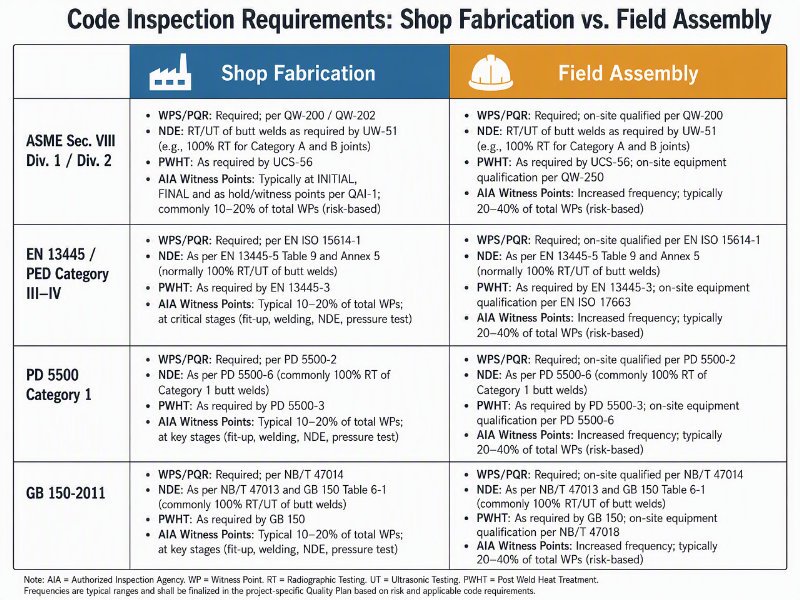
ASME Section VIII Division 1 and Division 2 don’t explicitly prohibit field fabrication, but they impose the same weld qualification and documentation requirements regardless of location — which is precisely where field execution gets expensive. A Division 2 vessel assembled in segments on site still requires full Code compliance: qualified welders, documented WPS/PQR records, and NDE coverage that matches the joint efficiency assumed in the design calculation. The practical problem is that radiographic examination of a circumferential seam at elevation, inside a partially erected column, costs two to five times what the same RT shot costs in a controlled shop bay, and scheduling delays compound when weather or access scaffolding interrupts the RT crew’s work window.
EN 13445 handles the distinction more explicitly. Category III and IV vessels under the Pressure Equipment Directive require notified body involvement at manufacturing hold points; field welds on those vessels trigger additional surveillance visits that must be contractually arranged well before mobilization. PD 5500 Category 1 construction similarly demands that any site welding procedure be pre-approved by the Inspecting Authority, not simply resubmitted after a shop-qualified WPS. GB 150-2011, China’s principal pressure vessel standard, requires that field welding procedures be separately approved by the local TSA (Special Equipment Safety Supervision) authority even when the original shop WPS was already reviewed — a duplication of effort that regularly adds four to eight weeks on cross-province projects.
Post-weld heat treatment introduces another layer of complexity. PWHT on a field seam of a large-diameter vessel often means either local induction heating with extensive thermocouple instrumentation or furnacing an assembled section — neither option is cheap. Local PWHT in the field is technically permissible under most codes but requires tighter temperature gradient control than a shop furnace naturally provides, and the soaking band width requirements for thick-wall hydrogen service vessels (typically ≥38 mm wall per ASME Code Case interpretations) make field compliance genuinely difficult to verify without additional hardness testing.
Authorized Inspection Agencies and National Competent Authority Approvals
An Authorized Inspection Agency — an ASME-accredited third party or a state boiler inspection agency — holds legal authority to witness and certify hold points. For a shop-built vessel, the AIA inspector works from a fixed location with scheduled witness points, predictable access, and complete documentation in one place. For a field-assembled vessel, the AIA must coordinate site access, travel, and often multiple jurisdictional approvals if the vessel crosses state or national borders before final assembly.
High-pressure service, hydrogen service, and sour (H₂S) service vessels attract heightened scrutiny from competent authorities in virtually every jurisdiction. In EU member states, a hydrogen storage sphere assembled on site would require the notified body to review the field welding and NDE plan as a formal design modification — not a simple addendum. In U.S. refinery projects, the state boiler inspector may require independent witness of field hydrotests even when the ASME Certificate Holder’s AI has already signed off, effectively doubling the inspection hold point schedule.
Field welds on sour service vessels typically require additional SSPC/NACE or equivalent hydrogen-induced cracking test coverage beyond standard shop WPS qualificationTrue
Most major oil company specifications and NACE MR0175/ISO 15156 implementation guidelines require HIC and SSC coupon testing at WPS qualification, and some client DEPs specifically state that field WPS requalification is mandatory even when shop WPS chemistry and heat input are nominally identical, because base metal heat from storage and transport can affect microstructure.
Client Specification Layers That Stack on Top of the Codes
Shell DEPs, ExxonMobil General Specifications, and similar owner engineering standards routinely impose requirements that exceed the referenced code baseline. For field welds specifically, these documents often mandate 100% RT or TOFD on all butt welds regardless of the joint efficiency credit taken in the design — even when Division 1 would permit spot RT at 85% joint efficiency. Requalification of WPS/PQR at site conditions (temperature, humidity range, consumable storage protocol) is a standard DEP requirement that fabricators accustomed to shop work routinely underestimate.
Budget the inspection and NDE premium for field welds realistically: on a complex column or reactor, the additional NDE, AIA visits, PWHT validation, and owner witness points for field seams commonly add 8–18% to the direct fabrication cost of those joints, depending on service severity and client specification tier. That figure doesn’t include the schedule float required when inspection hold points delay structural erection of adjacent equipment.
Total Installed Cost Breakdown: Shop Fabrication vs. Field Assembly Side by Side
Cost comparisons between shop fabrication and field assembly routinely get oversimplified into a fabrication-labor-only calculation. That’s where procurement teams get burned. Total installed cost (TIC) covers seven distinct buckets, and the balance between them shifts dramatically depending on vessel size, installation country, project schedule, and the competent authority’s willingness to accept foreign shop documentation.
Raw Material and Plate Procurement
Shop fabricators in major manufacturing hubs typically achieve 8–18% lower plate and forging costs than a field-assembly contractor sourcing locally at the job site. The spread depends on annual tonnage commitments, mill relationships, and whether the project falls during a commodity price spike. A shop running 3,000–5,000 tonnes of pressure vessel steel per year negotiates differently than a field contractor buying one vessel worth of SA-516-70 on the spot market. That procurement advantage is real, but it’s only the starting point.
Fabrication Labor Hours
This is where the labor-rate arbitrage argument is strongest. Shop fabrication in lower-wage manufacturing countries can reduce direct labor costs by 40–65% compared to union or statutory field labor rates in Western Europe, Australia, or North America. The exact differential depends on vessel complexity, weld joint category, and post-weld heat treatment requirements. A simple carbon steel separator involves fewer specialized welders than a clad-lined column with Category D nozzles. Don’t flatten those differences into a single percentage.
Surface Treatment and Painting
Controlled shop environments allow blast-and-coat cycles that are genuinely difficult to replicate in the field. Achieving Sa 2.5 or Sa 3 surface cleanliness outdoors, in humidity or wind, routinely requires rework that adds 15–30% to coating labor compared to shop conditions. For vessels with internal lining — rubber, epoxy, or fluoropolymer — field application almost always increases both material waste and inspection failure rates.
Transport and Heavy-Lift Logistics
This bucket is where shop-fabrication economics can unravel fast. Oversize load permits, escort vehicles, specialized trailers, and port handling for vessels in the 80–200-tonne range typically run 3–8% of fabricated vessel value for standard corridors. That figure climbs to 12–20% or higher when routes involve mountain passes, low bridges, or congested port infrastructure with limited heavy-lift crane availability. Expedited freight for a vessel that missed the scheduled vessel sailing can erase months of labor savings in a single invoice.
Shop fabrication typically reduces total installed cost by 15–30% for vessels under 200 tonnes lift weight compared to field assemblyTrue
This range aligns with published EPC project benchmarking data and reflects the combined effect of labor rate arbitrage, controlled QA environments, and bulk material procurement — though the actual saving is highly dependent on installation country labor rates, transport distance, and port infrastructure.
Field Labor and Scaffolding
Field assembly of a large vessel — erecting shell courses, fitting internals, installing trays or packing — requires sustained scaffold access that costs money every day it stands. Scaffolding and access systems for a column exceeding 30 meters typically represent 6–12% of field assembly labor cost, independent of the welding scope itself. That cost disappears entirely for a shop-built vessel arriving ready for installation.
Site QC, Inspection, and Re-inspection Risk
Shop-built vessels stamped under ASME Section VIII, PED, or equivalent codes arrive with a complete documentation package — MTRs, weld maps, NDE reports, hydrostatic test records. A competent local authority that accepts those documents shortens final inspection cycles considerably. The risk emerges when it doesn’t. Some jurisdictions require partial re-inspection or witness of local pressure tests regardless of shop certification. Budgeting zero contingency for this is optimistic; 2–5% of vessel fabrication value is a more defensible allowance when the receiving authority’s acceptance practice hasn’t been confirmed in writing before contract award.
Customs, Port Delays, and the Hidden Cost Cascade
Customs clearance delays on oversized or hazardous-classified vessels can run 2–6 weeks beyond planned schedule in ports with limited inspection bandwidth. Each week of delay carries a project carrying cost — crane pre-mobilization standing time, site labor waiting on the critical path item, and potentially liquidated damages exposure. These costs don’t appear on the fabrication quotation. They appear on the project control report six months later, attributed to “logistics variance.” Building realistic port clearance float into the schedule, and confirming import duty classification for the vessel’s HS code before purchase order, are the two procurement actions most often skipped and most often regretted.
| Cost Bucket | Shop Fabrication Driver | Field Assembly Driver | Typical Spread |
|---|---|---|---|
| Raw material / plate | Mill contract pricing | Spot or local sourcing | 8–18% lower for shop |
| Fabrication labor | Manufacturing country rates | Installation country rates | 40–65% lower for shop (rate-dependent) |
| Surface treatment | Controlled environment | Site conditions, rework risk | 15–30% lower for shop |
| Transport / heavy lift | Oversize logistics, port fees | Minimal — material only | 3–20% of vessel value (route-dependent) |
| Scaffolding / site access | Absent | 6–12% of field labor cost | Field adds cost |
| Inspection / re-inspection | Shop documentation package | Witness tests, local authority | 2–5% contingency for shop if acceptance unconfirmed |
| Customs / port delay | HS code, clearance time | Not applicable | Schedule risk; quantify per project |
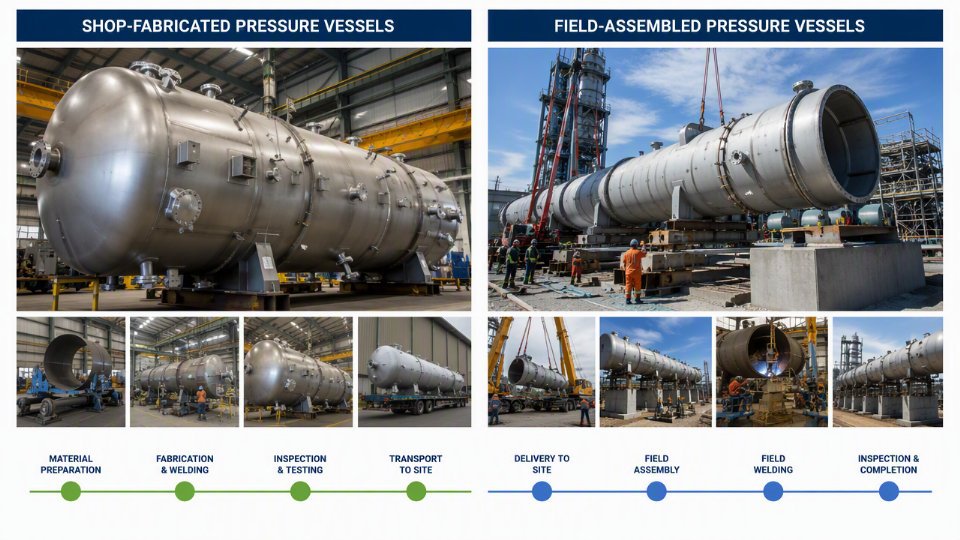
Schedule and Critical-Path Implications for EPC Project Timelines
Project managers often treat fabrication-route selection as a procurement decision that gets resolved early and then forgotten. That instinct is wrong. The route you choose reshapes the critical path from foundation pour to mechanical completion, and the schedule consequences tend to surface at exactly the wrong moment — when float has already been consumed by something else.
Shop Fabrication Opens Parallel Workstreams
The clearest schedule advantage of shop fabrication is the ability to run civil and mechanical scopes simultaneously. Once a purchase order is placed and drawings are approved, the fabrication shop begins rolling shell courses and fitting nozzles while your site contractor is still excavating anchor bolt pockets. On a typical refinery reactor or separator train, this parallel execution window runs 14–22 weeks depending on vessel complexity and mill lead times for pressure-quality plate. That overlap is real schedule compression — not acceleration achieved by adding resources, but by removing the dependency chain that forces sequential work.
Field assembly breaks that logic. Before a field welding crew can set up, the foundation must be cured and surveyed, scaffolding must be erected, the laydown area must be graded and accessible, and temporary shelter or weather protection may need to go up first. Each of those activities is a predecessor. In practice, meaningful field vessel work rarely begins until 6–12 weeks after civil substantial completion, depending on site complexity. On a greenfield project with a hard mechanical completion date, that serialization eats directly into contingency.
Transport Risk Is Real and Needs Explicit Float
Shop fabrication introduces a vulnerability that parallel execution cannot fully offset: the logistics window between shop release and site receipt. Oversize and overmass loads require route surveys, temporary bridge reinforcements in some corridors, and highway-use permits that vary by jurisdiction. Permit lead times alone range from 3 weeks for straightforward domestic moves to 14 weeks or longer when the route crosses multiple state or provincial boundaries, or when the vessel exceeds the standard envelope for the transport authority in question.
Port congestion adds another variable. Vessels shipped internationally face berth availability, customs examination holds, and inland forwarding delays that can stack unpredictably. A vessel that leaves a fabrication shop on schedule can still arrive 6–10 weeks late at site if port dwell time spikes — something that has happened repeatedly at major bulk ports during periods of container imbalance.
Oversize transport permitting lead times are fixed and predictable once a route survey is complete.False
Permit timelines depend on the issuing authority's workload, seasonal restrictions (frost laws, harvest-season road bans in agricultural regions), and whether bridge or utility crossings require engineering review. Even with a completed route survey, lead times can extend significantly if an authority requires independent structural assessment of a crossing.
EPC project managers should build explicit contingency float of 4–8 weeks into the procurement schedule milestone for shop-fabricated vessels that require oversize road or sea transport. That float should be tracked separately from general project contingency and should trigger a re-evaluation of transport strategy if it is consumed before the vessel ships.
When Field Assembly Is Actually Faster
The calculus inverts for remote, offshore, or island locations where transport infrastructure is the constraint rather than the enabler. If the nearest fabrication shop capable of handling a 7-meter-diameter column is 4,000 kilometers away and the only transport option is a barge with a 12-week booking lead time, field assembly using locally mobilized welders and rented equipment can deliver mechanical completion faster — even accounting for the sequential civil dependency described earlier. The fabrication duration for a large field-erected vessel typically runs 18–32 weeks depending on wall thickness and weld joint category, but that work can begin as soon as personnel and materials arrive. No port, no permit corridor, no lift-window coordination with a heavy-transport contractor.
Brownfield turnaround projects on offshore platforms follow the same logic. Replacing or augmenting a vessel that physically cannot be removed through existing access hatches or crane reach envelopes leaves field assembly as the only viable route regardless of schedule preference. In those cases, the schedule discussion shifts to crew mobilization lead time and consumable availability rather than transport risk — a meaningfully different set of variables to manage.
Quality Control Variables That Differ Between Controlled Shops and Open Job Sites
A pressure vessel’s mechanical integrity is only as reliable as the process that built it. When a technical lead or QA manager evaluates fabrication route, the quality engineering argument is rarely straightforward — shop fabrication carries real structural advantages, but field assembly is not inherently inferior if the right controls are imposed and funded. Understanding exactly where the gaps appear is what separates a defensible engineering decision from an assumption that becomes an NCR during hydrostatic testing.
Shop Environment Advantages That Directly Affect Weld Quality
A purpose-built fabrication shop gives welders and inspectors something a field site almost never can: a controlled, repeatable environment. Ambient temperature and relative humidity can be regulated or at least monitored continuously, which matters directly for preheat and post-weld heat treatment (PWHT) conformance. PWHT on Cr-Mo alloy vessels, for example, requires tight soak-temperature windows — typically ±14°C (±25°F) around the hold temperature per ASME Section VIII requirements — and a permanently installed furnace with calibrated thermocouples will hold that tolerance more reliably than a field resistance-heating blanket battling wind and ambient swings.
Fit-up precision improves when overhead bridge cranes can rotate and position a shell course to within millimeter tolerances before tacking. That translates directly to reduced misalignment at longitudinal and circumferential seams, which in turn reduces the probability of weld defects that require repair. Semi-automatic and mechanized welding processes — submerged arc welding for longitudinal seams, orbital GTAW for nozzle-to-shell — are practical in a shop because the fixturing infrastructure supports them. In the field, manual SMAW or FCAW is typically the only realistic option, and its quality is more operator-dependent.
Calibrated NDE equipment — fixed digital radiography panels, phased-array UT sets with certified setups, PMI analyzers — lives in the shop. Access geometry for radiography is planned into the build sequence from the start. An inspector can shoot a double-wall exposure on a 600 NPS nozzle weld with the vessel at the optimal orientation, not after it has been set on its foundation and surrounded by scaffolding.
Field Assembly Quality Risks That EPC Teams Frequently Underestimate
Weather-dependent welding is the most obvious risk but not always the most damaging one. Rain, humidity above 90%, and ambient temperatures below the minimum preheat value are individually manageable with shelter tents and heating equipment — but those controls cost time and money, and they are often the first items a subcontractor skips when the schedule tightens. A single night of inadequate preheat on a 2.25Cr-1Mo shell course can introduce hydrogen-assisted cracking that does not show on immediate post-weld inspection and surfaces months later in service.
Welder qualification continuity on multi-month field campaigns is a genuine document-management challenge. If a qualified welder leaves the project at month three and a replacement is brought in, that welder must hold a current qualification per the applicable procedure. Projects spanning six to twelve months have a real probability of personnel turnover that disrupts WPS/PQR continuity if the QC coordinator is not actively tracking it.
NDE accessibility on large-diameter field-erected vessels compounds the problem. Internal radiography on a 7-meter-diameter vessel with permanent internals partially installed is geometrically constrained in ways that a shop build sequence would have avoided by staging NDE before internal fitting.
Documentation chain-of-custody — MTRs, NDE reports, heat treatment charts, welder stamps — is harder to maintain on a multi-contractor field site than in a single shop with a centralized QMS. Traceability gaps during final data book compilation are one of the most common causes of delayed mechanical completion sign-off.
When Client Inspection Requirements Erase the Quality Gap — and Shift the Cost
Some owner-operators and EPC clients have responded to these risks by mandating equivalent inspection regimes regardless of fabrication route. That means 100% radiographic or TOFD examination of all field welds, third-party witness of all PWHT cycles, and independent PMI on every heat of alloy material. These requirements are technically achievable in the field.
Imposing shop-equivalent NDE and PWHT witness requirements on field assembly typically adds 8–18% to field fabrication cost, depending on vessel alloy grade, weld joint count, and site access conditions.True
Cost premium reflects mobilization of advanced NDE equipment to site, additional third-party inspector days, and extended schedule for witness hold points — consistent with field QA cost structures reported in IChemE and ASME project benchmarking guidance.
When those requirements are imposed, the economic case for field assembly narrows significantly. The route is still justified when geometry or transport physically forces it, but the assumption that field assembly is cheaper because shop overhead is eliminated stops being valid the moment the inspection specification is written to shop-equivalent standards. QA managers reviewing the project quality plan should verify which inspection regime the client specification requires before the cost estimate is locked — not during the pre-commissioning walkthrough.
Site Logistics, Rigging, and Civil Interface Factors EPC Buyers Must Confirm Early
Locking down the fabrication route without first auditing site logistics is one of the more expensive mistakes an EPC project team can make. A vessel that ships perfectly from the fabrication shop can become an immovable problem at the gate — or worse, halfway through a refinery access road — if the haul corridor was never properly assessed. This section is a working checklist, not a theoretical framework.
Site Access Audit: What to Verify Before You Sign the Fabrication Contract
Start with the delivery corridor from the nearest port or railhead to the battery limit. You need the actual surveyed data, not the general route a trucking company assumes it can use.
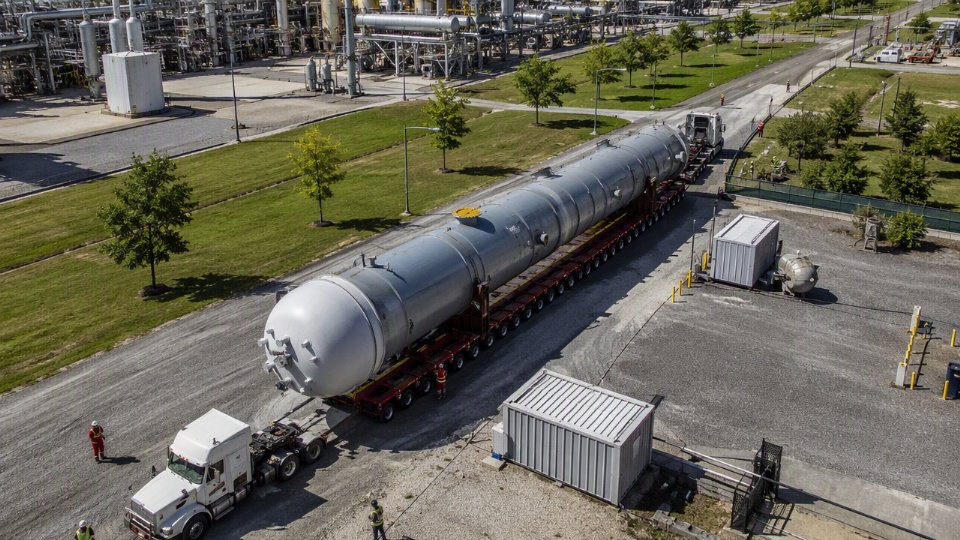
Haul-road width governs whether a lowboy with outrigger overhangs can physically pass. Vessels in the 3.5–5 m diameter range typically require a cleared corridor of 7–9 m depending on transport frame geometry and local regulations — verify this against the actual road reserve, not a satellite image. Load-bearing capacity matters just as much as width: unpaved or thinly paved plant-access roads commonly carry 40–60 tonne axle limits, and a multi-axle hydraulic transporter spreading a 180-tonne vessel across 20 axle lines still concentrates load differently than highway design assumes. Get geotechnical confirmation, not just a trucking contractor’s verbal assurance.
Bridges and culverts on the haul route are the most frequently overlooked choke points. A single municipal bridge rated at 60 tonnes posted load can force a 120-km detour or require temporary structural reinforcement — either option adds 3–8 weeks and $80,000–$300,000 depending on jurisdiction and bridge ownership. Survey every structure on the primary and alternate routes before fabrication begins.
Turning radius is geometrically non-negotiable. A vessel 18 m in length on a standard transport frame requires a swept path that can exceed 35 m at 90-degree intersections. Plot the actual plant-gate geometry, internal road intersections, and any fixed obstacles such as pipe racks or existing structures that sit within the swing zone.
Crane Pad Design and Heavy-Lift Readiness
Even when a vessel arrives successfully, inadequate crane pad preparation is a recurring source of schedule damage. A crane pad for a 300–500-tonne-capacity crawler crane must be designed to the crane manufacturer’s ground-bearing pressure specifications — typically 10–18 tonnes per square meter depending on boom configuration and lift radius. Soft or poorly compacted subgrade that looked acceptable during a dry season can fail during wet conditions, triggering crane re-mobilization costs of $50,000–$150,000 per incident and pushing the lift date out by weeks.
Crane pad civil work can be completed in parallel with vessel fabrication with no schedule impact if the lift location is confirmed before shop work begins.True
Crane pad construction is a civil workstream independent of vessel fabrication. Parallel execution is standard EPC practice, but it requires the erection point and crane selection to be fixed early — changes to lift radius or vessel weight after civil work starts are the typical cause of rework.
The consequence of deferring crane pad design is frequently a forced switch from shop fabrication to field assembly after contract award — at that point, the cost premium for field assembly arrives on top of already-spent engineering and transport mobilization costs.
Foundation Curing, Delivery Sequencing, and Adjacent Equipment Coordination
Foundation concrete for large pressure vessels typically requires 21–28 days of curing to reach the specified compressive strength before any anchor bolt tensioning or vessel load transfer. That curing window must be plotted against the fabrication shop’s delivery lead time — which for ASME-stamped shop-built vessels commonly runs 16–28 weeks depending on vessel complexity, material procurement, and inspection scheduling.
If the foundation is not ready when the vessel arrives on site, you face storage costs, potential coating damage from extended outdoor lay-down, and secondary rigging expenses when the vessel must be moved again. Conversely, if the vessel is delayed past foundation readiness and adjacent equipment has already been installed — heat exchangers, pumps, connected pipe structures — the lift window may be obstructed entirely, forcing a sequence change that cascades through the critical path.
The coordination matrix an EPC project engineer should maintain connects vessel delivery date, foundation pour date, concrete cure completion, crane pad readiness, adjacent equipment installation freeze, and transport corridor availability. Any one of these milestones slipping without the others adjusting accordingly is where field-assembly decisions get made reactively rather than proactively — and reactive decisions almost always cost more.
Vendor Selection Criteria When Issuing RFQs for Either Fabrication Route
Price is the wrong primary filter when evaluating fabricators for complex pressure vessel packages. An underbid shop that lacks the right WPS coverage or an NDE subcontractor who shows up with an expired field radiography license will cost you far more than the delta between their number and the next bidder. Structure your vendor evaluation around verifiable technical capability first, then commercial terms.
Prequalification Requirements for Shop Fabrication Vendors
Start with welding procedure qualifications — not a list of processes, but documented WPS/PQR coverage that matches your actual material grades and thickness range. A vendor holding procedures qualified to ASME Section IX for P-1 carbon steel is not automatically equipped to fabricate a 2205 duplex or 321 stainless vessel without re-qualification, which adds weeks. Confirm the thickness range tested in each PQR against your shell and head nominal dimensions, not nominal-minus-tolerance.
ASME U-stamp or U2-stamp (or the relevant national equivalent — PED Category III Notified Body authorization in Europe, GB 150 Type A license in China-export contexts) is a baseline, not a differentiator. What distinguishes shops is their third-party inspection track record: ask for the last three NBIC or AI annual audit reports, look for repeat nonconformance items, and check closure timelines. Patterns matter more than isolated findings.
In-house NDE capability significantly affects schedule and quality control. Shops that subcontract all RT and UT work introduce scheduling gaps and chain-of-custody issues with radiographic film or digital image files. For thick-wall or alloy vessels, ask explicitly whether the vendor holds ASNT Level III personnel on staff or on long-term retainer — not just “we use a qualified third party.” Phased array UT on nozzle-to-shell welds in particular benefits from in-house execution where the UT operator can re-scan within hours if the fabricator needs to grind and repair.
Additional Requirements for Field Assembly Specialists
Field assembly introduces variables that simply do not exist in a controlled shop. Your RFQ must probe these directly. Welding crew certification continuity is a common failure point: a vendor may reference a completed project but have turned over a significant portion of that crew. Ask for the specific continuity policy — how long a welder can be inactive before re-qualification is required, and how they manage that on multi-month site campaigns where crew rotation is unavoidable.
Mobile PWHT equipment ownership versus rental is a procurement risk that surfaces during execution. Owned equipment means the vendor controls the maintenance schedule and calibration records. Rented or subcontracted PWHT introduces a third party whose availability during your project’s critical window is not guaranteed. For vessels in hydrogen or wet H₂S service, PWHT is not optional, and a two-week delay waiting for a subcontractor’s furnace trailer directly affects your mechanical completion date.
Field radiography licensing is jurisdiction-specific and non-trivial. Confirm that the vendor holds or can obtain the required radiation source permits for your project site, and verify who manages source security and regulatory reporting. Some jurisdictions require source re-registration for each new job site, which takes four to eight weeks depending on the authority. Missing this in the RFQ stage means discovering the gap during site mobilization.
Request prior project references that match your service class and design pressure — not just vessel diameter or weight class. A field assembler with a strong track record on atmospheric storage tanks is not the same as one with demonstrated experience on 150-bar high-pressure separators with NACE MR0175 requirements.
Structuring the RFQ Document to Enable Real Comparison
RFQ documents that do not specify the fabrication route force vendors to assume different execution bases, making bids technically incomparable.True
When bidders independently choose shop or field routes, their pricing reflects different labor, logistics, and QA cost structures. Without a common basis, the lowest price may represent a riskier or lower-quality execution plan rather than genuine efficiency.
Explicitly state the intended fabrication route in the RFQ, or — where project constraints genuinely allow either — require vendors to price both alternatives as separate line items with distinct technical narratives. This immediately reveals which vendors have real capability in each route versus those quoting outside their core competency to win the bid. Require each bidder to submit a fabrication procedure outline with their commercial offer, not after award. Reviewing that document during bid evaluation, rather than during the pre-production meeting, is where you catch scope gaps before they become change orders.
Frequently Asked Questions from EPC Buyers About Pressure Vessel Fabrication Routes
Can a shop-fabricated vessel be split into field-welded sections if it exceeds transport limits, and how does this affect the ASME or EN stamp?
Yes, but the engineering and certification consequences are real. When a vessel is designed for shop fabrication and subsequently split at a circumferential seam to meet transport envelope restrictions, that field closure weld becomes a pressure boundary weld subject to the same code requirements as every other seam on the vessel. Under ASME Section VIII, the field weld must be performed under a valid U-stamp or, if a separate field erection stamp applies, under a U2 or field certification regime — the original shop stamp does not automatically extend to cover work performed outside that facility’s quality program.
Practically, the fabricator must either hold a field erection authorization or subcontract weld completion to an NBIC R-stamp holder, depending on whether the closure constitutes repair, alteration, or original construction. Either way, expect full NDE on the field seam — typically 100% radiographic or ultrasonic examination, not the spot-exam percentage that may have applied to shop seams under Div. 1. Hydrostatic re-test requirements depend on jurisdiction and the applicable code edition; some authorities require a full re-test on site, which has direct civil and lifting implications. Budget an additional 3–8 weeks for inspection coordination, NDE, and documentation closure, depending on the AI’s schedule and whether witness hold points are involved.
Which vessel services most commonly require field assembly regardless of transport feasibility?
Large atmospheric and low-pressure storage tanks — API 650 and API 620 territory — are almost always field-erected because their diameters routinely run 10–30+ meters, making transport physically impossible. Beyond storage, large-diameter absorber and scrubber columns in gas treating and sulfur recovery units frequently exceed road and rail envelopes at their design dimensions. Reactors with internal catalyst loading constraints present a different driver: even when a reactor shell could theoretically be transported whole, the internals configuration, bed support structures, or distributor geometry may require staged field assembly to achieve correct installation sequence and alignment tolerances. Cryogenic cold boxes, which integrate multiple process vessels into a single insulated module, are another category where field assembly of the cold box enclosure around pre-tested vessels is standard practice regardless of individual vessel size.
How do EPC buyers handle code jurisdiction conflicts when a vessel is shop-fabricated in one country but installed under a different national authority?
This situation arises regularly on international EPC projects, and ignoring it early creates certification delays at the worst possible moment — during pre-commissioning. The document package traveling with the vessel must satisfy both the country of manufacture and the country of installation. Where mutual recognition agreements exist (certain EU Pressure Equipment Directive alignments, or bilateral arrangements between specific jurisdictions), re-stamping may not be required, but the local Competent Authority still typically requires submission of the original manufacturer’s data report, material certifications, NDE records, and hydro-test documentation in a format they can audit.
Where no mutual recognition applies, re-stamping or local registration is the path. This usually involves engaging a locally accredited inspection body to review the complete technical dossier and, in some cases, witness additional NDE or pressure testing. Build 6–14 weeks into the project schedule for this process; the range depends on the specific jurisdictions involved, the completeness of the original documentation, and whether translation of quality records is required by the local authority.
What is the typical lead-time difference between a shop-fabricated and a field-assembled vessel for a 2,000 mm diameter, 20-bar column?
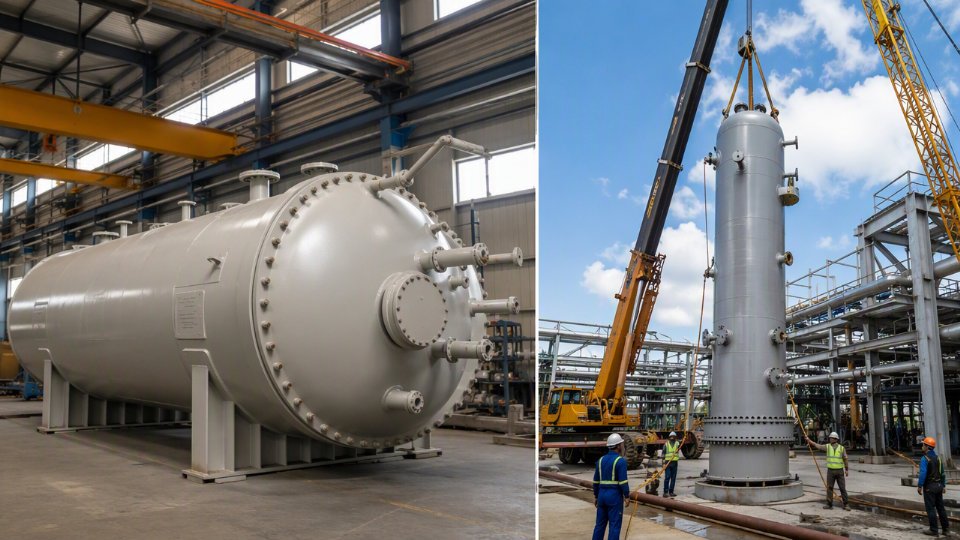
For a column at that diameter and design pressure — a size comfortably within shop fabrication capability in most industrial markets — a shop-built vessel typically runs 14–22 weeks from purchase order to delivery, depending on plate and nozzle material availability, the PWHT requirement, and the shop’s current backlog. A field-assembled equivalent adds mobilization, site civil readiness, sequential weld-inspect-NDE cycles under open-sky conditions, and final hydro, pushing total elapsed time to 22–36 weeks in realistic project conditions. The gap widens when the site is remote or when seasonal weather windows constrain outdoor welding. It narrows when the shop is heavily loaded and the field erection crew is already mobilized for concurrent work.
Shop-fabricated vessels under ASME Section VIII Div. 1 consistently pass final inspection faster than equivalent field-welded vessels.True
Controlled shop environments reduce NDE failure rates and documentation gaps that typically cause re-inspection cycles in field fabrication, supporting the 20–40% faster final acceptance range cited by quality engineers with multi-project experience.
How should an EPC contract apportion risk for field weld failures between the fabricator, the field erection contractor, and the EPC prime?
This is where contract drafting directly determines who absorbs a potentially expensive problem. The fabricator’s liability should be clearly bounded at the shop-inspected scope boundary — typically the last circumferential seam completed and hydro-tested in the shop. Any field closure welds or field-installed nozzles fall under the field erection contractor’s scope, and the contract should explicitly state this, with separate weld procedure qualifications, welder certifications, and inspection records maintained for that scope.
The EPC prime carries integration risk: if the interface between shop scope and field scope is poorly defined in the technical specification, disputes over defect origin become expensive and time-consuming. A clear weld map in the fabrication specification, with each seam labeled by responsibility, is not bureaucratic overhead — it is the document that resolves liability in the event of a hydro failure or a post-commissioning leak. Warranty periods for field welds should run from mechanical completion of the field scope, not from shop release date, and should not be linked to the fabricator’s warranty clock, which may have partially expired during a long transport and storage interval.