
Selecting between a vertical and horizontal pressure vessel is not only a layout decision. The orientation can affect footprint, liquid hold-up, gas-liquid separation, nozzle arrangement, foundation design, maintenance access, transportation, and installation. For EPC buyers, the right choice depends on the complete process duty, not a generic preference. A vertical vs horizontal pressure vessel comparison should always begin with medium, pressure, temperature, volume, site layout, inspection requirements, and project delivery constraints.
WSHI focuses on project-based custom pressure vessels, industrial storage vessels above 1,000 liters, separators, heat exchangers, towers, and custom chemical equipment. This article explains the practical factors buyers should review before confirming vessel orientation.
For pressure equipment context, ASME BPVC Section VIII Division 1 may be relevant where vessels are designed as pressure equipment. Final orientation, code basis, support design, and inspection scope should be confirmed by the project owner, EPC contractor, inspection authority, and qualified engineers.
A vertical pressure vessel is always better when plot space is limited.False
Vertical vessels reduce ground footprint, but buyers must still check height limits, platforms, crane access, wind or seismic loads, support design, transport, and maintenance access.
Pressure vessel orientation should be selected from process duty and project constraints, not habit.True
Liquid hold-up, separation duty, nozzle layout, foundation, maintenance, transport, and installation can all affect whether vertical or horizontal orientation is suitable.
What Is a Vertical Pressure Vessel?
A vertical pressure vessel is installed upright, usually supported by a skirt, legs, or another vertical support structure. It is often selected when plot space is limited, when gravity drainage is important, or when the process requires vertical phase separation, contacting, level control, or height-based operation.
Vertical vessels may be used for gas-liquid separation, scrubbers and absorbers, process columns, flash vessels, surge vessels, reactors, utility pressure vessels, and compact process units.
For process towers and columns, vertical orientation is usually part of the process function because height supports contacting, separation, or mass transfer.
What Is a Horizontal Pressure Vessel?
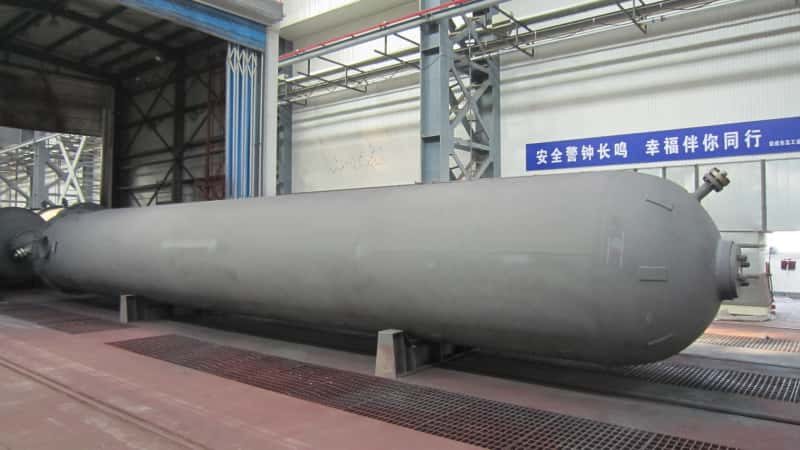
A horizontal pressure vessel is installed lengthwise and usually supported by saddles. It is often selected when larger liquid hold-up, easier access, lower overall height, or transport practicality is important.
Horizontal vessels may be used for pressure storage, three-phase separation, compressor suction drums, large buffer vessels, LPG or liquefied gas storage, condensate receivers, process surge drums, and heat exchanger shells in some configurations.
For industrial storage tanks and pressure storage vessels above 1,000 liters, horizontal orientation may be useful where liquid capacity, transport height, or site access must be considered.
Key Differences Between Vertical and Horizontal Vessels
Footprint and Site Layout
Vertical vessels use less ground area but require more height. This may be useful in crowded process units, but buyers must consider building height, crane access, maintenance platforms, ladder systems, wind loads, seismic loads, and installation method.
Horizontal vessels require more plot area but have a lower overall height. They may be easier to access for certain maintenance tasks and may simplify transportation for large-diameter vessels.
Liquid Hold-Up and Residence Time
Horizontal vessels can provide larger liquid hold-up for the same diameter because of their length. This can be useful for storage, buffering, three-phase separation, surge capacity, or liquid residence requirements.
Vertical vessels may be preferred when liquid inventory should be smaller, when fast drainage is needed, or when vertical disengagement supports the process.
Separation Duty
For gas-liquid separation, vertical vessels may be suitable where gas flow is moderate and liquid load is relatively low. Horizontal vessels may be considered when liquid load is higher or when more residence volume is required.
For three-phase separation, horizontal vessels are often reviewed because they can provide longer separation length and liquid residence volume. However, final separator orientation should be confirmed by process engineers based on actual flow and phase data.
Nozzle Layout and Piping Interface
Vertical and horizontal vessels have different piping and nozzle arrangement considerations. A vertical vessel may simplify top and bottom connections, while a horizontal vessel may provide more side nozzle options and easier access to certain process connections.
EPC buyers should review nozzle orientation with piping layout, instrument access, maintenance space, insulation, platform design, lifting requirements, and transport protection before fabrication.
Foundation and Supports
Vertical vessels may require skirts, legs, or specialized supports depending on height, weight, wind conditions, seismic conditions, and equipment loads. Horizontal vessels are commonly supported by saddles, which must match foundation, thermal expansion, operating weight, transport, and site installation considerations.
Support design should be confirmed by qualified engineers according to project requirements.
Transportation and Installation
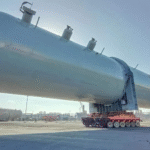
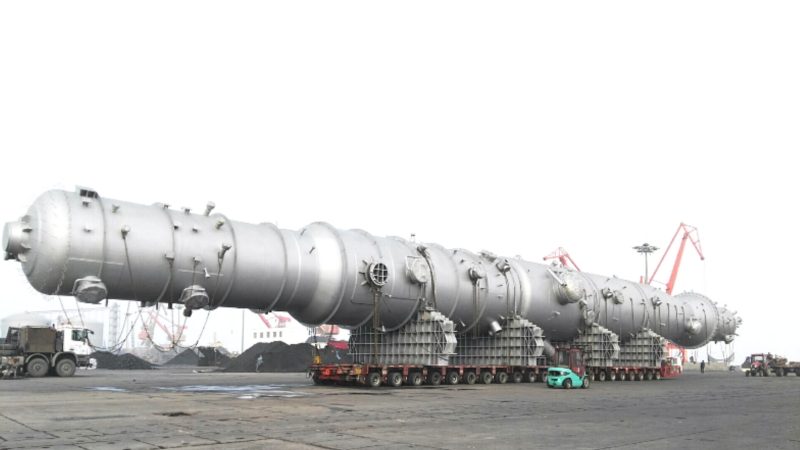
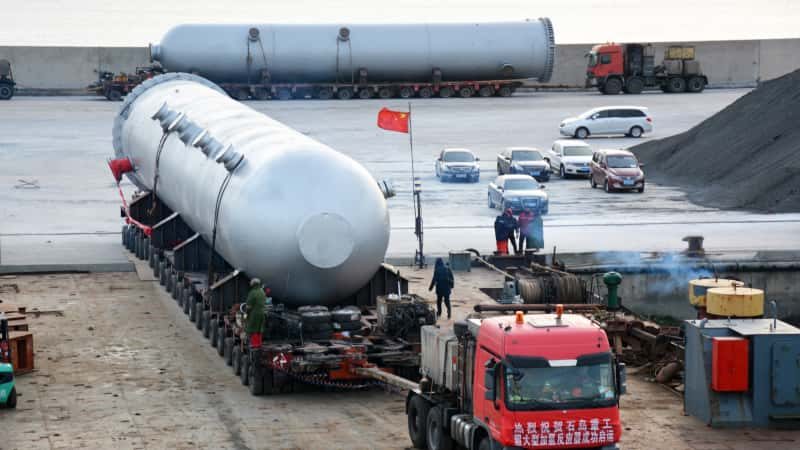
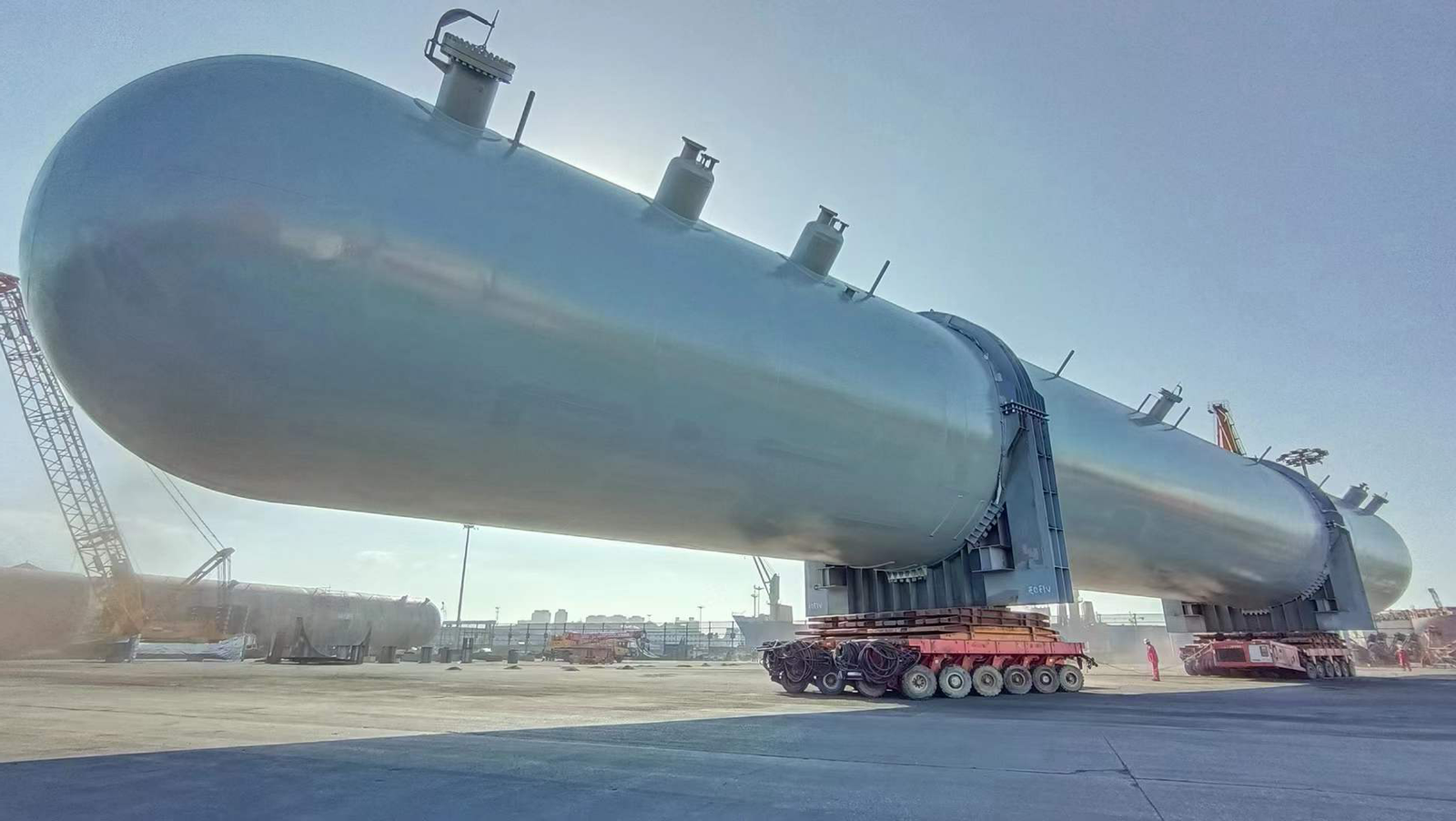
Transportation can influence vessel orientation. A very tall vertical vessel may require special route planning or field assembly. A long horizontal vessel may face length restrictions, turning-radius limits, or port handling constraints.
For export delivery, buyers should confirm shipping dimensions, lifting points, saddles, temporary supports, nozzle protection, coating protection, and packing requirements early in the project.
Vertical vs Horizontal Vessel Comparison
| Selection Factor | Vertical Vessel | Horizontal Vessel |
|---|---|---|
| Footprint | Smaller ground area, greater height | Larger ground area, lower height |
| Liquid hold-up | Often lower liquid inventory for similar diameter | Often better for larger liquid volume or residence time |
| Separation duty | Useful for some gas-liquid separation and column-type functions | Common for high liquid load, three-phase separation, and surge service |
| Access | May require platforms, ladders, and height access planning | Often easier for side access, manways, and ground-level maintenance |
| Transport | Height and route restrictions can matter for large vessels | Length, saddle design, turning radius, and shipping supports can matter |
How EPC Buyers Should Choose
The buyer should not select orientation based only on habit. Instead, the project team should define process function, medium and phase condition, required liquid hold-up, gas and liquid flow rates, operating and design pressure, operating and design temperature, available plot space, maintenance access, foundation and support requirements, transportation limits, inspection scope, and documentation needs.
For industrial pressure vessels, these inputs help the manufacturer evaluate feasibility, fabrication method, nozzle layout, support arrangement, surface treatment, and delivery planning.
RFQ Checklist for Vessel Orientation Review
| RFQ Item | Recommended Information |
|---|---|
| Process duty | Storage, separation, buffering, reaction, utility service, scrubber, column, receiver, or surge duty |
| Operating data | Medium, phase condition, flow rate, liquid load, required volume, residence time, pressure, temperature |
| Layout limits | Plot area, height restriction, maintenance clearance, platform access, adjacent equipment, piping route |
| Mechanical requirements | Support type, lifting lugs, nozzle schedule, nozzle orientation, insulation, coating, drainage, vents |
| Inspection and delivery | Code basis, NDT scope, pressure testing, documentation, transport limits, packing, port handling, site unloading |
Manufacturing and Quality Control Considerations
Both vertical and horizontal pressure vessels require controlled fabrication. Manufacturing may include plate cutting, rolling, forming, welding, nozzle fit-up, support fabrication, dimensional inspection, NDT, pressure testing where applicable, surface treatment, and final documentation.
For project-based pressure vessel manufacturing, EPC buyers should confirm approved drawings and datasheets, material certificates, welding procedure requirements, support and lifting design requirements, nozzle orientation and dimensions, NDT scope according to project specifications, hydrostatic or pneumatic test requirements where applicable, coating or painting requirements, packing, loading, and delivery method.
A large-scale pressure vessel manufacturer should be able to coordinate fabrication, inspection, coating, loading, and export delivery.
Common Selection Mistakes
One common mistake is choosing a vertical vessel only because plot space is limited, without checking maintenance height, crane access, platform requirements, wind or seismic loading, and transport route.
Another mistake is choosing a horizontal vessel for storage or separation without considering liquid level control, drainage, site footprint, support design, and nozzle access.
A third mistake is confirming vessel orientation before transportation limits are known. For large vessels, shipping and installation can affect the final configuration and should be reviewed before fabrication.
Related Equipment in Industrial Projects
Vertical and horizontal pressure vessels may be used alongside heat exchangers, process towers, separators, and storage vessels. For example, a horizontal separator may be installed after an industrial heat exchanger, while a vertical vessel may support scrubber towers or chemical process systems.
For chemical, petrochemical, oil and gas, environmental, and new energy projects, vessel orientation should be reviewed as part of the complete equipment package.
FAQ
Is a vertical pressure vessel better than a horizontal pressure vessel?
Neither is always better. The choice depends on process function, liquid hold-up, separation duty, site layout, maintenance access, support design, and transport limits.
When is a horizontal pressure vessel commonly used?
Horizontal vessels are often used for pressure storage, surge volume, three-phase separation, compressor suction service, condensate receivers, and applications requiring larger liquid hold-up.
When is a vertical pressure vessel commonly used?
Vertical vessels are often used for gas-liquid separation, process columns, scrubbers, flash vessels, reactors, and applications where floor space is limited.
Can the orientation be changed after design?
Changing orientation can affect supports, nozzles, pressure design, piping layout, foundation, inspection, and transport. It should be reviewed before fabrication.
What information is needed for vessel orientation review?
Buyers should provide process duty, medium, pressure, temperature, volume, flow rates, liquid hold-up, site layout, installation limits, inspection requirements, and delivery constraints.
Conclusion
The choice between a vertical vs horizontal pressure vessel depends on process duty, footprint, liquid hold-up, separation needs, nozzle layout, foundation, maintenance access, and transportation limits. EPC buyers should confirm these factors before finalizing drawings and procurement.
If you are planning a chemical, petrochemical, oil and gas, environmental, or new energy project, you can discuss your project requirements with an engineering team or download the pressure vessel catalog. Sharing drawings, operating conditions, required capacity, orientation constraints, material requirements, and inspection specifications will help support manufacturing feasibility review.