
When Should a Chemical Plant Use Vertical or Horizontal Pressure Vessels?
Choosing between a vertical pressure vessel and a horizontal pressure vessel is not only a mechanical layout decision. For EPC buyers and project engineers, vessel orientation can affect gas-liquid separation, liquid hold-up, pressure drop, installation space, transport limits, nozzle arrangement, inspection access and long-term operation. A vessel that looks correct on a datasheet may still create problems if it does not match the process duty and site conditions.
For chemical, petrochemical, gas processing, environmental and new energy projects, orientation should be reviewed as part of the complete equipment package, not as a standalone shell design issue. Nozzles, supports, instruments, lifting points and internals should be coordinated within the complete vessel scope rather than treated as unrelated small items.
A vertical pressure vessel is always better than a horizontal pressure vessel because it saves floor space.False
Vertical vessels can reduce footprint, but horizontal vessels may be more suitable for liquid hold-up, residence time, gas disengagement area, maintenance access or transport requirements.
Pressure vessel orientation should be confirmed before fabrication release.True
Changing vessel orientation after fabrication starts can affect supports, nozzles, lifting points, drainage, inspection access, coating and site installation.
What Is Vessel Orientation?
Vessel orientation refers to whether a pressure vessel is installed vertically or horizontally. Both configurations can be used for custom pressure vessels, separators, drums, receivers, storage vessels, reactors and other process equipment.
The correct choice depends on what the vessel needs to do. A vertical vessel may be preferred where floor space is limited or where gravity-assisted separation is important. A horizontal vessel may be preferred where liquid residence time, gas disengagement area or maintenance access requires more length.
There is no universal “better” orientation. EPC buyers should define the process requirement first, then evaluate mechanical design, maintenance access, transport limits and site constraints.
Vertical vs Horizontal Pressure Vessel Comparison
| Selection factor | Vertical pressure vessel | Horizontal pressure vessel |
|---|---|---|
| Plot space | Uses less floor area but more height | Uses more length and foundation area |
| Liquid hold-up | Can be limited by diameter and height constraints | Often practical for larger liquid volume and residence time |
| Gas-liquid separation | Common for knock-out and vapor disengagement duties | Common where larger interface area or liquid load is important |
| Maintenance access | May require platforms or elevated access | May offer easier ground-level access for some items |
| Transport | May be transported horizontally and erected on site | Length can become a transport constraint |
| Typical examples | Scrubbers, columns, vertical separators, receivers | Surge drums, horizontal separators, condensate vessels, receivers |
When Vertical Pressure Vessels Are Commonly Used
Limited Plot Space
Vertical pressure vessels are often used when the plant layout has limited floor area. Because the vessel uses height rather than length, it can reduce footprint in congested process units.
This can be useful in petrochemical plants, gas treatment units, scrubber systems and compact process areas where piping and equipment density are high. However, buyers must still check total height, lifting method, platform access and transportation limits.
Gas-Liquid Separation Duties
Vertical vessels are frequently used for gas-liquid separation, vapor disengagement and knock-out service when the process design supports this configuration. Gravity helps liquid fall to the bottom while gas exits from the top.
For a gas-liquid separator vessel, EPC buyers should provide gas flow, liquid load, operating pressure, temperature, medium composition, droplet removal expectation if defined and allowable pressure drop. The manufacturer should not be expected to size the vessel from a name alone.
For related applications, WSHI supports pressure vessels for oil and gas where separators, drums, heat exchangers and process vessels must be coordinated with the full system.
Process Columns and Towers
Tall equipment such as absorbers, scrubbers, distillation columns and stripping columns is usually vertical because the process depends on staged contact, gravity flow or vertical vapor-liquid movement.
If the project includes tower equipment, EPC buyers should review process towers and columns early because height, diameter, lifting points, shipping sections and field installation may affect the procurement plan.
When Horizontal Pressure Vessels Are Commonly Used
Larger Liquid Hold-Up
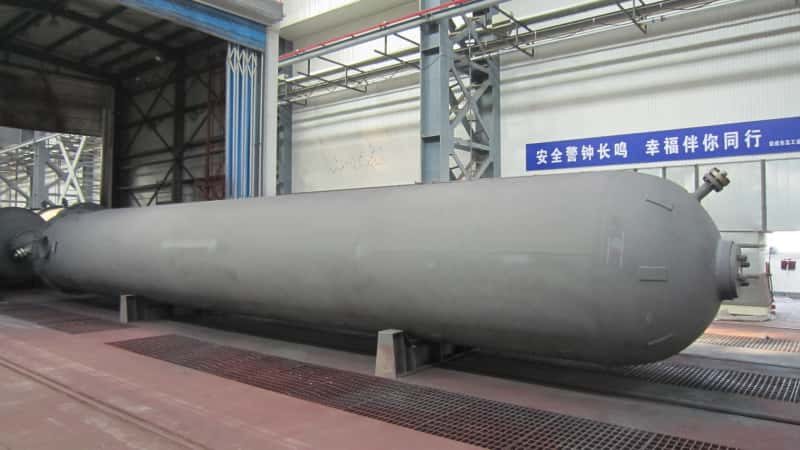
Horizontal pressure vessels are often selected when the process requires more liquid storage volume, longer residence time or easier liquid level control. The long cylindrical shape can provide practical volume without excessive height.
This is common for surge drums, receivers, horizontal separators, condensate vessels and some large storage applications. For storage projects, the content should be specified for industrial scale above 1,000 liters, with the full tank scope defined by drawings, medium, design conditions and delivery requirements.
High Flow or Multiphase Separation
Horizontal separators can provide a larger gas-liquid interface area, which may help in certain separation duties. In oil, gas and chemical processing, horizontal orientation may be considered when liquid load is high or when the process needs more separation residence time.
The final selection should follow process engineering calculations and project specifications. Buyers should avoid choosing orientation only based on past projects, because gas density, liquid properties, flow rate and pressure conditions can vary widely.
Easier Ground-Level Maintenance
Horizontal vessels may provide easier access to heads, supports and certain nozzles at ground level. This can simplify inspection and maintenance planning in some plants. However, they require more horizontal space and may affect pipe routing, foundation design and transport dimensions.
Key Factors EPC Buyers Should Review
1. Process Function
The first question is what the vessel does. Is it a separator, buffer vessel, receiver, reactor, flash drum, knock-out drum, storage vessel or process column? Each duty may point toward a different orientation.
2. Flow Rate and Residence Time
Flow rate, vapor velocity, liquid load and residence time strongly influence orientation. For separation equipment, buyers should provide process data rather than asking for a standard vessel. Incorrect assumptions can lead to carryover, unstable levels or poor downstream protection.
3. Pressure and Temperature
Both vertical and horizontal pressure vessels must be designed around operating pressure, design pressure, operating temperature, design temperature and possible vacuum condition. If the vessel is code-stamped or built to a specified pressure vessel code, the buyer should state the required code and edition.
ASME BPVC Section VIII, Division 1 is often referenced for pressure vessel design, fabrication, inspection and testing, but the correct code path depends on project location, contract requirements and local regulations.
4. Material and Corrosion Risk
Material selection depends on medium composition, corrosion risk, temperature and service conditions. EPC buyers should provide data on chemicals, gas composition, water content, chlorides, CO2, H2S, pH, solids and impurities where relevant.
For corrosive or hazardous service, the project may require corrosion allowance, stainless steel, cladding, lining, internal coating, post-weld heat treatment or additional inspection. These requirements should be defined by engineering specifications.
5. Layout, Support and Installation
Orientation affects plot plan, foundation, saddle or skirt support, lifting plan, platform arrangement and pipe routing. A vertical vessel may require lifting height and structural access. A horizontal vessel may require more ground space and longer foundations.
Nozzle orientation, manways, drains, vents and instrument connections should be coordinated within the complete vessel design. They should not be purchased or reviewed as separate small parts outside the full equipment scope.
6. Transport and Export Delivery
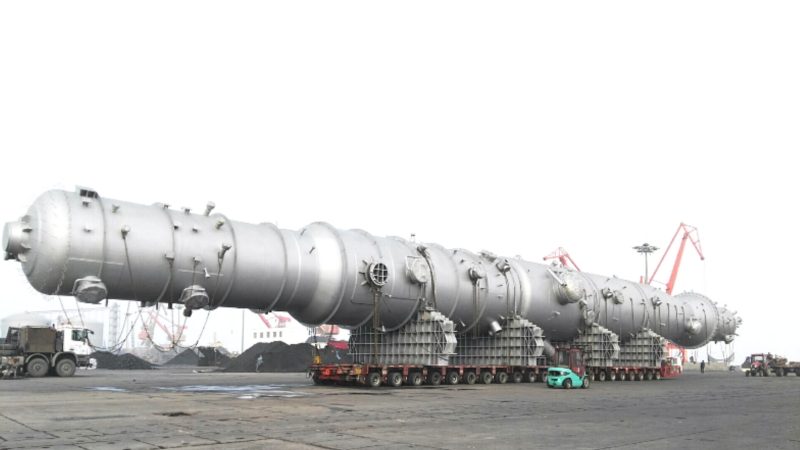
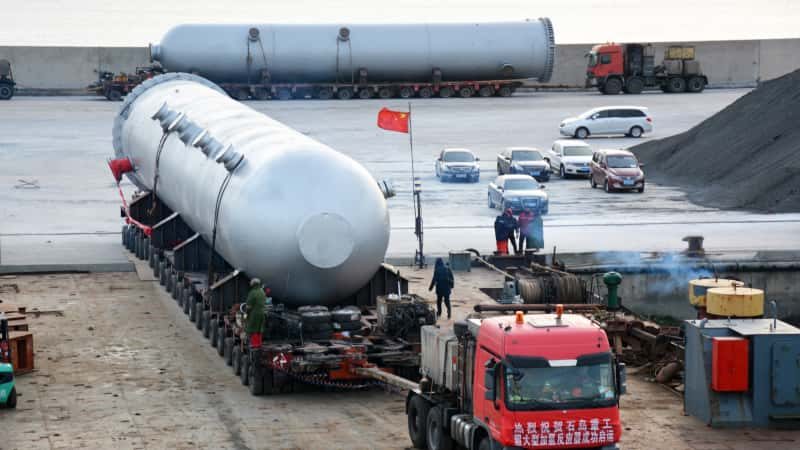
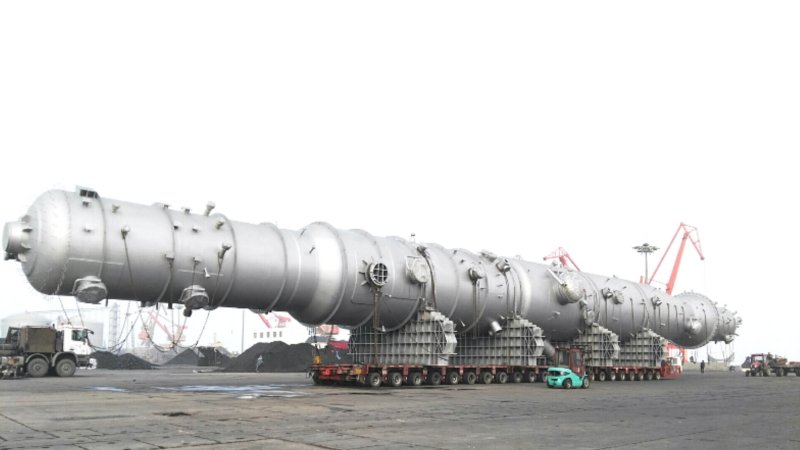
Large vessels may be limited by road transport, port handling, lifting capacity, shipping length, diameter and weight. A vertical vessel may need to be transported horizontally and erected on site. A horizontal vessel may be easier to transport in its operating orientation, but length can still become a constraint.
For overseas EPC projects, packing, preservation, lifting points, saddle supports, center of gravity marking and port delivery should be clarified before fabrication release.
Manufacturing and Quality Control Considerations
A capable large-scale pressure vessel manufacturer should review manufacturability before production. This includes plate rolling, welding sequence, heat treatment, machining, support design, lifting arrangement, coating and transport planning.
Depending on project specifications, inspection may include visual inspection, radiographic testing, ultrasonic testing, magnetic particle testing, penetrant testing, dimensional inspection, pressure testing and coating inspection. For hazardous chemical service, the EPA Risk Management Program and EPA RMP rule overview provide useful regulatory background for accident prevention and risk management concepts. Applicability must be confirmed by the owner, EPC contractor and qualified specialists.
WSHI supports pressure vessel manufacturing for chemical, petrochemical, gas processing and industrial projects based on drawings, datasheets and agreed inspection requirements.
RFQ Checklist for Vertical or Horizontal Pressure Vessels
Before requesting a quotation, EPC buyers should prepare:
- Vessel type and process function
- Required vertical or horizontal orientation, if already decided
- Process datasheet and drawings
- Flow rate, liquid load and residence time requirement
- Operating and design pressure
- Operating and design temperature
- Medium composition and corrosion data
- Material grade and corrosion allowance
- Applicable code and project standards
- Nozzle orientation and connection schedule within the full vessel scope
- Support type and foundation interface
- NDE, testing and third-party inspection requirements
- Coating and preservation requirements
- Transport size, weight and delivery terms
- Documentation package requirements
If the orientation has not been finalized, the RFQ should clearly ask the manufacturer to review fabrication feasibility after the EPC engineering team defines the process basis.
Conclusion
A chemical plant should use vertical or horizontal pressure vessels based on process duty, flow behavior, separation needs, liquid hold-up, available plot space, maintenance access, material requirements and transport constraints. The right orientation is not chosen by appearance; it is chosen by engineering conditions and project delivery requirements.
If you are preparing an EPC inquiry for vertical pressure vessels, horizontal pressure vessels, separators, drums, process vessels or related petrochemical pressure vessels, you can share your drawings, datasheets, operating conditions and delivery requirements with WSHI. Our team can support early communication for fabrication feasibility, quality control planning and project delivery review. You can discuss your project requirements with our engineering team.
FAQ
Is a vertical pressure vessel better than a horizontal pressure vessel?
Not always. Vertical vessels may save plot space and suit certain gas-liquid separation or column duties. Horizontal vessels may support larger liquid hold-up and easier ground-level access. The final choice depends on process and site conditions.
When should a horizontal pressure vessel be used?
A horizontal pressure vessel may be used when the project requires larger liquid volume, longer residence time, practical level control or a horizontal layout that fits the site and transport plan.
When should a vertical pressure vessel be used?
A vertical pressure vessel may be used when space is limited, when gravity-assisted separation is suitable, or when the process requires vertical contact, such as towers, columns or scrubbers.
What information is needed to choose vessel orientation?
Buyers should provide process duty, flow rate, liquid load, pressure, temperature, medium composition, residence time, layout constraints, inspection requirements and delivery limitations.
Can vessel orientation be changed after fabrication starts?
Changing orientation after fabrication starts is usually difficult and may affect supports, nozzles, lifting points, drainage, inspection and coating. Orientation should be confirmed before fabrication release.