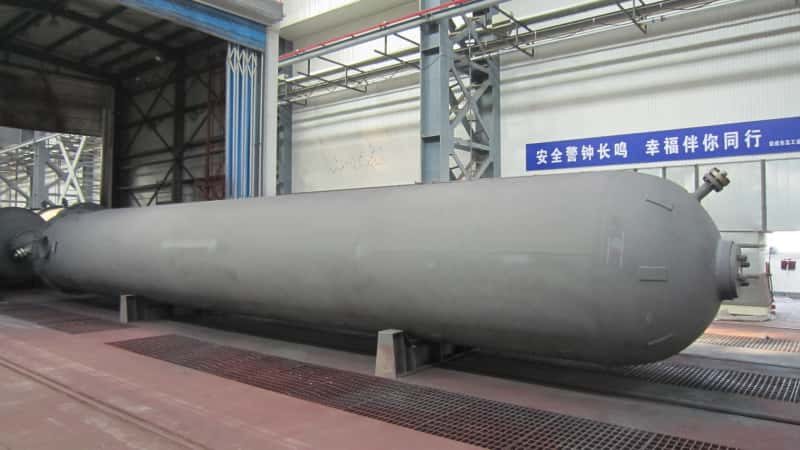

Methanol synthesis does not end when syngas is converted into crude methanol. The crude product normally contains water, dissolved gases, light-boiling compounds, ethanol, higher alcohols, organic acids, ketones, esters, and other by-products. A methanol plant therefore needs a carefully designed distillation train to remove impurities, recover methanol, control energy use, and consistently produce saleable product.
The main distillation columns used in methanol production plants are usually a topping or light-ends column and a main refining or rectification column. Large, high-purity, or energy-optimized plants may add pressure columns, atmospheric final columns, recovery columns, or dedicated side-draw systems. The correct arrangement depends on crude methanol composition, product specification, plant capacity, steam and cooling costs, wastewater limits, and process licensor requirements.
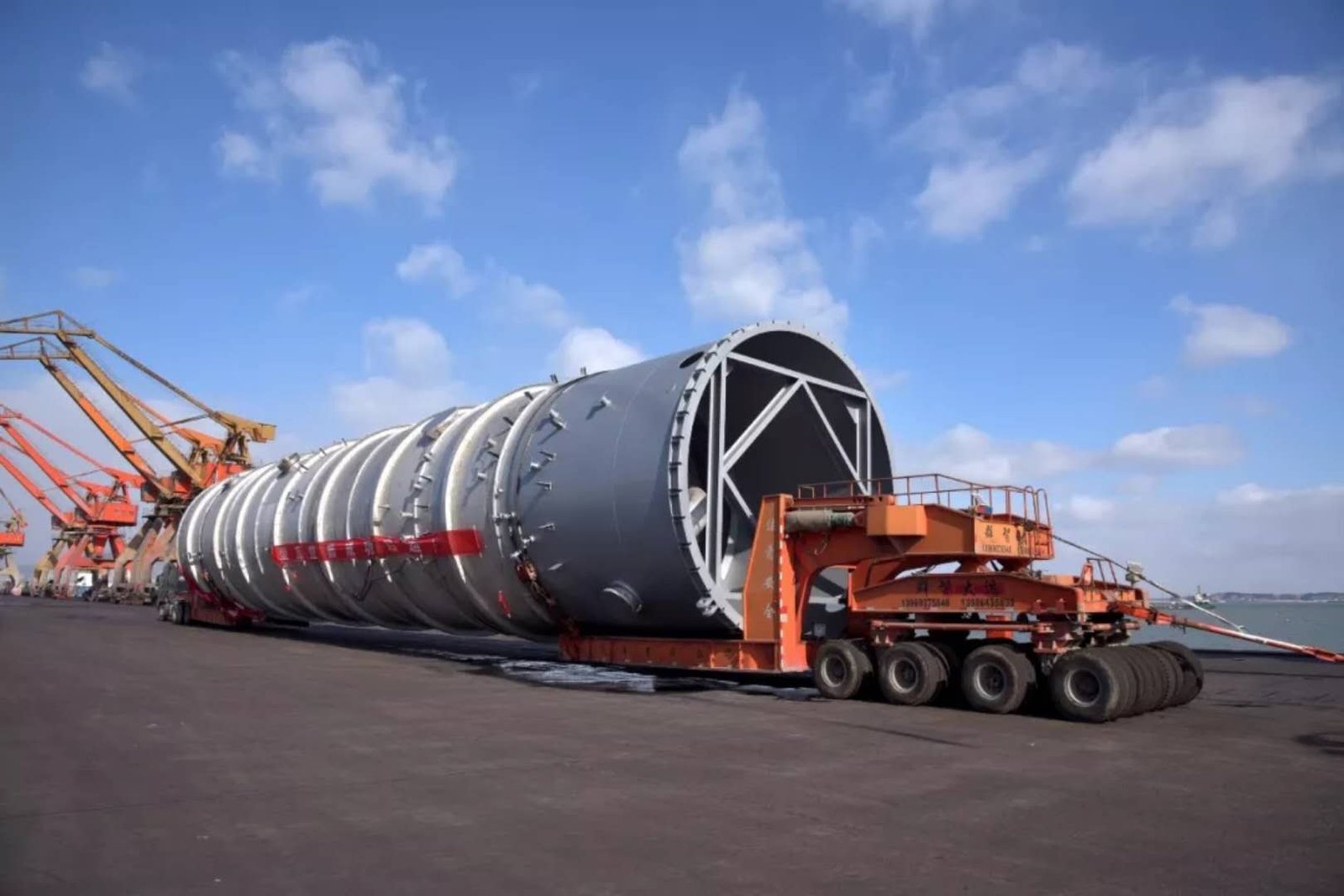
Why Does Crude Methanol Require Distillation?
Crude methanol from the synthesis loop contains more than methanol. Flashing or stabilization can remove part of the dissolved gas, but distillation is still required to separate light organic impurities, water, higher-boiling compounds, and fusel components.
The purification section must achieve several objectives:
- Remove dissolved gases and low-boiling impurities
- Separate methanol from water
- Control ethanol and higher alcohols
- Recover methanol from aqueous and side streams
- Produce the required commercial or chemical-grade specification
- Reduce methanol loss to wastewater or fuel streams
- Minimize steam and cooling demand through heat integration
The Methanol Institute provides an overview of methanol production, including synthesis from syngas and downstream purification. For equipment buyers, purification should be evaluated as a complete process package rather than as an isolated tower shell.
Main Distillation Columns Used in Methanol Plants
| Column | Alternative Names | Main Function |
|---|---|---|
| Topping column | Light-ends column, pre-run column, stabilizer | Removes dissolved gases and components more volatile than methanol |
| Main refining column | Rectification column, methanol refining column | Separates methanol from water and heavier impurities |
| Pressure refining column | Medium-pressure or high-pressure methanol column | Produces methanol vapor at a temperature useful for heat integration |
| Atmospheric final column | Final refining, low-pressure, or bottoming column | Completes methanol-water separation and product polishing |
| Recovery column | Methanol recovery or wastewater stripper | Recovers methanol from aqueous, fusel, or off-spec streams |
What Does a Topping Column Do?
The topping column is commonly the first major distillation column in the purification train. Crude methanol enters after flashing, stabilization, or feed preheating. Heat supplied through a reboiler drives volatile components upward, while methanol-rich liquid leaves the bottom for further refining.
Potential overhead components include dissolved synthesis gas, carbon dioxide, dimethyl ether, methyl formate, acetone, and other light ends. The overhead system may include a condenser, vent condenser, reflux drum, gas handling, and routing to fuel, recovery, treatment, or flare systems according to the approved process design.
Early removal of light ends helps protect product odor, acidity, stability, and specification compliance. It also reduces the separation burden on the main refining column.
What Does the Main Refining Column Do?
The main refining or rectification column performs the central methanol-water separation. Methanol concentrates toward the upper section, while water and heavier compounds move toward the lower section. Refined methanol may be recovered overhead or through an upper product draw, while water-rich bottoms leave the base.
The column may also use a side draw to manage ethanol, propanol, butanol, higher alcohols, and other fusel components. The design must balance product purity against methanol recovery because an aggressive side draw can remove impurities but also increase valuable methanol loss.
Commercial methanol specifications can include limits for water, ethanol, acidity, acetone, chloride, sulfur, appearance, and permanganate time. The applicable specification should be agreed before the column sequence, tray count, reflux ratio, and side-draw strategy are finalized. IMPCA publishes current reference specifications used within the international methanol industry.
Two-Column Methanol Distillation
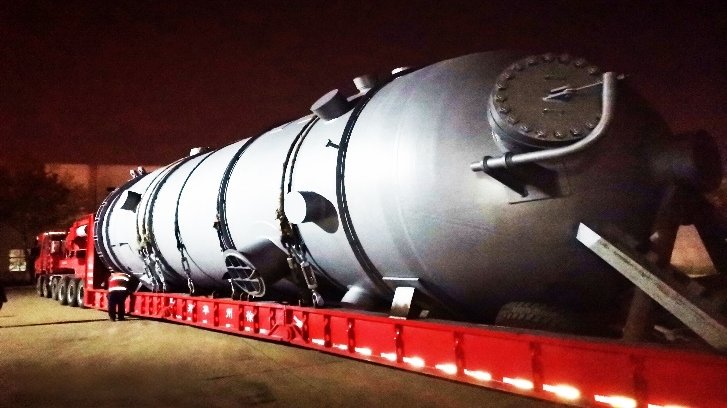
A conventional two-column arrangement normally includes a topping column followed by one main refining column. This configuration is relatively simple to operate and may suit small or medium plants, moderate utility costs, and product specifications that do not require more elaborate pressure integration.
The topping column removes light ends. The refining column then produces purified methanol, water-rich bottoms, and potentially a fusel-oil side stream. Each column generally requires a reboiler, overhead condenser, reflux drum, pumps, controls, pressure relief interfaces, and associated heat exchangers.
Buyers should still require guarantees for product water, ethanol, light impurities, methanol recovery, steam use, cooling duty, turndown, and feed-composition range. A simple flowsheet is not automatically a low-risk solution.
Three-Column and Pressure-Integrated Distillation
Large methanol plants may use a topping column, a pressure refining column, and an atmospheric or lower-pressure final column. The pressure column operates at a higher boiling temperature, allowing its overhead vapor to provide heat to the reboiler of the lower-pressure column.
This double-effect or multi-effect concept reuses heat and can reduce external steam and cooling demand. The final pressure levels and heat-integration arrangement should be confirmed by the process licensor and EPC engineering team.
A three-column system may be justified when:
- Plant capacity is large and continuous
- Steam is expensive, limited, or carbon-intensive
- Cooling water or air-cooler capacity is constrained
- Product purity and methanol recovery targets are demanding
- Wastewater methanol limits are strict
- The operations team can support more complex pressure and heat integration
The energy benefit depends on a practical condenser-reboiler temperature difference. Pressure levels, heat-transfer area, fouling, control response, startup heating, and upset operation must be evaluated together.
Methanol Recovery and Wastewater Stripping Columns
Some plants add an auxiliary recovery column or wastewater stripper to recover methanol from water-rich bottoms, off-spec product, fusel streams, condensate, or other dilute process streams. This can increase yield and reduce methanol loading to wastewater treatment.
A recovery column does not necessarily replace product-grade refining. Its role is usually to return recovered methanol to the purification train while producing a lower-methanol aqueous stream for downstream treatment.
Fusel Oil and Side-Draw Management
Fusel oil can contain methanol, water, ethanol, propanol, butanol, and other higher alcohols. These components may concentrate between the methanol-rich top and water-rich bottom of a refining column. Without a suitable side draw, impurities can accumulate and affect product quality.
Buyers should define:
- Expected side-draw composition and flow
- Vapor or liquid side-draw arrangement
- Sampling points above and below the draw
- Methanol recovery, fuel use, treatment, or disposal route
- Guaranteed ethanol and higher-alcohol limits in final product
The fusel-oil strategy should be part of the process guarantee, not a field adjustment left until off-spec methanol appears.
Column Internals and Hydraulic Design
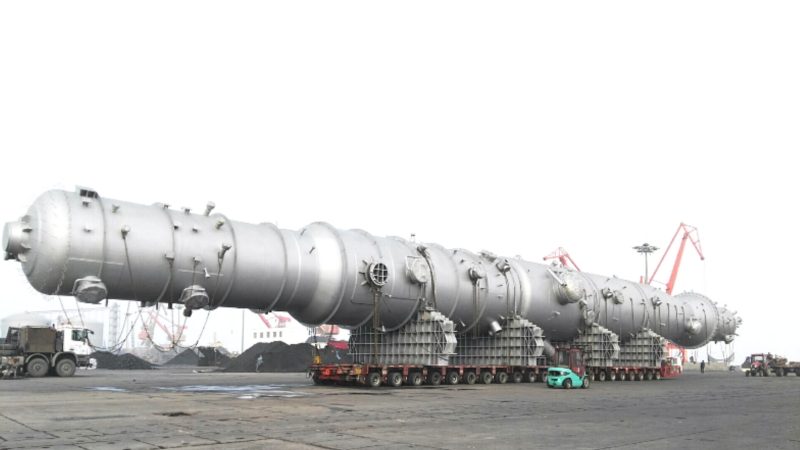
A methanol distillation tower is more than a shell. Separation performance depends on trays or packing, feed devices, reflux distributors, downcomers, demisters, chimney trays, draw-off collectors, support grids, and internal piping.
| Internal Type | Potential Application | Buyer Review |
|---|---|---|
| Conventional trays | New topping and refining columns with broad operating range | Flooding, weeping, entrainment, efficiency, and turndown |
| High-capacity trays | Revamps and capacity increases | Vendor hydraulic guarantee and mechanical fit |
| Structured packing | Low pressure drop or constrained revamps | Liquid distribution, fouling, support, and installation tolerances |
| Random packing | Smaller recovery or utility duties | Efficiency and maldistribution risk |
| Demisters and collectors | Overhead and side-draw systems | Entrainment control and stable liquid withdrawal |
The EPC contractor, process licensor, internals supplier, and column fabricator should define interface responsibility before fabrication. Shell diameter, internal support rings, nozzle orientation, manways, tolerances, installation sequence, and inspection access must match the internals design.
For equipment planning, methanol columns belong to the broader family of process towers and columns. A project-specific fractionation tower may also provide a useful reference for column fabrication and internal interfaces.
Reboilers, Condensers, and Heat Integration
Every column requires a controlled heat input and overhead heat removal. Reboilers generate vapor for separation, while condensers provide reflux and product recovery. Pressure-integrated systems may use one exchanger as both the condenser of a higher-pressure column and the reboiler of a lower-pressure column.
Buyers should define:
- Reboiler type, circulation method, and heat source
- Condenser type and cooling-water or air-cooler design case
- Heat-transfer area and fouling assumptions
- Operating and design pressure on both sides
- Startup and turndown heat requirements
- Condensate handling, vent condensation, and reflux control
- Control response during feed or utility disturbances
Project teams may evaluate industrial heat exchangers and a shell and tube heat exchanger together with the column package.
Materials, Safety, and Mechanical Design
Methanol is flammable and toxic. Equipment design should address hazardous-area classification, pressure relief, vent routing, drain handling, fire-safe valves, grounding, purging, gas detection, closed sampling, and safe maintenance access.
Material selection depends on water content, acidity, chlorides, oxygen exposure, trace contaminants, pressure, temperature, and cleaning methods. Carbon steel may be suitable for some services, while stainless steel or upgraded alloys may be required in wet, oxygenated, corrosive, or product-critical areas.
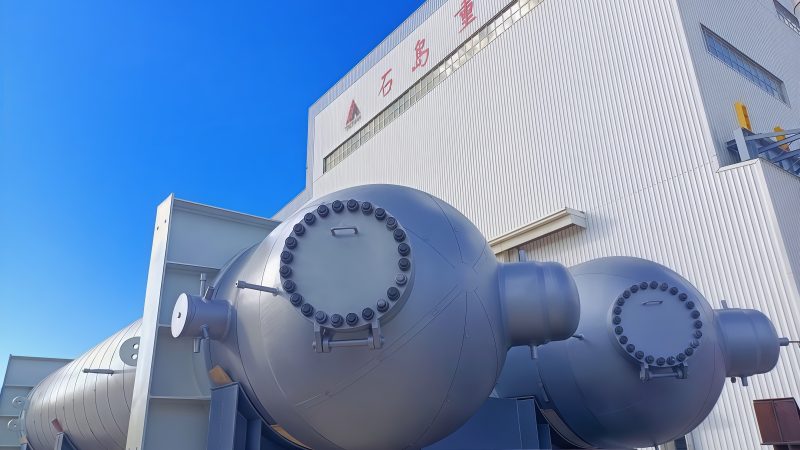
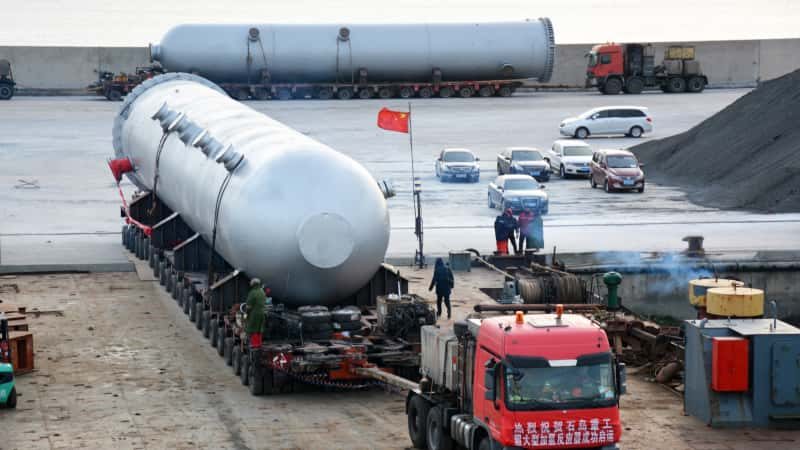
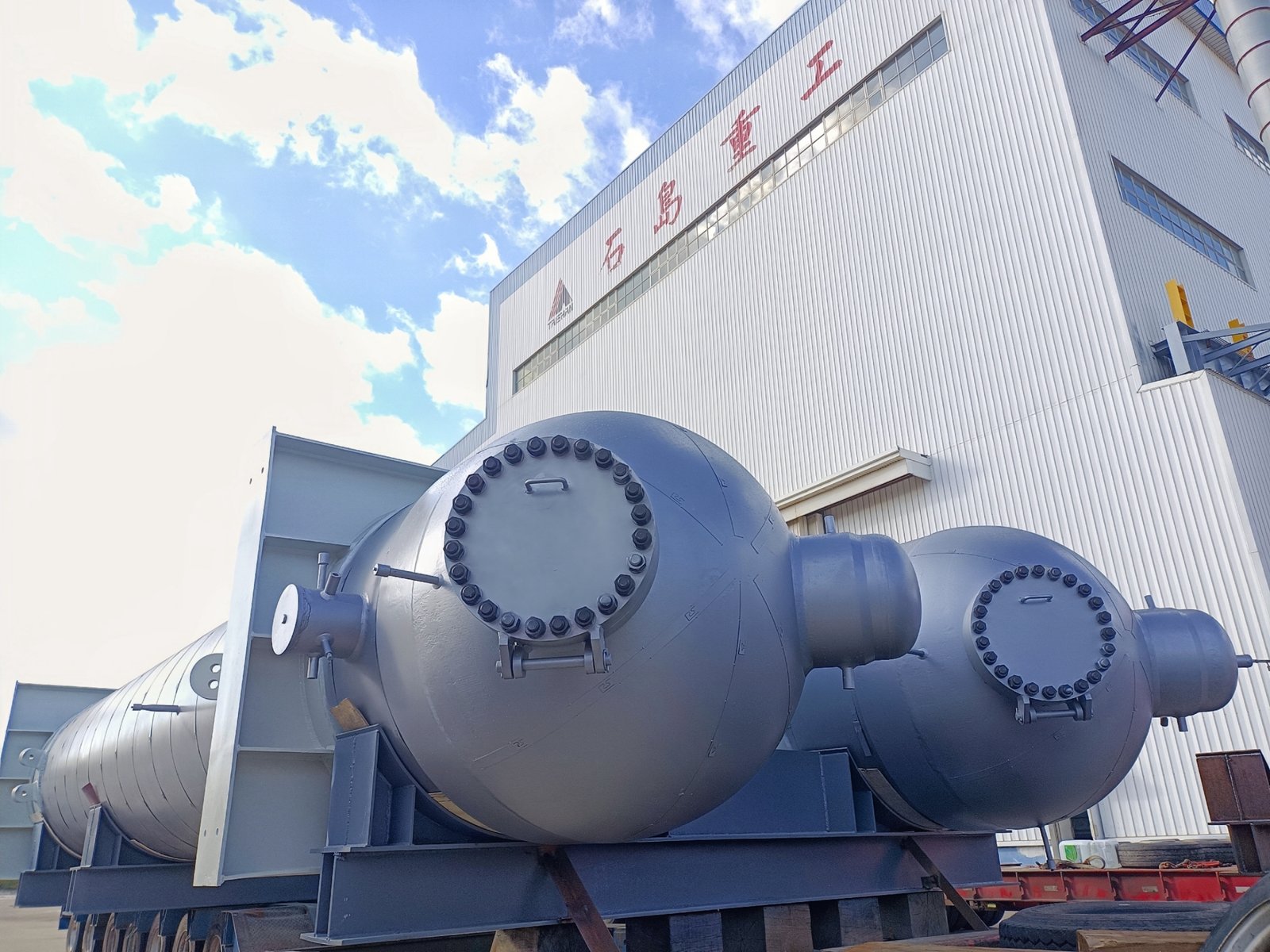
Mechanical design should cover shell thickness, wind and seismic loads, skirt support, platforms, ladders, lifting lugs, nozzle loads, internal loads, insulation, transportation, and site erection. A large-scale pressure vessel manufacturer should review manufacturability, plate forming, welding access, internal supports, dimensional control, inspection, and delivery constraints.
How Should Buyers Select the Column Scheme?
Column selection should begin with the required methanol product specification and work backward through feed composition, impurity removal, methanol recovery, energy use, wastewater, and equipment constraints.
| Decision Factor | Two-Column System | Three-Column or Multi-Effect System |
|---|---|---|
| Plant size | Small or medium capacity | Large continuous production |
| Steam cost | Low-cost or surplus steam | Expensive, limited, or carbon-intensive steam |
| Cooling capacity | Limited concern | Cooling-water or air-cooler constraint favors integration |
| Product target | Manageable standard specification | Tight purity or recovery target |
| Capital priority | Lower installed complexity | Lower lifecycle utility cost |
| Operations | Simpler pressure and control scheme | Skilled team for integrated operation |
What Buyers Should Prepare Before Quotation
Before requesting a quotation, prepare:
- Crude methanol composition and expected variation
- Required product specification and guaranteed impurities
- Plant capacity, turndown, and operating schedule
- Preferred two-column, three-column, or recovery concept, if known
- Operating and design pressure and temperature
- Steam, cooling water, electricity, and condensate conditions
- Product recovery and wastewater methanol targets
- Fusel-oil and side-draw requirements
- Tray or packing requirements and hydraulic margins
- Reboiler, condenser, reflux drum, pump, and analyzer scope
- Material specification and corrosion allowance
- Applicable design code and project standard
- NDT, inspection, pressure testing, and documentation requirements
- Delivery destination, transport limits, and site erection constraints
Common Procurement Mistakes
Buying Only the Column Shell
A bare shell does not guarantee separation performance. The process guarantee should include internals, reboilers, condensers, reflux systems, side draws, hydraulics, controls, and defined feed cases.
Designing for Average Crude Methanol
Feed composition changes can affect light-end load, reflux, ethanol accumulation, water separation, side-draw rate, and utility use. The design basis should include a realistic composition envelope.
Ignoring Lifecycle Utility Cost
A two-column system may have lower capital cost but higher annual steam and cooling demand. Large plants should compare the lifecycle economics of pressure integration.
Forgetting Hot-Weather Condenser Performance
Cooling-water and air-cooler design conditions can limit overhead condensation, reflux, pressure control, and plant capacity. Worst-case ambient conditions should be included.
FAQ
What distillation columns are commonly used in methanol plants?
Most plants use a topping or light-ends column and a main refining or rectification column. Large or energy-efficient plants may add pressure refining, atmospheric final, recovery, or wastewater stripping columns.
What is the role of the topping column?
It removes dissolved gases and low-boiling impurities before the methanol-rich bottoms stream enters the main refining section.
Why is the refining column important?
It performs the main separation of methanol from water and heavier impurities, producing marketable methanol and a water-rich bottoms stream.
Does every methanol plant use the same number of columns?
No. The number and pressure levels depend on product grade, capacity, crude methanol composition, utility costs, methanol recovery, and wastewater targets.
When is a three-column system attractive?
It is often considered for large continuous plants where steam savings, cooling limitations, high recovery, or tight product specifications justify additional equipment and control complexity.
Conclusion
Methanol production plants commonly use topping and refining columns as the basic purification train. Larger plants may use pressure, atmospheric final, recovery, or auxiliary columns to improve product purity, methanol recovery, wastewater performance, and heat integration.
If you are sourcing methanol distillation columns, fractionation towers, heat exchangers, reflux drums, pressure vessels, or other custom process equipment for methanol, chemical, fertilizer, petrochemical, or EPC projects, you can discuss your project requirements with an engineering and manufacturing team. Sharing crude methanol composition, product specification, plant capacity, utility conditions, materials, inspection needs, and delivery terms will support technical communication and fabrication evaluation.