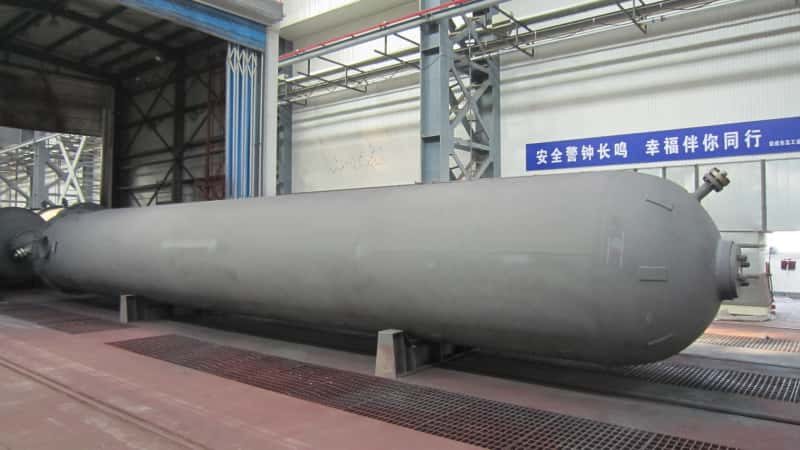

Storage-tank planning for a biofuel or liquid-fuel terminal should begin with the properties of each product, not with a standard tank diameter or a target steel price. Ethanol, biodiesel, renewable diesel, gasoline, diesel, sustainable aviation fuel (SAF), jet fuel, and heavy fuel oils can have very different requirements for vapor control, water exclusion, cleanliness, heating, materials, seals, fire protection, and inspection.
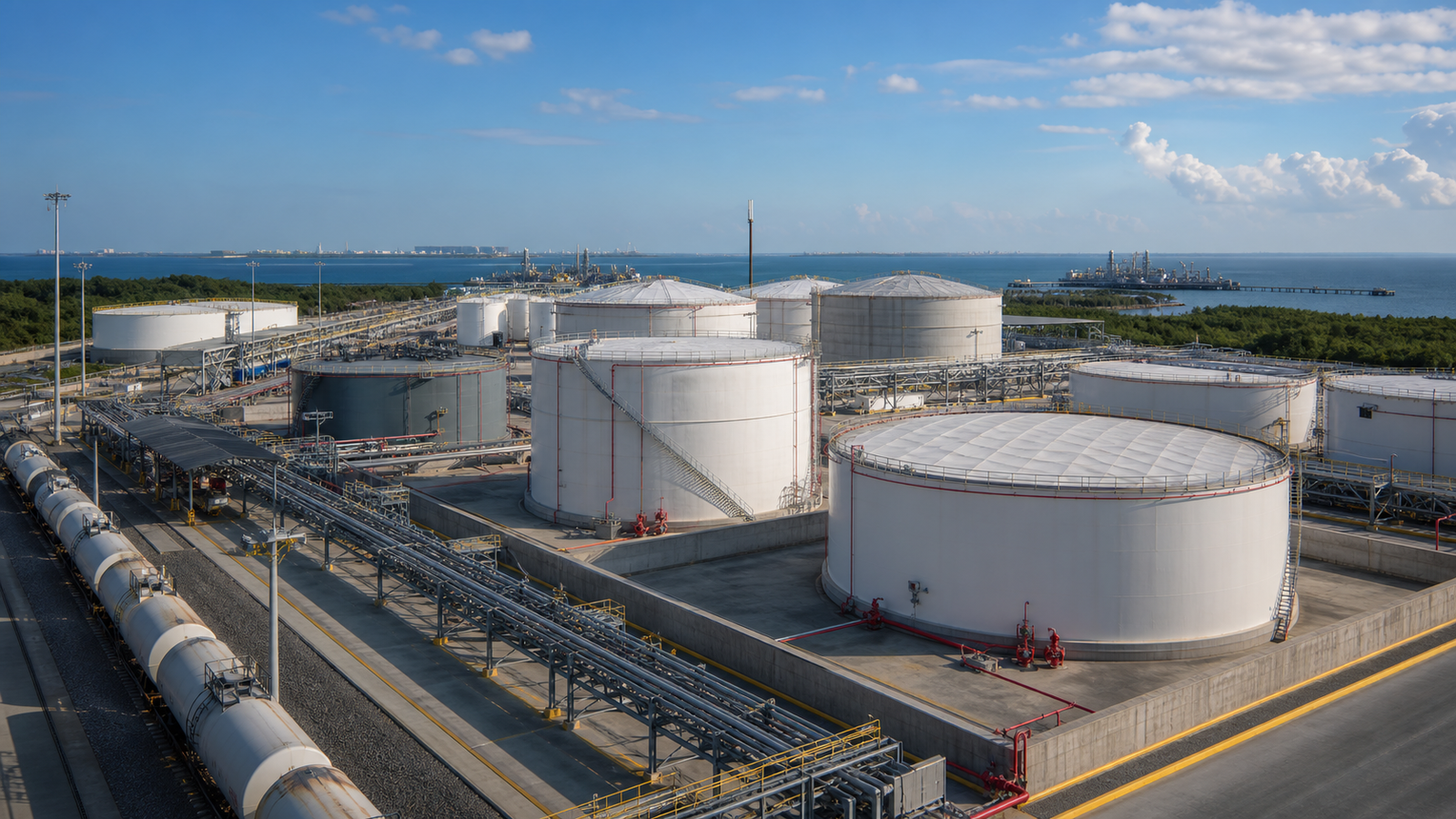
For EPC contractors and terminal owners, the tank farm is an integrated storage, transfer, safety, and product-quality system. A technically acceptable tank can still create operational problems if its usable capacity, roof type, nozzles, coating, heating system, overfill interfaces, containment arrangement, or maintenance access do not match the real service. Buyers planning wider renewable-fuel packages can also review pressure vessels for new energy projects.
Quick Answer: What Should EPC Buyers Define First?
EPC buyers should first prepare a product-property and operating matrix for every current and future fuel. The matrix should cover flash point, vapor pressure, density, viscosity, water sensitivity, oxidation stability, corrosivity, conductivity, cold-flow behavior, cleanliness requirement, storage temperature, expected residence time, receipt rate, dispatch rate, and compatibility with coatings, seals, pumps, valves, and instruments.
EPC buyers should select biofuel and liquid-fuel storage tanks according to fuel properties and operating duty, not capacity alone.True
Vapor pressure, flash point, water affinity, oxidation stability, viscosity, cold-flow behavior, corrosivity, cleanliness requirements, storage time, and transfer rate determine the tank type, roof system, materials, venting, heating, water control, fire protection, and inspection strategy.
Only after this basis is established should the EPC team freeze tank count, working capacity, roof design, foundation loads, nozzle orientation, heating or insulation, secondary containment, fire protection, overfill prevention, and the manufacturer’s supply scope. For large welded atmospheric tanks, API Standard 650 is a common project reference, while final requirements must follow the project location, authority having jurisdiction, owner specifications, and approved engineering basis.
Why Fuel Properties Must Drive Tank Planning
A storage tank is more than a container. It protects saleable product, limits emissions, provides operating inventory, supports safe transfer, and creates a barrier between fuel and the environment. The stored liquid influences how the tank breathes, accumulates water, corrodes, generates static electricity, forms sediment, changes viscosity, or becomes off specification.
For example, ethanol service places strong emphasis on water exclusion and compatibility. Biodiesel requires disciplined water-bottom management and may need oxidation and cold-flow controls. Gasoline makes vapor management and fire protection central design questions. Jet fuel and SAF require strict cleanliness, water removal, filtration, and segregation. Heavy fuel oils may require continuous heating, insulation, recirculation, and sludge-removal access.
The U.S. Energy Information Administration’s biofuels overview distinguishes products such as ethanol and biomass-based diesel. The U.S. Department of Energy’s Alternative Fuels Data Center also publishes current selected biodiesel specification requirements. These sources reinforce an important procurement principle: fuels grouped under a broad commercial label can still have different storage and quality-control needs.
Fuel-Property-to-Tank-Design Matrix
| Fuel property | Why it matters | Typical EPC planning response |
|---|---|---|
| Flash point | Influences liquid classification, ignition risk, spacing, and fire-protection basis. | Confirm the applicable code basis, tank spacing, foam strategy, emergency venting, grounding, and loading safeguards. |
| Vapor pressure | Drives breathing losses, roof selection, vapor recovery, and pressure/vacuum vent sizing. | Evaluate fixed roof, internal or external floating roof, conservation venting, vapor recovery, or blanketing. |
| Water affinity | Affects phase separation, corrosion, microbial activity, and product acceptance. | Provide dry receiving, suitable roof sealing, bottom slope, water draw-off, sampling, and moisture-control procedures. |
| Oxidation stability | Can limit storage time and contribute to gum, sediment, or quality deterioration. | Control residence time, temperature, air exposure, turnover, additives, and recirculation. |
| Viscosity and cold flow | Affect pumpability, drainage, mixing, line sizing, and unloading time. | Confirm heating coils, insulation, recirculation, suction design, pump selection, and winter operation. |
| Corrosivity and acidity | Influence shell, bottom, coating, gasket, valve, and piping materials. | Specify compatible materials, lining, corrosion allowance, water-bottom control, and inspection intervals. |
| Conductivity and static risk | Influence filling velocity, relaxation time, bonding, grounding, and loading procedure. | Coordinate transfer rates, inlet arrangement, electrical continuity, grounding, and approved operating controls. |
| Cleanliness requirement | Critical for aviation fuels, high-specification renewable fuels, and sensitive blending components. | Use dedicated or verified-clean systems, filtration, representative sampling, water draw-off, and controlled commissioning. |
| Density | Affects shell design, foundation load, seismic analysis, hydrotest basis, and roof buoyancy. | Confirm design specific gravity, calibration basis, operating levels, and future product-conversion limits. |
How Tank Requirements Change by Fuel Family
| Product or service | Common tank direction | Primary design priorities |
|---|---|---|
| Gasoline | Floating-roof tank or fixed-roof system with suitable vapor controls, depending on size and regulations. | Vapor losses, emissions, fire protection, roof seals, static control, and overfill prevention. |
| Denatured fuel ethanol | Fixed-roof tank with controlled breathing or dry blanketing where justified. | Water exclusion, compatible coatings and elastomers, dry transfer, segregation, and sampling. |
| Ethanol-gasoline blends | Selected according to blend properties, volatility, compatibility, and permitting basis. | Water control, vapor control, phase-separation prevention, and verified component compatibility. |
| B100 biodiesel | Clean fixed-roof tank, with heating or insulation when climate and feedstock require it. | Water and sediment control, oxidation, microbial risk, cold flow, and storage duration. |
| Biodiesel blends | Diesel-type tank with blend-specific compatibility and water-management controls. | Blend accuracy, water removal, filtration, additive handling, and microbial monitoring. |
| Renewable diesel or HVO | Often similar to diesel infrastructure, subject to product-specific confirmation. | Cleanliness, density, additives, cold-flow grade, water control, and carbon-accounting segregation. |
| Diesel or ULSD | Fixed or cone-roof tank with suitable venting and bottom-water management. | Water bottoms, microbial control, additive quality, sediment, and low-temperature operation. |
| Jet fuel or certified SAF blend | Dedicated clean tank with suitable suction, filtration, and water-removal arrangements. | Water, particulate, surfactants, sampling, certification discipline, and line segregation. |
| Heavy fuel or viscous bio-oil | Fixed-roof tank with heating, insulation, circulation, and cleanout access. | Viscosity, pumpability, sludge, temperature limits, corrosion, and residence time. |
Ethanol and Ethanol-Blend Storage
Ethanol should not be treated as ordinary gasoline inventory. Its water sensitivity and interaction with some coatings, seals, and elastomers make dry storage and written compatibility evidence important. Buyers should define roof tightness, venting or blanketing philosophy, low-point drains, water detection, sampling locations, inlet arrangement, and acceptable construction-cleanliness standards.
Conversion of an existing tank requires a documented review of the previous product, internal deposits, coating condition, seals, gaskets, instruments, vents, foam system, and connected piping. A visually clean shell is not proof that every wetted component is compatible with higher ethanol blends.
Biodiesel Storage
B100 and biodiesel blends require attention to water, sediment, oxidation, storage duration, microbial activity, and cold-flow behavior. Feedstock and product grade can affect low-temperature performance, so heating should be based on actual cloud-point and pumpability requirements. Excessive temperature or unnecessary recirculation may be harmful, while inadequate heating may slow unloading and cause filter problems.
Tank bottoms should be easy to drain and inspect. The design should support representative sampling, controlled turnover, filtration, compatible elastomers, and clean commissioning. When B100 is used for in-line blending, metering accuracy and the downstream mixing and sampling method are as important as the tank itself.
Renewable Diesel, Diesel, and ULSD
Renewable diesel is not the same material as FAME biodiesel, even when both are marketed as lower-carbon diesel alternatives. It may use much of the same terminal infrastructure as petroleum diesel, but the buyer should still confirm density, cold-flow grade, additives, lubricity, product segregation, storage temperature, and accounting requirements.
For diesel-family products, persistent risks include water bottoms, microbial contamination at the fuel-water interface, rust or sediment, additive stratification, and cross-contamination between grades. Accessible water draw-off, suitable outlet elevation or floating suction, sampling, filtration, and tank-cleaning provisions should be part of the datasheet.
Gasoline and Other Volatile Fuels
Gasoline storage is strongly influenced by vapor pressure, emissions permitting, roof type, fire protection, and overfill prevention. Buyers should coordinate roof seals, deck fittings, gauge wells, vents, vapor recovery, foam connections, grounding, lightning protection, floating-roof drainage, and independent level protection as one package. Related terminal and refinery packages may also include other pressure vessels for oil and gas.
The U.S. EPA’s AP-42 Chapter 7 resources for liquid storage tanks describe common tank configurations and emissions-estimation context. Emissions analysis should be completed before roof and vapor-control decisions are frozen, particularly for volatile products and high-throughput terminals.
Jet Fuel and SAF
For aviation service, cleanliness is part of compatibility. The storage and transfer system must protect the certified product from water, particulate, surfactants, incompatible residues, and undocumented cross-contamination. Tank dedication, internal condition, floating or elevated suction, sump design, filtration, water separation, closed sampling, and quality-release procedures should be agreed before procurement.
If the terminal stores a neat SAF blending component before final blending and certification, the approved pathway, blend limit, quality specification, segregation, custody-transfer logic, and release procedure must be established by the responsible fuel-quality organizations. The tank manufacturer should build to the approved mechanical and interface requirements rather than define the fuel-certification basis.
Heavy Fuel Oil and Renewable Intermediates
High-viscosity fuels and some renewable intermediates may need heating coils, insulation, circulation, heated suction, large drains, and sludge-cleaning access. Buyers should state the minimum pumpable temperature, maximum permitted storage and coil-surface temperatures, heating medium, warm-up time, expected sediment, and whether the product can stratify or degrade.
An unheated or poorly insulated tank may cost less initially but reduce terminal throughput, increase pump energy, cause line blockages, and make cleaning difficult. For unstable or corrosive intermediates, short residence time and special materials may be more important than maximum storage volume.
Roof, Venting, and Vapor-Control Selection
Roof selection should follow the fuel’s volatility, fire classification, emissions basis, oxygen sensitivity, water sensitivity, terminal throughput, climate, and maintenance capability. No roof type is universally best.
| Option | Typical fit | Important limitations |
|---|---|---|
| Fixed cone roof with conservation vent | Diesel, biodiesel, renewable diesel, ethanol, and some clean-fuel services. | Volatile service still requires emissions, fire, and vent-capacity review. |
| Fixed roof with nitrogen blanketing | Water-sensitive, oxidation-sensitive, or high-purity services where justified. | Requires reliable gas supply, pressure control, vent coordination, and operating procedures. |
| Internal floating roof | Gasoline and volatile products where reduced vapor space and weather protection are useful. | Seal compatibility, deck fittings, inspection access, landing conditions, and fire protection require detailed review. |
| External floating roof | Large volatile-product tanks in suitable climates and terminal layouts. | Weather, roof drainage, seal maintenance, access, and operating-level restrictions must be managed. |
| Fixed roof with vapor recovery | Terminals with emissions limits, vapor balancing, or integrated loading controls. | The recovery system must cover filling, emptying, thermal breathing, and credible simultaneous-transfer cases. |
Roof selection, venting, vapor recovery, and blanketing must be engineered as one pressure-control system.True
A roof or vent selected in isolation may restrict the required transfer rate, admit moisture, increase emissions, or create pressure and vacuum risk. The EPC team should evaluate normal breathing, filling, emptying, thermal effects, fire exposure, blanketing failure, and simultaneous operating cases.
Capacity and Tank Count: Use Working Inventory, Not Annual Throughput
Annual throughput alone does not define storage capacity. The EPC team should model parcel size, delivery frequency, peak daily demand, truck or rail schedules, marine berth windows, pipeline nominations, blending batches, certification time, tank settling, unusable heel, floating-roof landing volume, vapor space, maintenance outage, quarantine inventory, and future expansion.
A few very large tanks may reduce the number of foundations and accessories but can make segregation, maintenance, and product changeover difficult. More small tanks improve flexibility but increase cost, plot area, valves, instruments, and inspection workload. A mixed arrangement often provides better resilience: large tanks for stable bulk products, smaller tanks for blend components, seasonal grades, quarantine, and off-spec material.
Capacity Questions to Resolve During FEED
- What is the largest receipt parcel and how quickly must it be unloaded?
- What inventory must remain available while one tank is inspected or cleaned?
- Which products and blend grades require physical segregation?
- How much volume is unavailable because of heel, roof landing, minimum pump suction, or vapor space?
- Does the terminal need settling, certification, quarantine, slop, interface, or off-spec capacity?
- What future fuels could use the same tank without changing the coating, roof, seals, heating, and fire basis?
Materials, Coatings, Seals, and Product Compatibility
Carbon steel is widely used for large welded fuel-storage tanks, but the complete wetted system must be reviewed. Internal coatings, linings, roof seals, gaskets, valve seats, hoses, loading arms, pump seals, meters, level instruments, and sample systems may respond differently to oxygenated fuels, biodiesel, additives, water bottoms, and cleaning chemicals.
Buyers should require written compatibility statements from the responsible material and component suppliers. Generic wording such as “suitable for fuel” is not enough for a multi-product terminal. The statement should identify the product or blend range, temperature, exposure mode, limitations, surface preparation, cure requirements, and any inspection or maintenance conditions.
Water Management Is a Design Requirement
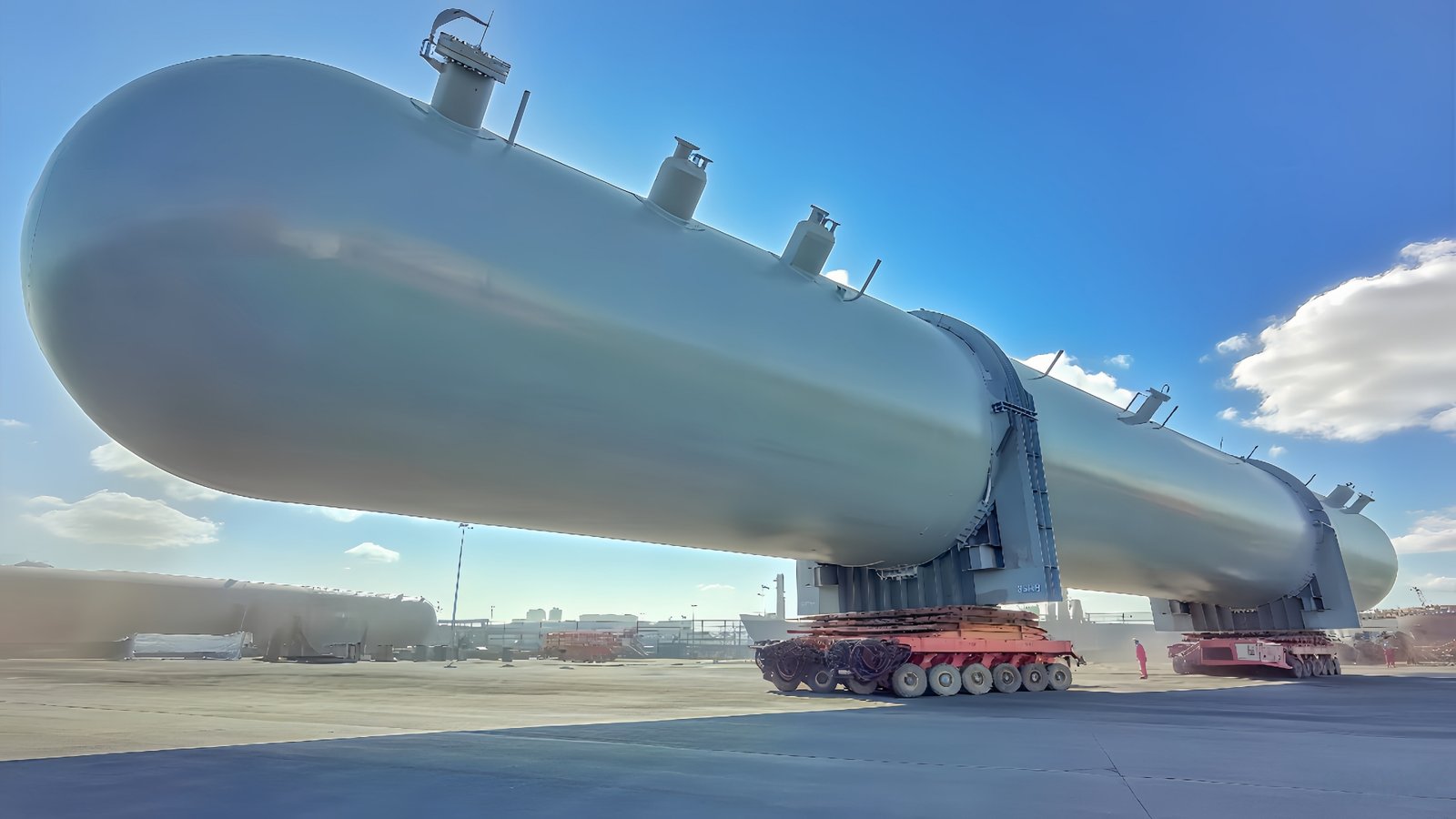
Water can enter through wet receipts, condensation, leaking roofs, open hatches, maintenance, shared lines, or contaminated transport equipment. Its consequences vary by fuel, but may include phase separation, corrosion, microbial growth, sludge, blocked filters, and rejected product.
The tank should support detection and removal rather than depend only on operating discipline. Useful features may include a suitable bottom slope and sump, accessible water draw-off, representative low-level sampling, water-level measurement where justified, tight roof details, dry blanketing or desiccation where appropriate, and procedures that prevent open drains from becoming uncontrolled release points.
Secondary Containment, Drainage, and Environmental Planning
Secondary containment should be planned before tank spacing and civil levels are frozen. In the United States, EPA SPCC guidance states that applicable bulk-storage installations must provide containment for the capacity of the largest single container plus sufficient freeboard for precipitation. The exact regulatory basis depends on facility location and stored materials, but the engineering principle is broadly useful: containment must account for real tank displacement, rainfall, drainage, firewater, liners, penetrations, and emergency access.
EPA provides current guidance on secondary containment under SPCC and separate calculation worksheets. Project teams should still confirm local environmental permits, fire codes, storm criteria, and authority requirements.
Clean stormwater, oily drainage, product drains, chemical drains, and firewater runoff should not be combined without an approved treatment and isolation philosophy. Dike drains should be visible, controllable, and included in operating inspections. For ethanol or water-miscible components, spill and firewater behavior may differ from conventional hydrocarbon assumptions.
Overfill Protection and Instrumentation
Overfill prevention is a combined equipment, control-system, and management responsibility. The tank supplier must provide correct nozzles, stilling wells, supports, access, and mechanical interfaces; the EPC team must define alarm independence, shutdown actions, valve closure time, operator response, proof testing, and transfer permissives.
API Standard 2350 is a common reference for overfill prevention in petroleum facilities. The applicable edition and scope should be confirmed in project documents. A typical terminal instrument philosophy may include automatic tank gauging, an independent high-level alarm, independent high-high shutdown where required, temperature measurement, water-bottom monitoring for selected services, pressure or vacuum indication for blanketed tanks, and interfaces with inventory and terminal automation systems.
Secondary containment and overfill protection should be defined before tank procurement, not added during construction.True
Dike geometry, drainage, instrument nozzles, shutdown valves, alarm independence, access, transfer rate, and response time affect civil, mechanical, electrical, control, and operating scopes. Late definition commonly causes redesign and field modification.
Transfer Efficiency: Design the Tank Around Real Movements
A tank can have sufficient capacity and still create a terminal bottleneck. Receipt and dispatch efficiency depend on nozzles, pump suction, line size, manifold routing, vapor handling, metering, sampling, filtration, automation, and the time needed to settle and release the product.
The terminal movement study should cover marine, rail, truck, and pipeline cases, including simultaneous transfers. Buyers should define maximum and minimum rates, pump NPSH conditions, liquid temperature, viscosity, vapor-return requirements, recirculation, blending, flushing, pigging, drain-down, custody transfer, and credible valve lineups.
Cross-contamination risk increases rapidly when many products share complex manual manifolds. Dedicated lines, positive isolation, automated routing, double-block-and-bleed arrangements, blinds, flushing provisions, and clear operating states may be justified depending on product value and quality sensitivity.
Manufacturing and Quality Control
A qualified storage tank manufacturer should review the product matrix, design basis, general arrangement, material specifications, roof details, nozzle schedule, coating system, fire and overfill interfaces, inspection plan, erection method, and delivery conditions before fabrication begins.
Quality control may include material certificate review, traceability, approved welding procedures, welder qualifications, dimensional inspection, weld examination, bottom and shell testing, roof and nozzle checks, coating inspection, hydrostatic testing where applicable, settlement monitoring, calibration interfaces, and final document review. Field-erected tanks also require controls for plate storage, weather, fit-up, welding sequence, temporary bracing, lifting or jacking, and site coating repairs.
How Should EPC Buyers Evaluate Tank Suppliers?
Supplier selection should compare technical and execution capability, not only purchase price. A low quotation may exclude coating, roof accessories, water draw-off, foam interfaces, overfill nozzles, stairs, platforms, heating, insulation clips, third-party inspection, field erection, testing, or the final manufacturing record book.
| Evaluation category | Suggested weight | Evidence to request |
|---|---|---|
| Code and standards capability | 15% | Comparable approved projects, calculations, drawings, and current code access. |
| Fuel-service experience | 15% | References for the relevant ethanol, biodiesel, gasoline, diesel, aviation, or heated-fuel service. |
| Engineering capability | 15% | Roof, nozzle, wind, seismic, foundation-interface, coating, and accessory coordination. |
| QA/QC and welding | 15% | Project quality plan, ITP, traceability, WPS/PQR, qualifications, NDT procedures, and nonconformance control. |
| Compatibility and coating control | 10% | Product-specific coating, gasket, seal, valve, and accessory documentation. |
| Documentation | 10% | Drawing register, sample manufacturing record book, inspection reports, and turnover index. |
| Delivery and erection | 10% | Realistic milestones, lifting or jacking method, site team, HSE plan, and weather controls. |
| After-sales support | 5% | Warranty response, repairs, spares, coating repair method, and inspection support. |
| Commercial clarity | 5% | Clear inclusions, exclusions, battery limits, logistics, payment milestones, and change control. |
What Buyers Should Prepare Before Requesting a Quotation
- Product list, blend percentages, additives, contaminants, and future conversion scenarios
- Product specifications and key physical and chemical properties
- Required working volume, design volume, heel, vapor space, and tank availability philosophy
- Receipt, dispatch, recirculation, blending, and simultaneous-transfer rates
- Design standard, local code, owner specification, and authority requirements
- Site climate, wind, seismic, geotechnical, flood, corrosion, and environmental data
- Roof, venting, vapor recovery, blanketing, and emissions basis
- Material, corrosion allowance, coating, lining, seal, and gasket requirements
- Heating, insulation, mixing, filtration, sampling, and water-management requirements
- Nozzle schedule, piping loads, pump interfaces, instruments, foam, grounding, and overfill connections
- Secondary containment, drainage, firewater, access, and maintenance requirements
- Inspection, testing, third-party inspection, documentation, delivery, and erection scope
Common Procurement Mistakes
Treating Every Liquid Fuel as the Same Service
This leads to generic coatings, roof systems, seals, heating, and water controls that may not protect the actual product.
Sizing Tanks from Annual Throughput Alone
Throughput does not show parcel size, downtime, segregation, settling, certification, heel, roof landing, or future expansion.
Freezing the Plot Before Containment and Fire Review
Late changes to spacing, dikes, drainage, fire roads, foam systems, and emergency access can affect the entire site layout.
Comparing Quotations Without Scope Normalization
Price differences often come from omitted accessories, coating, inspection, documentation, erection, or safety interfaces rather than manufacturing efficiency.
Assuming an Existing Tank Can Accept a New Biofuel
Conversion requires inspection, cleaning, compatibility confirmation, vent and fire review, new operating limits, and revised quality procedures.
FAQ
How should EPC buyers size storage tanks for a biofuel terminal?
Size tanks from the terminal operating model: receipt parcel, dispatch schedule, peak demand, usable volume, heel, vapor space, settling and certification time, product segregation, tank outages, quarantine inventory, and expansion. Annual throughput alone is not sufficient.
Does ethanol require a different tank from diesel?
Often yes. Ethanol places greater emphasis on water exclusion and compatibility of coatings, seals, gaskets, and connected equipment. The final tank configuration depends on the ethanol grade, blend, volatility, site rules, and operating conditions.
Does biodiesel require tank heating?
Not always. Heating depends on biodiesel feedstock, grade, cloud point, local minimum temperature, transfer rate, and residence time. The design should maintain pumpability without unnecessarily accelerating oxidation or degrading product quality.
Which roof is best for gasoline storage?
There is no universal answer. Internal floating roofs, external floating roofs, and controlled fixed-roof systems may be used depending on tank size, vapor pressure, throughput, emissions requirements, climate, fire basis, and owner standards.
What is most important for jet fuel and SAF tanks?
Cleanliness, water removal, filtration, representative sampling, compatible materials, line segregation, and documented quality-release procedures are central. Certification and fuel-quality responsibilities must be defined by the appropriate project and fuel organizations.
What standards may apply to terminal storage tanks?
Projects may reference API 650, API 653, API 2350, NFPA 30, OSHA requirements, environmental regulations, local fire codes, and owner specifications. Applicability and editions must be confirmed for the specific jurisdiction and project.
How should buyers compare storage-tank manufacturers?
Compare code capability, relevant fuel-service references, engineering review, compatibility knowledge, welding and quality controls, coating capability, documentation, delivery and erection resources, and lifecycle support on the same technical scope.
Conclusion
Effective storage-tank planning for biofuel and liquid-fuel terminals starts with fuel properties and operating duty. Flash point and vapor pressure influence roof type, venting, emissions control, and fire protection. Water sensitivity affects roof tightness, blanketing, drainage, and sampling. Oxidation and cold-flow behavior influence residence time, temperature control, and turnover. Cleanliness requirements determine segregation, filtration, internal condition, and release procedures.
For EPC buyers, the strongest procurement package connects the product matrix with capacity, layout, materials, roof design, containment, overfill protection, transfer systems, inspection, documentation, and future conversion. This reduces redesign, protects product quality, and makes technical quotations easier to compare.
If you are sourcing industrial storage tanks, fuel terminal tanks, pressure vessels, heat exchangers, or other custom equipment for biofuel, renewable fuel, petroleum, aviation fuel, or EPC projects, you can discuss your project requirements with an engineering and manufacturing team. Sharing the product list, fuel properties, tank capacity, site data, applicable codes, inspection scope, and delivery terms will support a more accurate technical evaluation.