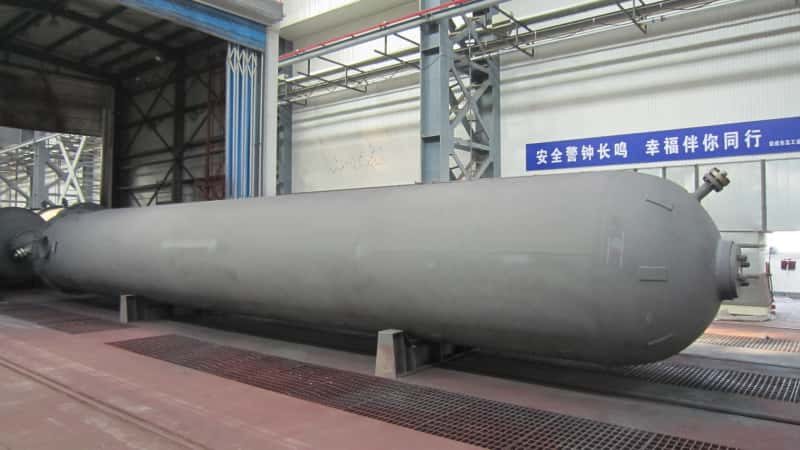

Ammonia Storage Terminal Equipment for Energy and Chemical Supply Chains
Ammonia storage terminals are attracting more attention as fertilizer demand, industrial chemical supply chains and clean energy applications continue to develop. Recent industry news reported ITOCHU’s investment in an ammonia storage terminal business at Port Pipavav in India, with storage, cargo handling, pipeline and truck loading infrastructure. For EPC buyers, this type of project raises a practical procurement question: what ammonia storage terminal equipment should be reviewed before ordering large tanks, pressure vessels and connected process equipment?
Ammonia terminal projects should be specified as complete industrial infrastructure. The focus is not only the storage tank itself, but also pressure conditions, loading interfaces, material compatibility, heat transfer, inspection, coating, safety requirements and delivery boundaries.
Ammonia storage terminal procurement is only a storage tank purchasing task.False
Ammonia terminal projects may include storage tanks, pressure vessels, loading interfaces, heat transfer equipment, safety-related interfaces, inspection documents and delivery planning.
EPC buyers should define ammonia service conditions, codes, materials, loading interfaces and delivery boundaries before fabrication.True
These inputs affect tank or vessel classification, material selection, inspection scope, nozzle layout, coating, preservation, transport and project integration.
Why Ammonia Storage Terminals Are Becoming More Important
Ammonia has long been used in fertilizer and industrial chemical applications. It is also being discussed as a hydrogen carrier, marine fuel candidate and low-carbon energy-related commodity. As these uses expand, terminal infrastructure becomes more important for receiving, storing, transferring and distributing ammonia safely.
A Tank Storage Magazine report published on September 10, 2026 said ITOCHU had acquired part of the equity securities of Aegis Terminal at Port Pipavav in Gujarat, India. The report described terminal infrastructure including an ammonia storage tank of around 36,000 tonnes, cargo handling facilities, pipelines and truck loading and unloading facilities.
The ITOCHU official release dated August 31, 2026 described the Port Pipavav business as an ammonia import tank project with approximately 36,000 tonnes, or about 52,000 m³, of storage capacity, along with ship cargo handling equipment, pipelines and truck handling facilities.
A terminal may serve fertilizer plants, chemical manufacturers, port logistics operators, energy companies or industrial users. Depending on the project, ammonia may be handled through ship unloading, pipeline transfer, storage tanks, truck loading, rail loading or process plant connections.
For manufacturers of industrial storage tanks and custom pressure vessels, ammonia projects create demand for equipment that must be designed around medium properties, safety requirements, site conditions and long-term operation.
What Equipment May Be Included in an Ammonia Terminal?
Large Ammonia Storage Tanks
The storage tank is usually the core equipment in an ammonia terminal. Depending on project design, ammonia storage may involve refrigerated, pressurized or other engineered storage approaches. EPC buyers should not assume one standard tank type fits all projects.
Key specification points include:
- Ammonia grade and purity
- Storage volume and operating mode
- Operating pressure and design pressure
- Operating temperature and design temperature
- Refrigerated or pressurized storage philosophy
- Material requirements
- Corrosion and stress corrosion considerations
- Inspection and testing scope
- Foundation, support and site interface
- Coating, preservation and delivery requirements
WSHI’s storage tank content is positioned toward large industrial tanks above 1,000L and project-scale applications, not small tanks or retail storage.
Pressure Vessels and Process Vessels
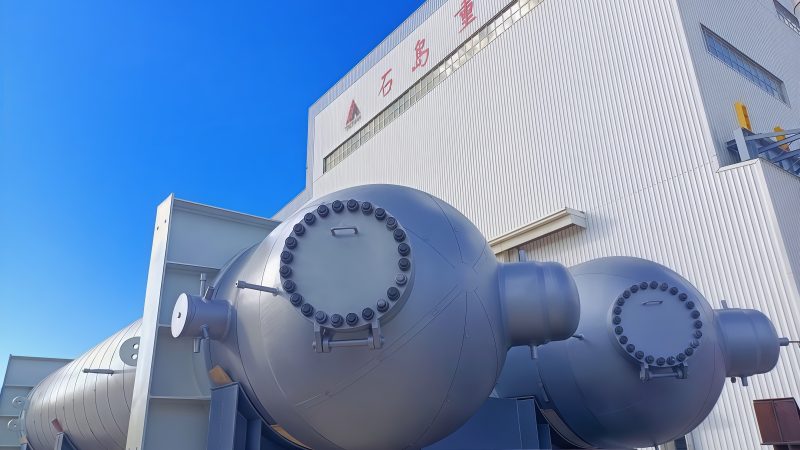
An ammonia terminal may also require pressure vessels for vapor handling, surge control, separation, condensate collection, buffer service or supporting process systems. These vessels should be specified according to drawings, datasheets and project standards.
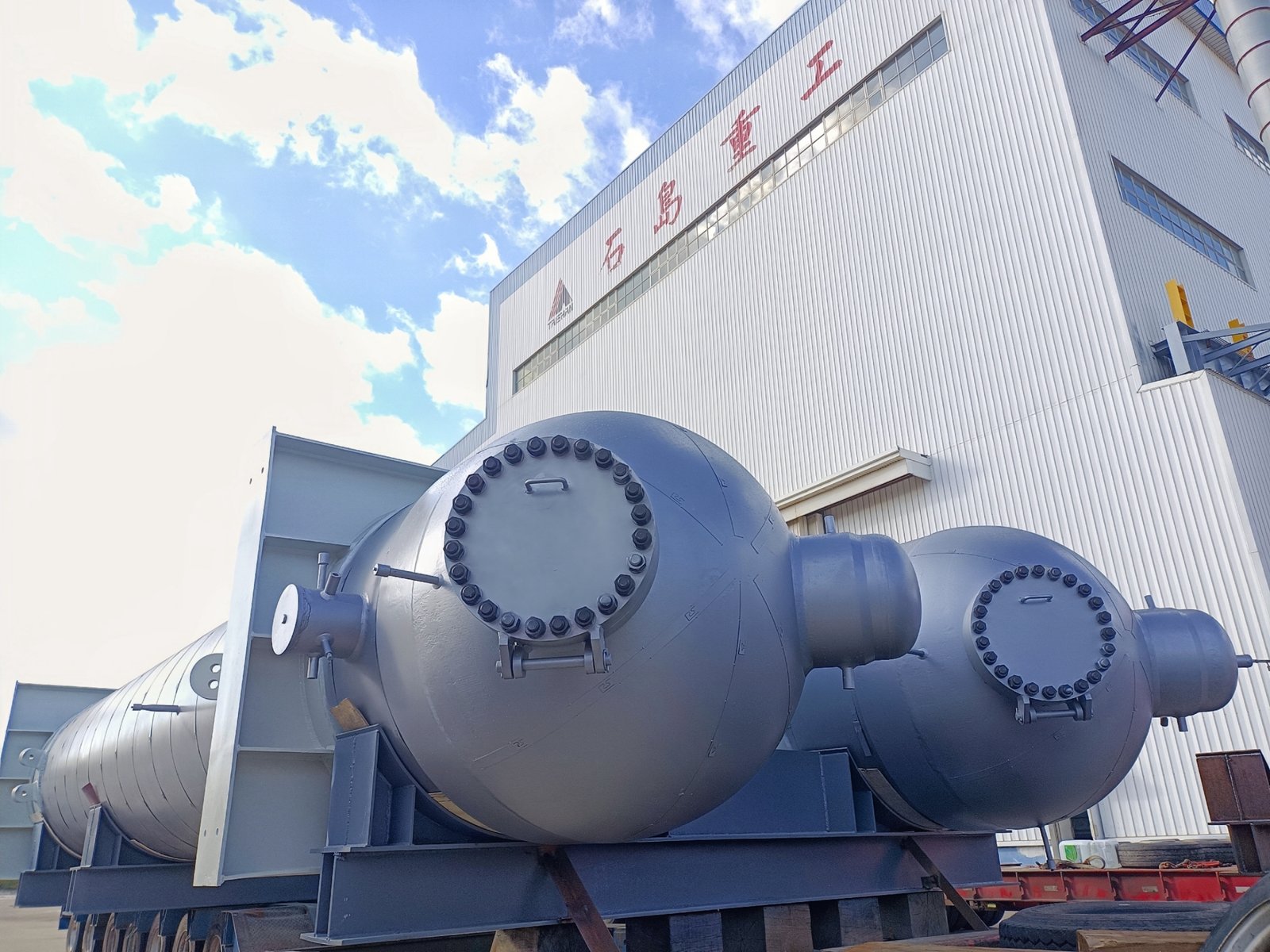
For ammonia projects, pressure vessels for chemical plants may need careful review of pressure, temperature, material compatibility, NDE scope and documentation. Nozzles, manways, supports, drains and instrument connections should be coordinated as part of the complete vessel package.
Heat Exchangers and Thermal Equipment
Temperature control may be required in ammonia storage, transfer, vapor management or process integration systems. Depending on the terminal design, heat exchangers may support cooling, heating, condensation, vapor handling or utility interfaces.
When specifying industrial heat exchangers, EPC buyers should provide heat duty, fluid composition, flow rate, inlet and outlet temperatures, allowable pressure drop, material requirements and inspection scope.
Loading and Unloading Interfaces
Ammonia terminal equipment must connect safely with ships, pipelines, trucks, rail systems or downstream plants. The tank and pressure vessel manufacturer may not supply every loading system component, but equipment interfaces must match the project’s piping and safety design.
EPC buyers should confirm:
- Flange standards and ratings
- Nozzle orientation
- Drain and vent requirements
- Loading and unloading battery limits
- Site installation constraints
- Inspection access
- Emergency and safety interfaces defined by the EPC design
These details should be clarified before fabrication release.
Key Selection Factors for EPC Buyers
Ammonia Service Conditions
Ammonia is a hazardous chemical and must be handled carefully. EPC buyers should define whether the project involves anhydrous ammonia, aqueous ammonia or another specified ammonia stream. Pressure, temperature, water content, impurities and operating mode can affect the equipment design.
The final material selection and safety requirements should be confirmed by qualified engineers according to the latest project specifications and local regulations.
Codes, Standards and Regulatory Review
Ammonia terminal equipment may involve pressure vessel codes, tank standards, hazardous chemical regulations, port requirements, environmental rules and owner safety standards. ASME BPVC Section VIII may apply to pressure vessels depending on design conditions and project location. API tank standards or other local standards may apply to certain storage designs.
The manufacturer can fabricate according to agreed drawings and specifications, but EPC buyers should define the applicable standards, editions, inspection scope and certification requirements in the RFQ.
Materials and Corrosion Considerations
Material selection should be based on ammonia service, temperature, pressure, impurities, site environment and regulatory requirements. Some ammonia services may require special attention to stress corrosion cracking, low-temperature properties, welding procedure control or post-weld requirements.
These decisions should not be made from a generic article. They should be reviewed by the EPC engineering team, owner and qualified technical parties.
Site Layout and Logistics
Ammonia terminals are interface-heavy projects. Storage tanks, pressure vessels, pipe racks, truck loading areas, access roads, foundations, safety distances and emergency systems all affect layout.
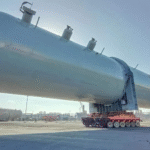
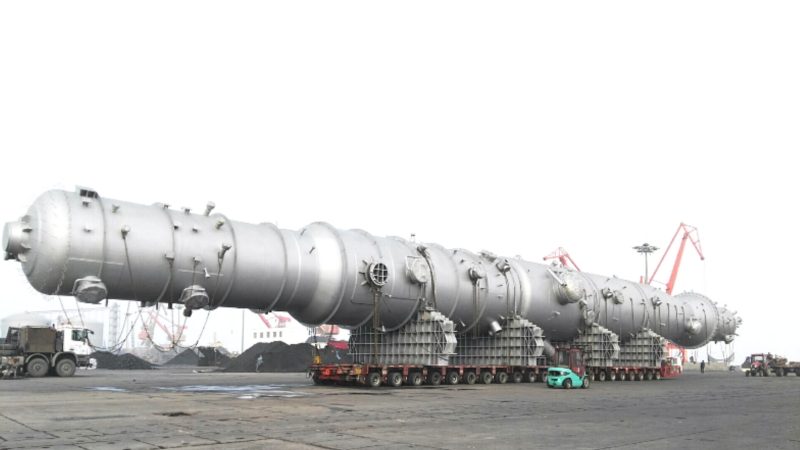
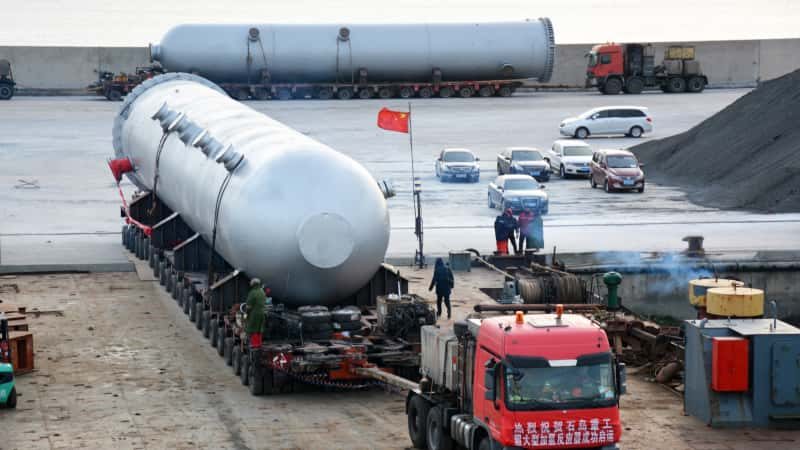
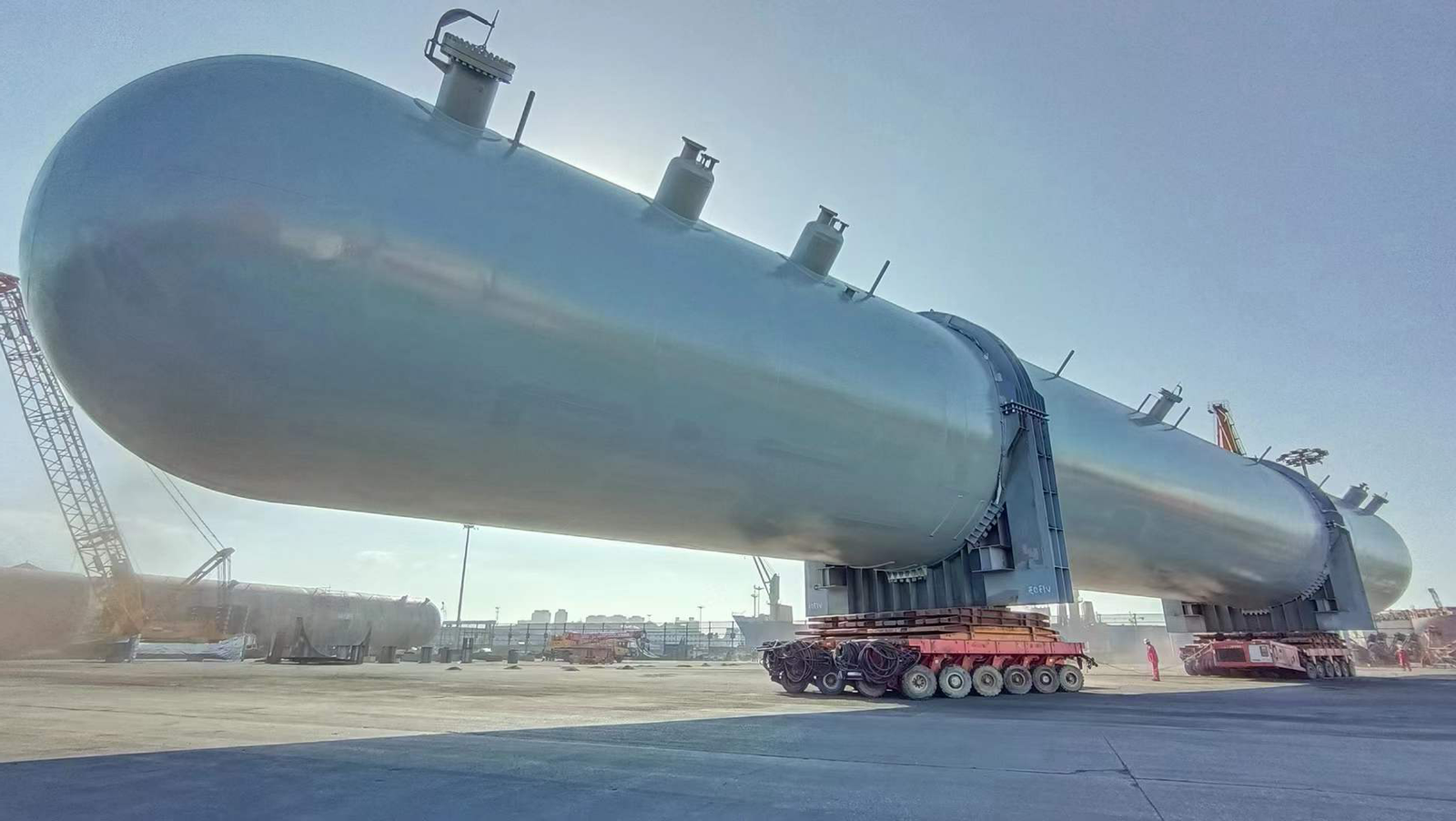
For large equipment, transport and lifting feasibility should be reviewed early. A large-scale pressure vessel manufacturer can help evaluate fabrication dimensions, lifting points, saddles, coating protection, packing and port delivery requirements.
Ammonia Terminal Equipment Checklist
| Equipment or interface | What EPC buyers should confirm | Why it matters |
|---|---|---|
| Ammonia storage tanks | Storage method, capacity, pressure, temperature, materials and inspection scope | Defines the core tank design and project acceptance basis |
| Pressure vessels | Service duty, drawings, design conditions, NDE and documentation | Supports vapor handling, buffering and process integration |
| Heat exchangers | Heat duty, fluids, temperature approach, pressure drop and materials | Supports temperature control and vapor management |
| Loading interfaces | Ship, truck, rail, pipeline or plant battery limits and nozzle orientation | Reduces installation conflict and safety-interface risk |
| Delivery planning | Dimensions, lifting, packing, preservation, transport route and documents | Improves project schedule control for large equipment |
Manufacturing and Quality Control
Ammonia terminal equipment requires controlled manufacturing and documentation. Depending on the project, fabrication may include material procurement, plate forming, welding, heat treatment if required, dimensional inspection, NDE, pressure testing, leak testing, coating inspection and export packing.
A strong quality plan may include:
- Material traceability
- Welding procedure control
- Welder qualification records if required
- Radiographic or ultrasonic testing where specified
- Magnetic particle or penetrant testing where specified
- Pressure or leak testing according to the inspection plan
- Coating and preservation records
- Final documentation package
WSHI supports pressure vessel manufacturing and custom industrial equipment fabrication based on customer drawings, datasheets and agreed project requirements. OSHA also provides an ammonia refrigeration resource page that can serve as a general safety reference for ammonia hazards and controls, although terminal requirements must follow the project’s jurisdiction and approved safety basis.
RFQ Checklist for Ammonia Storage Terminal Equipment
Before requesting quotation, EPC buyers should prepare:
- Equipment list and battery limits
- Ammonia composition and service description
- Storage capacity and operating mode
- Operating pressure and design pressure
- Operating temperature and design temperature
- Tank or vessel drawings and datasheets
- Applicable codes and project standards
- Material grade and supplementary requirements
- Nozzle orientation and loading interface requirements
- Heat exchanger duty if included
- NDE, testing and third-party inspection scope
- Coating, preservation and packing requirements
- Transport dimensions and delivery terms
- Documentation package requirements
A complete RFQ helps the manufacturer evaluate the project as a full equipment package rather than isolated tanks or vessels.
Conclusion
Ammonia storage terminal equipment should be specified around the full project boundary: large storage tanks, pressure vessels, heat exchangers, loading interfaces, inspection, coating, documentation and delivery planning. For EPC buyers, early clarification of ammonia service conditions, materials, codes, safety requirements and logistics can reduce technical uncertainty before fabrication.
If you are planning an ammonia storage terminal, fertilizer supply project, chemical terminal or energy-related ammonia infrastructure project, you can share drawings, datasheets, operating conditions and delivery requirements with WSHI. Our team can support early communication for custom pressure vessels, industrial storage tanks, heat exchangers and project delivery review. You can discuss your project requirements with our engineering team.
FAQ
What equipment is used in an ammonia storage terminal?
An ammonia storage terminal may include large storage tanks, pressure vessels, loading and unloading interfaces, pipelines, heat exchangers, vapor handling equipment and supporting process vessels.
Are ammonia storage tanks pressure vessels?
Some ammonia storage systems are pressure-rated, while others may follow different storage design approaches. Final classification depends on pressure, temperature, storage method, code requirements and local regulations.
What should EPC buyers provide before requesting a quotation?
Buyers should provide drawings, datasheets, ammonia composition, pressure, temperature, storage capacity, standards, material requirements, inspection scope, coating requirements and delivery terms.
Why is material selection important for ammonia service?
Ammonia service can involve specific compatibility, temperature and stress corrosion considerations. Material selection should be reviewed by qualified engineers according to project specifications.
Can WSHI support overseas ammonia terminal equipment projects?
WSHI can support custom pressure vessels, large industrial storage tanks, heat exchangers and related process equipment based on drawings, datasheets and agreed inspection requirements.