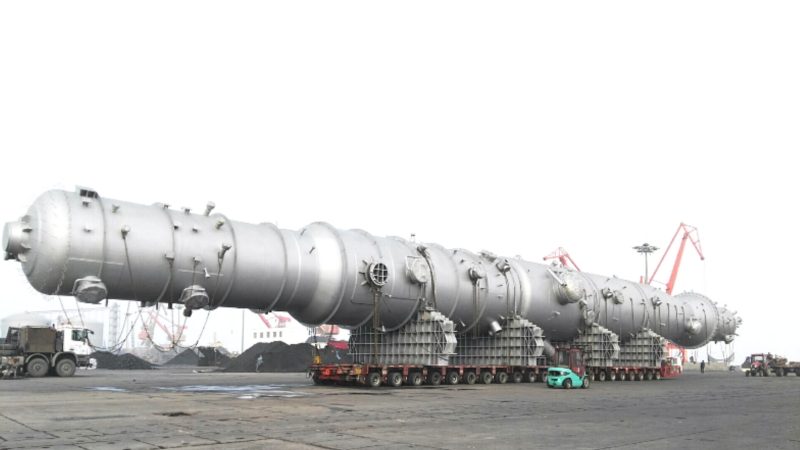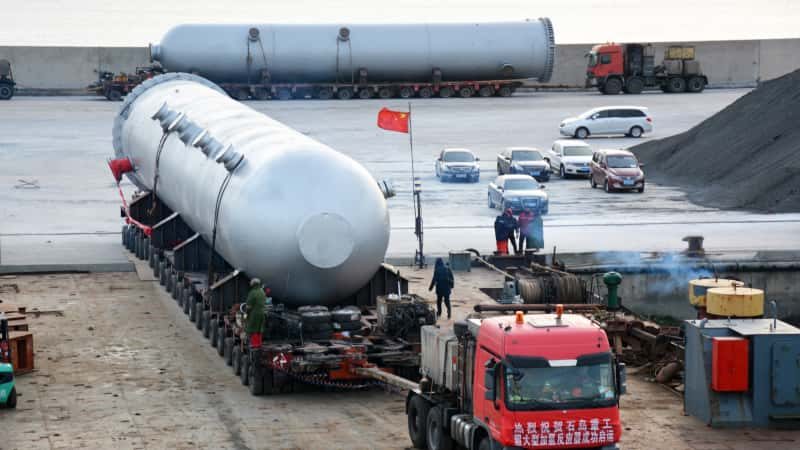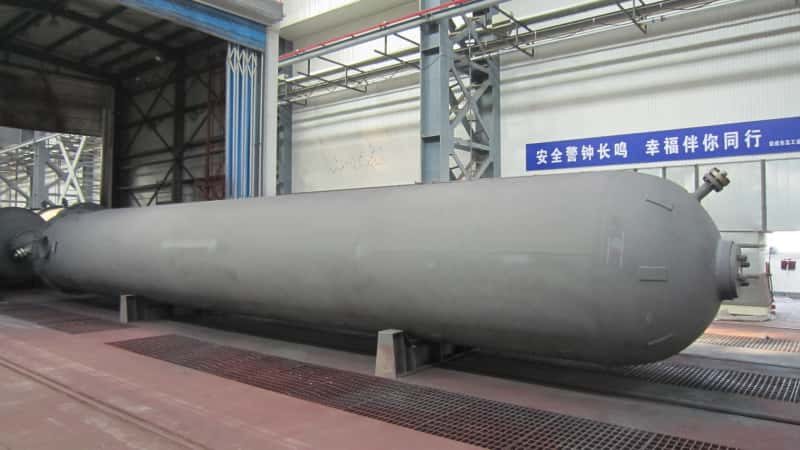

Selecting an ammonia synthesis tower and column without fully understanding the critical specifications can lead to costly inefficiencies, safety risks, and premature equipment failure. Many buyers struggle with mismatched materials, improper pressure ratings, or suboptimal catalyst compatibility—issues that can severely impact production stability and ROI. The solution lies in a systematic evaluation of engineering, operational, and material specifications to ensure the equipment aligns precisely with process requirements and long-term performance goals.
The critical specifications for purchasing an ammonia synthesis tower and column include design pressure and temperature ratings, material selection for corrosion and hydrogen embrittlement resistance, catalyst compatibility, internal configuration (such as trays or packing), gas flow dynamics, heat management systems, and compliance with industry standards (e.g., ASME). Properly balancing these factors ensures safe, efficient, and durable ammonia production.
To make an informed investment, it is essential to go beyond surface-level parameters and understand how each specification directly affects operational efficiency, maintenance cycles, and overall plant productivity. The following structured outline will guide you through the key considerations.
How Do Design Pressure and Temperature Specifications Affect Ammonia Synthesis Tower Performance?

In ammonia production, even slight deviations in pressure and temperature can dramatically impact conversion efficiency, catalyst life, and overall plant economics. Many operators face challenges such as reduced yield, excessive energy consumption, or catalyst degradation—often due to suboptimal design specifications. Because ammonia synthesis is governed by equilibrium and kinetics, improper pressure or temperature design can limit performance regardless of equipment size or quality. The solution lies in precisely optimizing these parameters during the design phase to balance reaction rate, equilibrium conversion, and operational stability.
Design pressure and temperature specifications directly determine ammonia synthesis tower performance by influencing reaction equilibrium, reaction kinetics, catalyst activity, heat management, and overall efficiency. High pressure favors ammonia formation thermodynamically, while optimized temperature ensures sufficient reaction rate without degrading catalyst or shifting equilibrium unfavorably.
To fully understand their impact, we must analyze how pressure and temperature interact within the ammonia synthesis process.
Increasing temperature always improves ammonia production efficiency because it speeds up the reaction.False
While higher temperature increases reaction rate, it shifts equilibrium away from ammonia formation, reducing overall conversion efficiency.
Fundamental Reaction Principles: Pressure vs Temperature
Ammonia synthesis follows the Haber-Bosch reaction:
N₂ + 3H₂ ⇌ 2NH₃ + Heat
This reaction is:
- Exothermic (releases heat)
- Volume-reducing (fewer gas molecules on product side)
Pressure Effect
Higher pressure shifts equilibrium toward ammonia formation due to reduced volume.
Temperature Effect
Higher temperature increases reaction rate but reduces equilibrium conversion because the reaction is exothermic.
| Parameter | Effect on Equilibrium | Effect on Rate |
|---|---|---|
| High Pressure | Increases NH₃ yield | Slight increase |
| High Temperature | Decreases NH₃ yield | Increases rate |
The challenge is balancing these opposing effects.
Impact of Design Pressure on Performance
Enhanced Conversion Efficiency
High pressure (typically 150–300 bar) increases ammonia yield per pass.
| Pressure Level | Conversion Efficiency | Energy Cost |
|---|---|---|
| Low (<100 bar) | Low | Lower |
| Medium (100–200 bar) | Moderate | Moderate |
| High (200–300 bar) | High | Higher |
Higher pressure reduces recycle load and improves plant throughput.
Equipment and Safety Considerations
Designing for high pressure requires:
- Thick-walled reactors
- High-strength materials
- Advanced sealing systems
| Factor | Impact |
|---|---|
| Material Strength | Critical for safety |
| Wall Thickness | Increases cost |
| Maintenance | More complex |
Thus, pressure optimization must balance performance and cost.
Impact of Design Temperature on Performance
Reaction Rate Optimization
Typical operating temperatures: 400–500°C
Higher temperatures:
- Increase reaction speed
- Improve catalyst activity
But excessive temperature:
- Reduces equilibrium conversion
- Damages catalyst
| Temperature Range | Effect |
|---|---|
| <350°C | Slow reaction |
| 400–450°C | Optimal |
| >500°C | Catalyst degradation |
Catalyst Performance and Longevity
Catalysts (iron-based) are sensitive to temperature.
| Temperature | Catalyst Impact |
|---|---|
| Optimal | High activity |
| Too High | Sintering |
| Too Low | Inactive |
Proper temperature control extends catalyst life and reduces replacement costs.
Heat Management and Temperature Control
Because the reaction is exothermic, heat removal is critical.
Design features include:
- Interstage cooling
- Internal heat exchangers
- Multi-bed reactor design
| Method | Function | Benefit |
|---|---|---|
| Cooling coils | Remove heat | Maintain equilibrium |
| Multi-bed design | Stepwise reaction | Higher conversion |
| Heat recovery | Energy efficiency | Cost savings |
Effective heat management ensures stable operation.
Interaction Between Pressure and Temperature
Pressure and temperature must be optimized together.
| Scenario | Result |
|---|---|
| High P + Low T | High equilibrium, slow rate |
| Low P + High T | Fast rate, low yield |
| High P + Moderate T | Optimal balance |
This balance defines reactor performance.
Real-World Case Study
In an ammonia plant upgrade:
- Pressure increased from 180 to 220 bar
- Temperature optimized with improved cooling
Results:
- 12% increase in conversion efficiency
- 8% reduction in energy consumption
- Extended catalyst life
This demonstrates the importance of design optimization.
Common Design Mistakes
- Overemphasis on temperature for speed
- Underestimating pressure benefits
- Poor heat removal design
- Ignoring catalyst limitations
These can significantly reduce performance.
Engineering Optimization Strategy
| Parameter | Optimization Goal |
|---|---|
| Pressure | Maximize yield |
| Temperature | Balance rate & equilibrium |
| Heat Removal | Maintain stability |
| Catalyst | Ensure longevity |
Advanced Design Innovations
Modern ammonia reactors use:
- Radial flow designs
- Advanced catalysts
- Digital monitoring systems
- Improved heat integration
These enhance performance and efficiency.
Conclusion: Balance Is the Key to Performance
Design pressure and temperature are the most critical factors influencing ammonia synthesis tower performance. Their interaction determines conversion efficiency, energy consumption, and operational stability. A well-optimized design achieves the perfect balance between thermodynamics and kinetics, ensuring maximum productivity and long-term reliability.
Contact Us for Advanced Reactor Design Solutions
If you are designing or upgrading an ammonia synthesis tower and need expert guidance on pressure, temperature optimization, or reactor performance, contact our team today. We provide advanced engineering solutions tailored to maximize efficiency, safety, and profitability.
Why Is Material Selection Critical for Ammonia Synthesis Columns in High-Pressure Environments?

In ammonia synthesis, operating conditions are among the most extreme in the chemical industry—high pressures (150–300 bar), elevated temperatures (400–500°C), and hydrogen-rich environments. Under these conditions, poor material selection can lead to hydrogen embrittlement, high-temperature creep, corrosion, and catastrophic vessel failure. Many plants that overlook material compatibility face premature equipment degradation, safety risks, and costly shutdowns. The solution is a carefully engineered material selection strategy that aligns with both mechanical and chemical demands of the process.
Material selection is critical for ammonia synthesis columns because it directly affects resistance to high-pressure stress, hydrogen embrittlement, high-temperature creep, corrosion, and long-term structural integrity. Proper materials—such as low-alloy steels, Cr-Mo steels, and specialized linings—ensure safe, durable, and efficient operation under extreme conditions.
To fully understand this, we must analyze how materials behave under ammonia synthesis conditions and how they influence performance and safety.
Standard carbon steel is sufficient for ammonia synthesis columns because it is strong and cost-effective.False
Carbon steel alone is not adequate due to hydrogen embrittlement and high-temperature degradation; specialized alloy steels and linings are required.
Extreme Operating Conditions Define Material Requirements
Ammonia synthesis columns operate in one of the harshest environments in chemical engineering.
Key conditions include:
- High pressure (up to 300 bar)
- High temperature (400–500°C)
- Hydrogen-rich atmosphere
- Cyclic thermal and pressure loads
These factors create multiple failure mechanisms that materials must resist simultaneously.
| Condition | Material Challenge | Risk |
|---|---|---|
| High Pressure | Stress resistance | Rupture |
| High Temperature | Creep deformation | Structural failure |
| Hydrogen | Embrittlement | Cracking |
| Corrosive gases | Chemical attack | Degradation |
Material selection must address all these simultaneously.
Hydrogen Embrittlement: The Most Critical Threat
Hydrogen embrittlement occurs when hydrogen atoms diffuse into steel, reducing ductility and causing brittle fracture.
This is especially severe in ammonia synthesis due to high hydrogen concentration.
| Factor | Impact |
|---|---|
| Hydrogen diffusion | Weakens grain boundaries |
| High pressure | Accelerates penetration |
| Temperature | Increases mobility |
To mitigate this, materials such as Cr-Mo steels and internal linings are used.
High-Temperature Creep Resistance
At elevated temperatures, materials can deform slowly under stress (creep).
| Material Type | Creep Resistance | Application |
|---|---|---|
| Carbon Steel | Low | Not suitable |
| Cr-Mo Steel | High | Standard choice |
| Advanced Alloys | Very high | Critical zones |
Creep-resistant materials ensure long-term dimensional stability.
Corrosion and Chemical Compatibility
Although ammonia itself is relatively stable, impurities and process gases can cause corrosion.
Key concerns include:
- Nitrogen and hydrogen reactions
- Trace contaminants
- Stress corrosion cracking
Materials must be chemically stable under these conditions.
Multi-Layer Structural Design
Modern ammonia synthesis columns often use multi-layer construction:
- Outer shell: High-strength low-alloy steel
- Inner lining: Stainless steel or specialized alloy
- Insulation layers
| Layer | Function | Benefit |
|---|---|---|
| Outer Shell | تحمل (load bearing) | Structural strength |
| Inner Lining | Corrosion resistance | Protects shell |
| Insulation | Heat control | Efficiency |
This combination balances strength and resistance.
Mechanical Strength Under High Pressure
The reactor must withstand extreme الضغط without deformation.
Material properties required:
- High yield strength
- Fatigue resistance
- Toughness
| Property | Importance |
|---|---|
| Yield Strength | Prevents deformation |
| Toughness | Prevents brittle failure |
| Fatigue Resistance | Long-term reliability |
Impact on Safety and Reliability
Material failure in ammonia synthesis columns can lead to catastrophic accidents.
Proper material selection ensures:
- Leak prevention
- Structural integrity
- Safe long-term operation
Lifecycle Cost and Economic Impact
| Factor | Poor Material | Proper Material |
|---|---|---|
| Initial Cost | Low | Higher |
| Maintenance | Frequent | Minimal |
| Downtime | High | Low |
| Lifespan | Short | Long |
| Total Cost | High | Lower |
Investing in proper materials reduces long-term costs.
Real-World Case Study
In an ammonia plant, replacing a carbon steel reactor with a Cr-Mo steel design and stainless lining resulted in:
- Elimination of hydrogen cracking
- 30% longer service life
- Reduced maintenance costs
Common Material Selection Mistakes
- Using standard materials for cost savings
- Ignoring hydrogen effects
- Underestimating temperature impact
- Lack of proper lining
Advanced Material Technologies
Modern innovations include:
- Hydrogen-resistant alloys
- Clad materials
- Advanced welding techniques
- Surface treatments
These improve durability and safety.
Engineering Selection Strategy
| Criteria | Requirement |
|---|---|
| Pressure Resistance | High strength |
| Temperature Resistance | Creep مقاومة |
| Hydrogen Resistance | Anti-embrittlement |
| Corrosion Resistance | Chemical stability |
Conclusion: Materials Define Safety and Longevity
Material selection is the foundation of ammonia synthesis column performance. It determines whether the reactor can safely withstand extreme conditions while maintaining efficiency and durability. A well-engineered material strategy ensures reliable operation, reduced risk, and optimal lifecycle value.
Contact Us for Expert Material Solutions
If you are designing or upgrading ammonia synthesis equipment and need expert guidance on material selection, contact our team today. We provide advanced engineering solutions to ensure safety, performance, and long-term reliability in high-pressure environments.
How Does Catalyst Compatibility Influence the Design of an Ammonia Synthesis Tower?
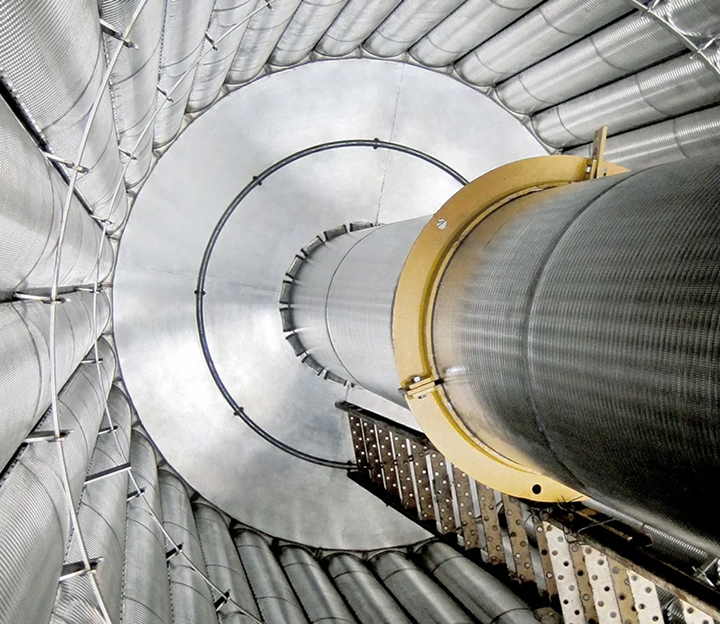
In ammonia synthesis, even the most advanced reactor design can fail to deliver optimal performance if it is not compatible with the catalyst inside. Many plants experience reduced conversion rates, uneven temperature distribution, rapid catalyst deactivation, or excessive pressure drop—all due to poor integration between catalyst properties and reactor design. Since the catalyst is the heart of the Haber-Bosch process, ignoring its characteristics can lead to inefficient operation and costly shutdowns. The solution is to design the ammonia synthesis tower around the catalyst, not the other way around.
Catalyst compatibility influences ammonia synthesis tower design by determining reactor geometry, bed configuration, temperature control strategy, gas distribution, pressure drop management, and material selection. Proper alignment between catalyst properties and reactor design ensures optimal reaction efficiency, extended catalyst life, and stable long-term operation.
To fully understand this relationship, we must analyze how catalyst characteristics shape every aspect of reactor design.
The catalyst only affects reaction speed and does not influence the physical design of the ammonia synthesis tower.False
Catalyst properties such as activity, particle size, and thermal sensitivity directly influence reactor geometry, flow design, and heat management.
Catalyst Properties Define Reactor Design Requirements
Ammonia synthesis catalysts (typically iron-based with promoters) have specific physical and chemical characteristics:
- Particle size and shape
- Surface area and activity
- Sensitivity to temperature and poisons
- Mechanical strength
These properties directly influence how the reactor must be designed.
| Catalyst Property | Design Impact | Risk if Ignored |
|---|---|---|
| Particle Size | Flow resistance | High pressure drop |
| Activity | Reactor size | Inefficiency |
| Thermal Sensitivity | Temperature control | Deactivation |
| Strength | Bed stability | Crushing |
A well-designed reactor must accommodate all these factors.
Catalyst Bed Configuration and Reactor Geometry
The arrangement of catalyst inside the reactor is critical.
Common configurations include:
- Axial flow beds
- Radial flow beds
- Multi-bed systems with interstage cooling
| Configuration | Advantage | Application |
|---|---|---|
| Axial Flow | Simple design | Small reactors |
| Radial Flow | Low pressure drop | Large-scale plants |
| Multi-Bed | Temperature control | High efficiency |
Catalyst compatibility determines which configuration is optimal.
Temperature Control and Heat Management
Ammonia synthesis is highly exothermic, and catalysts are sensitive to temperature.
Design must ensure:
- Uniform temperature distribution
- Avoidance of hot spots
- Efficient heat removal
| Design Feature | Function | Benefit |
|---|---|---|
| Interstage Cooling | Removes heat | Protects catalyst |
| Internal Heat Exchangers | Temperature регулирование | Stability |
| Multi-Bed Design | Stepwise reaction | Higher conversion |
Poor temperature control can lead to catalyst sintering and loss of activity.
Gas Distribution and Flow Uniformity
Uniform gas flow is essential to ensure all catalyst particles are utilized effectively.
Design considerations include:
- Distributor plates
- Flow channels
- Radial vs axial flow paths
| Issue | Cause | Solution |
|---|---|---|
| Channeling | Poor distribution | Improved design |
| Dead Zones | Uneven flow | Optimized geometry |
| Overheating | Localized flow | Uniform distribution |
Proper design maximizes catalyst utilization.
Pressure Drop and Energy Efficiency
Catalyst beds create resistance to gas flow.
Factors affecting pressure drop:
- Particle size
- Bed depth
- Flow velocity
| Parameter | Effect |
|---|---|
| Small particles | High pressure drop |
| Deep beds | Increased resistance |
| High velocity | Energy loss |
Design must balance efficiency and energy consumption.
Catalyst Loading and Replacement Considerations
Catalyst compatibility also affects maintenance design.
Features include:
- Easy loading/unloading systems
- Support grids
- Access points
| Feature | Benefit |
|---|---|
| Modular beds | Easy replacement |
| Access ports | Simplified maintenance |
| Support structures | Prevent damage |
This reduces downtime and operational cost.
Material Compatibility with Catalyst
Catalysts can interact with reactor materials.
Design must prevent:
- Contamination
- Chemical reactions
- Catalyst poisoning
Materials must be compatible with both catalyst and process conditions.
Real-World Case Study
In an ammonia plant, switching to a radial-flow reactor design tailored to catalyst properties resulted in:
- 15% reduction in pressure drop
- Improved temperature distribution
- Extended catalyst life by 20%
This highlights the importance of design-catalyst alignment.
Common Design Mistakes
- Ignoring catalyst thermal limits
- Poor flow distribution design
- Overpacking catalyst beds
- Using incompatible materials
These mistakes reduce efficiency and increase costs.
Advanced Catalyst-Driven Design Innovations
Modern reactors incorporate:
- Structured catalyst beds
- Advanced distribution systems
- Digital monitoring
- Improved cooling technologies
These enhance performance and reliability.
Engineering Optimization Strategy
| Design Aspect | Catalyst Requirement |
|---|---|
| Geometry | Match flow characteristics |
| Temperature | Stay within limits |
| Pressure Drop | Minimize resistance |
| Materials | Prevent contamination |
Conclusion: Catalyst-Centric Design Is Essential
Catalyst compatibility is not a secondary consideration—it is the foundation of ammonia synthesis tower design. Every aspect of the reactor, from geometry to temperature control, must be aligned with catalyst properties to achieve optimal performance, efficiency, and longevity.
Contact Us for Advanced Reactor Design
If you are designing or optimizing an ammonia synthesis tower and need expert guidance on catalyst compatibility and reactor engineering, contact our team today. We deliver high-performance, customized solutions tailored to your process requirements.
What Internal Structures (Trays, Packing, or Radial Flow Design) Are Best for an Ammonia Synthesis Column?
When people hear the word “column,” they often think of trays or packing, but that assumption can be costly in ammonia service. An ammonia synthesis tower is not a distillation or absorption column; it is a high-pressure catalytic reactor operating under severe temperature, pressure, and equilibrium constraints. Choosing the wrong internal concept can raise pressure drop, create maldistribution, overheat catalyst, and cut conversion efficiency. The practical solution is to match the internals to the real duty of the vessel: controlled gas distribution through catalyst beds with effective heat management and minimal pressure loss.
For a modern ammonia synthesis tower, radial-flow or axial-radial fixed catalyst-bed internals are usually the best choice. Trays and conventional packing are generally not the right primary internals for the reaction zone, because ammonia synthesis depends on catalyst-bed performance, low pressure drop, uniform gas flow, and tight temperature control rather than phase-contact efficiency. In most large modern converters, radial-flow catalyst beds with interbed cooling are preferred because they allow lower pressure drop and the use of smaller, more active catalyst particles.
If you are comparing internals for a new plant or revamp, the key is not to ask which option is most familiar, but which one best supports catalyst utilization, temperature control, pressure-drop management, and long campaign life. That is why the answer in ammonia synthesis is usually very different from what it would be for a separation column.
Tray or packed-column internals are usually the best primary reaction internals for a high-pressure ammonia synthesis tower.False
Industrial ammonia synthesis towers are normally designed around fixed catalyst beds, most commonly radial-flow or axial-radial catalyst-bed internals, because the process needs controlled catalytic reaction, low pressure drop, and effective heat management rather than tray or packing mass-transfer contact.
Why the Terminology Causes Confusion
The confusion starts with the word “column.” In fertilizer plants, people often use “ammonia synthesis column,” “converter,” “tower,” and “reactor” interchangeably. Functionally, though, this vessel is a catalytic reactor. Its main job is to pass synthesis gas over iron-based catalyst under high pressure while controlling temperature rise from the exothermic reaction and avoiding unnecessary pressure loss. Modern industrial designs described by Topsoe and in published reactor studies are built around two-bed or three-bed radial-flow or axial-radial catalyst arrangements, not around tray decks or random/structured packing like those used in mass-transfer columns.
That distinction matters because the governing design problem is different. In a distillation or absorption tower, trays and packing are meant to maximize vapor-liquid contact area. In ammonia synthesis, the central objective is to move gas uniformly through catalyst while limiting pressure drop and controlling hot spots. Published industry references note that older axial-flow beds using larger catalyst particles were later converted in many plants to radial-flow or axial/radial-flow beds so smaller catalyst particles could be used with less pressure-drop penalty, improving efficiency.
The Three Options Compared
1. Trays
Trays are excellent for vapor-liquid contacting, but they are generally not the best primary internals for the reaction section of an ammonia synthesis converter. Ammonia synthesis is a gas-phase catalytic reaction over a fixed solid catalyst bed. A tray stack does not provide the deep, mechanically supported catalyst volume, the low-resistance radial gas path, or the integrated interbed temperature-control architecture used in modern converter practice. In industrial ammonia converters described in the literature and by licensors, the internals are catalyst beds with quench or indirect cooling arrangements, not tray stages.
That does not mean tray-like support elements never appear anywhere in the vessel. You may still have support plates, grids, or distribution plates associated with catalyst retention and gas distribution. But these are support/distributor components, not “tray internals” in the separation-column sense. For selecting the main internal architecture, trays are usually the wrong conceptual model for ammonia synthesis service. This is less a matter of preference than process physics: the reactor needs catalyst residence, heat control, and low pressure drop, not stagewise contacting.
2. Packing
Conventional packing also tends to be the wrong primary choice for an ammonia synthesis converter. Structured or random packing is optimized for creating interfacial area and reducing pressure drop in phase-contact equipment. In an ammonia converter, however, the active medium must be a catalyst bed engineered for reaction kinetics, pellet strength, gas distribution, and temperature management. The key packed medium is therefore catalyst itself, not tower packing. Studies on ammonia converter performance focus on catalyst particle diameter, porosity, bed geometry, and axial-radial flow through catalyst beds, showing that catalyst-bed design drives reactor performance.
There is also a practical reason to avoid thinking in terms of ordinary packing. The ammonia loop runs at very high pressure, and even modest extra pressure loss matters because compression energy is expensive. The industrial move toward radial and axial-radial catalyst beds was driven in part by the ability to reduce pressure drop while using smaller catalyst particles with higher activity. A conventional “packed-column” mindset does not address this nearly as well as a purpose-built radial-flow catalyst basket does.
3. Radial-Flow Design
For most modern, high-capacity ammonia synthesis converters, radial-flow or axial-radial catalyst-bed internals are the best choice. Topsoe’s commercial ammonia converters are explicitly radial-flow designs: the S-200 is a two-bed radial-flow converter with indirect cooling, and the S-300 is a three-bed radial-flow converter that Topsoe describes as its recommended design for new plants. Topsoe also states that the three radial-flow beds in the S-300 allow higher conversion using smaller catalyst particles, improving overall efficiency.
The engineering logic is strong. Radial-flow beds shorten the gas path through the catalyst and enlarge the effective flow area, which lowers bed pressure drop relative to purely axial flow. Published technical sources and reactor studies note that axial-radial converters are characterized by low pressure drop and can use smaller catalyst particles for a given conversion. That combination is valuable because smaller particles increase effective catalytic activity but would impose too much pressure drop in a simple axial bed.
Another major advantage is temperature control. Industrial ammonia converters are commonly arranged as multiple adiabatic catalyst beds with interbed cooling or quench. Radial-flow baskets integrate well with these temperature-management strategies, helping operators limit hot spots, protect catalyst, and keep each bed closer to its optimal operating window. Published reactor modeling work and commercial designs alike describe two-bed and three-bed arrangements with interstage cooling, which is a strong indicator of where modern best practice sits.
Practical Comparison Table
| Internal concept | Suitability for ammonia synthesis reaction zone | Main strength | Main weakness in ammonia service | Best use | |
|---|---|---|---|---|---|
| Trays | Low | Stagewise contact in separation service | Not optimized for fixed-bed catalytic reaction, pressure-drop control, or interbed catalyst management | Distillation/absorption, not main ammonia reaction internals | |
| Conventional packing | Low | Low pressure drop and high interfacial area in contacting service | Does not replace purpose-built catalyst-bed architecture; wrong design basis for catalyst utilization and temperature control | Separation service, not primary converter internals | |
| Axial fixed catalyst bed | Moderate | Simple construction | Higher pressure drop than radial-flow concepts at comparable duty | Smaller or older converter concepts, some specific revamps | |
| Radial-flow / axial-radial catalyst bed | High | Low pressure drop, better use of smaller catalyst particles, strong fit with multi-bed cooling design | More complex internals and manufacturing | Most modern medium- and large-scale ammonia converters |
Why Radial Flow Usually Wins in Real Plants
The answer is not simply “because licensors like it.” Radial flow usually wins because it aligns with the actual bottlenecks of ammonia synthesis. First, ammonia synthesis benefits from high pressure, so wasting pressure across the bed hurts loop economics. Second, the reaction is exothermic, so internal design must prevent local overheating and maintain useful temperature profiles across multiple beds. Third, catalyst performance improves with smaller particle sizes, but smaller particles increase pressure drop in conventional axial beds. Radial-flow geometry addresses all three issues better than trays or ordinary packing.
That is why the commercial market signals are so consistent. Topsoe’s S-200 and S-300 product lines are radial-flow designs, with the S-300 positioned as the recommended choice for new plants. Casale also markets Axial-Radial® ammonia cartridges for revamps and new applications. When major licensors repeatedly converge on the same internal philosophy, it usually reflects hard-earned operating experience, not just branding.
When an Axial Bed May Still Make Sense
There are situations where a purely axial or axial-downflow concept can still be justified. KBR notes, in a related reactor context, that radial flow offers better pressure-drop control across the bed, while a simpler axial downflow design can reduce weight substantially. That highlights the real tradeoff: radial-flow internals are often superior for pressure-drop-sensitive catalytic duty, but axial concepts can still appeal where simplicity, weight, or specific revamp constraints dominate.
So the best answer is not “radial flow always, no exceptions.” The better engineering answer is: for most modern high-pressure ammonia synthesis converters, radial-flow or axial-radial catalyst-bed internals are the preferred baseline; axial beds remain possible in some special cases; trays and conventional packing are generally not the right primary reaction internals at all.
Selection Table for Buyers and Engineers
| Project situation | Best internal choice | Why | |
|---|---|---|---|
| New medium/large ammonia plant | Radial-flow or axial-radial multi-bed converter | Best balance of low pressure drop, catalyst utilization, and temperature control | |
| Converter revamp with pressure-drop limitations | Axial-radial cartridge or radial-flow basket | Can improve performance without excessive loop penalty | |
| Small/simple special-case unit with tight mechanical constraints | Axial fixed bed may be considered | Simpler mechanics, but pressure-drop tradeoff must be accepted | |
| Thinking about tray/packing internals for the main reactor zone | Usually avoid | They solve the wrong process problem for ammonia synthesis |
Conclusion
For an ammonia synthesis column, the best internal structure is usually a radial-flow or axial-radial fixed catalyst-bed design, not trays and not conventional packing. The reason is straightforward: ammonia synthesis performance depends on catalyst-bed efficiency, low pressure drop, uniform gas distribution, and careful heat management. Modern industrial practice, published reactor studies, and commercial converter offerings all point in the same direction: multi-bed radial-flow internals are the practical benchmark for most new high-pressure ammonia synthesis service.
Contact Us
If you are evaluating ammonia synthesis converter internals for a new project or revamp, contact us for a design review focused on catalyst layout, pressure drop, temperature control, and long-term reliability.
How Do Gas Flow Dynamics and Heat Management Impact Ammonia Synthesis Tower Efficiency?
In ammonia synthesis, achieving high efficiency is not just about pressure and catalyst—it is fundamentally governed by how gas flows through the reactor and how heat is managed during the exothermic reaction. Poor gas distribution can create channeling, dead zones, and uneven catalyst utilization, while inadequate heat management can cause hot spots, catalyst degradation, and equilibrium limitations. These issues reduce conversion efficiency, increase energy consumption, and shorten catalyst life. The solution lies in optimizing gas flow dynamics and integrating advanced heat management strategies into the reactor design.
Gas flow dynamics and heat management directly impact ammonia synthesis tower efficiency by controlling reaction uniformity, catalyst utilization, temperature distribution, pressure drop, and equilibrium conditions. Uniform gas flow ensures full catalyst engagement, while effective heat removal maintains optimal reaction temperatures, maximizing conversion efficiency and extending catalyst life.
To fully understand their importance, we must analyze how flow behavior and thermal control interact within the reactor.
Uniform gas flow is not critical in ammonia synthesis because the catalyst will compensate for uneven distribution.False
Uneven gas flow leads to channeling and underutilized catalyst zones, significantly reducing reactor efficiency and performance.
The Role of Gas Flow Dynamics in Reactor Performance
Gas flow dynamics determine how reactants (N₂ and H₂) interact with the catalyst.
Key objectives include:
- Uniform distribution across the catalyst bed
- Minimization of pressure drop
- Avoidance of channeling and bypassing
| Flow Issue | Cause | Impact |
|---|---|---|
| Channeling | Poor distributor design | Reduced conversion |
| Dead Zones | Uneven flow | Catalyst underutilization |
| High Velocity Areas | Poor geometry | Erosion, hot spots |
Proper flow design ensures that every catalyst particle contributes to the reaction.
Radial vs Axial Flow: Impact on Efficiency
Modern ammonia reactors often use radial or axial-radial flow designs.
| Flow Type | Advantage | Limitation |
|---|---|---|
| Axial Flow | Simple | Higher pressure drop |
| Radial Flow | Low pressure drop | Complex design |
| Axial-Radial | Balanced | Moderate complexity |
Radial flow improves efficiency by reducing resistance and enabling better gas distribution.
Pressure Drop and Energy Consumption
Pressure drop is a critical factor in ammonia synthesis loops.
Higher pressure drop:
- Increases compressor energy demand
- Reduces overall efficiency
| Factor | Effect |
|---|---|
| Catalyst size | Smaller = higher drop |
| Bed depth | Deeper = higher drop |
| Flow velocity | Faster = higher drop |
Optimized flow design minimizes energy loss while maintaining performance.
Heat Management: Controlling an Exothermic Reaction
The ammonia synthesis reaction releases significant heat.
Without proper control:
- Temperature rises rapidly
- Equilibrium shifts unfavorably
- Catalyst degrades
| Temperature Issue | Consequence |
|---|---|
| Hot Spots | Catalyst sintering |
| Overheating | Reduced yield |
| Uneven Temperature | Inefficiency |
Effective heat management is essential for stable operation.
Multi-Bed Design and Interstage Cooling
Modern reactors use multiple catalyst beds with cooling between stages.
| Design Feature | Function | Benefit |
|---|---|---|
| Multi-Bed | تقسيم (staging) reaction | Better control |
| Interstage Cooling | Removes heat | Maintains equilibrium |
| Heat Exchangers | Energy recovery | Efficiency |
This approach allows the reaction to proceed closer to optimal conditions.
Internal Heat Exchangers and Energy Integration
Advanced designs include internal heat exchangers to recover and redistribute heat.
Benefits include:
- Preheating incoming gas
- Reducing external energy requirements
- Stabilizing temperature profiles
| System | Impact |
|---|---|
| Waste Heat Recovery | Energy savings |
| Internal Cooling | Temperature control |
| Heat Integration | Process optimization |
Interaction Between Flow and Temperature
Gas flow and heat management are interdependent.
| Scenario | Result |
|---|---|
| Poor Flow + Poor Cooling | Severe inefficiency |
| Good Flow + Poor Cooling | Hot spots |
| Poor Flow + Good Cooling | Uneven reaction |
| Optimized Both | Maximum efficiency |
Both must be optimized together.
Catalyst Utilization and Performance
Uniform flow and controlled temperature ensure:
- Maximum catalyst usage
- Stable reaction rates
- Longer catalyst life
| Condition | Catalyst Effect |
|---|---|
| Uniform Flow | Full utilization |
| Controlled Temperature | High activity |
| Hot Spots | Deactivation |
Real-World Case Study
In an ammonia plant upgrade:
- Improved gas distributor design
- Added interstage cooling
Results:
- 10–15% increase in conversion efficiency
- Reduced energy consumption
- Extended catalyst life
Common Design Mistakes
- Poor gas distribution systems
- Inadequate cooling design
- Ignoring pressure drop
- Overloading catalyst beds
These reduce efficiency and increase costs.
Advanced Technologies
Modern solutions include:
- CFD-based flow optimization
- Digital temperature monitoring
- Advanced cooling systems
- Improved reactor internals
These enhance performance and reliability.
Engineering Optimization Strategy
| Parameter | Goal |
|---|---|
| Gas Flow | Uniform distribution |
| Pressure Drop | Minimize |
| Temperature | Optimal range |
| Heat Removal | Efficient |
Conclusion: Flow and Heat Define Efficiency
Gas flow dynamics and heat management are the core drivers of ammonia synthesis tower efficiency. Their optimization ensures uniform reaction conditions, maximizes catalyst performance, and minimizes energy consumption. A well-designed system balances both factors to achieve high conversion, reliability, and long-term operational success.
Contact Us for Advanced Reactor Optimization
If you are designing or optimizing an ammonia synthesis tower and need expert support in flow dynamics, heat management, or reactor performance, contact our team today. We provide advanced engineering solutions tailored to maximize efficiency, safety, and profitability.
Which Industry Standards and Certifications Should an Ammonia Synthesis Column Meet?
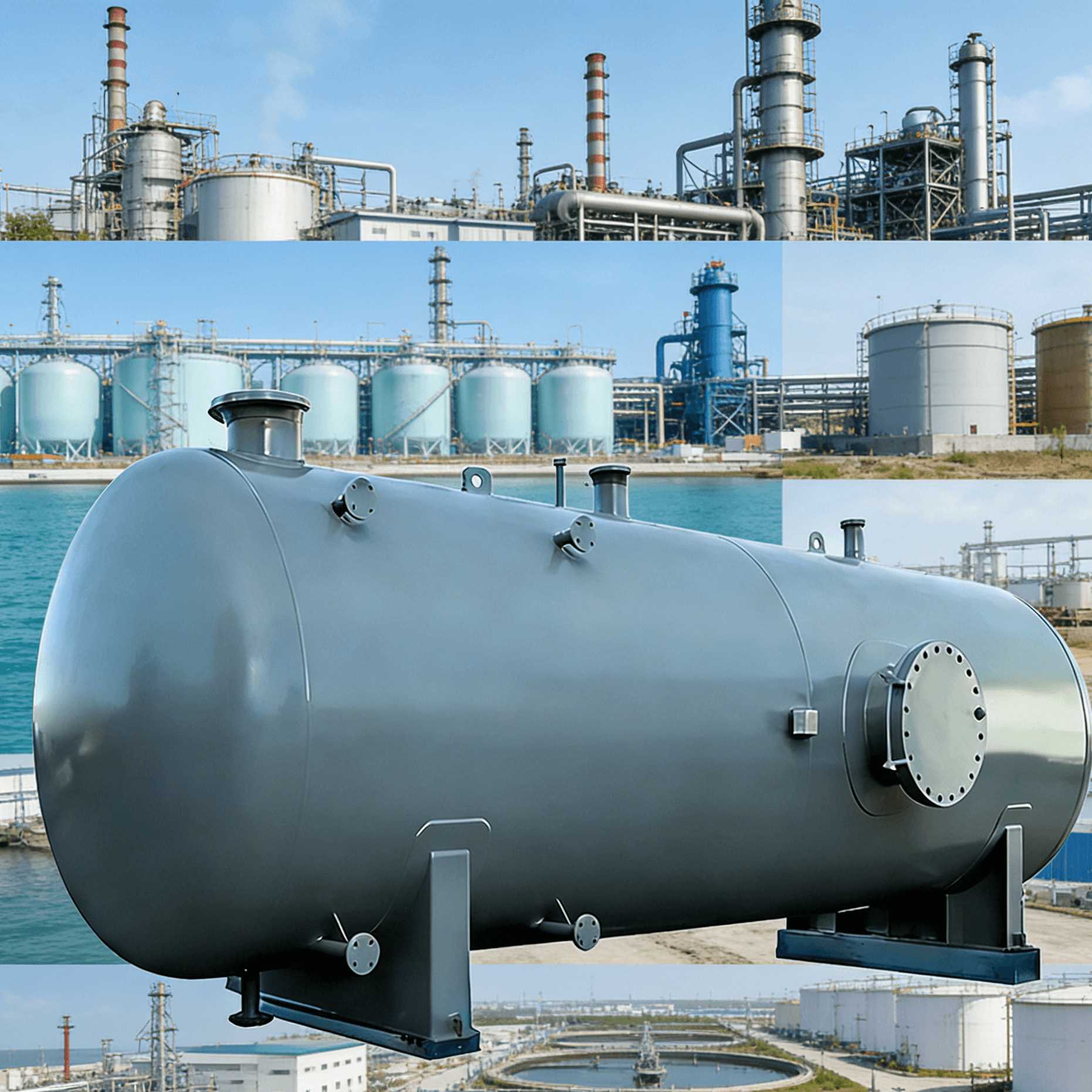
In ammonia synthesis plants, the reactor (often called the synthesis column or converter) operates under extreme conditions—high pressure, high temperature, and hydrogen-rich environments. Any failure can lead to catastrophic consequences, including explosions, toxic releases, and massive financial losses. Yet many buyers and project engineers underestimate the importance of certifications and standards, focusing instead on cost or delivery time. This oversight can result in non-compliant equipment, rejected installations, or long-term safety risks. The solution is to ensure that ammonia synthesis columns meet the correct combination of international standards and certifications that guarantee safety, reliability, and regulatory compliance.
An ammonia synthesis column should comply with key international standards such as ASME (pressure vessel design), PED (European compliance), ISO 9001 (quality management), ASTM/EN (material standards), ASME Section IX (welding), and applicable safety and inspection codes. These certifications ensure structural integrity, safe operation under extreme conditions, and compliance with global regulatory requirements.
To make informed decisions, it is essential to understand what each certification covers and why it matters specifically for ammonia synthesis applications.
ISO 9001 certification alone is sufficient to guarantee the safety and compliance of an ammonia synthesis column.False
ISO 9001 ensures quality management systems but does not cover specific technical safety requirements such as pressure vessel design or high-pressure operation standards.
Why Standards Are Critical in Ammonia Synthesis Columns
Ammonia synthesis columns are among the most demanding pressure vessels in the chemical industry. They must withstand:
- Pressures up to 300 bar
- Temperatures up to 500°C
- Hydrogen embrittlement risks
- Cyclic thermal and mechanical stresses
Standards ensure that every aspect of design, fabrication, and operation is controlled and verified.
| Risk Factor | Without Standards | With Standards |
|---|---|---|
| Structural Failure | High | Minimized |
| Compliance Issues | Likely | Avoided |
| Safety Incidents | Increased | Reduced |
| Lifecycle Reliability | Uncertain | Predictable |
Standards act as the foundation of safe and reliable operation.
ASME Boiler and Pressure Vessel Code (BPVC)
ASME is the most important standard for ammonia synthesis columns.
It governs:
- Design calculations
- Material selection
- Fabrication processes
- Inspection and testing
| Section | Scope | Importance |
|---|---|---|
| Section VIII | Pressure vessel design | Core requirement |
| Section II | Materials | Material integrity |
| Section V | NDT methods | Inspection reliability |
| Section IX | Welding | Weld quality |
ASME certification (U stamp) is widely recognized globally and often mandatory.
PED (Pressure Equipment Directive – Europe)
For equipment used in the European Union, PED compliance is required.
It ensures:
- Safety under pressure
- Third-party inspection
- CE marking
| Category | Requirement | Risk Level |
|---|---|---|
| I | Basic compliance | Low |
| II–IV | Notified body involvement | Medium–High |
PED certification is essential for market access in Europe.
ISO 9001: Quality Management System
ISO 9001 ensures that the manufacturer follows standardized quality processes.
Benefits include:
- Consistent production
- Reduced defects
- Continuous improvement
However, it must be combined with technical standards.
Material Standards (ASTM / EN)
Material selection is critical due to hydrogen and high-temperature conditions.
Standards define:
- Chemical composition
- Mechanical properties
- Testing requirements
| Standard | Region | Application |
|---|---|---|
| ASTM | USA/global | Material specs |
| EN | Europe | Material compliance |
These ensure materials can withstand extreme environments.
Welding and Fabrication Standards
Welding quality is critical for high-pressure vessels.
Key standards include:
- ASME Section IX
- AWS (American Welding Society)
| Aspect | Requirement | Benefit |
|---|---|---|
| WPS | Qualified procedures | Consistency |
| Welder Certification | Skilled personnel | Reliability |
| NDT | Defect detection | Safety |
Inspection and Testing Standards
Inspection ensures that the equipment meets design requirements.
Common methods:
- Radiographic testing (RT)
- Ultrasonic testing (UT)
- Hydrostatic testing
| Test | Purpose | Importance |
|---|---|---|
| RT | Internal defects | Critical |
| UT | Thickness measurement | Structural integrity |
| Hydrotest | Pressure validation | Safety assurance |
Additional Industry Standards
Depending on project requirements, additional standards may apply:
- API (American Petroleum Institute)
- IEC (electrical systems)
- Local regulatory codes
These enhance safety and compatibility.
Certification Verification Process
To ensure authenticity:
- Verify certificates with issuing bodies
- Conduct factory audits
- Review documentation and past projects
This prevents counterfeit or incomplete certifications.
Real-World Case Study
In a fertilizer plant project, a non-certified reactor failed inspection due to lack of PED compliance, causing delays and additional costs. A certified ASME + PED unit was later installed successfully, demonstrating the importance of proper certification.
Common Mistakes to Avoid
- Relying only on ISO certification
- Ignoring regional requirements
- Not verifying certificate scope
- Overlooking welding and inspection standards
Strategic Certification Checklist
| Certification | Required |
|---|---|
| ASME BPVC | ✔ |
| PED (EU projects) | ✔ |
| ISO 9001 | ✔ |
| ASTM/EN Materials | ✔ |
| Welding Standards | ✔ |
| NDT Inspection | ✔ |
Conclusion: Certifications Ensure Safety and Compliance
Industry standards and certifications are not optional—they are essential for ensuring the safety, reliability, and compliance of ammonia synthesis columns. By adhering to internationally recognized codes such as ASME, PED, and ISO, you can minimize risk, improve performance, and ensure long-term operational success.
Contact Us for Certified Engineering Solutions
If you are sourcing or designing an ammonia synthesis column and need expert guidance on certifications, compliance, or engineering standards, contact our team today. We provide fully certified, high-performance solutions tailored to your project requirements.
Conclusion
Purchasing an ammonia synthesis tower and column is a highly technical decision that directly influences plant safety, efficiency, and profitability. By carefully evaluating specifications such as pressure tolerance, materials, internal design, and compliance standards, buyers can significantly reduce operational risks and ensure long-term reliability. A well-specified system is not just an equipment purchase—it is a strategic investment in production excellence.
Call to Action
If you are planning to invest in an ammonia synthesis tower or column, our engineering team is ready to provide customized solutions tailored to your process requirements. Contact us today to discuss your project and receive expert guidance for optimal equipment selection.
FAQ
Q1: What are the key design specifications for an ammonia synthesis tower?
A:
The ammonia synthesis tower is the core component in the Haber process, where nitrogen and hydrogen react under high pressure and temperature to form ammonia. Key design specifications include operating pressure, temperature range, catalyst type, reactor volume, and conversion efficiency. Typically, these towers operate at pressures between 150–300 bar and temperatures of 400–500°C. These extreme conditions require robust engineering and precise material selection.
The internal design often includes multiple catalyst beds with interstage cooling to optimize conversion rates and prevent overheating. Efficient heat management is critical because the ammonia synthesis reaction is exothermic. Poor thermal control can lead to catalyst degradation or reduced yield.
Another critical specification is gas flow distribution. Uniform distribution ensures maximum contact between gases and catalyst surfaces. Maldistribution can cause hotspots and reduce efficiency. Additionally, pressure drop across the reactor must be minimized to reduce energy consumption.
The reactor’s size and throughput capacity must align with plant production goals. Engineers must also consider scalability, maintenance accessibility, and integration with upstream and downstream processes.
In summary, the most important specifications are:
– Operating pressure and temperature
– Catalyst type and arrangement
– Heat management system
– Gas flow distribution
– Structural integrity and safety design
A well-designed synthesis tower maximizes ammonia yield while minimizing energy consumption and operational risks.
Q2: Why is material selection critical for ammonia synthesis columns?
A:
Material selection is one of the most important considerations when purchasing an ammonia synthesis tower because of the harsh operating environment. High pressure, elevated temperatures, and the presence of hydrogen create conditions that can lead to corrosion, embrittlement, and mechanical failure.
Hydrogen embrittlement is a major concern in ammonia synthesis systems. This phenomenon weakens metals, making them brittle and prone to cracking. To mitigate this, manufacturers often use specialized alloy steels such as chromium-molybdenum steels or stainless steels designed to resist hydrogen attack.
Another factor is resistance to high-temperature creep. Over time, metals exposed to extreme heat can deform under stress. Materials must maintain their strength and structural integrity over long operational periods.
Corrosion resistance is also vital, especially in systems where trace impurities like sulfur or oxygen may be present. These contaminants can accelerate material degradation.
Additionally, internal components such as catalyst support grids and liners must be made from materials that can withstand both chemical exposure and thermal cycling.
Proper material selection ensures:
– Long equipment lifespan
– Reduced maintenance costs
– Enhanced safety and reliability
– Compliance with industrial standards (e.g., ASME codes)
Choosing substandard materials can result in catastrophic failures, costly downtime, and safety hazards. Therefore, investing in high-quality, certified materials is essential for any ammonia plant.
Q3: How does catalyst selection impact reactor performance?
A:
Catalyst selection plays a central role in determining the efficiency and productivity of an ammonia synthesis tower. The catalyst facilitates the reaction between nitrogen and hydrogen, significantly increasing the reaction rate under industrial conditions.
The most commonly used catalyst is iron-based, often promoted with elements like potassium, aluminum, and calcium to enhance activity and stability. These promoters improve the catalyst’s surface properties and resistance to poisoning.
Catalyst performance is influenced by:
– Surface area and porosity
– Resistance to sintering (loss of active surface area at high temperatures)
– Tolerance to impurities such as sulfur or carbon monoxide
A high-quality catalyst allows for higher conversion rates at lower pressures and temperatures, reducing energy consumption. It also extends operational cycles, minimizing the need for frequent replacement.
The arrangement of catalyst beds within the reactor is equally important. Multi-bed configurations with intermediate cooling stages help maintain optimal reaction conditions and improve overall efficiency.
Catalyst life expectancy is another key consideration. A longer-lasting catalyst reduces operational costs and downtime. However, even the best catalysts degrade over time due to thermal stress and contamination.
In conclusion, selecting the right catalyst ensures:
– Higher ammonia yield
– Lower energy consumption
– Longer operational lifespan
– Improved process stability
Careful evaluation of catalyst properties and supplier reliability is essential when purchasing an ammonia synthesis system.
Q4: What safety and pressure requirements must be considered?
A:
Safety is paramount in ammonia synthesis due to the high-pressure and high-temperature environment. The reactor must be designed to withstand extreme conditions without risk of failure.
Pressure vessel design must comply with international standards such as ASME Boiler and Pressure Vessel Code. These standards ensure the reactor can safely handle pressures up to 300 bar or more.
Key safety considerations include:
– Pressure relief systems to prevent overpressure
– Leak detection systems for hydrogen and ammonia
– Emergency shutdown mechanisms
– Thermal monitoring to detect hotspots
The reactor must also be equipped with robust sealing systems to prevent gas leaks. Hydrogen is highly flammable, and ammonia is toxic, making containment critical.
Structural integrity is ensured through rigorous testing, including hydrostatic pressure tests and non-destructive examinations like ultrasonic and radiographic inspections.
Additionally, proper insulation and refractory lining are necessary to protect both the equipment and personnel from extreme heat.
Modern ammonia plants also incorporate automation and control systems to continuously monitor operating conditions and respond to deviations in real time.
Ultimately, safety specifications ensure:
– Protection of personnel and environment
– Compliance with regulatory standards
– Reliable long-term operation
Ignoring safety requirements can lead to severe accidents, financial losses, and legal consequences.
Q5: How do efficiency and energy consumption affect purchasing decisions?
A:
Efficiency and energy consumption are critical factors when selecting an ammonia synthesis tower because they directly impact operating costs and environmental footprint.
The Haber process is energy-intensive, primarily due to the need for high pressure and temperature. Therefore, optimizing reactor efficiency can lead to significant cost savings over time.
Key efficiency factors include:
– Conversion rate per pass
– Heat recovery systems
– Catalyst performance
– Pressure drop within the reactor
Advanced designs incorporate heat exchangers that recover excess heat from the exothermic reaction and reuse it within the process. This reduces the need for external energy input.
Energy-efficient reactors also minimize pressure losses, which reduces the workload on compressors—one of the most energy-consuming components in the system.
Another important aspect is integration with the overall plant design. A well-integrated system ensures smooth operation and maximizes resource utilization.
From a financial perspective, a more efficient reactor may have a higher initial cost but offers better long-term returns through reduced energy consumption and maintenance expenses.
Environmental considerations are also increasingly important. Efficient systems produce fewer emissions and align with sustainability goals.
In summary, focusing on efficiency ensures:
– Lower operational costs
– Reduced energy consumption
– Improved sustainability
– Higher return on investment
Purchasing decisions should balance upfront costs with long-term performance benefits.
References
- Ammonia Synthesis Technology Roadmap – https://www.iea.org/reports/ammonia-technology-roadmap – International Energy Agency
- Haber Process Overview – https://www.britannica.com/science/Haber-process – Encyclopaedia Britannica
- Ammonia Plant Design – https://www.sciencedirect.com/topics/engineering/ammonia-synthesis – ScienceDirect
- Catalyst in Ammonia Production – https://www.chemguide.co.uk/physical/equilibria/haber.html – Chemguide
- Pressure Vessel Standards – https://www.asme.org/codes-standards – ASME
- Hydrogen Embrittlement – https://www.nace.org/resources/general-resources/corrosion-basics/hydrogen-embrittlement – NACE
- Industrial Ammonia Production – https://www.energy.gov/eere/amo/articles/ammonia-production – U.S. Department of Energy
- Chemical Reactor Design – https://ocw.mit.edu/courses/chemical-engineering/ – MIT OpenCourseWare
- Heat Transfer in Reactors – https://www.engineeringtoolbox.com/heat-transfer-d_428.html – Engineering Toolbox
- Catalyst Fundamentals – https://www.science.org/doi/10.1126/science.abb2032 – Science Journal