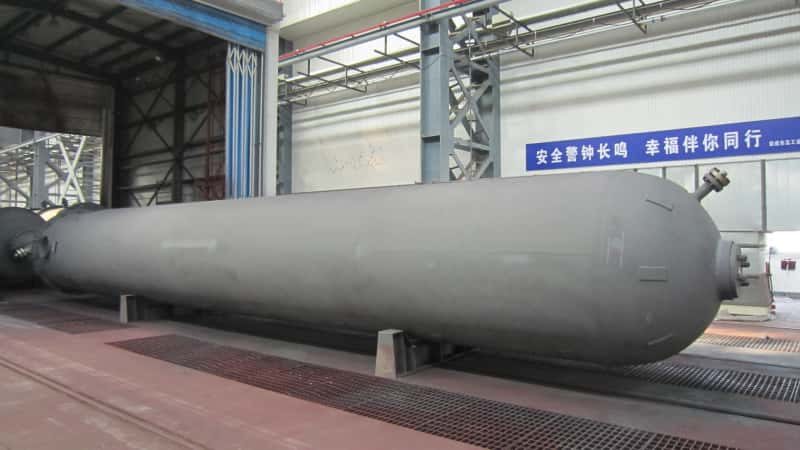

A vessel drawing can be ready for review while its material specification still carries an unresolved process requirement. In that situation, an “approved” comment is useful only if everyone knows what was approved and which work may proceed.
Approval authority for ammonia-urea equipment must be assigned by deliverable and decision in the project agreements. Identify who owns the process inputs, who coordinates plant interfaces, who performs mechanical design and fabrication, and which owner, licensor or EPC decisions each submission requires. Then link permission to proceed to the relevant document revisions and resolved conditions; no party’s review should be treated as approval outside its assigned scope.
Managing ammonia-urea equipment procurement interfaces starts with that allocation. The examples below are discussion tools for complete industrial equipment orders. Actual responsibilities come from the contracts, licensing arrangements, applicable regulations and project quality plan; the examples do not establish universal approval rights.
Separate Design Responsibility, Supply Scope and Performance Guarantees
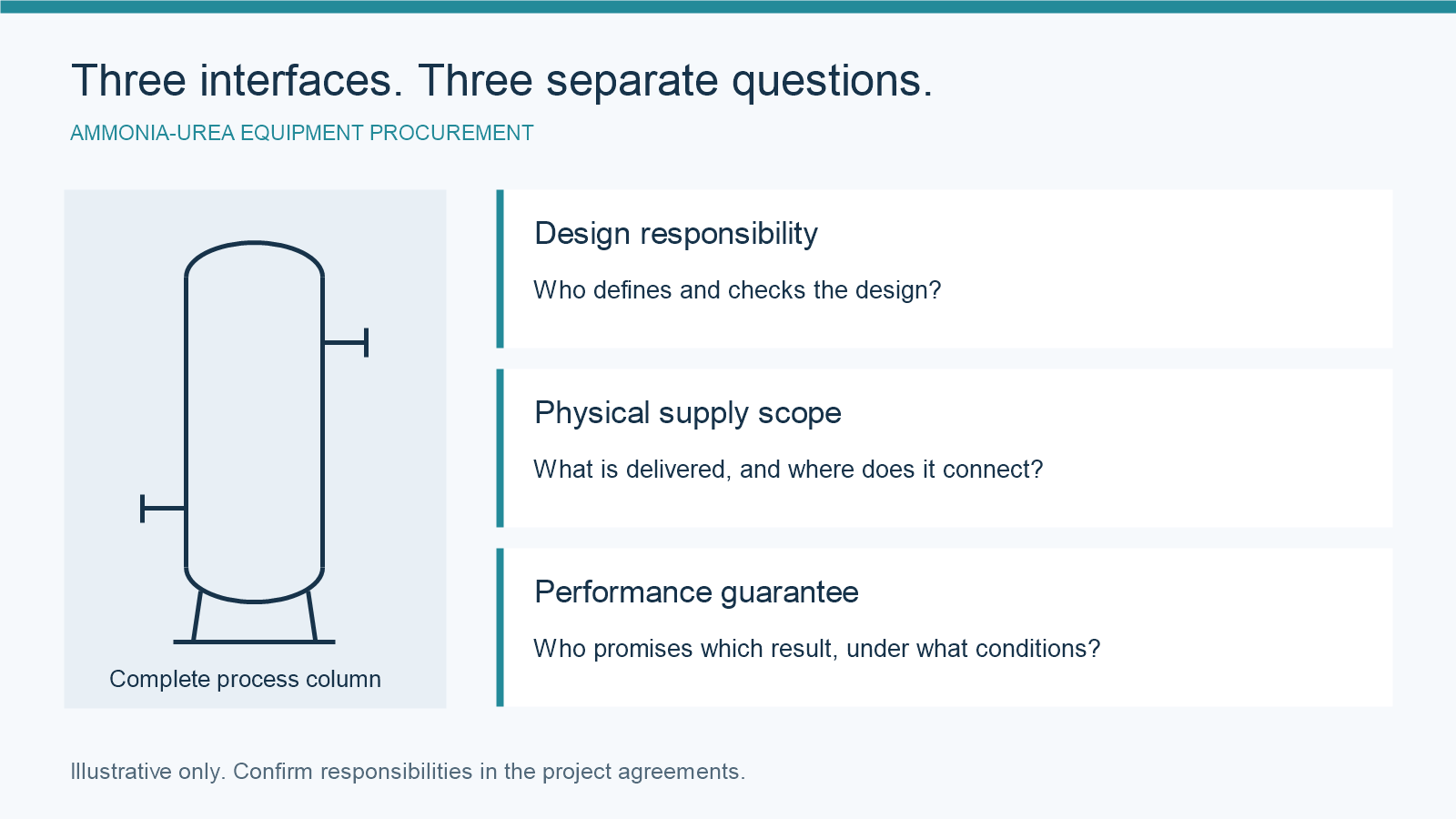
Start by separating three questions: who defines the requirement, who supplies the equipment, and who promises the result. A company named in one answer should not automatically be entered in the other two.
For procurement discussions, use the following distinctions:
| Interface | Question to settle | Example for a complete column or exchanger |
|---|---|---|
| Design responsibility | Who develops and checks each part of the design? | Identify the source of process conditions and the party responsible for mechanical calculations. |
| Physical supply scope | What is delivered, and where does another package connect? | Define the complete equipment boundary and the drawings that describe its connections. |
| Performance guarantee | Which result is promised, by whom, and under what conditions? | Separate an agreed equipment duty from a plant-wide production or consumption guarantee. |
Scroll the table horizontally to view all columns on smaller screens.
For a shell-and-tube exchanger, preparing mechanical drawings, establishing thermal duty and guaranteeing an integrated process result are different assignments. The inquiry for shell-and-tube heat exchangers should identify which assignments belong to the equipment order and which remain with another party. Do not infer them from the equipment name.
NASA’s general interface-management guidance distinguishes functional, physical and performance interfaces and recommends documented responsibilities. It is a useful organizing principle, not an ammonia-urea procurement rule or a source of contractual approval rights.
Keep the equipment list separate from this responsibility discussion. The broader ammonia-urea pressure vessel procurement guide covers equipment categories; the purpose here is to identify who can accept the documents and decisions behind each order.
Build an Approval Matrix Around Each Deliverable
Assign authority to a document and a decision, not simply to an organization name. “EPC approval” is incomplete unless the project identifies the discipline, delegated authority and scope of that approval.
The matrix below is an illustrative discussion template, not a record of any company’s procedure. Its proposed preparers and reviewers are starting points to check against the actual contracts, licensing arrangements, applicable requirements and project quality plan. Every approval entry needs project confirmation. An equipment package may also require separate regulatory or code-related acceptance.
| Deliverable | Input source to identify | Suggested preparer to confirm | Review route to confirm | Approval authority | Proposed release condition |
|---|---|---|---|---|---|
| Process medium and operating-case sheet | Licensor package where applicable; owner feed and utility data | Assigned process designer; EPC may consolidate | Process lead; owner input providers; licensor for its defined scope | Project confirmation required: process-basis authority and any required licensor concurrence | Governing cases identified; conflicting inputs resolved; revision recorded |
| Material and corrosion specification | Service chemistry, process requirements and project material specification | Assigned materials/corrosion engineer | Process specialist; fabricator for manufacturing implications; licensor where specified | Project confirmation required: material-selection authority and deviation approver | Selected specification traceable to service; proposed exceptions formally decided |
| Mechanical calculations and equipment drawings | Approved design inputs, specified code/edition and interface requirements | Fabricator or separately appointed mechanical designer | Assigned mechanical reviewer; relevant layout/piping disciplines; licensor only within agreed scope | Project confirmation required: technical acceptance and manufacturing-release authorities | Governing inputs identified; comments affecting the released work closed |
| Inspection and test plan (ITP) and manufacturing procedures | Applicable construction requirements, purchase specification and quality plan | Fabricator’s quality/manufacturing team | Project quality function; designated inspection body where required | Project confirmation required: ITP acceptance and each hold-point release authority | Applicable inspection stages, notices and acceptance records agreed before the affected operation |
| Deviation request or change record | Baseline documents and proposed difference | Party proposing the change | Affected technical disciplines; licensor if its requirements are affected; commercial team for consequences | Project confirmation required: technical decision maker plus commercial authority where needed | Decision recorded; affected documents and permissions updated |
| Final equipment dossier | Agreed document register and manufacturing records | Fabricator’s document-control team | Project document controller and designated technical/quality reviewers | Project confirmation required: dossier acceptance and dispatch authority | Required records accepted, or outstanding items handled under an expressly authorized arrangement |
Scroll the table horizontally to view all columns on smaller screens.
Define Review, Approval and Release Separately
Use the project’s own status definitions. For this template, review means checking within an assigned scope, approval means an authorized decision on a defined submission, and release means permission for a named activity to proceed. These explanatory terms do not replace contractual definitions.
A process reviewer may accept the conditions entered on a datasheet without accepting mechanical calculations. A procurement manager may authorize expenditure without resolving a material deviation. Ask the project to state these limits beside each sign-off.
Make the matrix usable by adding document numbers, responsible functions, named delegates, planned return dates and an escalation route. Where several approvals are required, identify each separately and name the coordinator who collects them. Coordination should not be mistaken for authority to override a missing technical decision.
NASA’s interface-management guidance supports documenting interface responsibilities and change decisions. The equipment-specific assignments above are editorial proposals for discussion, not assignments prescribed by that source. Resolve any blank authority before relying on the matrix to release work.
Resolve Process and Material Conflicts Before Release
Send a conflict back to the authority responsible for the affected requirement. Do not let the fabricator silently choose between incompatible inputs, or assume that a later drawing automatically overrides a process specification.
Ask the project to confirm its document-precedence rules and record a specific resolution. If the datasheet, material specification and licensor package disagree, the clarification should identify the disputed requirement, the governing document and the revisions that need correction. A statement such as “follow the latest documents” does not resolve a disagreement between different document types.
Ammonia and urea service should not be treated as a single material environment. Stamicarbon’s equipment overview describes the corrosive conditions associated with ammonium carbamate in high-temperature, high-pressure urea processing and the importance of suitable alloys and passivating conditions. That observation concerns the relevant process environment; it is not a material specification for every vessel or scrubber in an ammonia-urea complex.
For each equipment tag, ask the designated process and materials specialists to confirm which service cases govern the specification. Keep normal operating data distinguishable from the design conditions selected by the responsible engineering authority. The fabricator needs an approved basis; it should not be asked to reconstruct a proprietary process from an equipment title.
Material Substitution Needs More Than a Grade Comparison
Treat an offered alternative as a documented proposal. The following questions help define its review route without prescribing a material choice:
- Requirement affected: Which specification, product form or purchase requirement would change, and why is the change proposed?
- Service assessment: Who will evaluate suitability for the actual medium and operating cases, including any process-specific corrosion restrictions?
- Manufacturing assessment: Which calculations, fabrication procedures, examinations and material records need reconsideration?
- Acceptance route: Does the project require licensor concurrence, a designated engineering approval or additional code/regulatory review for this particular change?
- Commercial decision: Who accepts the documented cost and schedule consequences after the technical decision is available?
A supplier’s claim that an alternative is “equivalent” is a question to substantiate, not a release instruction. Record the accepted specification and any conditions in the documents used for purchasing and fabrication. If the proposal is rejected, record that outcome too, so the same alternative does not reappear later as an unexplained drawing revision.
Define What Each Fabrication Release Actually Permits
Make the release identify the exact activity it authorizes and the document revisions supporting it. An order to prepare drawings, a permission to purchase specified material and a permission to start an affected fabrication operation should be distinguishable in the project record.
Use this short checklist when drafting the release arrangement:
- Equipment and activity: Identify the tag and the work being authorized, including any limits on a partial release.
- Governing documents: List the applicable revisions of the datasheet, drawings, specifications and procedures needed for that activity.
- Required decisions: Confirm the approvals and comment closures on which this release depends, including licensor decisions where the agreed scope requires them.
- Quality conditions: Identify inspection obligations and hold points that apply before or during the authorized work, with their assigned release authorities.
- Open dependencies: State what remains unresolved and which work remains on hold. If a partial release is proposed, explain why the unresolved items do not prevent the specifically authorized activity.
For example, a project considering an early material purchase should ask which subsequent design decisions could invalidate that purchase. The response needs to address the specific equipment and material commitment; a general statement that the design is “mostly frozen” is not enough to define that exposure.
Document review and inspection also serve different purposes. Acceptance of a drawing should not be used as evidence that a later inspection took place. Equally, a witnessed inspection should not be used to infer acceptance of a separate process deviation. Keep the project’s technical, quality and commercial records connected, with the purpose of each decision stated.
The release notice should direct the shop to the authorized revisions and identify how revised instructions will reach work already in progress. This is a proposed procurement control, not a universal release sequence: the applicable contract and quality plan determine which permissions and records the project actually requires.
Route Changes Back to the Affected Decision Makers
After a baseline is agreed, route a proposed change according to the requirements and interfaces it affects. Do not assume that either the original drawing reviewer or the person requesting the change can authorize every consequence.
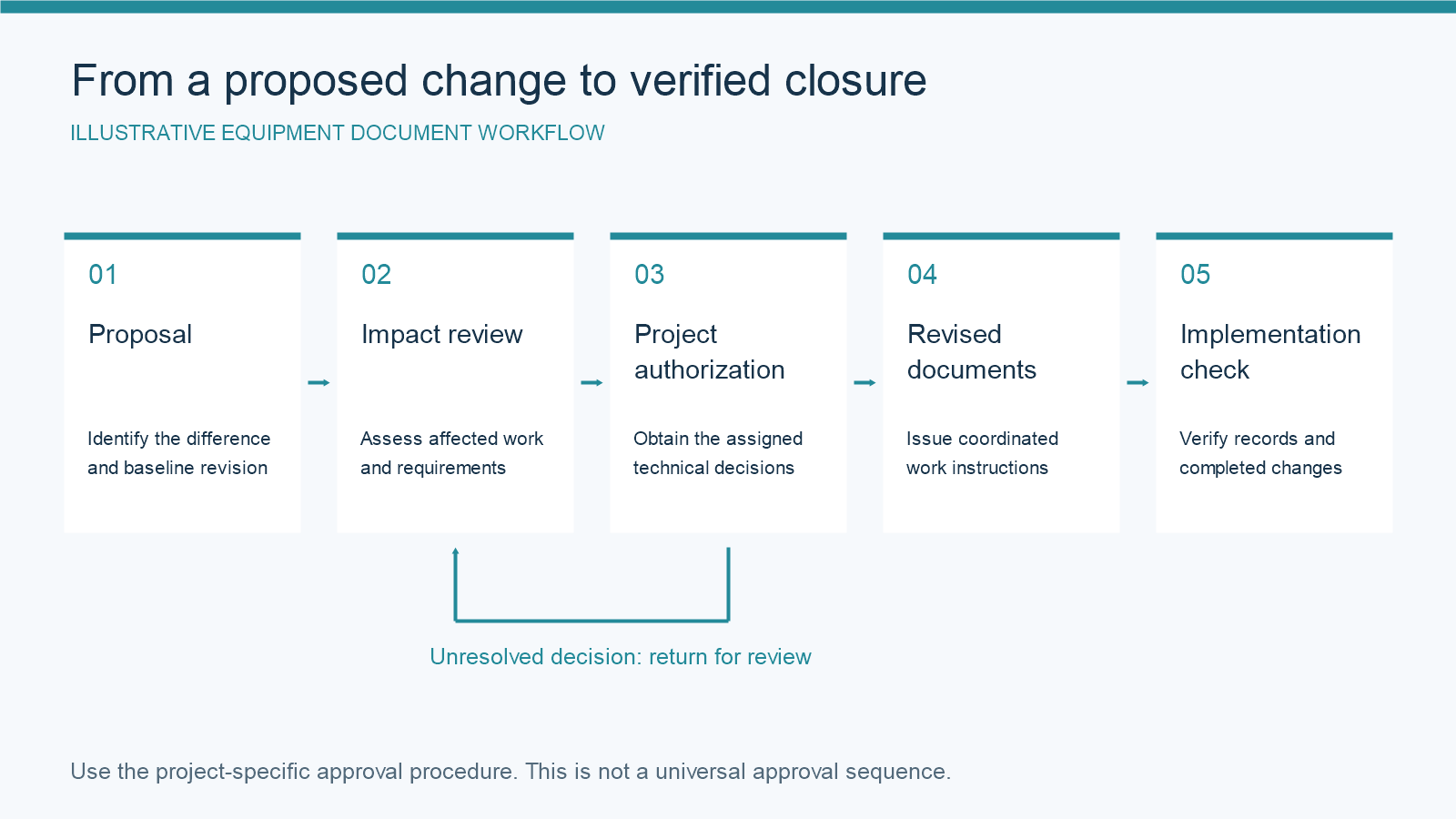
NASA’s configuration-management guidance describes evaluating proposed changes, incorporating approved changes and verifying their implementation. It also distinguishes the approved baseline from proposed changes and records their status. These are general management principles; the following procurement workflow is a suggested application to equipment documents, not a NASA requirement for fertilizer plants.
- Identify the proposed difference. Record the equipment tag, existing requirement, baseline revision, proposed change and reason. Distinguish a changed requirement from a request to accept a departure from an unchanged requirement.
- Map the affected decisions. Ask the relevant disciplines which inputs, calculations, interfaces and acceptance conditions need reconsideration. Identify whether material already ordered or work already completed is affected.
- Obtain the assigned decisions. Use the project’s approval matrix to obtain the required technical decisions and any separate commercial authorization. Where authority is unclear, escalate that gap before releasing affected work.
- Issue coordinated instructions. Update the affected documents, identify superseded revisions and communicate the approved work scope. Define the status of affected work while the change remains undecided.
- Verify closure. Check that the accepted change appears in the equipment records and relevant final drawings. Retain the decision, its conditions and evidence of implementation with the equipment dossier.
Hypothetical Example: A Revised Scrubber Connection
Suppose a project proposes moving a connection on a complete urea scrubber column after its arrangement drawing has been accepted. This is an illustrative scenario, not a reported WSHI project.
The first question is whether the proposal changes only a site interface or also affects a process requirement. Ask the assigned mechanical designer about the vessel implications, the plant integration team about connecting equipment and access, and the process authority about any functional consequences. Obtain licensor review if the change falls within the licensor’s agreed review scope; do not assume it is always required or always unnecessary.
The change record should say which drawing revisions and work instructions need updating and whether completed work requires a disposition. If the project instead changes service conditions while leaving dimensions unchanged, the review route may still need to revisit process, materials and mechanical decisions. Visible geometry alone does not define the scope of the review.
FAQ
Does an ASME stamp demonstrate approval by a process licensor?
No. ASME describes its BPVC certification program in relation to applicable Code requirements for construction and the certificate holder’s quality-control system. That stated scope does not establish acceptance by a particular process licensor. See ASME’s Boiler and Pressure Vessel Certification overview.
Check code-related certification and any project-specific licensor acceptance separately. Ask what evidence the purchase specification requires for the equipment, manufacturing location and scope concerned. This distinction does not confirm or deny any particular manufacturer’s current certification or licensor status.
What should a vendor do when owner and EPC comments conflict?
Request one coordinated disposition through the project’s designated document channel. Identify the conflicting comments, the affected requirement and the work that depends on the answer. Ask the authorized parties to resolve the conflict under the project procedure rather than choosing whichever comment is easiest to implement.
Must the fabricator receive the entire proprietary process package?
The information to be shared depends on the agreed engineering scope and disclosure permissions. For procurement planning, identify the approved inputs needed for the fabricator’s assigned work and arrange authorized access to those inputs. Do not assume that buying a vessel grants access to the full licensed process package, or that withholding the package removes the need to provide adequate design information.
Put the Approval Route in the Equipment Inquiry
An equipment inquiry becomes more useful when it identifies both the required equipment and the decisions needed to move it forward. Send the current datasheets, relevant process and material requirements, document register and proposed approval route. Mark unresolved inputs and ask the supplier to state its assigned design, manufacturing and documentation scope.
For a complete vessel, column or exchanger inquiry, discuss the complete equipment scope with WSHI using that package. Request confirmation of the applicable supply scope and document responsibilities before treating a quotation as acceptance of process-performance obligations or licensor requirements.
References
The NASA sources support general management principles, not ammonia-urea contractual assignments. The ASME source is a certification-program overview; no claim is made here to have verified the full BPVC text or project-specific compliance. All sources below were accessed on October 10, 2026.
- NASA. 6.3 Interface Management. Online Systems Engineering Handbook section; page updated July 26, 2023.
- NASA. 6.5 Configuration Management. Online Systems Engineering Handbook section; publication date not confirmed in this review.
- Stamicarbon. Stamicarbon Equipment. Equipment and process-environment overview; undated web page.
- ASME. Boiler and Pressure Vessel Certification. Certification-program overview; undated web page.