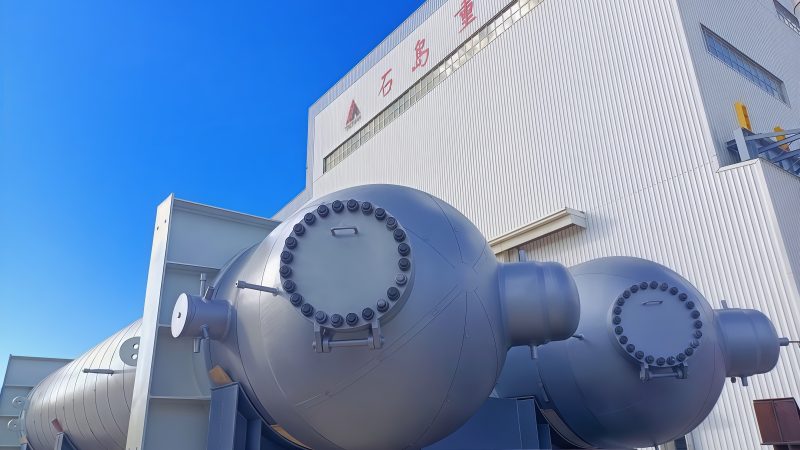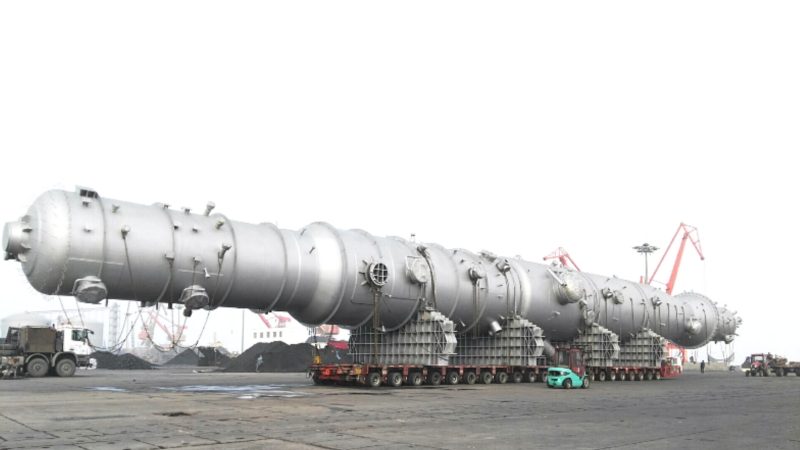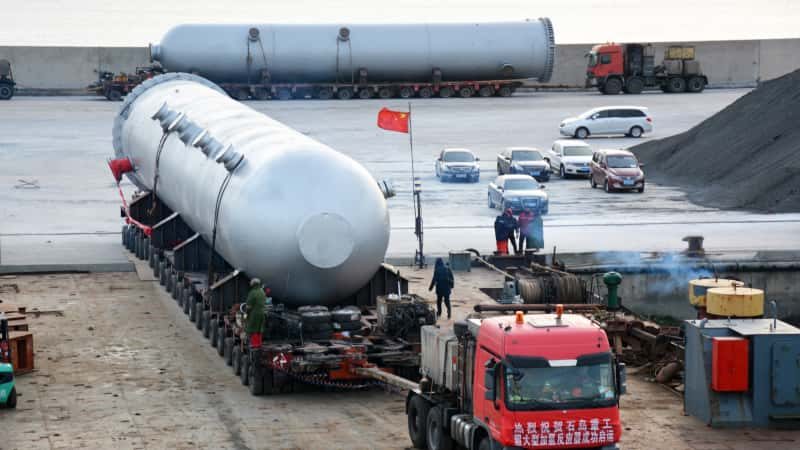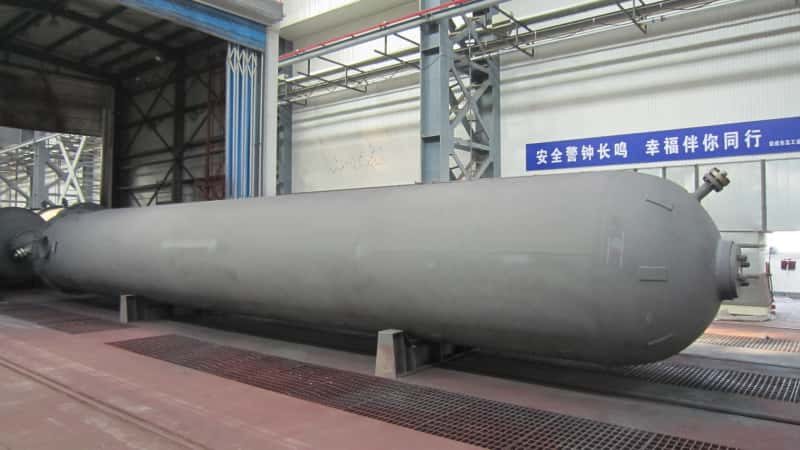

In industries where downtime translates directly into lost revenue, slow maintenance and difficult equipment disassembly can become major operational bottlenecks. Traditional heat exchangers often require extensive labor and time for inspection and cleaning, leading to inefficiencies and increased maintenance costs. This is where breech lock type heat exchangers offer a game-changing solution by simplifying access and reducing downtime.
A breech lock type heat exchanger is designed with a quick-opening closure mechanism that allows rapid access to internal components without the need for extensive bolting. Its key features include fast maintenance access, enhanced safety locking systems, high-pressure resistance, compact design, and ease of cleaning. The main advantages are significantly reduced downtime, lower labor costs, improved operational efficiency, and increased reliability in demanding industrial environments.
To fully understand why breech lock heat exchangers are becoming increasingly popular, it is essential to explore their structural characteristics and the practical benefits they deliver in real-world applications.
What Is a Breech Lock Type Heat Exchanger and How Does It Work?

In many industrial operations, maintenance downtime is one of the most costly and disruptive challenges. Traditional shell and tube heat exchangers often require extensive disassembly—bolts, flanges, and heavy lifting—just to access internal components for cleaning or inspection. This process can take hours or even days, significantly impacting productivity. The solution is the breech lock type heat exchanger, a design innovation that dramatically reduces maintenance time while maintaining safety and performance.
A breech lock type heat exchanger is a specialized shell and tube heat exchanger that uses a quick-opening locking mechanism (breech lock closure) instead of traditional bolted flanges. This design allows rapid access to the tube bundle for cleaning, inspection, and maintenance, reducing downtime while ensuring secure pressure containment during operation.
To fully understand its value, we need to explore its structure, working principle, and advantages in real industrial applications.
Breech lock heat exchangers are less safe than traditional bolted designs because they open more easily.False
Breech lock mechanisms are engineered with precise locking systems and safety interlocks, ensuring secure operation under pressure while allowing quick access when safely depressurized.
What Is a Breech Lock Mechanism?
The term “breech lock” originates from artillery systems, where quick-opening mechanisms are used to load and unload efficiently. In heat exchangers, this concept is adapted to create a fast, secure closure system.
Instead of using dozens of bolts to secure the channel head, a breech lock system typically includes:
- A locking ring or segmented clamp
- A grooved shell or flange interface
- A rotational or sliding locking mechanism
| Component | Function | Benefit |
|---|---|---|
| Locking Ring | Secures closure | Fast operation |
| Grooved Flange | Guides alignment | Ensures sealing |
| Safety Interlock | Prevents opening under pressure | Enhances safety |
This system allows operators to open the exchanger quickly without removing multiple bolts.
How Does a Breech Lock Heat Exchanger Work?
The working principle is similar to a standard shell and tube heat exchanger, with the key difference being the closure mechanism.
Step-by-Step Operation:
- Normal Operation
- Fluids flow through tubes and shell
- Heat transfer occurs across tube walls
- Shutdown and Depressurization
- System pressure is safely released
- Temperature is reduced
- Unlocking the Breech Mechanism
- The locking ring is rotated or released
- The head or cover is disengaged
- Access to Tube Bundle
- Tube bundle can be removed or inspected
- Cleaning or maintenance is performed
- Reassembly
- Head is repositioned
- Locking mechanism is re-engaged
| Step | Traditional Design | Breech Lock Design |
|---|---|---|
| Opening Time | Hours | Minutes |
| Labor Required | High | Low |
| Tools Needed | Extensive | Minimal |
| Downtime | Long | Short |
Key Components of a Breech Lock Heat Exchanger
Quick-Opening Closure System
This is the defining feature. It replaces bolted flanges with a mechanical locking system that can be engaged or disengaged rapidly.
Removable Tube Bundle
Like standard designs, the tube bundle can be removed for cleaning, but access is significantly faster.
Sealing System
High-performance gaskets or metal seals ensure leak-tight operation even under high pressure.
Safety Interlocks
Modern systems include mechanisms that prevent opening while the unit is pressurized.
Advantages of Breech Lock Heat Exchangers
Reduced Maintenance Time
The most significant benefit is time savings. Maintenance tasks that previously required hours can now be completed in minutes.
Improved Operational Efficiency
Less downtime means higher productivity and lower operational costs.
Enhanced Safety
Despite quick access, safety is not compromised. Properly designed systems include pressure indicators and locking safeguards.
Lower Labor Requirements
Fewer tools and personnel are needed for maintenance.
| Advantage | Impact |
|---|---|
| Fast Access | Minimizes downtime |
| Easy Operation | Reduces labor cost |
| Reliable Sealing | Maintains safety |
| Repeatability | Consistent performance |
Typical Applications
Breech lock heat exchangers are commonly used in industries where frequent cleaning is required:
- Oil & gas
- Petrochemical plants
- Power generation
- Food processing (high fouling systems)
They are especially valuable in applications with:
- High fouling rates
- Strict maintenance schedules
- Critical uptime requirements
Real-World Example
In a refinery application, switching from a traditional bolted heat exchanger to a breech lock design reduced maintenance time from 6 hours to less than 45 minutes. This resulted in significant cost savings and improved plant availability.
Limitations to Consider
While highly beneficial, breech lock designs may have:
- Higher initial cost
- More complex manufacturing requirements
- Specific size or pressure limitations depending on design
However, these are often outweighed by long-term operational benefits.
Comparison with Traditional Designs
| Feature | Traditional Heat Exchanger | Breech Lock Type |
|---|---|---|
| Closure Method | Bolted flange | Locking mechanism |
| Maintenance Time | Long | Short |
| Labor | High | Low |
| Cost | Lower upfront | Higher upfront |
| Lifecycle Value | Moderate | High |
Conclusion: A Smart Choice for High-Maintenance Systems
Breech lock type heat exchangers represent a significant advancement in heat exchanger design. By combining rapid access with reliable sealing and safety, they offer a powerful solution for industries where downtime is costly and maintenance is frequent.
Contact Us for Advanced Heat Exchanger Solutions
If you are considering upgrading to a breech lock heat exchanger or need expert advice on selecting the right design for your application, contact our team today. We provide customized, high-efficiency solutions tailored to your operational needs.
What Are the Key Structural Features of a Breech Lock Type Heat Exchanger?
In high-maintenance industrial environments, traditional heat exchanger structures often create bottlenecks during inspection and cleaning. Complex bolted closures, heavy components, and time-consuming disassembly procedures can significantly increase downtime and labor costs. For industries where uptime is critical, this structural limitation becomes a major operational challenge. The breech lock type heat exchanger addresses this issue through innovative structural features that enable rapid access while maintaining strength and safety.
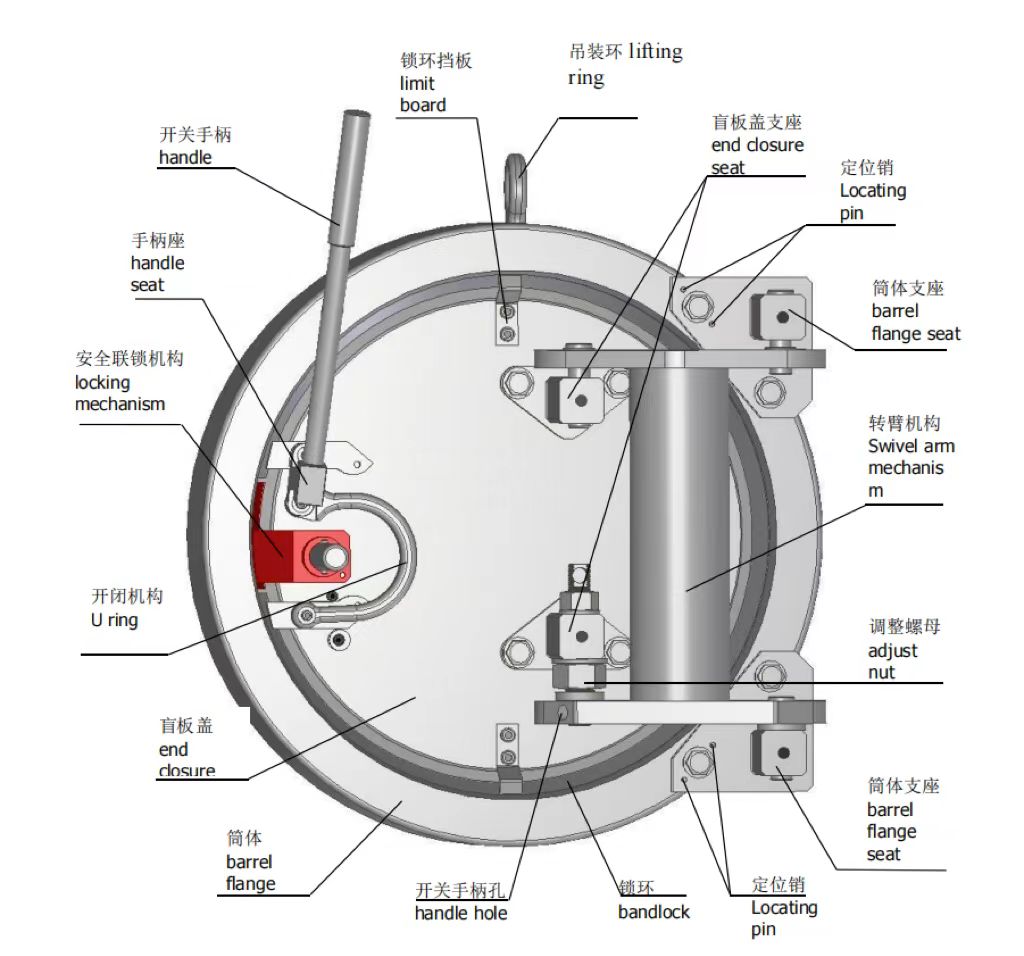
The key structural features of a breech lock type heat exchanger include a quick-opening breech lock closure system, segmented locking ring, precision-machined sealing surfaces, removable tube bundle, reinforced shell interface, and integrated safety interlocks. These elements work together to provide fast maintenance access, secure pressure containment, and reliable long-term performance.
To fully appreciate its advantages, it is essential to analyze each structural element and understand how they contribute to performance, safety, and maintainability.
Breech lock heat exchangers eliminate the need for sealing systems because the locking mechanism alone ensures tightness.False
Even with a locking mechanism, proper sealing elements such as gaskets or metal seals are essential to prevent leakage under pressure.
Quick-Opening Breech Lock Closure System
The defining structural feature is the breech lock closure mechanism, which replaces traditional bolted flanges. This system allows the operator to open and close the heat exchanger quickly using a rotational or sliding motion.
Structurally, it consists of interlocking grooves and lugs that engage securely when rotated into position. This design distributes load evenly across the circumference, ensuring structural integrity under pressure.
| Feature | Structural Role | Benefit |
|---|---|---|
| Interlocking Lugs | Load distribution | High strength |
| Rotational Locking | Fast engagement | Time saving |
| Uniform Contact | Even stress distribution | Reduced wear |
This feature dramatically reduces maintenance time without compromising safety.
Segmented Locking Ring Assembly
The locking ring is typically divided into segments, allowing easier handling and engagement.
These segments:
- Fit into machined grooves on the shell and cover
- Provide uniform clamping force
- Allow quick assembly/disassembly
| Aspect | Design Function | Impact |
|---|---|---|
| Segmentation | Easy handling | Reduced labor |
| Precision Fit | Tight locking | Leak prevention |
| Load Sharing | Structural balance | Durability |
Segmented rings also reduce the need for heavy lifting equipment during maintenance.
Precision-Machined Sealing Surfaces
A critical structural element is the sealing interface between the shell and the head.
Unlike standard flanges, breech lock systems rely on:
- High-precision machining
- Metal-to-metal or gasket sealing
- Controlled compression
| Seal Type | Application | Advantage |
|---|---|---|
| Gasket Seal | General use | Flexibility |
| Metal Seal | High pressure/temp | долговечность (durability) |
Proper sealing ensures leak-tight performance even under extreme conditions.
Removable Tube Bundle Design
The tube bundle is designed for easy removal, enabling efficient cleaning and inspection.
Structural considerations include:
- Guide rails or supports
- Alignment systems
- Clearance for extraction
| Feature | Purpose | Benefit |
|---|---|---|
| Guided Removal | Prevents damage | Safer maintenance |
| Modular Design | आसान replacement | Flexibility |
| Clearance Space | Easy access | Reduced downtime |
This feature is especially valuable in fouling-prone applications.
Reinforced Shell and Closure Interface
Because the breech lock system concentrates loads differently than bolted flanges, the shell and closure interface must be reinforced.
This includes:
- Thickened shell sections
- Strengthened grooves
- Stress-distribution design
| Parameter | Structural Need | Risk if Weak |
|---|---|---|
| Thickness | Pressure resistance | Deformation |
| Groove Strength | Lock integrity | Failure |
| Stress Design | Fatigue resistance | Cracking |
Advanced engineering ensures these areas can withstand repeated opening cycles.
Integrated Safety Interlock Mechanisms
Safety is a critical structural consideration. Breech lock systems incorporate interlocks that prevent accidental opening under pressure.
These may include:
- Mechanical locks
- Pressure indicators
- Sequential unlocking systems
| Safety Feature | Function | Benefit |
|---|---|---|
| Interlock | Blocks opening under pressure | Prevents accidents |
| Indicator | Shows pressure status | Operational safety |
| Controlled Release | Stepwise opening | Risk reduction |
These features ensure that quick access does not compromise safety.
Structural Alignment and Guide Systems
Proper alignment is essential for sealing and locking efficiency.
Design features include:
- Alignment pins
- Guide tracks
- Positioning stops
These ensure that components fit correctly every time, reducing wear and preventing leaks.
Material and Surface Treatment Considerations
Structural components are often made from high-strength alloys and treated to resist wear and corrosion.
Common practices include:
- Surface hardening
- Anti-corrosion coatings
- Precision finishing
These enhance durability and extend service life.
Real-World Engineering Insight
In a petrochemical plant, upgrading to a breech lock design with reinforced locking grooves and improved sealing surfaces reduced maintenance time by 70% and eliminated recurring leakage issues caused by flange misalignment.
This demonstrates how structural design directly impacts operational performance.
Common Design Mistakes to Avoid
- Insufficient groove strength
- Poor sealing surface finish
- Lack of safety interlocks
- Inadequate alignment systems
Such issues can negate the advantages of breech lock designs.
Structural Comparison with Traditional Designs
| Feature | Traditional Design | Breech Lock Design |
|---|---|---|
| Closure | Bolted flange | Locking mechanism |
| Access Time | Long | Short |
| Structural Complexity | Moderate | Advanced |
| Maintenance | Labor-intensive | Efficient |
| Safety Systems | Basic | Integrated |
Conclusion: Structural Innovation Drives Performance
The structural features of a breech lock type heat exchanger are engineered to balance speed, strength, and safety. From the locking mechanism to sealing systems and reinforced interfaces, every element is designed to optimize maintenance efficiency without compromising reliability.
Contact Us for Advanced Design Solutions
If you are evaluating breech lock heat exchangers or need expert guidance on structural design and customization, contact our team today. We deliver high-performance, engineered solutions tailored to your operational demands.
How Does a Breech Lock Type Heat Exchanger Improve Maintenance Efficiency?

In industrial operations, maintenance downtime is one of the most expensive hidden costs. Traditional shell and tube heat exchangers often require hours of labor-intensive disassembly—removing dozens of bolts, lifting heavy covers, and aligning components during reassembly. This not only increases labor costs but also extends downtime, reducing plant productivity. The breech lock type heat exchanger addresses this problem through a fundamentally different structural approach that dramatically improves maintenance efficiency.
A breech lock type heat exchanger improves maintenance efficiency by enabling rapid opening and closing through a quick-lock mechanism, reducing disassembly time from hours to minutes, minimizing labor requirements, simplifying access to internal components, and ensuring faster cleaning, inspection, and reassembly without compromising safety or performance.
To understand its full impact, we must examine how each design feature contributes to faster, safer, and more efficient maintenance operations.
Breech lock heat exchangers reduce maintenance time but increase the risk of improper reassembly.False
Breech lock systems are designed with alignment guides and locking mechanisms that ensure consistent and correct reassembly, reducing human error.
Rapid Opening and Closing Mechanism
The most significant improvement comes from replacing traditional bolted flanges with a breech lock closure system.
Instead of loosening and tightening dozens of bolts, operators can:
- Rotate or release a locking ring
- Disengage the head quickly
- Gain immediate access to internal components
| Task | Traditional Design | Breech Lock Design |
|---|---|---|
| Bolt Removal | 1–3 hours | Not required |
| Opening Time | Long | Minutes |
| Tools Needed | Multiple | Minimal |
This drastically reduces maintenance preparation time.
Simplified Access to Tube Bundle
Maintenance often focuses on the tube bundle, where fouling and scaling occur.
Breech lock designs allow:
- Direct access without complex disassembly
- Quick removal of the tube bundle
- Easier inspection and cleaning
| Feature | Impact on Maintenance |
|---|---|
| Open Access | Faster inspection |
| Removable Bundle | Easy cleaning |
| Reduced Obstruction | Improved safety |
This is especially beneficial in high-fouling applications.
Reduced Labor Requirements
Traditional maintenance often requires multiple technicians and heavy equipment.
With breech lock systems:
- Fewer personnel are needed
- Less physical effort is required
- Maintenance becomes more standardized
| Factor | Traditional | Breech Lock |
|---|---|---|
| Workforce | Large team | Small team |
| Physical Effort | High | Low |
| Skill Requirement | Complex | Simplified |
This reduces both labor costs and the risk of human error.
Improved Reassembly Efficiency
Reassembly is often as time-consuming as disassembly in traditional systems.
Breech lock designs improve this by:
- Using alignment guides
- Providing repeatable locking positions
- Eliminating bolt tightening sequences
| Step | Traditional Issue | Breech Lock Advantage |
|---|---|---|
| Alignment | Difficult | Guided |
| Sealing | Variable | Consistent |
| Tightening | Time-consuming | Instant locking |
This ensures faster and more reliable reassembly.
Enhanced Safety During Maintenance
Safety is a critical aspect of maintenance efficiency.
Breech lock systems include:
- Pressure interlocks
- Controlled opening mechanisms
- Clear status indicators
| Safety Feature | Benefit |
|---|---|
| Interlocks | Prevent accidental opening |
| Indicators | Ensure safe conditions |
| Controlled Release | Reduces risk |
These features allow maintenance to be performed safely and efficiently.
Reduced Downtime and Increased Productivity
The ultimate goal of improved maintenance is reduced downtime.
| Metric | Traditional | Breech Lock |
|---|---|---|
| Maintenance Time | Hours–Days | Minutes–Hours |
| Downtime | High | Low |
| Production Loss | Significant | Minimal |
This translates directly into higher operational efficiency and profitability.
Real-World Case Study
In a chemical plant, a traditional heat exchanger required 5 hours for cleaning and inspection. After switching to a breech lock design:
- Maintenance time dropped to 45 minutes
- Labor costs reduced by 60%
- Equipment availability increased significantly
This demonstrates the tangible benefits of improved design.
Impact on Preventive and Predictive Maintenance
Faster access encourages more frequent inspections.
This leads to:
- Early detection of fouling
- Improved performance monitoring
- Reduced risk of unexpected failures
Breech lock designs support modern maintenance strategies.
Common Misconceptions
Some users assume that faster access compromises durability. In reality, properly engineered breech lock systems maintain structural integrity while improving accessibility.
Another misconception is that these systems are only suitable for small units. Modern designs are available for large industrial applications.
Strategic Comparison
| Criteria | Traditional Design | Breech Lock Design |
|---|---|---|
| Maintenance Speed | Slow | Fast |
| Labor Cost | High | Low |
| Safety | Moderate | High |
| Reliability | Variable | Consistent |
| Lifecycle Efficiency | Moderate | High |
Conclusion: A Game-Changer for Maintenance Efficiency
Breech lock type heat exchangers represent a significant advancement in maintenance efficiency. By combining quick access, reduced labor, improved safety, and faster turnaround times, they enable industries to minimize downtime and maximize productivity.
Contact Us for High-Efficiency Solutions
Why Is a Breech Lock Type Heat Exchanger Safer Than Traditional Designs?

In high-pressure industrial systems, safety is not just a requirement—it is a necessity. Traditional shell and tube heat exchangers rely heavily on bolted flange connections, which, while effective, can introduce risks such as uneven bolt tightening, human error during maintenance, and delayed detection of unsafe conditions. These issues can lead to leaks, mechanical failures, or even dangerous accidents during opening and operation. The breech lock type heat exchanger addresses these concerns through advanced structural and safety-oriented design features that significantly enhance operational safety.
A breech lock type heat exchanger is safer than traditional designs because it incorporates engineered locking mechanisms, uniform load distribution, integrated safety interlocks, controlled opening systems, and precise sealing surfaces. These features reduce human error, prevent accidental opening under pressure, and ensure consistent structural integrity during operation and maintenance.
To understand why this design is inherently safer, we must examine the specific safety advantages built into its structure.
Quick-opening mechanisms in breech lock heat exchangers increase the likelihood of accidental opening during operation.False
Breech lock systems are designed with safety interlocks and pressure checks that prevent opening unless the system is fully depressurized.
Elimination of Bolt-Related Risks
Traditional heat exchangers rely on multiple bolts to secure the closure. This introduces several risks:
- Uneven bolt tightening
- Missing or damaged bolts
- Fatigue failure over time
Breech lock systems eliminate these issues by replacing bolts with a continuous locking mechanism.
| Risk Factor | Traditional Design | Breech Lock Design |
|---|---|---|
| Bolt Failure | Possible | Eliminated |
| Uneven Load | Common | Uniform |
| Human Error | High | Reduced |
This significantly improves structural reliability.
Uniform Load Distribution
In a breech lock system, the locking force is distributed evenly around the circumference through interlocking grooves and segments.
This results in:
- Reduced stress concentration
- Improved sealing performance
- Enhanced fatigue resistance
| Feature | Safety Benefit |
|---|---|
| Even Pressure | Prevents localized failure |
| Continuous Contact | Improves sealing |
| Balanced Stress | Extends lifespan |
Uniform load distribution is a key factor in preventing mechanical failure.
Integrated Safety Interlock Systems
One of the most important safety features is the interlock mechanism.
These systems ensure that:
- The exchanger cannot be opened under pressure
- Operators are alerted to unsafe conditions
- Opening follows a controlled sequence
| Interlock Type | Function | Benefit |
|---|---|---|
| Mechanical | Blocks movement | Prevents accidents |
| Pressure-Based | Detects internal pressure | Ensures safe operation |
| Sequential | Controls unlocking steps | Reduces human error |
This makes breech lock systems inherently safer during maintenance.
Controlled and Predictable Opening Process
Traditional systems require gradual bolt removal, which can lead to sudden release of pressure if not done correctly.
Breech lock designs provide:
- Controlled disengagement
- Step-by-step opening
- Clear operational procedures
| Aspect | Traditional Risk | Breech Lock Advantage |
|---|---|---|
| Pressure Release | Unpredictable | Controlled |
| Opening Sequence | Manual judgment | Guided process |
| Safety Margin | Variable | High |
This reduces the likelihood of accidents during maintenance.
Precision Sealing and Leak Prevention
Sealing is critical for safety, especially in high-pressure systems.
Breech lock heat exchangers use:
- Precision-machined sealing surfaces
- High-performance gaskets or metal seals
- Consistent compression through locking mechanisms
| Seal Feature | Safety Impact |
|---|---|
| Precision Fit | Prevents leakage |
| Uniform Compression | Ensures reliability |
| High-Quality Materials | Withstands extreme conditions |
This minimizes the risk of hazardous leaks.
Reduced Human Error
Human error is a major factor in industrial accidents.
Breech lock systems reduce reliance on manual processes by:
- Simplifying operation
- Eliminating complex bolt patterns
- Providing clear locking indicators
| Factor | Traditional | Breech Lock |
|---|---|---|
| Complexity | High | Low |
| Error Risk | High | Low |
| Repeatability | Variable | Consistent |
Simplification leads to safer operations.
Structural Integrity Under Cyclic Use
Heat exchangers often undergo repeated opening and closing cycles.
Breech lock designs are engineered for:
- High fatigue resistance
- Durable locking components
- Consistent performance over time
This ensures long-term safety even in demanding environments.
Real-World Safety Improvement Example
In a petrochemical facility, a traditional heat exchanger experienced repeated gasket leaks due to uneven bolt tightening. After upgrading to a breech lock system:
- Leak incidents dropped to zero
- Maintenance-related safety incidents were eliminated
- Inspection time was reduced significantly
This demonstrates the practical safety advantages of the design.
Common Misconceptions About Safety
Some believe that quick-opening systems are inherently less safe. In reality, properly engineered breech lock systems are safer because they incorporate multiple layers of protection.
Another misconception is that traditional bolted systems are more reliable due to familiarity. However, they rely heavily on manual processes, which introduce variability.
Safety Comparison Summary
| Safety Aspect | Traditional Design | Breech Lock Design |
|---|---|---|
| Closure Method | Bolts | Locking mechanism |
| Load Distribution | Uneven | Uniform |
| Human Error | High | Low |
| Opening Safety | Variable | Controlled |
| Leak Risk | Moderate | Low |
Conclusion: Safety Through Engineering Innovation
Breech lock type heat exchangers achieve higher safety levels not by adding complexity, but by simplifying and engineering the closure system for consistency, reliability, and control. By eliminating bolt-related risks, integrating safety interlocks, and ensuring uniform load distribution, they provide a safer alternative to traditional designs.
Contact Us for Safe and Reliable Solutions
What Industries Benefit Most from Breech Lock Type Heat Exchangers?
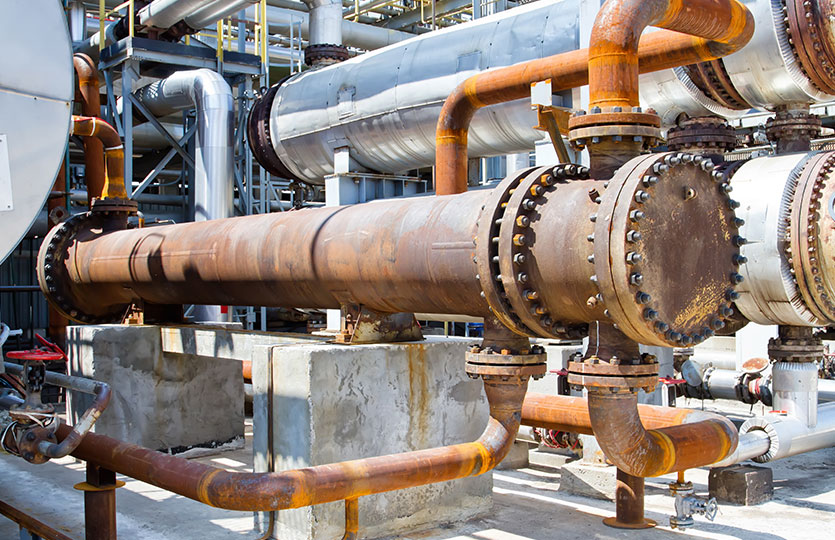
In many industries, downtime is not just an inconvenience—it is a direct financial loss. Processes that rely on continuous heat transfer systems often suffer when traditional heat exchangers require lengthy maintenance or cleaning cycles. Industries dealing with fouling, scaling, corrosive media, or strict hygiene standards face even greater challenges. The breech lock type heat exchanger offers a solution by enabling rapid access, reducing downtime, and improving operational efficiency. However, its true value becomes most apparent in specific industries where maintenance frequency and reliability are critical.
Industries that benefit most from breech lock type heat exchangers include oil & gas, petrochemical, chemical processing, power generation, food and beverage, and marine sectors. These industries require frequent maintenance, high reliability, and minimal downtime, making the quick-opening and efficient design of breech lock systems highly advantageous.
To understand where these systems deliver the greatest value, we must examine how industry-specific conditions align with their design advantages.
Breech lock heat exchangers are only suitable for small-scale or low-pressure applications.False
Modern breech lock designs are engineered for large-scale, high-pressure industrial applications and are widely used in demanding sectors such as oil and gas and power generation.
Oil & Gas Industry: Maximizing Uptime in Critical Operations
The oil and gas industry operates under extreme conditions, including high pressure, high temperature, and corrosive fluids. Heat exchangers are used in refining, gas processing, and offshore platforms.
Frequent maintenance is required due to:
- Fouling from hydrocarbons
- Corrosion from sulfur compounds
- Scale formation
| Challenge | Traditional Impact | Breech Lock Benefit |
|---|---|---|
| Fouling | Long cleaning time | Quick access |
| Downtime | High cost | Reduced |
| Safety | Complex maintenance | Simplified |
Breech lock systems significantly reduce turnaround time during shutdowns, improving overall plant availability.
Petrochemical Industry: Handling Complex Fluids
Petrochemical processes involve complex chemical reactions and fluids that can cause rapid fouling or corrosion.
Key requirements include:
- Frequent inspection
- Reliable sealing
- High operational safety
| Requirement | Breech Lock Advantage |
|---|---|
| Maintenance Frequency | Reduced time |
| Process Stability | Improved |
| Safety | Enhanced |
The ability to quickly access internal components is crucial for maintaining efficiency.
Chemical Processing Industry: Corrosion and Fouling Management
Chemical plants often deal with aggressive media that degrade materials and cause deposits.
Breech lock heat exchangers allow:
- Rapid inspection of corrosion
- Easy cleaning of deposits
- Quick replacement of components
| Issue | Impact | Solution |
|---|---|---|
| Corrosion | Equipment damage | Fast inspection |
| Scaling | Reduced efficiency | Easy cleaning |
| Maintenance | Frequent | Quick access |
This improves both safety and performance.
Power Generation: Ensuring Continuous Operation
Power plants rely on heat exchangers for cooling and energy transfer.
Downtime directly affects electricity production and revenue.
| Factor | Traditional | Breech Lock |
|---|---|---|
| Maintenance Time | Long | Short |
| Reliability | Moderate | High |
| Availability | Reduced | Improved |
Breech lock systems help maintain continuous operation by minimizing maintenance interruptions.
Food and Beverage Industry: Hygiene and Cleanability
In food processing, hygiene is critical. Heat exchangers must be cleaned frequently to prevent contamination.
Breech lock designs provide:
- Quick opening for cleaning
- Easy access for inspection
- Compliance with hygiene standards
| Requirement | Benefit |
|---|---|
| Cleanability | Fast and thorough |
| Inspection | সহজ (easy) |
| Downtime | Minimal |
This ensures product safety and regulatory compliance.
Marine and Offshore Applications: Space and Accessibility Constraints
Marine environments present unique challenges:
- Limited space
- Difficult access
- Harsh conditions
Breech lock heat exchangers are ideal because:
- They require less maintenance space
- Opening is fast and simple
- Reliability is high
| Constraint | Traditional Issue | Breech Lock Advantage |
|---|---|---|
| Space | Limited access | Compact operation |
| Maintenance | Difficult | Simplified |
| Environment | Corrosive | Durable design |
Industries with High Fouling Rates: The Biggest Beneficiaries
Industries where fouling is frequent gain the most value.
These include:
- Waste heat recovery
- Heavy oil processing
- Slurry systems
Frequent cleaning becomes manageable with breech lock systems.
Real-World Example
In a refinery, switching to breech lock heat exchangers reduced maintenance downtime by 70%, allowing faster turnaround during scheduled shutdowns and increasing annual production efficiency.
When Breech Lock May Not Be Necessary
While highly beneficial, breech lock designs may not be essential for:
- Low-maintenance systems
- Clean fluid applications
- Small-scale operations
In such cases, traditional designs may suffice.
Strategic Industry Comparison
| Industry | Maintenance Frequency | Benefit Level |
|---|---|---|
| Oil & Gas | Very High | ★★★★★ |
| Petrochemical | High | ★★★★★ |
| Chemical | High | ★★★★☆ |
| Power Generation | Moderate | ★★★★☆ |
| Food & Beverage | High | ★★★★★ |
| Marine | Moderate | ★★★★☆ |
Conclusion: Targeted Value Across High-Demand Industries
Breech lock type heat exchangers deliver the greatest benefits in industries where maintenance is frequent, downtime is costly, and reliability is critical. By enabling rapid access, improving safety, and reducing labor requirements, they provide a strategic advantage in demanding industrial environments.
Contact Us for Industry-Specific Solutions
How Do Breech Lock Type Heat Exchangers Compare to Conventional Heat Exchangers?

In industrial heat transfer systems, choosing between breech lock type and conventional heat exchangers is not just a design preference—it directly impacts maintenance efficiency, safety, operational cost, and long-term reliability. Many facilities continue to use traditional bolted flange designs simply due to familiarity, without realizing the hidden costs associated with downtime, labor-intensive maintenance, and human error. As operational demands increase, the need for faster, safer, and more efficient systems becomes critical. This is where breech lock heat exchangers offer a compelling advantage.
Breech lock type heat exchangers differ from conventional designs primarily in their closure mechanism, maintenance efficiency, safety features, and lifecycle cost. While conventional heat exchangers use bolted flanges requiring time-consuming disassembly, breech lock systems enable quick opening, reduce downtime, improve safety, and lower long-term operational costs—making them ideal for high-maintenance and critical applications.
To make an informed decision, it is essential to compare these two designs across key technical and operational dimensions.
Conventional heat exchangers are always more reliable than breech lock designs because they use simpler technology.False
While conventional designs are simpler, breech lock systems are engineered with advanced mechanisms that enhance reliability, safety, and consistency when properly designed and maintained.
Closure Mechanism: Fundamental Structural Difference
The most obvious difference lies in how the heat exchanger is opened and closed.
Conventional designs rely on bolted flanges, which require multiple bolts to be tightened or loosened during maintenance. Breech lock systems use a locking ring mechanism that allows rapid engagement and disengagement.
| Feature | Conventional Design | Breech Lock Design |
|---|---|---|
| Closure Type | Bolted flange | Locking ring |
| Opening Time | Hours | Minutes |
| Tools Required | Extensive | Minimal |
| Complexity | Manual | Engineered |
This structural difference is the foundation of all other performance advantages.
Maintenance Efficiency: Time and Labor Impact
Maintenance is where breech lock systems provide the most significant improvement.
| Maintenance Aspect | Conventional | Breech Lock |
|---|---|---|
| Disassembly Time | Long | Very short |
| Labor Requirement | High | Low |
| Accessibility | Limited | Easy |
| Reassembly | Time-consuming | Quick |
In industries with frequent cleaning requirements, this difference translates into substantial cost savings.
Safety Comparison
Safety is a critical factor in high-pressure systems.
Conventional systems depend heavily on correct bolt tightening and manual procedures, which can introduce variability. Breech lock systems incorporate engineered safety features.
| Safety Factor | Conventional | Breech Lock |
|---|---|---|
| Load Distribution | Uneven | Uniform |
| Human Error | Higher | Lower |
| Opening Control | Manual | Guided |
| Interlocks | Limited | Integrated |
Breech lock designs reduce risks associated with improper assembly and accidental opening.
Operational Efficiency and Downtime
Downtime directly affects productivity and revenue.
| Metric | Conventional | Breech Lock |
|---|---|---|
| Maintenance Duration | Long | Short |
| Equipment Availability | Lower | Higher |
| Production Loss | Significant | Minimal |
Breech lock systems enable faster turnaround during shutdowns, improving overall plant efficiency.
Lifecycle Cost Analysis
While breech lock heat exchangers may have a higher initial cost, they often provide better long-term value.
| Cost Factor | Conventional | Breech Lock |
|---|---|---|
| Initial Investment | Lower | Higher |
| Maintenance Cost | High | Low |
| Downtime Cost | High | Low |
| Total Lifecycle Cost | Higher | Lower |
This makes breech lock systems a cost-effective choice over time.
Structural Complexity and Engineering Requirements
Breech lock systems are more advanced in design and manufacturing.
| Aspect | Conventional | Breech Lock |
|---|---|---|
| Design Complexity | Moderate | High |
| Manufacturing Precision | Standard | High |
| Engineering Requirement | Basic | Advanced |
This means selecting a qualified manufacturer is essential for breech lock systems.
Application Suitability
Each design has its ideal use case.
| Application Type | Recommended Design |
|---|---|
| High fouling systems | Breech Lock |
| Frequent maintenance | Breech Lock |
| Low-maintenance systems | Conventional |
| Budget-sensitive projects | Conventional |
Understanding your operational needs is key to selecting the right design.
Real-World Performance Comparison
In a petrochemical plant, replacing conventional heat exchangers with breech lock units resulted in:
- 65% reduction in maintenance time
- 40% reduction in labor costs
- Significant increase in equipment availability
This demonstrates the tangible benefits of modern design.
Common Misconceptions
Some users believe breech lock systems are overly complex or less durable. In reality, their engineered design improves consistency and reduces reliance on manual processes.
Another misconception is that they are only suitable for small systems. Modern designs support large-scale industrial applications.
Strategic Comparison Summary
| Criteria | Conventional | Breech Lock |
|---|---|---|
| Maintenance Speed | Slow | Fast |
| Safety | Moderate | High |
| Cost (Initial) | Lower | Higher |
| Cost (Lifecycle) | Higher | Lower |
| Reliability | Good | Excellent |
Conclusion: Choosing the Right Design for Your Needs
Breech lock type heat exchangers represent a significant evolution in heat exchanger technology. While conventional designs remain suitable for simpler applications, breech lock systems offer superior performance in environments where maintenance efficiency, safety, and uptime are critical.
Contact Us for Expert Recommendations
Conclusion
Breech lock type heat exchangers provide a powerful combination of efficiency, safety, and ease of maintenance. Their innovative quick-opening mechanism makes them an ideal choice for industries that require frequent inspection and minimal downtime.
Call to Action
FAQ
Q1: What is a breech lock type heat exchanger?
A1:
A breech lock type heat exchanger is a specialized design of shell and tube heat exchanger that incorporates a quick-opening closure mechanism, commonly referred to as a breech lock. This mechanism allows the operator to rapidly open and close the exchanger without the need for numerous bolts or complex disassembly procedures. The design is inspired by breech-loading systems used in artillery, where a locking ring or segmented closure enables fast access while maintaining a secure seal under pressure.
In industrial applications, this type of heat exchanger is particularly valuable where frequent inspection, cleaning, or maintenance is required. For example, industries dealing with fouling fluids—such as petrochemical processing, food production, or wastewater treatment—benefit greatly from the reduced downtime provided by the breech lock mechanism.
Structurally, the breech lock closure is typically installed on the channel head or shell cover. It uses interlocking segments or threads that can be quickly engaged or disengaged. Despite its ease of operation, it is engineered to withstand high pressures and temperatures, ensuring safety and reliability.
The design also improves operational efficiency by minimizing the time required for maintenance shutdowns. Traditional flange connections may require removing dozens of bolts, which can be time-consuming and labor-intensive. In contrast, a breech lock system allows for rapid access with minimal tools.
Overall, a breech lock heat exchanger combines the thermal efficiency of conventional shell and tube designs with enhanced accessibility and operational convenience, making it ideal for demanding industrial environments.
Q2: What are the key features of a breech lock heat exchanger?
A2:
Breech lock heat exchangers are distinguished by several unique features that enhance both usability and performance. The most notable feature is the quick-opening closure system. This mechanism allows operators to open and close the exchanger in a fraction of the time required for traditional bolted flange designs.
Another important feature is the segmented locking ring or threaded closure. This design ensures a tight and secure seal while still allowing for easy disengagement. It provides both safety and convenience, even in high-pressure applications.
The design also supports frequent maintenance. Because the exchanger can be opened quickly, it is ideal for processes where fouling or scaling occurs regularly. This helps maintain high thermal efficiency over time.
Robust construction is another key feature. Breech lock heat exchangers are typically built from high-strength materials such as carbon steel, stainless steel, or specialized alloys. This ensures durability and resistance to corrosion and thermal stress.
Safety mechanisms are often integrated into the design. These may include pressure interlocks or locking indicators that prevent the unit from being opened while under pressure.
Additionally, the design is often compatible with various tube bundle configurations, allowing flexibility in thermal design.
In summary, the key features include quick opening, secure locking, durability, safety systems, and maintenance-friendly design, all of which contribute to improved operational efficiency.
Q3: What are the advantages of using a breech lock heat exchanger?
A3:
The primary advantage of a breech lock heat exchanger is the significant reduction in maintenance time. Traditional heat exchangers with bolted closures can take hours to open and reassemble, whereas a breech lock system can be accessed in minutes. This leads to reduced downtime and increased productivity.
Another major benefit is improved safety. The design often includes built-in safety features that prevent accidental opening under pressure. This reduces the risk of workplace accidents and enhances operational reliability.
Cost savings is another important advantage. While the initial investment may be higher, the reduction in labor costs and downtime results in lower overall operating expenses. Over time, this makes breech lock heat exchangers a cost-effective solution.
The design also enhances cleaning efficiency. Quick access to the tube bundle allows for more frequent and thorough cleaning, which helps maintain optimal heat transfer performance and reduces fouling-related issues.
Operational flexibility is another benefit. These exchangers are well-suited for industries with variable operating conditions or frequent shutdowns.
Finally, durability and reliability contribute to long service life. High-quality materials and robust construction ensure that the exchanger can withstand harsh industrial environments.
In essence, breech lock heat exchangers offer faster maintenance, improved safety, cost efficiency, and better performance, making them a preferred choice in many industries.
Q4: In which industries are breech lock heat exchangers commonly used?
A4:
Breech lock heat exchangers are widely used in industries where frequent maintenance and cleaning are necessary. One of the primary sectors is the petrochemical and oil & gas industry. In these applications, fluids often contain impurities that can cause fouling, making quick access essential for maintaining efficiency.
The chemical processing industry also benefits from this design. Many chemical reactions produce residues or scaling, requiring regular cleaning of heat exchange surfaces. The breech lock mechanism significantly reduces maintenance time in such environments.
In the food and beverage industry, hygiene is critical. Equipment must be cleaned frequently to meet sanitary standards. Breech lock heat exchangers allow for easy access, ensuring compliance with strict cleanliness requirements.
Power generation is another sector where these exchangers are used, particularly in systems that require periodic inspection and maintenance to ensure reliability.
Wastewater treatment plants also utilize breech lock heat exchangers due to the high likelihood of fouling and contamination.
Additionally, marine and offshore applications benefit from the compact design and ease of maintenance, especially in environments where space and time are limited.
Overall, any industry that requires frequent inspection, cleaning, or rapid maintenance can benefit from the use of breech lock heat exchangers.
Q5: How does a breech lock mechanism improve maintenance efficiency?
A5:
The breech lock mechanism dramatically improves maintenance efficiency by simplifying the process of opening and closing the heat exchanger. Traditional exchangers rely on bolted flanges, which require loosening and tightening multiple bolts—a time-consuming and labor-intensive task.
In contrast, the breech lock system uses a locking ring or segmented closure that can be engaged or disengaged quickly. This reduces the time required to access internal components from hours to minutes.
The ease of access encourages more frequent maintenance and inspection, which helps prevent performance degradation caused by fouling or scaling. As a result, the heat exchanger can operate at optimal efficiency for longer periods.
The design also reduces the need for specialized tools and labor, further lowering maintenance costs. Operators can perform routine inspections with minimal effort, improving overall operational efficiency.
Safety is also enhanced, as many breech lock systems include interlocks that prevent opening under pressure. This ensures that maintenance can be carried out safely and efficiently.
Additionally, faster maintenance turnaround means reduced downtime, which is critical in continuous industrial processes. This leads to increased productivity and better resource utilization.
In summary, the breech lock mechanism streamlines maintenance, reduces downtime, lowers costs, and improves safety, making it a highly efficient solution for industrial heat exchangers.
References
- Heat Exchanger Design Handbook – https://www.elsevier.com/books/heat-exchanger-design-handbook – Elsevier
- Shell and Tube Heat Exchangers – https://www.sciencedirect.com/topics/engineering/shell-and-tube-heat-exchanger – ScienceDirect
- TEMA Standards – https://www.tema.org – Tubular Exchanger Manufacturers Association
- ASME Pressure Vessel Code – https://www.asme.org/codes-standards – ASME
- Industrial Heat Transfer – https://www.engineeringtoolbox.com/heat-exchangers-d_419.html – Engineering Toolbox
- Heat Exchanger Efficiency – https://www.energy.gov/eere/amo/heat-exchangers – U.S. Department of Energy
- Chemical Processing Equipment – https://www.chemicalprocessing.com/articles/2019/shell-and-tube-heat-exchangers/ – Chemical Processing
- Thermal Engineering Basics – https://www.thermopedia.com/content/945/ – Thermopedia
- Maintenance of Heat Exchangers – https://www.chemicalprocessing.com/articles/2019/heat-exchanger-maintenance/ – Chemical Processing
- Fundamentals of Heat Transfer – https://ocw.mit.edu/courses/mechanical-engineering/ – MIT OpenCourseWare