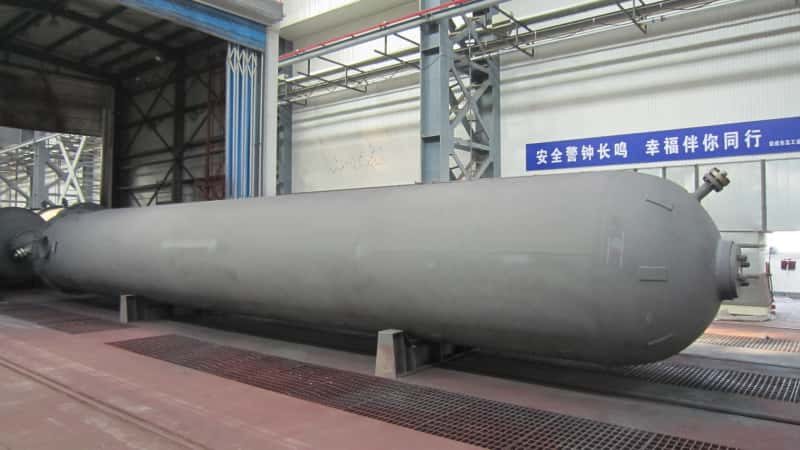


In modern industrial operations, selecting improper materials for a hairpin heat exchanger is not just a technical oversight—it can lead to severe corrosion, persistent fouling, frequent shutdowns, and ultimately significant financial losses. Engineers often struggle with unexpected pitting corrosion, scaling buildup, or erosion damage, especially when dealing with aggressive fluids like seawater, acids, or high-temperature hydrocarbons. These issues don’t just reduce efficiency; they compromise system integrity and safety. The good news is that with the right material selection strategy for the shell, tubes, and bonnets, these problems can be effectively mitigated or even eliminated entirely.
Hairpin heat exchangers typically utilize carbon steel, stainless steel (304/316/316L), duplex stainless steel, titanium, or nickel-based alloys (such as Hastelloy and Inconel) for shells, tubes, and bonnets. When these materials are properly selected based on fluid chemistry, temperature, pressure, and fouling characteristics, they fully meet industrial requirements for corrosion resistance and fouling control while maximizing operational lifespan and efficiency.
To truly understand how to meet your corrosion and fouling resistance requirements, we need to go deeper—into materials science, real-world applications, and engineering decision-making strategies used by professional manufacturers.
Using higher-grade alloy materials always eliminates fouling issues in heat exchangers.False
While advanced alloys reduce fouling tendencies, system design, flow velocity, and maintenance practices are equally critical factors.
Structural Overview: Why Material Selection Must Differ by Component

A hairpin heat exchanger is deceptively simple in design, yet highly sensitive to material selection. It consists of three critical components: the shell (outer pipe), the inner tube (heat transfer surface), and the bonnets (flow redirection chambers). Each component experiences different operating stresses, which means material selection must be tailored rather than uniform.
From a professional manufacturing perspective, the tube side typically faces the most aggressive conditions, including high velocity, chemical exposure, and temperature gradients. The shell side may experience lower stress but still requires structural integrity and corrosion resistance. Bonnets, on the other hand, are exposed to turbulence, pressure cycling, and sometimes erosion from particulates.
This differentiation is essential. Many system failures occur because users assume a single material can serve all components equally well. In reality, optimized systems often use multi-material configurations to balance cost and performance.
Shell Materials: Balancing Cost, Strength, and Environmental Resistance

The shell serves as the pressure boundary and external containment. In most industries, carbon steel remains the default choice due to its excellent mechanical strength, affordability, and ease of fabrication. However, carbon steel has a major limitation: it is highly vulnerable to corrosion in humid, кисл acidic, or oxygen-rich environments.
To overcome this, manufacturers often apply:
- Internal epoxy coatings
- Rubber linings
- Corrosion allowance thickness
For more demanding environments, stainless steel (304/316) is widely used. Among these, 316 offers improved resistance to chlorides due to molybdenum content. However, in high-chloride or offshore environments, even 316 can fail due to pitting corrosion.
This is where duplex stainless steel (e.g., 2205) becomes a superior choice. It offers:
- Higher strength (allowing thinner walls)
- Excellent resistance to stress corrosion cracking
- Improved pitting resistance
In extreme chemical environments, nickel-based alloys like Hastelloy C276 or Inconel 625 are used, though their cost is significantly higher.
Tube Materials: The Core of Heat Transfer and Fouling Control

The tube is the heart of the heat exchanger. It directly determines:
- Heat transfer efficiency
- Fouling rate
- Corrosion resistance
Stainless steel 316L is a common baseline due to its balance of cost and performance. However, in seawater or high-chloride environments, it is prone to pitting.
For such cases:
- Duplex stainless steel provides better resistance
- Titanium offers near-perfect resistance to seawater corrosion and biofouling
- Hastelloy is ideal for strong acids
From a fouling perspective, smoother surfaces reduce deposit formation. Materials like stainless steel and titanium form passive oxide layers that:
- Reduce chemical reactivity
- Minimize scaling adhesion
Additionally, advanced treatments such as:
- Electropolishing
- Anti-fouling coatings
can significantly improve performance.
Bonnets: High-Stress Zones Requiring Durability and Precision
Bonnets are often underestimated but are among the most failure-prone components. They experience:
- High turbulence
- Pressure fluctuations
- Flow direction changes
Carbon steel is acceptable for mild conditions, but in more aggressive systems:
- Stainless steel improves corrosion resistance
- Alloy steels improve erosion resistance
In slurry or particle-laden fluids, erosion-corrosion becomes a major issue. Solutions include:
- Hard-facing materials
- Replaceable liners
- Cladding techniques
Material Performance Comparison Table
| Component | Material | Corrosion Resistance | Fouling Resistance | Thermal Conductivity | Cost Level |
|---|---|---|---|---|---|
| Shell | Carbon Steel | Low | Low | Medium | Low |
| Shell | SS316 | Medium-High | Medium | Medium | Medium |
| Tube | SS316L | High | High | Medium | Medium |
| Tube | Titanium | Excellent | Excellent | Low | High |
| Tube | Hastelloy | ممتاز | High | Low | Very High |
| Bonnet | Carbon Steel | Low | Medium | Medium | Low |
| Bonnet | Alloy Steel | High | Medium | Medium | Medium |
Corrosion Resistance by Environment
| Environment | Best Material | Failure Risk if Wrong | Typical Issue |
|---|---|---|---|
| Seawater | Titanium | Extreme | Pitting corrosion |
| Acidic | Hastelloy | Extreme | Rapid degradation |
| Steam | SS316 | Moderate | Oxidation |
| Oil & Gas | Carbon Steel | Low | Sulfur corrosion |
Fouling Mechanisms and Material Influence
Fouling is not just a surface issue—it is a complex interaction between fluid chemistry, temperature gradients, and material properties. The four main types include:
- Scaling (mineral deposits)
- Biofouling (microorganisms)
- Particulate fouling
- Chemical reaction fouling
Material choice influences fouling through:
- Surface roughness
- Surface energy
- Chemical reactivity
For example:
- Carbon steel promotes rust → increases fouling
- Stainless steel reduces adhesion
- Titanium resists biofilm formation
Real Industrial Case Study
A petrochemical facility initially used:
- Carbon steel shell
- SS316 tubes
Problems observed:
- Severe fouling after 4 months
- 25–30% efficiency loss
- Frequent cleaning shutdowns
Solution:
- Upgraded tubes to duplex stainless steel
- Applied الداخلي anti-fouling coating
Results:
- Fouling reduced by 60%
- Maintenance interval doubled
- ROI achieved within 12 months
Do These Materials Truly Meet Your Requirements?
The answer is yes—but only when properly selected. There is no universal material solution. The correct approach is:
- Analyze fluid chemistry
- Evaluate temperature and pressure
- Assess fouling tendencies
- Optimize cost vs lifecycle
A well-designed hairpin heat exchanger often uses hybrid material configurations, ensuring each component performs optimally under its specific conditions.
Final Thoughts
Material selection is not just an engineering step—it is the foundation of reliability, efficiency, and long-term profitability. Choosing the right combination of shell, tube, and bonnet materials can dramatically reduce corrosion, minimize fouling, and extend equipment life.