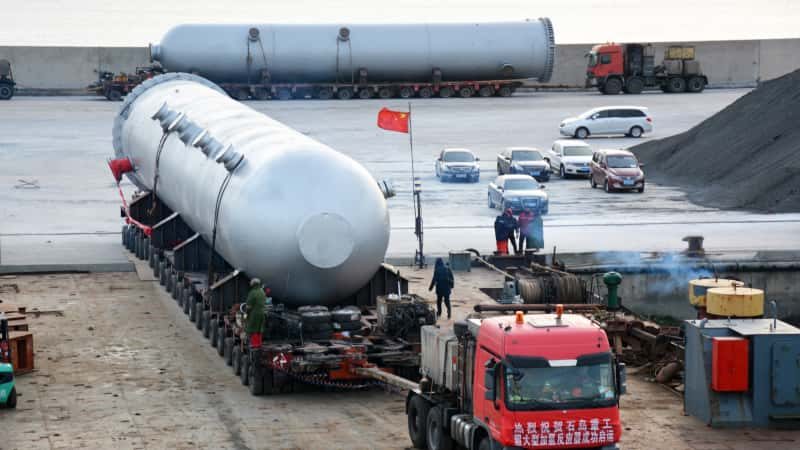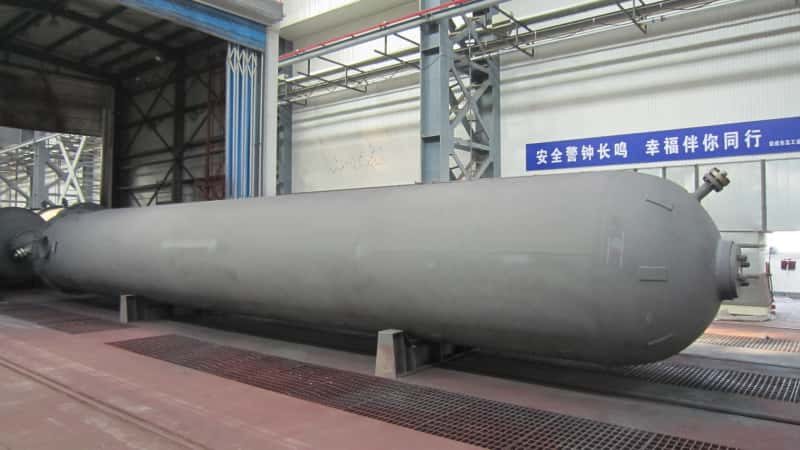

Compressed air is a core plant utility in chemical plants, manufacturing facilities, petrochemical units, environmental projects, and many EPC-built industrial sites. It supports instruments, control valves, pneumatic tools, packaging systems, utility stations, and production lines. For these applications, a large compressed air receiver vessel is not a small compressor accessory. It is a complete pressure vessel, typically above 1,000 liters for industrial projects, designed to stabilize air pressure, provide buffer capacity, manage demand fluctuations, and support reliable compressed air distribution.
WSHI focuses on project-based custom pressure vessels and industrial storage vessels above 1,000 liters, rather than small standard compressor tanks. This guide is written for EPC contractors, plant utility engineers, procurement teams, and project owners who need complete compressed air receiver vessels for industrial compressed air systems.

For technical context, compressed air receivers may fall under pressure equipment rules depending on project location, pressure, volume, and owner specification. ASME BPVC Section VIII Division 1 is commonly referenced for pressure vessel construction, while the U.S. Department of Energy provides compressed air system resources for industrial energy and system efficiency context. Final design requirements should always be confirmed by the EPC contractor, owner, local authority, and qualified engineers.
A large compressed air receiver vessel is only a compressor accessory.False
For industrial projects, an air receiver above 1,000 liters should be treated as a project pressure vessel with defined pressure rating, volume, materials, nozzles, inspection, testing, documentation, and delivery requirements.
Compressed air receiver sizing should be reviewed as part of the complete plant air system.True
Receiver capacity depends on compressor control strategy, peak demand, pressure stability, downstream air treatment, drainage, installation layout, and plant operating requirements.
What Is a Large Compressed Air Receiver Vessel?
A compressed air receiver vessel is a pressure vessel used to store compressed air and balance fluctuations in an air system. It can reduce pressure pulsation, stabilize air supply, support short-term peak demand, and reduce frequent compressor loading and unloading.
In industrial plants, large air receiver vessels may be used in central compressed air stations, chemical plant utility systems, petrochemical and refinery offsites, manufacturing production lines, instrument air systems, pneumatic conveying support, environmental engineering facilities, and EPC utility equipment packages.
For industrial pressure vessels, the receiver should be designed according to project pressure, volume, air quality, drainage, installation, inspection, coating, and documentation requirements.
Why Large Air Receiver Vessels Matter
A compressed air system without adequate receiver capacity may experience unstable pressure, frequent compressor cycling, moisture accumulation, and reduced downstream equipment reliability. In chemical and manufacturing plants, these issues can affect valves, instruments, production tools, packaging systems, and process control systems.
A properly specified air receiver can help buffer short-term air demand changes, support stable plant air pressure, reduce compressor cycling, provide temporary reserve capacity, improve moisture separation before downstream treatment, protect sensitive pneumatic equipment, and support reliable instrument air distribution.
The receiver vessel should be reviewed as part of the complete compressed air system, not as an isolated tank.
| System Issue | How a Receiver Vessel Helps | Buyer Review Point |
|---|---|---|
| Pressure fluctuation | Provides buffer volume between compressor output and plant demand | Define acceptable pressure range and peak air demand |
| Compressor cycling | Reduces frequent loading and unloading in some control strategies | Coordinate vessel capacity with compressor controls |
| Short-term peak demand | Provides reserve air volume for temporary demand spikes | Confirm peak users and operating schedule |
| Moisture accumulation | Allows condensate collection and drainage when properly arranged | Define drain nozzles, condensate handling, and air treatment scope |
| Plant reliability | Supports more stable air supply for instruments and utilities | Review receiver location and downstream air quality requirements |
Key Selection Factors for EPC Buyers
Capacity Above 1,000 Liters
This guide focuses on large industrial air receiver vessels above 1,000 liters. These are different from small air tanks supplied with workshop compressors or small packaged equipment.
For EPC projects, capacity should be determined by compressed air demand, compressor control strategy, pressure fluctuation tolerance, peak usage, emergency reserve, and downstream air treatment requirements. Buyers should clarify whether the volume refers to total vessel volume, working storage volume, or required buffer capacity.
Design Pressure and Operating Pressure
Compressed air receiver vessels are pressure equipment. Buyers should define normal operating pressure, design pressure, maximum allowable working pressure, pressure relief requirements, test pressure, and applicable code basis.
Depending on project location and owner specification, ASME Section VIII or other pressure vessel standards may be required. The final code basis should be confirmed by the EPC contractor, owner, inspection authority, and qualified engineers.
Air Quality and Drainage Requirements
Compressed air often contains moisture, oil carryover, or particles depending on compressor type and air treatment system. Receiver vessels should include suitable drainage points and interfaces for condensate removal.
For instrument air or process air applications, the receiver should be reviewed together with dryers, filters, downstream air quality requirements, and plant distribution headers. WSHI does not position small filters or accessories as standalone products; they should be considered only as part of the complete compressed air system interface.
Material and Corrosion Protection
Material selection should reflect design pressure, operating environment, air quality, and site conditions. Carbon steel is commonly used in many industrial receiver applications, while internal coating, external coating, or special surface protection may vary by project.
Outdoor installations may require surface preparation, primer, topcoat, and corrosion protection suitable for the site environment. Coastal, humid, or chemically aggressive sites may require more careful coating review.

Nozzle Layout and Plant Interface
A large air receiver vessel may include inlet, outlet, drain, safety valve connection, pressure gauge connection, manway, inspection opening, temperature instrument, support interface, and lifting points. Nozzle orientation should be checked against piping layout and maintenance access before fabrication.
For petrochemical pressure vessels, chemical plant utility vessels, and manufacturing plant receiver vessels, site installation space, foundation, platform access, drainage routing, and future inspection access should be reviewed early.
Specification Checklist for Large Air Receiver Vessels
| Specification Item | Information to Provide | Why It Matters |
|---|---|---|
| Required volume | Total volume, working storage volume, or calculated buffer capacity | Determines vessel size, foundation load, and air system stability |
| Pressure data | Operating pressure, design pressure, relief pressure, test requirement | Defines pressure boundary design and code review basis |
| Air service | Plant air, instrument air, process air, or utility air | Affects air quality, drainage, cleanliness, and downstream interface |
| Materials | Material grade, corrosion allowance, coating, lining if required | Controls durability, corrosion risk, and documentation needs |
| Nozzles | Inlet, outlet, drain, safety valve, instruments, manway, spare nozzles | Ensures compatibility with piping, maintenance, and inspection access |
| Installation | Vertical or horizontal arrangement, supports, foundation, access space | Prevents layout conflicts and site installation rework |
| Delivery | Destination, transport limits, lifting points, packing, export documents | Reduces logistics and project schedule risk |
Manufacturing and Quality Control
Large compressed air receiver vessels should be manufactured according to approved drawings, material specifications, welding requirements, inspection plans, and pressure testing requirements. Manufacturing may include plate cutting, shell rolling, head forming, shell welding, nozzle fit-up, dimensional inspection, NDT, pressure testing, surface preparation, coating, nameplate marking, packing, and final documentation.
For EPC procurement, buyers should confirm approved drawings and datasheets, material certificates, welding procedure requirements, welder qualification records, NDT scope, hydrostatic or pneumatic test requirements where applicable, surface treatment, coating specification, nameplate requirements, document package, packing method, lifting design, and delivery destination.
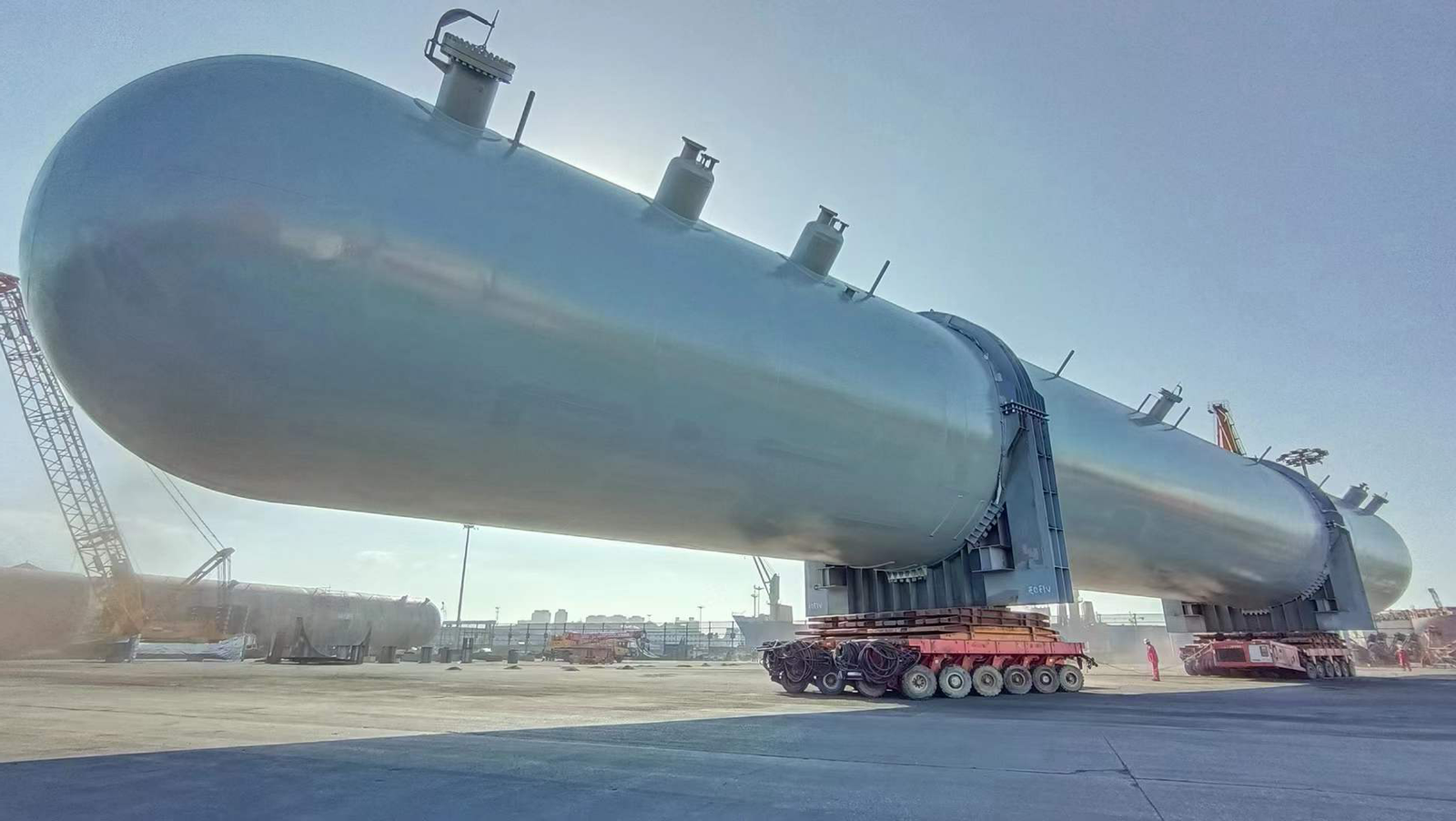
A large-scale pressure vessel manufacturer should be able to coordinate fabrication, inspection, testing, coating, loading, and export delivery for project-based equipment.
Inspection, Testing, and Documentation
Inspection requirements depend on the vessel design, code basis, wall thickness, project specification, and owner requirements. Common records may include material certificates, welding records, dimensional inspection reports, NDT reports, pressure test reports, coating reports, nameplate information, as-built drawings, and final data book.
For industrial compressed air receivers, documentation is important for acceptance, registration, maintenance, and future inspection. Buyers should define documentation requirements in the purchase order instead of treating them as optional extras.
| Document | Purpose |
|---|---|
| Approved drawing | Confirms dimensions, nozzles, supports, orientation, and design conditions |
| Material certificates | Confirms material grade, heat number, chemistry, and mechanical properties |
| Welding records | Confirms welding procedure and welder qualification control |
| NDT reports | Confirms inspection results according to project requirements |
| Pressure test report | Confirms pressure test completion and acceptance |
| Coating report | Confirms surface preparation, coating system, and inspection results |
| Final data book | Supports project handover, registration, maintenance, and future inspection |
Related Equipment in Utility Systems
Compressed air receiver vessels are often part of a broader plant utility system. Depending on the project, they may be installed near compressor stations, dryers, air treatment packages, control valve systems, or instrument air distribution headers.
For plants that also require process heating, cooling, or gas handling, buyers may source related industrial heat exchangers, storage vessels, separators, and custom chemical equipment as part of a larger EPC equipment package.
Common Procurement Mistakes
One common mistake is treating an industrial air receiver as a small compressor accessory. Large plant utility systems usually require project-specific vessel volume, pressure rating, inspection documents, and site interface review.
Another mistake is requesting a quotation with only volume and pressure. Buyers should also provide installation location, air quality, drainage requirements, coating requirements, nozzle layout, applicable code, inspection scope, and delivery requirements.
A third mistake is ignoring transport and installation. Large receiver vessels may require lifting lugs, saddles, shipping supports, route review, port delivery, and site unloading coordination.
Why Custom Manufacturing Matters
Industrial compressed air receiver vessels are not always standard products. Project requirements may vary by plant size, air demand, pressure level, site environment, documentation requirements, and delivery destination.
WSHI supports project-based manufacturing for pressure vessels, storage vessels, utility vessels, and custom industrial equipment. For chemical, petrochemical, manufacturing, and environmental projects, custom fabrication helps align the receiver vessel with the utility system, inspection plan, and installation layout.
FAQ
Does WSHI manufacture small air compressor tanks?
WSHI focuses on large project-based pressure vessels and compressed air receiver vessels above 1,000 liters, not small standard compressor tanks.
What information is needed for a compressed air receiver quotation?
Buyers should provide required volume, operating pressure, design pressure, installation location, material requirements, nozzle layout, coating requirements, inspection scope, and delivery destination.
Is a compressed air receiver vessel a pressure vessel?
In most industrial applications, yes. It stores compressed air under pressure and should be designed according to applicable pressure vessel requirements and project specifications.
Why is drainage important for air receiver vessels?
Compressed air may contain moisture or oil carryover. Drainage connections help remove condensate and reduce corrosion or downstream air quality problems.
Can large air receiver vessels be supplied for overseas EPC projects?
Yes. Project-based vessels can be prepared for export delivery when drawings, code requirements, inspection scope, packing method, and transport conditions are confirmed.
Conclusion
A large compressed air receiver vessel above 1,000 liters should be specified as a complete industrial pressure vessel, not a small compressor tank. EPC buyers should define air demand, vessel capacity, design pressure, material, drainage, coating, nozzle layout, inspection scope, documentation, and delivery requirements before procurement.
If you are planning a chemical plant, manufacturing facility, petrochemical unit, or industrial utility project, you can discuss your project requirements with an engineering team or download the pressure vessel catalog. Sharing drawings, operating pressure, required volume, air system conditions, inspection specifications, and delivery terms will help support manufacturing feasibility review.