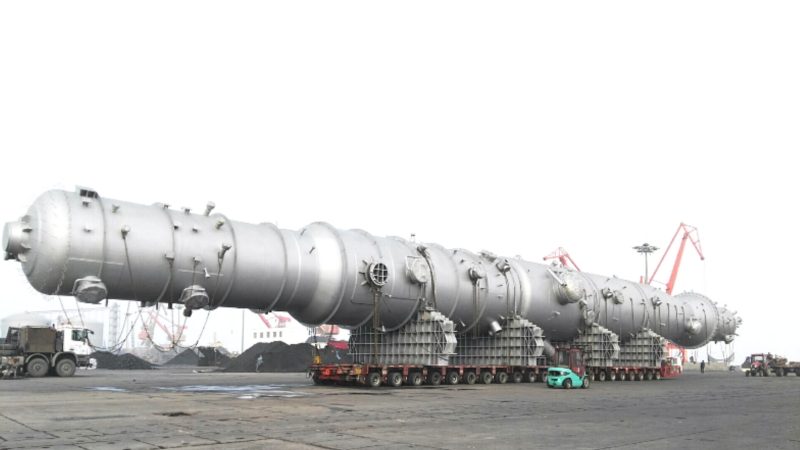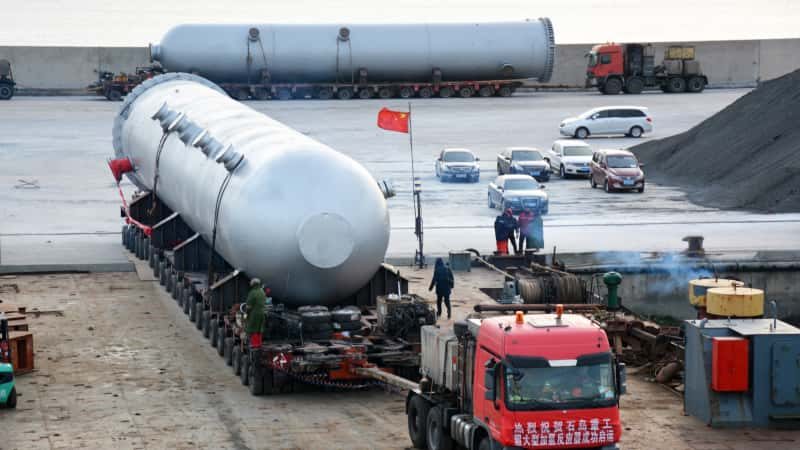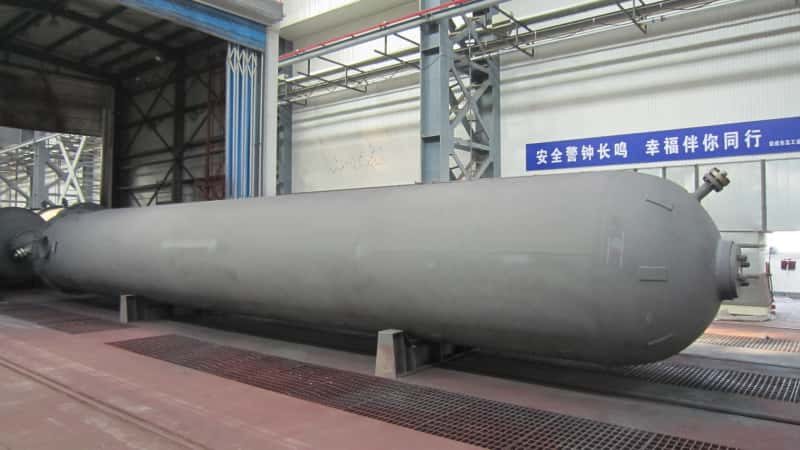

Pressure vessel failure is rarely caused by one isolated problem. In industrial service, failures typically develop from a combination of overpressure, corrosion or erosion, fatigue, cracking, material degradation, fabrication defects, improper repairs, or operating conditions that exceed the original design basis.
The consequences can range from leakage and unplanned shutdowns to loss of containment or catastrophic rupture.
For EPC contractors, plant owners, engineers, and equipment buyers, the key principle is simple:
Pressure vessel safety cannot be added after fabrication. It must be engineered into the vessel from the beginning.
Pressure vessel reliability therefore depends on the complete lifecycle—from process design and material selection to fabrication, inspection, operation, maintenance, repair, and eventual replacement.
The ASME Boiler and Pressure Vessel Code Section VIII establishes requirements for pressure-vessel design, materials, fabrication, examination, inspection, testing, and certification, while standards such as API 510 and API RP 571 address in-service integrity and damage mechanisms.
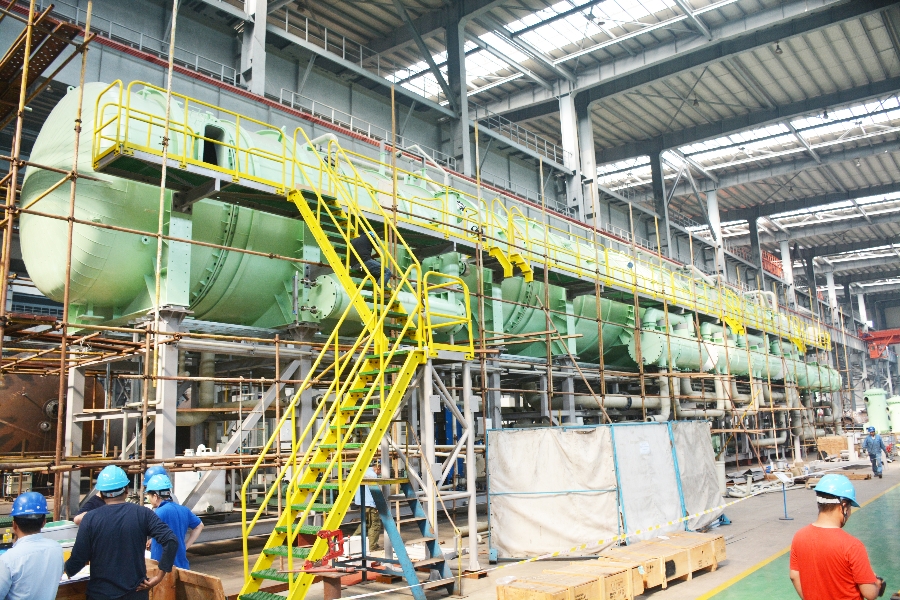
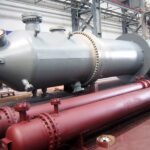
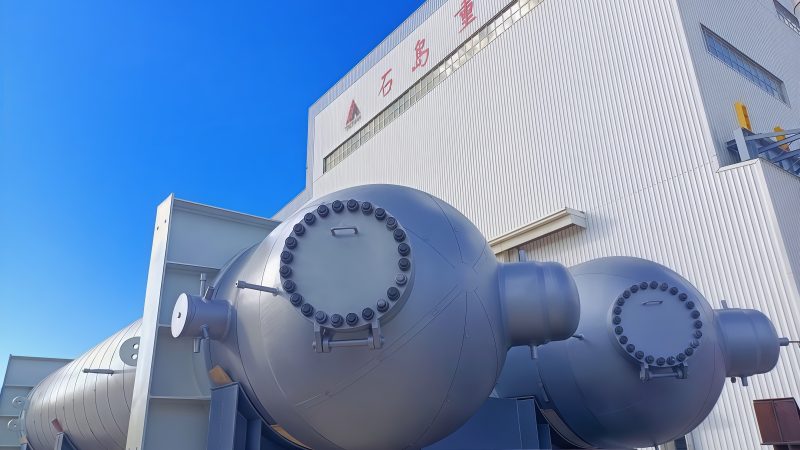
Large-scale pressure vessel fabrication at Weihai Shidao Heavy Industry (WSHI). Reliable pressure equipment begins with engineering, material control, qualified welding, inspection, and disciplined fabrication.
Executive Summary
The most important causes of pressure vessel failure include:
| Failure Mechanism | Typical Cause | Potential Consequence |
|---|---|---|
| Overpressure | Process upset, blocked outlet, runaway reaction, inadequate relief | Plastic deformation or rupture |
| General corrosion | Corrosive process medium or environment | Progressive wall thinning |
| Localized corrosion | Pitting, crevice attack, local chemistry | Local loss of pressure-retaining strength |
| Erosion / erosion-corrosion | High velocity, solids, droplets, turbulence | Accelerated metal loss |
| Fatigue | Repeated pressure or temperature cycles | Crack initiation and propagation |
| Stress corrosion cracking | Susceptible material + environment + tensile stress | Localized cracking |
| Hydrogen-related damage | Hydrogen service under susceptible conditions | Cracking or metallurgical degradation |
| Brittle fracture | Low toughness, defects and high stress | Sudden fracture |
| Creep | Prolonged high-temperature service | Time-dependent deformation and cracking |
| Fabrication defects | Welding, forming, material or heat-treatment problems | Reduced structural integrity |
| Improper repair | Unqualified welding or incorrect heat treatment | New defects or weakened material |
| Operation outside design basis | Process modifications or abnormal operation | Unexpected damage mechanisms |
The critical point is that different services create different damage mechanisms. A pressure vessel should therefore be designed, manufactured, inspected, and maintained according to its actual operating environment rather than according to a generic specification.
What Does Pressure Vessel Failure Actually Mean?
Pressure vessel failure does not necessarily mean that a vessel suddenly explodes.
Failure can begin much earlier, when the equipment can no longer safely or reliably perform its intended function.
Typical conditions include:
- unacceptable wall thinning;
- localized pitting;
- cracking;
- weld deterioration;
- permanent deformation;
- nozzle or attachment damage;
- flange or pressure-boundary leakage;
- pressure-relief malfunction;
- loss of structural integrity;
- catastrophic rupture.
This distinction is important because many serious pressure-vessel incidents develop progressively.
A vessel can appear externally intact while corrosion, fatigue cracks, hydrogen damage, or another deterioration mechanism is developing in a critical area.
Understanding how pressure vessels fail is therefore more useful than simply asking whether a vessel has already failed.
1. Overpressure
Overpressure is one of the most direct routes to pressure vessel failure.
Every pressure vessel is designed around defined pressure and temperature conditions. If actual pressure significantly exceeds the allowable limit, stresses within the vessel increase accordingly.
Common causes include:
- blocked outlets;
- failed control valves;
- runaway chemical reactions;
- abnormal heat input;
- thermal expansion of trapped liquid;
- incorrect operating procedures;
- changes in process conditions;
- pressure-control system failures;
- improperly sized or configured pressure-relief systems.
The U.S. Environmental Protection Agency identifies operation above maximum allowable pressure, inadequate pressure-relief protection, corrosion, fatigue, improper repairs, and other integrity problems among factors associated with pressure-vessel accidents in its Chemical Safety Alert on Pressure Vessel Rupture Hazards.
Why This Matters During Procurement
A manufacturer cannot design the correct vessel without a reliable process basis.
At minimum, the purchaser or EPC contractor should clearly define:
- design pressure;
- design temperature;
- normal operating pressure;
- normal operating temperature;
- startup and shutdown conditions;
- credible upset conditions;
- process medium;
- fluid composition;
- corrosion environment;
- external loads;
- vacuum conditions where applicable;
- cyclic operation;
- applicable design code.
Incomplete process information can create risk before fabrication even begins.
2. Corrosion and Wall Thinning
Corrosion is one of the most important long-term degradation mechanisms affecting industrial pressure equipment.
General Corrosion
General corrosion reduces wall thickness across a relatively broad area.
As metal is progressively lost, the remaining wall may eventually become inadequate for the required pressure and loads.
Localized Corrosion
Localized corrosion can be more difficult to manage.
Pitting, crevice corrosion, or other concentrated forms of attack may produce deep penetration in a relatively small area even when the average vessel wall remains comparatively thick.
External Corrosion
Not all corrosion occurs on the process side.
External surfaces can also deteriorate because of:
- atmospheric exposure;
- moisture;
- insulation systems;
- chemical contamination;
- coastal environments;
- damaged coatings.
Erosion and Erosion-Corrosion
High fluid velocity, entrained solids, liquid droplets, turbulence, or impingement can accelerate material loss.
Areas around:
- nozzles;
- inlets;
- outlets;
- reducers;
- internal flow changes;
may require particular attention depending on the service.
API RP 571 provides an industry framework for understanding many of the damage mechanisms that can affect fixed equipment in refining and related process industries.
Material Selection Is Part of Failure Prevention
Mechanical strength alone does not make a material suitable for pressure-vessel service.
A material may be strong enough to withstand the design pressure yet remain unsuitable for the actual process medium.
Depending on the application, engineers may need to evaluate:
- corrosion resistance;
- operating temperature;
- hydrogen exposure;
- chloride content;
- sulfur-containing environments;
- process contaminants;
- low-temperature toughness;
- fabrication characteristics;
- weldability;
- heat-treatment requirements;
- corrosion allowance;
- cladding or weld-overlay requirements.
Industrial pressure vessels may therefore be manufactured from a range of materials including:
- carbon steel;
- low-alloy steel;
- Cr-Mo steel;
- stainless steel;
- duplex stainless steel;
- nickel alloys;
- titanium;
- zirconium;
- clad or weld-overlay material systems.
There is no universally “best” pressure-vessel material.
The correct material is the material that is suitable for the actual pressure, temperature, process chemistry, damage mechanisms, fabrication route, and intended service life.
3. Fatigue from Pressure and Temperature Cycling
A vessel may operate safely under relatively steady conditions but experience very different stresses during repeated:
- startup;
- shutdown;
- pressurization;
- depressurization;
- heating;
- cooling;
- batch cycles;
- process transitions.
Repeated stress cycles can eventually initiate fatigue cracks.
This is particularly important because fatigue damage tends to concentrate around areas where local stresses are higher.
Typical areas of concern include:
- nozzle connections;
- attachment welds;
- weld transitions;
- geometric discontinuities;
- repaired areas;
- support interfaces;
- locations affected by thermal gradients.
Cyclic Service Should Be Defined During Design
The manufacturer should know whether the vessel will operate continuously under stable conditions or undergo frequent operating cycles.
A vessel intended for highly cyclic service may require different engineering evaluation from equipment operating under comparatively steady conditions.
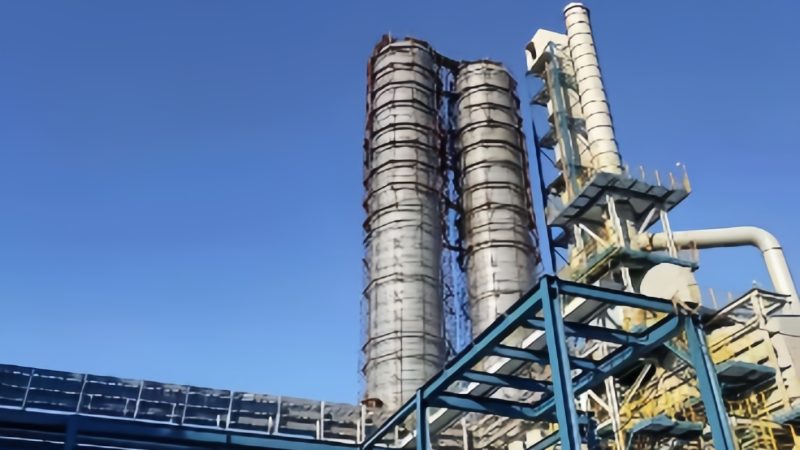
Large process vessels used in severe refinery applications require engineering that considers the actual pressure, temperature, thermal cycling, material system, and service conditions.
For petrochemical projects involving large reactors, columns, coke drums, separators, and other process vessels, the equipment should therefore be evaluated according to the real operating profile—not just a single design-pressure value.
Explore WSHI’s petrochemical pressure vessel projects for examples of heavy process equipment manufactured for demanding industrial service.
4. Stress Corrosion Cracking
Some materials can develop cracking when three conditions occur together:
Susceptible material + aggressive environment + tensile stress
This broad mechanism is generally referred to as stress corrosion cracking, although the specific form of cracking depends on the material and process environment.
Factors affecting susceptibility can include:
- process chemistry;
- contaminants;
- chloride concentration;
- temperature;
- residual welding stress;
- hardness;
- material grade;
- heat treatment.
One difficulty is that stress corrosion cracking may occur while much of the surrounding vessel wall remains relatively thick.
This means that wall-thickness measurement alone cannot identify every form of pressure-vessel deterioration.
Inspection methods should therefore be selected according to the damage mechanisms that are actually credible for the service.
5. Hydrogen-Related Damage
Hydrogen-containing process environments can create particularly demanding material conditions.
Depending on:
- hydrogen partial pressure;
- operating temperature;
- metallurgy;
- stress;
- process chemistry;
- fabrication condition;
hydrogen-related deterioration may become relevant.
Possible mechanisms include different forms of hydrogen-assisted cracking, blistering, hydrogen-induced damage, and high-temperature hydrogen attack where applicable.
These risks are especially relevant to certain:
- refinery units;
- hydrogenation systems;
- hydrocracking units;
- petrochemical processes;
- fertilizer equipment;
- hydrogen-processing facilities.
Real Project Example: Heavy Hydrocracking Reactor
Severe refinery equipment provides a good example of why pressure-vessel materials cannot be selected generically.
WSHI manufactured a large hydrocracking reactor for Xinyue Fuel Chemical with the following published specifications:
| Parameter | Project Data |
|---|---|
| Equipment | Hydrocracking Reactor |
| Diameter | φ4000 mm |
| Wall configuration | 212 + 6.5 mm |
| Length | 22,049 mm |
| Weight | 626.6 tons |
| Base material | 12Cr2Mo1V forged |
| Overlay | E309L + E347 |
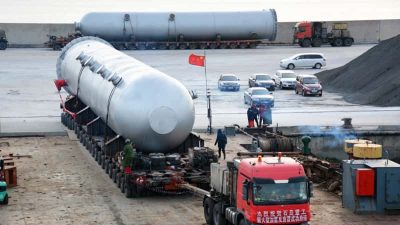
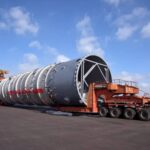
Large hydrocracking reactor manufactured by WSHI. Severe hydrogen, pressure, temperature, and process conditions require service-specific metallurgy and fabrication engineering.
The project demonstrates an important principle:
Severe service requires service-specific material engineering—not simply thicker steel.
The required combination of base material, corrosion-resistant overlay, welding procedure, heat treatment, inspection, and fabrication method must be considered as one integrated pressure-boundary system.
More project information is available in the Xinyue Fuel Chemical Hydrocracking Reactor Project.
6. Brittle Fracture
Pressure vessel steel is normally expected to possess sufficient ductility and toughness for its intended service.
At sufficiently low temperature, however, some steels can transition toward brittle behavior.
According to the UK Health and Safety Executive’s guidance on pressure vessels operating at low temperature, important factors affecting brittle-fracture risk include:
- material fracture toughness;
- crack-like defects;
- stress at the crack tip.
Unlike ductile failure, brittle fracture can propagate rapidly with relatively little visible deformation.
This makes the following factors particularly important:
- minimum design metal temperature;
- material toughness;
- impact-test requirements;
- welding quality;
- fabrication defects;
- residual stresses;
- startup conditions;
- low-temperature operation.
For equipment that may experience unusually low temperatures during normal operation, depressurization, startup, shutdown, or process upset, low-temperature suitability should be considered during the design stage.
7. Creep and High-Temperature Degradation
Pressure vessels operating at elevated temperatures face a different problem.
When materials remain under stress at sufficiently high temperatures for long periods, time-dependent deformation known as creep can occur.
Unlike an immediate overpressure event, creep develops gradually.
Long-term exposure can progressively affect:
- base metal;
- weld metal;
- heat-affected zones;
- high-stress regions.
High-temperature vessel design therefore cannot be reduced to a simple relationship between wall thickness and internal pressure.
Engineers may also need to consider:
- material creep properties;
- operating duration;
- thermal gradients;
- weld metallurgy;
- heat treatment;
- stress distribution;
- process stability.
This is particularly important for certain high-temperature industrial reactors and other severe-service process vessels.
8. Welding and Fabrication Defects
Even a correctly designed pressure vessel can be compromised by poor fabrication.
A large pressure vessel may contain extensive:
- longitudinal welds;
- circumferential welds;
- nozzle welds;
- attachment welds;
- clad or overlay welds.
Potential fabrication problems can include:
- incomplete fusion;
- unacceptable weld discontinuities;
- incorrect filler material;
- poor weld geometry;
- excessive misalignment;
- uncontrolled heat input;
- inappropriate repair welding;
- inadequate preheating;
- incorrect post-weld heat treatment;
- material traceability failures.
That is why pressure-vessel manufacturing involves much more than forming steel plate and completing weld seams.
Key Manufacturing Controls
| Manufacturing Control | Primary Purpose |
|---|---|
| Material traceability | Verify specified materials throughout fabrication |
| WPS / PQR qualification | Establish approved welding procedures |
| Welder qualification | Confirm welding personnel capability |
| Dimensional inspection | Verify geometry and alignment |
| RT / UT | Detect relevant internal discontinuities |
| MT / PT | Detect relevant surface-breaking discontinuities |
| PWHT | Control residual stress and metallurgical condition where required |
| Pressure testing | Verify pressure-boundary integrity under specified test conditions |
| Documentation review | Provide traceable evidence of compliance |
The ASME BPVC Section VIII addresses design, materials, fabrication, examination, inspection, testing, and certification because manufacturing quality is an integral part of pressure-boundary integrity.
Heavy pressure-vessel manufacturing requires coordinated control of materials, welding, forming, heat treatment, NDE, dimensional accuracy, lifting, and documentation.
For very large or thick-wall equipment, the manufacturer’s actual production capabilities become increasingly important.
9. Improper Repairs and Alterations
Pressure vessels may eventually require:
- weld repair;
- nozzle modification;
- reinforcement;
- component replacement;
- rerating;
- other alterations.
An improperly executed repair can create new risks rather than eliminate the original problem.
For example, incorrect repair welding can affect:
- residual stresses;
- hardness;
- metallurgical condition;
- heat-affected zones;
- crack susceptibility.
The EPA has documented improper repairs and welding as contributing factors in serious pressure-vessel failures.
API 510 addresses the in-service inspection, rating, repair, alteration, and rerating of pressure vessels, illustrating why repair activities should remain within an established pressure-equipment integrity framework.
Pressure-vessel repairs should therefore not be treated like ordinary structural-steel repairs.
10. Operating Outside the Original Design Basis
A pressure vessel may be correctly designed and manufactured but later exposed to service conditions that were never considered in the original engineering.
Over many years, a plant may change:
- feedstock;
- operating pressure;
- operating temperature;
- throughput;
- process chemistry;
- chemical concentration;
- startup frequency;
- cleaning method;
- cycle frequency.
Each individual change may appear minor.
Together, they can create a substantially different operating environment.
A vessel originally designed for one process condition should therefore not automatically be assumed suitable for another.
When significant operating changes occur, engineers should reassess whether the existing vessel remains suitable for the revised service.
Where Do Pressure Vessel Failures Usually Develop?
There is no universal weak point because damage location depends on the service and failure mechanism.
However, engineering and inspection attention commonly focuses on areas such as:
- longitudinal and circumferential welds;
- nozzle-to-shell connections;
- attachment welds;
- supports;
- repaired areas;
- geometric discontinuities;
- liquid-vapor interfaces;
- process inlet zones;
- high-velocity areas;
- insulated surfaces;
- areas exposed to aggressive process chemistry.
The appropriate inspection technique should then be selected according to the expected damage mechanism.
For example:
| Damage Concern | Potential Examination Approach* |
|---|---|
| General wall thinning | UT thickness measurement |
| Localized corrosion | Detailed UT / scanning techniques |
| Surface cracks | PT or MT where appropriate |
| Internal weld defects | UT or RT where applicable |
| Suspected crack-like damage | Specialized UT / other appropriate NDE |
| General external condition | Visual examination |
*The appropriate technique depends on material, geometry, access, code requirements, expected damage mechanism, and qualified engineering judgment.
This damage-mechanism-based philosophy is consistent with the approach described in API RP 571.
How Can Pressure Vessel Failure Be Prevented?
Pressure-vessel failure prevention is best approached as a lifecycle process.
1. Define the Real Process Conditions
Before detailed design begins, establish:
- design pressure;
- design temperature;
- operating envelope;
- process chemistry;
- upset scenarios;
- external loads;
- cyclic conditions;
- corrosion environment.
2. Select Materials for the Actual Service
Consider:
- strength;
- toughness;
- corrosion;
- hydrogen effects;
- temperature;
- process contaminants;
- weldability;
- heat treatment;
- fabrication route.
3. Use the Appropriate Design Code
Applicable requirements may include ASME Section VIII, PED, EN standards, GB standards, or other project-specific requirements.
Code selection should be established before detailed engineering and procurement.
4. Control Fabrication
Important areas include:
- qualified welding procedures;
- welder qualifications;
- material traceability;
- forming control;
- dimensional inspection;
- PWHT where required;
- NDE;
- pressure testing.
5. Maintain the Operating Envelope
Operators should understand:
- maximum allowable conditions;
- relief-system requirements;
- startup limitations;
- shutdown limitations;
- abnormal operating conditions.
6. Inspect According to Credible Damage Mechanisms
Inspection should answer:
What damage can realistically occur in this vessel, where is it likely to occur, and which examination technique can detect it?
This is more effective than applying the same inspection approach to every pressure vessel.
7. Manage Process Changes
Changes to pressure, temperature, chemistry, throughput, feedstock, or operating cycles should trigger an engineering review where appropriate.
8. Control Repairs and Alterations
Repairs should use qualified procedures, qualified personnel, appropriate inspection, and required engineering review.
What Should Buyers Check When Selecting a Pressure Vessel Manufacturer?
For industrial projects, pressure-vessel procurement should go far beyond quoted price.
The larger, heavier, higher-pressure, hotter, or more metallurgically complex the vessel becomes, the more important manufacturing capability becomes.
A practical supplier evaluation should include the following.
Engineering Capability
Can the manufacturer work with:
- complex process datasheets;
- international design codes;
- thick-wall vessels;
- cyclic service;
- external loads;
- special materials?
Material Capability
Can the manufacturer process the required:
- carbon steel;
- low-alloy steel;
- stainless steel;
- duplex steel;
- nickel alloy;
- titanium;
- zirconium;
- clad materials?
Welding Capability
Evaluate experience with:
- heavy-wall welding;
- alloy welding;
- overlay welding;
- dissimilar-metal welding;
- controlled heat input.
Heat Treatment
Large and thick-wall pressure equipment may require substantial PWHT capability.
NDE Capability
The project may require combinations of:
- RT;
- UT;
- MT;
- PT;
- advanced ultrasonic methods;
- project-specific examination.
Heavy Manufacturing Capability
For very large equipment, buyers should also consider:
- workshop dimensions;
- crane capacity;
- turning rolls;
- machining capability;
- lifting;
- assembly;
- transportation route.
Quality Documentation
For EPC projects, the documentation package may be almost as important as the physical vessel.
Typical requirements include:
- material certificates;
- welding records;
- NDE reports;
- heat-treatment records;
- dimensional reports;
- test records;
- manufacturing data reports.
Pressure Vessel Manufacturing Capability at WSHI
Weihai Shidao Heavy Industry (WSHI), a wholly owned subsidiary of Taishan Group, specializes in large, tailor-made pressure vessels and related heavy process equipment.
Its product scope includes:
- industrial heat exchangers;
- process towers and columns;
- industrial reactors;
- large industrial storage tanks;
- other custom pressure equipment for severe industrial applications.
Published manufacturing capabilities include a 70,000 m² production workshop and lifting capacity up to 960 tons, together with ASME U/U2 certification and pressure-vessel manufacturing qualifications.
These capabilities are particularly relevant to projects involving:
- refinery equipment;
- petrochemical vessels;
- fertilizer and chemical equipment;
- oil and gas pressure vessels;
- large heat exchangers;
- high-pressure reactors;
- heavy process columns;
- special-material equipment.
Planning a Large or Severe-Service Pressure Vessel Project?
For an accurate technical evaluation, provide as much of the following information as possible:
equipment type + design pressure + design temperature + process medium + material requirement + dimensions + applicable code + quantity + drawings or datasheet
Contact the WSHI engineering team to discuss your pressure vessel requirements.
Frequently Asked Questions
What is the most common cause of pressure vessel failure?
There is no single failure mechanism that dominates every application.
Common causes include:
- corrosion;
- wall thinning;
- overpressure;
- fatigue;
- stress corrosion cracking;
- material degradation;
- fabrication defects;
- improper repairs;
- operation outside the design basis.
The dominant mechanism depends on the vessel’s material, process fluid, temperature, pressure, cyclic loading, environment, and operating history.
Can a pressure vessel explode?
Yes.
A catastrophic pressure vessel rupture can suddenly release substantial stored energy.
Depending on the process medium and surrounding conditions, consequences may include:
- blast effects;
- equipment damage;
- projectiles;
- hazardous-material release;
- fire;
- injury.
However, not every pressure vessel failure is an explosion.
Leakage, cracking, corrosion, deformation, and loss of pressure-retaining capability are also forms of pressure-vessel failure.
Can corrosion cause a pressure vessel to rupture?
Yes.
General corrosion can progressively reduce wall thickness, while localized corrosion can create deeply weakened areas.
If the remaining pressure-retaining material becomes inadequate for the applied loads, loss of containment or rupture may occur.
Why do pressure vessels crack?
Pressure vessel cracking can result from several mechanisms, including:
- fatigue;
- stress corrosion cracking;
- hydrogen-related damage;
- brittle fracture;
- creep;
- welding defects;
- high local stresses.
Determining the actual cause requires an understanding of the material, stress state, process environment, temperature, operating history, and crack characteristics.
Does ASME certification mean a pressure vessel cannot fail?
No.
ASME Section VIII provides a recognized framework for pressure-vessel design and construction, including requirements covering materials, fabrication, examination, inspection, testing, and certification.
Long-term integrity also depends on:
- actual process conditions;
- corrosion;
- cyclic loading;
- operation;
- inspection;
- maintenance;
- repair;
- process changes.
Construction-code compliance and lifecycle integrity management therefore complement one another.
How can pressure vessel failure be detected before rupture?
The appropriate approach depends on the expected damage mechanism.
Inspection techniques may include:
- visual examination;
- ultrasonic testing;
- radiographic examination;
- magnetic-particle testing;
- liquid-penetrant testing;
- specialized NDE techniques.
A good inspection strategy does not simply perform every available test.
It first identifies which damage mechanisms are credible, then selects examination methods capable of detecting those forms of deterioration.
How often should a pressure vessel be inspected?
There is no universal inspection interval suitable for every pressure vessel.
Inspection frequency depends on factors such as:
- applicable regulations;
- industry code;
- vessel service;
- corrosion rate;
- damage mechanisms;
- operating history;
- previous inspection results;
- remaining life;
- risk assessment.
For a detailed discussion, inspection frequency should therefore be treated separately from the broader question of why pressure vessels fail.
Conclusion
Pressure vessel failures are generally associated with identifiable engineering, manufacturing, environmental, or operational mechanisms rather than unexplained events.
The major causes include:
overpressure, corrosion, erosion, fatigue, cracking, hydrogen damage, brittle fracture, high-temperature degradation, material incompatibility, fabrication defects, improper repairs, and operation outside the original design basis.
The most effective failure-prevention strategy begins long before the equipment enters service.
It requires:
accurate process data → appropriate engineering → correct material selection → qualified fabrication → suitable NDE → controlled operation → damage-mechanism-based inspection → properly managed repairs and process changes.
For EPC contractors and industrial buyers, this leads to an important procurement principle:
Selecting a pressure vessel manufacturer is an engineering and risk-management decision—not simply a price comparison.
For large pressure vessels, reactors, heat exchangers, process columns, separators, and industrial storage vessels operating under demanding pressure, temperature, corrosion, or cyclic conditions, manufacturing capability must be evaluated together with engineering competence, metallurgy, welding, quality control, inspection, and project experience.