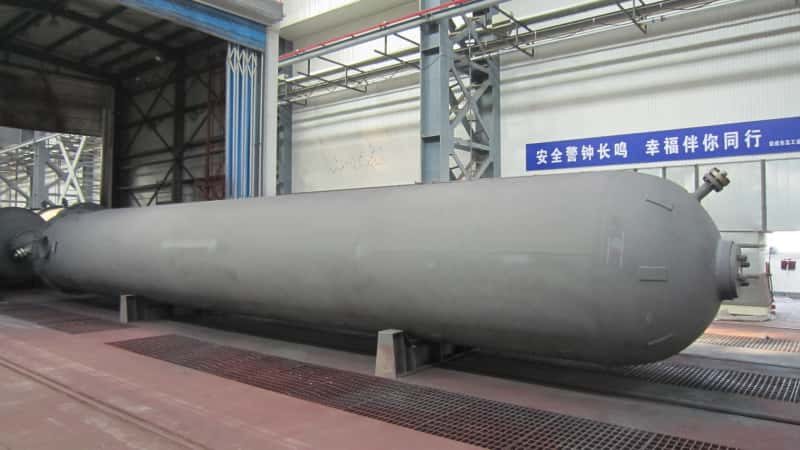

Choosing between vertical and horizontal pressure vessels can look simple on a purchase list, but the wrong orientation can create oversized foundations, poor separation efficiency, difficult inspection access, unstable level control, shipping problems, and unnecessary fabrication cost. A project team may specify a vertical vessel because floor space is limited, then discover later that liquid retention volume is too small or the vessel is too tall for transport. Another team may choose a horizontal pressure vessel because it offers generous surge capacity, then struggle with plot area, saddle-support settlement, or poor drainage.
The right question is not whether vertical or horizontal pressure vessels are universally better. The right question is which orientation fits the process duty, installation envelope, operating pressure, phase behavior, maintenance strategy, code requirements, and total lifecycle cost. For EPC buyers and plant engineers, vessel orientation should be decided before final quotation because it affects shell size, supports, nozzles, internals, lifting, shipping, inspection, and installation.

ASME BPVC Section VIII Division 1 is commonly referenced for pressure vessel construction where applicable, while inspection and safety guidance may also involve API, EPA, HSE, or local jurisdictional requirements depending on the project. Orientation does not remove the need for code-compliant design, pressure relief, inspection, testing, and documentation.
A vertical pressure vessel is always better than a horizontal pressure vessel.False
The better orientation depends on process duty, available space, liquid retention time, gas-liquid separation requirements, support loads, maintenance access, transportation limits, and total lifecycle cost.
Pressure vessel orientation does not remove the need for code-compliant design, inspection, testing, and pressure relief protection.True
Vertical and horizontal pressure vessels both require proper design, fabrication, inspection, testing, certification, and safe overpressure protection according to the applicable code and jurisdiction.
Quick Answer: Which Is Better?
A vertical pressure vessel is usually better when the project needs a small footprint, efficient gas-liquid disengagement, easy draining, compact installation, or gas-dominant operation. A horizontal pressure vessel is usually better when the project needs larger liquid storage, longer retention time, stable level control, lower overall height, easier access to internal components, or high liquid flow with surge capacity. For most projects, the better choice is the orientation that satisfies process performance first, then structural support, transportation, inspection, and cost.
| Selection factor | Vertical pressure vessel | Horizontal pressure vessel | Often better choice |
|---|---|---|---|
| Plot footprint | Small floor area, greater height. | Larger floor area, lower height. | Vertical for congested plants; horizontal for height-restricted sites. |
| Liquid holdup | Limited by diameter and liquid section height. | Strong because vessel length creates useful volume. | Horizontal. |
| Gas-liquid disengagement | Good for gas-dominant flow and compact mist removal. | Good for mixed flow with larger interface area. | Depends on gas/liquid ratio. |
| Level control | Smaller level span and faster response. | Longer and more stable level span. | Horizontal. |
| Drainage | Excellent bottom drainage. | Requires proper drain placement or slope. | Vertical. |
| Maintenance access | Top internals may require platforms. | Manways and internals are often easier near grade. | Horizontal. |
What Is the Practical Difference?
A vertical pressure vessel stands upright on legs, a skirt, lugs, or a ring base, with the shell axis perpendicular to the floor. This arrangement concentrates volume upward, making it useful when floor space is scarce, gravity drainage is important, solids or condensate must collect at the bottom, or gas needs a direct upward flow path through demisters, mist eliminators, vane packs, or other internals.
A horizontal pressure vessel lies on saddles or structural supports, with the shell axis parallel to the floor. This arrangement spreads volume lengthwise, making it useful when liquid inventory, surge capacity, residence time, operator access, or low overall height matters more than footprint. Both orientations may use similar shell courses, formed heads, nozzles, manways, lifting lugs, weld procedures, NDT, pressure testing, nameplates, and documentation packages, but the engineering emphasis changes significantly.
For related project planning, buyers may review custom pressure vessels, industrial storage tanks, and pressure vessels for oil and gas depending on the service.
When Is a Vertical Pressure Vessel Better?
A vertical pressure vessel is usually the better choice when the project needs maximum capacity in a tight footprint, when the service is gas-dominant, when liquid inventory is moderate, when complete drainage matters, or when the process benefits from gravity-assisted separation. In compressed air systems, a vertical air receiver can be placed close to compressors or process skids without consuming valuable floor area, and its bottom drain can remove condensate efficiently.
In gas knock-out service, an upright vessel allows incoming gas to slow down, change direction, release entrained droplets, pass through mist elimination equipment, and exit through the top nozzle. In filtration and coalescing service, vertical housings may be preferred because elements can be arranged for clean flow distribution and bottom sump collection.
However, vertical vessels are not automatically cheaper. A tall vertical vessel may need a skirt, anchor bolts, wind and seismic calculations, platforms, ladders, davits, insulation support rings, and lifting studies. Nozzles at the top head may be harder to access, and internal maintenance may involve working at height.
When Is a Horizontal Pressure Vessel Better?
A horizontal pressure vessel is usually the better choice when the project requires high liquid capacity, long retention time, stable level control, lower installation height, easier manway access, or good handling of liquid surges and slugs. The long shell length creates a wider operating band between low-low level, normal level, high level, and high-high alarm.
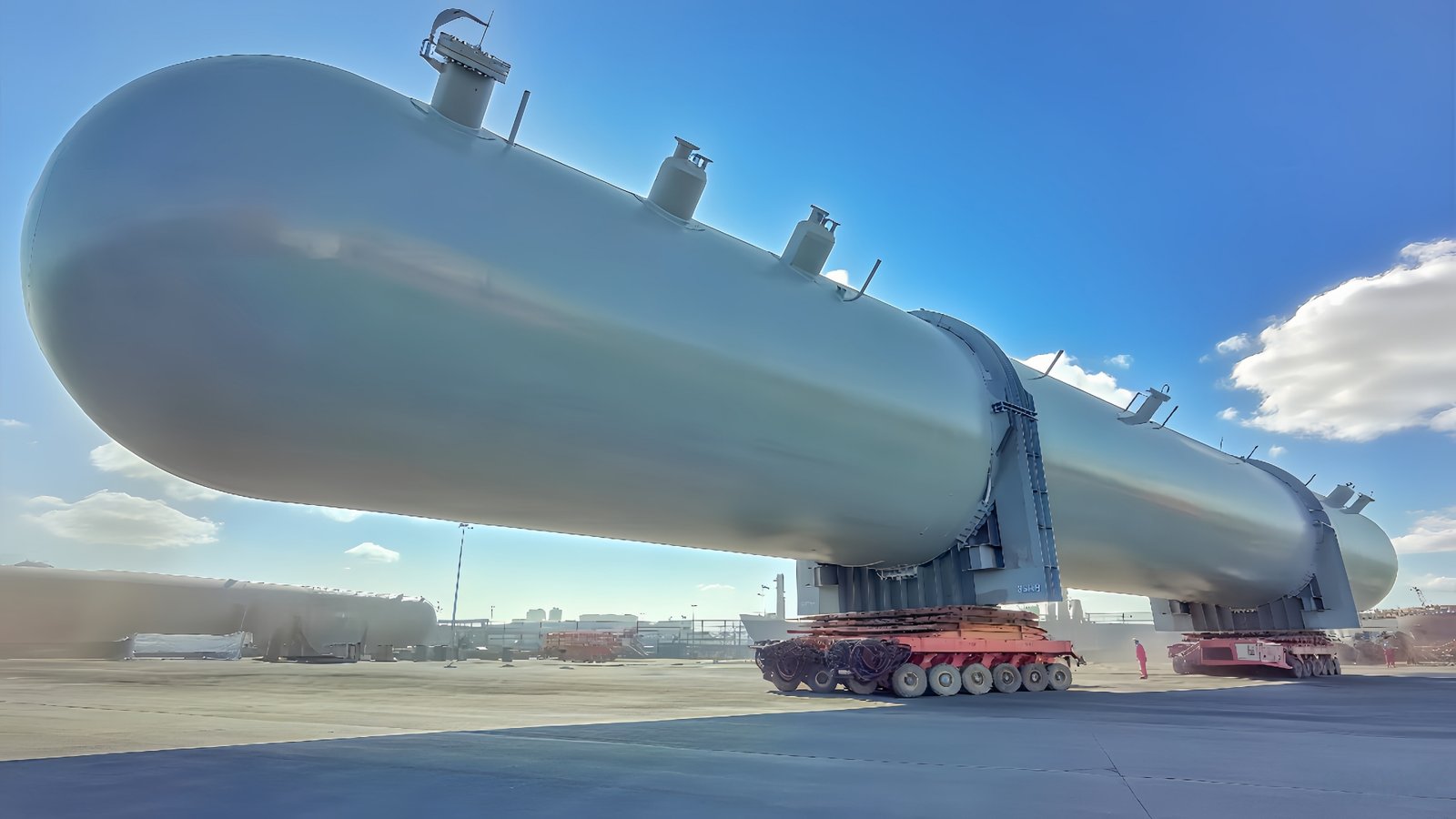
Horizontal vessels are common for three-phase separators, two-phase separators with significant liquid load, surge drums, blowdown receivers, LPG storage bullets, chemical holding vessels, condensate receivers, and process accumulators. They often allow manways, internals, level instruments, drains, and supports to be reached from grade or lower platforms.
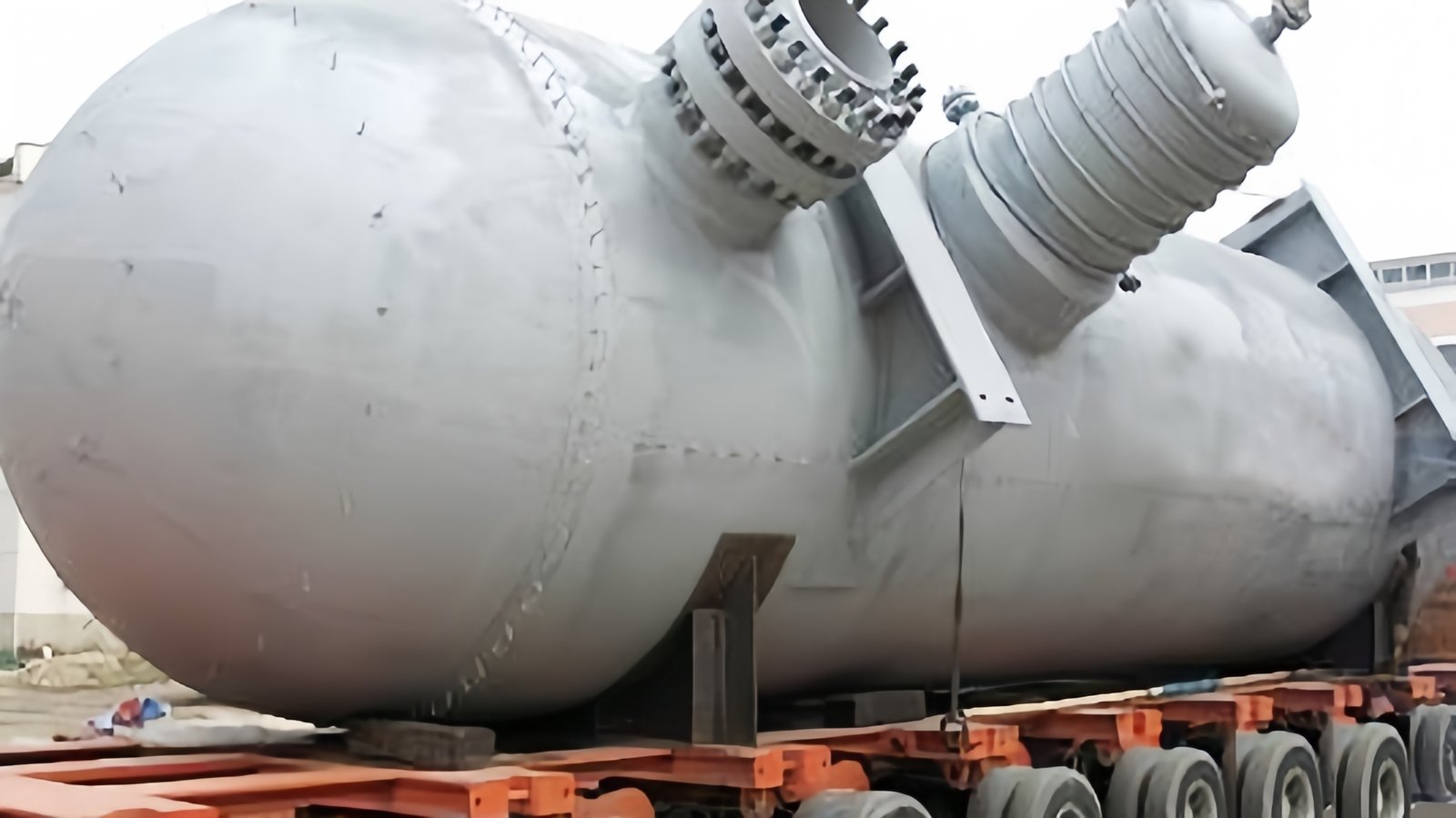
Horizontal vessels also have engineering risks. Saddle supports introduce local shell stresses, especially if saddle spacing is poorly selected. Large-diameter horizontal vessels may require substantial plot width, longer piping runs, and careful foundation alignment. Drainage is not as naturally complete as in a vertical vessel, so drain nozzle location, internal slope, sump design, and clean-out provisions matter.
Decision Matrix: Which Orientation Fits Your Project?
| Project requirement | Recommended starting point | Why it usually works | Watch-outs before ordering |
|---|---|---|---|
| Limited floor space | Vertical | Uses height instead of plot area. | Check height limits, wind/seismic loads, access platforms. |
| Large liquid inventory | Horizontal | Provides long shell volume and stable level range. | Check saddle loads, drainage, plot width, transport length. |
| Gas knock-out service | Often vertical | Gas rises, liquid falls, and demister can be placed near top outlet. | Confirm gas velocity, liquid slug volume, and demister access. |
| Three-phase separation | Often horizontal | Supports interface control and liquid residence time. | Confirm internals, weirs, coalescers, sand removal, level instruments. |
| Complete drainage | Vertical | Bottom outlet helps liquid and solids collect at the low point. | Confirm bottom head geometry, sump design, and clean-out access. |
| Maintenance near grade | Horizontal | Manways, instruments, and internals may be easier to reach. | Confirm safe access, confined-space entry, and lifting clearance. |
How Process Performance Should Drive Orientation
Pressure vessel orientation should begin with the duty. An air receiver, separator, knock-out drum, surge drum, heat exchanger shell, filter vessel, accumulator, LPG storage vessel, reactor, vacuum vessel, and custom process vessel may each favor different geometry. Designers should evaluate gas load, liquid load, residence time, nozzle arrangement, internals, support type, relief-device access, foundation loads, corrosion allowance, coating, insulation, transportation route, and applicable code.
For separators, performance depends on pressure, fluid properties, separator geometry, flow steadiness, inlet device design, relative gas and liquid amounts, and mist extractor type. Orientation alone does not make a separator reliable; it only creates a geometry that must still be sized and equipped correctly.
Structural, Foundation, and Support Differences
A vertical vessel needs careful attention to wind and seismic overturning, skirt or leg design, platform loads, ladder access, drain geometry, and top-head nozzle access. A horizontal vessel needs careful attention to saddle design, shell local stresses near saddles, thermal expansion, liquid-filled weight, nozzle loads, support settlement, and transport length.
Foundation cost can shift the decision. A vertical vessel may reduce plot area but need heavier anchoring and access steel. A horizontal vessel may simplify maintenance but require wider foundations and more plot space. EPC buyers should compare total installed cost, not only the vessel purchase price.
Safety, Code Compliance, and Pressure Relief
Both vertical and horizontal pressure vessels require proper overpressure protection, inspection, testing, and documentation. Relief devices must be sized, located, accessible, and installed according to the applicable code and jurisdiction. Orientation should make relief protection easier, not harder.
The relief valve connection should be accessible, oriented properly, and protected from blockage, liquid accumulation, freezing, corrosion, and unauthorized isolation. A vertical vessel may place the relief device at the top, which is process-friendly but may require a platform. A horizontal vessel may allow easier side access, but the designer must ensure the relief connection senses the correct vapor space and is not obstructed by internals or liquid level.
Manufacturing and Fabrication Considerations
Vertical and horizontal pressure vessels share fabrication fundamentals: plate procurement, material traceability, cutting, rolling, longitudinal and circumferential welding, head forming, nozzle fitting, reinforcement pads, heat treatment when required, dimensional inspection, NDT, pressure testing, surface preparation, coating, marking, documentation, and shipment.
Orientation changes how these steps are executed. A vertical vessel may need a skirt with vent holes, drain holes, base ring, anchor chair details, platform clips, and tailing lug reinforcement. A horizontal vessel may need saddle wear plates, internal support clips, anti-vortex devices, level bridle connections, clean-out nozzles, and lifting trunnions around the center of gravity.
Practical RFQ Checklist
| RFQ information | Why it affects orientation | Better specification |
|---|---|---|
| Required usable liquid volume | Horizontal vessels may provide a better operating range. | State gross volume, normal liquid volume, and surge volume separately. |
| Gas flow and density | Vertical diameter may be gas-velocity controlled. | Provide gas flow, pressure, temperature, molecular weight, or density. |
| Slug volume | Horizontal geometry may be needed for transient liquid. | Specify maximum slug size and frequency. |
| Site footprint and height | Determines whether vertical or horizontal layout is feasible. | Provide maximum diameter, length, height, and lifting limits. |
| Code and jurisdiction | Determines design, testing, stamping, and documentation. | Specify ASME VIII, PED, GB, EN, or local code as applicable. |
| Internals | Can favor one orientation over the other. | Define inlet device, demister, baffles, weirs, coalescer, or supports. |
Common Mistakes When Choosing Orientation
The first common mistake is choosing a vertical pressure vessel only to save floor space without checking whether height, access, wind load, and liquid retention are acceptable. The second is choosing a horizontal pressure vessel only because it seems easier to inspect, while ignoring plot congestion, long pipe runs, or inadequate drainage.
Another mistake is comparing prices without comparing equal performance. A small vertical separator may be cheaper than a larger horizontal separator, but if it cannot handle liquid slugs, it is not a valid alternative. A horizontal surge drum may cost more than a vertical drum, but if it prevents pump trips and production shutdowns, it may have a lower lifecycle cost.
Buyers should also avoid changing orientation late in the project. Changing from vertical to horizontal affects nozzle orientation, support reactions, internals, foundation, shipping, piping, instrumentation, platforms, relief valve location, and sometimes shell thickness.
What Buyers Should Prepare Before Requesting a Quotation
- Service description and equipment function
- Fluid composition and gas/liquid/solid phase condition
- Design pressure and design temperature
- Operating pressure and operating temperature
- Required gross volume, usable liquid volume, or retention time
- Gas flow, liquid flow, slug volume, and foaming tendency if applicable
- Material specification and corrosion allowance
- Nozzle schedule and instrument requirements
- Internal components such as demisters, baffles, weirs, or distributors
- Site footprint, height limits, lifting limits, and transport route
- Applicable code, NDT, testing, coating, and documentation requirements
FAQ
Which is better, a vertical or horizontal pressure vessel?
Neither is universally better. Vertical pressure vessels are often better for limited floor space and gravity-assisted separation, while horizontal pressure vessels are often better for larger storage capacity, lower height, easier access, and stable level control.
How do vertical pressure vessels save space?
Vertical pressure vessels use height instead of floor area, giving them a smaller footprint. This can be useful in compact plants, modular skids, and facilities where layout space is limited.
Why are horizontal pressure vessels commonly used for storage?
Horizontal pressure vessels are commonly used for storage because they offer large capacity, stable saddle support, lower installation height, easier transportation, and convenient access for inspection and maintenance.
How does orientation affect cost and maintenance?
Orientation affects foundations, supports, access structures, transport, installation, inspection access, and maintenance work. The lowest-cost option should be compared by total installed cost, not only purchase price.
Does application determine vessel orientation?
Yes. The application determines required volume, phase behavior, internals, level control, drainage, venting, relief access, and maintenance needs. These factors usually decide whether vertical or horizontal orientation is better.
Conclusion
Vertical pressure vessels are better for projects where compact footprint, gas-dominant service, gravity drainage, modular installation, and simple liquid collection are the strongest requirements. Horizontal pressure vessels are better where liquid volume, surge capacity, retention time, level stability, lower height, and easier internal access are the strongest requirements.
If you are selecting between a vertical pressure vessel and a horizontal pressure vessel for a new project, you can discuss your project requirements with an engineering and manufacturing team. Sharing process datasheets, required volume, design pressure, design temperature, fluid service, site space limits, preferred code, and maintenance requirements will help support orientation review and quotation.
External references used: ASME BPVC Section VIII Division 1; ASME BPVC standards; EPA pressure vessel rupture hazard alert; API 510 pressure vessel inspection code announcement; HSE Pressure Systems Safety Regulations.