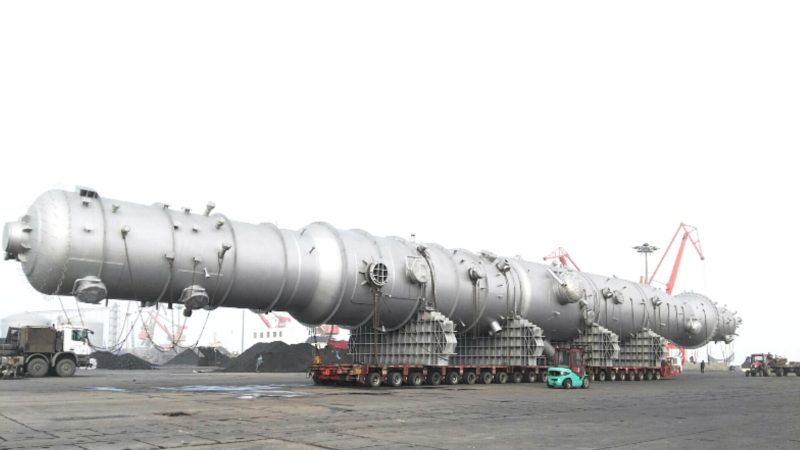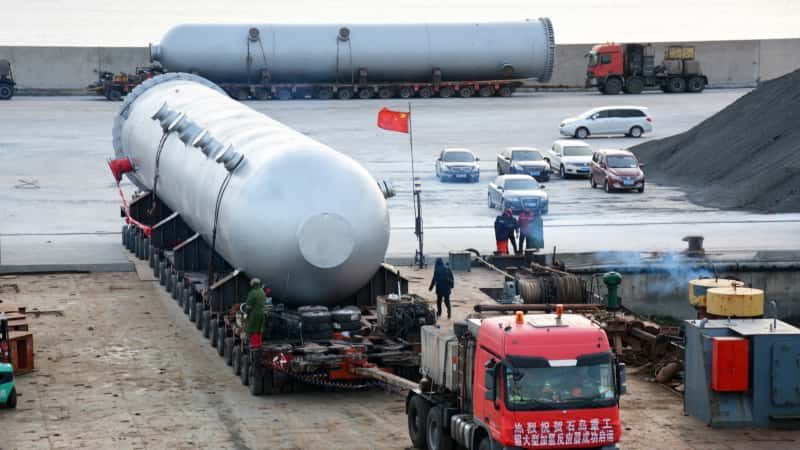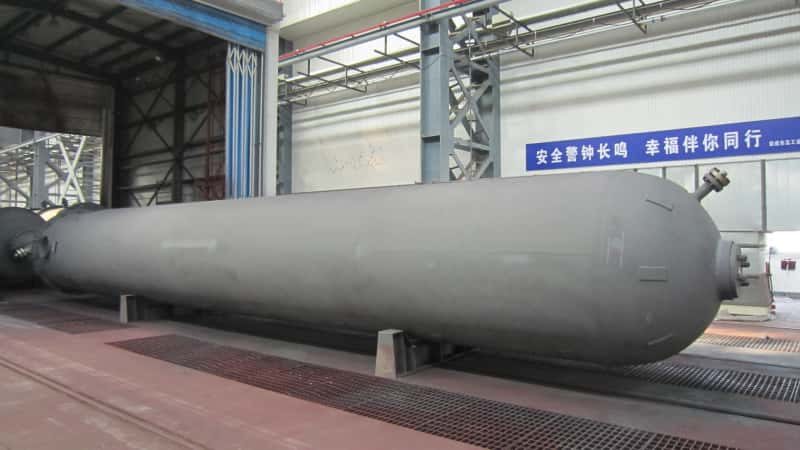

An industrial pressure vessel can pass its mechanical inspections and pressure test, arrive with a complete fabrication data book, and still leave an important acceptance question unanswered: is the equipment demonstrably clean for its intended oxygen service—and has that condition been preserved through delivery?
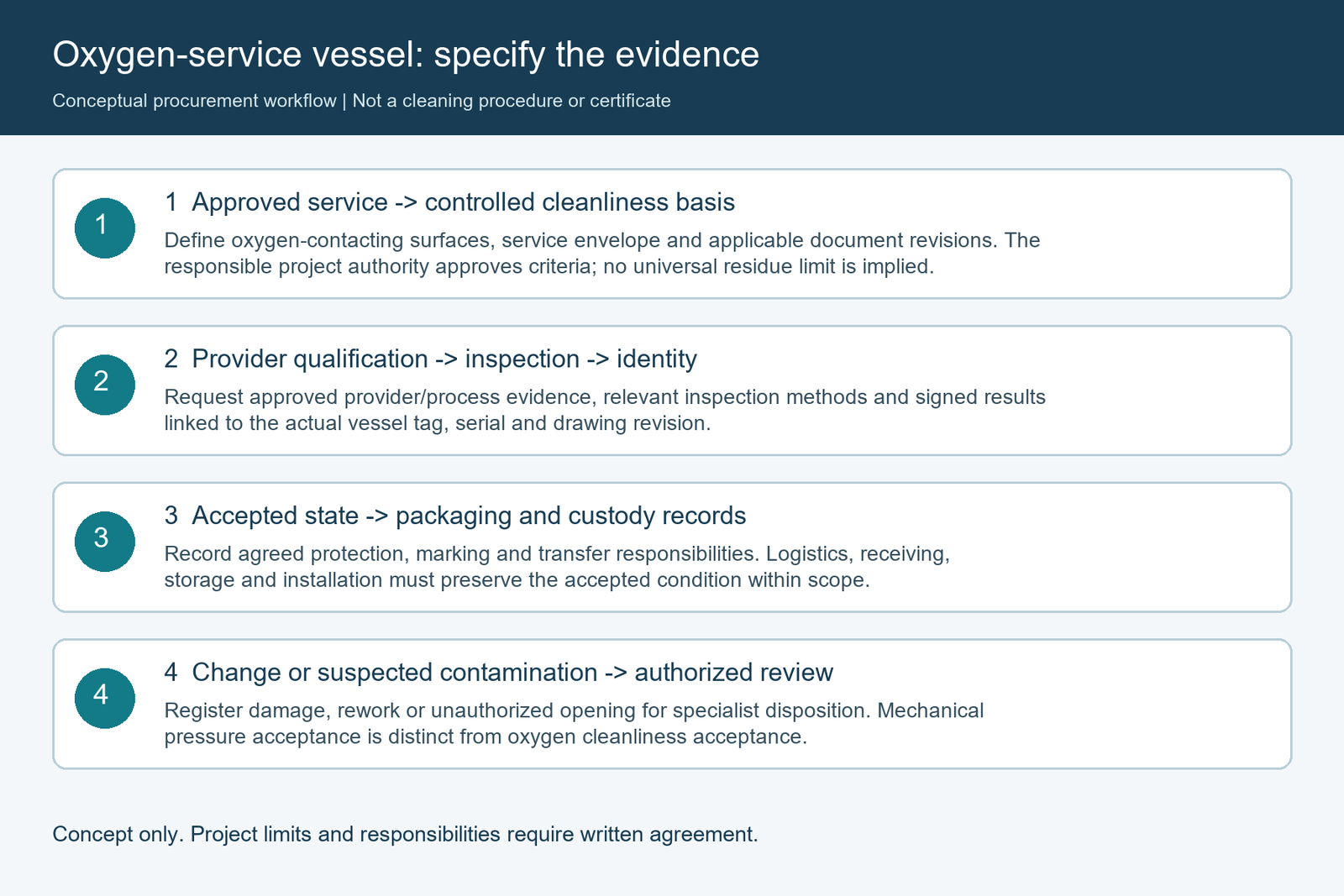
For EPC teams procuring large oxygen-service vessels, a note reading “oxygen cleaned” is not a complete specification. The buyer needs an agreed cleanliness basis, evidence linked to the actual vessel, a verification and sign-off plan, and defined responsibilities after cleaning. These requirements matter for oxygen storage and other complete industrial oxygen-contacting vessels; the precise requirements depend on the approved service and project.
Procurement takeaway: Specify what must be clean, to which approved criteria, by whom and how it will be verified. Then specify how the accepted condition is protected, documented and handed over from the cleaning provider through packing, transport, site storage and final installation. Mechanical pressure-boundary acceptance and oxygen-cleanliness acceptance are related project records, but they answer different questions.
Why Is Oxygen-Service Cleanliness a Separate Purchase Requirement?
Oxygen is not itself a fuel, but oxygen-enriched environments can support more intense combustion. Oils, greases, debris and other contaminants on oxygen-wetted surfaces can create ignition hazards. The ASTM International description of ASTM G93/G93M-25 identifies contamination control as a fundamental oxygen-system fire-safety measure and distinguishes selecting a cleanliness level from choosing and verifying an appropriate cleaning process.
A vessel’s design, materials, fabrication and inspection also require their own reviews. The following do not, by themselves, demonstrate oxygen-service cleanliness:
- A nameplate or pressure-design code reference.
- A hydrostatic or other pressure-test report.
- Successful welding, NDE or dimensional inspection.
- Stainless-steel construction, pickling or passivation alone.
- A clean-looking exterior, a generic photograph or an unsigned supplier declaration.
A pressure test addresses the specified mechanical test objective; it does not establish the residual contamination condition of internal oxygen-contacting surfaces. Conversely, an accepted cleaning record does not establish the vessel’s suitability for all pressure, temperature, oxygen-compatibility, system-design or operating hazards. The project must assess those subjects through their respective qualified disciplines.
For orientation, the site’s published high-pressure liquid oxygen storage tank project shows an example of its industrial equipment category. That project summary is not an approved cleaning procedure, project-specific acceptance certificate, independent qualification of a cleaning service or proof that identical requirements apply to a different vessel.
Which Oxygen Service and Cleanliness Basis Should the RFQ Establish?
Begin with the actual duty, rather than copying the phrase oxygen clean from a previous purchase order. The owner or responsible process/safety design authority should approve the oxygen service definition and decide which equipment surfaces and interfaces require a specified cleanliness condition.
Establish the service and equipment boundary
Identify at least the following where applicable:
- Oxygen phase and service description: gaseous oxygen, liquid oxygen or another approved oxygen-containing environment; normal and relevant design conditions supplied by the process authority.
- Vessel identification: equipment tag, description, controlled drawings, interfaces and proposed manufacturing scope.
- Oxygen-contacting boundaries: vessel interior and nozzles, integrated internals, supplied closures and other items within the complete contracted equipment, as identified on approved drawings.
- Non-contact surfaces and temporary items: which surfaces have different treatment or protection requirements, and which temporary items must be removed or controlled before acceptance.
- Location and timing of cleaning relative to fabrication, mechanical inspection, any subsequent work and final closure.
- Applicable local regulations, pressure-equipment requirements, owner specifications and any cleaning guidance explicitly incorporated in the contract.
It is not safe to infer that the same cleaning requirements apply to every type of oxygen vessel merely because both handle oxygen. The project team must decide the intended service envelope and the required evidence.
State the controlled document and revision—not just an acronym
Two useful primary references are:
- EIGA Doc 33/18, Cleaning of Equipment for Oxygen Service: industry guidance covering cleaning, inspection, packaging, handling, quality assurance and record keeping. EIGA’s publication directory lists the 2018 document. Its use is not automatically a statutory obligation in every jurisdiction.
- ASTM G93/G93M-25: the ASTM guide on cleanliness levels and cleaning methods for oxygen-enriched environments. ASTM states that the guide assists qualified personnel in specifying requirements; it does not prescribe one cleanliness level for every industry and application.
The project may reference either document, another approved standard, an owner-specific specification, or a combination. The contract-approved revision and precedence control the order, not whichever standard appears newest on a website. If multiple specifications are cited, require a documented resolution of differences rather than letting bidders select the least demanding interpretation.
Do not insert a universal residue value into an RFQ. The required contamination limits, inspection coverage and acceptance criteria must come from the approved project specification and technical authority. This guide intentionally does not supply cleaning recipes, operating procedures or generic numerical thresholds.
Minimum project specification register
| Required field | What EPC/owner should define | Evidence required from the bidder |
|---|---|---|
| Service identification | Oxygen phase, duty, controlled operating/design basis | Acknowledged service basis with revision |
| Equipment boundary | Tag and approved oxygen-wetted surface/assembly scope | Marked-up boundary drawing and exclusions |
| Cleanliness requirement | Applicable document, edition, project amendments and acceptance criteria | Compliance matrix and deviation list |
| Method qualification | Required provider competence, method qualification and change control | Qualification evidence and proposed controlled procedure reference |
| Inspection plan | Methods, coverage, inaccessible areas, witness/hold points and acceptance authority | Project-specific inspection and test plan (ITP) |
| Final document package | Records, identifiers, signatures, language and handover format | Document register with controlled revisions |
| Preservation handover | Closing, labeling, shipment and site custody requirements | Preservation plan, evidence and custody transfer points |
Editorial procurement template. All values and roles are to be filled from the actual contract; it is not a mandatory industry datasheet.
What Evidence Demonstrates More Than a Generic “Oxygen Cleaned” Statement?
The evidence should connect qualification of the process, inspection of the resulting condition and identity of the delivered vessel. A certificate with no test basis or equipment reference is a weak handover record, even if it carries an official-looking signature.
1. Qualified provider and approved process basis
Ask who is responsible for cleaning: the vessel fabricator, an approved specialist subcontractor, or another provider assigned by contract. EIGA Doc 33/18, Section 12, discusses qualification of the provider and personnel, the specification, inspection capability, packaging and documentation.
For a bid comparison, request a controlled statement of:
- Proposed cleaning service provider and work location, and whether subcontracting is included.
- Applicable cleaning specification, method/procedure reference and revision, without requiring proprietary method details in a public RFQ article.
- Evidence of competence or qualification as required by the project, including who reviews and approves it.
- Required witness or hold points and arrangements for areas inaccessible after final assembly.
- Change-control responsibility if the approved method, inspection method, work location or subcontractor changes.
A manufacturer’s general pressure-vessel credentials do not prove a separate, project-specific oxygen-cleaning qualification. The provider’s actual capability and approved scope must be checked before award.
2. Defined inspection method and acceptance result
EIGA Doc 33/18, Section 8, describes categories of inspection including white-light visual inspection, ultraviolet observation and other residue-evaluation methods. It notes that a combination of methods may be necessary, and that areas inaccessible after assembly may need acceptance evidence before closure. The selection belongs to the qualified provider and project approving authority.
| Acceptance question | Evidence category to request | What it does not prove automatically |
|---|---|---|
| Are accessible surfaces visibly free of unacceptable contamination? | Signed visual inspection record with defined area and acceptance basis | Absence of all contamination that cannot be seen |
| Is an agreed residual-contaminant criterion satisfied? | Approved method and recorded result, units/basis and representative area where relevant | Validity for every unexamined surface or contaminant type |
| Were concealed or difficult-to-access surfaces evaluated? | Pre-closure inspection/witness records or approved alternative coverage | That an inspection through one nozzle covered the entire assembly |
| Did a changed or repaired area remain acceptable? | Documented reassessment and repeat acceptance as required | Continued validity of the original record without review |
| Is the delivered item the tested item? | Cross-reference to equipment tag, drawing/revision and manufacturing identity | Correctness of a certificate unlinked to the vessel |
Do not write “UV passed, therefore oxygen clean” as an automatic conclusion. As EIGA explains, not all contaminants fluoresce; each method has a defined capability and limitations. Actual inspection criteria should be selected for the expected contaminants, accessible geometry and project specification.
3. Signed, traceable records
EIGA Doc 33/18, Section 12.1, lists record fields such as equipment identity, serial/drawing number, cleaning specification and method, inspection dates, methods, results and inspector signature. Turn those categories into a project-controlled register rather than treating one unsigned line in the general data book as conclusive evidence.
Suggested cleaned-equipment identity record:
| Field | Project value / evidence reference |
|---|---|
| Project / PO / equipment tag | To be confirmed |
| Vessel name and unique manufacturing/serial identification | To be confirmed |
| Oxygen-contacting area or approved assembly boundary | To be confirmed |
| Applicable cleaning specification and revision | To be confirmed |
| Approved procedure reference and provider identity | To be confirmed |
| Cleaning completion date and controlled work record | To be confirmed |
| Inspection method, surface/assembly coverage and result | To be confirmed |
| Inspection date, inspector signature and required witness approval | To be confirmed |
| Final drawing/as-built revision and outstanding deviations | To be confirmed |
| Preservation/closure record and transfer-of-custody reference | To be confirmed |
Illustrative blank fields only: no sample tag, certificate number, date or result represents an actual manufactured vessel.
Document control should flag inconsistent identification, conflicting revisions and missing signatures before shipping release. Where the owner requires formal cleanliness certification, the certificate should refer to the relevant approved specification and supporting records; its exact format and contractual authority must be agreed.
How Can Cleanliness Be Preserved After Factory Acceptance?
Cleanliness is not a permanent property conferred by the original inspection. A valid factory record describes a condition at a defined time. Later fabrication work, opening, handling, unsuitable packing, transport damage or exposure during site storage may change that condition.
EIGA Doc 33/18, Sections 10–12, specifically addresses packaging, labels and records as part of keeping cleaned equipment clean until it enters service. ASTM G93/G93M-25 likewise identifies preservation through handling, packaging and assembly as part of cleanliness management.
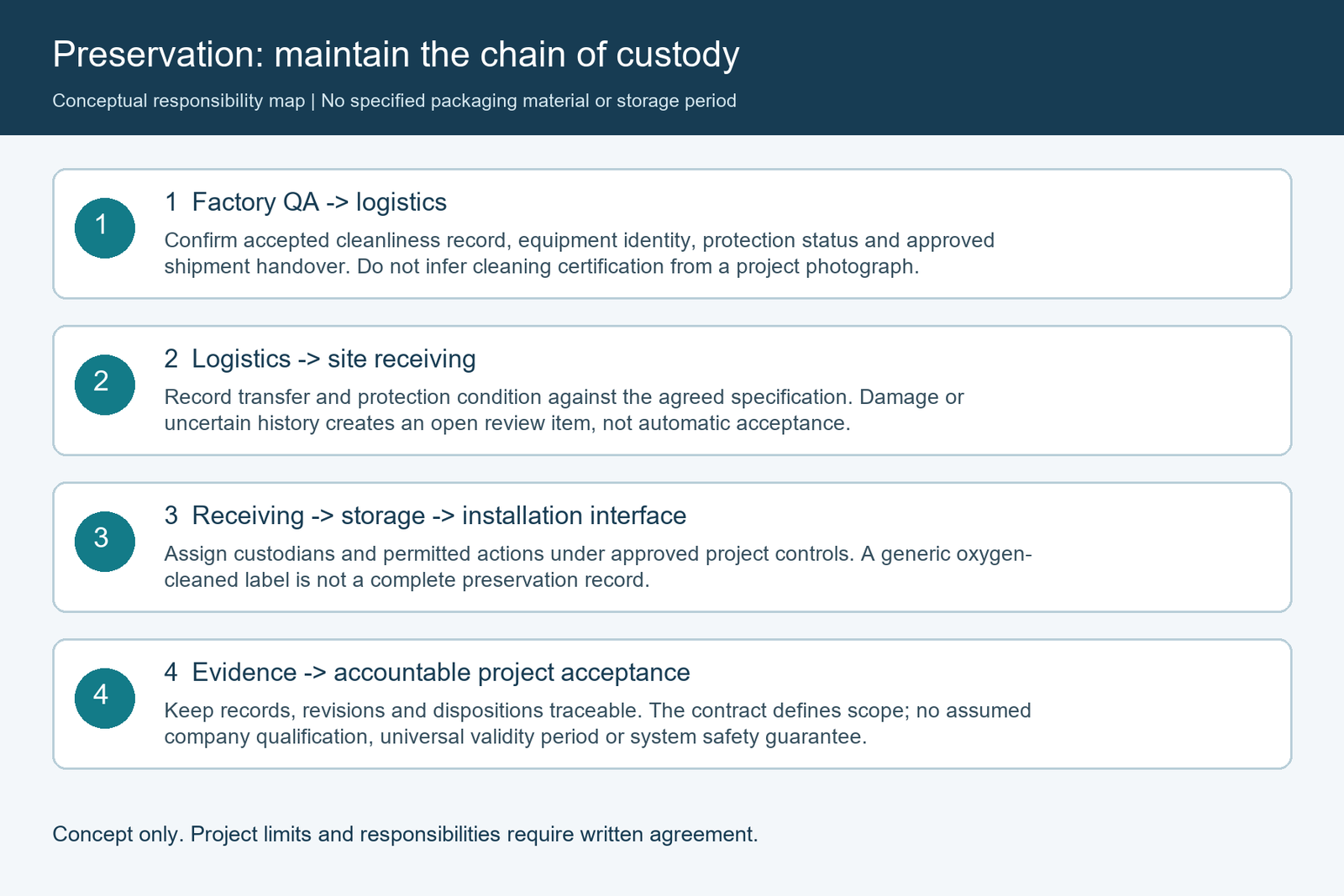
Define preservation as a chain of custody
For each transfer point, the project should record what condition is being transferred, how it is protected, what will be inspected, who receives it, and who can authorize a release or corrective action.
| Handover stage | Required project evidence | Responsible-party question |
|---|---|---|
| After final cleanliness acceptance | Signed clean-condition record, identified boundary, outstanding NCR status | Who authorizes final closure and packaging? |
| Packaging and factory dispatch | Approved closure/packing plan, identification labels, photographs or checks if required | Who confirms each specified opening and interface is protected? |
| Transport and external handling | Agreed transport-preservation conditions, custody documents and incident reporting | Who reports package damage or unauthorized access? |
| Receiving at project site | Receiving inspection record, intact/seal/marking status and mismatch log | Who accepts custody and preserves the existing condition? |
| Storage before installation | Agreed storage conditions, periodic review points and changes in storage duration | Who maintains protection and records any deterioration? |
| Installation / connection interface | Authorized clean-area/connection responsibilities and inspection/release records | Who controls exposure after opening or connection work? |
| Final project acceptance | Consolidated evidence of factory cleanliness plus subsequent preservation and deviations | Which qualified authority approves the condition for the next project stage? |
The allocation above is a recommended project responsibility framework, not a representation of what any particular supplier automatically includes.
What should buyers require from the packing specification?
The RFQ should call for an approved protection and labeling plan suitable for the vessel’s geometry, shipping route and storage conditions. At a minimum, buyers should ask bidders to document:
- Which openings, internal assemblies and interfaces are within the preservation boundary.
- The approved general type of closures or packaging and its compatibility with the required cleanliness condition.
- How packaging and markings distinguish oxygen-cleaned items from equipment not yet accepted.
- What information appears on external labels and in the dispatch record.
- How potentially contamination-causing handling, repacking or unplanned access is documented and reviewed.
- Whether site storage beyond the planned period triggers review under the agreed preservation plan.
This is a documentation and responsibility checklist, not packaging or field-opening instructions. If a vessel is preserved under a special internal atmosphere, the responsible engineering and safety teams must establish the approved specification, hazards, marking, custody and handling requirements. The buyer should not assume an inert-gas or atmospheric approach is universally suitable.
What happens when shipping protection is damaged?
An apparently intact vessel does not automatically retain its documented cleanliness if a package or closure has been damaged or opened. EIGA identifies damaged or opened packages and illegible labels as conditions requiring review of cleanliness, with further cleaning where required.
The contract should therefore establish a hold-and-review route, not an informal assumption that a factory certificate remains valid forever. The receiving team records the event; designated technical and QA authorities determine whether inspection, additional evidence or requalification is required; and release occurs only under the agreed project procedure. This article does not prescribe actions for opening, cleaning or putting oxygen equipment into service.
Which Acceptance Gates Should Appear in the ITP and Contract?
An inspection and test plan (ITP) is most useful when it identifies decisions that must be closed before the next project stage, rather than simply listing every available document.
| Gate | Question to close | Minimum documentary outcome | Potential owner/approver* |
|---|---|---|---|
| G1 — Design/RFQ approval | Is the service boundary and applicable cleanliness basis approved? | Controlled service/cleanliness specification and boundary drawing | Owner/EPC process and safety authority |
| G2 — Provider qualification | Are the cleaning and inspection responsibilities and qualifications accepted? | Qualified provider, method references, ITP and exceptions | Manufacturer QA, specialist and buyer QA |
| G3 — Pre-closure inspection | Are areas that will become inaccessible covered? | Accepted pre-closure inspection/witness record | Supplier QA and agreed witness |
| G4 — Final cleanliness acceptance | Are the approved criteria met on the identified vessel? | Signed results, identity link and closed deviations | Qualified inspection and contract approver |
| G5 — Dispatch | Is accepted cleanliness protected and traceable? | Packaging/labeling and release records | Supplier QA and logistics per contract |
| G6 — Site receipt/storage | Has custody transferred without unresolved preservation concerns? | Receiving report, storage plan and discrepancy log | EPC/owner site QA and custodian |
| G7 — Pre-use project handover | Is downstream work or exposure reconciled with the accepted condition? | Approved final evidence package and outstanding-item disposition | Owner/installer and designated safety authority |
Proposed roles, subject to project contract, regulation and local practice. No gate automatically proves entire-system oxygen safety or authorizes operation.
Mechanical and cleanliness records should stay distinct—but linked
The general manufacturing data book for a large pressure vessel may include material traceability, welding qualifications, NDE results and pressure-test records. Those remain essential. The oxygen-cleanliness file adds a service-specific layer, addressing the internal acceptance condition and preservation evidence that generic vessel documents do not prove.
For the broader pre-shipment document review, see the site’s pressure vessel shipment document guide. The oxygen-service checklist here intentionally does not reproduce its customs, packing-list or general manufacturing-document categories.
What Should Buyers Do About Rework, Design Changes or Suspected Recontamination?
A clean-condition record may become incomplete if the equipment boundary changes after approval. A post-cleaning modification, repaired nozzle, replaced integrated item or additional site work can create a new cleanliness exposure. The project should define how those changes are raised and reviewed, including whether previous inspection evidence still covers the affected scope.
A defensible deviation record should contain:
- The unique vessel tag, drawing revision and affected surface or assembly.
- The event and date: discrepancy, modification, package damage, suspected recontamination or scope change.
- The previously applicable approved cleanliness and preservation basis.
- The responsible technical authority’s evaluation and required reinspection/requalification decision, without assuming a universal remedy.
- The documented outcome, signed closure and authorization to proceed to the next stage.
The buyer should not accept blanket wording such as “cleanliness remains valid after all site work”. Nor should a workshop fabricator be assumed to have authority to waive an owner’s oxygen-system safety requirements. Assign the actual decision rights in the contract.
How Should an EPC Buyer Compare Two Oxygen-Service Vessel Quotations?
Two quotations can list the same steel grade and fabrication scope but differ materially in their oxygen-cleaning and preservation deliverables. Evaluate against a single, approved compliance matrix.
| Bid-comparison point | Evidence needed for a comparable offer | Clarification if absent |
|---|---|---|
| Cleanliness basis | Contract document and revision; applicable surface boundaries | What did the bidder assume instead of the project requirement? |
| Service-specific qualifications | Actual provider and approved qualification evidence | Who performs and certifies cleaning; is subcontracting included? |
| Access and inspection | Defined inspection coverage and pre-closure records | Which zones remain inaccessible or excluded? |
| Acceptance criteria | Named inspection methods, controlled results and sign-off | Are criteria simply claimed without a measurement/verification plan? |
| Traceability | Unique tag/serial/drawing references on all records | Are the certificates linked to the delivered vessel? |
| Preservation | Closure, labeling, dispatch and site-storage interfaces | Does the offer stop at factory inspection? |
| Site continuation | Responsibility after delivery and after connection/rework | Who evaluates possible recontamination? |
| Commercial scope | Included/excluded cleaning, testing, witness, records and preservation activities | Are apparent price differences driven by missing activities? |
If a supplier proposes a different qualification or inspection route, require a formal technical deviation supported by the responsible specialists. Do not treat a cheaper quotation as equivalent simply because both offers state “oxygen cleaned.”
Example RFQ clarification language
For the complete oxygen-service pressure vessel identified in the project datasheet, the bidder shall confirm the contract-specified oxygen-contacting boundaries, cleaning document and revision, approved qualification and inspection responsibilities, acceptance record format, pre-closure verification, labeling and preservation requirements, and custody transfer points. The technical bid shall identify included activities, exclusions, proposed alternatives, required owner approvals and unresolved data. Acceptance is subject to the approved project specifications and applicable requirements.
Editorial example for specialist and legal review; not a complete code requirement, cleaning procedure or performance guarantee.
Frequently Asked Questions
Does a pressure test establish oxygen-service cleanliness?
No. It can provide evidence for the mechanical test objective specified by the pressure-equipment design requirements. It does not, on its own, show that oxygen-wetted internal surfaces meet a selected cleanliness specification. The project needs separate, traceable cleanliness acceptance records. If testing or other work occurs after cleaning, the responsible authority must assess whether the documented clean condition is preserved.
Can a vessel pass a visual inspection and still need more cleanliness evidence?
Yes. Visual inspection has limitations and does not necessarily detect every residual substance or inaccessible area. The approved project plan should identify the expected contaminants, suitable inspection methods, acceptance criteria and required coverage. The presence or absence of a particular test is not universally decisive outside that context.
Who owns preservation after cleanliness acceptance?
The party identified in the purchase order, shipping and site-handover arrangements. The vessel manufacturer may control factory closure and dispatch, while logistics and the site custodian may assume later responsibilities; the allocation is not automatic. It should identify condition at transfer, required records, response to damaged protection and final approval authority.
Is stainless-steel pickling or passivation equivalent to oxygen cleaning?
No. These are different surface-treatment and cleanliness questions. Fabrication-related oxide removal or passivation may be relevant to the material specification, but it does not automatically demonstrate that oxygen-contacting surfaces satisfy an approved oxygen cleanliness requirement. The required evaluation is service-specific.
Does a published liquid-oxygen vessel project prove a supplier’s cleaning certification?
No. A public project description can illustrate that the business markets or manufactures the stated equipment type. It cannot replace the project-specific cleaning specification, provider qualification, inspection reports and signed acceptance records needed for a particular order.
Preparing a Complete Industrial Oxygen Vessel RFQ
Before asking suppliers for a comparable quotation, provide the approved equipment datasheet, oxygen service and contact-boundary definition, cleanliness document and edition, inspection and verification requirements, expected preservation duration/conditions, and the contractual split between fabrication, cleaning, delivery and site responsibilities.
The site’s industrial pressure-vessel product range can help frame the complete equipment inquiry. Any cleaning-service qualification, specialist testing, performance commitment or final system safety obligation must be checked separately and stated explicitly in the supplier’s confirmed scope.
The essential buyer question is not simply “Was this vessel cleaned?” It is “Which vessel, to which approved requirements, with what verified results—and who is responsible for maintaining that condition until handover?”
References
- European Industrial Gases Association (EIGA) — Doc 33/18: Cleaning of Equipment for Oxygen Service. Particularly Sections 8 (inspection), 10 (packaging/maintaining cleanliness), 11 (labeling) and 12 (quality assurance and records). Industry guidance; applicability must be confirmed for the project.
- ASTM International — ASTM G93/G93M-25: Standard Guide for Cleanliness Levels and Cleaning Methods for Materials and Equipment Used in Oxygen-Enriched Environments. Official catalogue summary supports the rationale, project-selected cleanliness levels, verification and preservation. The complete standard is subject to its publisher’s access terms.
- EIGA — Official publication directory. Used to confirm the displayed Doc 33/18 reference on the association’s website; not independent evidence that every project must adopt it.