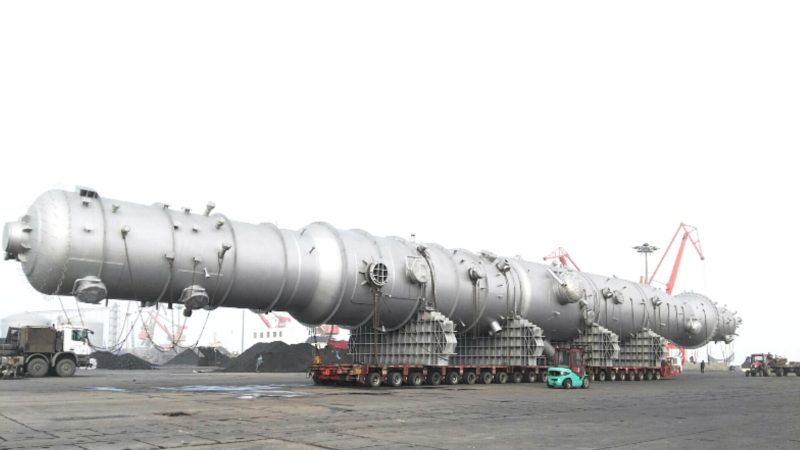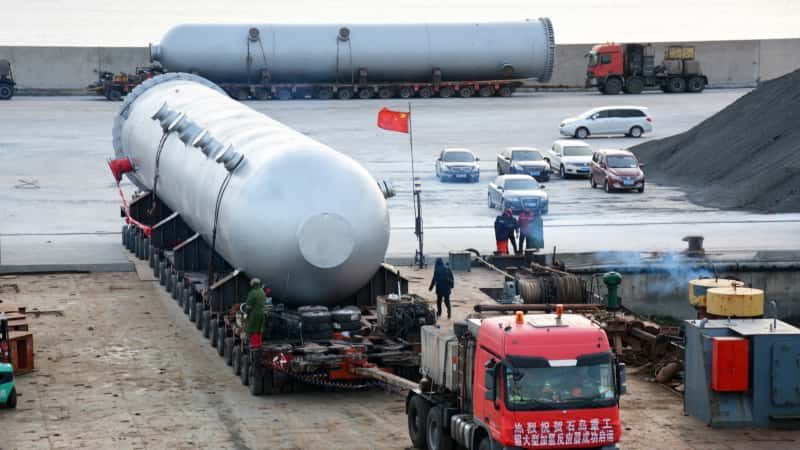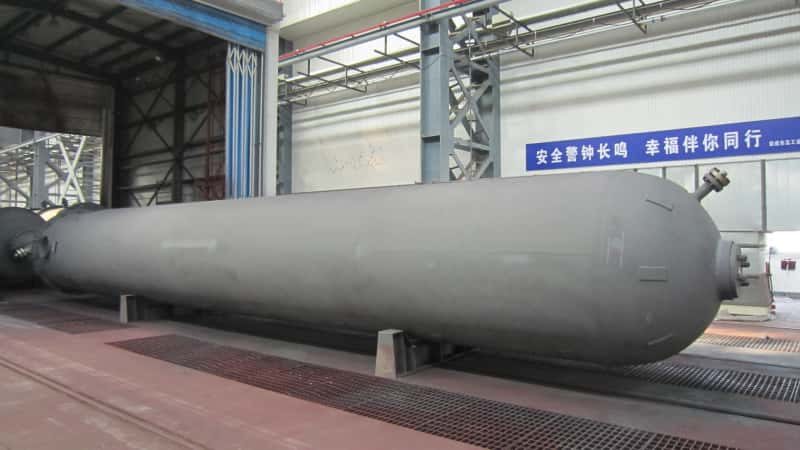

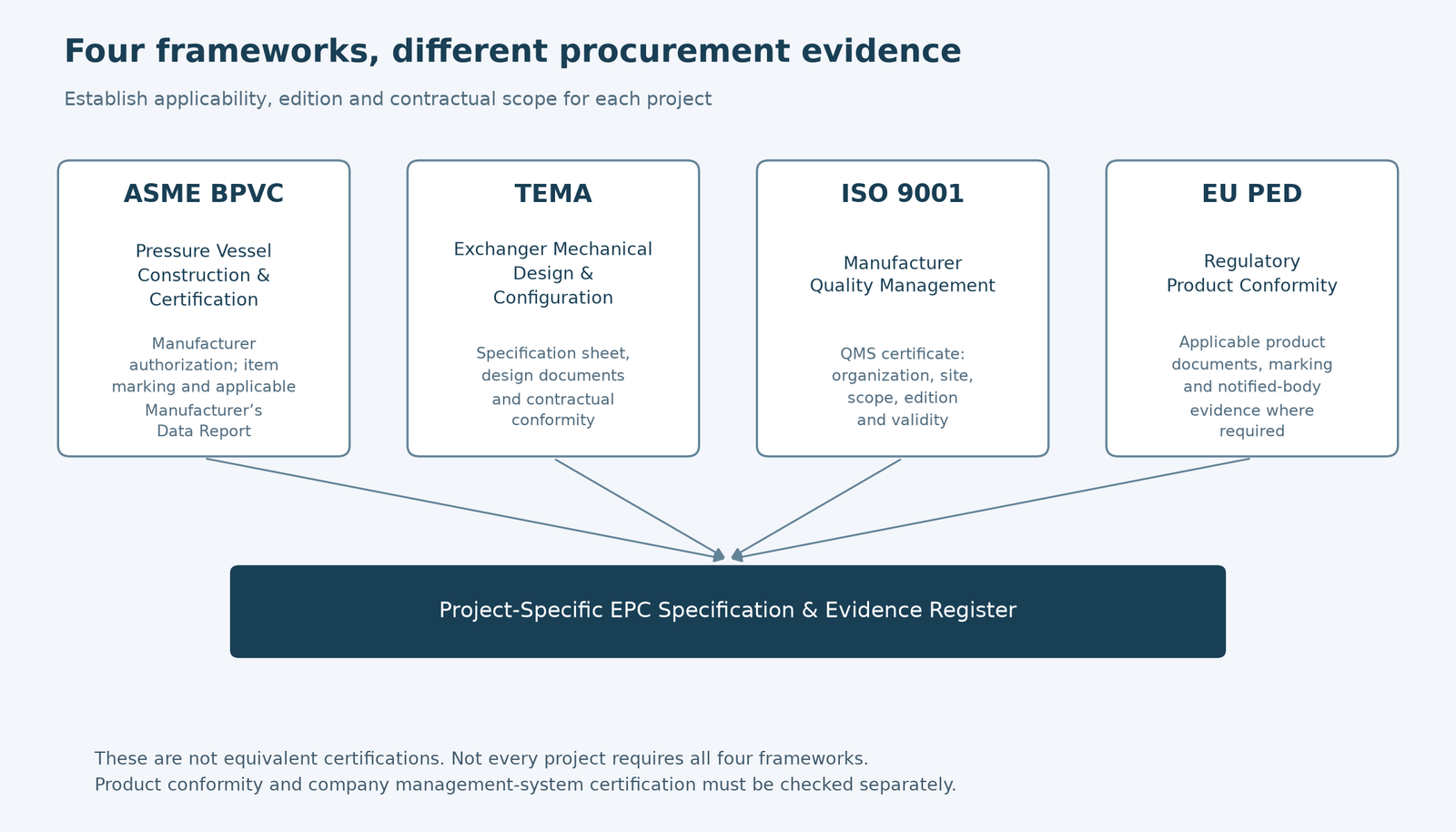
ASME, TEMA, ISO 9001 and the European Pressure Equipment Directive (PED) are frequently listed together in industrial shell-and-tube heat exchanger specifications. However, they do not represent the same type of requirement or provide the same evidence of conformity.
EPC buyers should distinguish pressure-vessel construction requirements, exchanger-specific mechanical standards, manufacturer quality-management certification, and legally required pressure-equipment conformity assessment. The applicable combination depends on the installation market, equipment design, pressure conditions, contractual specifications and the editions adopted by the project.
A manufacturer holding an ASME Certificate of Authorization does not automatically mean that every exchanger it produces is ASME-stamped. A TEMA exchanger designation does not prove regulatory approval. ISO 9001 certification covers a manufacturer’s quality-management system, not a specific pressure vessel. And compliance with ASME or TEMA alone does not automatically establish conformity with EU PED requirements.
This guide explains what each framework addresses, how the 2026 TEMA and ISO 9001 revisions affect procurement, and which supporting documents buyers should request before placing an order for a complete industrial heat exchanger.
Which Standards and Certifications Apply to a Shell-and-Tube Heat Exchanger?
The first step is to identify the type of requirement rather than treating every name on a vendor datasheet as a product certification.
Compare the Purpose of Each Framework
| Framework | Primary function | What buyers should specify | Evidence to review |
|---|---|---|---|
| ASME BPVC Section VIII | Pressure-vessel construction rules for applicable equipment | Governing division, edition, certification requirements and construction scope | Relevant manufacturer authorization; applicable equipment marking and Manufacturer’s Data Report |
| TEMA Standards | Exchanger-specific mechanical design and construction practices | Edition, applicable class, configuration and project deviations | Design documents, specification sheet and contractual statement of conformity |
| ISO 9001 | Requirements for an organization’s quality-management system | Required certification edition, validity and relevant manufacturing scope | Certificate from an appropriate certification body, including covered site and scope |
| EU PED 2014/68/EU | Legal framework for pressure equipment within its scope | Applicability, classification, conformity assessment route and required deliverables | Applicable EU Declaration of Conformity, CE marking, technical documentation and notified-body evidence where required |
The appropriate evidence depends on the actual equipment, project jurisdiction and contractual scope. This is a procurement comparison, not a declaration that all four frameworks are mandatory in every project.
ASME and TEMA are not interchangeable. ASME BPVC Section VIII establishes construction requirements for pressure vessels within its scope, while TEMA addresses additional engineering and construction considerations specific to tubular heat exchangers.
ISO 9001 addresses the organization. Certification demonstrates that the specified quality-management system has been assessed against the referenced ISO 9001 edition. It does not independently approve the mechanical design of an exchanger.
PED addresses EU regulatory conformity. Where PED applies, the appropriate conformity assessment must be completed under the directive, regardless of whether the equipment was designed using ASME or TEMA as part of its engineering basis.
Establish the Destination and Supply Boundary
An EPC should confirm:
- The country and jurisdiction where the equipment will be placed on the market and installed.
- The applicable local pressure-equipment and operating requirements.
- Whether the exchanger is supplied as one item of pressure equipment or within a larger assembly.
- The governing pressure-vessel construction code and edition.
- The shell-side and tube-side fluids, pressures and temperatures.
- The relevant size, volume and other classification parameters.
- The required TEMA class and mechanical configuration.
- The certification, inspection and documentation required by the project.
- The parties responsible for design approval, conformity assessment, manufacture and installation interfaces.
The same manufacturer’s product may require different compliance documentation for different destination markets or contractual arrangements.
A claim such as “internationally certified” is therefore insufficient without identifying the actual certificate, covered equipment or organization, scope, edition and validity.
What Does ASME Certification Prove for an Industrial Heat Exchanger?
ASME Boiler and Pressure Vessel Code (BPVC) Section VIII is a commonly specified construction framework for pressure-retaining equipment, including shell-and-tube exchangers where the relevant provisions apply.
The appropriate division and edition must be determined for the equipment and project.
Distinguish the Code From the Manufacturer’s Authorization
The ASME Boiler and Pressure Vessel Certification Program covers manufacturers’ quality-control systems and authorization to construct and mark products in accordance with applicable BPVC requirements.
For pressure vessels, the certification program identifies, among others:
- U: Pressure vessels under Section VIII, Division 1.
- U2: Pressure vessels under Section VIII, Division 2.
- U3: High-pressure vessels under Section VIII, Division 3.
These designations correspond to different certification scopes. They should not be treated as interchangeable marks or as an automatic ranking of equipment quality.
The purchaser should confirm that the proposed manufacturer holds the relevant authorization and that the intended item and scope of construction fall within the proposed certification arrangement.
Manufacturer Certification Is Not the Same as Equipment Certification Evidence
Three different pieces of evidence should be reviewed:
| Evidence | What it indicates | What it does not establish alone |
|---|---|---|
| Manufacturer’s ASME Certificate of Authorization | The organization is authorized within a defined ASME certification scope | That a specific quoted exchanger has been completed and appropriately marked |
| ASME Certification Mark and applicable designator on the equipment | The particular item has been marked under the applicable certification arrangement | That every external piping system or market-specific requirement has been approved |
| Applicable Manufacturer’s Data Report | Documents construction information and required certification particulars for the item | That all process performance and site requirements have been independently guaranteed |
For example, where a Section VIII, Division 1 exchanger is to be supplied as a U-stamped pressure vessel, the buyer should require the appropriate marking and Manufacturer’s Data Report as part of the agreed final documentation.
The exact report form and documentation must match the equipment and code requirements. Buyers should not universally prescribe one form for all ASME divisions or arrangements.
The official ASME certification resources provide information on certificate scopes, certification marks and Data Report Forms.
Does an ASME Stamp Guarantee Thermal Performance?
No.
ASME pressure-vessel certification addresses the applicable construction and certification requirements. It does not, by itself, guarantee that the exchanger will achieve a specified heat duty, outlet temperature, fouling allowance or pressure drop at the intended process conditions.
Those are separate thermal-hydraulic and contractual matters.
An exchanger can require both a compliant pressure boundary and a suitable thermal design. Neither requirement should be substituted for the other.
Likewise, an ASME mark is not a universal legal passport for every destination market. Local requirements and separate regulatory conformity processes must still be checked.
What Do the TEMA Standards Cover, and Which Edition Applies in 2026?
The Tubular Exchanger Manufacturers Association (TEMA) publishes technical standards specifically for shell-and-tube heat exchangers.
TEMA guidance addresses exchanger configurations and mechanical-design considerations relevant to construction, inspection, serviceability and maintenance.
A specification stating “TEMA compliant” should identify the edition, applicable class and any deviations.
Confirm the TEMA 2026 Edition
According to the official TEMA Standards Support Page, the TEMA 2026 Edition was issued on August 1, 2026 and became effective immediately.
TEMA also states that the Eleventh Edition, published July 1, 2024, remains considered current for work in process during a six-month grace period.
This is a TEMA publication and transition arrangement. It does not automatically override a signed project contract or determine how every purchaser must handle an existing order.
The buyer should therefore document whether the contract requires:
- TEMA 2026 Edition.
- The 2024 Eleventh Edition under the applicable in-process arrangement.
- A different expressly agreed edition, subject to technical and contractual acceptance.
TEMA explicitly states that the 2026 Edition is not called the Twelfth Edition. Its new publication approach uses years rather than continuing sequential edition numbers.
What Changed in the TEMA 2026 Edition?
TEMA’s official 2026 Standards announcement identifies a number of additions and updates, including:
- New mechanical-design rules related to selected pass partitions, retaining rods, supports and kettle-type shells.
- An appendix addressing rod baffles.
- An updated heat exchanger specification sheet.
- Revised SI-unit guidance.
- Corrections to reference-table values.
These publicly announced changes do not establish how every individual exchanger design is affected.
The responsible engineer should review the purchased standard edition and identify which changes apply to the selected exchanger construction. This article does not reproduce proprietary technical rules.
TEMA Classes Are Not Government Licenses
TEMA exchanger specifications distinguish three service classes:
| TEMA class | General application description |
|---|---|
| R | Severe petroleum and related processing applications |
| B | Chemical process service |
| C | Commercial and general process applications |
The appropriate class should be selected from the equipment’s service and contractual engineering requirements.
A class designation does not, by itself, confirm that the exchanger has passed ASME certification, PED conformity assessment or a thermal performance test.
It also does not guarantee suitability for every service within the broad application category.
TEMA Configuration Codes Identify Construction Arrangements
Common three-letter TEMA designations describe the front-end head, shell and rear-end head configuration.
For example:
- BEM identifies a bonnet-type front head, an E-type shell and a fixed-tubesheet rear arrangement.
- BEU identifies a bonnet-type front head, an E-type shell and a U-tube bundle arrangement.
- AES identifies an A-type channel, an E-type shell and an S-type floating-head arrangement.
These are configuration identifiers, not certification marks.
They help clarify construction and maintenance characteristics, but they do not independently establish pressure-code compliance or market approval.
TEMA provides public nomenclature charts and specification-sheet resources to support consistent communication between purchasers and manufacturers.
What Does ISO 9001 Certification Mean for a Heat Exchanger Manufacturer?
ISO 9001 is an international quality-management system standard.
It helps an organization establish and control processes for consistently meeting applicable requirements and improving its management system.
ISO 9001 certification is therefore relevant to supplier qualification, but it is not a product design code or a substitute for pressure-equipment conformity assessment.
ISO 9001:2026 Has Been Published
ISO officially published ISO 9001:2026 on September 16, 2026, replacing ISO 9001:2015 as the current edition of the standard.
The ISO 9001 official standard page identifies the 2026 edition and describes updates to quality-management requirements.
Publication of a new standard edition does not mean every existing ISO 9001:2015 certificate immediately becomes invalid.
The Global ACI transition announcement establishes a transition period for the relevant accredited certification framework, including a September 30, 2029 deadline for organizations already certified to ISO 9001:2015.
Buyers should check the certificate’s status, edition, covered legal entity, manufacturing site, scope and certification body rather than rejecting a certificate solely because it references the previous edition during the approved transition period.
What Should EPC Buyers Check on an ISO 9001 Certificate?
A practical supplier review should confirm:
- The name of the certified organization.
- The manufacturing site or locations within the certificate scope.
- The stated activities, such as relevant design or manufacturing operations.
- The standard edition.
- The certificate’s issue, expiry and current status.
- The issuing certification body and relevant accreditation information.
- Whether the certificate actually covers the company that will manufacture the exchanger.
ISO explicitly states that it does not itself issue ISO 9001 certificates. Certification is performed by external certification bodies.
A certificate from one group company or plant should not automatically be presented as certification of every related entity or manufacturing facility.
Does ISO 9001 Replace ASME or PED?
No.
An ISO 9001 certificate does not establish that a particular exchanger has been designed and constructed under ASME BPVC Section VIII.
It also does not constitute the EU Declaration of Conformity required for equipment subject to the relevant PED conformity route.
Other ISO standards may be relevant to environmental management, occupational health and safety, or specific technical activities, but they should be identified individually rather than treating “ISO certified” as a single all-purpose product approval.
When Does EU PED Conformity Assessment Apply to Heat Exchangers?
The European Union’s Pressure Equipment Directive 2014/68/EU governs the design, manufacture and conformity assessment of stationary pressure equipment within its scope.
The European Commission’s PED guidance identifies a maximum allowable pressure above 0.5 bar as part of the directive’s general scope.
However, a pressure value alone is not sufficient to establish every legal obligation. The actual equipment type, fluid, volume, pressure, intended market, exclusions and other classification conditions must be reviewed.
Determine PED Applicability and Equipment Classification
For a relevant industrial shell-and-tube exchanger, the responsible compliance team should establish:
- Whether the equipment is within the scope of PED 2014/68/EU.
- Whether it is treated as an item of pressure equipment or part of an assembly.
- The applicable equipment type and relevant chambers.
- The maximum allowable pressure and other required design parameters.
- The nature and group of the process fluids.
- The applicable classification category or sound engineering practice treatment.
- The required conformity assessment procedure.
- Whether a notified body is involved and, if so, its approved scope.
The specific classification must be made using the relevant provisions of PED, rather than assigning every exchanger to the same risk category.
The consolidated Directive 2014/68/EU includes rules for classification and conformity assessment, while the European Commission links to related guidance and the notified-body database.
Understand PED Categories and Sound Engineering Practice
Depending on the applicable provisions and classification, pressure equipment may be covered by the directive’s conformity assessment categories I through IV.
Article 4(3) sound engineering practice (SEP) is different from category I–IV equipment requiring the corresponding conformity assessment.
Under PED itself, equipment subject solely to Article 4(3) SEP requirements must not receive CE marking on the basis of PED.
For equipment requiring CE marking under the relevant PED provisions, buyers should confirm the applicable conformity assessment procedure, documentation and marking requirements.
Notified-body involvement depends on the category and selected procedure; it should not be described as mandatory for every item of equipment covered by PED.
What Product-Level Evidence Should Be Requested?
For an exchanger subject to a PED conformity assessment route, the required final deliverables may include:
| Document or evidence | Procurement purpose |
|---|---|
| Approved PED applicability and classification assessment | Identifies the basis for the selected legal compliance route |
| Technical documentation | Supports the required demonstration of conformity |
| Applicable notified-body documentation | Demonstrates involvement where the chosen route requires it |
| EU Declaration of Conformity | Records the manufacturer’s declaration for the applicable legal requirements |
| Required CE marking and identification information | Provides product marking under the applicable legislation |
| Instructions and safety information | Supports the required user documentation |
| Material, fabrication, inspection and test records | Supports the relevant technical and contractual compliance evidence |
The documents required for a particular item depend on its classification and conformity assessment procedure. SEP equipment is subject to different obligations.
Using ASME construction rules or a TEMA mechanical design does not automatically satisfy every applicable PED essential safety requirement or conformity assessment obligation.
Likewise, a valid ISO 9001 quality-management certificate does not by itself constitute a PED approval for the exchanger.
Does PED Approval Mean Worldwide Approval?
No.
PED is a regulatory framework for the market and products within its defined scope. It does not automatically provide approval under another country’s pressure-equipment rules.
International projects must assess the installation market independently rather than assuming that one certificate or mark guarantees acceptance everywhere.
What Should EPC Buyers Include in the Exchanger Purchase Specification?
An effective purchase specification should convert standards names into clear, verifiable equipment requirements.
The buyer should state which standards and legal obligations apply, who is responsible for them, and what evidence will be delivered.
Build a Standards and Conformity Matrix
| RFQ field | Information to specify | Evidence or review action |
|---|---|---|
| Destination market | Country, jurisdiction and applicable local regulations | Owner/EPC compliance review |
| Exchanger scope | Complete equipment, chambers and included interfaces | Approved equipment specification |
| ASME construction basis | Applicable BPVC division, edition and required certification arrangement | Manufacturer authorization and item-level construction documents |
| TEMA basis | Edition, applicable class, configuration and accepted deviations | Supplier technical proposal and approved exchanger specification |
| Quality-management requirements | ISO 9001 edition and relevant certified manufacturing scope | Valid certificate and status verification |
| PED applicability | Scope, classification and assessment procedure, where relevant | Approved compliance assessment and final conformity evidence |
| Fluids and pressure conditions | Shell and tube side services, design conditions and classification inputs | Process datasheet |
| Documentation deliverables | Design records, material evidence, inspections, tests and reports as agreed | Document register with required submission stages |
| Verification responsibilities | Design authority, inspection roles, notified body where applicable and purchaser review | Responsibility matrix |
| Open deviations | Proposed alternatives, unavailable evidence and required approvals | Technical clarification register |
Editorial EPC procurement checklist. It does not replace a project-specific technical datasheet or the applicable legal requirements.
Specify Editions Explicitly
A useful standards register should include:
Standard or directive / edition / applicable equipment scope / responsible party / documentary evidence / deviation or approval status.
For example, a project being tendered in late 2026 should not simply say “latest TEMA” without clarifying whether the intended edition is TEMA 2026 and how existing engineering work will be handled.
Similarly, ISO 9001:2026 is now published, but a manufacturer’s ISO 9001:2015 certification may remain valid during the established transition period.
The relevant ASME BPVC edition and any applicable code cases, local regulations, contractual addenda, and PED obligations should be separately established.
If a standard changes after the contract is awarded, its implications should be reviewed through the project’s technical and commercial change-control process. A publisher’s new edition does not automatically revise the signed purchase specification without considering the contract and applicable law.
Ask for Evidence, Not Just Logos
Before approving a supplier’s technical quotation, buyers should request:
- The manufacturer’s legal name and facility performing the work.
- The precise ASME authorization and proposed certification scope, where required.
- The specified ASME marking and Manufacturer’s Data Report for the actual equipment, where applicable.
- A statement of the TEMA edition, class and deviations used in the design.
- The relevant ISO 9001 certification and its actual scope.
- A documented PED conformity route and associated deliverables where applicable.
- A list of applicable standards, legal requirements and project-specific exceptions.
- A clear document submission schedule and technical clarification process.
A certificate image shown in a product brochure is not an adequate substitute for verifying its current scope and applicability to the proposed exchanger.
Keep Thermal Performance Requirements Separate
A compliant manufacturing process and an appropriate pressure-vessel construction basis do not replace the required thermal-hydraulic specification.
Buyers still need the applicable heat duty, flow rates, fluid properties, operating cases, allowable pressure drops and other process inputs.
The site’s heat exchanger purchasing specifications guide covers those broader procurement parameters.
This article remains focused on standards, editions, certification evidence and regulatory conformity.
Define the Final Manufacturing Scope
The purchaser should also identify which parts of the offered package fall within the equipment manufacturer’s supply and which belong to other contractors.
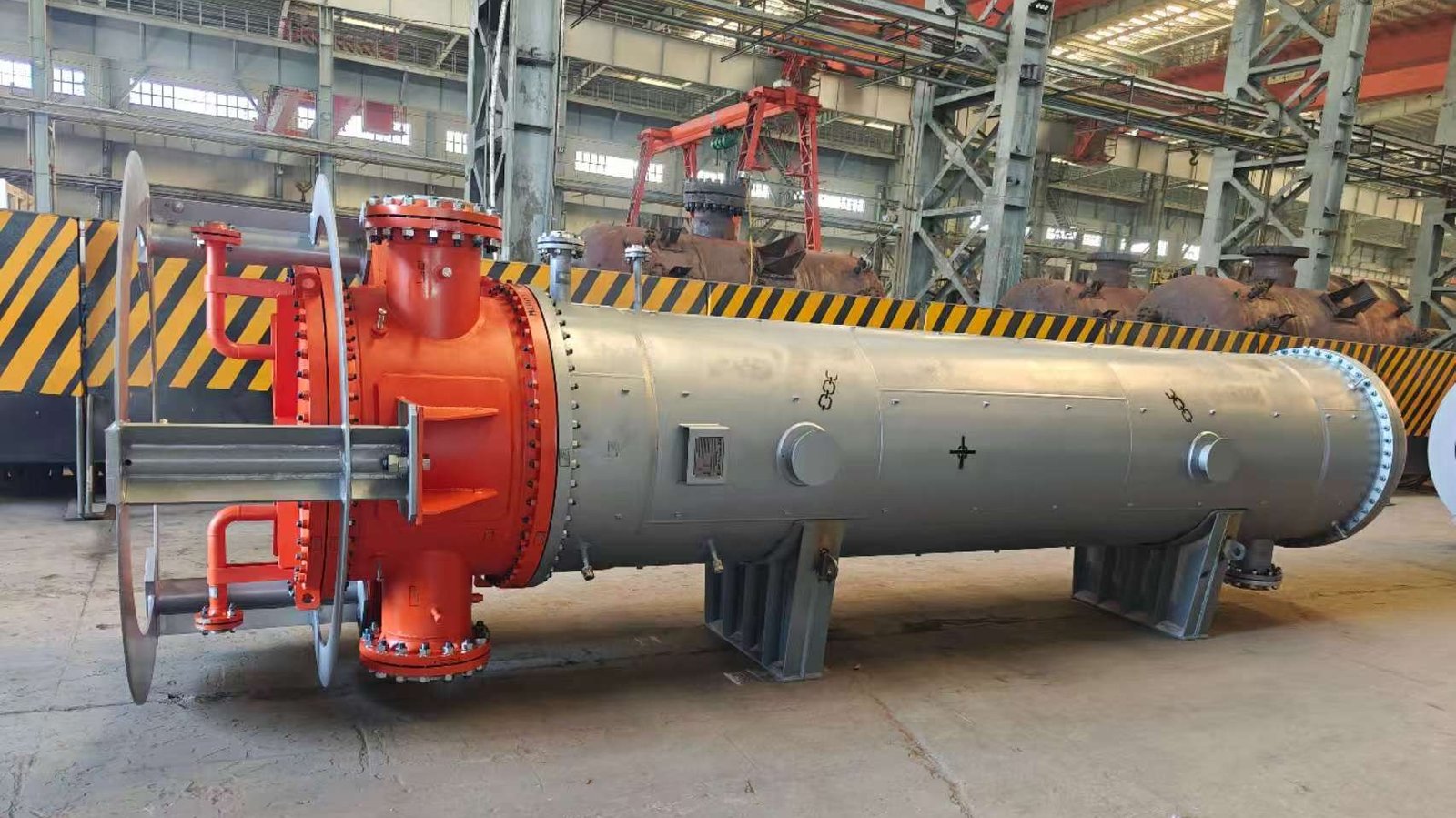
For a complete industrial shell-and-tube heat exchanger, the scope may include the pressure-retaining shell, tube bundle, heads, supports, integrated connections and agreed fabrication documentation.
The exact manufacturing and certification requirements must follow the approved project specification.
Buyers should submit their destination market, process conditions, applicable code editions, desired TEMA arrangement and required certification documents when requesting a technical quotation.
Frequently Asked Questions
Does specifying TEMA automatically mean an exchanger is ASME-stamped?
No. TEMA provides exchanger-specific mechanical standards and configuration designations. ASME marking requires the applicable BPVC construction and certification arrangements. The two requirements must be specified and verified independently.
What is the difference between TEMA Class R, B and C?
They are exchanger service classes described by TEMA: Class R for severe petroleum and related processing applications, Class B for chemical process service, and Class C for commercial and general process applications. They do not constitute separate government permits or replace equipment design calculations.
Does ISO 9001 certification replace PED conformity assessment?
No. ISO 9001 certifies an organization’s quality-management system within the stated scope. PED addresses specific EU pressure-equipment requirements and conformity assessment procedures. A manufacturer may need to satisfy both independently when applicable.
Is ISO 9001:2015 certification already invalid after publication of ISO 9001:2026?
No. ISO 9001:2026 was published in September 2026, and a defined transition period applies within the relevant accredited certification framework. Buyers should verify the actual certificate and current transition requirements rather than assuming that all existing 2015 certificates became invalid on the publication date.
Which TEMA edition should be specified for a new exchanger order in late 2026?
The purchaser should normally review the TEMA 2026 Edition as the newly issued standard and expressly identify the contract edition. TEMA’s six-month grace period recognizes the 2024 Eleventh Edition for work in process, but application to an individual contract must be agreed rather than assumed.
Conclusion
Shell-and-tube heat exchanger procurement requires a clear distinction between construction codes, equipment-specific technical standards, company management-system certification and market-specific regulatory conformity.
ASME BPVC defines applicable pressure-vessel construction requirements and related certification arrangements. TEMA provides exchanger-specific mechanical standards and classifications. ISO 9001 concerns the manufacturer’s quality-management system. PED governs conformity assessment for pressure equipment within its EU legal scope.
The 2026 revisions to both TEMA Standards and ISO 9001 make edition control particularly important for current EPC projects.
Before awarding a complete industrial heat exchanger contract, buyers should confirm the governing requirements, their editions, the actual manufacturer and equipment scope, the applicable product-level evidence, and who must approve any unresolved deviations.
A well-documented standards matrix provides a much stronger procurement basis than a brochure listing ASME, TEMA, ISO and PED without explaining what each one proves.
References
- Tubular Exchanger Manufacturers Association (TEMA). TEMA Standards — 2026 Edition. Official summary of new and updated technical content. https://tema.org/standards/
- TEMA. Standards Support Page. Official release date, six-month grace period, edition naming, exchanger classes, nomenclature and downloadable specification-sheet resources. https://support.tema.org/
- American Society of Mechanical Engineers (ASME). Boiler and Pressure Vessel Certification. Official explanation of manufacturer certification scopes, pressure-vessel designators and equipment marking. https://www.asme.org/certification-accreditation/boiler-and-pressure-vessel-certification
- ASME. Why Demand the Mark? Official explanation of the ASME Certification Mark and manufacturer authorization. https://www.asme.org/certification-accreditation/why-demand-the-mark
- International Organization for Standardization (ISO). ISO 9001:2026 — Quality Management Systems — Requirements. Official edition and publication information. https://www.iso.org/standard/9001
- ISO. ISO 9001:2026: What Businesses Need to Know. Official explanation of the new standard, management-system purpose and certification transition. https://www.iso.org/quality-management/iso-9001-2026
- Global Accreditation Cooperation Incorporated (Global ACI). (September 16, 2026). Transition Requirements for ISO 9001:2026. Official accreditation-related transition information. https://global-aci.org/en/news/global-aci-publishes-transition-requirements-for-iso-90012026/
- European Commission. Pressure Equipment Directive. Official overview of PED 2014/68/EU, guidance, harmonized standards and notified bodies. https://single-market-economy.ec.europa.eu/sectors/pressure-equipment-and-gas-appliances/pressure-equipment-sector/pressure-equipment-directive_en
- European Union. Directive 2014/68/EU on Pressure Equipment. Consolidated legislative text, including scope, classification and conformity assessment provisions. https://eur-lex.europa.eu/eli/dir/2014/68/2026-05-30/eng