

Industrial systems operating under extreme heat and pressure face a serious engineering challenge: ordinary heat exchangers quickly fail due to thermal fatigue, seal degradation, or pressure rupture. When downtime can cost millions per day, selecting the wrong design is not just inefficient—it is risky. Many engineers struggle to balance efficiency, durability, and maintenance feasibility in such harsh conditions.
The best heat exchangers for high-temperature and high-pressure environments are shell-and-tube heat exchangers, welded plate heat exchangers, and helical coil heat exchangers, with shell-and-tube being the most reliable and widely used industrial standard due to its exceptional mechanical strength and thermal resilience.

If you are designing or selecting equipment for extreme operating conditions, understanding the structural differences between these technologies is critical. Let’s break them down in a practical, engineering-focused way.
Shell-and-Tube Heat Exchangers: The Industrial Benchmark

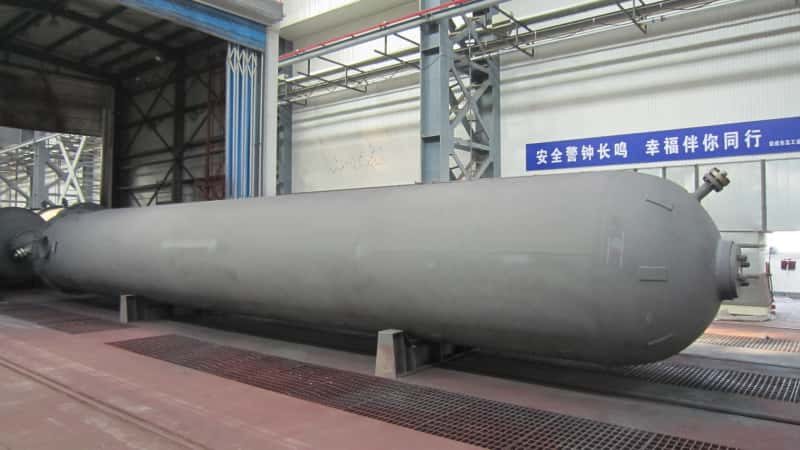
Shell-and-tube heat exchangers dominate high-pressure and high-temperature applications because their geometry is essentially a pressure vessel containing a bundle of tubes. This gives them unmatched structural integrity.
They are designed to handle:
- Pressures exceeding 30 MPa
- Temperatures above 600°C in specialized alloys
- Highly corrosive and fouling fluids
Why engineers prefer them:
Their cylindrical shell distributes stress evenly, while tube bundles allow thermal expansion without structural failure. Floating head and U-tube designs further reduce thermal stress damage.
Common applications:
- Petroleum refining (crude oil heating and cooling)
- Power generation (steam condensers)
- Petrochemical reactors
Welded Plate Heat Exchangers: Compact but Powerful

Welded plate heat exchangers eliminate elastomer gaskets entirely, replacing them with fully welded channels. This makes them far more resistant to high temperature and pressure than traditional gasketed plate designs.
Key advantages:
- No gasket failure risk at high temperatures
- Compact footprint compared to shell-and-tube
- Excellent thermal efficiency
Limitations:
- Difficult to clean or repair internally
- Requires precise manufacturing and quality control
Typical use cases:
- Chemical processing plants
- Heat recovery systems
- High-temperature fluids with moderate fouling risk
Helical Coil Heat Exchangers: High-Pressure Specialist

Helical coil heat exchangers are designed for extreme pressure scenarios where compact geometry and enhanced turbulence are required.
The curved tube structure creates secondary flow patterns, increasing heat transfer efficiency while maintaining structural integrity.
Strengths:
- Excellent resistance to very high pressure
- Strong turbulence improves heat transfer rates
- Compact and mechanically robust
Weaknesses:
- Limited scalability for large industrial systems
- More difficult to design and fabricate
Applications:
- High-pressure gas processing
- Specialized chemical reactors
- Experimental thermal systems
Performance Comparison Table
| Heat Exchanger Type | Maximum Pressure | Maximum Temperature | Efficiency | Maintenance | Industrial Suitability |
|---|---|---|---|---|---|
| Shell-and-Tube | ⭐⭐⭐⭐⭐ (Very High) | ⭐⭐⭐⭐⭐ (600°C+) | Medium | Moderate | Heavy Industry Standard |
| Welded Plate | ⭐⭐⭐⭐ | ⭐⭐⭐⭐ | High | Low | Chemical & Energy Systems |
| Helical Coil | ⭐⭐⭐⭐⭐ | ⭐⭐⭐⭐ | Medium-High | Moderate | High-Pressure Specialty |
| Gasketed Plate (for reference) | ⭐⭐ | ⭐⭐ | Very High | High | Not suitable |
Material Selection: The Real Limiting Factor
Even the best heat exchanger design will fail if the material selection is incorrect. In high-pressure and high-temperature systems, material behavior under thermal stress is often the limiting factor.
| Material | Max Operating Temperature | Corrosion Resistance | Typical Use |
|---|---|---|---|
| Carbon Steel | ~450°C | Low | Low-cost industrial systems |
| Stainless Steel 316L | ~800°C | Good | General chemical processing |
| Inconel (600/625) | >1000°C | Excellent | Extreme environments |
| Titanium | ~600°C | Excellent (chloride resistance) | Marine & desalination |
Inconel alloys are particularly favored in refinery and aerospace applications due to their resistance to creep deformation and oxidation at extreme temperatures.
Engineering Design Considerations
Selecting the right heat exchanger is not just about type—it is about system integration.
1. Thermal Stress Management
Rapid temperature cycling can cause expansion fatigue. Shell-and-tube systems handle this best due to flexible tube designs.
2. Pressure Containment
Pressure vessel code compliance (ASME Section VIII) is critical for safety certification.
3. Fouling Behavior
Dirty fluids require designs that allow mechanical or chemical cleaning, favoring shell-and-tube systems.
4. Maintenance Accessibility
Downtime cost often outweighs energy efficiency gains in industrial systems.
Real Industrial Case Study
A refinery in the Gulf region upgraded its crude oil heating system, operating under:
- Temperature: 520°C
- Pressure: 22 MPa
- High sulfur content fluid
Original system:
Gasketed plate heat exchanger system failed within 14 months due to seal degradation.
Replacement:
Shell-and-tube exchanger with Inconel tube bundles was installed.
Results:
- 3.5× longer operational lifespan
- 28% reduction in unplanned shutdowns
- Improved thermal efficiency stability
This demonstrates that durability often outweighs compactness in extreme environments.
Key Selection Guidelines
When choosing a heat exchanger for high-temperature and high-pressure environments, engineers should prioritize:
- Mechanical strength over compact size
- Thermal fatigue resistance over peak efficiency
- Material compatibility with process fluids
- Maintainability in real-world plant conditions
A common mistake is selecting a compact exchanger for space-saving reasons, only to face frequent failures and higher lifecycle costs.
Conclusion
High-temperature and high-pressure heat transfer systems demand robust engineering solutions rather than compact or cost-optimized designs.
- Shell-and-tube heat exchangers remain the most reliable and widely adopted industrial standard.
- Welded plate designs provide a compact alternative for moderate extreme conditions.
- Helical coil systems serve niche high-pressure applications where space and turbulence matter.
Ultimately, the best choice depends on balancing safety, durability, and lifecycle cost—not just initial efficiency.