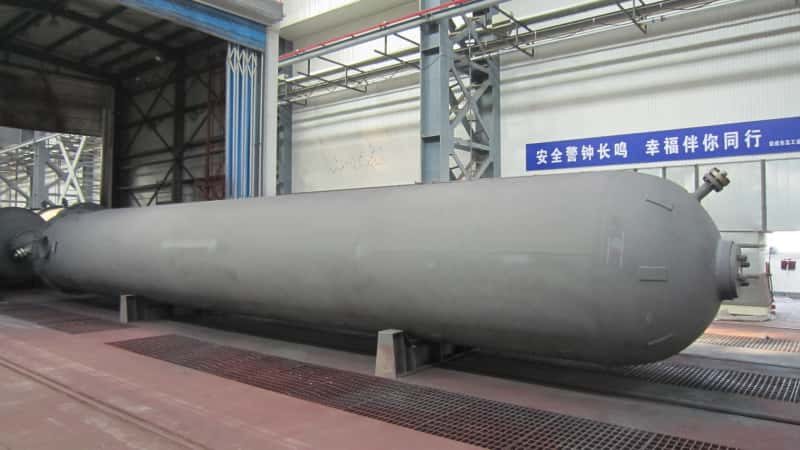

In large-scale oil and gas storage projects, selecting the wrong tank size can lead to severe operational inefficiencies, safety risks, and costly redesigns. Undersized tanks may cause frequent turnover, supply disruptions, and logistical bottlenecks, while oversized tanks can result in unnecessary capital expenditure, increased evaporation losses, and underutilized assets. For EPC contractors, terminal operators, and energy companies, inaccurate sizing directly impacts profitability and compliance.
To select the correct size and capacity of large oil and gas storage tanks, you must evaluate storage demand, turnover rate, supply chain logistics, design standards (such as API 650 or API 620), product characteristics, and future expansion requirements. The optimal capacity is determined by working volume, safety margins, and operational flexibility—not just total geometric volume. Proper sizing ensures safety compliance, cost efficiency, and long-term operational reliability.
Understanding how to size bulk storage tanks requires a shift from small-system thinking to industrial-scale engineering logic. Instead of focusing on pressure regulation, the emphasis must be on storage strategy, regulatory compliance, and lifecycle performance. The following outline highlights the key decision-making factors your target customers care about.
How Do You Calculate Required Capacity for Large Oil & Gas Storage Tanks Based on Demand?

In large-scale oil and gas operations, miscalculating storage capacity is not a minor issue—it directly affects supply reliability, operational continuity, and financial performance. Undersized tanks lead to production interruptions, shipment delays, and emergency logistics costs, while oversized tanks lock capital into unused infrastructure and increase evaporation losses and maintenance burden. Many facilities struggle because they rely on simplified assumptions rather than real demand-driven calculations. The solution is to size storage tanks based on actual demand patterns, replenishment timing, and operational constraints.
To calculate the required capacity for large oil and gas storage tanks, you must determine demand over replenishment time, then add safety stock, operational buffer, and unusable inventory (heel). This ensures the tank can handle supply gaps, demand fluctuations, and operational risks efficiently.
Understanding this process allows engineers to design storage systems that balance cost, safety, and operational flexibility.
Storage tank capacity in oil and gas systems must be calculated based on demand over replenishment time rather than average demand alone.True
Average demand does not account for supply delays, peak consumption, or operational constraints, all of which significantly impact required storage capacity.
Understanding the Demand-Based Sizing Principle
Why Demand Drives Tank Capacity

Storage tanks act as a buffer between supply and demand. The required capacity is essentially the volume needed to cover the mismatch between incoming supply and outgoing consumption.
Key Concept:
- Continuous demand + intermittent supply = need for storage buffer
Core Capacity Formula
The fundamental engineering equation is:
C = (D \times T) + S + O + H
Where:
- ( C ) = Total required tank capacity
- ( D ) = Demand rate (m³/day or bbl/day)
- ( T ) = Replenishment time (days)
- ( S ) = Safety stock
- ( O ) = Operational allowance
- ( H ) = Heel (unusable volume)
Step 1: Determine Demand Profile
Key Demand Parameters

| Parameter | Description | Impact |
|---|---|---|
| Average Demand | Normal daily usage | Base sizing |
| Peak Demand | Maximum usage | Surge capacity |
| Seasonal Variation | Demand fluctuation | Safety margin |
| Critical Runtime | Required autonomy | Minimum capacity |
Engineering Insight:
Design must consider both average and peak demand, not just one value.
Step 2: Calculate Base Storage Requirement
Example Calculation
- Demand = 20,000 m³/day
- Replenishment interval = 5 days
Base capacity:
- ( 20,000 × 5 = 100,000 , m³ )
This is the minimum working inventory required before adding safety margins.
Step 3: Add Safety Stock

Safety stock accounts for uncertainties such as:
- Shipping delays
- Pipeline interruptions
- Weather disruptions
Typical Range:
- 10%–30% of base capacity
Step 4: Include Operational Allowance
Operational allowance ensures smooth system operation.
Includes:
- Tank switching
- Blending operations
- Surge demand handling
Typical Range:
- 5%–15% of total capacity
Step 5: Account for Heel (Unusable Volume)
Heel is the portion of liquid that cannot be used due to:
- Pump suction limits
- Sediment and water accumulation
- Safety requirements
Typical Range:
- 5%–10% of tank volume
Final Capacity Calculation Example
Given:
- Demand = 20,000 m³/day
- Replenishment = 5 days
- Safety = 20%
- Operational = 10%
- Heel = 5%
Step-by-step:
- Base = 100,000 m³
- Safety = 20,000 m³
- Operational = 10,000 m³
- Heel = 5,000 m³
Final Capacity:
135,000 m³
Capacity Breakdown Table
| Component | Percentage | Volume (m³) |
|---|---|---|
| Base Demand | — | 100,000 |
| Safety Stock | 20% | 20,000 |
| Operational | 10% | 10,000 |
| Heel | 5% | 5,000 |
| Total | — | 135,000 |
Key Factors Affecting Tank Size

* Demand variability
* Supply reliability
* Transportation mode
* Regulatory requirements
* Product type (crude, LNG, refined fuels)
Common Design Mistakes
- Using only average demand
- Ignoring supply delays
- Underestimating safety stock
- Forgetting unusable volume
Consequences:
- Supply interruptions
- Increased operational risk
- Higher long-term costs
Industrial Case Insight
In a refinery project:
- Initial design used only average demand
- Result: frequent shortages during delayed shipments
After redesign:
- Added 25% safety buffer
- Increased tank capacity
Outcome:
- Stable operations
- Reduced emergency logistics costs
Conclusion
Calculating storage tank capacity in oil and gas systems requires a comprehensive understanding of demand, supply timing, and operational constraints. By combining demand coverage, safety stock, operational allowances, and unusable volume, engineers can design storage systems that are both efficient and resilient.
A well-sized storage tank is not just about volume—it is about ensuring uninterrupted, cost-effective, and safe operations.
How Do API Standards Influence the Size and Capacity of Oil & Gas Storage Tanks?

In oil and gas storage projects, tank size is not determined by demand alone. Many engineers calculate required volume correctly but later discover that regulatory standards—especially API standards—force redesign, capacity adjustments, or even complete layout changes. Ignoring these standards early can lead to non-compliance, safety risks, project delays, and increased costs. The reality is that API standards directly influence not just how tanks are built, but how large they can be, how much usable capacity they provide, and how they are arranged within a facility.
API standards such as API 650, API 620, and API 653 influence storage tank size and capacity by defining design limits, allowable stress, material requirements, safety margins, roof types, and operational constraints, all of which affect both the gross volume and usable capacity of oil and gas storage tanks.
To design compliant and efficient storage systems, engineers must integrate API requirements into capacity calculations from the earliest stage.
API standards directly affect both the structural design and usable capacity of oil and gas storage tanks.True
Standards define allowable fill levels, safety margins, and design constraints that reduce or modify the effective usable volume of a tank.
Overview of Key API Standards
Major Standards Affecting Tank Design
| Standard | Scope | Impact on Capacity |
|---|---|---|
| API 650 | Atmospheric tanks | Most common, defines size limits |
| API 620 | Low-pressure tanks | Allows larger/different designs |
| API 653 | Inspection & repair | Affects long-term usable capacity |
1. Design Limits and Maximum Tank Dimensions
API standards impose limits on:
- Tank diameter
- Shell height
- Aspect ratios
Engineering Impact:
- Tanks cannot be infinitely large
- Structural stress limits define maximum size
Example:
API 650 typically governs tanks up to certain pressure limits, requiring thicker walls for larger diameters, which increases cost and may limit practical size.
2. Allowable Stress and Material Selection
API standards define allowable stress for materials.
Effect on Capacity:
- Higher stress → thinner walls → larger tanks possible
- Lower stress → thicker walls → practical size limits
Key Insight:
Material selection directly impacts maximum feasible tank capacity.
3. Freeboard and Maximum Fill Levels
API standards require:
- Minimum freeboard space
- Overfill protection systems
Impact:
- Not all geometric volume is usable
- Effective capacity is reduced
Typical Reduction:
- 5%–10% of total tank volume
4. Roof Design and Its Influence on Capacity
Types of Roofs:
| Roof Type | Impact on Capacity |
|---|---|
| Fixed Roof | Vapor space required |
| Floating Roof | Reduces vapor loss, increases usable volume |
| Internal Floating Roof | Hybrid efficiency |
Engineering Insight:
Floating roofs reduce vapor space, effectively increasing usable storage capacity.
5. Safety Spacing and Layout Constraints
API standards influence:
- Distance between tanks
- Dike (bund) requirements
- Fire safety zones
Impact:
- Limits number of tanks per area
- Influences total storage strategy
6. Operational Constraints from API Standards
API guidelines affect:
- Minimum operating levels
- Pump suction requirements
- Sludge accumulation zones
Result:
A portion of the tank volume becomes unusable (heel).
Capacity Breakdown Under API Constraints
| Component | Percentage | Impact |
|---|---|---|
| Geometric Volume | 100% | Total tank size |
| Freeboard | 5–10% | Not usable |
| Heel/Dead Stock | 5–10% | Not usable |
| Operational Margin | 5% | Reserved |
| Usable Capacity | ~75–85% | Effective volume |
Real-World Example
Initial Design:
- Calculated requirement: 100,000 m³
After API Adjustments:
- Freeboard: 8,000 m³
- Heel: 7,000 m³
- Operational margin: 5,000 m³
Final Tank Size Needed:
~120,000 m³
Insight:
Ignoring API standards would result in undercapacity.
Common Design Mistakes
- Designing based only on net capacity
- Ignoring freeboard requirements
- Underestimating safety spacing
- Not considering inspection allowances (API 653)
Engineering Best Practices
- Start with demand-based capacity
- Apply API constraints early
- Convert usable capacity to gross volume
- Validate with safety and layout requirements
Conclusion
API standards play a critical role in determining both the size and usable capacity of oil and gas storage tanks. They introduce structural limits, safety requirements, and operational constraints that reduce effective volume and influence overall design strategy.
A successful tank design integrates API compliance from the beginning—ensuring safety, efficiency, and regulatory approval.
How Do Product Properties (Crude Oil, LNG, Refined Fuels) Affect Storage Tank Capacity Selection?

In oil and gas storage design, many engineers correctly calculate demand but overlook one critical variable: product properties. The physical and chemical characteristics of crude oil, LNG, and refined fuels significantly influence how storage tanks must be sized, configured, and operated. Ignoring these differences can result in vapor losses, safety hazards, inefficient storage utilization, or even catastrophic design failures. The solution is to integrate product-specific properties—such as volatility, temperature, density, and phase behavior—directly into capacity selection.
Product properties affect storage tank capacity selection by influencing usable volume, safety margins, tank type, temperature control, vapor space requirements, and operational constraints. Crude oil requires allowances for sediment and vapor, LNG requires cryogenic insulation and boil-off management, and refined fuels require vapor control and safety spacing, all of which reduce effective usable capacity.
Understanding these differences is essential for designing safe, efficient, and compliant storage systems.
Different petroleum products require different storage tank designs and capacity allowances due to their physical and chemical properties.True
Variations in volatility, temperature, and composition affect vapor space, safety margins, and usable volume, directly impacting tank sizing.
Why Product Properties Matter in Tank Sizing
The Core Principle
Storage tanks are not just containers—they are controlled environments designed to manage:
- Phase changes (liquid ↔ vapor)
- Temperature effects
- Pressure variations
- Contaminants and residues
Key Insight:
Different products behave differently under storage conditions, and this behavior directly reduces or modifies usable capacity.
1. Crude Oil: Variable Composition and Sediment Impact
Key Properties:
- Variable density and composition
- Presence of water, wax, and solids
- Moderate vapor pressure
Capacity Impacts:
- Heel and Sludge Volume
- Sediment accumulates at the bottom
- Reduces usable volume by 5–10% or more
- Vapor Space Requirements
- Light crude generates vapors
- Requires floating roofs or vapor control
- Blending Allowance
- Tanks often used for blending operations
- Requires additional working volume
Design Result:
- Larger tanks needed than pure demand calculation suggests
- Floating roof tanks often preferred
2. LNG (Liquefied Natural Gas): Cryogenic and Boil-Off Constraints
Key Properties:
- Extremely low temperature (~ -162°C)
- Stored as cryogenic liquid
- Continuous boil-off gas (BOG) generation
Capacity Impacts:
- Thermal Expansion and Contraction
- Requires design margins for temperature variation
- Boil-Off Gas (BOG)
- Reduces stored liquid over time
- Requires vapor handling systems
- Insulation Thickness
- Reduces internal usable volume
- Safety Fill Limits
- Strict maximum fill levels to prevent overpressure
Design Result:
- Effective usable capacity may be 10–20% lower than geometric volume
- Tank sizing must include BOG losses and safety margins
3. Refined Fuels (Gasoline, Diesel, Jet Fuel): Volatility and Safety
Key Properties:
- Gasoline: high volatility
- Diesel: low volatility
- Jet fuel: moderate volatility
Capacity Impacts:
- Vapor Losses (Especially Gasoline)
- Requires vapor recovery systems
- Additional vapor space reduces usable volume
- Temperature Sensitivity
- Expansion with temperature changes
- Requires freeboard allowance
- Product Segregation
- Separate tanks for different fuels
- Increases total storage requirement
Design Result:
- Gasoline tanks have lower usable capacity due to vapor control
- Diesel tanks can utilize a higher percentage of volume
Product Comparison Table
| Property | Crude Oil | LNG | Refined Fuels |
|---|---|---|---|
| Temperature | Ambient | Cryogenic (-162°C) | Ambient |
| Volatility | Medium | High (BOG) | Varies |
| Sediment | High | None | Low |
| Vapor Space | Required | Critical | Required (esp. gasoline) |
| Usable Capacity | 80–90% | 70–85% | 75–90% |
Capacity Adjustment Factors by Product
| Factor | Typical Range | Affected Products |
|---|---|---|
| Heel/Dead Stock | 5–10% | Crude, fuels |
| Vapor Space | 5–10% | All (especially gasoline) |
| Thermal Expansion | 2–5% | LNG, fuels |
| Operational Margin | 5–10% | All |
| Total Reduction | 10–30% | Depends on product |
Real-World Example
Scenario:
Required net storage = 100,000 m³
Adjustments:
- Crude oil:
- +15% allowance → 115,000 m³ tank
- LNG:
- +25% allowance → 125,000 m³ tank
- Gasoline:
- +20% allowance → 120,000 m³ tank
Insight:
Same demand → different tank sizes due to product properties.
Common Design Mistakes
- Treating all liquids the same
- Ignoring vapor pressure differences
- Underestimating LNG boil-off losses
- Not accounting for sludge in crude tanks
Engineering Best Practices
- Analyze product physical properties early
- Apply product-specific capacity corrections
- Include safety and operational margins
- Validate against standards (API, NFPA, etc.)
Conclusion
Product properties play a decisive role in storage tank capacity selection. Crude oil, LNG, and refined fuels each impose unique constraints on usable volume, safety margins, and tank design. Ignoring these factors leads to underperformance, safety risks, and costly redesigns.
A properly designed storage system integrates product behavior into capacity calculations—ensuring efficiency, safety, and long-term reliability.
How Do Turnover Rate and Supply Chain Logistics Impact Storage Tank Sizing?

In large oil & gas storage systems, tank sizing is often calculated based on demand alone—but this approach frequently fails in real operations. Facilities that ignore turnover rate and supply chain logistics face either chronic shortages or excessive idle inventory. Tanks may run empty during delayed shipments or remain underutilized due to poor turnover efficiency. These issues lead to lost revenue, operational instability, and increased working capital costs. The solution is to integrate turnover rate and logistics behavior directly into storage capacity design.
Turnover rate and supply chain logistics impact storage tank sizing by determining how quickly inventory is replenished and consumed. High turnover systems require smaller tanks with frequent replenishment, while slow or uncertain supply chains require larger tanks to maintain buffer inventory and ensure uninterrupted operations.
Understanding this relationship is essential for designing efficient, cost-effective storage systems.
Higher inventory turnover rates allow for smaller storage tank sizes, while lower turnover rates require larger storage capacity.True
Faster replenishment reduces the need for large buffer storage, whereas slower or uncertain supply requires larger tanks to avoid shortages.
Understanding Turnover Rate in Storage Systems
What Is Turnover Rate?
Turnover rate measures how frequently stored product is replaced over a given period.
Formula:
[
\text{Turnover Rate} = \frac{\text{Annual Throughput}}{\text{Tank Capacity}}
]
Interpretation:
- High turnover → inventory cycles quickly
- Low turnover → inventory stays longer in storage
1. High Turnover Systems (Frequent Replenishment)
Characteristics:
- Continuous or frequent supply
- Short replenishment intervals
- Efficient logistics network
Impact on Tank Size:
- Smaller tanks sufficient
- Lower storage buffer needed
- Reduced capital investment
Example:
- Daily supply via pipeline
- Replenishment every 1–2 days
Result:
Tank size mainly covers short-term fluctuations rather than long-term storage.
2. Low Turnover Systems (Infrequent Supply)
Characteristics:
- Long supply intervals
- Remote or constrained logistics
- High dependency on storage
Impact on Tank Size:
- Large tanks required
- High safety stock needed
- Increased storage duration
Example:
- Marine delivery every 10–20 days
Result:
Tank capacity must cover extended demand periods.
3. Supply Chain Logistics Factors
Storage sizing is strongly influenced by logistics reliability.
Key Factors:
- Transportation Mode
- Pipeline → stable supply
- Ship → intermittent large deliveries
- Truck → flexible but variable
- Lead Time
- Longer lead time → larger tanks
- Supply Variability
- Uncertain supply → higher safety stock
- Infrastructure Constraints
- Limited unloading capacity → storage buffering required
Combined Impact: Turnover + Logistics
Capacity Relationship:
C \propto \frac{D \times T}{\text{Turnover Rate}}
Insight:
- Faster turnover reduces required capacity
- Slower logistics increases required capacity
Practical Comparison Table
| Scenario | Turnover Rate | Supply Frequency | Tank Size Requirement |
|---|---|---|---|
| Pipeline-fed refinery | High | Continuous | Small–Medium |
| Urban fuel depot | Medium | Daily trucks | Medium |
| Marine import terminal | Low | Weekly/biweekly | Large |
| Remote facility | Very Low | Irregular | Very Large |
Real-World Example
Case A: Pipeline Supply
- Demand: 50,000 m³/day
- Continuous supply
Tank requirement:
- ~1–2 days buffer → 50,000–100,000 m³
Case B: Marine Supply
- Same demand: 50,000 m³/day
- Delivery every 10 days
Tank requirement:
- 500,000 m³ + safety margin
Insight:
Same demand → 10× difference in tank size
Inventory Strategy and Tank Sizing
Strategies:
- Just-in-Time (JIT):
- High turnover
- Small tanks
- High logistics dependency
- Buffer Storage:
- Low turnover
- Large tanks
- High reliability
Common Design Mistakes
- Ignoring supply delays
- Assuming constant replenishment
- Underestimating logistics risks
- Designing only for average demand
Consequences:
- Stockouts
- Emergency supply costs
- Inefficient capital use
Engineering Best Practices
- Analyze turnover rate early
- Map full supply chain
- Include delay scenarios
- Size tanks for worst-case logistics
Conclusion
Turnover rate and supply chain logistics are critical factors in determining storage tank size. High turnover systems with reliable supply chains can operate efficiently with smaller tanks, while low turnover or uncertain logistics require significantly larger storage capacity to maintain operational stability.
A well-designed storage system balances inventory efficiency with supply reliability—ensuring both cost optimization and uninterrupted operation.
What Role Do Safety Margins and Environmental Factors Play in Tank Capacity Design?
In storage tank design, engineers often focus on demand, flow rates, and logistics—but overlooking safety margins and environmental factors is a critical mistake. Tanks designed without these considerations may technically meet capacity requirements yet fail under real-world conditions such as temperature fluctuations, storms, corrosion, or operational upsets. This can lead to overfilling, structural stress, environmental contamination, or regulatory violations. The solution is to incorporate safety margins and environmental constraints directly into tank capacity calculations from the beginning.
Safety margins and environmental factors influence tank capacity design by reducing usable volume, requiring additional buffer space, and imposing design constraints to ensure safe operation under variable conditions such as temperature changes, weather events, and regulatory limits.
Understanding these influences is essential for designing storage systems that are not only efficient but also safe and compliant.
Safety margins and environmental conditions reduce the effective usable capacity of storage tanks and must be included in design calculations.True
Allowances for expansion, weather, and operational risk reduce the portion of tank volume that can be safely used.
Understanding Safety Margins in Tank Design
What Are Safety Margins?
Safety margins are reserved volumes or design allowances that ensure the tank operates safely under all conditions.
Key Types:
- Freeboard (empty space above liquid)
- Overfill protection margin
- Emergency surge capacity
1. Freeboard and Overfill Protection
Why Freeboard Is Required
Freeboard provides space for:
- Liquid expansion
- Wave motion (sloshing)
- Measurement inaccuracies
Typical Range:
- 5%–10% of total volume
Impact:
Reduces usable capacity but prevents overflow incidents.
2. Thermal Expansion Effects
Liquids expand with temperature changes.
Key Impacts:
- Increased volume at higher temperatures
- Risk of overfilling if not accounted for
Engineering Consideration:
Capacity must include expansion allowance based on product type.
3. Environmental Factors: Weather and Climate
External Conditions Affect Tank Capacity
Key Environmental Factors:
- Temperature Extremes
- Affects fluid expansion and contraction
- Wind and Storm Loads
- Structural design may limit tank height
- Rainfall and Flooding
- Requires drainage and containment space
- Seismic Activity
- Influences tank geometry and capacity
4. Vapor Emissions and Environmental Compliance
Environmental regulations require:
- Vapor control systems
- Emission limits
- Secondary containment
Impact on Capacity:
- Additional vapor space required
- Reduced usable liquid volume
5. Secondary Containment (Bund Capacity)
Containment systems must hold:
- 100% of the largest tank (typical requirement)
Impact:
- Limits total site layout
- Influences number and size of tanks
Capacity Reduction Breakdown
| Factor | Typical Reduction | Impact |
|---|---|---|
| Freeboard | 5–10% | Prevent overflow |
| Thermal Expansion | 2–5% | Temperature safety |
| Vapor Space | 3–8% | Emission control |
| Operational Margin | 5% | System flexibility |
| Total Reduction | 10–25% | Usable capacity |
Real-World Example
Initial Requirement:
- Net storage needed = 100,000 m³
Adjustments:
- Freeboard (8%) = 8,000 m³
- Expansion (3%) = 3,000 m³
- Vapor space (5%) = 5,000 m³
- Operational margin (5%) = 5,000 m³
Final Tank Size:
~121,000 m³
Insight:
Ignoring safety/environmental factors would underdesign capacity by over 20%.
Common Design Mistakes
- Ignoring temperature effects
- Underestimating freeboard
- Not considering environmental regulations
- Designing for ideal conditions only
Consequences:
- Overfilling risks
- Environmental violations
- Structural failures
Engineering Best Practices
- Include safety margins early in design
- Analyze environmental conditions for the site
- Apply regulatory requirements (API, environmental laws)
- Convert net capacity to gross capacity
Conclusion
Safety margins and environmental factors are essential components of storage tank capacity design. They ensure that tanks operate safely under real-world conditions, including temperature changes, weather events, and regulatory constraints. While they reduce usable capacity, they are critical for preventing failures and ensuring compliance.
A well-designed tank system balances operational efficiency with safety and environmental responsibility.
How Do You Plan Storage Tank Capacity for Future Expansion and Cost Optimization?

Many storage tank projects are designed only for today’s throughput, not tomorrow’s reality. That creates two expensive outcomes: either the facility becomes constrained within a few years and requires disruptive retrofits, or it is oversized from the beginning and ties up too much capital in underutilized assets. In oil and gas, both mistakes are costly because storage is deeply connected to logistics, safety, land use, and working capital. The practical solution is to size tank capacity with a phased growth strategy that balances immediate operational demand, future expansion flexibility, and lifecycle cost.
To plan storage tank capacity for future expansion and cost optimization, you should size the initial system for current demand plus a realistic growth margin, reserve land and infrastructure for future tanks, evaluate phased expansion scenarios, and compare capital cost, operating cost, and inventory cost across multiple capacity options. The best design is usually not the largest tank farm, but the one that delivers the lowest total lifecycle cost while preserving expansion flexibility.
If the goal is long-term efficiency, tank capacity planning should be treated as a strategic infrastructure decision rather than a simple volume calculation.
The most cost-effective storage tank design is usually a phased-capacity plan rather than either the minimum possible initial size or the maximum possible build-out.True
A phased design reduces unnecessary upfront capital while preserving the ability to expand as demand, logistics, and commercial conditions evolve.
Why Future Expansion Must Be Considered at the Beginning
A storage facility is one of the hardest assets to expand efficiently after construction if the original layout does not allow for growth. Once tanks, pipe racks, roads, containment dikes, firewater systems, and utility corridors are fixed in place, future expansion becomes more expensive and operationally disruptive. That is why experienced tank farm planners do not only ask, “How much storage do we need now?” They also ask, “What demand, supply chain, product mix, and regulatory changes are likely over the next five, ten, or fifteen years?” Future expansion planning matters because oil and gas storage assets often outlive the commercial assumptions used to justify them. Throughput may increase, new fuels may be added, product segregation may become stricter, marine cargo size may change, pipeline schedules may shift, and safety or environmental requirements may tighten. A tank farm that looks adequate on day one may become operationally rigid far earlier than expected if no spare plot area, piping tie-in points, or utility capacity has been reserved.
The Core Planning Principle
The right planning approach is to separate initial required capacity from ultimate master-plan capacity.
Practical framework
Ultimate Capacity Plan = Initial Capacity + Future Expansion Capacity
But the key is not just adding more volume. It is deciding:
- How much capacity is needed now
- How much additional capacity may be needed later
- When that future capacity is likely to be required
- Whether it should be built now or deferred
- Which shared infrastructure should be oversized upfront
This is where cost optimization begins. Some assets are cheap to add later, while others are much cheaper to size correctly at the start.
Step 1: Forecast Demand in Phases, Not as a Single Number
Instead of using one projected demand value, build at least three scenarios:
- Base case: most likely growth path
- High-growth case: accelerated expansion or new contracts
- Low-growth case: slower market development
This allows you to match storage capacity to realistic business outcomes rather than optimistic assumptions.
Example demand forecast table
| Year | Base Case Throughput | High Case Throughput | Low Case Throughput |
|---|---|---|---|
| 1 | 500,000 m³/year | 500,000 m³/year | 500,000 m³/year |
| 3 | 620,000 m³/year | 720,000 m³/year | 560,000 m³/year |
| 5 | 760,000 m³/year | 950,000 m³/year | 640,000 m³/year |
| 10 | 1,050,000 m³/year | 1,400,000 m³/year | 800,000 m³/year |
The purpose is not to predict perfectly. It is to prevent a rigid design based on one fragile assumption.
Step 2: Convert Demand Growth into Storage Capacity Requirements
Once growth cases are defined, calculate tank capacity for each phase using the same demand-based logic used for current storage design:
Required Capacity = Demand Coverage + Safety Stock + Operational Buffer + Heel/Dead Stock
Then apply this across time horizons.
Example phased capacity table
| Phase | Demand Basis | Net Required Capacity | Gross Installed Capacity |
|---|---|---|---|
| Phase 1 | Current demand | 80,000 m³ | 95,000 m³ |
| Phase 2 | 5-year base case | 115,000 m³ | 135,000 m³ |
| Phase 3 | 10-year high case | 160,000 m³ | 190,000 m³ |
This immediately shows whether it is smarter to build all 190,000 m³ now or install only 95,000 m³ initially and preserve expandability.
Step 3: Decide What Should Be Built Now vs Reserved for Later
Not every part of the system should be expanded in phases at the same pace.
Assets often worth oversizing initially
- Site grading and earthworks
- Foundations in constrained sites
- Firewater ring main
- Main utility corridors
- Control system architecture
- Tank farm roads and drainage
- Bunded area master layout
- Major manifolds and headers
Assets often suitable for later expansion
- Additional tanks
- Booster pumps
- Metering skids
- Loading bays
- Product-specific transfer lines
- Minor instrumentation packages
This distinction is crucial. In many projects, the most cost-effective solution is to oversize the “difficult-to-retrofit” infrastructure and phase the “easy-to-add” assets.
Step 4: Use Phased Expansion Layout Planning
A good tank farm master plan should clearly define:
- Initial tank locations
- Reserved footprints for future tanks
- Future bund/dike extensions
- Pipe rack expansion corridors
- Spare manifold nozzles and tie-in points
- Access roads for future cranes and construction
This helps avoid one of the most common design failures: building the first phase in a way that blocks the second phase.
Layout planning goals
- Maintain safe spacing for future tanks
- Avoid relocating critical piping later
- Preserve operability during expansion construction
- Minimize shutdowns when adding capacity
Step 5: Compare Fewer Large Tanks vs More Modular Tanks
Tank farms intended for future growth usually face a strategic choice between large centralized tanks and smaller modular additions.
Comparison table
| Strategy | Advantages | Disadvantages | Best Use Case |
|---|---|---|---|
| Fewer large tanks | Lower unit cost per m³, fewer fittings, simpler operations | Less flexibility, larger outage impact, harder future matching | Stable single-product demand |
| More modular tanks | Easier phased expansion, better product segregation, flexible operations | Higher cost per m³, more valves/instruments, larger footprint | Multi-product or uncertain growth |
| Hybrid approach | Balances cost and flexibility | Requires strong planning discipline | Most expanding terminals |
In many real facilities, a hybrid approach works best: build one or two efficient base-load tanks now, then add modular tanks for future product diversification or demand growth.
Step 6: Include Inventory Cost, Not Just Steel Cost
A frequent mistake is evaluating tank options only by construction cost. But storage capacity carries an inventory cost as well. Larger tanks often encourage higher average stockholding, which means more capital tied up in stored product.
Cost components to compare
- Tank fabrication and erection cost
- Civil and foundation cost
- Fire protection and utility cost
- Land and containment cost
- Maintenance and inspection cost
- Evaporation or boil-off losses
- Working capital tied in inventory
- Future retrofit cost if initial design is too small
Simplified total cost concept
Total Cost = CAPEX + OPEX + Inventory Carrying Cost + Future Expansion Cost
This is why the cheapest tank per cubic meter is not always the best financial choice.
Step 7: Analyze Turnover and Logistics Flexibility
Future capacity planning must consider how logistics may evolve:
- Will cargo frequency improve?
- Will pipeline supply become more reliable?
- Will truck dispatch increase?
- Will larger marine parcels be introduced?
- Will more product grades need segregation?
A facility with improving logistics may not need massive long-term storage growth. A facility facing volatile marine schedules or remote supply risks may need greater buffer capacity. In other words, future storage demand is often driven as much by logistics structure as by sales growth.
Step 8: Plan for Product Mix Changes
Future expansion is not always about “more volume.” Sometimes it is about “more compartments” or “more segregated storage.” A terminal storing only diesel today may later need gasoline, jet fuel, biofuel blends, low-sulfur products, or additive segregation. In those cases, one large future tank may be less valuable than several smaller tanks with flexible manifold access.
Product mix planning questions
- Will new products be introduced?
- Will quality segregation become stricter?
- Will blending be required?
- Will turnaround operations need more dedicated tanks?
This is especially important for refined fuels, chemicals, and multi-customer terminals.
Step 9: Build Expansion Triggers into the Plan
A smart capacity plan does not simply say “expand later.” It defines when later becomes necessary.
Typical expansion triggers
- Average utilization above 80–85%
- Throughput exceeds forecast for 3 consecutive quarters
- Safety stock falls below policy threshold during supply delays
- New product contract signed
- Peak season dispatch repeatedly constrained
- Maintenance outages cause capacity bottlenecks
These trigger points turn expansion from a vague future intention into an actionable decision framework.
Step 10: Evaluate Lifecycle Scenarios
The best way to optimize cost is to compare multiple design scenarios over the project life.
Example scenario comparison
| Scenario | Initial CAPEX | 10-Year Expansion CAPEX | Inventory Cost | Flexibility | Overall Assessment |
|---|---|---|---|---|---|
| Build minimum now | Low | High | Low | Poor | Risky |
| Build full future size now | Very high | Low | High | Moderate | Capital-heavy |
| Phase tanks, oversize infrastructure | Moderate | Moderate | Moderate | High | Best balance |
This type of comparison usually reveals that phased tank installation with master-planned infrastructure provides the strongest long-term value.
Practical Example
Assume a terminal currently needs 90,000 m³ gross storage, but forecast suggests it may need 150,000 m³ within 6 years and 190,000 m³ in a high-growth case.
Option A: Build 190,000 m³ now
- Highest upfront capital
- Large land and inventory exposure
- Strong future readiness
- Risk of underutilization for years
Option B: Build 90,000 m³ now with no expansion planning
- Lowest initial capital
- High future retrofit cost
- Potential shutdown disruption later
- Poor long-term flexibility
Option C: Build 100,000 m³ now, reserve space and oversize shared infrastructure for 190,000 m³
- Balanced initial investment
- Low disruption future expansion
- Strong cost efficiency over lifecycle
- Best adaptability to market changes
In most real cases, Option C is the strongest engineering and financial decision.
Common Design Mistakes
- Sizing only for current demand
- Reserving no land for future tanks
- Ignoring future product segregation needs
- Building full ultimate capacity without demand certainty
- Not oversizing shared utilities and manifolds
- Failing to define expansion trigger points
These errors usually lead to either stranded capital or expensive retrofits.
Best Practices for Future Expansion and Cost Optimization
Recommended approach
- Forecast demand in multiple scenarios
- Define current and ultimate master-plan capacities
- Separate hard-to-retrofit assets from easy-to-add assets
- Reserve land and layout corridors early
- Compare modular vs large-tank strategies
- Include inventory carrying cost in economics
- Establish clear expansion triggers
This turns storage design into a resilient long-term investment rather than a short-term construction exercise.
Conclusion
In conclusion, selecting the correct size and capacity of large oil and gas storage tanks is a complex engineering process that balances demand, safety, regulatory standards, and economic efficiency. A well-designed storage solution not only meets current operational needs but also supports long-term scalability and sustainability.
FAQ
Q1: How do you determine the correct capacity of a large oil and gas storage tank?
The correct capacity starts with the operating requirement, not the shell dimensions. Most projects begin by calculating working storage from daily or hourly throughput, receipt and dispatch schedules, required buffer inventory, and downtime tolerance. From there, engineers add allowances for heel volume, dead stock, roof and nozzle clearances, thermal expansion, sludge or water bottoms, and operational maximum fill limits. For atmospheric petroleum service, API 650 is the core design standard for welded oil storage tanks, while API 620 is commonly used when the tank requires low-pressure service beyond normal atmospheric conditions.
Tank capacity also depends on the product being stored. Crude oil, condensate, diesel, gasoline, produced water, and stabilized hydrocarbons all behave differently with respect to vapor pressure, temperature sensitivity, emissions, and turnover frequency. For volatile organic liquids, federal air rules can affect whether a fixed roof, internal floating roof, or another control approach is appropriate, and these choices influence both usable capacity and tank geometry. Under 40 CFR Part 60 Subpart Kb, storage vessels above specific capacity thresholds can trigger vapor-management requirements depending on true vapor pressure, which directly affects selection of tank type and roof system.
At a practical level, engineers usually work backward from required net working volume to gross shell volume. A facility that needs several days of operational buffer may choose multiple tanks instead of one very large tank to improve maintenance flexibility, batch segregation, and contingency planning. Capacity selection is therefore a balance among inventory strategy, construction cost, site footprint, emissions obligations, and safety systems rather than a simple gallon or barrel target.
Q2: Why are throughput, turnover rate, and inventory strategy critical for tank sizing?
Throughput and turnover rate determine whether the tank is acting as surge storage, operational storage, blending storage, custody transfer staging, or long-duration reserve. A high-turnover terminal may need less days-of-storage but more tanks for simultaneous receipt and dispatch. A production facility with variable upstream supply may need larger buffer storage to absorb flow interruptions and maintain downstream continuity. That means two facilities with the same annual volume can require very different tank capacities because their delivery patterns, outage risks, and operating philosophy differ. This is a design inference based on how storage obligations interact with code-driven tank selection and facility operating constraints.
Inventory strategy also drives the choice between one large tank and several smaller tanks. Multiple tanks provide operational redundancy, easier cleaning and inspection scheduling, and better product segregation. They can also simplify overfill management and maintenance planning, both of which are major concerns in petroleum storage. API 2350 focuses on overfill prevention for petroleum storage tanks, reinforcing that safe operating levels, alarms, and shutdown philosophy must be built into the design basis instead of being treated as an afterthought.
In addition, emergency response and environmental protection rules affect inventory strategy. EPA’s SPCC requirements for bulk storage installations require secondary containment sized for the largest single container with sufficient freeboard for precipitation. That often changes the economic optimum: one huge tank may reduce shell count, but it can increase containment size, drainage design burden, and consequences of a single-tank failure. As a result, the “best” capacity is often the smallest arrangement that still meets throughput and resilience goals without creating oversized containment and response obligations.
Q3: How do product properties affect the size and type of storage tank you should choose?
Product properties are central to both tank type and final capacity. Liquids with higher vapor pressure or greater evaporative loss risk may require floating roof configurations or emissions controls, while heavier and less volatile products may be suitable for fixed-roof atmospheric tanks. Federal air requirements under 40 CFR Part 60 Subpart Kb apply to certain volatile organic liquid storage vessels based on design capacity and vapor pressure thresholds, so the stored fluid can determine not only the emissions equipment but also the economically sensible tank size and operating range.
Temperature, density, corrosivity, sediment content, and water contamination also matter. Crude oil and some field liquids may need extra allowance for bottoms accumulation, interface management, and sampling. Heated products may require special design considerations, and product compatibility influences material selection, coatings, seals, vents, and inspection intervals. API 650 includes annexes and data-sheet provisions that support these design variables, while API 620 becomes relevant where service conditions exceed the normal atmospheric design envelope.
Large-tank sizing must therefore consider more than nominal storage barrels. The selected shell height and diameter need to preserve safe operating levels, vapor space, and roof performance for the actual liquid. In volatile petroleum service, the correct answer may be a smaller nominal working range inside a larger physical shell so the facility can maintain safe fill limits, overfill response time, and emissions compliance. That is why product characterization is one of the first inputs in serious tank-sizing work.
Q4: How do safety, spacing, and containment rules influence storage tank capacity?
Safety rules can materially limit how large a tank should be on a given site. NFPA 30 and OSHA both establish aboveground tank spacing concepts based on tank diameter and liquid classification, including minimum shell-to-shell separation and related distance rules. For many aboveground flammable-liquid tanks, spacing is not less than one-sixth the sum of adjacent tank diameters, subject to minimums and special cases. As diameter grows, spacing requirements grow too, which can make a single larger tank less practical than several optimized tanks.
Containment rules are equally important. EPA states that bulk storage container installations under SPCC must provide secondary containment for the entire capacity of the largest single container plus sufficient freeboard for precipitation. This means tank capacity decisions cascade into dike or berm volume, drainage control, stormwater management, and land use. A larger tank is not just a bigger shell; it is also a bigger containment and consequence-management problem.
Overfill risk also scales with tank size and transfer rate. API 2350 exists specifically to address overfill prevention in petroleum storage tanks, and large-capacity tanks require clear definitions for alarm set points, response time, independent high-level protections, and operating procedures. In practice, safe capacity is often governed by what can be reliably monitored, isolated, and contained during abnormal transfer events, not merely by how much steel can be erected on the site.
Q5: Is it better to use one very large tank or multiple smaller oil and gas storage tanks?
There is no universal rule that one very large tank is better. A single large tank can reduce per-barrel shell cost and simplify some piping, but it can also increase the size of containment systems, spacing demands, fire protection planning, outage exposure, and single-event consequence. Multiple smaller tanks usually improve operational flexibility because one tank can be isolated for cleaning, inspection, repair, or product changeover while the rest of the facility stays online. This is a common engineering conclusion drawn from the interaction of API tank design standards, NFPA spacing requirements, and EPA containment obligations.
Multiple tanks also help when facilities manage different crude slates, segregated products, or varying vapor-pressure liquids. They can simplify overfill prevention by reducing simultaneous exposure per vessel and may reduce the operational disruption caused by one tank being unavailable. On the other hand, more tanks mean more foundations, nozzles, seals, instrumentation, inspections, and leak points. The best arrangement is usually the one that minimizes total lifecycle risk and cost while still meeting throughput and compliance needs.
A practical selection approach is to define required net working inventory, then test several layouts such as one large tank, two medium tanks, or three duty-plus-standby tanks. Compare each option against land availability, spacing, containment volume, emissions controls, inspection strategy, and transfer philosophy. The chosen capacity is the option that meets the operating case with the lowest combined penalty in safety, environmental exposure, and maintainability.
References
API Standard 650 — Welded Tanks for Oil Storage
URL:https://www.api.org/~/media/files/publications/whats%20new/650%20e12%20pa.pdf
Source: American Petroleum InstituteAPI 1525, Bulk Oil Testing, Handling, and Storage Guidelines
URL:https://www.api.org/-/media/files/certification/engine-oil-diesel/publications/api-1525%20-%202nd%20edition.pdf
Source: American Petroleum InstituteAPI Standard 2350: 5th Edition
URL:https://www.api.org/products-and-services/standards/important-standards-announcements/standard-2350
Source: American Petroleum Institute40 CFR Part 60 Subpart Kb — Standards of Performance for Volatile Organic Liquid Storage Vessels
URL:https://www.ecfr.gov/current/title-40/chapter-I/subchapter-C/part-60/subpart-Kb
Source: Electronic Code of Federal Regulations40 CFR Part 112 — Oil Pollution Prevention
URL:https://www.ecfr.gov/current/title-40/chapter-I/subchapter-D/part-112
Source: Electronic Code of Federal RegulationsSecondary Containment for Each Container Under SPCC
URL:https://www.epa.gov/oil-spills-prevention-and-preparedness-regulations/secondary-containment-each-container-under-spcc
Source: U.S. Environmental Protection AgencyWhat Are the Specifications for Bulk Storage Secondary Containment?
URL:https://www.epa.gov/oil-spills-prevention-and-preparedness-regulations/what-are-specifications-bulk-storage-secondary
Source: U.S. Environmental Protection Agency1910.106 — Flammable Liquids
URL:https://www.osha.gov/laws-regs/regulations/standardnumber/1910/1910.106
Source: Occupational Safety and Health AdministrationNFPA 30 Technical Committee Report on Tank Spacing Provisions
URL:https://docinfofiles.nfpa.org/files/AboutTheCodes/30/30_A2023_FLC_TAN_SD_SRReport.pdf
Source: National Fire Protection AssociationAboveground Storage Tanks
URL:https://www.epa.gov/ust/aboveground-storage-tanks
Source: U.S. Environmental Protection Agency