
Material selection is often underestimated in large oil and gas storage tank design, yet it is one of the most decisive factors behind premature failure, unexpected maintenance costs, and even catastrophic environmental incidents. When the wrong material is chosen, tanks may corrode rapidly, crack under stress, or degrade when exposed to aggressive chemicals—leading to leaks, shutdowns, and regulatory penalties. These risks escalate significantly in harsh environments such as offshore platforms or high-temperature storage conditions. The solution lies in a scientific, data-driven approach to material selection, ensuring compatibility with operational conditions while optimizing long-term durability and cost efficiency.
Material selection determines a storage tank’s resistance to corrosion, mechanical strength, maintenance frequency, and overall lifespan. Carbon steel provides strength and low upfront cost but requires intensive corrosion protection; stainless steel offers superior durability and chemical resistance; composite materials provide lightweight strength and corrosion immunity; fiberglass (FRP) excels in highly corrosive environments with minimal maintenance. The optimal choice depends on fluid type, environment, temperature, and lifecycle cost considerations.
To fully understand how to make the right choice, we must analyze each material not just in theory, but in real-world operational contexts with engineering depth and practical insight.
Fiberglass tanks cannot be used in oil and gas applications due to low strength.False
Modern FRP tanks are engineered with high strength-to-weight ratios and are widely used for corrosive fluids, produced water, and certain hydrocarbons in oil and gas industries.
Carbon Steel Tanks: Cost-Effective but Maintenance-Heavy

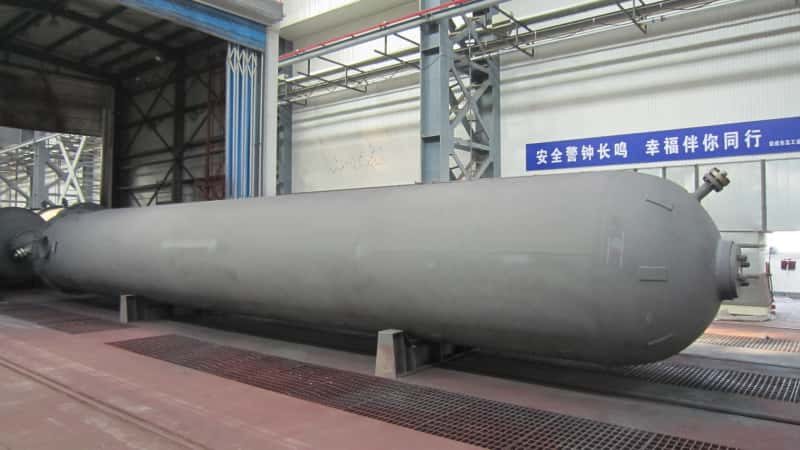
Carbon steel has historically dominated the oil and gas storage sector due to its affordability and structural robustness. It is especially favored for large atmospheric storage tanks storing crude oil and petroleum products.
Carbon steel’s primary advantage lies in its high mechanical strength and ability to withstand large volumes and structural loads. It is also relatively easy to fabricate, weld, and repair, making it a practical choice for large-scale infrastructure projects. However, these benefits come at a cost—corrosion vulnerability.
Without proper protection, carbon steel is highly susceptible to:
- Uniform corrosion due to oxygen and moisture
- Pitting corrosion in chloride environments
- Microbial-induced corrosion (MIC) in water-containing fluids
To mitigate these risks, operators must invest in:
- Protective coatings (epoxy, polyurethane)
- Cathodic protection systems
- Regular inspection and maintenance
Performance Data Table
| Parameter | Value |
|---|---|
| Typical Lifespan | 15–25 years |
| Corrosion Rate (unprotected) | 0.1–0.5 mm/year |
| Maintenance Frequency | High |
| Initial Cost | Low |
Over time, maintenance costs can exceed initial savings, making lifecycle analysis essential.
Stainless Steel Tanks: High Reliability for Harsh Environments

Stainless steel offers a premium solution for environments where corrosion resistance is critical. Its chromium content forms a passive oxide layer that protects against oxidation and chemical attack.
This makes stainless steel particularly suitable for:
- High-sulfur crude oil
- Offshore environments
- Chemical storage
- LNG applications
The most commonly used grades include 304 and 316, with 316 offering superior resistance to chlorides and marine conditions.
Technical Comparison
| Property | SS 304 | SS 316 |
|---|---|---|
| Corrosion Resistance | Good | Excellent |
| Chloride Resistance | Moderate | High |
| Cost Factor | 2.5× carbon steel | 3–4× carbon steel |
| Lifespan | 30–40 years | 40–50 years |
Despite higher initial costs, stainless steel significantly reduces:
- Maintenance requirements
- Risk of leakage
- Downtime
However, it is not immune to all issues. Chloride stress corrosion cracking (CSCC) can occur under specific conditions, requiring careful design and monitoring.
Composite Tanks: Advanced Lightweight Engineering

Composite materials, such as carbon fiber-reinforced polymers (CFRP) and glass fiber composites, represent a newer generation of storage solutions. These materials are engineered for high performance in specialized applications.
Their key advantage is the exceptional strength-to-weight ratio, which makes them ideal for:
- Offshore platforms
- Floating storage units
- Transportable tanks
Composites also offer:
- Excellent corrosion resistance
- Resistance to chemical degradation
- Minimal maintenance requirements
Performance Characteristics
| Feature | Composite Tanks |
|---|---|
| Weight | 60–70% lighter than steel |
| Corrosion Resistance | Excellent |
| Maintenance | Very low |
| Repair Complexity | High |
However, limitations include:
- Higher upfront costs
- Complex repair procedures
- Limited use in ultra-large tanks due to scaling challenges
Fiberglass (FRP) Tanks: Corrosion-Free Longevity

Fiberglass Reinforced Plastic (FRP) tanks are widely recognized for their outstanding corrosion resistance, making them ideal for aggressive chemical and water-based environments.
FRP tanks are particularly suitable for:
- Produced water storage
- Chemical storage
- Wastewater treatment
- Underground fuel tanks
Their non-metallic nature eliminates electrochemical corrosion entirely.
Lifecycle Comparison Table
| Material | Maintenance Cost (20 yrs) | Failure Risk | Inspection Frequency |
|---|---|---|---|
| Carbon Steel | High | Medium-High | Frequent |
| Stainless Steel | Low | Low | Moderate |
| Composite | Very Low | Low | Minimal |
| Fiberglass | Very Low | Low | Minimal |
Despite their advantages, FRP tanks have:
- Lower impact resistance
- Temperature limitations (typically <120°C)
- Design constraints for very large tanks
Key Engineering Decision Factors
Selecting the right material requires balancing multiple variables:
1. Chemical Compatibility
Different materials react differently to hydrocarbons, acids, and water content.
2. Environmental Exposure
- Coastal → stainless steel or FRP
- Desert → coated carbon steel
- Offshore → composites or stainless steel
3. Temperature and Pressure
High temperatures may degrade composites and FRP, favoring steel options.
4. Lifecycle Cost Analysis
Initial cost vs maintenance + downtime + replacement cost must be evaluated holistically.
Real-World Case Study Comparison
| Scenario | Material | Result |
|---|---|---|
| Offshore crude storage | Carbon steel | Severe corrosion in 8 years |
| Offshore optimized | SS 316 | >20 years without failure |
| Chemical tank | Carbon steel | Leakage and contamination |
| Optimized solution | FRP | Zero corrosion |
Final Thoughts
Material selection is a strategic engineering decision that directly impacts safety, compliance, and profitability in oil and gas storage systems. While carbon steel remains dominant due to its low initial cost, modern operational demands increasingly favor stainless steel, composites, and fiberglass for their durability and reduced maintenance burden. The optimal solution is always application-specific and should be based on a detailed evaluation of environmental conditions, stored media, and long-term economic performance.